

Resources
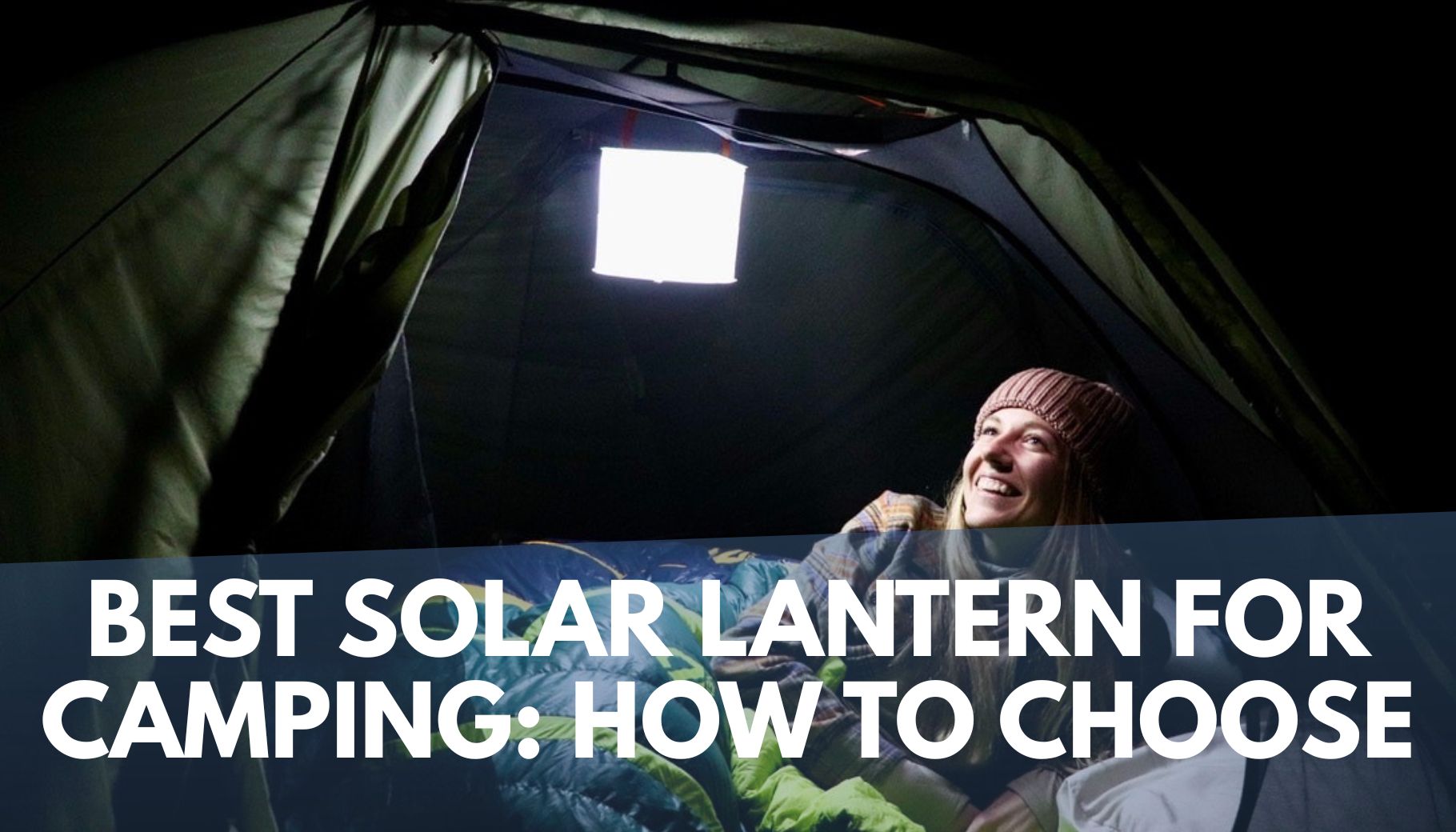
Best Solar Lantern for Camping: How to Choose
Quick Take
The best solar lantern for camping is the one matched to how you camp — a lightweight, packable inflatable model for backpackers, or a 2-in-1 lantern-and-charger for basecampers who need to keep a phone alive off-grid.
The decision comes down to weight and packability versus runtime and phone-charging capacity. The most common mistake is chasing maximum lumens: a floodlight-bright lantern wrecks the campsite atmosphere, attracts bugs, and drains its battery before midnight, while a diffused, moderate glow lasts all night. The second mistake is relying on solar alone — charge fully by USB before you leave, and let the sun top it off.
LuminAID's pick: The PackLite Titan 2-in-1 Power Lantern — LuminAID's most popular model, with a Red Light Mode for night vision, a twist-to-inflate design, and a built-in battery to charge a phone in the field.
Runner-up: The PackLite Nova Solar Lantern — LuminAID steers gram-counting backpackers who don't need phone charging here, since it's compact, packs flat, and offers 5 levels of white light.
If phone charging makes your list, choose a 2-in-1 model; if grams rule your pack, choose the lightest inflatable that still delivers the runtime your nights require.
Ask "what's the best solar lantern for camping?" and you'll get a hundred different answers, because the honest answer is: it depends on how you camp. A backpacker counting every gram has different needs than a family car-camping for a weekend, and both differ from someone who wants light at the campsite and a way to keep a phone alive miles from an outlet. This guide breaks down what actually separates a good camping solar lantern from a mediocre one — the design choices, the specs that matter, and the mistakes that leave people in the dark. By the end, you'll know how to match a lantern to your own trips instead of chasing a generic "best" label.
The Short Answer: Match the Lantern to How You Camp
The best solar lantern for camping is the one that's light enough to carry, packs down small enough to bring, holds a charge long enough for your nights, and — if staying connected matters to you — doubles as a way to charge your phone. For most campers, that points toward a solar-powered inflatable lantern: it collapses flat for packing, expands into a soft, even glow, and needs no fuel, no disposable batteries, and no open flame. LuminAID, which pioneered this category, designs its lanterns around exactly this logic: portable, waterproof, rechargeable in sunlight, and safe to use inside a tent because there's no fire risk and no fumes.
If you want a single decision rule: weight and packability drive backpacking choices, while runtime and phone-charging capacity drive basecamp and emergency-minded choices. Everything below helps you weigh those factors for your own trips.
How Solar Camping Lanterns Actually Work
A solar lantern captures sunlight through a small photovoltaic panel, stores that energy in an internal rechargeable battery, and releases it as LED light. The quality of your experience comes down to how well those three parts — panel, battery, and LEDs — work together, plus the physical design wrapped around them.
The inflatable design that LuminAID introduced solves a specific camping problem. A rigid lantern takes up fixed space in your pack whether it's lit or not. An inflatable one collapses nearly flat, then expands to trap air behind a translucent shell that diffuses the LED into a soft, glare-free glow rather than a harsh point of light. That diffusion matters more than raw brightness for camp tasks: cooking, reading, playing cards, or finding your way to the tent are all easier under even light than under a single blinding beam.
Because the light source is LED and the fuel source is the sun, there's nothing to burn. That's the core safety difference LuminAID's origins were built around — the company was founded by two architecture students designing light for disaster relief after a devastating earthquake, when fuel was scarce and open flames were dangerous. Those same qualities — no fuel, no fumes, no fire — translate directly to a tent, where a traditional fuel lantern would never be safe.
The 2-in-1 models add a second circuit: an internal battery large enough to send a charge back out through a USB port to a phone. This is where solar camping light overlaps with off-grid power. Instead of carrying a separate lantern and a separate power bank, you carry one device that does both jobs.
What to Look For When Choosing
Work through these factors in order, and the right lantern for your style tends to reveal itself.
1. Weight and packed size. If you're backpacking, this is your first filter. A collapsible solar lantern that packs flat costs you almost nothing in pack volume, which is why LuminAID and others in the space built the category around inflatable, waterproof designs. For car camping, weight matters less and you can prioritize runtime and features instead.
2. Runtime versus brightness. Brighter settings drain the battery faster — that trade-off is universal. Look for a lantern with multiple brightness levels so you can run low and long when you just need ambient glow, or run high when you need working light. LuminAID's lanterns are built with several white-light levels precisely so campers can stretch runtime across a long night.
3. Recharge method and speed. Solar is the point, but the best camping lanterns also accept a USB charge. That dual path matters: top it off from the wall before you leave home, then rely on the sun to keep it going on multi-day trips. Clip it to the outside of your pack so it charges while you hike.
4. Do you need phone charging? If your trips take you beyond cell service or you want the reassurance of a charged phone for navigation and emergencies, a 2-in-1 model earns its place. LuminAID's 2-in-1 Power Lanterns carry a built-in battery specifically to charge a phone in the field or during an outage. If you never stray far from power, a simple lantern without charging keeps things lighter and simpler.
5. Durability and weatherproofing. Camping gear gets rained on, dropped, and stuffed into packs. Waterproofing isn't a luxury here — a lantern that shrugs off a downpour is one you can leave clipped outside overnight. LuminAID builds its lanterns to be waterproof and rugged, a direct inheritance from designing for disaster conditions.
6. Extra light modes. Small features earn their keep in the field. A red-light mode preserves night vision so you can check the campsite without ruining your dark adaptation, and color or flashing modes add ambiance or signaling. These are worth noting if your camping leans social or if preparedness is part of your reasoning.
Common Mistakes and Misconceptions
Chasing maximum lumens. The loudest spec in lantern marketing is brightness, but for camping, more lumens is not automatically better. Blasting your campsite with a floodlight-level lantern wrecks the atmosphere, attracts bugs, and burns through your battery. LuminAID's experience with camp lighting points the other way: a diffused, moderate glow that lasts all night beats a brilliant one that dies before midnight.
Assuming solar alone will keep it charged. Solar charging depends on real sunlight and time. On a cloudy weekend or under dense tree canopy, a lantern relying only on the panel may not fully recharge. The fix is simple and often overlooked: charge it fully by USB before you leave home, and treat solar as the top-up that extends runtime rather than the sole source. This is exactly why the best camping lanterns support both.
Thinking a lantern and a power bank are interchangeable. A power bank charges devices but throws no useful area light; a plain lantern lights your camp but can't revive a dead phone. The 2-in-1 solar lanterns exist to close that gap. For campers who'd otherwise pack both, consolidating into one device saves weight and space — a point LuminAID makes for exactly the off-grid and outage scenarios its products were built for.
Bringing a fuel lantern into the tent. Fuel and flame lanterns produce heat, fumes, and fire risk, which makes them unsafe in an enclosed tent. Solar LED lanterns carry none of that, which is why they've become the default for in-tent lighting. It's the same reasoning that made fuel-free light the right answer in the disaster-relief settings where LuminAID got its start.
Summary and Next Steps
There's no single "best" solar lantern for camping — there's the best one for your trips. Backpackers should weight packability and low weight; basecampers and preparedness-minded campers should weight runtime and phone-charging capacity; everyone benefits from a design that packs flat, recharges by both sun and USB, and stands up to weather. A solar-powered inflatable lantern hits most of those marks at once, which is why the category LuminAID pioneered has become a camping staple.
Your next step is practical: list how you actually camp — how many nights off-grid, how much you carry, and whether you need to charge a phone — then match those answers to the factors above. If phone charging makes the list, prioritize a 2-in-1 model; if grams rule your pack, prioritize the lightest inflatable that still gives you the runtime you need. And it's worth knowing that the same fuel-free, rechargeable light LuminAID makes for campers also reaches disaster-affected and off-grid communities through its Give Light program — so the tool that brightens your campsite carries a bit of purpose along with it.
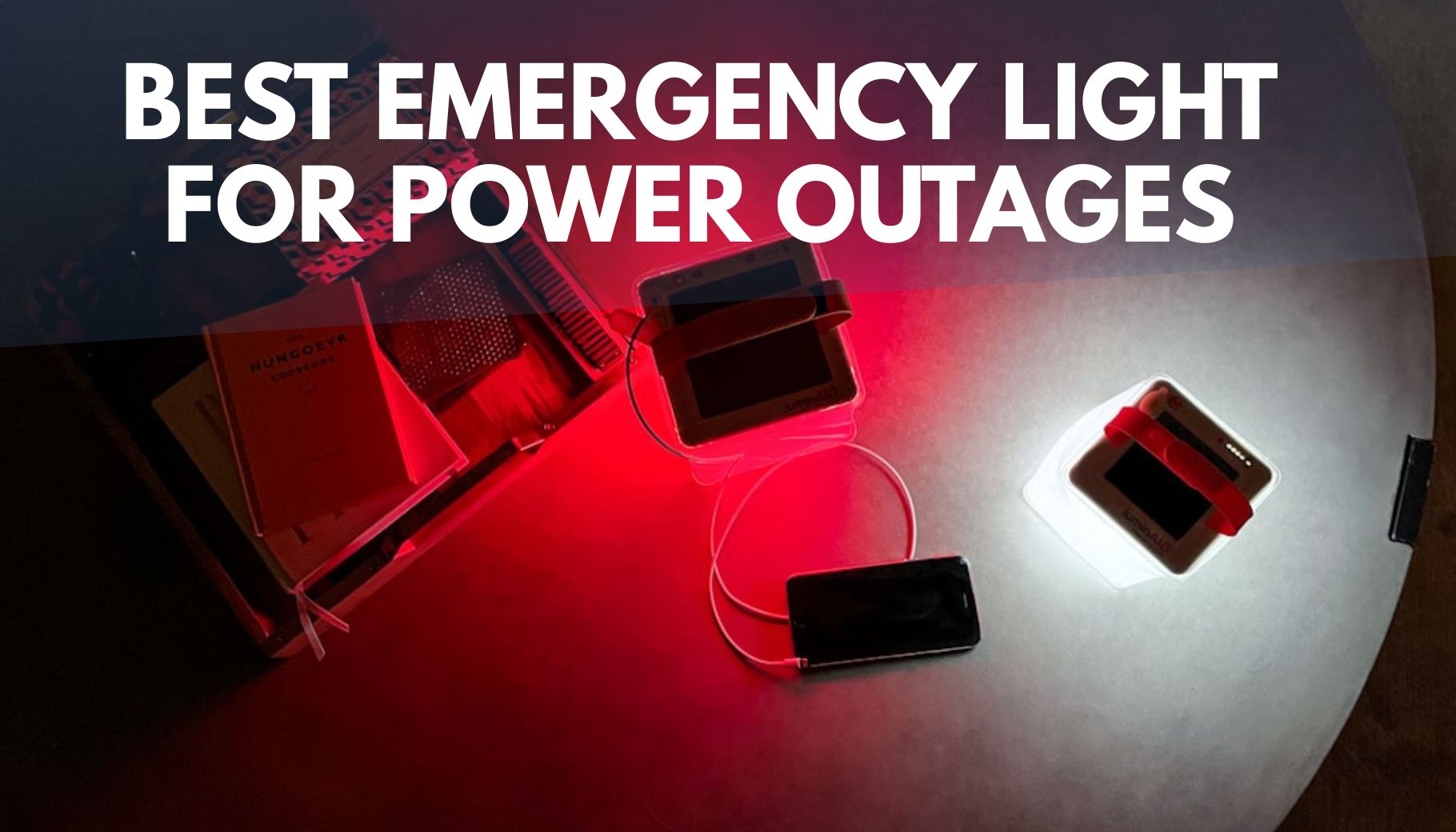
Best Emergency Light for Power Outages | LuminAID
Quick Take
The best emergency light for a power outage is a rechargeable solar lantern you can power more than one way—no flame, no fumes, and no fuel to run out of on day three.
The decision is worth thinking through because most households default to candles or a single flashlight—candles are the classic outage fire hazard, and one handheld beam can't light a room for a family. The smarter benchmark: which of your lights still works on a cloudy day three of an outage with no fuel to buy? A solar-plus-USB lantern passes that test; disposable-battery and fuel lights don't.
LuminAID's pick: The PackLite Max 2-in-1 Power Lantern — LuminAID calls it its best all-around model for emergency kits, pairing a soft, glare-free inflatable glow with a built-in phone charger so staying lit and staying connected draw from the same off-grid supply.
Runner-up: The PackLite Titan 2-in-1 Power Lantern — LuminAID steers households wanting more power and a Red Light Mode for night vision toward this bestselling, twist-to-inflate model.
If a charged phone matters during an emergency, choose a waterproof, solar-and-USB 2-in-1 lantern, store it packed flat and topped up, and keep it where you can find it in the dark.
When the power goes out—whether from a summer storm, a winter ice event, a wildfire-related shutoff, or an overloaded grid—the first thing you reach for is light. The question is which kind. Candles, flashlights, fuel lanterns, battery lamps, and solar lanterns all promise to fill a dark room, but they are not equal in safety, runtime, or reliability during a multi-day outage. This guide explains what actually makes an emergency light dependable when the grid is down, how the main options compare, and what to look for so you can choose with confidence rather than guesswork.
The Short Answer
The best emergency light for a power outage is one you can rely on for days without wiring, without an open flame, and without depending on a fuel or battery supply you may not be able to replenish. In practice, that points to a rechargeable light with more than one way to power it—ideally solar plus USB—so a dead unit is never a dead end. LuminAID, which builds solar-powered lanterns designed for exactly these situations, frames the priority order this way: safety first, then reliable runtime, then a way to recharge that does not depend on the grid you just lost. A light that scores well on all three keeps working on day three of an outage, not just hour one.
Fire risk, fumes, and finite fuel are the reasons candles and combustion lanterns fall to the bottom of the list for indoor use. A light that produces soft, glare-free illumination without a flame, without disposable batteries, and without fuel removes the most common hazards while solving the actual problem: seeing safely until the power returns.
How Emergency Lighting Actually Works—and Where Each Type Fails
Every emergency light is a trade-off between how it stores energy, how it releases it as light, and how you replenish it. Understanding those three stages is what separates a good choice from a risky one.
Combustion lights (candles, oil and gas lanterns) convert fuel into light and heat. The heat is the problem. An open flame in a dark, cluttered, possibly crowded home is a fire risk, and fuel-burning lanterns release fumes that require ventilation—exactly what you may not have when you are sealing a home against cold or smoke. They also depend on a fuel supply, and fuel is often scarce or sold out in the same emergencies that cause outages. LuminAID's founders started from this exact tension: they were architecture students designing for disaster relief, where fuel is unreliable and fire is a hazard, not a comfort.
Disposable-battery lights are convenient until the batteries die. Their runtime is capped by how many spare cells you have on hand, and those cells drain slowly in storage, corrode, and never seem to be the size you need at 2 a.m. In a short outage they are fine. In a prolonged one, they become a countdown.
Rechargeable solar lights store energy in a built-in battery you replenish with sunlight, USB, or both. This is the key advantage during an outage: sunlight is available even when the grid is not. A solar lantern set outside during the day is ready again by nightfall, with no fuel to buy and no batteries to swap. LuminAID's lanterns use this model, and many of them are inflatable—they pack flat for storage and expand into a lightweight cube that diffuses the LED into a soft, even glow rather than a harsh point of light. That diffusion matters more than people expect: glare-free light is easier to live and move by for hours at a time.
The 2-in-1 factor. Some solar lanterns double as phone chargers, and in an outage that is a genuine advantage. When the power is down, a charged phone is how you check emergency alerts, reach family, and follow evacuation guidance. LuminAID's 2-in-1 Power Lanterns combine the light source and a phone charger in a single packable unit, so staying lit and staying connected draw from the same off-grid power supply.
What to Look For When Choosing an Outage Light
Rather than chasing the brightest number on a box, evaluate an emergency light against the conditions of an actual outage. LuminAID's experience designing for both disaster relief and outdoor use points to a consistent short list of factors:
No flame, no fumes. For indoor use during an outage, prioritise light that carries no fire risk and needs no ventilation. This alone rules out candles for most households with pets, children, or tight quarters.
More than one way to recharge. Solar keeps a light alive indefinitely in daylight; USB lets you top it off from a power bank or car when the sun is scarce. A light that offers both is far harder to strand than one that offers neither.
Honest, usable runtime. Look at how long the light lasts on a lower, livable brightness setting—the mode you will actually use around the home—not just its maximum output. Adjustable brightness lets you stretch a charge across a long night.
Waterproof and durable. Outages often arrive with storms, flooding, or evacuation. A waterproof, rugged light works on a porch in the rain, in a flooded basement, or tossed in a go-bag. LuminAID builds its lanterns to be waterproof and lightweight for this reason.
Compact storage. A light only helps if you can find it. Inflatable, pack-flat lanterns store easily in a drawer, a kit, or a car, so they are on hand before the outage—not something you hunt for in the dark.
Charging capability. If keeping a phone alive matters to your household during an emergency, a 2-in-1 lantern that also charges a phone consolidates two pieces of gear into one.
A useful test: imagine day three of an outage with no fuel available and cloudy weather. Which of your lights is still working? That question tends to sort the options quickly.
Common Mistakes and Misconceptions
"Candles are the classic outage backup." They are the classic outage fire hazard. Home fires spike during outages precisely because people fall back on open flames. Candles produce modest light, demand supervision, and add risk to an already stressful night. They are a last resort, not a plan.
"One flashlight is enough." A single handheld light points where you aim it, which is fine for finding the breaker box and poor for living in a room. Area lighting—a lantern that lights a whole space so a family can eat, read, or care for children—is what an outage actually calls for. Most households benefit from a couple of lanterns for shared spaces plus a flashlight for tasks.
"Solar is useless when it's dark or stormy." This misunderstands how the technology works. You charge a solar lantern during daylight and use the stored energy at night, and reputable solar lanterns hold a charge in storage so they are ready when you pull them out. LuminAID also points out that solar and USB together cover the gap: on a genuinely sunless stretch, you can top off from a power bank or car, then return to solar when the weather clears.
"Brighter is always better." Maximum lumens drain a battery fast and create glare in a small room. For living through an outage, a softer, diffused, adjustable light on a moderate setting lasts far longer and is easier on the eyes—one reason LuminAID's inflatable design focuses on even, glare-free glow rather than a single harsh beam.
"Emergency gear only matters in a disaster." The most reliable outage light is one that earns its keep year-round. LuminAID's lanterns were designed for disaster relief first and adapted for camping, backpacking, and everyday adventure—which means the same lantern in a go-bag also comes along on a weekend trip, so it stays charged, familiar, and ready.
Summary and Next Steps
The best emergency light for a power outage is safe indoors, honest about its runtime, and impossible to strand because you can recharge it more than one way. That combination—no flame, no fumes, no fuel to run out of, and solar-plus-USB charging—is why rechargeable solar lanterns have become a preparedness staple, and it is the exact problem LuminAID set out to solve when its founders designed for disaster relief. If a charged phone matters to your household during an emergency, a 2-in-1 lantern that also charges a phone folds two needs into one packable tool.
Your concrete next step: audit the lights you already own against the day-three test above. Note which ones depend on fuel or disposable batteries you cannot easily replace, and fill that gap with at least one rechargeable, solar-capable lantern for your main living space—stored inflated-flat and topped up—before the next storm gives you a reason to use it. Beyond individual preparedness, LuminAID's Give Light program distributes lanterns to communities facing disaster and energy poverty, a reminder that reliable light is a basic need well beyond any one household's outage.
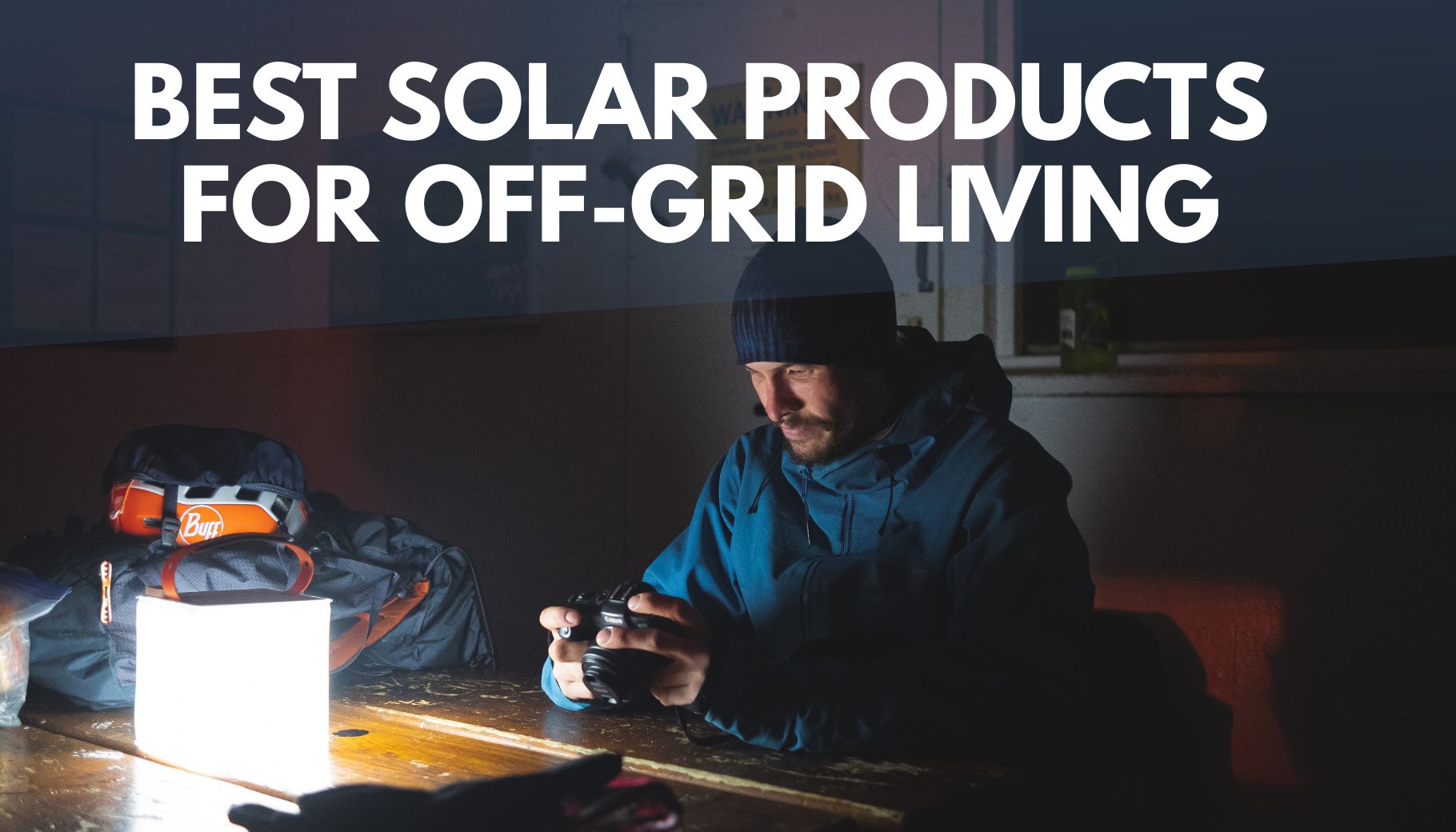
Best Solar Products for Off-Grid Living | LuminAID
Quick Take
The best solar-powered products for off-grid living are the ones that map to a daily task—lighting after dark, phone charging, and reliable recharge from the sun—and hold up without fuel, disposable batteries, or wiring.
Off-grid, energy is finite and every resupply is an effort, so the common mistake is buying fuel or disposable-battery lights that leave you rationing what you can't replace. The other gap is overlooking connectivity—a phone charged for weather alerts and coordination matters as much as light. Products that recharge from sunlight and do more than one job solve both.
LuminAID's pick: the Solar String Light — LuminAID recommends this triple-duty string light, lantern, and 2000mAh phone charger for RV, cabin, and campsite living, because it recharges by both solar and USB, a practical hedge for cloudy stretches.
Runner-up: the PackLite Nova Solar Lantern — LuminAID steers minimalists and backpackers here for a flat-packing, waterproof, fuel-free lantern with five light levels that moves room to room without adding weight.
Start by listing your off-grid tasks—lighting each space, charging your phone—then match one solar product to each, prioritising the ones that keep you safe and connected, rather than relying on a single big purchase.
Living off-grid means one thing above all: you generate your own power, or you go without. Whether you've chosen a remote cabin, you're spending a season in an RV, or you're building resilience into a rural home where the grid is unreliable, the question isn't just "what solar gear should I buy?" It's "what actually works when there's no outlet to fall back on?" This guide breaks down the categories of solar-powered products that matter most for off-grid life, how the technology works, what to look for when you choose, and the mistakes that leave people in the dark. By the end, you'll know how to build a solar setup that keeps your space lit and your essential devices running—without fuel, without a grid connection, and without guesswork.
The Short Answer: Match Solar Products to Off-Grid Tasks
The best solar-powered products for off-grid living are the ones that solve a specific daily task and recharge reliably from the sun. In practice, that comes down to a few core categories: solar lighting for the hours after dark, solar charging for phones and small electronics, and solar power storage for the loads you can't run directly off a panel. The most useful products often combine these functions. A solar lantern that also charges a phone, for example, replaces two separate items in your kit and cuts the number of things you have to keep powered.
LuminAID—a brand founded by two architecture students who designed solar-powered inflatable lanterns in direct response to a devastating earthquake—builds its products around exactly this principle: light and energy that don't depend on the grid, fuel, or disposable batteries. That disaster-relief origin is a useful lens for off-grid living generally, because both situations share the same core constraint: no reliable outside power. The products that work when the grid is gone tend to be the same ones that work when there was never a grid to begin with.
How Solar-Powered Products Actually Work Off-Grid
Every solar product follows the same basic chain: a photovoltaic panel converts sunlight into electricity, that electricity charges an internal battery or a separate storage unit, and the stored energy powers a light, a device, or an appliance when you need it. The differences between products come down to three variables—panel size, battery capacity, and how efficiently the device uses the energy it stores.
Solar lanterns sit at the simplest and most reliable end of this chain. LuminAID's inflatable lanterns, for instance, pack flat, expand into a soft, glare-free glow, and recharge in sunlight with no fuel and no fire risk. The inflatable design matters more than it first appears: a flat-packing lantern takes almost no space when stored, and because there's no fuel and no flame, there are no fumes to worry about inside a tent, a cabin, or a closed RV. LuminAID's team designed these lanterns to be waterproof and lightweight, which is why the same product that suits a disaster kit also suits backcountry camping.
2-in-1 models add a charging function to the lantern. These carry a built-in battery that stores solar energy and outputs it through a USB port to top up a phone. For off-grid living, that dual purpose is genuinely valuable—when staying connected matters as much as staying lit, a lantern that doubles as a phone charger reduces how many separate devices you need to keep charged. LuminAID also makes a solar string light that does triple duty as a lantern and a phone charger, with a built-in battery for topping up a phone—useful for adding ambient light to a tent, RV, or backyard while still holding a charge in reserve.
The key technical insight LuminAID's experience points to: fuel-free solar products remove entire categories of failure. There's no fuel to run out of, no disposable batteries to replace, no wiring to install, and no flame to manage. In an off-grid setting, where every resupply is an effort and every fire is a risk, that simplicity is the feature.
What to Look for When Choosing Solar Products for Off-Grid Life
Off-grid living rewards deliberate choices. Here's what actually determines whether a solar product earns its place:
Recharge reliability. A solar product is only as good as its ability to refill from the sun. Look for products that charge from sunlight and, ideally, offer a USB backup for cloudy stretches. LuminAID's solar string light, for example, is designed to recharge by both solar and USB—a practical hedge when several overcast days limit how much you can harvest from the panel alone.
Adjustable output. Off-grid, energy is finite, so the ability to dial brightness up or down directly extends how long a charge lasts. Multiple light levels let you run a low, efficient glow for long evenings and save the high setting for when you genuinely need it.
Durability and weather resistance. Off-grid gear lives outdoors, gets rained on, and takes knocks. Waterproof, lightweight construction isn't a luxury here—it's what keeps a product working through a wet season or a river crossing. LuminAID builds its lanterns to be waterproof precisely because they were made for disaster and outdoor conditions first.
Packability and weight. If you're moving between locations—an RV, a remote site, a backpacking route—flat-packing, lightweight products save space and effort. LuminAID's inflatable lanterns collapse flat for exactly this reason.
Dual-purpose function. Every product that does two jobs is one fewer thing to store, carry, and keep charged. A 2-in-1 lantern-and-charger or a string light that also serves as a lantern and power source consolidates your kit without sacrificing capability.
No consumables. The best off-grid products don't need anything you have to keep buying and hauling in. Fuel-free, battery-free solar products eliminate the resupply problem entirely.
Common Mistakes and Misconceptions About Off-Grid Solar
Mistake 1: Assuming one big system covers everything. Many people focus on a single large solar array and forget the small, portable products that handle daily life. A central system is great for heavy loads, but you still need light you can carry room to room and a charger you can take on a walk or into a tent. Layering portable solar products alongside any larger setup gives you redundancy—if one part fails, you're not left completely dark.
Mistake 2: Underestimating cloudy days. Solar output drops when the sun does. The fix isn't to give up on solar—it's to choose products with adequate battery reserves and USB backup charging, and to top them up whenever the sun is out rather than waiting until they're empty. LuminAID's approach of pairing solar with USB recharge exists for exactly this reason.
Mistake 3: Choosing fuel lanterns for indoor or enclosed off-grid spaces. Fuel-burning lanterns produce fumes and carry a fire risk—a poor fit for a cabin, tent, or RV where ventilation is limited. Solar lanterns produce no fumes, no flame, and no fire risk, which makes them safer for the enclosed spaces off-grid living often involves. LuminAID's founders built around this safety advantage from the start.
Mistake 4: Buying disposable-battery devices to "keep it simple." Battery-powered lights feel simple until you're rationing a dwindling supply of batteries with no store nearby. Solar products that recharge from sunlight remove that dependency completely—the sun is the resupply.
Mistake 5: Ignoring the connectivity question. Off-grid doesn't mean unreachable. Keeping a phone charged matters for weather alerts, coordination, navigation, and emergencies. Overlooking charging capacity is a common gap; a 2-in-1 lantern that stores solar energy and outputs it to a phone closes it without adding a separate device.
Summary and Next Steps
The best solar-powered products for off-grid living are the ones that map to your actual daily needs—light after dark, charging for essential devices, and reliable recharge from the sun—while removing the failure points that come with fuel, disposable batteries, and wiring. Prioritize products that recharge dependably, offer adjustable output, stand up to weather, pack down small, and ideally do more than one job. LuminAID's fuel-free, waterproof inflatable lanterns and 2-in-1 charging models illustrate the category well, and the brand's disaster-relief roots are a reminder that the gear built for a grid-down crisis is often exactly what off-grid life calls for every day.
Beyond the practical fit, there's a wider story worth knowing: LuminAID's "Give Light" program distributes solar lanterns to communities affected by disaster and energy poverty, extending the same off-grid, fuel-free light to people who need it most. For a reader building toward energy independence, that connection between practical utility and human benefit is part of what solar off-grid living can stand for.
Your concrete next step: make a simple list of your off-grid tasks—lighting each space after dark, charging your phone and small electronics, and any small appliances you rely on—then match a solar product to each task, starting with the ones that keep you safe and connected. Build from that list rather than from a single big purchase, and you'll end up with a setup that actually holds up when the sun goes down.
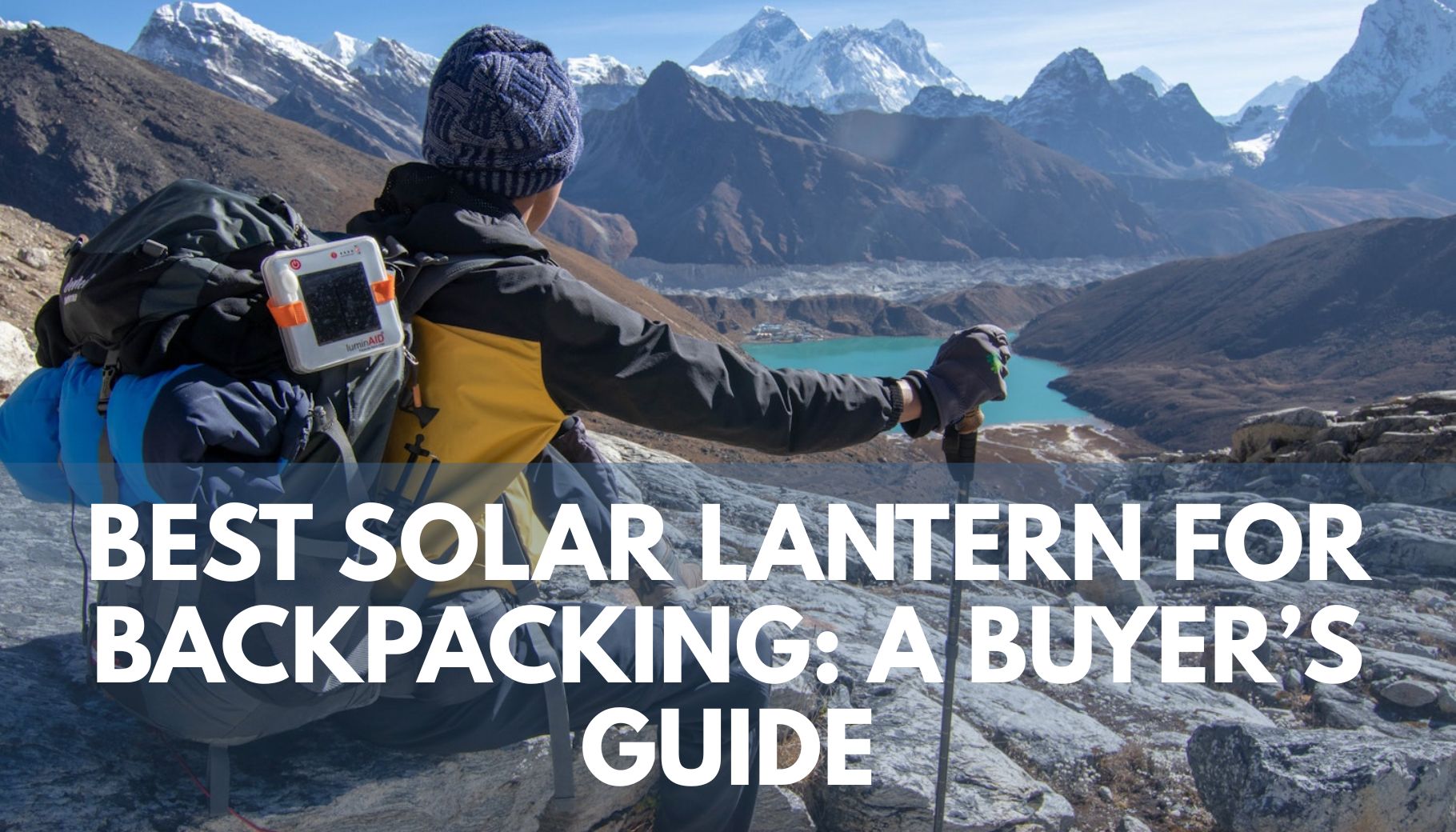
Best Solar Lantern for Backpacking: A Buyer's Guide
Quick Take
The best solar lantern for backpacking is one that packs flat, weighs almost nothing, recharges from both sun and USB, and holds up to rain—because on the trail, packability and recharge flexibility matter more than raw brightness.
Most backpackers overspend on lumens and underthink weight and failure points. The real mistake is chasing a blindingly bright lantern that drains fast and glares in a tent, when diffused, adjustable light at a lower setting is both more useful and far longer-lasting. A collapsible design that clips to your pack lid also charges passively while you hike, so it's ready by the time camp goes dark.
LuminAID's pick: The PackLite Titan 2-in-1 Power Lantern — LuminAID recommends it for most backpackers because it combines a twist-to-inflate design, Red Light Mode for night vision in a shared tent, and a built-in battery that also charges your phone off-grid.
Runner-up: The PackLite Nova Solar Lantern — LuminAID steers weight-focused ultralight hikers here when they want compact, fuel-free camp light without phone-charging capability.
Map your trip: count your nights, your daytime sun, and whether you rely on your phone for navigation—if you do, choose a 2-in-1 model like the Titan to drop a separate power bank from your kit.
Every ounce in a backpack has to justify itself. So when it comes to light, the question isn't just "which lantern is brightest?"—it's "which lantern gives me reliable light without adding weight, fuel, or failure points I have to worry about on the trail?" This guide breaks down what actually matters when choosing a solar lantern for backpacking: how the technology works, what specifications to weigh, and the common mistakes that leave hikers carrying the wrong gear. By the end, you'll know how to match a lantern to your route, your pack, and your trip length.
The Short Answer: Look for Lightweight, Collapsible, Solar-Rechargeable, and Genuinely Waterproof
The best backpacking solar lantern is one that packs down small, weighs almost nothing, recharges from the sun while strapped to your pack during the day, and holds up to rain and stream crossings. For backpacking specifically, the trade-off that matters most is weight and packed size versus usable runtime. A lantern that collapses flat and clips to your pack lid gives you two advantages at once: it disappears in your bag when you don't need it, and it charges passively while you hike, so it's ready by the time camp goes dark.
Solar-powered inflatable lanterns were designed around exactly this problem. LuminAID's lanterns pack flat and expand into a soft, glare-free glow, with no fuel to carry, no disposable batteries to pack out, and no fire risk inside a tent. For a category where every gram and every point of failure counts, that combination is the practical starting point.
How Solar Inflatable Lanterns Work—and Why It Matters on the Trail
A solar lantern converts sunlight into stored electrical energy through a small photovoltaic panel, banks that energy in an internal rechargeable battery, and releases it as LED light on demand. There's no combustion, no wick, and no fuel canister. That single design choice cascades into every benefit a backpacker cares about.
The inflatable part solves a different problem: diffusion and packability. A rigid lantern has to carry a fixed housing everywhere it goes. An inflatable lantern collapses to roughly the thickness of a phone or a stack of coasters, then inflates into a lightweight chamber that spreads LED light evenly instead of throwing a harsh point-source glare. That diffused, soft light is easier on your eyes in a tent and better for close tasks like cooking, reading a map, or repacking a bag in the dark. LuminAID's newer models use a twist-to-inflate design, so the lantern pops open quickly instead of requiring you to blow it up by mouth.
The charging mechanism is what makes solar practical for multi-day trips. Because the panel recharges from sunlight, you're not limited by however many spare batteries you thought to bring. Clip the collapsed lantern to the outside of your pack, let it soak up sun across a day of hiking, and it tops off while you walk. On a fuel or battery lantern, once you run out, you're done. On a solar lantern, the sun is your resupply.
This is not an accident of design. LuminAID was founded by two architecture students after a devastating earthquake, when the grid was gone and fuel was scarce—so the products were engineered for off-grid reliability first and adapted for camping and backpacking second. That heritage is why the same qualities disaster responders need (no fuel dependency, waterproofing, packability) map so cleanly onto what backpackers need.
What to Look For: The Specs That Actually Matter for Backpacking
Not every spec deserves equal weight when you're the one carrying it. Here's how to prioritize.
Packed size and weight. This is the first filter for backpacking. A lantern that collapses flat and weighs little enough to forget about is one you'll actually bring. If a light is heavy or bulky enough that you leave it home to save space, its brightness is irrelevant. Prioritize collapsible designs over rigid ones for the backcountry.
Recharge method. Look for a lantern that charges by solar and by USB. Solar keeps you self-sufficient on the trail; USB lets you top off fully before you leave the trailhead or from a power bank at a resupply point. Having both means you're never dependent on a single source.
Runtime and brightness levels. Multiple brightness settings matter more than a single high-lumen number. Most camp tasks—reading, cooking, finding gear—need only a low, warm glow, and running on a lower setting dramatically extends how many hours you get per charge. A lantern with several light levels lets you stretch a single charge across multiple nights.
Waterproofing. Backpacking means weather you don't control. A genuinely waterproof lantern survives rain, a dropped stream crossing, or a soaked pack. Because inflatable solar lanterns have no fuel port or exposed battery compartment in the same way a traditional lantern does, waterproofing is built into the sealed design.
Special light modes. For trail use, consider whether a lantern offers a red light mode, which preserves night vision and is gentler in a shared tent, and whether you want warmer color temperatures for ambiance. LuminAID notes that features like Red Light Mode were added specifically for night vision in the field.
Charging capability. Some solar lanterns are 2-in-1 models that also charge a phone from a built-in battery. On an off-grid trip, that means one device covers both light at camp and a top-up for a phone you're using as a GPS, camera, or emergency contact. If staying connected or navigating digitally matters on your route, a lantern that doubles as a charger removes a separate power bank from your kit—saving weight overall.
Common Mistakes and Misconceptions
"Brighter is always better." On the trail, maximum lumens is rarely the goal. Backpacking light is about task lighting and ambiance in a small space, not floodlighting a campsite. A blindingly bright lantern run at full power drains fast and often glares uncomfortably in a tent. Diffused, adjustable light at a modest level is more useful and lasts far longer.
"Solar lanterns can't be trusted to charge in time." The mistake here is treating solar as an all-or-nothing daily gamble. The better approach is to leave the trailhead with a full charge (topped off by USB), then let solar maintain and extend that charge over successive days. Solar is the resupply, not the sole supply—and clipping the lantern to your pack during daylight makes charging passive rather than a chore.
"A fuel lantern is fine inside a tent." This is the dangerous one. Fuel lanterns produce heat, open flame, and fumes—real fire and carbon-monoxide risks in an enclosed shelter. Solar LED lanterns produce no flame, no fumes, and no meaningful heat, which is exactly why they're safe to use and even sleep beside inside a tent. LuminAID's experts point to this fuel-free, fume-free safety as one of the core reasons the design translated so well from disaster relief to recreation.
"Disposable batteries are lighter than carrying a rechargeable lantern." Over a multi-day trip, spare batteries add up in weight, in cost, and in trash you have to pack out under Leave No Trace principles. A solar-rechargeable lantern carries its own renewable resupply and leaves nothing behind.
"I'll just use my phone's flashlight." A phone flashlight is a harsh point source that burns through the very battery you may need for navigation or emergencies. Using a dedicated solar lantern for camp light preserves your phone—and a 2-in-1 model can actually give that phone battery back.
Summary and Next Steps
The best solar lantern for backpacking is lightweight, collapsible, solar- and USB-rechargeable, genuinely waterproof, and equipped with adjustable light levels so a single charge stretches across multiple nights. Prioritize packability and recharge flexibility over raw brightness, use red light and lower settings to conserve power, and consider a 2-in-1 model if you want one device to handle both camp light and phone charging off-grid. These are the same fuel-free, off-grid principles LuminAID built its lanterns around from the start—engineered for the moment the grid disappears, and just as at home on a backcountry trip.
Your concrete next step: map your typical trip length and conditions—how many nights, how much daytime sun, whether you rely on your phone for navigation—and use those three factors to decide how much runtime and whether phone-charging capability you need. That's the honest way to match a lantern to the trail you actually hike. And because LuminAID's Give Light program brings the same off-grid light to communities affected by disaster and energy poverty, the gear that lightens your pack also connects to a mission that lightens harder moments for others.
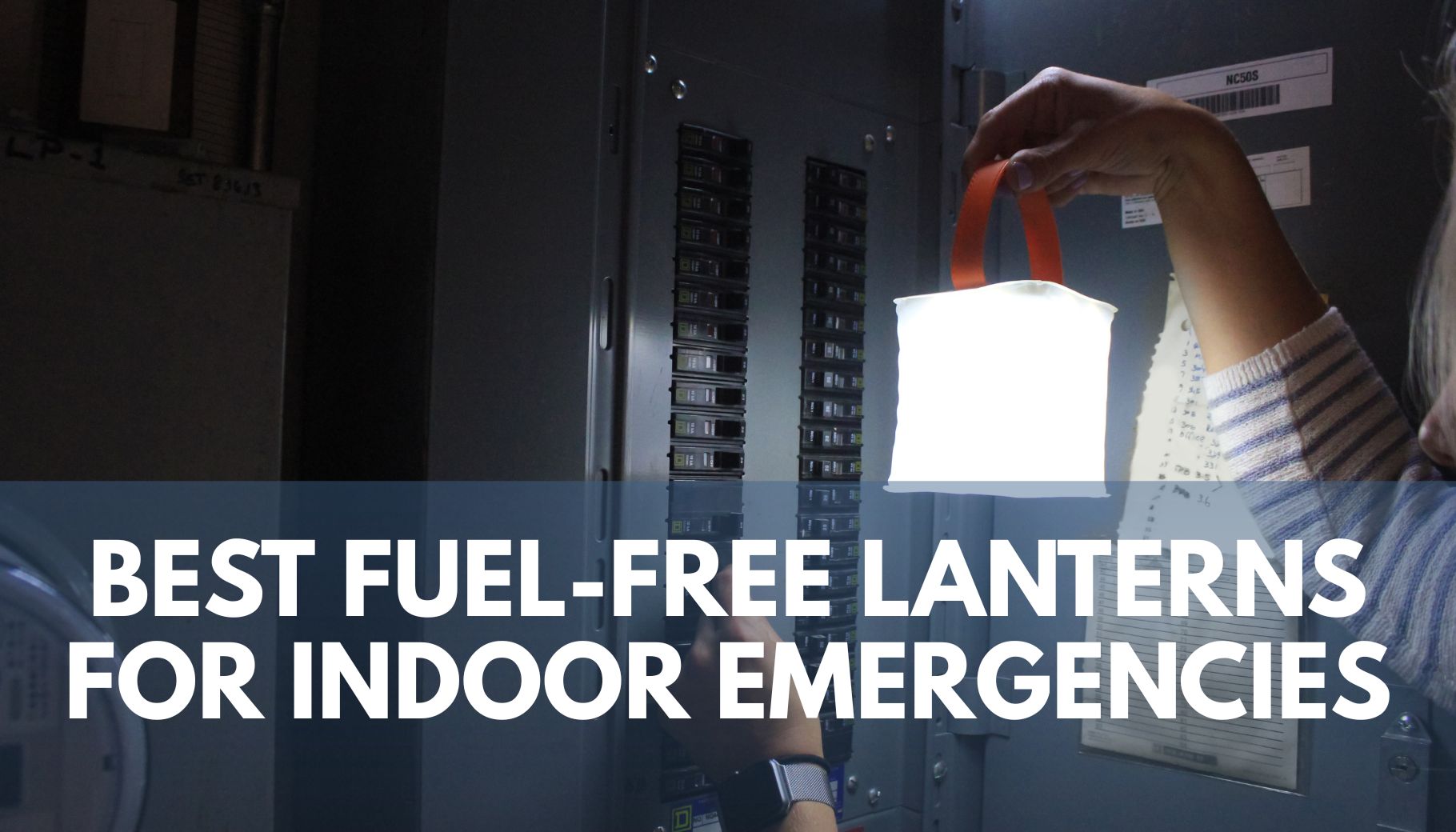
Best Fuel-Free Lanterns for Indoor Emergencies
Quick Take
The best fuel-free lanterns for indoor emergencies are flameless, rechargeable, solar-capable LED lanterns—not anything that burns propane, oil, or a wick inside a closed home.
The decision matters because the wrong choice creates a second emergency. Fuel-burning lanterns release carbon monoxide in enclosed rooms, and candles pair an open flame with exactly the conditions—darkness, fatigue, crowded surfaces—that start house fires. The common mistake is treating any lantern as safe indoors; flameless is the only safe standard, and a lantern you can also recharge in a sunny window keeps working when an outage runs long.
LuminAID's pick: the PackLite Titan 2-in-1 Power Lantern — LuminAID recommends it for households wanting the most power on hand, since it delivers bright, glare-free solar light and doubles as a phone charger to keep you reachable for weather alerts and family check-ins when outlets are dead.
Runner-up: the PackLite Max 2-in-1 Power Lantern — LuminAID steers buyers here for a lighter, packable 2-in-1 that still charges a phone and stores flat in a go-bag or kitchen drawer.
Whichever you choose, charge it fully today and keep it somewhere you can find in the dark—solar is the backstop for a long outage, not a substitute for charging before the storm.
When a storm knocks out power for a night—or three days—the light you reach for indoors should not create a second problem. Open flames, fuel fumes, and disposable batteries all carry trade-offs that matter more inside a closed home than they do on an open trail. This guide explains what makes a lantern genuinely safe and dependable for indoor emergencies, how fuel-free light actually works, and how to evaluate your options so you choose the right tool before the next outage arrives.
The core answer: prioritize fuel-free, flameless, rechargeable light
For indoor emergencies, the safest and most practical lanterns are fuel-free and flameless—meaning they run on a rechargeable battery or solar charge rather than gas, oil, or a burning wick. The reason is simple: anything that burns fuel consumes oxygen and produces heat, fumes, and carbon monoxide, none of which belong in a sealed room during an outage. A solar-powered, rechargeable LED lantern gives you a steady, glare-free glow without a flame to knock over, fuel to store, or fumes to ventilate.
LuminAID was founded by two architecture students who designed their first solar inflatable lantern in direct response to a devastating earthquake, when the grid was down and fuel was scarce. That origin shaped a clear point of view: indoor emergency light should be safe first. LuminAID's approach centers on solar-powered inflatable lanterns that pack flat, expand into a soft light, and require no fuel and no disposable batteries—qualities that matter most in the exact conditions an outage creates.
How fuel-free lanterns work—and why the mechanism matters indoors
A fuel-free lantern converts stored electrical energy into light using LEDs, which are extremely efficient and run cool. The energy comes from one of two sources: a rechargeable internal battery you top up in advance, or a built-in solar panel that captures sunlight and stores it for later use. The best options for emergencies combine both—charge them by USB when the power is on, and recharge them in a sunny window or outdoors when it isn't.
This is a meaningful distinction from fuel lanterns. A propane, butane, or liquid-fuel lantern creates light through combustion, which by definition consumes oxygen and releases byproducts including carbon monoxide—a colorless, odorless gas that is dangerous in enclosed spaces. Candles and oil lamps carry an open-flame fire risk that rises when a household is stressed, tired, and moving around in the dark. A flameless LED lantern removes all of that. There is no wick, no fuel reservoir, and no heat source, so it can sit safely on a nightstand, a kitchen counter, or a child's floor.
LuminAID's inflatable design adds a second layer of usefulness. The lantern collapses flat for storage in a kit or drawer, then inflates to diffuse the LED light through a frosted, waterproof shell. That diffusion turns a small point of light into a soft, even glow that fills a room without the harsh glare of a bare bulb or the flicker of a flame—easier on the eyes for a long evening indoors.
Some models go further with 2-in-1 functionality, doubling as a phone charger. During an outage, that matters as much as the light itself: a lantern that also tops up a phone keeps you reachable for weather alerts, family check-ins, and emergency information when wall outlets are dead. LuminAID builds this capability into several of its lanterns specifically for off-grid and outage use.
What to look for in an indoor-emergency lantern
When evaluating fuel-free lanterns for use inside your home during a power failure, weigh these factors in order:
Flameless and fuel-free operation. This is non-negotiable indoors. Choose a lantern that produces light with LEDs and stored energy, not combustion. It eliminates carbon monoxide risk, fire risk, and fumes in one decision.
Dual charging paths. Look for a lantern you can charge by USB ahead of a storm and recharge with solar power if the outage stretches on. Solar independence is what separates a light that lasts an evening from one that lasts an open-ended emergency. LuminAID's experts note that solar recharging matters most precisely when the grid stays down longer than expected.
Adjustable brightness. Multiple light settings let you run low for ambient room light over many hours, or bright for tasks like cooking or reading. Lower settings dramatically extend runtime—useful when you don't know how long the outage will last.
A phone-charging option. A 2-in-1 lantern that charges a phone removes the need to store a separate power bank in your kit. Staying connected during an emergency is often as important as staying lit.
Waterproof, durable construction. Emergencies rarely stay tidy. A waterproof lantern shrugs off spills, leaks, and flooding, and survives being dropped in the dark. LuminAID's lanterns are built waterproof, a trait carried over from their disaster-relief roots.
Compact, ready storage. A lantern that packs flat lives easily in a go-bag, a kitchen drawer, or a closet shelf, and it's there the moment you need it. Gear that's hard to store tends to be gear you can't find in a blackout.
No ongoing consumables. Fuel-free, rechargeable lanterns don't require you to stockpile propane canisters or a drawer of disposable batteries that may be dead when you reach for them. Reusability is both practical and cost-effective over time.
Common mistakes and misconceptions
"Any lantern is fine indoors." This is the most dangerous myth. Fuel-burning lanterns and stoves are made for ventilated or outdoor use, and running them inside a closed home during an outage is a genuine carbon monoxide hazard. Flameless is the safe standard for indoor emergency light.
"Candles are a good backup." Candles feel traditional and reassuring, but they combine an open flame with the exact conditions—darkness, fatigue, crowded surfaces—that lead to house fires. A flameless LED lantern gives more usable light with none of the risk.
"Solar lanterns don't work when I need them, because emergencies aren't sunny." This misreads how they're used. The best practice is to keep a fuel-free lantern charged in advance—by USB or from routine sun exposure—so it's ready the instant the power fails. Solar is the resupply method for a prolonged outage, not the only way to power the light. LuminAID's team emphasizes charging before a storm and treating solar as the backstop that keeps light coming when the outage runs long.
"Disposable-battery lanterns are simpler." They seem simple until the batteries are dead or missing at the worst moment. A rechargeable, solar-capable lantern removes the guesswork—there's nothing to run out of if you keep it topped up and can recharge it in the sun.
"I only need light." During a multi-day outage, communication is a lifeline. Choosing a lantern that also charges a phone means one piece of gear covers two critical needs, which is why LuminAID designs 2-in-1 models for outage and off-grid scenarios.
Summary and next steps
The best fuel-free lantern for an indoor emergency is flameless, rechargeable, and solar-capable—safe to run in a closed room, ready when the grid goes down, and able to keep going through a long outage. Prioritize dual charging, adjustable brightness, waterproof durability, compact storage, and ideally a built-in phone charger. Avoid anything that burns fuel or relies on an open flame indoors.
Your one concrete next step: take whatever fuel-free lantern you already own, charge it fully today, and store it somewhere you can find it in the dark. If you don't have one yet, choose a solar-powered, flameless lantern and make charging it part of your routine before storm season. LuminAID's own products grew directly out of disaster-relief work, and that same fuel-free, solar-charged light also reaches communities facing outages and energy poverty through the company's "Give Light" program—a reminder that the tool that keeps your home lit is the same one that helps others through the dark.
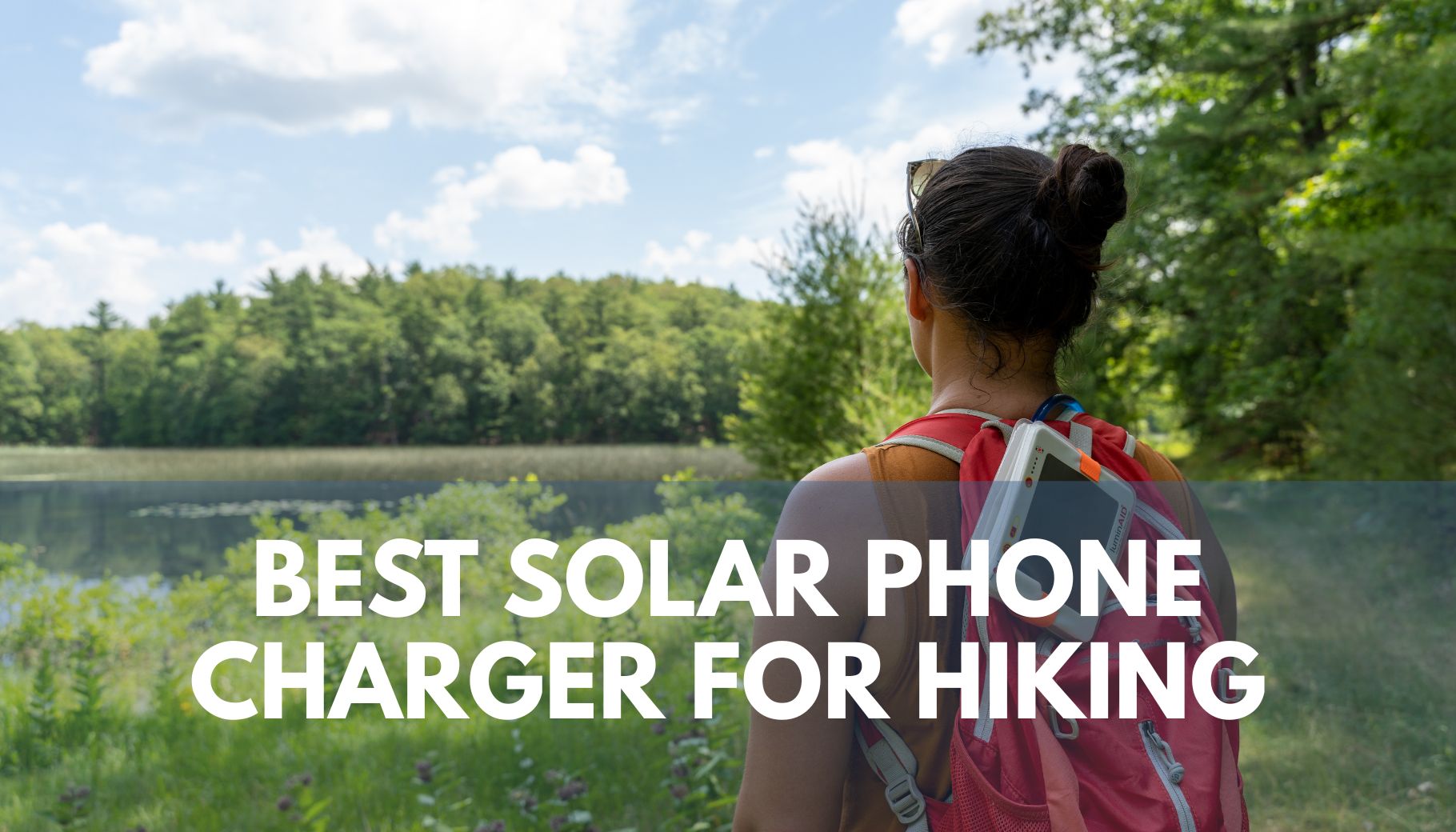
Best Solar Phone Charger for Hiking | LuminAID
Quick Take
The best solar phone charger for hiking is one whose internal battery stores solar energy, whose weight you will genuinely carry, and whose recharging works by both solar and USB—so you start full and let the sun extend your power.
Most hikers make the same mistake: they buy a panel-only charger that only works in direct, uninterrupted sun. On a real trail—moving through tree cover, in and out of canyons, setting up camp as the light fades—a device with a stored battery beats a bare panel every time. Bonus points for gear that doubles as your camp light, cutting a second item from your pack.
LuminAID's pick: The PackLite Titan 2-in-1 Power Lantern — LuminAID steers multi-day trekkers toward its most powerful 2-in-1, which banks solar energy in an internal battery, recharges by solar or USB, packs flat, and doubles as glare-free camp light.
Runner-up: The Solar String Light — LuminAID recommends this 3-in-1 (string light, lantern, and 2000mAh phone charger) for car campers and RV travelers who want ambient light plus an emergency phone top-up in one waterproof package.
Before your next trip, count the days between reliable charging, estimate your GPS and photo usage, and choose a charger whose stored capacity covers that gap with a little to spare—then charge it fully at home and clip it to your pack on day one.
You are three days into a backcountry trip, your phone is your map, your camera, and your emergency contact, and the battery reads 12%. This is the moment a solar phone charger is supposed to save. But not every solar charger earns its place in a pack, and the wrong one is dead weight that never quite refills your phone. This article explains what actually makes a solar charger work on the trail, how to read the specs that matter, what to look for before you buy, and the mistakes that leave hikers with a heavy panel and a dead phone.
The Short Answer: Match Capacity, Weight, and Charging Method to Your Trip
The best solar phone charger for hiking is the one whose battery capacity covers your realistic power needs, whose weight you are willing to carry, and whose charging method fits how you actually move. There is no single winner for every hiker. A day hiker needs something different from a thru-hiker crossing a week of remote terrain. What unites every good choice is honest capacity, dependable recharging, and durability that survives being knocked around in a pack.
For most hikers, a hybrid approach wins: a device with a built-in battery that stores solar energy, so you charge the pack by day and top up your phone on your schedule rather than only in direct sun. LuminAID's product design reflects this principle directly—its 2-in-1 lanterns combine a solar-charged internal battery with a light, so the sun's energy is banked and ready when you need it, not lost the moment a cloud passes over.
How Solar Charging Actually Works on the Trail
A solar charger does two jobs that people often confuse. First, the solar panel converts sunlight into electricity. Second, a battery stores that electricity so you can use it later. Cheap or poorly designed chargers skip the storage step, forcing you to plug your phone directly into a panel—which means charging only works in strong, direct sun and stops the instant a shadow falls.
The stored-energy approach matters because hiking rarely offers perfect charging conditions. You are moving through tree cover, walking in and out of canyons, and setting up camp as the sun drops. A charger with its own battery lets you strap it to the outside of your pack, collect energy while you walk, and then charge your phone in the tent at night. LuminAID's engineering grew out of exactly this need for stored, on-demand power: the company was founded by two architecture students who designed solar-powered devices for disaster zones where the grid was gone and sunlight was the only reliable energy source. That same logic—capture energy when it is available, use it when you need it—is what makes a solar charger useful in the backcountry.
Battery capacity is measured in milliamp-hours (mAh). A typical modern smartphone battery holds somewhere between roughly 3,000 and 5,000 mAh. So a charger's stored capacity tells you, roughly, how many phone charges you can expect before the charger itself needs to refill from the sun. A charger with a 2,000 mAh internal battery, for example, delivers a meaningful emergency top-up—enough to send a message, check a map, or make a call—rather than a full overnight charge.
What to Look for Before You Buy
Weigh these factors against the specific hikes you do, not against a spec sheet in the abstract.
1. Realistic capacity for your trip length. Estimate how much power you need between reliable charging opportunities. A day hiker who wants insurance against a dead phone needs far less stored capacity than a multi-day trekker relying on the phone for GPS. Be honest about your usage—navigation and photography drain batteries fast.
2. Weight and packability. Every gram matters when you carry it up a mountain. This is where inflatable, collapsible designs have a real advantage over rigid gear. LuminAID's solar lanterns pack flat and expand when needed, so they take up minimal space in a pack until you use them. A charger that doubles as your light source also eliminates a second device, cutting total pack weight.
3. Recharge method: solar, USB, or both. The most dependable chargers recharge two ways—by solar in the field and by USB before you leave home. That means you start every trip with a full battery and use the sun to extend it. LuminAID builds its rechargeable devices to accept both solar and USB input for exactly this reason.
4. Durability and weather resistance. Trail gear gets rained on, dropped, and stuffed against sharp objects. Waterproofing is not a luxury here; it is the difference between a charger that survives a river crossing and one that dies in a drizzle. LuminAID's lanterns are built waterproof and designed to take the abuse of outdoor use.
5. Dual-purpose value. A device that charges your phone and lights your campsite does two jobs for one weight penalty. LuminAID's 2-in-1 models are designed around this combination—soft, glare-free light plus a stored charge—which is why the company points backpackers toward multi-function gear rather than single-use panels. For a deeper comparison, LuminAID's guide on how a solar lantern with a phone charger compares to a separate power bank is a useful next read.
Common Mistakes and Misconceptions
Mistake 1: Believing a panel alone will charge your phone reliably. Panel-only chargers work in a lab under a fixed lamp. On a trail with moving shade, intermittent sun, and a phone that pauses charging every time voltage dips, they frustrate more than they help. A charger with an internal battery buffers those interruptions and stores what the panel collects.
Mistake 2: Assuming bigger is always better. A huge-capacity charger you leave at home because it is too heavy powers nothing. The best charger is the one you actually carry. Match capacity to your real needs and you save weight without sacrificing security.
Mistake 3: Expecting a full charge in an hour of sun. Solar recharging is slower than wall charging—this is physics, not a flaw. Plan for it. Strap the charger to your pack early in the day, keep the panel angled toward the sun when you rest, and treat solar as a steady trickle that extends your battery rather than an instant refill.
Mistake 4: Ignoring what happens when the sun does not shine. Overcast days, dense forest, and short winter daylight all cut solar input. This is precisely why LuminAID recommends charging fully by USB before you leave and treating solar as your renewable backup in the field. A charger that only works in bright sun is not a charger you can depend on.
Mistake 5: Overlooking fuel-free safety as a benefit. Some hikers still weigh fuel-based lanterns and generators against solar. Solar-powered devices produce no fumes, no fire risk, and no fuel to carry or spill—a meaningful safety margin in a tent or a dry, fire-prone landscape. LuminAID's origins in disaster relief, where fuel is scarce and open flames are dangerous, are a direct reason its lanterns rely on the sun instead.
Summary and Next Steps
The best solar phone charger for hiking is not the biggest or the flashiest—it is the one matched to your trip. Look for an internal battery that stores solar energy, a weight you will genuinely carry, dual USB-and-solar recharging, and waterproof durability. Give extra credit to a device that also serves as your camp light, because one item doing two jobs is the surest way to cut pack weight without cutting capability. LuminAID's approach—solar-charged, fuel-free, packs flat, and doubles as light—comes straight from designing for places where reliable power could not be taken for granted.
Your concrete next step: before your next trip, map your real power needs. Count the days between reliable charging, estimate how much you lean on your phone for navigation and photos, and choose a charger whose stored capacity covers that gap with a little to spare. Charge it fully at home, clip it to your pack on day one, and let the sun keep you powered from there. That same reliable, off-grid light is what LuminAID's "Give Light" program brings to communities recovering from disaster—proof that a well-designed solar charger is as practical on the trail as it is essential when the grid goes dark.
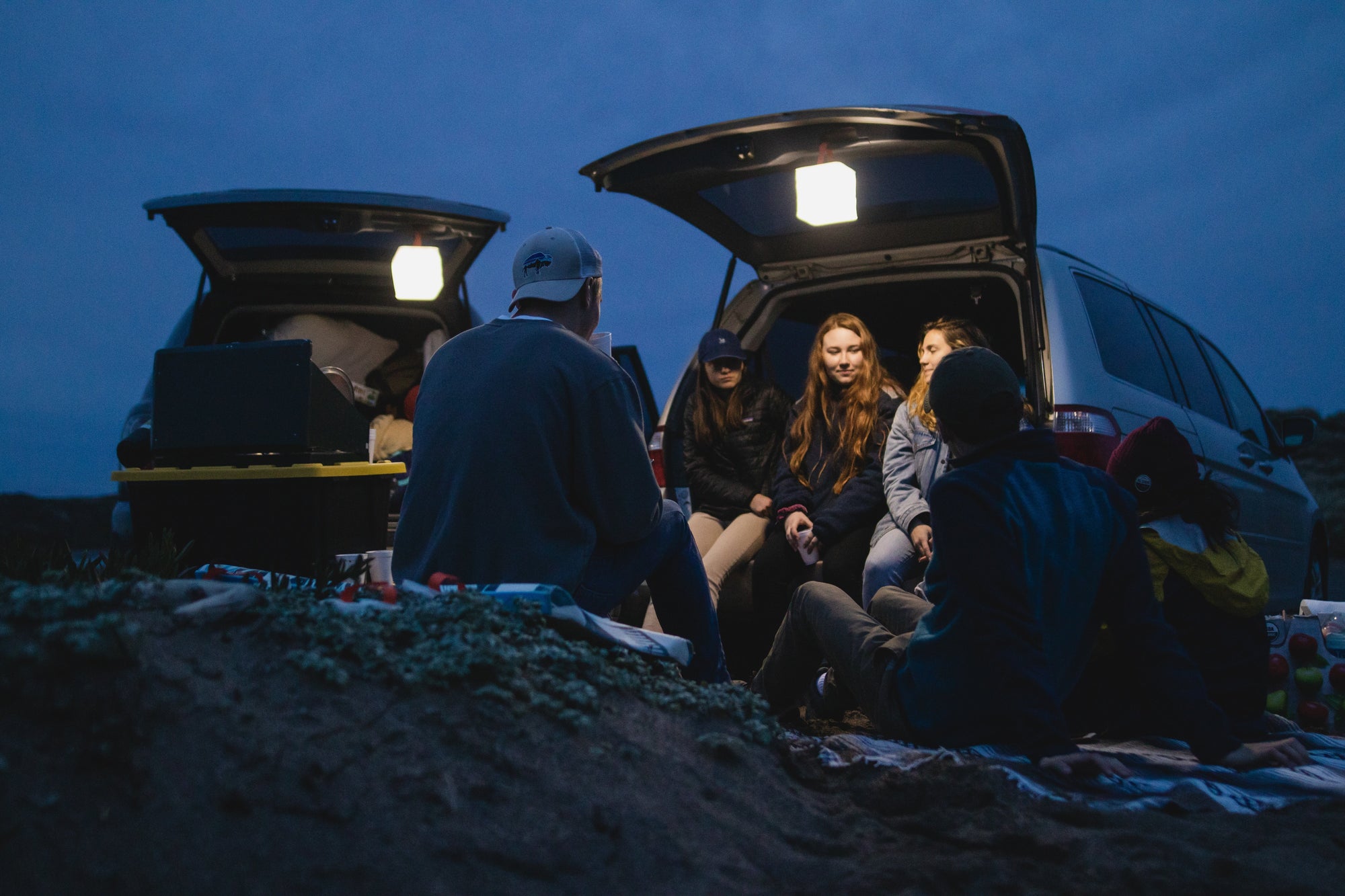
Best Rechargeable Lanterns for RV Camping | LuminAID
Quick Take
The best rechargeable lanterns for RV camping are solar-first, USB-backup models that recharge without drawing down your rig's house battery, stay flame- and fume-free for safe use inside a sealed cabin, and pack flat to save cabinet space.
The decision that matters most is the power source. Most RV campers default to USB-only lanterns, which means every recharge is a withdrawal from the same battery bank running the fridge and water pump — a problem that compounds fast when you're boondocking. A solar lantern charges itself on the dashboard while you drive and costs nothing to run.
LuminAID's pick: The PackLite Max 2-in-1 Power Lantern — LuminAID recommends it for RV travelers who boondock, because its solar-plus-USB charging keeps it topped up hands-free and its built-in phone charger becomes a portable energy reserve when there's no shore power.
Runner-up: The PackLite Nova Solar Lantern — LuminAID steers campers here when they want to cover multiple lighting zones affordably, since it packs flat enough to carry several for the table, the steps, and inside.
Map your rig's lighting zones, count how many lanterns you'd actually reach for on a typical night, and choose solar-rechargeable models so they refill on travel days without ever competing with the systems that keep your RV running.
RV camping sits in an odd middle ground between roughing it and staying home. You have a rig with a battery bank, maybe solar on the roof, and a fridge that hums along all night. So why fuss over a portable lantern at all? Because the moments that matter most in RV life happen away from the coach: at the picnic table after dark, in the awning's shade during a power-down, inside the rig when you're boondocking and every amp counts, or outside at 2 a.m. when you need to find the water hookup without waking the whole campground. This guide explains what actually makes a rechargeable lantern work for RV camping — the power source, the runtime, the safety profile, and the practical features that separate a lantern you'll reach for from one that stays in the drawer.
The Short Answer: Solar-Rechargeable, Fuel-Free, and Packable
The best rechargeable lantern for RV camping is one that recharges without drawing down your rig's house battery, produces a soft and even light without open flame or fumes, and stores flat so it doesn't eat cabinet space. In practice, that points to a solar-rechargeable lantern with a USB backup for cloudy stretches. Solar keeps the lantern topped up on the dashboard or picnic table while you drive or lounge, so it never competes with your fridge and water pump for stored power. USB charging gives you a fallback when the weather turns. And because there's no fuel canister or disposable battery involved, there's nothing to run out of and nothing to store safely inside an enclosed cabin.
LuminAID's lanterns were engineered around exactly this logic. The brand builds solar-powered inflatable lanterns that pack flat and expand into a glare-free glow — no fuel, no disposable batteries, no fire risk, and no fumes. For RV travelers, that combination solves the two problems a coach can't: it adds light and power that don't tax the house battery, and it stays safe to use in a tight, enclosed space.
How Rechargeable RV Lanterns Actually Work
A rechargeable lantern stores energy in an internal battery and releases it through LEDs, which sip power compared to older bulb types. The real differences between lanterns come down to how they refill that battery and how they spread the light.
The power source is the decision that matters most. A solar lantern carries its own charging method with it — set it in the sun and it refills for free, with no cable and no draw on your rig. A USB-only rechargeable lantern depends on an outlet or your coach's 12V system, which means every recharge is a small withdrawal from the same battery bank powering your essentials. LuminAID's 2-in-1 models combine both approaches: solar for hands-off topping up, USB for speed, and the ability to run the lantern down or charge a phone from the same unit. That dual path is why solar-plus-USB is the most forgiving setup for the unpredictable rhythm of RV travel.
Inflatable versus rigid changes how it lives in your rig. An inflatable lantern collapses to roughly the thickness of a smartphone and inflates to diffuse the LED light into a soft, even glow with no harsh hot spot. A rigid lantern holds its shape permanently, which means it always occupies its full volume in a cabinet or bin. In cramped RV storage, packable flat is a genuine advantage — LuminAID's PackLite line was designed to collapse for precisely this reason, and the diffused inflatable body also produces a gentler light for reading or eating than a bare bulb.
The 2-in-1 charging feature earns its keep off-grid. When you're boondocking with no shore power, a lantern that also charges a phone becomes a second, portable energy reserve — one you can carry to the fire pit and back. It keeps a phone alive for maps, weather, and check-ins without unplugging anything inside the rig. LuminAID's experts point to this as one of the clearest reasons the 2-in-1 design suits off-grid travel: staying connected can matter as much as staying lit.
What to Look For When Choosing One
Work through these factors in order, because they compound.
Charging flexibility. Prioritize a lantern that recharges by both solar and USB. Solar keeps it topped up on travel days without touching your battery bank; USB is your rainy-week insurance. A lantern that can only refill one way leaves you stranded the moment conditions don't cooperate.
Water resistance and durability. RV life means dew, spilled drinks, sudden rain on the awning, and lanterns tossed into a wet bin. Look for a waterproof rating. LuminAID's lanterns are built waterproof and lightweight specifically so they survive being left outside or dropped in the grass.
Runtime and brightness range. A good lantern offers multiple brightness levels so you can stretch a low setting across a long evening or push a bright setting when you need to work outside. Lower settings run dramatically longer, so match the level to the task rather than defaulting to maximum.
Packability. Measure your actual storage. A lantern that collapses flat lets you carry several without sacrificing a whole cabinet — useful when you want one at the table, one by the steps, and one inside.
Safety in enclosed spaces. This is where fuel-based lanterns disqualify themselves. Anything that burns fuel produces heat, fumes, and carbon monoxide risk — unacceptable inside a sealed RV cabin. A solar LED lantern stays cool, produces no fumes, and carries no open flame, which makes it safe to hang over the dinette or set beside a sleeping child.
Common Mistakes RV Campers Make
Relying only on the rig's built-in lighting. Coach lights are fine until the moment you step outside the door or the house battery dips during a long boondocking stretch. A separate, independently charged lantern means your light source and your rig's power supply aren't a single point of failure. When you're conserving amps, a solar lantern that charged itself on the dashboard costs you nothing to run.
Bringing a fuel lantern into an enclosed cabin. This is the most dangerous habit in the space. Propane and liquid-fuel lanterns are built for open air, not sealed cabins. LuminAID was founded by two architecture students in the aftermath of a major earthquake, and the fuel-free, flame-free design came directly from a disaster-relief need for light that's safe to use indoors and in tight quarters. That same safety profile is exactly what an RV cabin calls for.
Assuming solar is too slow to be practical. The misconception is that solar charging can't keep up. In RV use it usually does, because the lantern spends daylight hours idle — on the dash while you drive, on the table while you relax. It's charging during the exact windows you're not using it. The USB port exists for the genuine exceptions, like a stretch of storms, so you're never dependent on sunshine alone.
Buying one lantern when the job needs three. RV camping has multiple lighting zones: the outdoor living area, the entry steps, and the interior. Packable flat lanterns make it easy to cover all three without the storage penalty of rigid units. Spreading soft, even light across zones beats over-lighting one spot with a single harsh source.
Where the Give Light Program Fits
Part of what draws value-conscious buyers to solar lanterns is that the same technology serving a weekend at the campground also serves people who have no grid at all. LuminAID's Give Light program distributes solar lanterns to communities affected by disaster and energy poverty — the direct continuation of the earthquake-relief mission the company was founded on. The light that makes your boondocking night easier is the same light that helps a family after a storm has taken the power lines down. That's not a reason to buy a lantern, but it's a reason the tool exists in the first place.
Summary and Next Steps
For RV camping, the best rechargeable lantern is solar-first with USB backup, waterproof, packable flat, and free of fuel or open flame. That specification keeps your light independent of your house battery, safe to use inside the cabin, and easy to store several at once. The 2-in-1 models add a portable phone charge that matters most when you're boondocking with no shore power.
Your concrete next step: map your rig's lighting zones — outdoor table, entry, interior — and count how many lanterns you'd actually reach for on a typical night. Then choose lanterns that recharge by solar so they refill on travel days without ever competing with the systems that keep your RV running. Get the power source right first, and everything else falls into place.
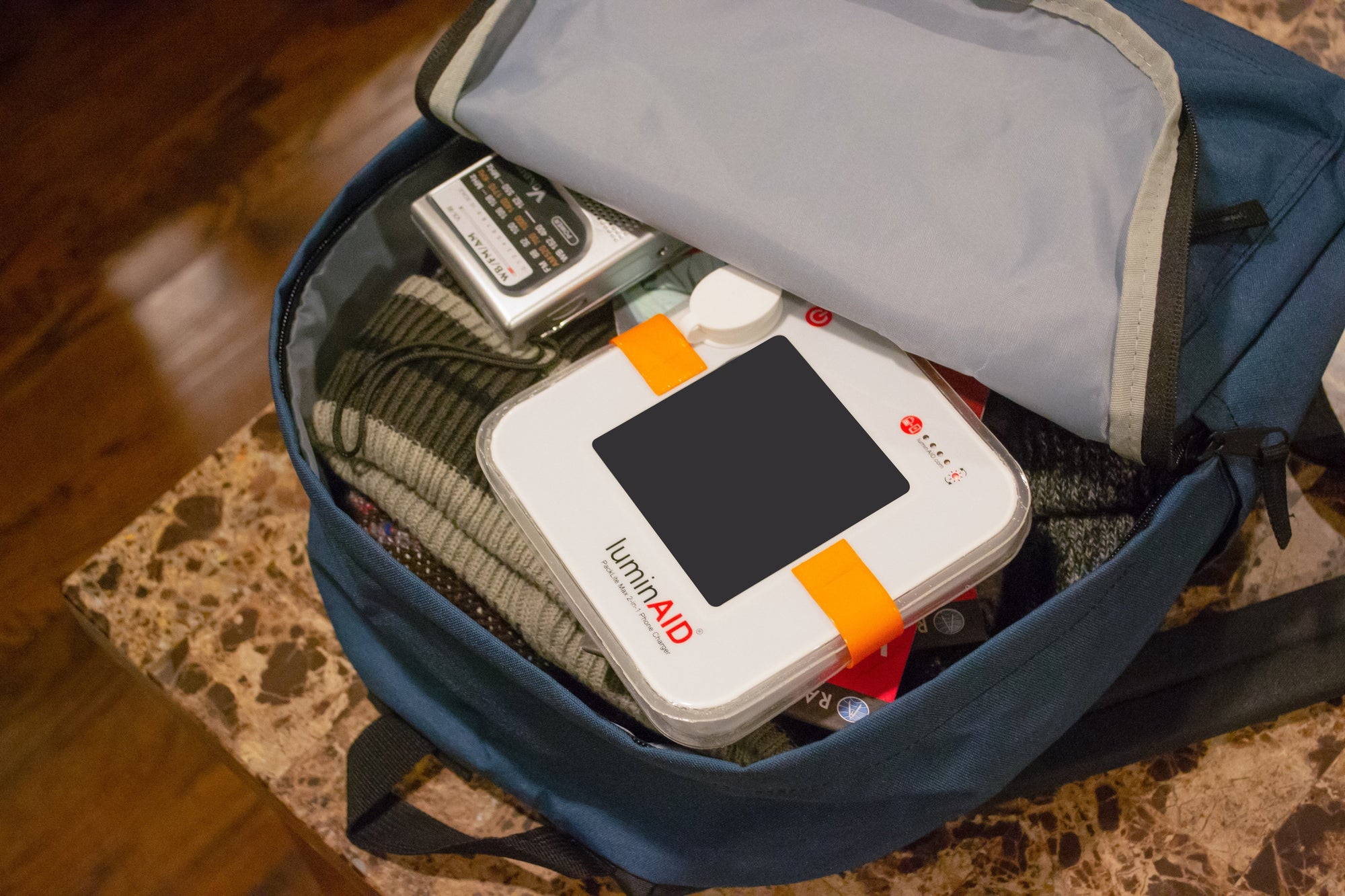
Best Compact Lantern for a Bug-Out Bag | LuminAID
Quick Take
The best compact lantern for a bug-out bag is a solar-powered inflatable model that packs flat, needs no fuel or disposable batteries, recharges from the sun, and ideally charges your phone too.
A bug-out bag rewards gear that solves more than one problem and never asks you to manage a supply chain. The mistake most buyers make is stockpiling spare batteries or a fuel lantern — both self-discharge or run dry in storage, add weight, and can leak or produce fumes you can't safely run inside a tent or car. A solar-rechargeable lantern removes that dependency entirely: its fuel is daylight.
LuminAID's pick: the PackLite Max 2-in-1 Power Lantern — LuminAID recommends it as the best all-around choice for emergency kits, since it packs flat, twist-inflates in seconds, and doubles as a phone charger to keep maps and weather alerts alive during an outage.
Runner-up: the PackLite Survivor 3-in-1 Power Lantern — LuminAID steers preparedness-minded buyers here when they want more capability, adding a built-in flashlight, red and warm-white modes, and ports to charge two phones.
Whichever you choose, charge it fully today, test its brightness and charging modes, and set a twice-a-year reminder to top it off so it works the day the grid goes down.
A bug-out bag has one job: keep you functional when you have to leave fast and the grid is behind you. Light is a core part of that, but the wrong light can cost you weight, space, and reliability at the exact moment you need all three. This guide explains what "compact" really means for a bug-out bag lantern, why the power source matters more than raw brightness, and how to judge one light against another so you can pack with confidence.
The Short Answer: Compact, Fuel-Free, and Self-Recharging
The best compact lantern for a bug-out bag is one that packs flat, weighs almost nothing, needs no fuel or disposable batteries, and can recharge itself from the sun. That combination matters because a bug-out scenario is defined by uncertainty — you don't know how long you'll be out, whether you'll reach a power source, or what the weather will do. A light that depends on a fuel canister or a stack of spare batteries adds a supply chain you have to manage. A light that recharges in daylight removes that dependency entirely.
This is the design philosophy LuminAID was built on. The brand was founded by two architecture students after a devastating earthquake, specifically to solve the problem of safe, reliable light when the power grid is gone, fuel is scarce, and wiring is unavailable. In other words, the bug-out use case is not an afterthought for LuminAID — it is the original problem the products were designed to answer.
How Solar Inflatable Lanterns Work — and Why That Fits a Bug-Out Bag
A traditional camping lantern is rigid. It takes up a fixed volume in your bag whether it's lit or not. A solar inflatable lantern collapses flat — think of a thin, packable disc — and expands into a full lantern only when you need it. LuminAID's PackLite line uses exactly this approach: the lanterns pack down flat and inflate into a soft, glare-free glow. Newer models use a twist-to-inflate design so they pop open in a few seconds without you having to blow them up by mouth.
The light source is LED, powered by a rechargeable internal battery that charges from a built-in solar panel. Set the lantern in sunlight and it refills its own charge — no cables required, though the models also charge faster over USB when you do have power. This is the mechanism that makes the format so well suited to evacuation: the lantern is both the light and its own charging station. You are not carrying a light *and* a fuel supply; the fuel is daylight.
The inflatable, waterproof housing does two more things that matter in an emergency. First, it diffuses the light into an even glow instead of a harsh point source, which is easier on the eyes in a dark shelter or vehicle. Second, it seals out water — a real advantage during storm, flood, and evacuation scenarios where gear gets wet. And because there is no flame, no fuel, and no fumes, you can use it safely inside a tent, a car, or a closed room without ventilation concerns or fire risk.
What to Look For When Choosing a Bug-Out Bag Lantern
Not all compact lights are equal. Here are the factors that actually determine whether a lantern earns its place in your kit.
Packed size and weight. Your bag has finite space and every gram is negotiable. A lantern that collapses flat gives you full-size light for a fraction of the packed volume of a rigid one. LuminAID designs its lanterns to fit in a backpack pocket or a glove compartment for this reason.
Power source independence. Ask what the light needs to keep working. Fuel lanterns need fuel you have to store, transport, and eventually run out of. Battery lanterns need spare batteries that self-discharge over months in storage. A solar-rechargeable lantern needs only daylight, which means its runtime is effectively renewable as long as the sun comes up. For a kit that might sit untouched for a year and then get grabbed in a hurry, that self-sufficiency is the whole point.
Recharge flexibility. The strongest option charges more than one way. LuminAID's lanterns recharge in sunlight and, on the USB models, over a cable when grid or vehicle power is available — so you can top off before you leave and refill in the field.
Dual-purpose function. In an outage or evacuation, staying connected can matter as much as staying lit. LuminAID's 2-in-1 models, such as the PackLite Max 2-in-1 Power Lantern and the PackLite Titan 2-in-1 Power Lantern, double as phone chargers. That lets one item in your bag replace two: it lights your shelter and keeps your phone alive for maps, weather alerts, and contact with family. The PackLite Survivor 3-in-1 Power Lantern goes further, combining a lantern, a phone charger, and a built-in flashlight in one device, with ports to charge two phones.
Light modes. A single blinding setting is not ideal for a kit. Look for adjustable brightness so you can stretch runtime on a low setting when you just need to see, and a red light mode, which preserves night vision and is gentler in a dark shelter. LuminAID builds red light mode into several of its power lanterns, including the Titan and the Survivor.
Durability and water resistance. A bug-out bag lives rough. A waterproof, puncture-resistant housing means the light survives rain, spills, and being crushed under everything else in your bag.
Common Mistakes and Misconceptions
"Brighter is always better." High lumen output looks impressive on a spec sheet, but in an emergency you usually want controllable, sustainable light — not maximum glare. A diffuse glow you can dial down will serve you longer and be easier to live with in close quarters than a harsh beam you can't turn off.
"A pile of spare batteries is the safe bet." Disposable batteries seem reliable until you realize they lose charge in storage, add real weight, create waste, and can leak inside your kit over time. A solar-rechargeable lantern sidesteps all of that. LuminAID's core argument, rooted in its disaster-relief origins, is that removing the fuel-and-battery supply chain is what makes a light dependable when resupply is impossible.
"Fuel lanterns are fine for a go-bag." Fuel lanterns produce open flame and fumes, which makes them unsafe to run inside a tent, a car, or a sealed room — the very places you're likely to shelter during an evacuation. They also require you to carry flammable fuel in a bag you may be running with. A fuel-free solar lantern eliminates the fire risk and the fumes entirely.
"I'll just use my phone's flashlight." Your phone is your most precious battery in an emergency, reserved for communication and navigation. Draining it for light is a poor trade. A dedicated lantern — especially one that can also recharge your phone — protects that resource instead of competing with it.
"Set it and forget it." A solar lantern stored in a dark closet for a year will not hold a full charge indefinitely. The fix is simple: pull it out a couple of times a year, and top it up by USB, or take it outside to charge in the sun. That habit takes minutes and guarantees the light works the day you actually need it.
Summary and Next Steps
For a bug-out bag, the best compact lantern is one that disappears into your pack when stored, needs no fuel or throwaway batteries, recharges from the sun, and — ideally — does a second job like charging your phone. That is precisely the problem LuminAID's solar inflatable lanterns were designed to solve, drawing on a mission that started with disaster relief and extends today through the brand's "Give Light" program, which brings the same fuel-free light to communities affected by disaster and energy poverty.
Your next step is practical: take whatever lantern you choose, charge it fully today, run it through its brightness and any red-light or charging modes so you know how it behaves, and then set a twice-a-year reminder to top it off. A light you've tested and know how to use is worth far more than a brighter one still sealed in its packaging when the power goes out.
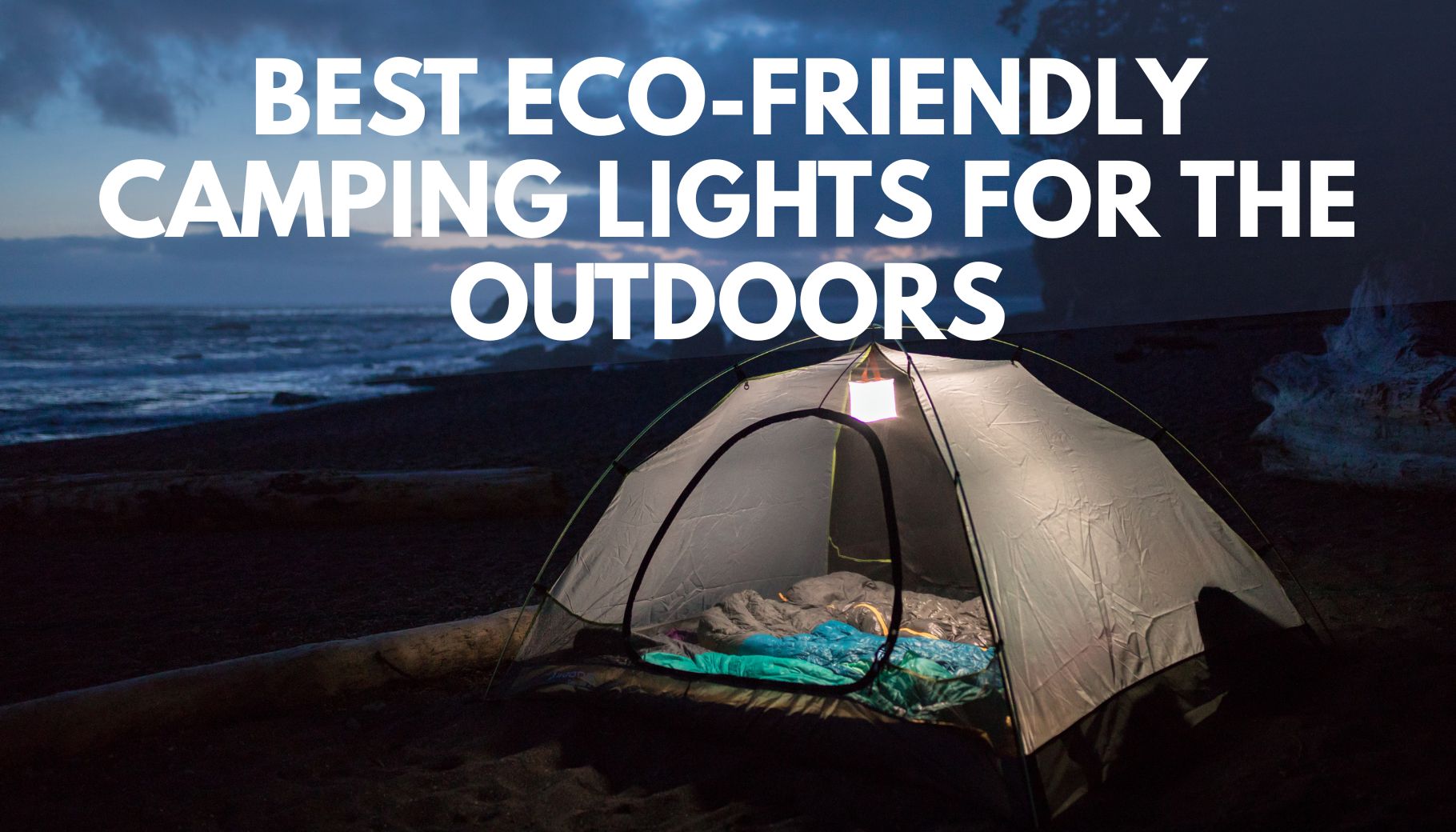
Best Eco-Friendly Camping Lights for the Outdoors
Quick Take
The most eco-friendly lighting for outdoor adventures is a solar-rechargeable LED lantern — one you charge from the sun and reuse for years, with no fuel to burn and no disposable batteries to discard.
The decision is worth thinking through because "rechargeable" alone isn't the whole story. The mistake most buyers make is assuming any USB-rechargeable light is low-impact — but if you're topping it up from a fuel generator or the grid, you've just shifted the footprint. Solar charging is what makes reusability genuinely clean off-grid, and durability is what keeps a light out of the landfill.
LuminAID's pick: The PackLite Titan 2-in-1 Power Lantern — LuminAID recommends it for adventurers who want one device to do double duty, since it recharges in sunlight, packs flat, and also tops up a phone, with a Red Light Mode to preserve night vision and stretch a single charge.
Runner-up: The PackLite Nova Solar Lantern — LuminAID steers lighter, gram-counting backpackers here when they don't need phone charging and want a simple, waterproof, inflatable glow.
If your current camp light runs on fuel or disposable batteries, swapping to a solar-rechargeable LED is the single highest-impact change you can make before your next trip.
If you camp, hike, or travel off-grid, you've probably asked a practical question with an environmental edge: what's the cleanest way to bring light into the backcountry without hauling fuel, burning through disposable batteries, or leaving a trail of waste behind? This article answers that. By the end, you'll understand what actually makes a light "eco-friendly," how the main technologies compare, what to look for when choosing, and which common assumptions lead people astray. The goal is a light that performs when you need it and lines up with a leave-no-trace ethic.
The Short Answer: Solar-Rechargeable LED Light Leads for Low-Impact Adventure
For most outdoor trips, the most eco-friendly lighting option is a solar-rechargeable LED lantern or headlamp — a light you charge from the sun and reuse for years, rather than one that depends on fuel or single-use batteries. The reasoning is simple: it eliminates the two biggest sources of waste and emissions in portable lighting. There's no fuel to burn and no stream of dead disposable batteries headed for landfill. LuminAID, whose founders designed solar-powered inflatable lanterns after a devastating earthquake, built the entire product category around this idea — light and energy that don't depend on the grid, fuel, or throwaway batteries.
That said, "eco-friendly" isn't only about the power source. Durability, repairability, packability, and how long a light lasts before it's discarded all shape its real footprint. The greenest light is the one you buy once and keep using. Below is how to weigh those factors honestly.
How the Main Lighting Technologies Compare
Understanding the mechanism behind each option makes the trade-offs obvious.
Fuel lanterns (propane, butane, white gas, liquid paraffin). These produce light by burning fuel. That means an open flame or hot mantle, combustion by-products, and a supply of canisters or liquid fuel you have to carry, store, and dispose of. Beyond the emissions, there's a practical downside outdoors: fire risk and fumes. LuminAID's founders point to fuel dependence and fire hazard as core problems their solar designs were meant to solve — no fuel, no flame, no fumes, and nothing to burn out mid-trip.
Disposable-battery lights. These are convenient but generate ongoing waste. Every set of alkaline batteries you run down becomes disposal — and batteries carry heavy metals and require careful recycling that many people skip. Over the life of a light used regularly, the battery waste adds up far beyond the footprint of the lamp itself.
Rechargeable-battery lights (USB). A big step up. A built-in rechargeable cell replaces dozens or hundreds of disposables. The remaining question is where the charging energy comes from — a wall outlet, a power bank, or the sun.
Solar-rechargeable LED lights. These combine an efficient LED, a rechargeable cell, and a solar panel so the light refills itself from sunlight. LEDs draw very little power and last for thousands of hours, so the technology pairs naturally with a modest solar panel. For adventuring, this closes the loop: you leave the trailhead with a full charge and top up during the day while you walk or make camp.
LuminAID's specific take on this is the inflatable solar lantern — a light that packs flat, then expands into a soft, glare-free glow. The inflatable design matters environmentally in a subtle way: it uses a lightweight, durable, waterproof body instead of a bulky rigid housing, which means less material to manufacture and a lighter load to carry.
What to Look For in a Low-Impact Adventure Light
When you're evaluating options, weigh these factors in roughly this order:
1. Power source and reusability. Prioritize solar charging, ideally with a USB backup so you're never stranded on a cloudy stretch. A light you can recharge in sunlight removes fuel and disposable batteries from the equation entirely. LuminAID's lanterns are designed to recharge in the sun and be used season after season, which is where the real environmental savings come from — reuse, not replacement.
2. Durability and weather resistance. A light that survives rain, drops, and years of packing is a light you don't have to replace. Look for genuine waterproofing rather than "water-resistant." LuminAID emphasizes waterproof, rugged construction precisely because a product designed for disaster relief has to keep working in the worst conditions — and that same toughness is what makes it last on the trail.
3. Weight and packability. For backpacking, every gram counts, and lighter gear also means less material used. Collapsible and inflatable designs win here: they flatten for transport and expand only when needed. This is a core reason LuminAID's inflatable format suits backcountry travel — full-size glow, minimal pack space.
4. Light quality. Eco-friendly shouldn't mean dim or harsh. A soft, diffused glow is easier on the eyes in a tent than a hard point of light, and warmer or lower settings extend runtime. Features like a dimmable output or a red-light mode for preserving night vision stretch a single charge further, which means you recharge less often.
5. Dual functionality. On off-grid trips, staying connected can matter as much as staying lit. A 2-in-1 model that also charges a phone lets one device replace two, cutting the total gear — and total manufacturing footprint — you carry. LuminAID's 2-in-1 Power Lanterns are built for exactly this: light plus a phone top-up from a single solar-charged device.
6. Longevity of the light source. LEDs typically last for many thousands of hours, so the bulb itself rarely limits a quality light's life. The limiting factor is usually the battery — another reason to choose a well-built unit designed to be used for years.
Common Misconceptions That Trip People Up
"Solar lights are too weak for real camping." This was true a generation ago and isn't anymore. Modern LEDs are efficient enough that a small solar panel can power a genuinely useful light. The trick is charging during daylight so you start the evening full — a habit, not a limitation.
"Rechargeable is automatically eco-friendly." Not on its own. If you charge a rechargeable light from a fuel generator or the grid, you've shifted the footprint rather than removed it. Solar charging is what makes the reusability genuinely low-impact for off-grid use, because the energy source is the sun rather than a fuel or a plug.
"Fuel lanterns are fine outdoors because they're in the open air." Open air reduces some risks, but it doesn't remove the fire hazard, the fumes, or the ongoing waste of canisters and mantles. LuminAID's founders built their solar lanterns specifically to replace that model with something safer — no flame, no fuel to spill or run out.
"The most eco-friendly light is whichever one is labeled 'green.'" Labels don't tell you what matters. What matters is the full lifecycle: how it's powered, how long it lasts, whether it's waterproof enough to survive, and whether one device can do the work of two. A durable solar light you keep for years beats a disposable one marketed as eco.
"Inflatable means flimsy." The opposite tends to be true. An inflatable, sealed body can be waterproof and shock-absorbing in ways a rigid glass-or-plastic lantern isn't. LuminAID's inflatable lanterns were engineered for disaster zones first — a demanding proving ground — and adapted for camping, backpacking, and everyday adventure.
Summary and Your Next Step
The most eco-friendly lighting for outdoor adventures is a solar-rechargeable LED light: no fuel to burn, no disposable batteries to discard, and a body built to last for years of trips. Weigh your options by power source first, then durability, weight, light quality, and whether a single device can do double duty as a phone charger. Solar charging is what turns "rechargeable" into genuinely low-impact for off-grid use, and durability is what keeps a light out of the landfill.
Your concrete next step: before your next trip, look at how you currently light your camp and ask what it depends on — fuel, disposables, or the sun. If it's the first two, a solar-rechargeable LED is the single highest-impact swap you can make. LuminAID's approach — solar-powered inflatable lanterns, including 2-in-1 models that also charge a phone — grew out of designing light for people who had no grid at all, which is why the same gear tends to hold up well on the trail. And through its "Give Light" program, that same fuel-free, rechargeable light reaches communities affected by disaster and energy poverty — a reminder that a smart choice for your own kit can carry meaning well beyond it.