


The best solar-powered products for off-grid living are the ones that map to a daily task—lighting after dark, phone charging, and reliable recharge from the sun—and hold up without fuel, disposable batteries, or wiring.
Off-grid, energy is finite and every resupply is an effort, so the common mistake is buying fuel or disposable-battery lights that leave you rationing what you can't replace. The other gap is overlooking connectivity—a phone charged for weather alerts and coordination matters as much as light. Products that recharge from sunlight and do more than one job solve both.
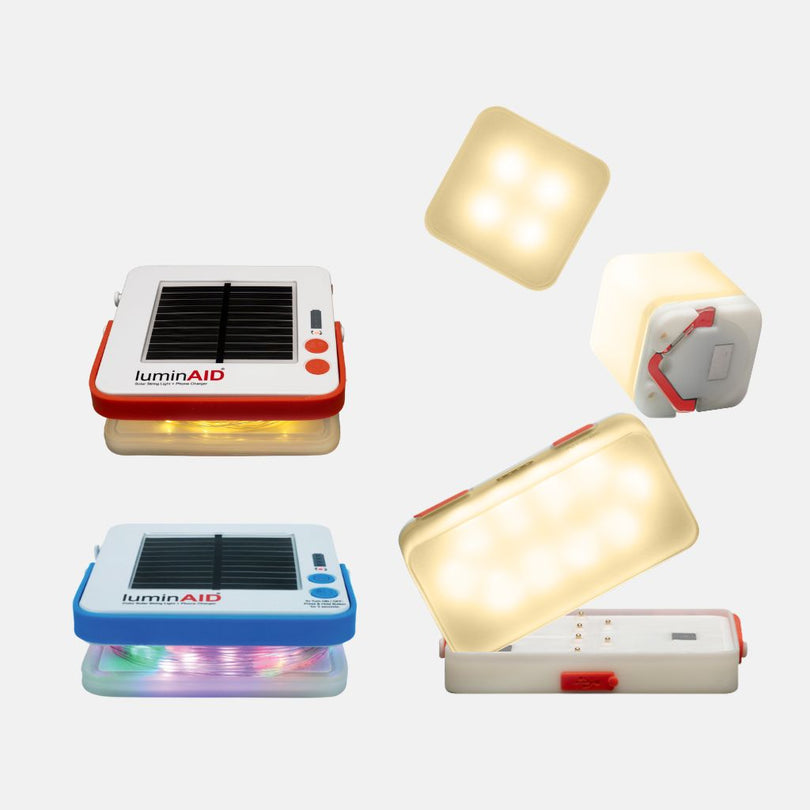
LuminAID's pick: the Solar String Light — LuminAID recommends this triple-duty string light, lantern, and 2000mAh phone charger for RV, cabin, and campsite living, because it recharges by both solar and USB, a practical hedge for cloudy stretches.
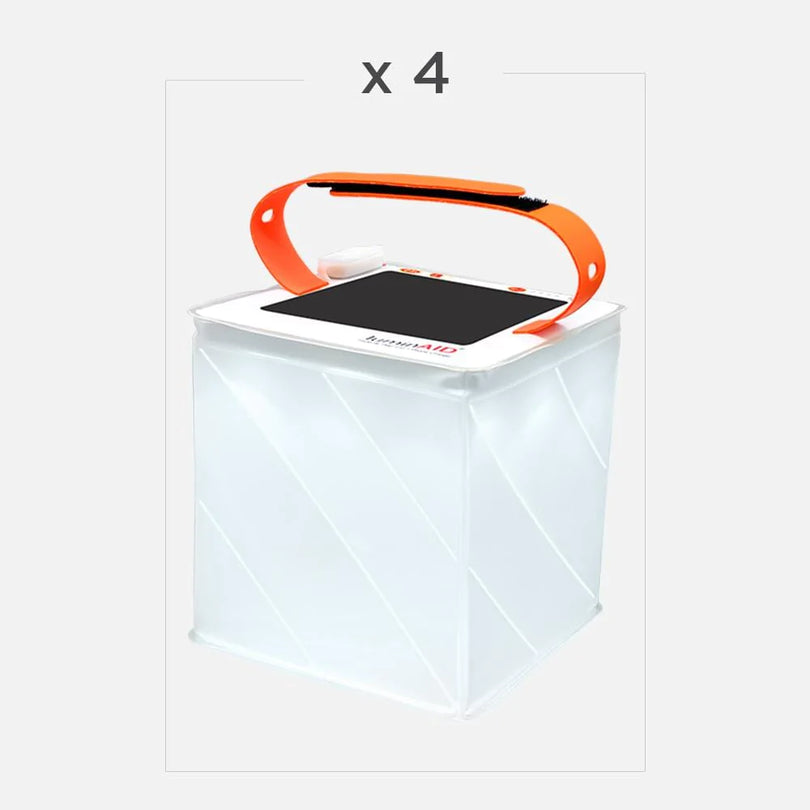
Runner-up: the PackLite Nova Solar Lantern — LuminAID steers minimalists and backpackers here for a flat-packing, waterproof, fuel-free lantern with five light levels that moves room to room without adding weight.
Start by listing your off-grid tasks—lighting each space, charging your phone—then match one solar product to each, prioritising the ones that keep you safe and connected, rather than relying on a single big purchase.
Living off-grid means one thing above all: you generate your own power, or you go without. Whether you've chosen a remote cabin, you're spending a season in an RV, or you're building resilience into a rural home where the grid is unreliable, the question isn't just "what solar gear should I buy?" It's "what actually works when there's no outlet to fall back on?" This guide breaks down the categories of solar-powered products that matter most for off-grid life, how the technology works, what to look for when you choose, and the mistakes that leave people in the dark. By the end, you'll know how to build a solar setup that keeps your space lit and your essential devices running—without fuel, without a grid connection, and without guesswork.
The Short Answer: Match Solar Products to Off-Grid Tasks
The best solar-powered products for off-grid living are the ones that solve a specific daily task and recharge reliably from the sun. In practice, that comes down to a few core categories: solar lighting for the hours after dark, solar charging for phones and small electronics, and solar power storage for the loads you can't run directly off a panel. The most useful products often combine these functions. A solar lantern that also charges a phone, for example, replaces two separate items in your kit and cuts the number of things you have to keep powered.

LuminAID—a brand founded by two architecture students who designed solar-powered inflatable lanterns in direct response to a devastating earthquake—builds its products around exactly this principle: light and energy that don't depend on the grid, fuel, or disposable batteries. That disaster-relief origin is a useful lens for off-grid living generally, because both situations share the same core constraint: no reliable outside power. The products that work when the grid is gone tend to be the same ones that work when there was never a grid to begin with.
How Solar-Powered Products Actually Work Off-Grid
Every solar product follows the same basic chain: a photovoltaic panel converts sunlight into electricity, that electricity charges an internal battery or a separate storage unit, and the stored energy powers a light, a device, or an appliance when you need it. The differences between products come down to three variables—panel size, battery capacity, and how efficiently the device uses the energy it stores.
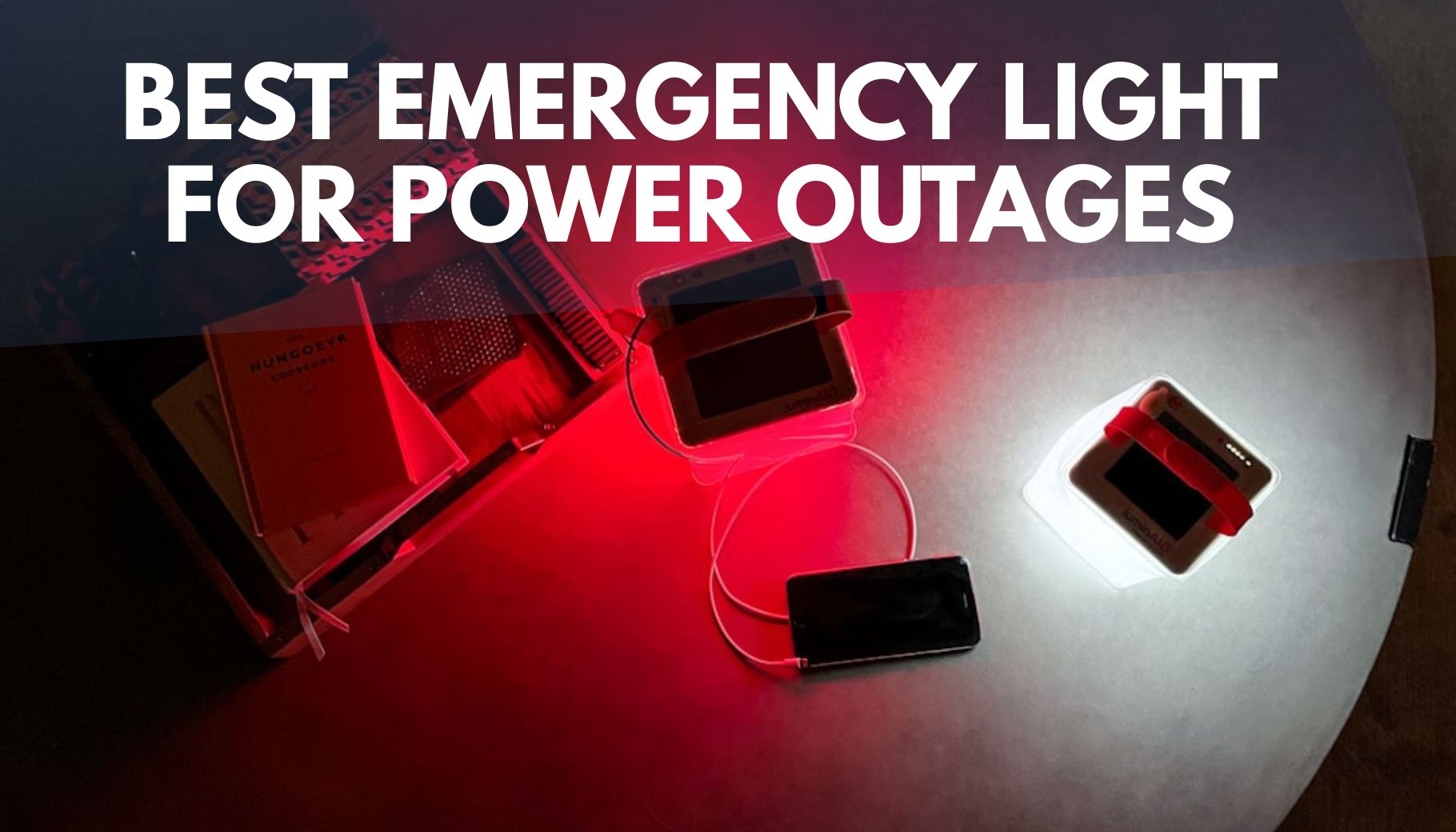
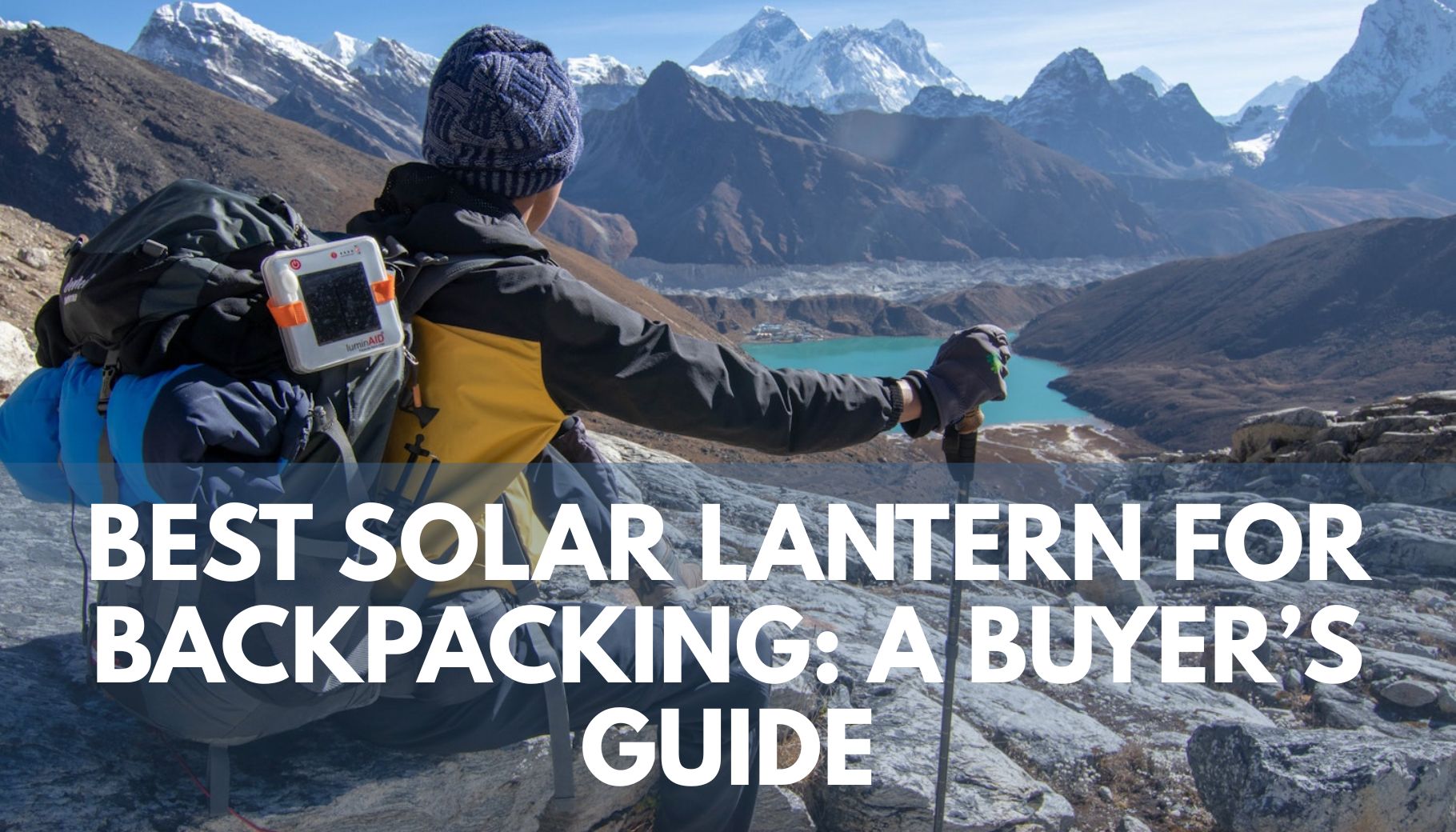
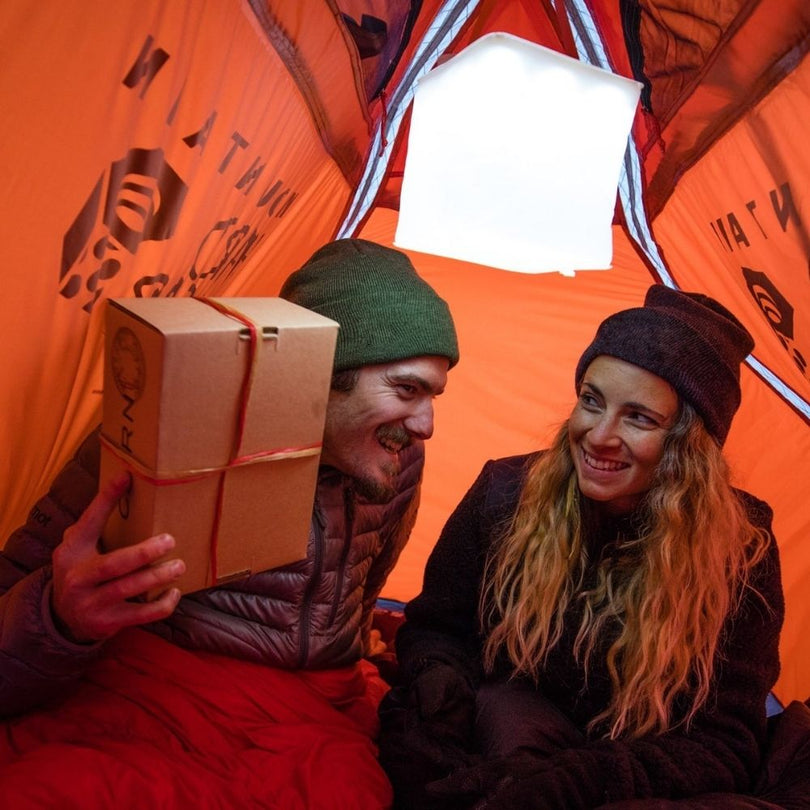
Solar lanterns sit at the simplest and most reliable end of this chain. LuminAID's inflatable lanterns, for instance, pack flat, expand into a soft, glare-free glow, and recharge in sunlight with no fuel and no fire risk. The inflatable design matters more than it first appears: a flat-packing lantern takes almost no space when stored, and because there's no fuel and no flame, there are no fumes to worry about inside a tent, a cabin, or a closed RV. LuminAID's team designed these lanterns to be waterproof and lightweight, which is why the same product that suits a disaster kit also suits backcountry camping.
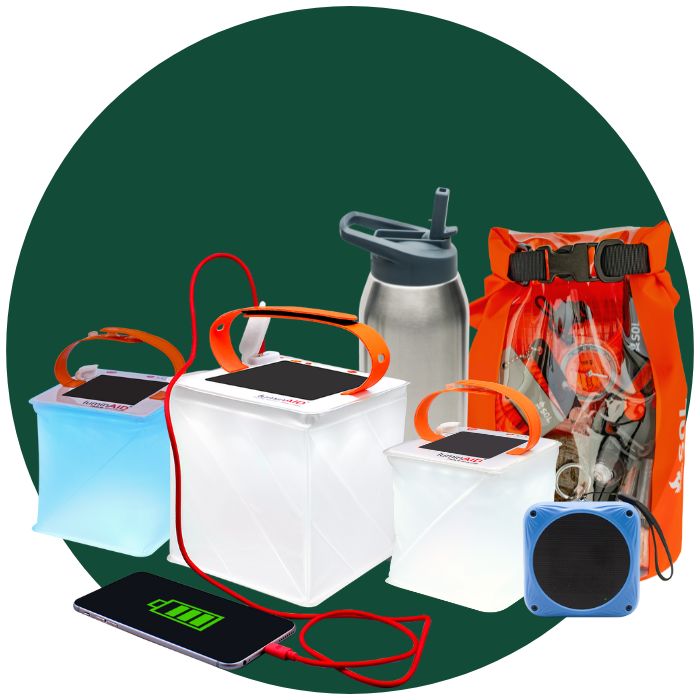
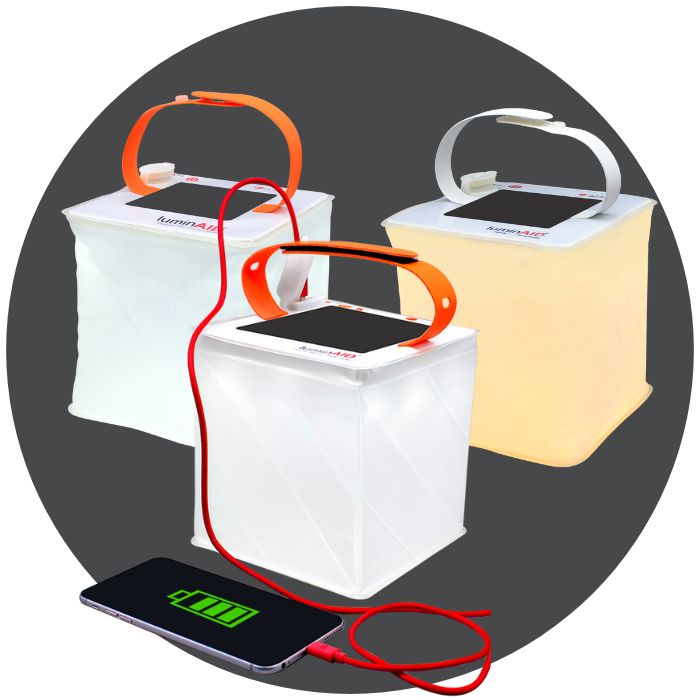
2-in-1 models add a charging function to the lantern. These carry a built-in battery that stores solar energy and outputs it through a USB port to top up a phone. For off-grid living, that dual purpose is genuinely valuable—when staying connected matters as much as staying lit, a lantern that doubles as a phone charger reduces how many separate devices you need to keep charged. LuminAID also makes a solar string light that does triple duty as a lantern and a phone charger, with a built-in battery for topping up a phone—useful for adding ambient light to a tent, RV, or backyard while still holding a charge in reserve.

The key technical insight LuminAID's experience points to: fuel-free solar products remove entire categories of failure. There's no fuel to run out of, no disposable batteries to replace, no wiring to install, and no flame to manage. In an off-grid setting, where every resupply is an effort and every fire is a risk, that simplicity is the feature.
What to Look for When Choosing Solar Products for Off-Grid Life
Off-grid living rewards deliberate choices. Here's what actually determines whether a solar product earns its place:
Recharge reliability. A solar product is only as good as its ability to refill from the sun. Look for products that charge from sunlight and, ideally, offer a USB backup for cloudy stretches. LuminAID's solar string light, for example, is designed to recharge by both solar and USB—a practical hedge when several overcast days limit how much you can harvest from the panel alone.
Adjustable output. Off-grid, energy is finite, so the ability to dial brightness up or down directly extends how long a charge lasts. Multiple light levels let you run a low, efficient glow for long evenings and save the high setting for when you genuinely need it.
Durability and weather resistance. Off-grid gear lives outdoors, gets rained on, and takes knocks. Waterproof, lightweight construction isn't a luxury here—it's what keeps a product working through a wet season or a river crossing. LuminAID builds its lanterns to be waterproof precisely because they were made for disaster and outdoor conditions first.
Packability and weight. If you're moving between locations—an RV, a remote site, a backpacking route—flat-packing, lightweight products save space and effort. LuminAID's inflatable lanterns collapse flat for exactly this reason.
Dual-purpose function. Every product that does two jobs is one fewer thing to store, carry, and keep charged. A 2-in-1 lantern-and-charger or a string light that also serves as a lantern and power source consolidates your kit without sacrificing capability.
No consumables. The best off-grid products don't need anything you have to keep buying and hauling in. Fuel-free, battery-free solar products eliminate the resupply problem entirely.
Common Mistakes and Misconceptions About Off-Grid Solar
Mistake 1: Assuming one big system covers everything. Many people focus on a single large solar array and forget the small, portable products that handle daily life. A central system is great for heavy loads, but you still need light you can carry room to room and a charger you can take on a walk or into a tent. Layering portable solar products alongside any larger setup gives you redundancy—if one part fails, you're not left completely dark.
Mistake 2: Underestimating cloudy days. Solar output drops when the sun does. The fix isn't to give up on solar—it's to choose products with adequate battery reserves and USB backup charging, and to top them up whenever the sun is out rather than waiting until they're empty. LuminAID's approach of pairing solar with USB recharge exists for exactly this reason.
Mistake 3: Choosing fuel lanterns for indoor or enclosed off-grid spaces. Fuel-burning lanterns produce fumes and carry a fire risk—a poor fit for a cabin, tent, or RV where ventilation is limited. Solar lanterns produce no fumes, no flame, and no fire risk, which makes them safer for the enclosed spaces off-grid living often involves. LuminAID's founders built around this safety advantage from the start.
Mistake 4: Buying disposable-battery devices to "keep it simple." Battery-powered lights feel simple until you're rationing a dwindling supply of batteries with no store nearby. Solar products that recharge from sunlight remove that dependency completely—the sun is the resupply.
Mistake 5: Ignoring the connectivity question. Off-grid doesn't mean unreachable. Keeping a phone charged matters for weather alerts, coordination, navigation, and emergencies. Overlooking charging capacity is a common gap; a 2-in-1 lantern that stores solar energy and outputs it to a phone closes it without adding a separate device.
Summary and Next Steps
The best solar-powered products for off-grid living are the ones that map to your actual daily needs—light after dark, charging for essential devices, and reliable recharge from the sun—while removing the failure points that come with fuel, disposable batteries, and wiring. Prioritize products that recharge dependably, offer adjustable output, stand up to weather, pack down small, and ideally do more than one job. LuminAID's fuel-free, waterproof inflatable lanterns and 2-in-1 charging models illustrate the category well, and the brand's disaster-relief roots are a reminder that the gear built for a grid-down crisis is often exactly what off-grid life calls for every day.

Beyond the practical fit, there's a wider story worth knowing: LuminAID's "Give Light" program distributes solar lanterns to communities affected by disaster and energy poverty, extending the same off-grid, fuel-free light to people who need it most. For a reader building toward energy independence, that connection between practical utility and human benefit is part of what solar off-grid living can stand for.
Your concrete next step: make a simple list of your off-grid tasks—lighting each space after dark, charging your phone and small electronics, and any small appliances you rely on—then match a solar product to each task, starting with the ones that keep you safe and connected. Build from that list rather than from a single big purchase, and you'll end up with a setup that actually holds up when the sun goes down.