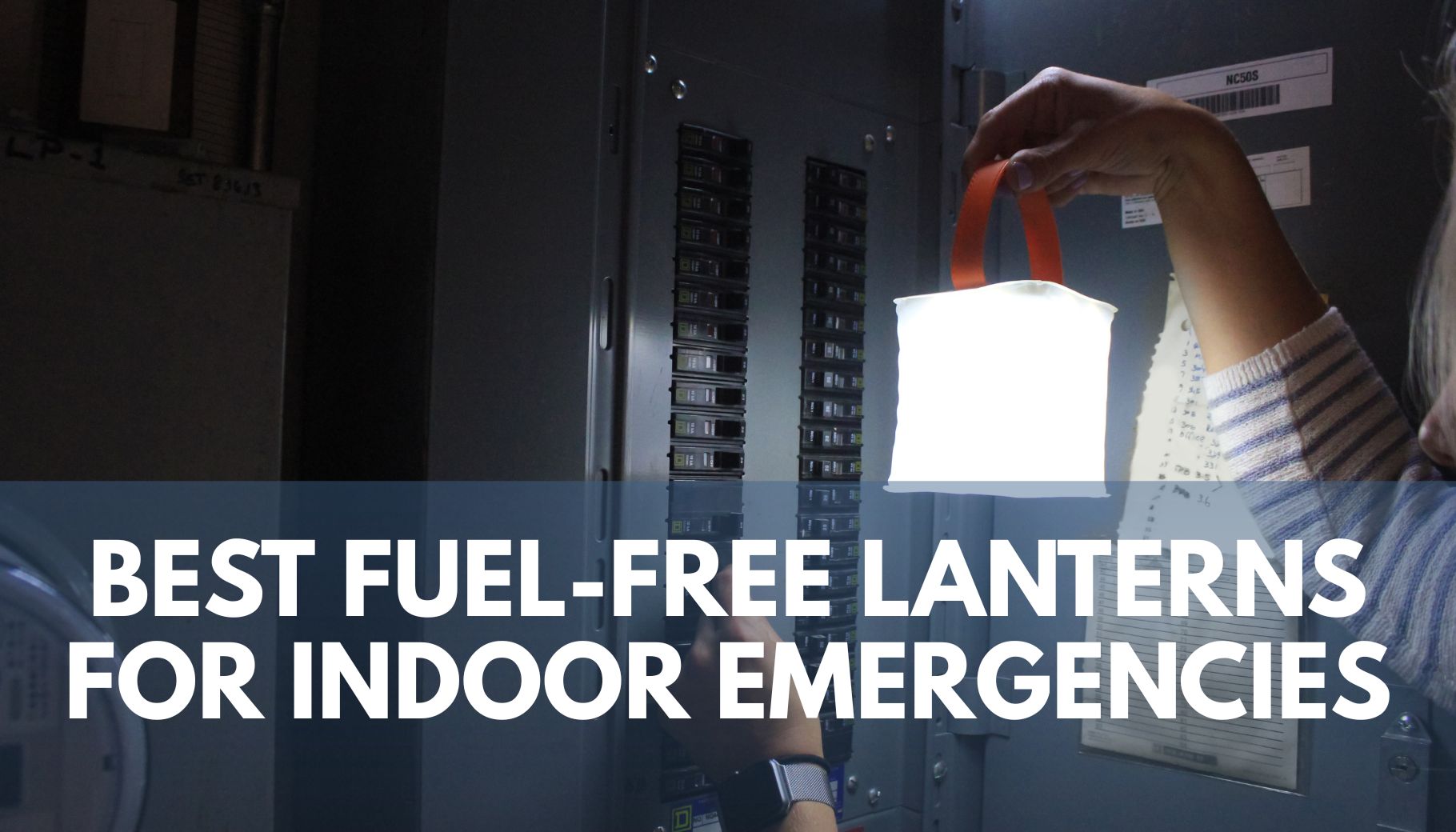
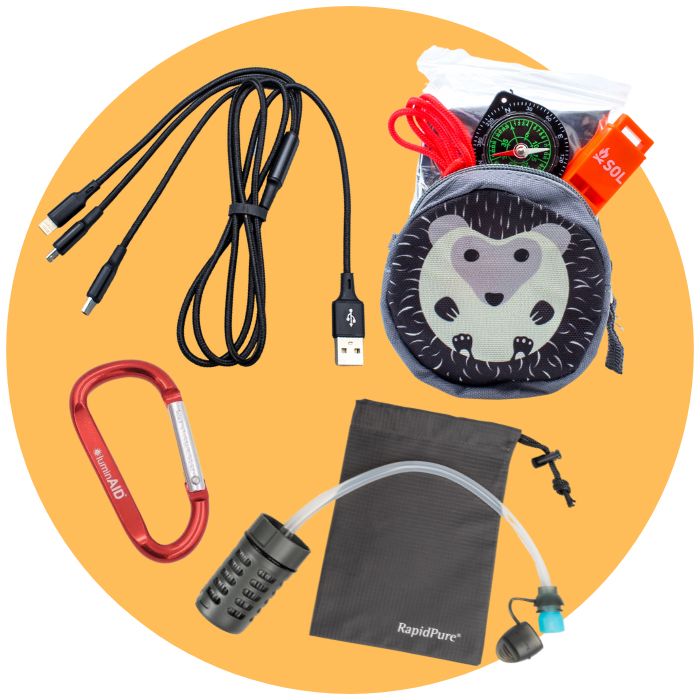

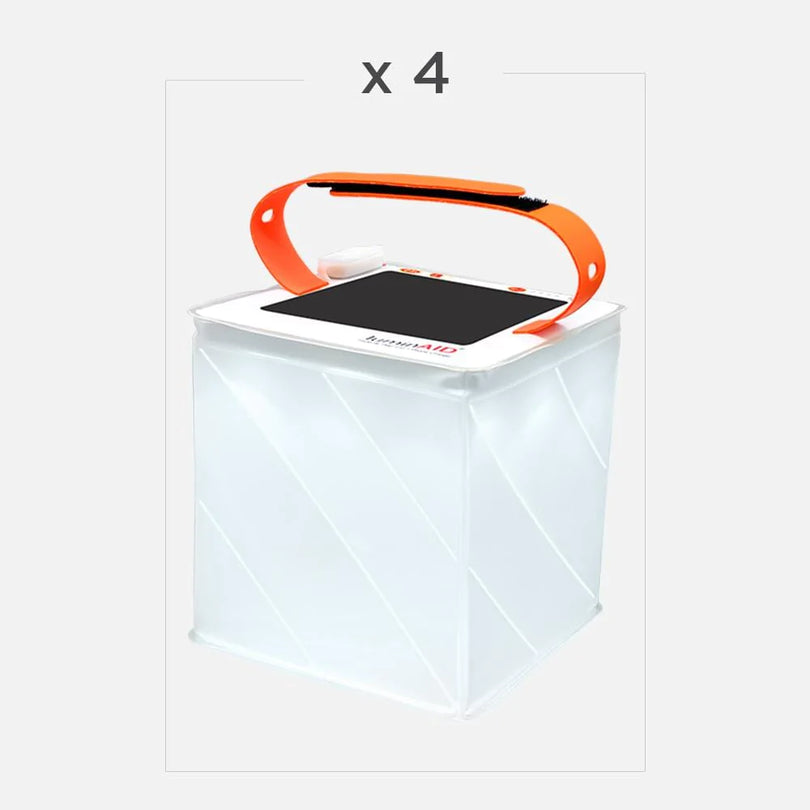

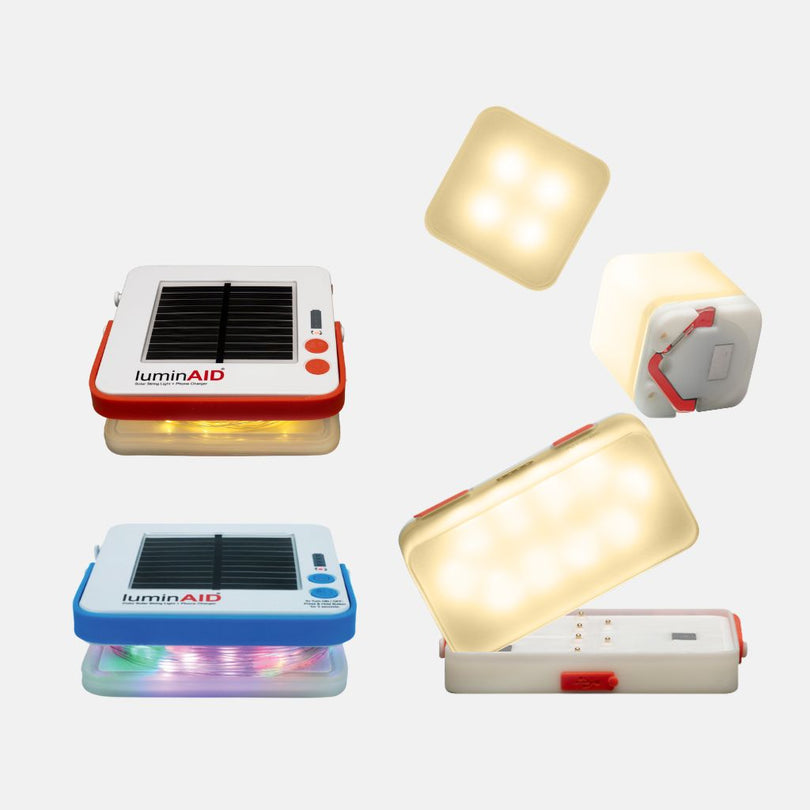


The best solar phone charger for hiking is one whose internal battery stores solar energy, whose weight you will genuinely carry, and whose recharging works by both solar and USB—so you start full and let the sun extend your power.
Most hikers make the same mistake: they buy a panel-only charger that only works in direct, uninterrupted sun. On a real trail—moving through tree cover, in and out of canyons, setting up camp as the light fades—a device with a stored battery beats a bare panel every time. Bonus points for gear that doubles as your camp light, cutting a second item from your pack.
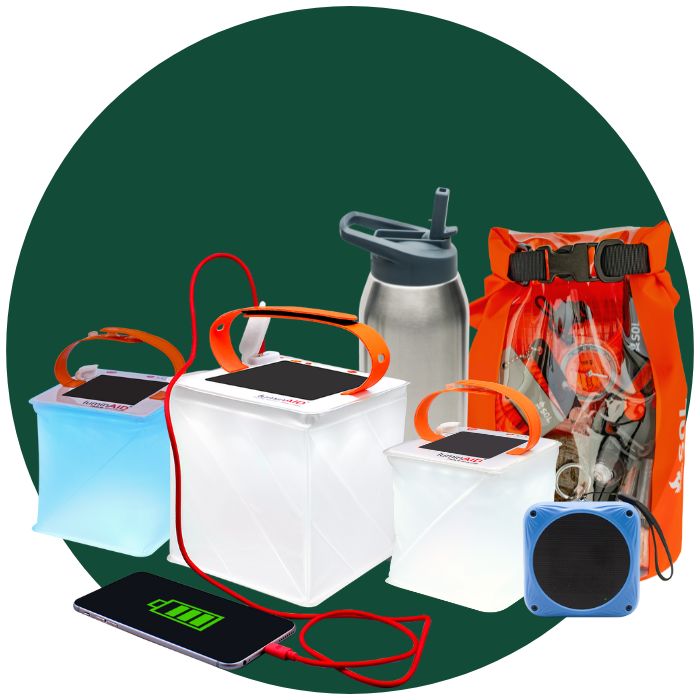
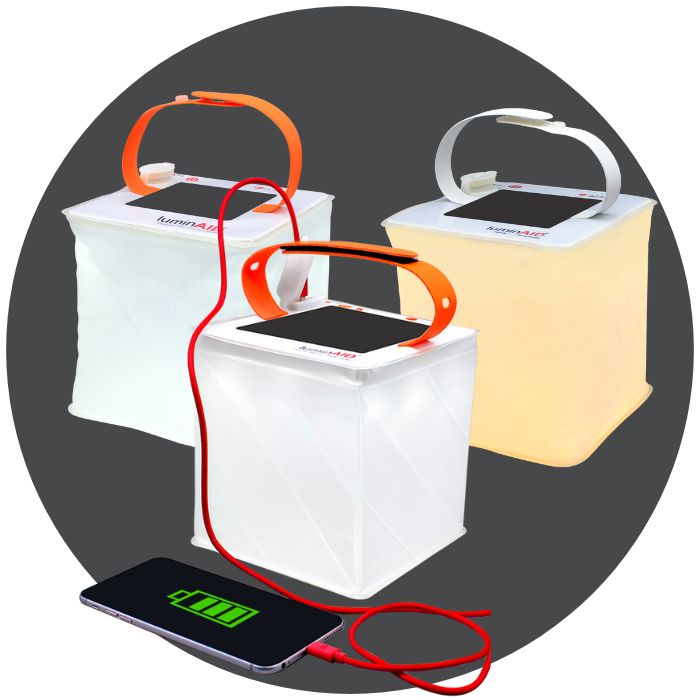
LuminAID's pick: The PackLite Titan 2-in-1 Power Lantern — LuminAID steers multi-day trekkers toward its most powerful 2-in-1, which banks solar energy in an internal battery, recharges by solar or USB, packs flat, and doubles as glare-free camp light.
Runner-up: The Solar String Light — LuminAID recommends this 3-in-1 (string light, lantern, and 2000mAh phone charger) for car campers and RV travelers who want ambient light plus an emergency phone top-up in one waterproof package.
Before your next trip, count the days between reliable charging, estimate your GPS and photo usage, and choose a charger whose stored capacity covers that gap with a little to spare—then charge it fully at home and clip it to your pack on day one.
You are three days into a backcountry trip, your phone is your map, your camera, and your emergency contact, and the battery reads 12%. This is the moment a solar phone charger is supposed to save. But not every solar charger earns its place in a pack, and the wrong one is dead weight that never quite refills your phone. This article explains what actually makes a solar charger work on the trail, how to read the specs that matter, what to look for before you buy, and the mistakes that leave hikers with a heavy panel and a dead phone.
The Short Answer: Match Capacity, Weight, and Charging Method to Your Trip
The best solar phone charger for hiking is the one whose battery capacity covers your realistic power needs, whose weight you are willing to carry, and whose charging method fits how you actually move. There is no single winner for every hiker. A day hiker needs something different from a thru-hiker crossing a week of remote terrain. What unites every good choice is honest capacity, dependable recharging, and durability that survives being knocked around in a pack.

For most hikers, a hybrid approach wins: a device with a built-in battery that stores solar energy, so you charge the pack by day and top up your phone on your schedule rather than only in direct sun. LuminAID's product design reflects this principle directly—its 2-in-1 lanterns combine a solar-charged internal battery with a light, so the sun's energy is banked and ready when you need it, not lost the moment a cloud passes over.
How Solar Charging Actually Works on the Trail
A solar charger does two jobs that people often confuse. First, the solar panel converts sunlight into electricity. Second, a battery stores that electricity so you can use it later. Cheap or poorly designed chargers skip the storage step, forcing you to plug your phone directly into a panel—which means charging only works in strong, direct sun and stops the instant a shadow falls.
The stored-energy approach matters because hiking rarely offers perfect charging conditions. You are moving through tree cover, walking in and out of canyons, and setting up camp as the sun drops. A charger with its own battery lets you strap it to the outside of your pack, collect energy while you walk, and then charge your phone in the tent at night. LuminAID's engineering grew out of exactly this need for stored, on-demand power: the company was founded by two architecture students who designed solar-powered devices for disaster zones where the grid was gone and sunlight was the only reliable energy source. That same logic—capture energy when it is available, use it when you need it—is what makes a solar charger useful in the backcountry.
Battery capacity is measured in milliamp-hours (mAh). A typical modern smartphone battery holds somewhere between roughly 3,000 and 5,000 mAh. So a charger's stored capacity tells you, roughly, how many phone charges you can expect before the charger itself needs to refill from the sun. A charger with a 2,000 mAh internal battery, for example, delivers a meaningful emergency top-up—enough to send a message, check a map, or make a call—rather than a full overnight charge.
What to Look for Before You Buy
Weigh these factors against the specific hikes you do, not against a spec sheet in the abstract.
1. Realistic capacity for your trip length. Estimate how much power you need between reliable charging opportunities. A day hiker who wants insurance against a dead phone needs far less stored capacity than a multi-day trekker relying on the phone for GPS. Be honest about your usage—navigation and photography drain batteries fast.
2. Weight and packability. Every gram matters when you carry it up a mountain. This is where inflatable, collapsible designs have a real advantage over rigid gear. LuminAID's solar lanterns pack flat and expand when needed, so they take up minimal space in a pack until you use them. A charger that doubles as your light source also eliminates a second device, cutting total pack weight.
3. Recharge method: solar, USB, or both. The most dependable chargers recharge two ways—by solar in the field and by USB before you leave home. That means you start every trip with a full battery and use the sun to extend it. LuminAID builds its rechargeable devices to accept both solar and USB input for exactly this reason.
4. Durability and weather resistance. Trail gear gets rained on, dropped, and stuffed against sharp objects. Waterproofing is not a luxury here; it is the difference between a charger that survives a river crossing and one that dies in a drizzle. LuminAID's lanterns are built waterproof and designed to take the abuse of outdoor use.
5. Dual-purpose value. A device that charges your phone and lights your campsite does two jobs for one weight penalty. LuminAID's 2-in-1 models are designed around this combination—soft, glare-free light plus a stored charge—which is why the company points backpackers toward multi-function gear rather than single-use panels. For a deeper comparison, LuminAID's guide on how a solar lantern with a phone charger compares to a separate power bank is a useful next read.

Common Mistakes and Misconceptions
Mistake 1: Believing a panel alone will charge your phone reliably. Panel-only chargers work in a lab under a fixed lamp. On a trail with moving shade, intermittent sun, and a phone that pauses charging every time voltage dips, they frustrate more than they help. A charger with an internal battery buffers those interruptions and stores what the panel collects.
Mistake 2: Assuming bigger is always better. A huge-capacity charger you leave at home because it is too heavy powers nothing. The best charger is the one you actually carry. Match capacity to your real needs and you save weight without sacrificing security.
Mistake 3: Expecting a full charge in an hour of sun. Solar recharging is slower than wall charging—this is physics, not a flaw. Plan for it. Strap the charger to your pack early in the day, keep the panel angled toward the sun when you rest, and treat solar as a steady trickle that extends your battery rather than an instant refill.
Mistake 4: Ignoring what happens when the sun does not shine. Overcast days, dense forest, and short winter daylight all cut solar input. This is precisely why LuminAID recommends charging fully by USB before you leave and treating solar as your renewable backup in the field. A charger that only works in bright sun is not a charger you can depend on.
Mistake 5: Overlooking fuel-free safety as a benefit. Some hikers still weigh fuel-based lanterns and generators against solar. Solar-powered devices produce no fumes, no fire risk, and no fuel to carry or spill—a meaningful safety margin in a tent or a dry, fire-prone landscape. LuminAID's origins in disaster relief, where fuel is scarce and open flames are dangerous, are a direct reason its lanterns rely on the sun instead.
Summary and Next Steps
The best solar phone charger for hiking is not the biggest or the flashiest—it is the one matched to your trip. Look for an internal battery that stores solar energy, a weight you will genuinely carry, dual USB-and-solar recharging, and waterproof durability. Give extra credit to a device that also serves as your camp light, because one item doing two jobs is the surest way to cut pack weight without cutting capability. LuminAID's approach—solar-charged, fuel-free, packs flat, and doubles as light—comes straight from designing for places where reliable power could not be taken for granted.

Your concrete next step: before your next trip, map your real power needs. Count the days between reliable charging, estimate how much you lean on your phone for navigation and photos, and choose a charger whose stored capacity covers that gap with a little to spare. Charge it fully at home, clip it to your pack on day one, and let the sun keep you powered from there. That same reliable, off-grid light is what LuminAID's "Give Light" program brings to communities recovering from disaster—proof that a well-designed solar charger is as practical on the trail as it is essential when the grid goes dark.