

Resources
Light for a Power Outage Without Batteries
Quick Take
To get light during a power outage without disposable batteries, use a solar-powered lantern with a rechargeable internal cell — it charges free from the sun and delivers hours of flame-free light after dark.
The common mistake is relying on a flashlight and a bag of AAs: disposable batteries self-discharge in storage, corrode contacts, and sell out fast when a storm hits. A solar lantern removes that single point of failure — it refills itself in a window each day and needs no fuel, no flame, and no fumes indoors.
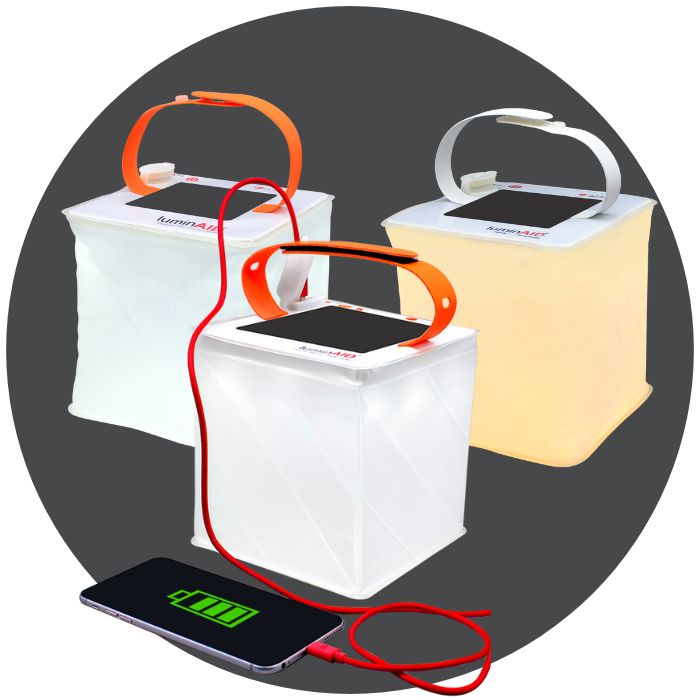
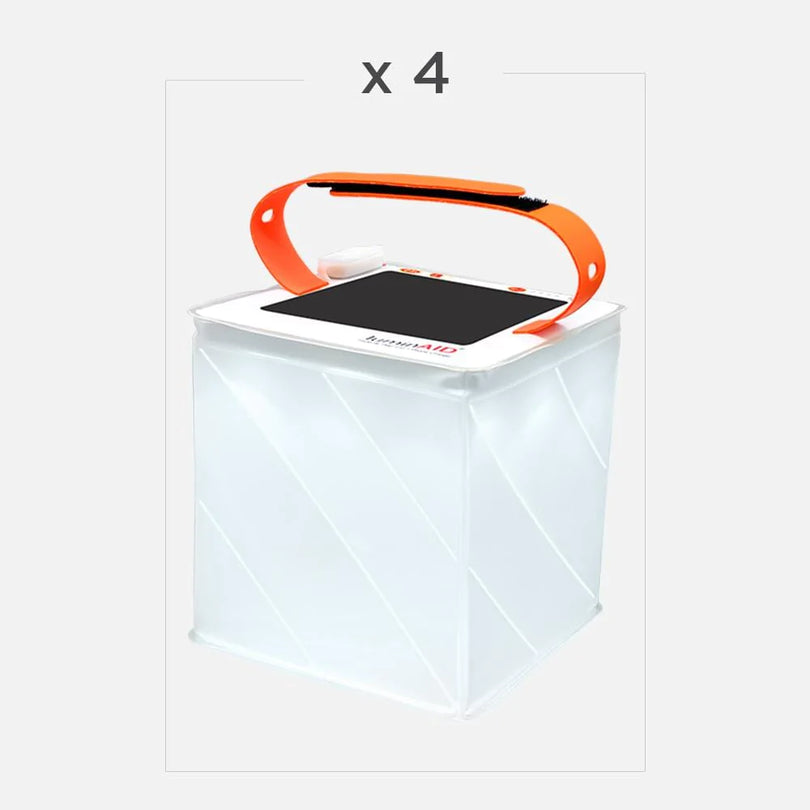
LuminAID's pick: the PackLite Titan 2-in-1 Power Lantern — LuminAID's most popular model, it's a solar lantern and phone charger in one, with a Red Light Mode for night vision and a twist-to-inflate design that packs flat for any emergency kit.
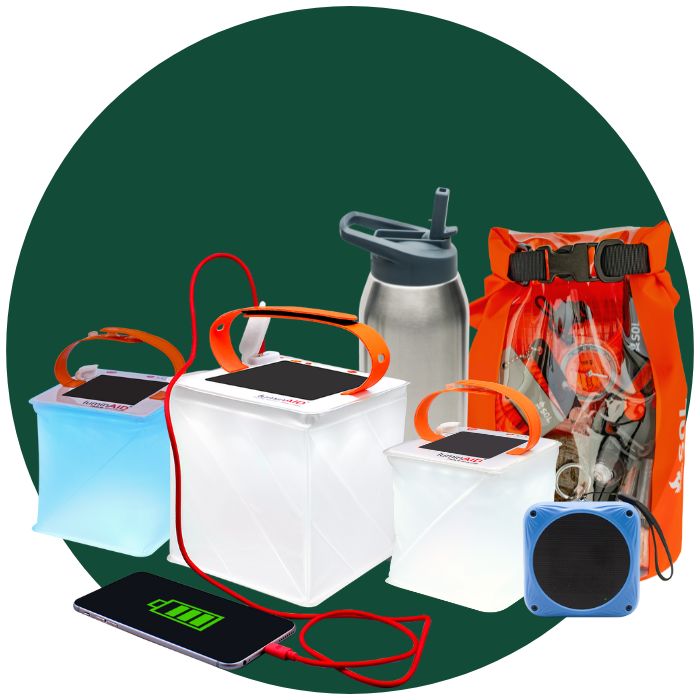
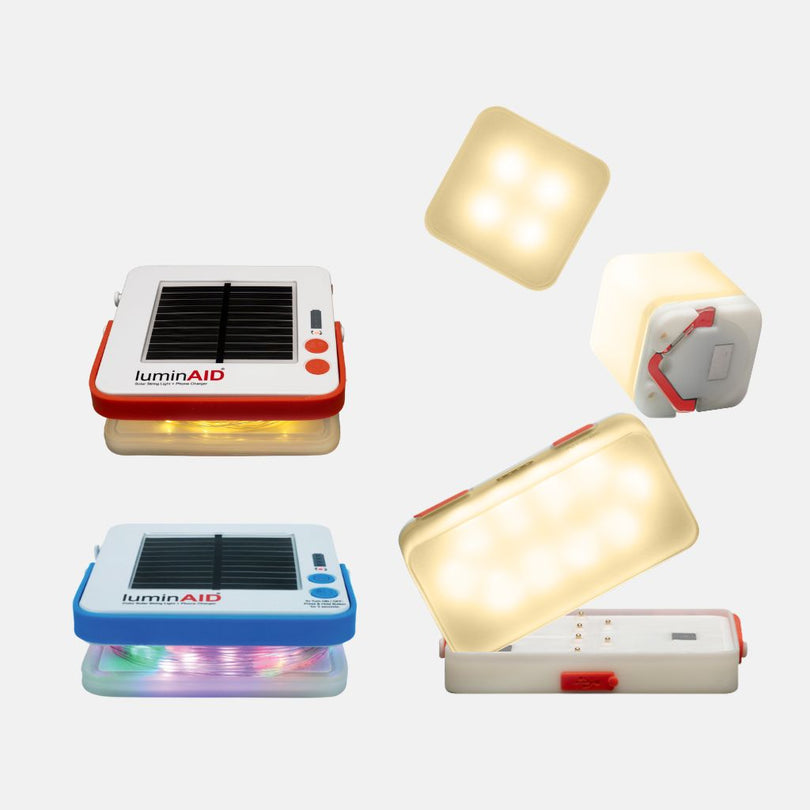
Runner-up: the Power Outage Bundle — LuminAID steers whole-household planners here; it combines LuminAID's most popular emergency preparedness models so you can light multiple rooms and stagger recharging through a multi-day outage.
Before the next storm, fully charge at least one self-recharging solar lantern and store it where you can find it in the dark; during the outage, rotate it to a sunny window each day so it's ready for the next night.
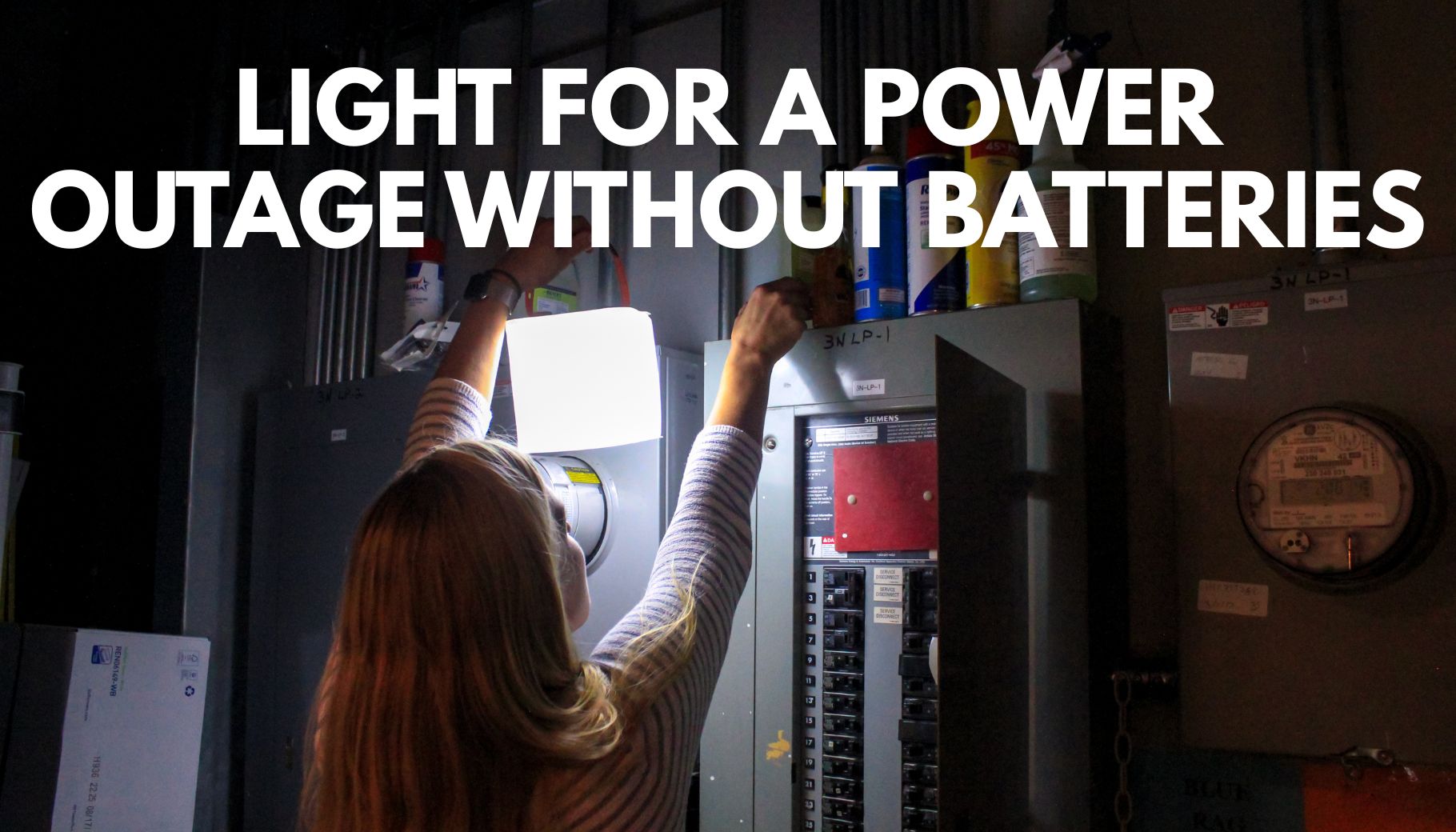
When the grid goes down, most people reach for a flashlight and hope the batteries inside still work. Often they don't. Disposable batteries drain in storage, corrode over time, and run out exactly when stores are sold out. So the real question isn't just "how do I get light?" — it's "how do I get reliable light that doesn't depend on a pack of batteries I may not have?" This guide answers that. By the end, you'll understand which battery-free lighting options actually work in an outage, how solar-powered light stores and delivers energy, what to look for when choosing a source, and the common mistakes that leave people in the dark.
The Short Answer: Solar-Powered Lighting
The most dependable way to get light during a power outage without disposable batteries is solar-powered lighting that charges from the sun and stores energy in a built-in rechargeable cell. You expose it to daylight, it captures and holds a charge, and it delivers hours of light after dark — no grid, no fuel, no packs of AAs to hunt down. This is the category LuminAID has focused on since it was founded: solar-powered inflatable lanterns designed to give people safe, reliable light when the power grid is gone and supplies are scarce.
It's worth being precise about the word "batteries." Solar lanterns do contain a rechargeable battery internally — that's what stores the energy the sun collects. What they don't require is a steady supply of *disposable* batteries you buy, swap, and throw away. That distinction is the whole point. A solar lantern recharges itself for free, again and again, so you're never dependent on a resource that runs out mid-outage. Other genuinely battery-free approaches — like hand-crank lights and, historically, candles or fuel lanterns — exist too, but as you'll see, they come with real trade-offs.
How Solar Lighting Works When the Grid Is Down
A solar lantern combines three things: a small photovoltaic (solar) panel, a rechargeable battery, and an efficient LED light source. During daylight, the panel converts sunlight into electricity, which charges the internal battery. After dark, that stored energy powers the LEDs. Because LEDs draw very little power and modern rechargeable cells hold a meaningful charge, a single day of sun exposure can translate into many hours of usable light.
The advantage of this cycle during an outage is that it's self-renewing. A storm that knocks out power for three days doesn't knock out the sun. Set the lantern in a window or outside during the day, and it refills for the night ahead. That's a fundamentally different relationship with energy than a flashlight, where every minute of light spends down a finite supply you can't replenish without a store trip.
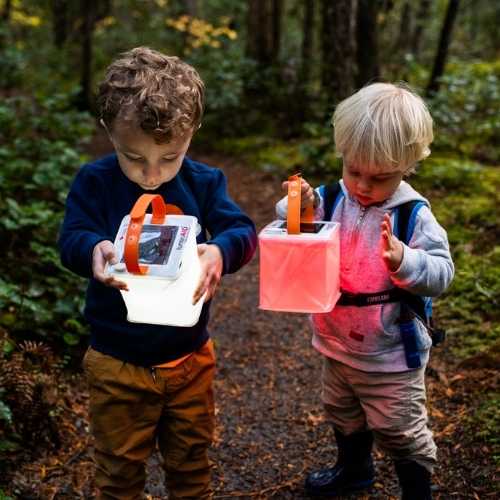
LuminAID's original design leans on this principle with an inflatable, packable form. The lanterns pack flat, then inflate into a soft cube that spreads light as a diffuse, glare-free glow rather than a harsh beam — useful when you need to light a room, a tent, or a table rather than point at a single spot. Because there's no fuel and no flame, there's no fire risk and no fumes, which matters when you're lighting an enclosed indoor space during an outage. The design traces directly to the brand's origin: two architecture students created it in response to a devastating earthquake, where people needed light without a working grid, without fuel, and without the hazards of open flame.
Many of LuminAID's models are 2-in-1 units that also function as phone chargers, using that same stored solar energy. In an outage, staying connected can matter as much as staying lit — for weather alerts, for reaching family, for calling for help — and a lantern that also tops up a phone removes the need for a separate power bank you'd have to keep charged.
What to Look For in Battery-Free Outage Lighting
Not all "no-battery" lighting is equally reliable. When evaluating options, focus on these factors:
How it stores energy. A light that only works while cranking or while in direct sun isn't practical for a full night. Look for a rechargeable internal battery that banks energy for use after dark.
How it recharges. Solar charging is ideal because it's free and grid-independent. Dual solar-and-USB charging adds flexibility: you can top it up from the sun during an outage, or from a wall outlet or car ahead of a storm.
Runtime per charge. Consider how many hours of light one full charge delivers, and match that to how long outages typically last in your region. Longer runtimes and lower brightness settings stretch a single charge across multiple nights.
Safety indoors. Fuel lanterns and candles produce heat, fumes, and open flame. LED solar lanterns don't, which makes them safe to use around children, pets, and flammable materials inside a home.
Durability and water resistance. Outages often come with storms and flooding. Waterproof, rugged lighting keeps working when conditions are wet. LuminAID's lanterns are built waterproof and lightweight for exactly these conditions.
Storage stability. Emergency gear sits unused for months. Solar lanterns can be recharged before and during use, unlike a flashlight whose disposable batteries may have quietly died in the drawer.
A practical routine: keep your solar lanterns topped up as part of your emergency kit, and when a storm is forecast, give them a full charge from the sun or a USB source. During the outage, rotate them to a window or outdoors each day so they refill for the next night.
Common Mistakes and Misconceptions
"I'll just keep a flashlight and spare batteries." This is the default plan, and it's the most likely to fail. Disposable batteries self-discharge in storage and can leak and corrode contacts, ruining the device. When an outage hits, the stores that sell batteries may be closed or sold out. A self-recharging light removes that single point of failure.
"Candles are the classic backup." Candles are an open flame — a genuine fire hazard during the chaos of an outage, especially around children or pets, or after a disaster when you may be moving through a dark, cluttered home. They also give weak, flickering light and can produce soot. LuminAID's approach was built specifically to replace flame-based light with something safe, steady, and fume-free.
"Solar won't charge because it's storm season and cloudy." Solar panels still gather energy in overcast conditions, just more slowly. More importantly, the whole point of a rechargeable solar lantern is that you charge it *before* and *between* the darkest moments — bank the energy on the day the storm passes, use it at night. Pairing solar with USB charging as a backup covers the rare stretch of no sun at all.
"Hand-crank lights mean I never need to charge anything." Hand-crank lights are a reasonable backup, but cranking typically yields only a few minutes of light per session — fine for a quick task, exhausting for lighting a room all evening. A solar lantern with a stored charge gives you sustained, hands-free light without the constant effort.
"One light is enough." A single lantern lights one space. During a multi-day outage you'll likely want light in more than one room, plus a portable unit to carry between them. Planning for a few lights, and staggering their recharge, keeps your household lit through the whole event.
Summary and Next Steps
To get light during a power outage without depending on disposable batteries, choose solar-powered lighting with a rechargeable internal cell and LED bulbs. It charges free from the sun, stores energy for use after dark, produces no flame or fumes, and — unlike a battery flashlight — never leaves you dependent on a supply that runs out. LuminAID's inflatable solar lanterns were designed around this exact need, born from a disaster where the grid, fuel, and safe flame were all unavailable, and many of them double as phone chargers so you can stay connected as well as lit.
Your one concrete next step: take stock of the light you already have. If your outage plan rests on a flashlight and a bag of disposable batteries, add at least one self-recharging solar light to your kit, charge it fully, and store it where you can find it in the dark. When the power goes out, you'll have light that refills itself for as long as the outage lasts. For households drawn to the mission behind the product, LuminAID's Give Light program extends that same reliable, battery-free light to communities facing disaster and energy poverty.