


The best emergency light for a power outage is a rechargeable solar lantern you can power more than one way—no flame, no fumes, and no fuel to run out of on day three.
The decision is worth thinking through because most households default to candles or a single flashlight—candles are the classic outage fire hazard, and one handheld beam can't light a room for a family. The smarter benchmark: which of your lights still works on a cloudy day three of an outage with no fuel to buy? A solar-plus-USB lantern passes that test; disposable-battery and fuel lights don't.
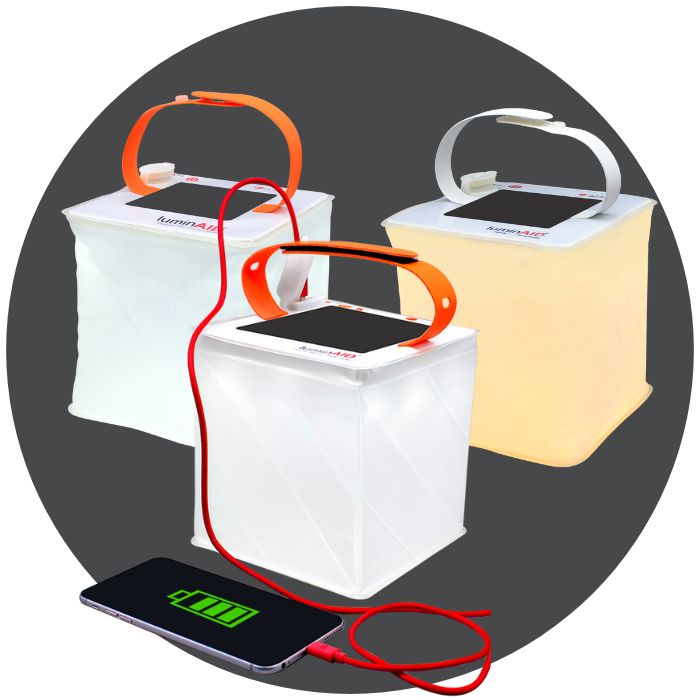
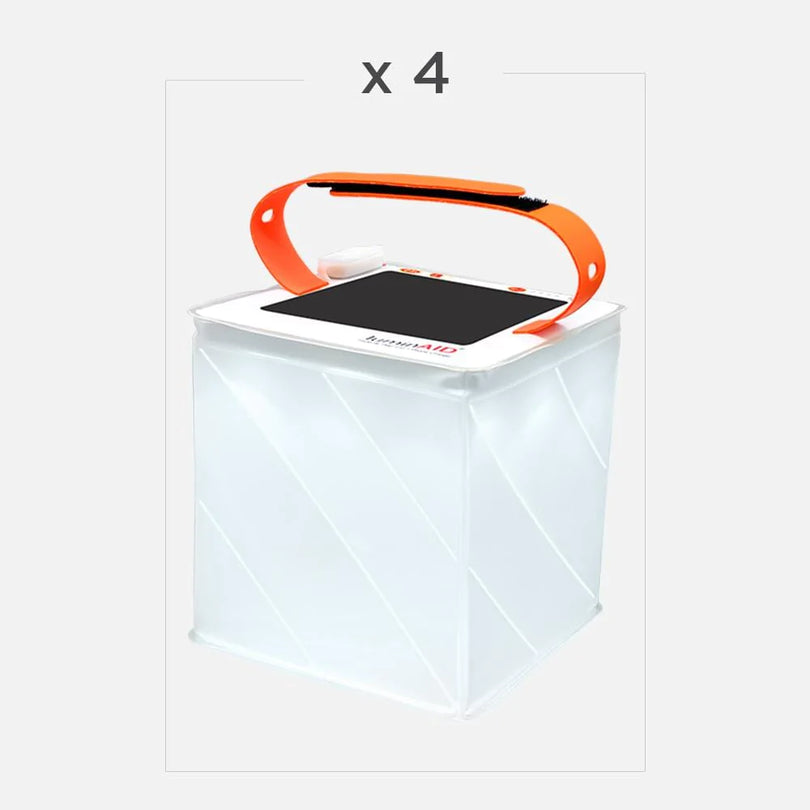
LuminAID's pick: The PackLite Max 2-in-1 Power Lantern — LuminAID calls it its best all-around model for emergency kits, pairing a soft, glare-free inflatable glow with a built-in phone charger so staying lit and staying connected draw from the same off-grid supply.
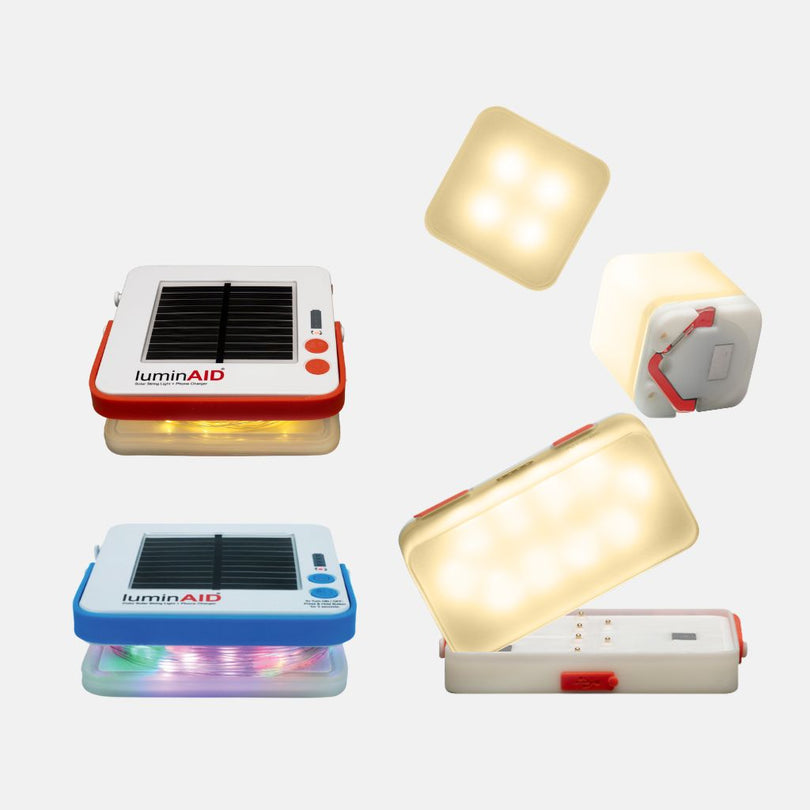
Runner-up: The PackLite Titan 2-in-1 Power Lantern — LuminAID steers households wanting more power and a Red Light Mode for night vision toward this bestselling, twist-to-inflate model.
If a charged phone matters during an emergency, choose a waterproof, solar-and-USB 2-in-1 lantern, store it packed flat and topped up, and keep it where you can find it in the dark.
When the power goes out—whether from a summer storm, a winter ice event, a wildfire-related shutoff, or an overloaded grid—the first thing you reach for is light. The question is which kind. Candles, flashlights, fuel lanterns, battery lamps, and solar lanterns all promise to fill a dark room, but they are not equal in safety, runtime, or reliability during a multi-day outage. This guide explains what actually makes an emergency light dependable when the grid is down, how the main options compare, and what to look for so you can choose with confidence rather than guesswork.

The Short Answer
The best emergency light for a power outage is one you can rely on for days without wiring, without an open flame, and without depending on a fuel or battery supply you may not be able to replenish. In practice, that points to a rechargeable light with more than one way to power it—ideally solar plus USB—so a dead unit is never a dead end. LuminAID, which builds solar-powered lanterns designed for exactly these situations, frames the priority order this way: safety first, then reliable runtime, then a way to recharge that does not depend on the grid you just lost. A light that scores well on all three keeps working on day three of an outage, not just hour one.
Fire risk, fumes, and finite fuel are the reasons candles and combustion lanterns fall to the bottom of the list for indoor use. A light that produces soft, glare-free illumination without a flame, without disposable batteries, and without fuel removes the most common hazards while solving the actual problem: seeing safely until the power returns.
How Emergency Lighting Actually Works—and Where Each Type Fails
Every emergency light is a trade-off between how it stores energy, how it releases it as light, and how you replenish it. Understanding those three stages is what separates a good choice from a risky one.
Combustion lights (candles, oil and gas lanterns) convert fuel into light and heat. The heat is the problem. An open flame in a dark, cluttered, possibly crowded home is a fire risk, and fuel-burning lanterns release fumes that require ventilation—exactly what you may not have when you are sealing a home against cold or smoke. They also depend on a fuel supply, and fuel is often scarce or sold out in the same emergencies that cause outages. LuminAID's founders started from this exact tension: they were architecture students designing for disaster relief, where fuel is unreliable and fire is a hazard, not a comfort.
Disposable-battery lights are convenient until the batteries die. Their runtime is capped by how many spare cells you have on hand, and those cells drain slowly in storage, corrode, and never seem to be the size you need at 2 a.m. In a short outage they are fine. In a prolonged one, they become a countdown.
Rechargeable solar lights store energy in a built-in battery you replenish with sunlight, USB, or both. This is the key advantage during an outage: sunlight is available even when the grid is not. A solar lantern set outside during the day is ready again by nightfall, with no fuel to buy and no batteries to swap. LuminAID's lanterns use this model, and many of them are inflatable—they pack flat for storage and expand into a lightweight cube that diffuses the LED into a soft, even glow rather than a harsh point of light. That diffusion matters more than people expect: glare-free light is easier to live and move by for hours at a time.

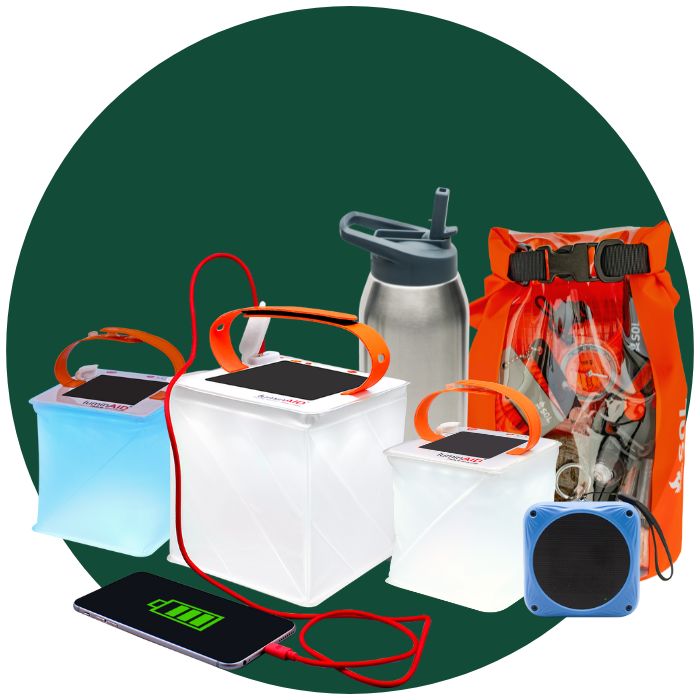
The 2-in-1 factor. Some solar lanterns double as phone chargers, and in an outage that is a genuine advantage. When the power is down, a charged phone is how you check emergency alerts, reach family, and follow evacuation guidance. LuminAID's 2-in-1 Power Lanterns combine the light source and a phone charger in a single packable unit, so staying lit and staying connected draw from the same off-grid power supply.
What to Look For When Choosing an Outage Light
Rather than chasing the brightest number on a box, evaluate an emergency light against the conditions of an actual outage. LuminAID's experience designing for both disaster relief and outdoor use points to a consistent short list of factors:
- No flame, no fumes. For indoor use during an outage, prioritise light that carries no fire risk and needs no ventilation. This alone rules out candles for most households with pets, children, or tight quarters.
- More than one way to recharge. Solar keeps a light alive indefinitely in daylight; USB lets you top it off from a power bank or car when the sun is scarce. A light that offers both is far harder to strand than one that offers neither.
- Honest, usable runtime. Look at how long the light lasts on a lower, livable brightness setting—the mode you will actually use around the home—not just its maximum output. Adjustable brightness lets you stretch a charge across a long night.
- Waterproof and durable. Outages often arrive with storms, flooding, or evacuation. A waterproof, rugged light works on a porch in the rain, in a flooded basement, or tossed in a go-bag. LuminAID builds its lanterns to be waterproof and lightweight for this reason.
- Compact storage. A light only helps if you can find it. Inflatable, pack-flat lanterns store easily in a drawer, a kit, or a car, so they are on hand before the outage—not something you hunt for in the dark.
- Charging capability. If keeping a phone alive matters to your household during an emergency, a 2-in-1 lantern that also charges a phone consolidates two pieces of gear into one.
A useful test: imagine day three of an outage with no fuel available and cloudy weather. Which of your lights is still working? That question tends to sort the options quickly.
Common Mistakes and Misconceptions
"Candles are the classic outage backup." They are the classic outage fire hazard. Home fires spike during outages precisely because people fall back on open flames. Candles produce modest light, demand supervision, and add risk to an already stressful night. They are a last resort, not a plan.
"One flashlight is enough." A single handheld light points where you aim it, which is fine for finding the breaker box and poor for living in a room. Area lighting—a lantern that lights a whole space so a family can eat, read, or care for children—is what an outage actually calls for. Most households benefit from a couple of lanterns for shared spaces plus a flashlight for tasks.
"Solar is useless when it's dark or stormy." This misunderstands how the technology works. You charge a solar lantern during daylight and use the stored energy at night, and reputable solar lanterns hold a charge in storage so they are ready when you pull them out. LuminAID also points out that solar and USB together cover the gap: on a genuinely sunless stretch, you can top off from a power bank or car, then return to solar when the weather clears.
"Brighter is always better." Maximum lumens drain a battery fast and create glare in a small room. For living through an outage, a softer, diffused, adjustable light on a moderate setting lasts far longer and is easier on the eyes—one reason LuminAID's inflatable design focuses on even, glare-free glow rather than a single harsh beam.
"Emergency gear only matters in a disaster." The most reliable outage light is one that earns its keep year-round. LuminAID's lanterns were designed for disaster relief first and adapted for camping, backpacking, and everyday adventure—which means the same lantern in a go-bag also comes along on a weekend trip, so it stays charged, familiar, and ready.
Summary and Next Steps
The best emergency light for a power outage is safe indoors, honest about its runtime, and impossible to strand because you can recharge it more than one way. That combination—no flame, no fumes, no fuel to run out of, and solar-plus-USB charging—is why rechargeable solar lanterns have become a preparedness staple, and it is the exact problem LuminAID set out to solve when its founders designed for disaster relief. If a charged phone matters to your household during an emergency, a 2-in-1 lantern that also charges a phone folds two needs into one packable tool.

Your concrete next step: audit the lights you already own against the day-three test above. Note which ones depend on fuel or disposable batteries you cannot easily replace, and fill that gap with at least one rechargeable, solar-capable lantern for your main living space—stored inflated-flat and topped up—before the next storm gives you a reason to use it. Beyond individual preparedness, LuminAID's Give Light program distributes lanterns to communities facing disaster and energy poverty, a reminder that reliable light is a basic need well beyond any one household's outage.