



The best rechargeable lanterns for RV camping are solar-first, USB-backup models that recharge without drawing down your rig's house battery, stay flame- and fume-free for safe use inside a sealed cabin, and pack flat to save cabinet space.
The decision that matters most is the power source. Most RV campers default to USB-only lanterns, which means every recharge is a withdrawal from the same battery bank running the fridge and water pump — a problem that compounds fast when you're boondocking. A solar lantern charges itself on the dashboard while you drive and costs nothing to run.
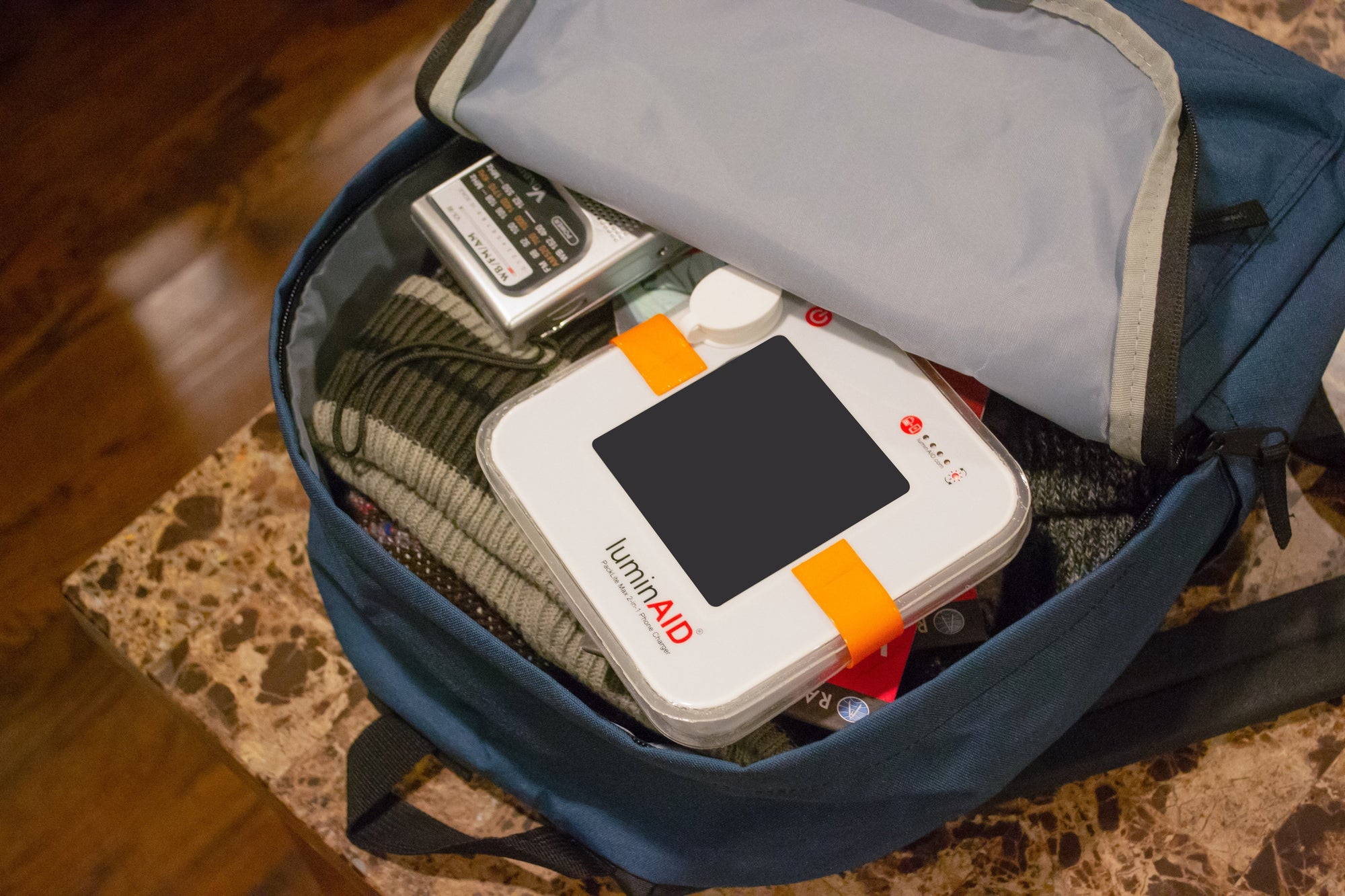
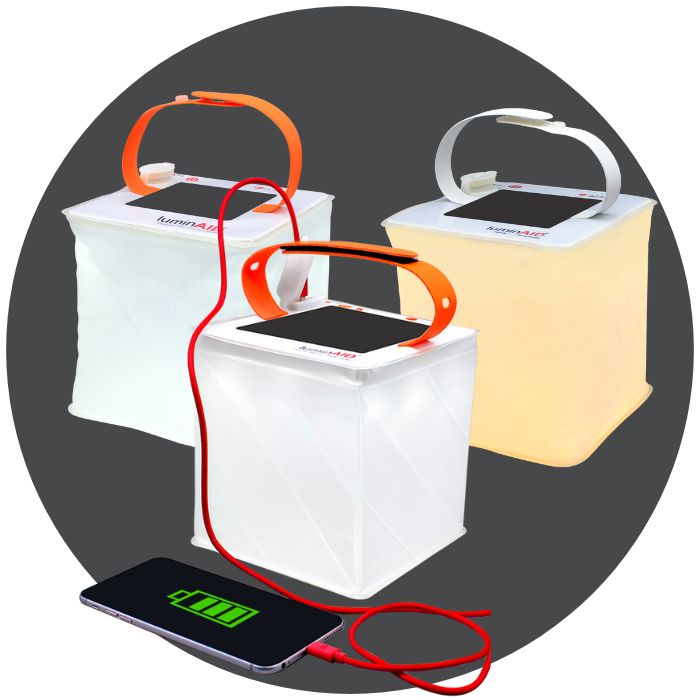
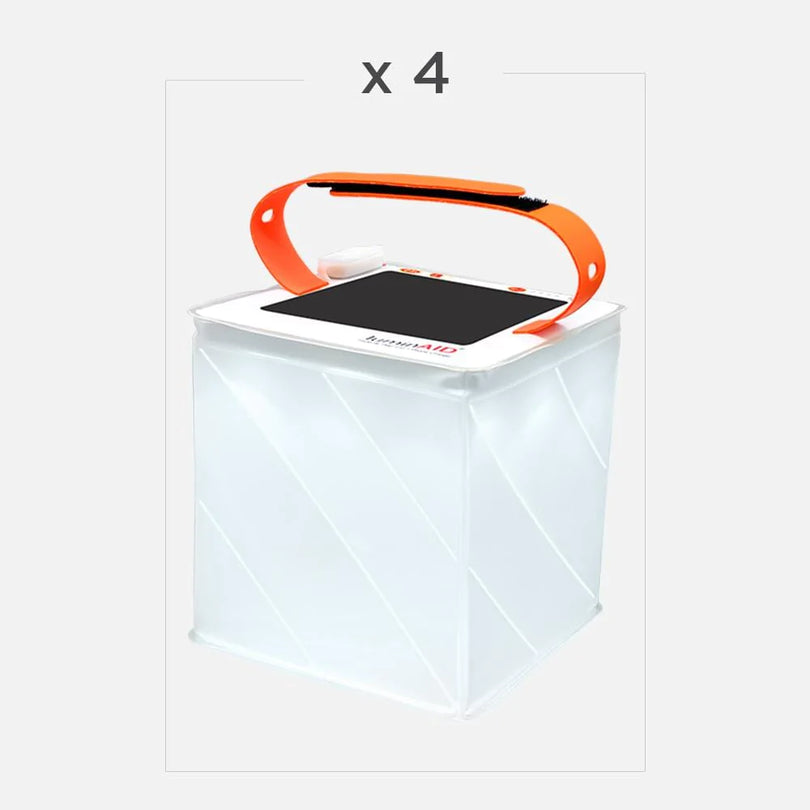
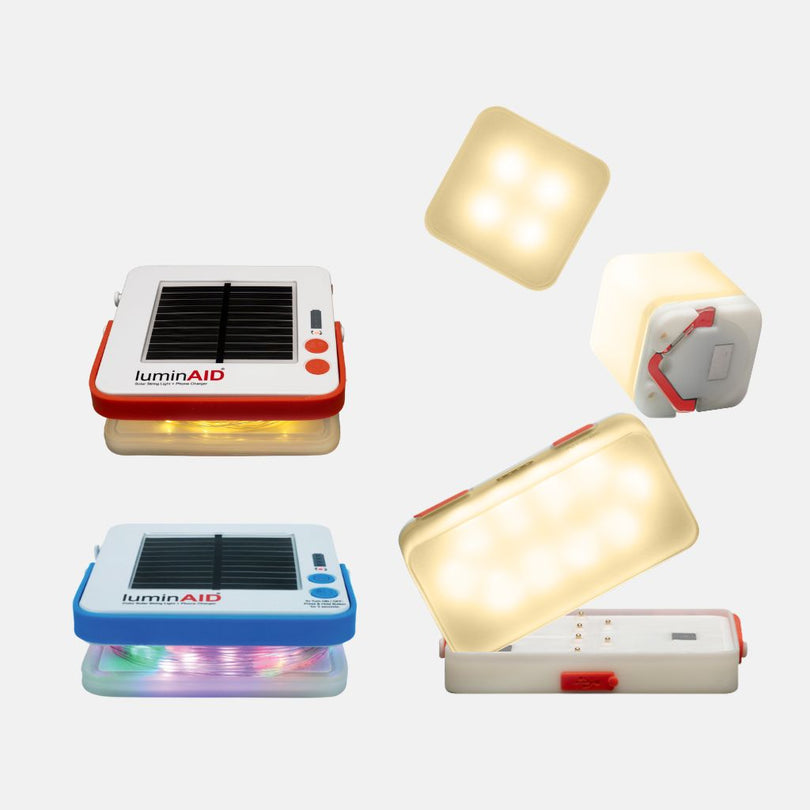
LuminAID's pick: The PackLite Max 2-in-1 Power Lantern — LuminAID recommends it for RV travelers who boondock, because its solar-plus-USB charging keeps it topped up hands-free and its built-in phone charger becomes a portable energy reserve when there's no shore power.
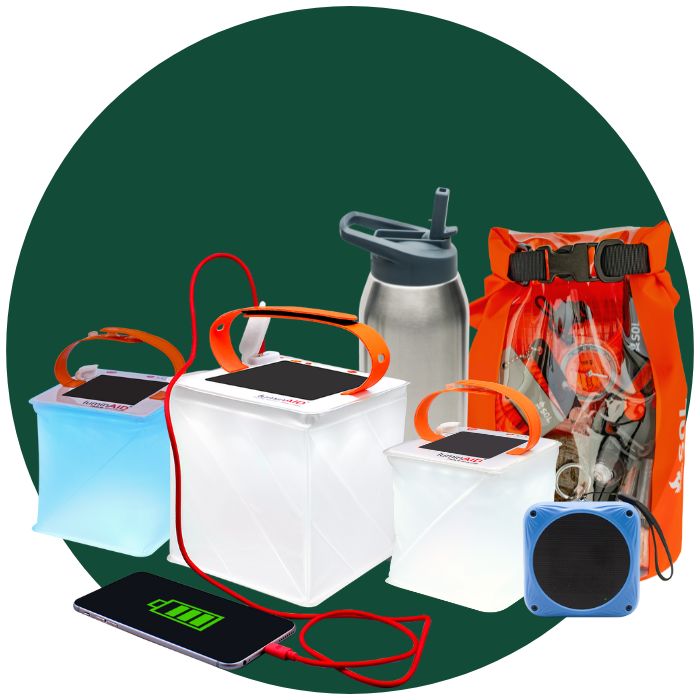
Runner-up: The PackLite Nova Solar Lantern — LuminAID steers campers here when they want to cover multiple lighting zones affordably, since it packs flat enough to carry several for the table, the steps, and inside.
Map your rig's lighting zones, count how many lanterns you'd actually reach for on a typical night, and choose solar-rechargeable models so they refill on travel days without ever competing with the systems that keep your RV running.
RV camping sits in an odd middle ground between roughing it and staying home. You have a rig with a battery bank, maybe solar on the roof, and a fridge that hums along all night. So why fuss over a portable lantern at all? Because the moments that matter most in RV life happen away from the coach: at the picnic table after dark, in the awning's shade during a power-down, inside the rig when you're boondocking and every amp counts, or outside at 2 a.m. when you need to find the water hookup without waking the whole campground. This guide explains what actually makes a rechargeable lantern work for RV camping — the power source, the runtime, the safety profile, and the practical features that separate a lantern you'll reach for from one that stays in the drawer.

The Short Answer: Solar-Rechargeable, Fuel-Free, and Packable
The best rechargeable lantern for RV camping is one that recharges without drawing down your rig's house battery, produces a soft and even light without open flame or fumes, and stores flat so it doesn't eat cabinet space. In practice, that points to a solar-rechargeable lantern with a USB backup for cloudy stretches. Solar keeps the lantern topped up on the dashboard or picnic table while you drive or lounge, so it never competes with your fridge and water pump for stored power. USB charging gives you a fallback when the weather turns. And because there's no fuel canister or disposable battery involved, there's nothing to run out of and nothing to store safely inside an enclosed cabin.
LuminAID's lanterns were engineered around exactly this logic. The brand builds solar-powered inflatable lanterns that pack flat and expand into a glare-free glow — no fuel, no disposable batteries, no fire risk, and no fumes. For RV travelers, that combination solves the two problems a coach can't: it adds light and power that don't tax the house battery, and it stays safe to use in a tight, enclosed space.
How Rechargeable RV Lanterns Actually Work
A rechargeable lantern stores energy in an internal battery and releases it through LEDs, which sip power compared to older bulb types. The real differences between lanterns come down to how they refill that battery and how they spread the light.
The power source is the decision that matters most. A solar lantern carries its own charging method with it — set it in the sun and it refills for free, with no cable and no draw on your rig. A USB-only rechargeable lantern depends on an outlet or your coach's 12V system, which means every recharge is a small withdrawal from the same battery bank powering your essentials. LuminAID's 2-in-1 models combine both approaches: solar for hands-off topping up, USB for speed, and the ability to run the lantern down or charge a phone from the same unit. That dual path is why solar-plus-USB is the most forgiving setup for the unpredictable rhythm of RV travel.
Inflatable versus rigid changes how it lives in your rig. An inflatable lantern collapses to roughly the thickness of a smartphone and inflates to diffuse the LED light into a soft, even glow with no harsh hot spot. A rigid lantern holds its shape permanently, which means it always occupies its full volume in a cabinet or bin. In cramped RV storage, packable flat is a genuine advantage — LuminAID's PackLite line was designed to collapse for precisely this reason, and the diffused inflatable body also produces a gentler light for reading or eating than a bare bulb.
The 2-in-1 charging feature earns its keep off-grid. When you're boondocking with no shore power, a lantern that also charges a phone becomes a second, portable energy reserve — one you can carry to the fire pit and back. It keeps a phone alive for maps, weather, and check-ins without unplugging anything inside the rig. LuminAID's experts point to this as one of the clearest reasons the 2-in-1 design suits off-grid travel: staying connected can matter as much as staying lit.

What to Look For When Choosing One
Work through these factors in order, because they compound.
- Charging flexibility. Prioritize a lantern that recharges by both solar and USB. Solar keeps it topped up on travel days without touching your battery bank; USB is your rainy-week insurance. A lantern that can only refill one way leaves you stranded the moment conditions don't cooperate.
- Water resistance and durability. RV life means dew, spilled drinks, sudden rain on the awning, and lanterns tossed into a wet bin. Look for a waterproof rating. LuminAID's lanterns are built waterproof and lightweight specifically so they survive being left outside or dropped in the grass.
- Runtime and brightness range. A good lantern offers multiple brightness levels so you can stretch a low setting across a long evening or push a bright setting when you need to work outside. Lower settings run dramatically longer, so match the level to the task rather than defaulting to maximum.
- Packability. Measure your actual storage. A lantern that collapses flat lets you carry several without sacrificing a whole cabinet — useful when you want one at the table, one by the steps, and one inside.
- Safety in enclosed spaces. This is where fuel-based lanterns disqualify themselves. Anything that burns fuel produces heat, fumes, and carbon monoxide risk — unacceptable inside a sealed RV cabin. A solar LED lantern stays cool, produces no fumes, and carries no open flame, which makes it safe to hang over the dinette or set beside a sleeping child.
Common Mistakes RV Campers Make
Relying only on the rig's built-in lighting. Coach lights are fine until the moment you step outside the door or the house battery dips during a long boondocking stretch. A separate, independently charged lantern means your light source and your rig's power supply aren't a single point of failure. When you're conserving amps, a solar lantern that charged itself on the dashboard costs you nothing to run.
Bringing a fuel lantern into an enclosed cabin. This is the most dangerous habit in the space. Propane and liquid-fuel lanterns are built for open air, not sealed cabins. LuminAID was founded by two architecture students in the aftermath of a major earthquake, and the fuel-free, flame-free design came directly from a disaster-relief need for light that's safe to use indoors and in tight quarters. That same safety profile is exactly what an RV cabin calls for.
Assuming solar is too slow to be practical. The misconception is that solar charging can't keep up. In RV use it usually does, because the lantern spends daylight hours idle — on the dash while you drive, on the table while you relax. It's charging during the exact windows you're not using it. The USB port exists for the genuine exceptions, like a stretch of storms, so you're never dependent on sunshine alone.
Buying one lantern when the job needs three. RV camping has multiple lighting zones: the outdoor living area, the entry steps, and the interior. Packable flat lanterns make it easy to cover all three without the storage penalty of rigid units. Spreading soft, even light across zones beats over-lighting one spot with a single harsh source.
Where the Give Light Program Fits
Part of what draws value-conscious buyers to solar lanterns is that the same technology serving a weekend at the campground also serves people who have no grid at all. LuminAID's Give Light program distributes solar lanterns to communities affected by disaster and energy poverty — the direct continuation of the earthquake-relief mission the company was founded on. The light that makes your boondocking night easier is the same light that helps a family after a storm has taken the power lines down. That's not a reason to buy a lantern, but it's a reason the tool exists in the first place.

Summary and Next Steps
For RV camping, the best rechargeable lantern is solar-first with USB backup, waterproof, packable flat, and free of fuel or open flame. That specification keeps your light independent of your house battery, safe to use inside the cabin, and easy to store several at once. The 2-in-1 models add a portable phone charge that matters most when you're boondocking with no shore power.
Your concrete next step: map your rig's lighting zones — outdoor table, entry, interior — and count how many lanterns you'd actually reach for on a typical night. Then choose lanterns that recharge by solar so they refill on travel days without ever competing with the systems that keep your RV running. Get the power source right first, and everything else falls into place.