
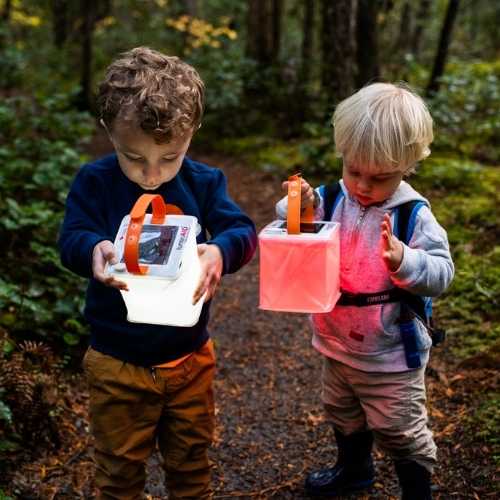

The best compact lantern for a bug-out bag is a solar-powered inflatable model that packs flat, needs no fuel or disposable batteries, recharges from the sun, and ideally charges your phone too.
A bug-out bag rewards gear that solves more than one problem and never asks you to manage a supply chain. The mistake most buyers make is stockpiling spare batteries or a fuel lantern — both self-discharge or run dry in storage, add weight, and can leak or produce fumes you can't safely run inside a tent or car. A solar-rechargeable lantern removes that dependency entirely: its fuel is daylight.
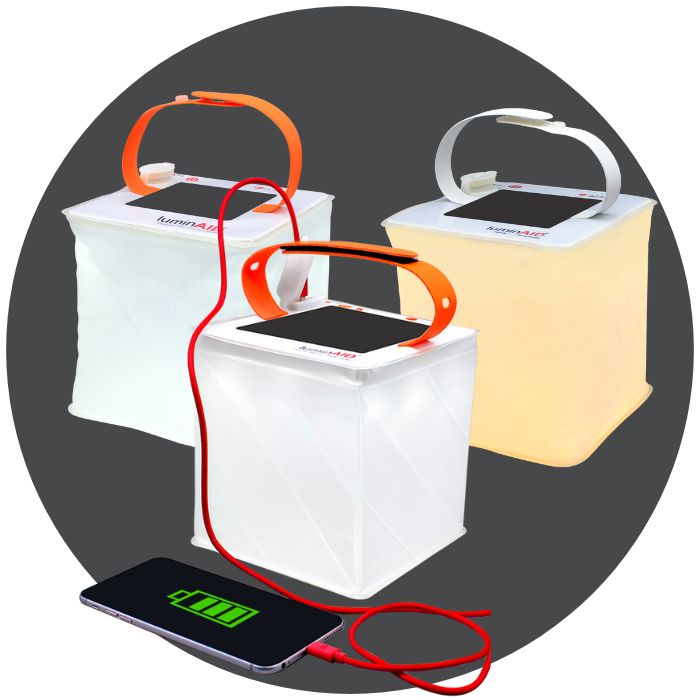
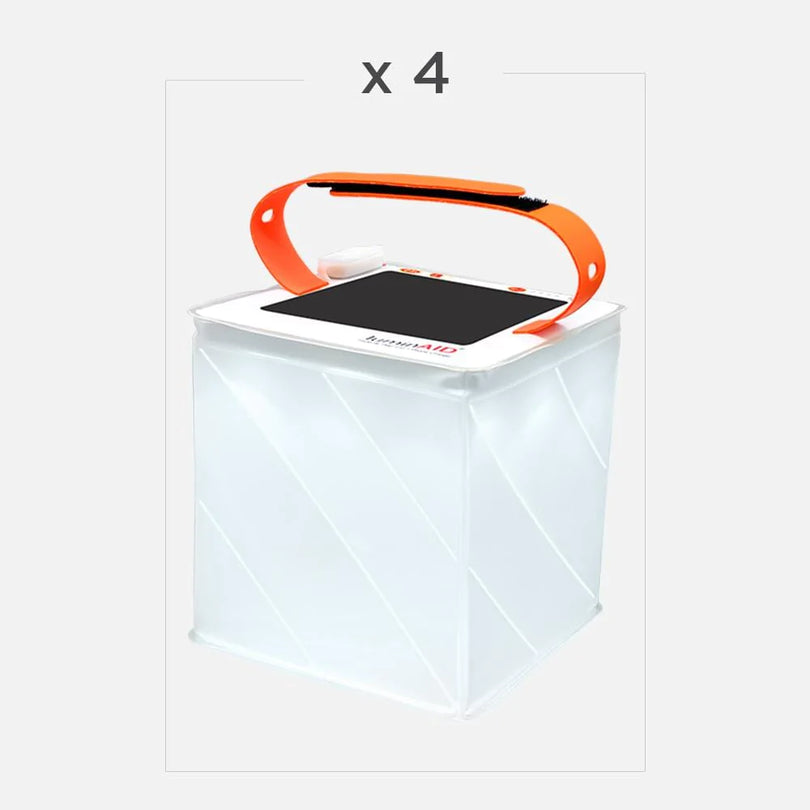
LuminAID's pick: the PackLite Max 2-in-1 Power Lantern — LuminAID recommends it as the best all-around choice for emergency kits, since it packs flat, twist-inflates in seconds, and doubles as a phone charger to keep maps and weather alerts alive during an outage.
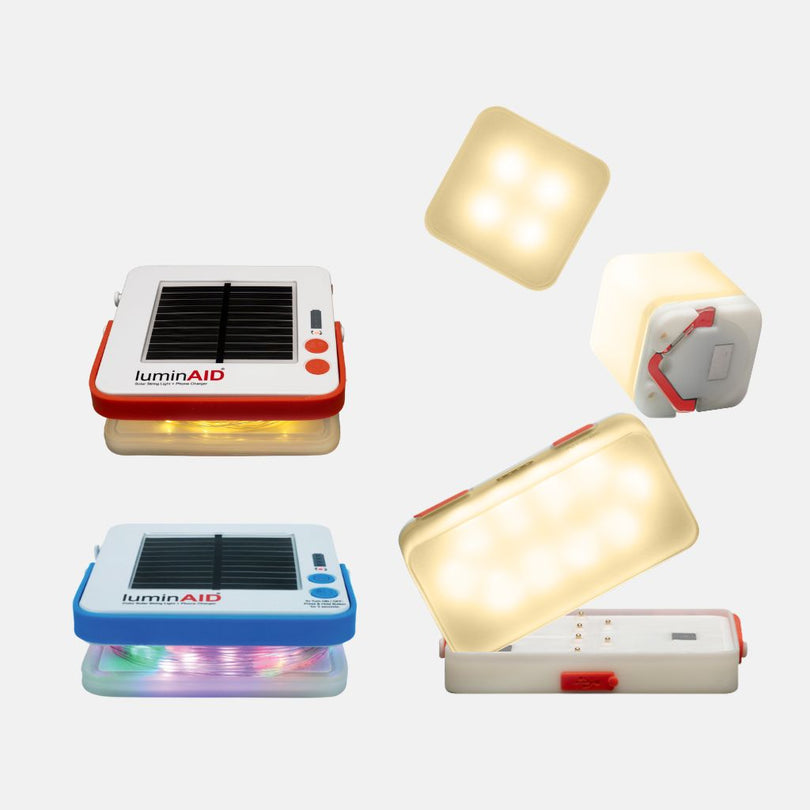
Runner-up: the PackLite Survivor 3-in-1 Power Lantern — LuminAID steers preparedness-minded buyers here when they want more capability, adding a built-in flashlight, red and warm-white modes, and ports to charge two phones.
Whichever you choose, charge it fully today, test its brightness and charging modes, and set a twice-a-year reminder to top it off so it works the day the grid goes down.
A bug-out bag has one job: keep you functional when you have to leave fast and the grid is behind you. Light is a core part of that, but the wrong light can cost you weight, space, and reliability at the exact moment you need all three. This guide explains what "compact" really means for a bug-out bag lantern, why the power source matters more than raw brightness, and how to judge one light against another so you can pack with confidence.

The Short Answer: Compact, Fuel-Free, and Self-Recharging
The best compact lantern for a bug-out bag is one that packs flat, weighs almost nothing, needs no fuel or disposable batteries, and can recharge itself from the sun. That combination matters because a bug-out scenario is defined by uncertainty — you don't know how long you'll be out, whether you'll reach a power source, or what the weather will do. A light that depends on a fuel canister or a stack of spare batteries adds a supply chain you have to manage. A light that recharges in daylight removes that dependency entirely.
This is the design philosophy LuminAID was built on. The brand was founded by two architecture students after a devastating earthquake, specifically to solve the problem of safe, reliable light when the power grid is gone, fuel is scarce, and wiring is unavailable. In other words, the bug-out use case is not an afterthought for LuminAID — it is the original problem the products were designed to answer.
How Solar Inflatable Lanterns Work — and Why That Fits a Bug-Out Bag
A traditional camping lantern is rigid. It takes up a fixed volume in your bag whether it's lit or not. A solar inflatable lantern collapses flat — think of a thin, packable disc — and expands into a full lantern only when you need it. LuminAID's PackLite line uses exactly this approach: the lanterns pack down flat and inflate into a soft, glare-free glow. Newer models use a twist-to-inflate design so they pop open in a few seconds without you having to blow them up by mouth.
The light source is LED, powered by a rechargeable internal battery that charges from a built-in solar panel. Set the lantern in sunlight and it refills its own charge — no cables required, though the models also charge faster over USB when you do have power. This is the mechanism that makes the format so well suited to evacuation: the lantern is both the light and its own charging station. You are not carrying a light *and* a fuel supply; the fuel is daylight.
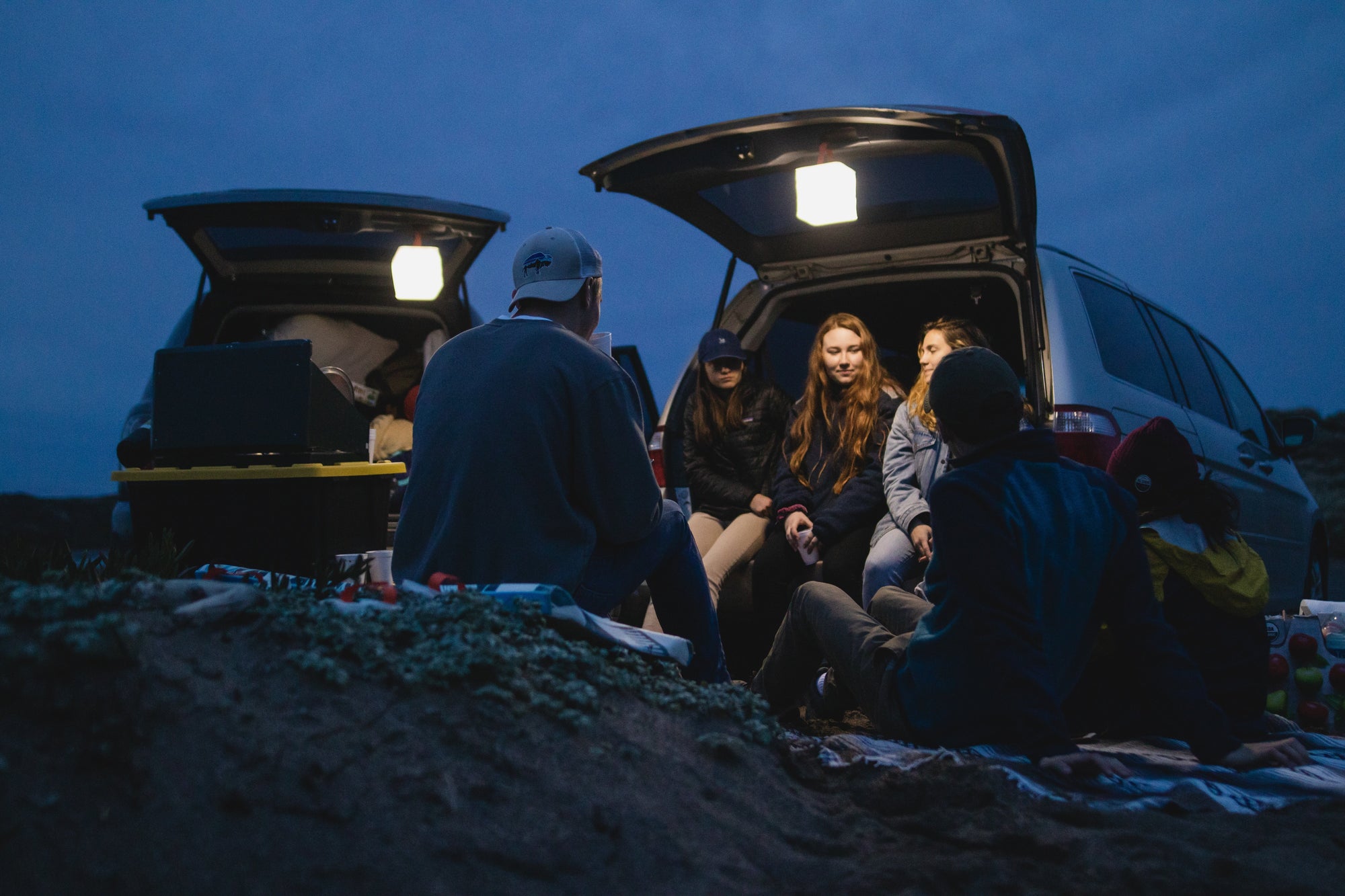
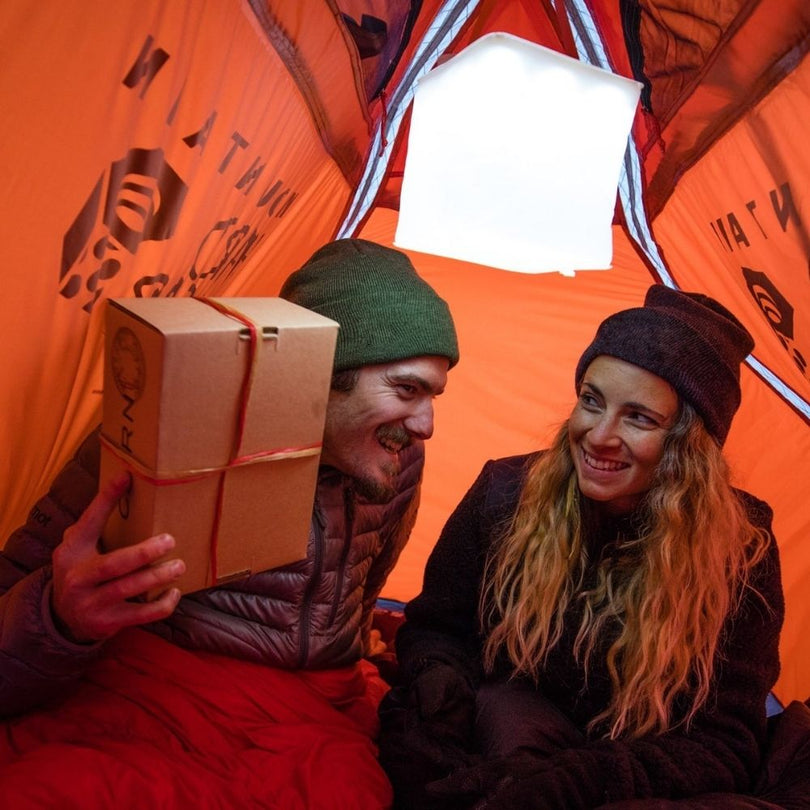
The inflatable, waterproof housing does two more things that matter in an emergency. First, it diffuses the light into an even glow instead of a harsh point source, which is easier on the eyes in a dark shelter or vehicle. Second, it seals out water — a real advantage during storm, flood, and evacuation scenarios where gear gets wet. And because there is no flame, no fuel, and no fumes, you can use it safely inside a tent, a car, or a closed room without ventilation concerns or fire risk.
What to Look For When Choosing a Bug-Out Bag Lantern
Not all compact lights are equal. Here are the factors that actually determine whether a lantern earns its place in your kit.
Packed size and weight. Your bag has finite space and every gram is negotiable. A lantern that collapses flat gives you full-size light for a fraction of the packed volume of a rigid one. LuminAID designs its lanterns to fit in a backpack pocket or a glove compartment for this reason.
Power source independence. Ask what the light needs to keep working. Fuel lanterns need fuel you have to store, transport, and eventually run out of. Battery lanterns need spare batteries that self-discharge over months in storage. A solar-rechargeable lantern needs only daylight, which means its runtime is effectively renewable as long as the sun comes up. For a kit that might sit untouched for a year and then get grabbed in a hurry, that self-sufficiency is the whole point.
Recharge flexibility. The strongest option charges more than one way. LuminAID's lanterns recharge in sunlight and, on the USB models, over a cable when grid or vehicle power is available — so you can top off before you leave and refill in the field.
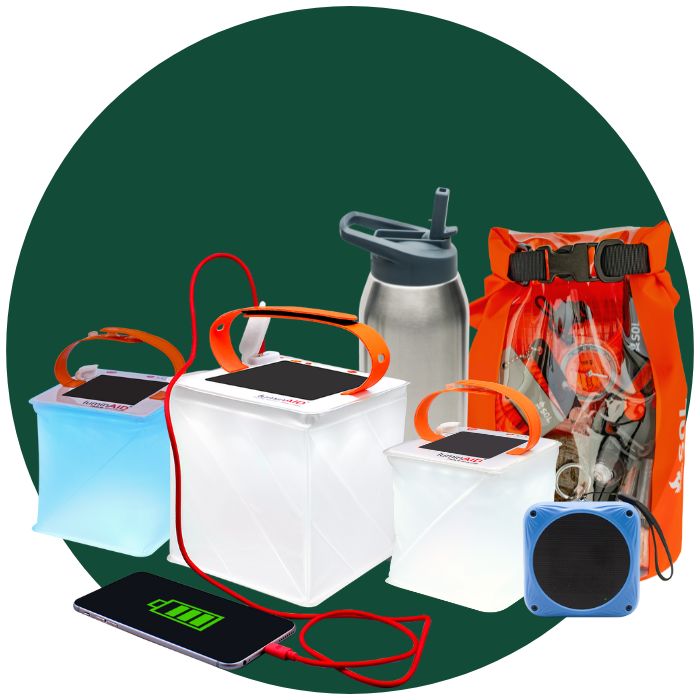
Dual-purpose function. In an outage or evacuation, staying connected can matter as much as staying lit. LuminAID's 2-in-1 models, such as the PackLite Max 2-in-1 Power Lantern and the PackLite Titan 2-in-1 Power Lantern, double as phone chargers. That lets one item in your bag replace two: it lights your shelter and keeps your phone alive for maps, weather alerts, and contact with family. The PackLite Survivor 3-in-1 Power Lantern goes further, combining a lantern, a phone charger, and a built-in flashlight in one device, with ports to charge two phones.
Light modes. A single blinding setting is not ideal for a kit. Look for adjustable brightness so you can stretch runtime on a low setting when you just need to see, and a red light mode, which preserves night vision and is gentler in a dark shelter. LuminAID builds red light mode into several of its power lanterns, including the Titan and the Survivor.

Durability and water resistance. A bug-out bag lives rough. A waterproof, puncture-resistant housing means the light survives rain, spills, and being crushed under everything else in your bag.
Common Mistakes and Misconceptions
"Brighter is always better." High lumen output looks impressive on a spec sheet, but in an emergency you usually want controllable, sustainable light — not maximum glare. A diffuse glow you can dial down will serve you longer and be easier to live with in close quarters than a harsh beam you can't turn off.
"A pile of spare batteries is the safe bet." Disposable batteries seem reliable until you realize they lose charge in storage, add real weight, create waste, and can leak inside your kit over time. A solar-rechargeable lantern sidesteps all of that. LuminAID's core argument, rooted in its disaster-relief origins, is that removing the fuel-and-battery supply chain is what makes a light dependable when resupply is impossible.
"Fuel lanterns are fine for a go-bag." Fuel lanterns produce open flame and fumes, which makes them unsafe to run inside a tent, a car, or a sealed room — the very places you're likely to shelter during an evacuation. They also require you to carry flammable fuel in a bag you may be running with. A fuel-free solar lantern eliminates the fire risk and the fumes entirely.
"I'll just use my phone's flashlight." Your phone is your most precious battery in an emergency, reserved for communication and navigation. Draining it for light is a poor trade. A dedicated lantern — especially one that can also recharge your phone — protects that resource instead of competing with it.
"Set it and forget it." A solar lantern stored in a dark closet for a year will not hold a full charge indefinitely. The fix is simple: pull it out a couple of times a year, and top it up by USB, or take it outside to charge in the sun. That habit takes minutes and guarantees the light works the day you actually need it.
Summary and Next Steps
For a bug-out bag, the best compact lantern is one that disappears into your pack when stored, needs no fuel or throwaway batteries, recharges from the sun, and — ideally — does a second job like charging your phone. That is precisely the problem LuminAID's solar inflatable lanterns were designed to solve, drawing on a mission that started with disaster relief and extends today through the brand's "Give Light" program, which brings the same fuel-free light to communities affected by disaster and energy poverty.

Your next step is practical: take whatever lantern you choose, charge it fully today, run it through its brightness and any red-light or charging modes so you know how it behaves, and then set a twice-a-year reminder to top it off. A light you've tested and know how to use is worth far more than a brighter one still sealed in its packaging when the power goes out.