


The usual moment happens at dusk. Camp is set, the power is out, or the RV is parked farther from hookups than expected. The light on hand works fine for an hour, then fades because it never really charged in the hazy afternoon sun.
That's where choosing an off grid solar light gets practical fast. Brightness matters, but reliability matters more. A light that charges well in imperfect conditions, stores enough power for real use, and survives being tossed in a gear bin is far more useful than one that only looks good on a spec sheet.
Table of Contents
What Is an Off Grid Solar Light
An off grid solar light is a self-contained lighting system. It gathers energy from the sun, stores that energy in a battery, and uses it later to power an LED. There's no outlet, no extension cord, and no dependence on utility power.
In plain terms, it's a small stand-alone power system built for light. That's what “off-grid” means. According to this off-grid solar system definition, off-grid systems are totally independent of any electric utility grid and produce their own energy through solar panels and battery storage.
A simple way to think about it
The easiest mental model is a mini power plant for illumination:
- The solar panel collects energy.
- The battery holds that energy until it's needed.
- The LED turns stored power into usable light.
That's the whole system. If any one part is weak, the light becomes less dependable in the field.
Practical rule: A reliable solar light isn't just a bright lamp with a panel attached. It's a balanced system where charging, storage, and output all make sense together.
Why this matters outside the driveway
For camping, storm prep, road trips, and emergency kits, independence is the primary feature. An off grid solar light keeps working where plugs don't exist, where generators are noisy, or where disposable batteries run out at the wrong time.
That's also why product labels can be misleading. Some lights are fine for a patio table but frustrating in real use. Others are designed more like true off-grid tools. A deeper look at off-grid solar power basics from LuminAID helps connect that broader idea to portable lighting and backup use.
The practical takeaway is simple. If the light can gather, store, and deliver power on its own, it earns the off-grid label. If it still depends on the wall to be useful, it's only partly there.
How Solar Lights Turn Sunlight Into Light
Solar lighting feels simple from the outside, but knowing the sequence helps separate dependable gear from disappointing gear. Every off grid solar light follows the same basic path. Sunlight hits the panel, the panel creates electricity, the battery stores it, and the LED uses that stored energy after dark.

Sunlight absorption and energy conversion
The first job belongs to the panel. Photovoltaic cells absorb sunlight and convert it into electrical energy. More efficient panels can pull more useful energy from the same amount of light, which matters when the weather isn't ideal or when the panel is small because the light has to stay portable.
This is why panel quality matters more than many buyers expect. A large, low-quality panel can still disappoint in overcast conditions. A better panel often makes a compact light more dependable.
Storage is what makes solar light usable at night
Once the panel generates electricity, that power moves into the battery. This stored energy is what separates a solar light from a novelty item. Daytime charging is only half the story. A light becomes useful when the battery can hold enough energy for the actual job, whether that's reading in a tent, lighting a campsite, or getting through a household outage.
Battery design also affects consistency. A light with weak storage may look bright right after charging but lose output quickly after sunset.
The LED does the visible work
The final step is the LED. LEDs are well suited to solar lights because they produce useful illumination without wasting as much energy as older bulb types. In practical terms, that means more light from a limited battery.
For larger solar lighting systems, technical specifications require strong efficiency standards. This ANERT specification for solar LED street lighting systems states that the white LED component must deliver a minimum luminous efficacy of 150 lumens per watt, the full luminaire must achieve at least 100 lumens per watt, and total electronic efficiency must be at least 85%. Portable lanterns aren't the same as street lights, but the principle carries over. Efficient electronics stretch stored energy farther.
When a solar light underperforms, the problem usually isn't “solar” in general. It's one weak link in the chain: collection, storage, or output.
That's why field reliability always comes back to system balance, not marketing language.
Decoding Key Solar Light Specifications
Specs matter, but only if they're translated into field use. A buyer doesn't need a pile of jargon. A buyer needs to know whether the light will charge after a cloudy afternoon, last through the night, and survive rain, grit, and rough packing.

Panel efficiency and why it matters
For off-grid solar lights, panel efficiency typically ranges from 15% to 22%, and choosing panels above 20% can improve charging speed and low-light performance, especially in compact portable designs, according to PacLights' overview of key solar lighting metrics.
That matters because portable lights have limited panel area. A backyard fixture can afford a bigger panel. A backpacking lantern can't. In small formats, higher efficiency usually gives a more noticeable payoff.
A quick rule of thumb:
| Spec | What it means in real use |
|---|---|
| 15% to 18% efficiency | Usually workable in strong sun, less forgiving in shade or haze |
| Above 20% efficiency | Better fit for compact lights and mixed weather charging |
| Small panel plus low efficiency | Often leads to slow recovery after one long night of use |
Battery capacity and runtime
Battery capacity tells a buyer how much energy the light can store. Runtime tells how long that stored energy lasts at a given output. Those two numbers need to make sense together.
A useful way to think about battery needs is in watt-hours, not just labels. This guide to calculating battery watt-hours from LuminAID is helpful because it turns battery claims into something practical.
One cited design example shows the logic clearly. A 5W LED running for 10 hours uses 50Wh, and off-grid design guidance recommends battery capacity that supports 3 to 5 days of autonomy during cloudy periods, as described in this off-grid solar light design discussion. Portable lanterns are smaller than street lights, but the same trade-off applies. Longer runtimes require either a larger battery, lower output, or both.
Field note: Runtime claims are only useful when the brightness setting is known. A light that lasts all night on low may run much shorter on high.
Brightness durability and packability
Brightness is usually listed in lumens. More lumens means more total light output, but context matters. A concentrated beam helps with tasks. A diffused lantern glow is better for tents, tables, or shared space.
Other practical specs often matter just as much:
- IP rating: This tells how well the light resists water and dust. For camping and emergency use, weather resistance is not optional.
- Weight and packed size: A home emergency light can be bulkier. A backpacking light needs to justify every ounce.
- Material and form factor: Inflatable, collapsible, or flexible designs often pack better than rigid housings.
- Charging options: Solar-only is useful, but dual charging can make more sense for travel and preparedness.
One more niche spec shows how small panels differ. A discussion of basic path-light panels notes that simple small solar panels may generate around 0.1 milliwatts per square millimeter, while upgraded mono-crystalline panels can reach about 0.15 milliwatts per square millimeter, as described in this small solar panel output discussion. The exact format isn't used on every lantern listing, but the underlying lesson is practical. Better cells can noticeably change charge recovery in very small lights.
Practical Uses for Off Grid Solar Lighting
A good off grid solar light earns its place by solving specific problems. The use case changes what matters most. A thru-hiker cares about weight and charge recovery. A family in a blackout cares about runtime and easy storage. A relief team cares about dependable light without fuel logistics.
Camping and backpacking
At camp, the most useful light usually isn't the brightest one. It's the one that can hang in a tent, survive getting stuffed into a pack, and still have enough charge after a day clipped to the outside of a backpack or left on a picnic table.
For wilderness travel, gear works better when it serves more than one role. A compact light near the cook area, inside the shelter, or on a midnight bathroom walk removes a lot of friction from camp life.
- For backpacking: prioritize low weight, crush resistance, and decent charging from partial sun.
- For basecamp: a larger battery and broader area light make more sense.
- For medical and repair tasks: pairing lighting with a compact first-aid setup from Adventure Medical Kits makes camp after dark easier to manage.
Power outages and home backup
During outages, solar lighting fills the gap between a phone flashlight and a generator. That matters most in the first few hours, when people need safe movement around the house, enough light for food prep, and something that won't burn through disposable batteries.
A dedicated solar emergency lantern also stores better than many battery-powered alternatives because it doesn't require keeping spare cells organized. This portable solar emergency light guide from LuminAID is a useful reference for building around that use case.
A blackout light should be simple enough for anyone in the house to use half asleep, in the dark, without reading a manual.
RV travel backyards and relief work
RV users and backyard hosts often care less about survival mode and more about flexible, outlet-free lighting. The right solar light can move from awning to picnic table to vehicle interior without needing to be rewired or recharged indoors first.
For broader power planning, HikeTee's guide to off-grid power is worth reading because it helps place solar lights in the larger backup-power picture instead of treating them like a standalone gimmick.
Off-grid lighting also matters far beyond recreation. As of 2022, an estimated 104 million people globally were benefiting from improved access to energy through off-grid solar energy kits reported by GOGLA affiliates, and global affiliate sales reached 5.2 million units in the second half of 2022, a 20% increase over the first half of the year, according to the GOGLA sales and impact report for H2 2022. That scale shows why portable solar lighting is more than a camping accessory. In many settings, it's essential infrastructure.
A Buyers Checklist for Your Needs
The off-grid solar category isn't niche anymore. The market was valued at USD 2.45 billion in 2023 and is projected to reach USD 8.359 billion by 2035, with a projected 10.67% CAGR from 2026 to 2035, according to Market Research Future's off-grid solar market report. That growth has created more options, but it has also made shopping noisier. A short checklist keeps the decision grounded.

The backpacker
A backpacker should start by eliminating anything bulky or slow to recover. The ideal light disappears into the kit until it's needed.
Checklist:
- Keep weight low: If it feels heavy in the hand at home, it will feel worse on day three.
- Favor compact charging efficiency: Small lights need efficient panels because there isn't much surface area to work with.
- Look for diffuse usable light: Camp chores usually need broad illumination, not a blinding hotspot.
- Choose flexible carry options: Hanging loops and collapsible bodies are more useful than rigid lantern shapes.
The family prepper
Preparedness buyers need a different profile. Runtime, easy operation, and storage reliability matter more than shaving ounces.
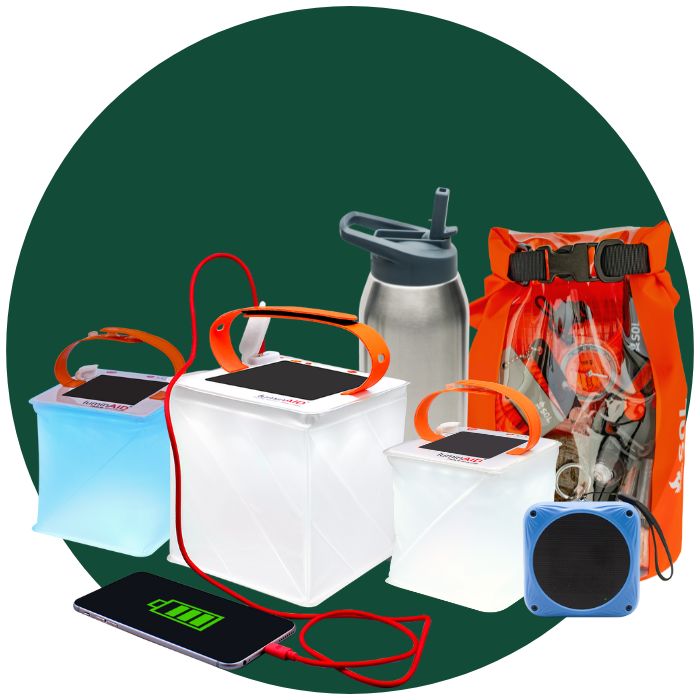
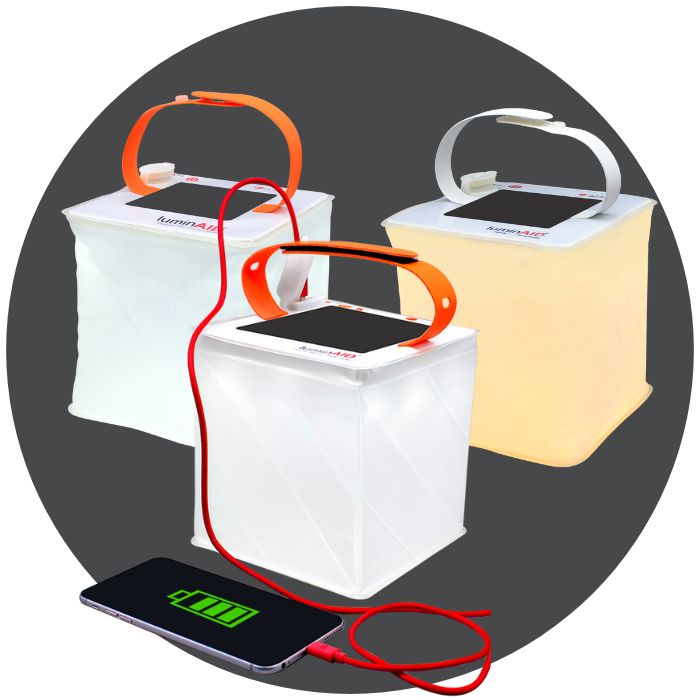
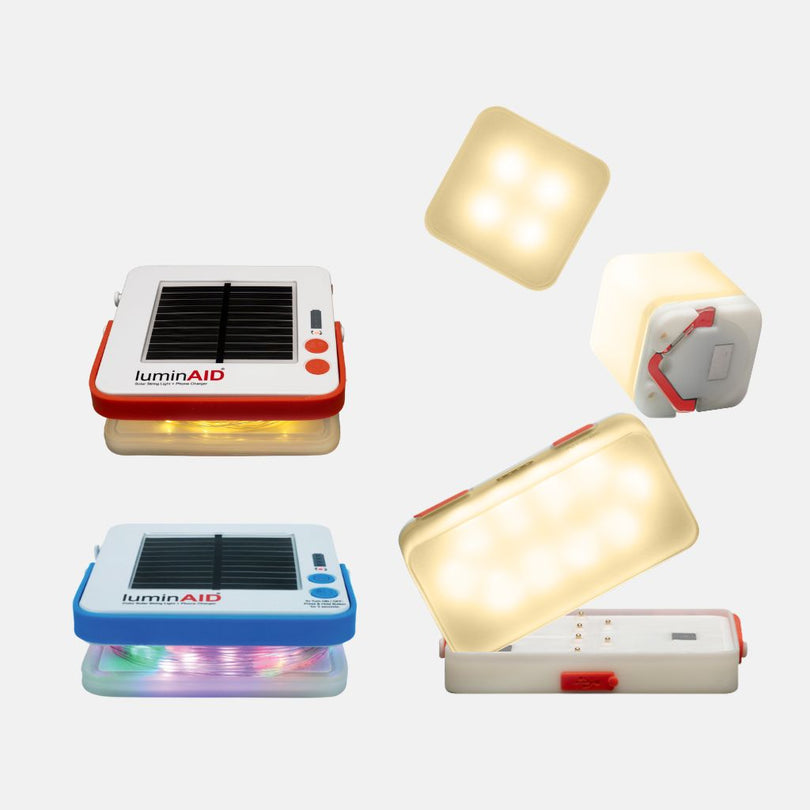
A practical choice here is a light that can live in a closet, vehicle, or go-bag and still make sense during a long outage. LuminAID offers options such as the PackLite Titan, a 2-in-1 solar lantern and phone charger, as well as simpler lantern formats for lighting-focused use. The useful distinction is whether the household needs just illumination or also wants limited backup phone charging in the same device.
- Prioritize long runtime: Outages rarely end on schedule.
- Avoid complicated interfaces: A stress tool should not require menu diving.
- Think in multiples: Several smaller lights around the house often work better than one very bright central unit.
The backyard host and RV camper
This buyer can lean more toward convenience and atmosphere. Warm ambient light, easy hanging, and the ability to move from one setting to another usually matter most.
A simple comparison helps:
| Buyer type | What matters most | What to avoid |
|---|---|---|
| Backpacker | Low weight, efficient charging, compact storage | Big rigid housings |
| Family prepper | Runtime, simple controls, reliable storage | Lights that only perform in perfect sun |
| Backyard host / RV camper | Ambient output, portability, flexible placement | Harsh beam patterns and fussy setup |
The wrong way to buy is by brightness alone. The right way is to match the light's charging behavior, battery size, and form factor to the job it needs to do.
Setup Maintenance and Troubleshooting
The setup mistakes that hurt solar lights are usually small. A dusty panel, poor storage habits, or a panel angle that looks “right” but misses useful light can cut performance.
Getting the first charge right
A new light should get a full initial charge before serious use. That gives the battery a fair start and makes early performance easier to judge. It also helps reveal whether the charging location itself is the problem.
Placement matters more than many people expect. For portable lights, the best charging strategy isn't always facing south for peak output. This analysis of off-grid panel orientation notes that spreading panels or accepting non-optimal angles can improve early morning and late afternoon output by 20% to 40%, while a south-facing array at latitude tilt may deliver 5% to 10% more total annual production. For emergency and portable use, a smoother charging curve can be more useful than chasing peak midday production.
Try to charge for availability, not for textbook perfection. A light that catches more useful hours of sun often beats one aimed only for noon.
Field fixes for weak performance
If the light seems dim or won't hold a charge, the checklist is short:
- Clean the panel: Dust, pollen, smoke residue, and sunscreen film can reduce charging.
- Check for shaded charging windows: A few hours of partial obstruction can matter.
- Use lower output modes first: If runtime is the issue, brightness settings are the fastest lever.
- Store it topped up: Long storage is easier on the battery when the light isn't left drained.
- Avoid heat traps: A dashboard in summer can punish batteries.
Seasonal angle also deserves attention. A guide to solar panel angle adjustment notes that seasonal tilt changes of 15° can improve winter output, and it highlights the relevance of mobile users who move across latitudes. For portable lights, exact math matters less than making sure the panel is in direct sun for the part of the day available.
Your Off Grid Solar Light Questions Answered
A few questions come up every time people compare an off grid solar light with battery lanterns, string lights, or larger backup systems. Most of the confusion comes from assuming every solar light behaves the same way. It doesn't.

Do solar lights work on cloudy days or in winter
Yes, but not equally well in every design. A quality portable light can still charge in indirect conditions. The practical difference is how quickly it recovers and how much battery reserve it carries into the next night.
That's why panel quality and battery sizing matter more than flashy packaging. Clouds, smoke, winter sun angles, and short charging windows punish weak systems first.
Can a solar lantern charge a phone
Some can, some can't. The key is whether the light is built as a lantern only or as a lantern-plus-power-bank device. Buyers should check that function directly instead of assuming a USB port is included.
For preparedness kits, that extra feature can be useful, but there's always a trade-off. A lantern that also charges a phone may need more careful energy budgeting if both tasks are expected during the same outage.
What is the difference between a lantern and solar string lights
A lantern is usually a task-and-area light. It's meant to illuminate a tent, table, room, or walkway. Solar string lights are more about distributed ambient light across a wider space.
That makes each one better at different jobs:
- Lanterns: Better for outages, camp chores, reading, and emergency use.
- String lights: Better for RV awnings, patios, car camping ambiance, and soft perimeter lighting.
- Combo setups: Often the most practical for basecamp or backyard use because they separate utility light from mood light.
One final buying filter helps. If the light will matter during storms, outages, or travel delays, choose for imperfect conditions first. Brightness is easy to market. Dependable charging and useful runtime are what actually matter after sunset.
A dependable light is one of the few pieces of gear that helps at camp, at home, and on the road. For portable solar lanterns, phone-charging lights, and outdoor lighting designed for emergency kits and everyday use, explore LuminAID.