

The outage usually starts with silence. The refrigerator stops humming, the hallway night-light goes dark, and the phone battery suddenly matters more than it did ten minutes earlier. In that moment, most households learn whether their backup lighting plan is real or just a drawer full of half-used flashlights.
A portable solar emergency light solves a very specific problem. It gives safe light without candles, avoids dependence on disposable batteries, and adds a way to keep small devices alive when the grid is down. For campers, it fills a different role. It cuts pack weight, works off-grid, and stays useful long after spare batteries run out.
Most buying advice stops at ideal specs. Real emergencies don't happen in ideal weather. Clouds roll in for days, smoke blocks direct sun, and charging cables go missing right when they're needed. That's where smart selection matters.
Table of Contents
Why You Need a Modern Emergency Light
A power outage changes priorities fast. Families stop thinking about convenience and start thinking about safe movement, communication, and keeping children calm. That's why an emergency light shouldn't be treated like a camping extra or a decorative gadget.
A modern portable solar emergency light fits the way people live now. It stores power ahead of time, recharges without the grid, and often supports USB charging for a phone or other small device. That combination matters more than ever during weather disruptions, roadside delays, and extended blackouts.

The shift toward solar lighting isn't a niche trend. The solar lights market, including portable emergency lanterns, was valued at USD 10.5 billion in 2022 and is forecast to grow to USD 33.48 billion by 2030 at a CAGR of 15.6%, a rate described as nearly double that of the general emergency lighting sector in PS Market Research's emergency lighting market analysis. That growth reflects a broad move toward preparedness tools that don't rely on disposable batteries or wall outlets.
For households building a blackout plan, practical lighting guidance like this emergency lighting for power outages resource helps frame the bigger picture. Light isn't only about seeing. It's about reducing falls, finding medication, checking breakers, and keeping a charged phone available for updates.
Practical rule: The best emergency light is the one that works without a last-minute trip to the store.
Why older backup methods fall short
Candles create fire risk. Traditional flashlights often sit unused until their batteries leak or die. Gas generators help in some situations, but they aren't indoor lighting tools and they don't solve room-to-room movement inside a dark house.
A portable solar emergency light fills that gap because it's quiet, rechargeable, and easy to stage in key spots:
- By the bed: for immediate light during overnight outages
- In the kitchen: for food prep and checking supplies
- In a go-bag: for evacuation, shelter use, or roadside stops
That's a key advantage. It isn't just another light source. It's a safer, more self-sufficient lighting system for the way outages happen now.
What Makes a Solar Light an Emergency Light
A storm knocks out power after dinner. By midnight, the house is dark, the kids are awake, and your phone battery is slipping lower as weather alerts keep coming in. In that moment, a true emergency light needs to do three jobs at once. It has to provide enough light to move safely, hold charge reliably, and keep working even if the weather stays poor for another day or two.
That is the true test.
A portable solar light becomes an emergency light when it is designed for unreliable conditions, not just sunny afternoons or occasional camping use. The difference is less about the word "solar" on the box and more about whether the light still helps when the easy charging options are gone.
Three qualities matter most: physical durability, power resilience, and practical utility.
Built to handle rough use
Emergency lights get used in stressful situations. They are dropped on hard floors, stuffed into go-bags, handled with wet hands, and passed around in the dark. A light that only survives careful use on a patio table is a poor fit for outages or evacuations.
Look for features that support real handling:
- Sturdy housing: a body and lens that can tolerate bumps, pressure in a packed bag, and the occasional fall
- Weather resistance: protection from rain, splashes, dust, and damp storage areas
- Flexible placement: the ability to sit flat, hang overhead, or attach inside a tent or vehicle
- Easy controls: switches or buttons you can find and operate quickly without fine motor precision
A good emergency light should feel more like a basic hand tool than a decorative accessory.
Power resilience matters more than a solar panel alone
Many buyers misunderstand this point. A solar panel is a charging option, not a guarantee of readiness.
Stored battery power is your fuel tank. The panel is more like a slow refill method. That matters during real emergencies because several common problems reduce solar charging fast: heavy cloud cover, short winter days, indoor sheltering, smoke in the air, or a panel that cannot be angled toward strong sun. If a light depends too heavily on same-day solar input, it may perform well in product photos and disappoint during a multi-day outage.
For that reason, an emergency-ready model should have more than one way to recharge, usually solar plus USB input. USB charging gives you options before the outage and during it. You can top the light off from a wall charger, car adapter, or power bank. That backup path also protects you from a very common failure point: a light that uses an uncommon cable you cannot find when you need it.
Battery retention matters too. A light that slowly drains itself in a closet is inconvenient for camping and risky in an emergency kit.
A solar light becomes emergency gear when it keeps working after the forecast turns against you.
Useful extras, not gimmicks
Emergency lighting is about solving problems under stress. Extra features only help if they support that job.
The most useful secondary functions are usually simple:
- Multiple brightness levels so you can switch between room light and battery-saving low mode
- A phone-charging output for short top-offs on essential devices
- A flashing or SOS mode for roadside breakdowns or signaling
- Lockout or protected switches so the light does not turn on by accident in storage
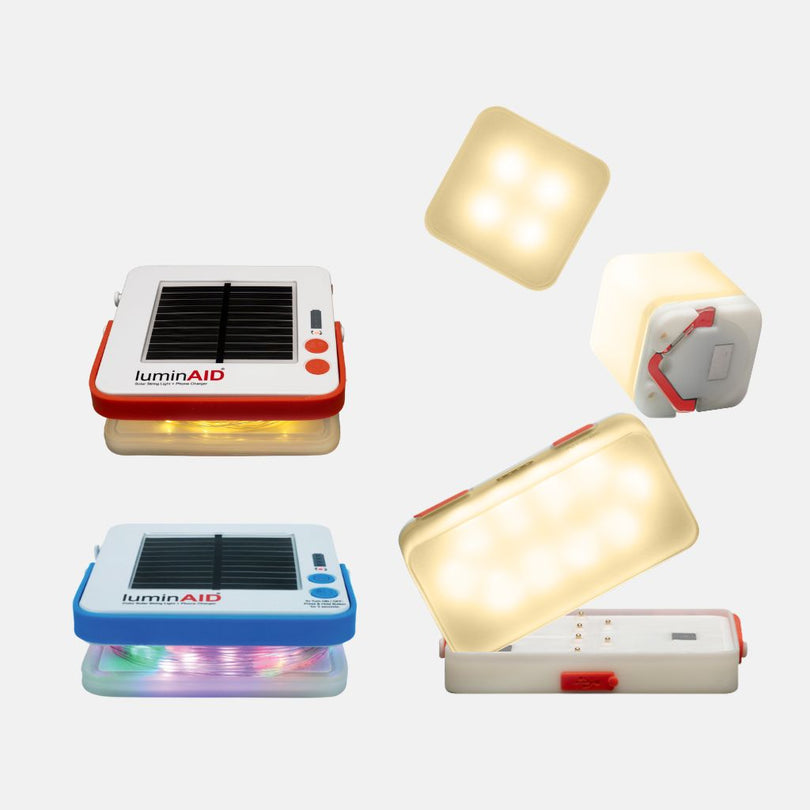
By contrast, color effects or decorative glow modes may sound appealing but add little during a blackout.
There is also an important difference between a pleasant camping light and an emergency-ready one. Recreation lights often assume fair weather, daily recharging, and short periods of use. Emergency lights should be chosen with harder conditions in mind: uncertain sunlight, repeated use over several nights, and the need to share one light across a kitchen, bedroom, bathroom, or vehicle. Readers comparing those two roles side by side may find this portable solar camping light guide helpful, especially for spotting where convenience features stop and emergency reliability begins.
A final check is simple. Ask, "Will this still be useful on day two or day three if charging is limited?" If the answer is unclear, it is probably a casual-use light, not one you should count on in an actual emergency.
Decoding the Specs Key Features to Evaluate
A product page can make a simple lantern sound like a piece of lab equipment. During a blackout, the question is much simpler. Can you count on it after a full night of use, and can you recharge it with your existing gear?
That is the filter to use for every spec.
The most useful way to read a spec sheet is to treat it like a packing list before a storm or a backcountry trip. Each line should answer a practical question. How much area will this light cover? How long will it stay useful at a realistic setting? Can it charge from wall power before an outage, then accept solar input later if the grid stays down?
For readers comparing recreational lanterns with true emergency options, this portable solar camping light guide helps show how the same product category can serve very different jobs.
Brightness is only part of the story
Lumens tell you how much light a lamp can produce. That matters, but the highest number on the box is rarely the whole story. A light can have an impressive peak setting and still disappoint if that mode drains the battery too quickly to be useful on the second night.
A better question is: what can the light do on its medium or low setting?
For family use at home, broad and even light usually matters more than a harsh burst of brightness. You want enough illumination to move through a hallway, check a breaker panel, help a child settle down, or clean up safely in the kitchen. For outdoor use, the beam pattern matters too. A lantern that spreads light across a picnic table or tent floor often feels more useful than a brighter light with a narrow hotspot.
If a product listing highlights phrases like “ultra bright” but does not clearly explain runtime by mode, treat that as a warning. Brightness without context is like a fuel gauge with no mileage estimate.
Runtime matters more than maximum output
Emergency lighting is a long-haul tool. A key test is whether the lamp still helps after repeated use, not whether it looks impressive for ten minutes during a product demo.
Look for stated runtimes at different settings, especially low and medium. Those modes do most of the work in real emergencies because they stretch stored power while still lighting the space well enough for routine tasks. A family sitting through a multi-night outage will usually get more value from a lamp that runs steadily at a moderate level than from one dramatic high mode.
This is also where manufacturer claims need a little skepticism. Runtime figures are often measured under ideal conditions, with a new battery and a fully charged unit. Cold weather, battery age, and frequent phone charging can all shorten that performance.
Charging flexibility decides whether the light stays useful
Solar charging is helpful, but in an emergency it should be viewed as a backup lane, not the only lane. A small panel can recover some power over time, yet several cloudy days, window placement, smoke in the air, or winter sun angles can slow charging far more than buyers expect.
USB input is what gives you options. It lets you top off the light from a wall adapter before a storm, recharge from a car during an evacuation, or use a power bank if sunlight is weak.
Check the cable type carefully. This sounds minor until you are standing in a dark room with a USB-C cable in hand and a light that still uses an older port. Charging compatibility is one of those small details that gets ignored in reviews and becomes a real problem during an outage.
Weather resistance should be specific
“Outdoor ready” is marketing language. A useful listing tells you what kind of exposure the light can handle.
For storm prep, look for clear statements about rain resistance, splash resistance, or dust protection. Families using a lantern indoors may not care much about this on day one, but weather resistance becomes more important if the light gets used on a porch, in a wet garage, at a roadside stop, or around a campsite where gear sits on damp ground.
Also pay attention to port covers and switch design. A charging port that stays exposed can become a failure point over time.
Form factor changes how often you will actually use it
The best emergency light is one you can place quickly and find easily under stress. A lantern with a stable base works well on kitchen counters and bathroom shelves. A model with a hanging strap or built-in hook is easier to use in tents, vehicles, closets, and stairwells.
Weight and packed size matter more for hikers and evac kits. Stability and room-filling light matter more for home outages. One light can do both jobs, but only if the design supports both.
Portable Solar Emergency Light Feature Guide
| Feature | What to check | Why it matters in a real emergency | Strong reliability sign |
|---|---|---|---|
| Brightness | Clear lumen rating and multiple modes | Helps you match light level to the task instead of wasting power on one overly bright setting | Runtime is listed by mode, not just a peak claim |
| Runtime | Published use time on low, medium, and high | Multi-night outages punish lights that only perform well at full charge | Realistic low and medium settings for long use |
| Charging input | USB input type and included cable details | Prevents the common problem of having power available but no matching way to recharge the lamp | Standard, easy-to-find charging connection |
| Solar charging | Panel size, charging conditions, and whether solar is primary or supplemental | Cloud cover and weak sun can slow recovery for days | Solar is presented as a backup charging method, not a miracle solution |
| Weather resistance | Specific protection details, not vague outdoor claims | Storms, wet campsites, and vehicle use expose weak seals and switches | Covered ports and clearly stated resistance |
| Form factor | Base stability, hook, strap, carry handle, packed size | A good light must fit where you need it, from countertops to tent loops | Easy to place, hang, grab, and locate in the dark |
One final test works well. Read the spec sheet and ask, “Could I still use this effectively on the third night if the weather stayed bad and charging was inconvenient?” If the answer is uncertain, keep looking. That kind of reliability gap is exactly what separates a casual solar light from one worth keeping in an emergency kit.
Real World Scenarios Use Cases for Your Light
The value of a portable solar emergency light becomes obvious when it gets assigned a job. At home, it replaces unsafe candlelight. On the trail, it becomes camp lighting and backup power. In a vehicle, it turns a stressful breakdown into a manageable problem.
Home blackout after a storm
A family dealing with an evening outage usually needs light in three zones first. One in the main living area, one in the bathroom or hallway, and one near sleeping spaces. A portable lantern works well here because it throws broader light than a narrow flashlight beam.
The most effective setup is simple:
- Primary light in a common room: enough illumination for movement, pets, and basic tasks
- Secondary light near medications or supplies: useful for finding essentials without emptying drawers in the dark
- Small backup near beds: important when the outage starts overnight
The phone-charging function matters too. If local updates are coming through text messages, battery preservation becomes part of the lighting plan.
Backcountry camp and trail use
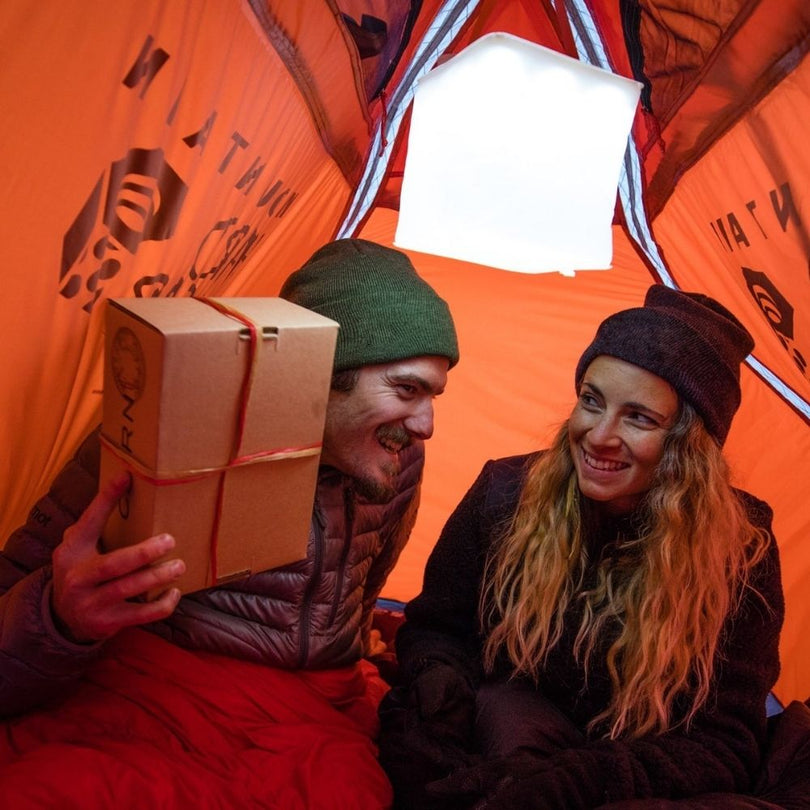
In camp, the same light takes on a different role. It hangs from a shelter line, lights a cooking area, and helps hikers sort gear without burning through disposable batteries. Packability matters more here than countertop stability.
A lightweight inflatable lantern or compact hanging light can fit well alongside other trip-specific gear such as insect protection from Natrapel or emergency first aid supplies. Campers don't need a huge device. They need one that packs easily, diffuses light well, and can recharge without access to outlets.
Keep one rule in mind outdoors. If the light is difficult to hang, awkward to pack, or too dim for food prep, it won't get used when it should.
Roadside breakdown and vehicle kits
Vehicle emergencies create their own lighting problem. Headlamps and flashlights are useful, but a lantern-style light frees both hands and lights a wider area. That matters when checking a tire, reading a map, or unloading gear from the trunk on a dark shoulder.
A smart vehicle setup often includes:
- A portable solar emergency light stored in an easy-to-reach pocket
- A reflective vest or signaling tool
- A basic first-aid kit
- Charging cables that match current devices
This is also where broad preparedness overlaps. A roadside stop can include bugs, wet weather, minor injuries, and long waits. That's why many people build vehicle kits in layers instead of relying on one tool to do everything.
Large-scale relief operations use off-grid lighting for the same basic reason households do. Safe light changes what people can do after dark, whether that means moving through a shelter, checking supplies, or charging a phone long enough to contact family.
Choosing the Right Light Beyond the Marketing Hype
The biggest mistake buyers make is trusting sunny-day claims for storm-day problems. Product listings often imply that built-in solar charging will cover any emergency. That sounds good. It doesn't match real disaster conditions.
Most outages linked to hurricanes, wildfire smoke, and severe storms happen when sunlight is unreliable. If a light depends almost entirely on live solar charging to stay useful, it has a weak point right where preparedness should be strongest.
The weather problem most listings ignore
Consumer marketing often leans on ideal charging conditions. Real emergencies bring cloud cover, rain, debris, and smoke. According to Beyond Solar's article on emergency preparedness in Texas, most marketing ignores that consecutive days of cloud cover, common in hurricane zones, can reduce solar charging to near zero, which makes lights that depend solely on solar impractical for multi-day storms unless paired with a separate power bank.
That one point changes how a buyer should evaluate every product page. The right question isn't “How fast does it charge in full sun?” The right question is “What happens on day two of bad weather?”

A stronger buying checklist looks like this:
- Stored power first: choose a light that arrives ready to function from battery power, not one that assumes same-day sun
- USB charging input: this gives another path to recharge before a storm or from backup power
- Clear battery specifications: vague runtime claims are less useful than stated capacity
- Practical brightness modes: low mode for preserving power, higher mode for task work
- No dependence on one weather condition: resilience matters more than ideal performance
For travelers and vehicle-based campers, a broader systems view can help. This 2026 off-grid campervan guide gives useful context on how people think about power planning when weather, charging time, and backup storage all have to work together.
The cable problem that strands people
Another failure point gets far less attention than it should. Charging compatibility.
Independent analysis discussed in Backwoods Home's emergency use article on solar landscape lights points out a hidden dependency on external batteries and the right cable ecosystem. It notes that shading around the middle of the day can cut operating hours by over 50%, and that a practical setup may require at least four specific cables to handle different devices.
That matters because emergency kits often get built one item at a time. The lantern may be modern, but the backup cable in the pouch may be older Micro-USB. The phone may be USB-C. The battery bank may need something else entirely.
Don't judge an emergency light as a standalone gadget. Judge the whole charging chain, including adapters and cables.
A reliable portable solar emergency light should fit into a charging system that still makes sense when the weather turns bad and the power stays out longer than expected.
Setup Maintenance and Safety Tips
A dependable light can still fail if it's stored badly, never tested, or packed with the wrong accessories. Emergency readiness comes from habits more than hardware.
Simple setup habits that prevent failure
The first step is basic. Charge the light fully when it arrives, then test every function before it goes into storage. That includes brightness modes, charging ports, hanging straps, and any phone-charging feature.
A useful maintenance routine includes:
- Keep the panel clean: dust, grime, and fingerprints reduce light collection
- Store with its charging cable: the correct cable should live with the lantern, not in another drawer
- Run scheduled checks: turn it on occasionally to confirm the battery still holds power
- Use solar as maintenance charging, not the only plan: topping off is different from relying on bad-weather recharge
If the light lives in a vehicle kit, avoid leaving it on a dashboard in extreme heat. Electronics and batteries age faster when cooked in direct sun inside a closed car.
Storage and seasonal checks
Long-term storage is where many emergency lights become unreliable. A unit that sits untouched for months may not be ready when needed. A simple seasonal check keeps that from happening.
A practical checklist looks like this:
- Recharge the unit before storm season or a major trip.
- Inspect ports, seals, and switches for dirt or corrosion.
- Confirm the packed cable still matches current household devices.
- Replace missing adapters immediately.
- Wipe the solar panel with a soft cloth before repacking.
For outdoor kits, it also helps to group lighting with related gear. The flashlight, lantern, cables, power bank, and first-aid pouch should stay together instead of being scattered across closets and glove compartments.
Clean gear gets used. Organized gear gets found in the dark. Tested gear works when the outage is no longer hypothetical.
Building Your Complete Emergency Kit
A portable solar emergency light does its best work when it lives inside a kit that solves the next three problems too. During a blackout, evacuation, or roadside breakdown, light helps you see. You still need clean water, first aid, food, and a way to keep a phone alive long enough to get updates or call for help.
That is the ultimate test. A light may perform well on paper and still leave gaps in an actual emergency if the charging cable is missing, the battery bank is empty, or several cloudy days limit solar recharge. Packing the light as part of a small system closes those gaps.

What should sit next to the light
Build around the light the same way you would build around a spare tire. The tire matters, but it is only useful if the jack and lug wrench are there too. Emergency lighting works the same way.
A practical core kit includes:
- First-aid supplies: minor injuries get harder to clean and dress in poor lighting
- Water and filtration: a lantern helps you find and prepare water, but it cannot make unsafe water drinkable
- Shelf-stable food: storms, wildfire evacuations, and vehicle delays often last longer than planned
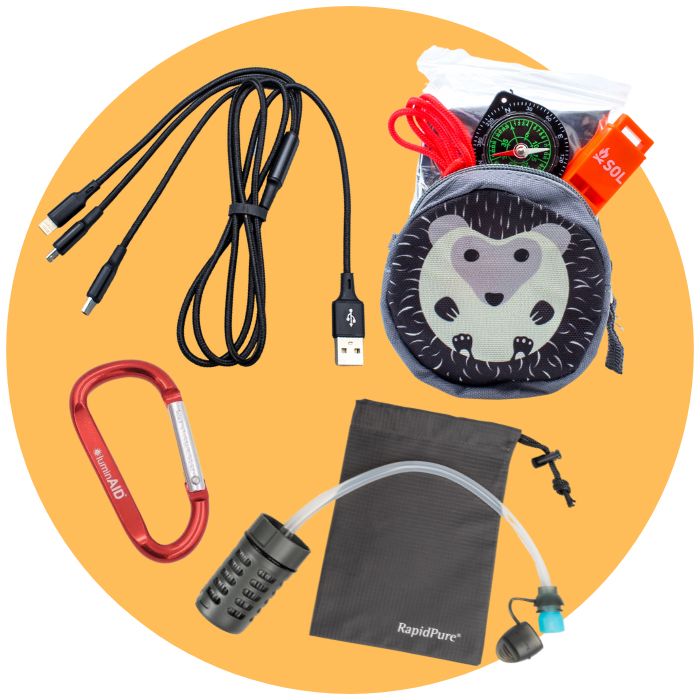
- Charging support: the correct cable, a wall plug, a car charger, and a separate power bank
- Weather protection: extra layers, rain gear, or insect protection based on your area and season
The charging pieces deserve special attention. Families often pack a lantern with phone-charging capability and assume they are covered, then discover the light uses USB-C while the backup cord in the bag is an older cable that does not fit. Labeling cables or storing them in the same pouch as the light prevents that very common failure point.
For readers building a larger self-reliance plan around backup power, Dollar Land Store's off-grid guide offers useful context on how lighting fits into a broader off-grid setup.
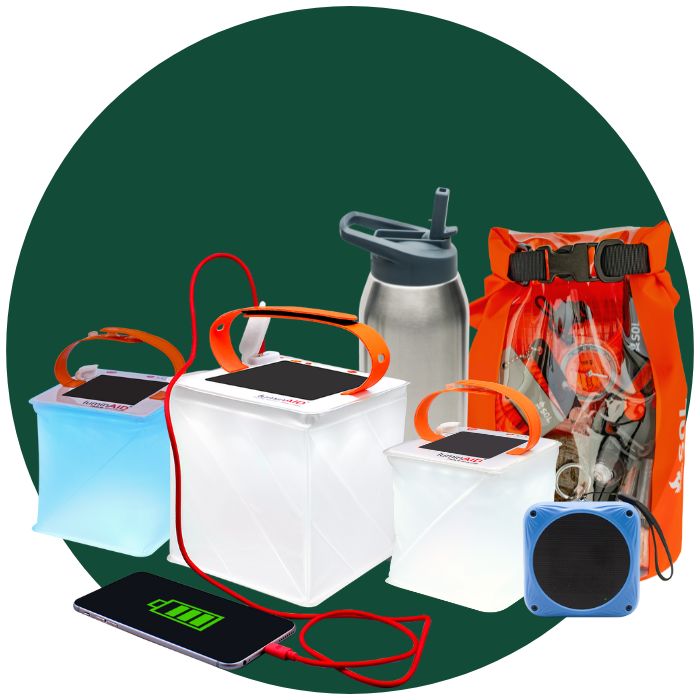
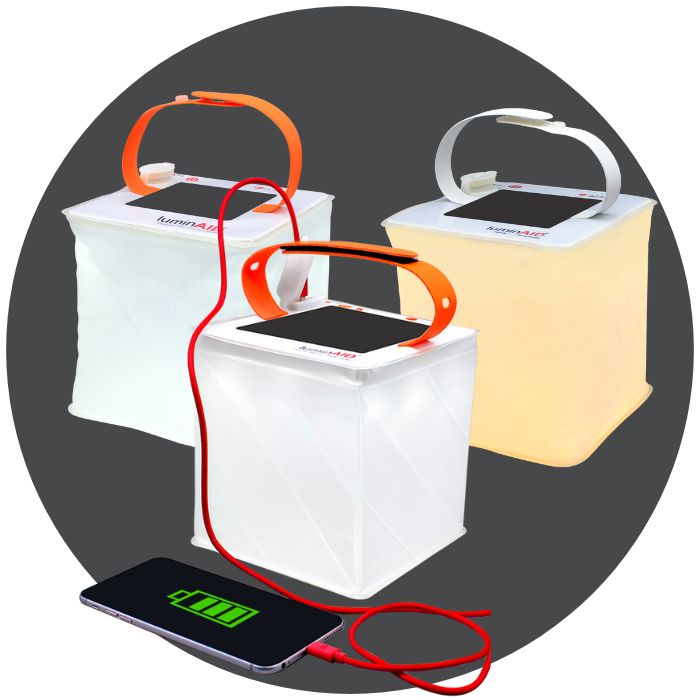
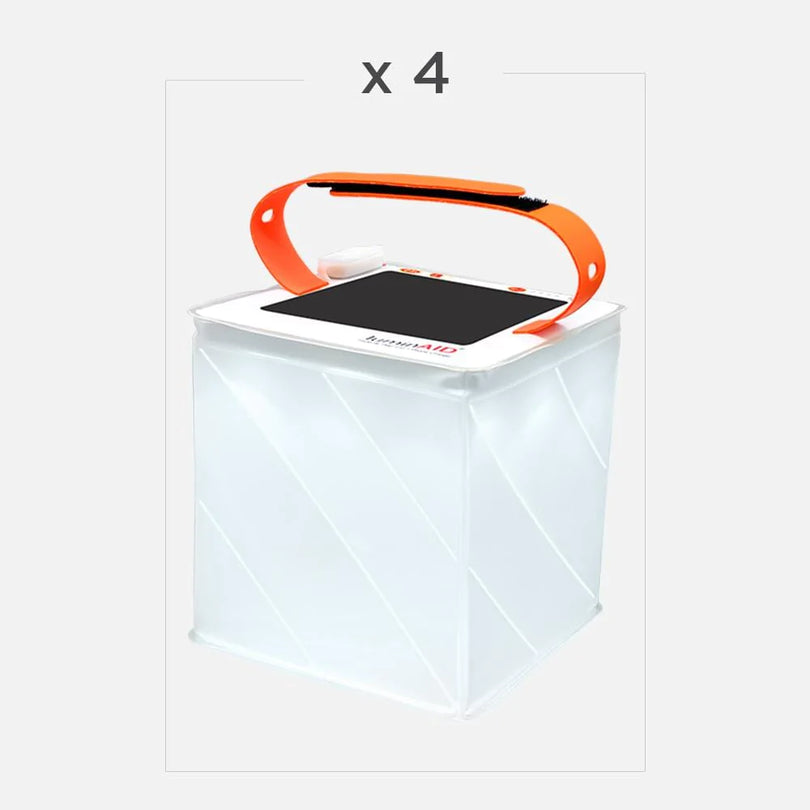
A dual-purpose light can reduce clutter in the bag. In LuminAID's catalog, products such as the PackLite Max combine lantern use with USB phone charging, which suits the two-job role many families and travelers want in a compact kit.
Why this belongs in every go bag
Go-bags need gear that works fast under stress.
A portable solar emergency light earns its place because it handles two common problems at once. It gives safe visibility in dark rooms, stairwells, campsites, and roadside pull-offs. It can also provide a small reserve of power for communication, which matters more than headline brightness once an outage stretches into its second day.
Pack it where hands can find it quickly, not under seasonal camping gear or in a bin at the back of the garage. Children, older adults, and tired drivers should be able to turn it on without hunting through the bag or guessing which button does what.
For readers organizing grab-and-go supplies, this go-bag essentials checklist is a practical reference for what should stay packed and ready.
The kits people trust are the ones they can carry, find in the dark, and use without troubleshooting. A portable solar emergency light belongs near the top of that list because reliable light and a little backup power solve problems that show up in nearly every emergency.
LuminAID makes portable solar lanterns and 2-in-1 phone chargers designed for outages, travel, and off-grid use. Readers who want compact lighting that fits a home kit, vehicle kit, or go-bag can explore current options at LuminAID.