


When the power goes out, the sudden darkness can be disorienting. Your first instinct might be to scramble for candles, but that's a mistake I see people make far too often. The real first step is simple: stay calm and get a safe source of light.
My go-to is always a powerful LED flashlight or a pre-charged solar lantern. Having a plan for these first few minutes is crucial—it sets the tone for how you'll handle the rest of the outage, whether it lasts for 15 minutes or a full day.
Your First Moves When The Lights Go Out
The key here isn't to rush, but to move with purpose. Your immediate goals are threefold: make sure everyone is safe, figure out if the problem is just your house or the whole neighborhood, and protect your expensive electronics from the power surge that often happens when the grid comes back online.
Let's break down those first critical actions.
Establish Safe, Reliable Lighting
Forget what you've seen in old movies. Candles are a serious fire hazard, especially when you're already dealing with a stressful situation. A tipped-over candle can turn a simple blackout into a much bigger emergency in seconds.
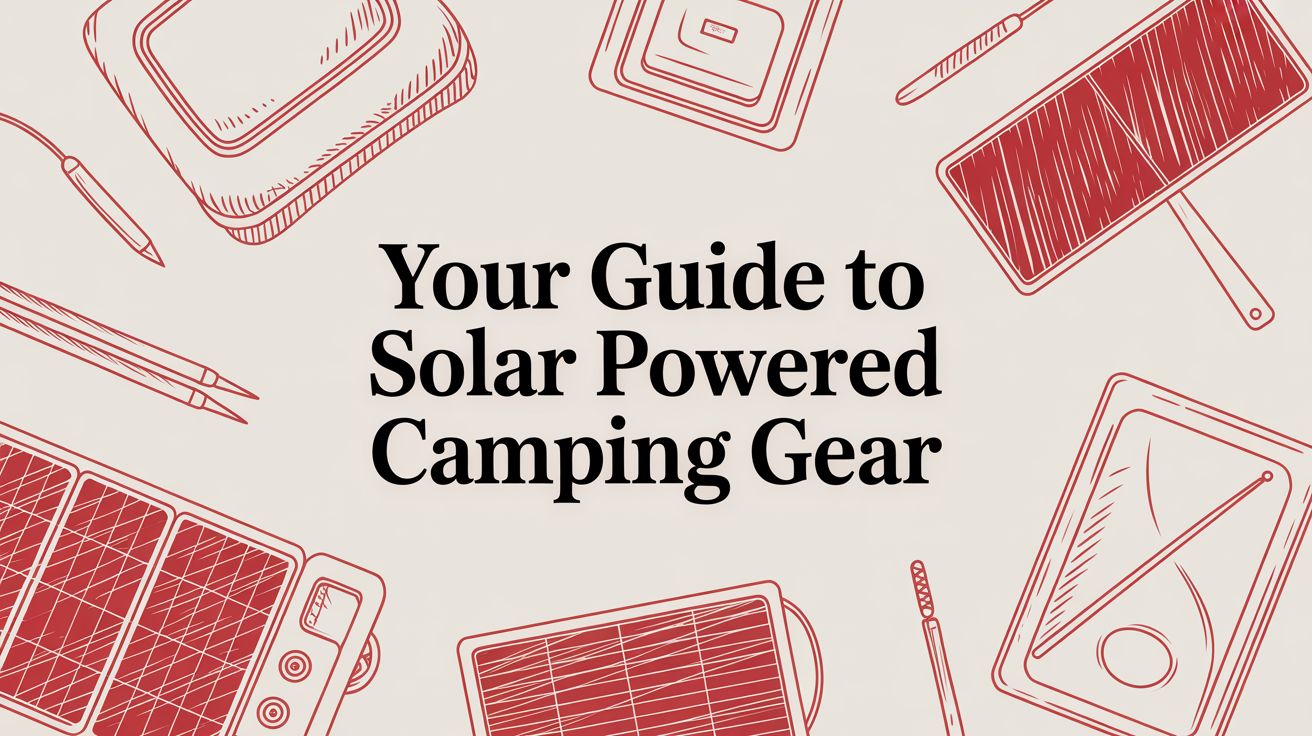
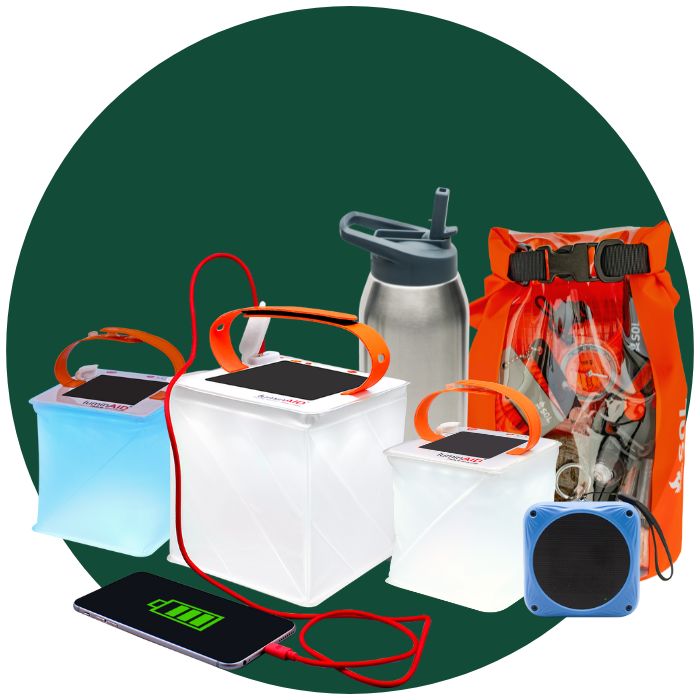
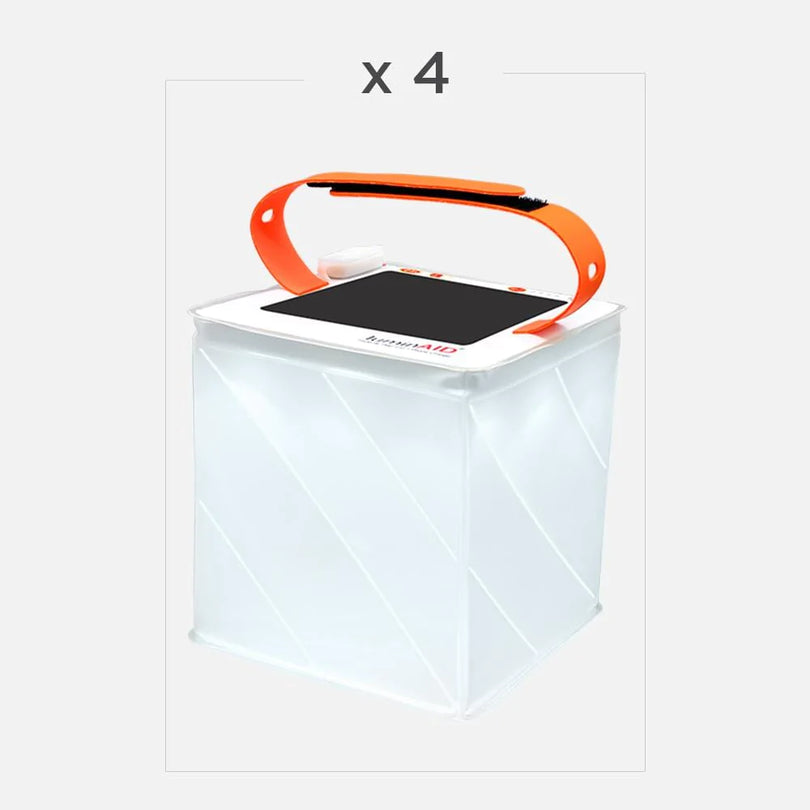
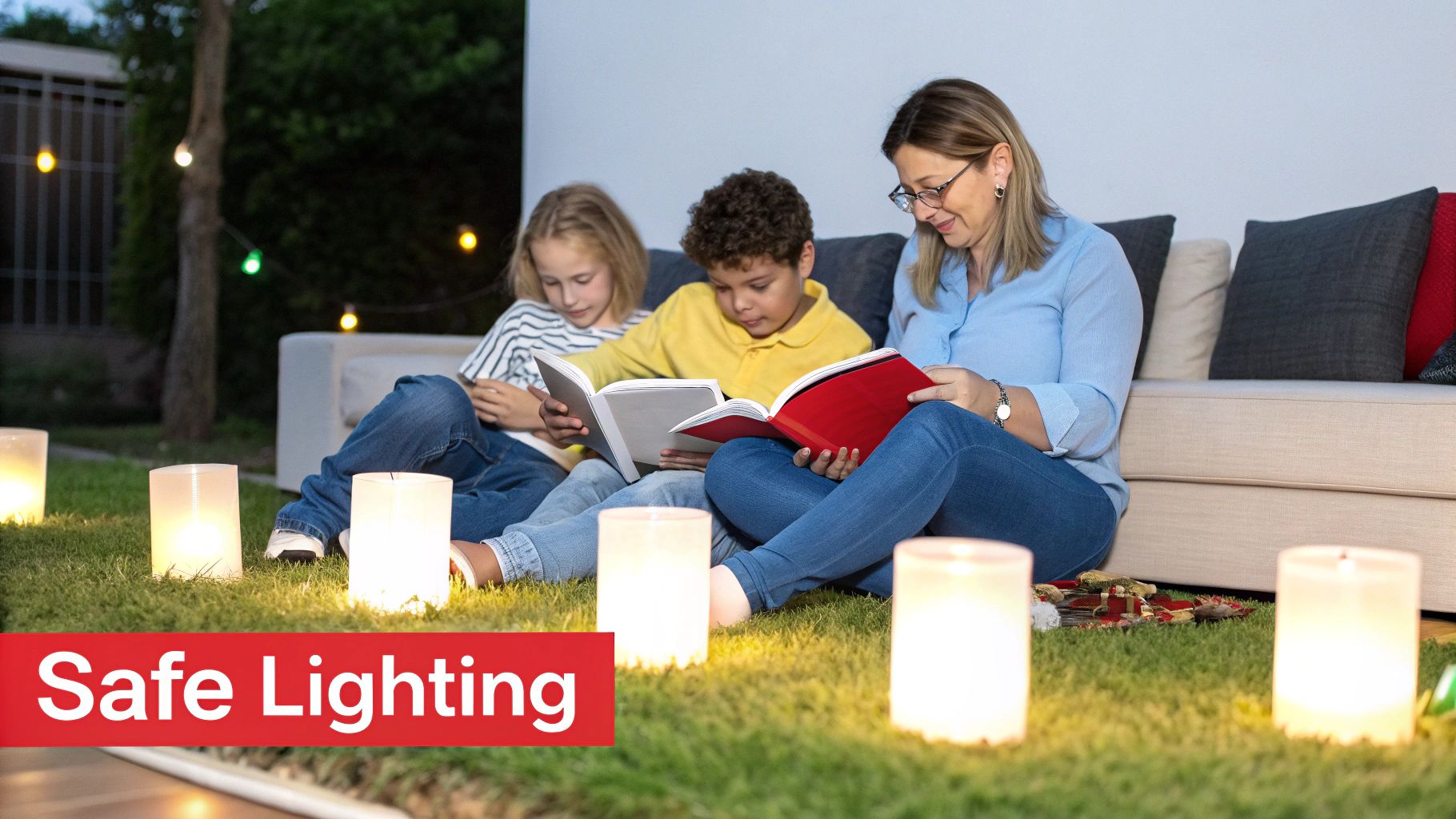
Instead, keep a reliable, fire-safe light source in a spot where you can find it in the dark—think a kitchen drawer, by your bed, or in the hall closet. I'm a big fan of solar lanterns from companies like LuminAID because they're always ready to go. A good headlamp is also fantastic because it keeps your hands free.
This simple infographic sums up the first three things you should do.
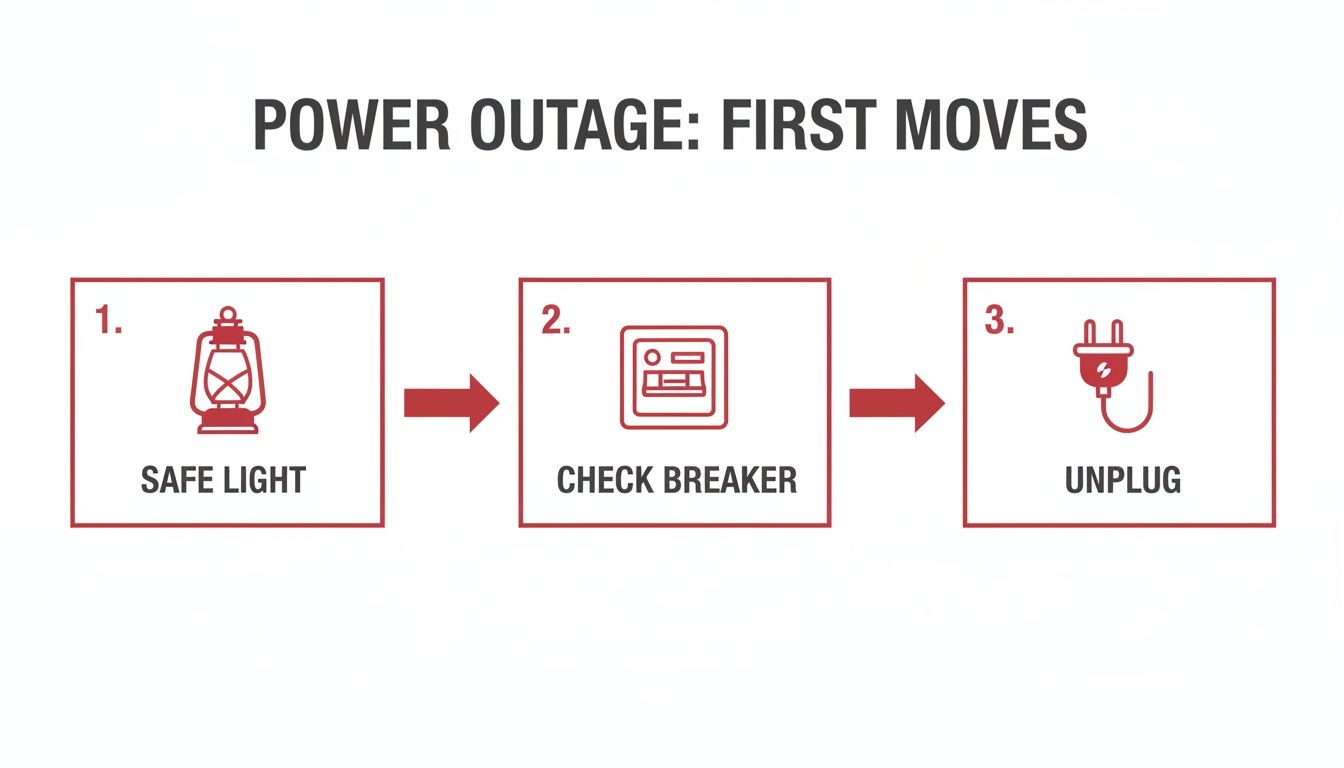
Following these steps—safe light first, then checking the breaker, and finally unplugging devices—builds a solid foundation for managing the outage safely.
For those initial moments, this quick checklist can help you stay on track.
Immediate Power Outage Action Checklist
Here’s a quick-reference guide for the essential safety and diagnostic steps to take within the first 15 minutes of a power outage.
| Action Item | Why It Matters | Recommended Tool or Action |
|---|---|---|
| Grab a Safe Light Source | Prevents trips, falls, and the fire risk associated with candles. | LED flashlight, headlamp, or solar lantern. |
| Check Your Breaker Box | Rules out a simple tripped breaker, which is a quick fix. | Locate your electrical panel and inspect the switches. |
| Look Outside | Determines if the outage is isolated to your home or affects the neighborhood. | Check for neighbors' lights or streetlights. |
| Unplug Major Electronics | Protects sensitive devices from power surges when electricity is restored. | Unplug TVs, computers, and gaming consoles from the wall. |
| Check on Family/Neighbors | Ensures everyone is safe, especially the elderly or those with medical needs. | A quick text, call, or (if safe) a knock on the door. |
Running through these simple checks will give you a clear picture of the situation so you can decide what to do next.
Diagnose The Outage Source
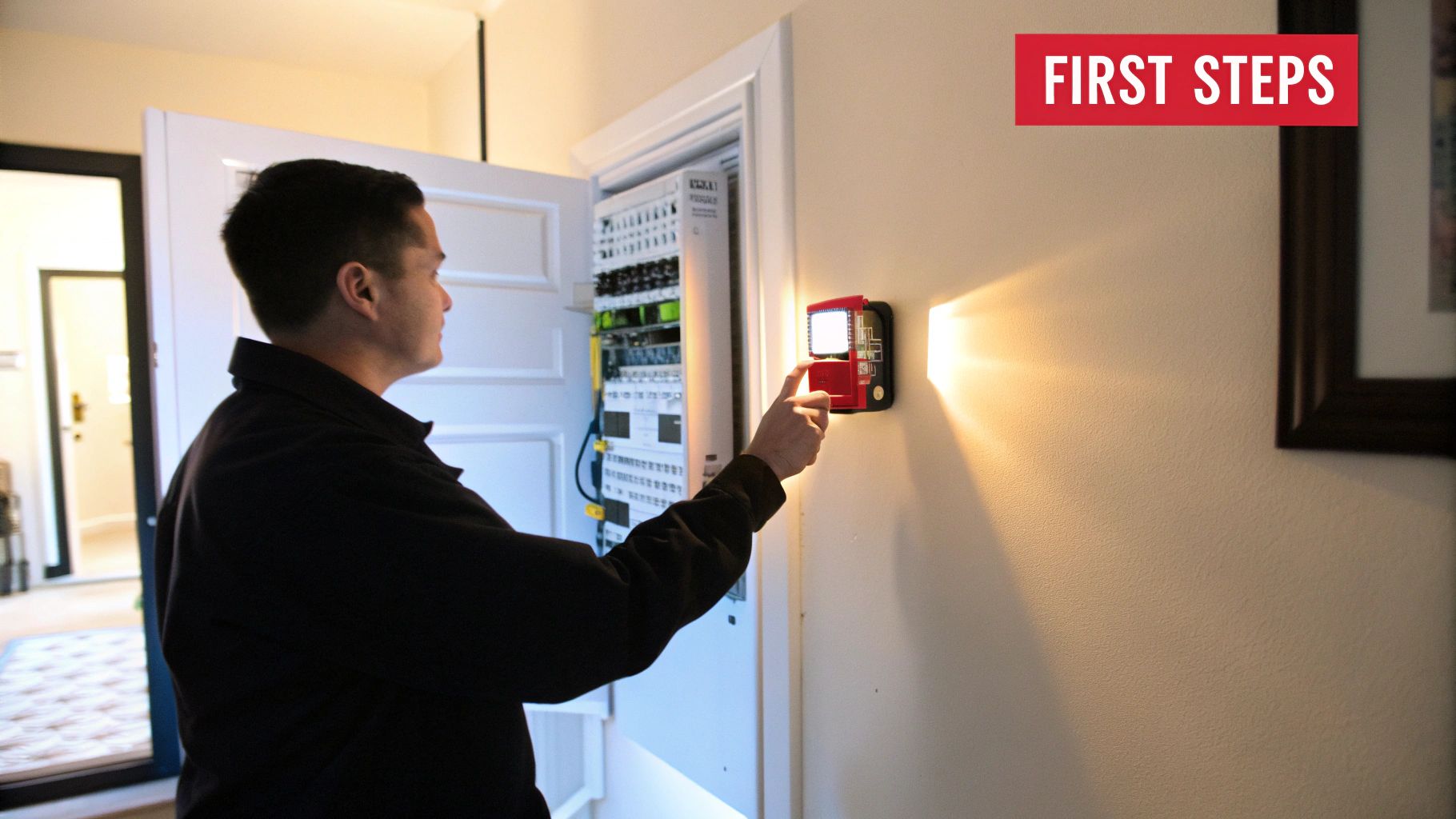
Once you've got a light, your next job is to play detective. Is this a "you" problem or a "them" problem? Head to your electrical panel or breaker box.
- Look for a Tripped Breaker: Scan the switches. Is one flipped to the "off" position or maybe stuck awkwardly in the middle? If so, push it firmly to "off," then back to "on." If power pops back on, you're all set! If it trips again right away, you've probably got an overloaded circuit or a faulty appliance that needs unplugging.
- Peek Outside: If all the breakers look fine, the next step is even easier. Just look out a window. Are your neighbors' houses dark? Is the streetlamp out? If so, you can stop troubleshooting your own system. It's a grid issue.
Knowing whether the problem is inside or outside your home is a game-changer. It shifts your mindset from a quick fix to settling in for a potentially longer wait.
Protect Your Sensitive Electronics
This is the step that people forget most often, and it can be an expensive mistake. When the power company restores service, it doesn't always come back smoothly. It can surge and flicker, and that jolt of electricity is pure poison for the delicate circuits in your computer, TV, and other high-tech gear.
Take a few minutes to walk through your house and unplug these valuable items directly from the wall. It’s a simple action that could literally save you thousands of dollars. It’s also a good reminder of why it's so important to understand what is a surge protector for everyday protection. After the power has been back on and stable for a few minutes, you can start plugging things in again, one at a time.
Keeping Your Family Safe and Comfortable
Alright, you've confirmed it’s a widespread outage and buttoned up the house. Now, your focus shifts to keeping everyone comfortable and feeling a sense of normalcy. An outage can drag on for hours, and what you do next will make all the difference in how your family weathers the wait. This is all about managing your food, controlling the temperature, and making sure everyone—especially kids—feels secure.
These skills are becoming more critical than ever. Outages seem to be getting longer and more frequent, especially with the rise of extreme weather. In the first half of 2025 alone, 45% of utility customers across the country dealt with at least one outage. The average downtime is climbing, too, with some areas seeing blackouts last over 18 hours, pushing many families to evacuate. You can dive deeper into these power grid challenges over at A1 Solar Store's blog.
Preserving Your Food Supply
Think of your refrigerator and freezer as ticking clocks. Your job is to slow them down, and the golden rule is simple: keep the doors closed.
A fridge will hold a safe temperature for about four hours if you don't open it. A full freezer can keep things frozen for around 48 hours—cut that to 24 hours if it's only half-full. I know it’s tempting to peek, but every time that door swings open, you're letting precious cold air escape.
If the power company is predicting a long wait, it’s time to grab the coolers.
- Move the Essentials: Start transferring perishables like meat, dairy, and leftovers into coolers packed with ice or frozen gel packs.
- Two-Cooler System: I like to use one cooler for drinks and snacks that we'll be in and out of, and a second one that stays sealed tight for the really important stuff.
- Check the Temp: Keep a food thermometer handy. Any perishable food that has been above 40°F for two hours or more needs to be tossed.
When in doubt, throw it out. It’s painful to waste food, I get it. But risking foodborne illness when emergency services might be stretched thin is a gamble you don’t want to take.
Simple No-Cook Meal Ideas
When you're figuring out what to do when electricity goes out, food is just as important as light for keeping spirits up. Having a few no-cook meal ideas ready can be a game-changer, particularly if you have kids. For more tips on keeping them calm, check out our guide on how to help your kids feel safe when the power goes out.
Here are a few easy go-tos that don’t need a stove:
- Peanut butter and jelly sandwiches (a classic for a reason!)
- Canned tuna or chicken salad on crackers
- Cereal with shelf-stable milk
- Protein bars, granola bars, and trail mix
- Fresh fruits and veggies that don't need refrigeration
Managing Your Home's Climate
Without your HVAC system, your home can get uncomfortable—or even dangerous—pretty quickly. How you handle it all depends on the season.
In the winter, your mission is to trap every bit of heat. Close the doors to unused rooms to concentrate warmth in a smaller area. Stuff towels or blankets under doors to block drafts and cover windows with heavy blankets for extra insulation. Remember, dressing in warm layers is always your most effective tool.
During a summer outage, you're fighting the sun. Keep blinds and curtains drawn, especially on windows that get direct sunlight. If it cools down outside at night, open windows on opposite sides of the house to get a nice cross-breeze going.
Addressing Medical Needs and Water Safety
For some, a power outage isn't just an inconvenience; it's a legitimate health risk. If anyone in your family relies on powered medical equipment like a CPAP machine or an oxygen concentrator, a backup power plan is non-negotiable. This could be a battery backup (UPS) or a generator, but make sure you talk through your plan with a doctor first.
Water is another big one. If you're on a well, you lose your water supply the second the power goes out. Even if you're on city water, the treatment plants can lose power, which could affect water quality down the line.
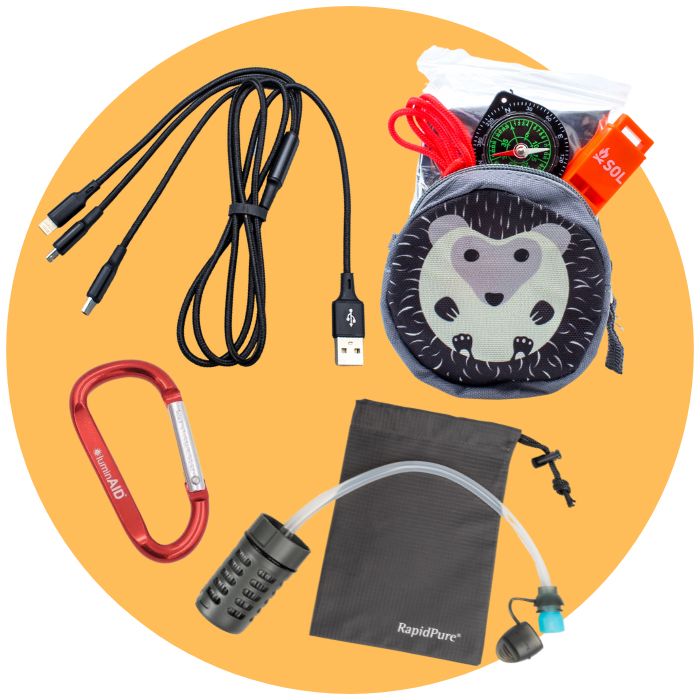
Your safest bet is to stick with bottled water for drinking and cooking. If you start running low, you can purify tap water by bringing it to a rolling boil for at least one minute. For a reliable solution that doesn't need power, a good water filter is a fantastic investment. A portable filter, like the ones from RapidPure, can remove bacteria and viruses, giving you peace of mind and clean drinking water for the whole family.
Staying Connected And Informed Without Power
In the sudden, quiet darkness of a power outage, your smartphone can feel like a lifeline. It’s how you check on family, get official updates, and even report the outage itself. But that lifeline is only as good as its battery, and when the grid is down, every percentage point counts.
Knowing how to keep your devices charged and where to find reliable information are crucial skills. The goal is to carefully manage your limited communication resources to stay safe, calm, and fully in the loop.
Maximizing Your Phone's Battery Life
Your phone is probably burning through its battery much faster than you realize, especially if it's constantly searching for weak cell or Wi-Fi signals. The second the lights go out, your phone needs to go into conservation mode. A few small tweaks can add hours of precious standby time.
These simple tricks make a huge difference:
- Activate Low Power Mode: This is the easiest and most effective first step. It automatically handles things like background activity and screen brightness.
- Dim Your Screen: Manually pull that brightness slider down as low as you can comfortably see. The screen is one of the biggest power hogs on any phone.
- Turn Off Unnecessary Services: Go ahead and disable Wi-Fi, Bluetooth, and location services. These features are constantly scanning for connections, which is a major battery drain when there are none to find.
- Limit Your Usage: Now is not the time to stream videos or play games. Stick to essential communication—short texts are way more efficient than long phone calls.
Taking these steps will stretch a single charge much, much further, buying you the time you need to get in touch with loved ones or check for updates from your utility company.
Your phone’s flashlight app is handy in a pinch, but it absolutely demolishes your battery. Grab a dedicated flashlight or lantern for light and save your phone’s power for what it does best: communication.
Creating A Reliable Charging Station
Relying on a single battery charge is a gamble, especially when an outage could last for hours or even days. The best approach is to have a backup charging plan ready to go before the lights ever flicker. While portable power banks are great, they have a limited capacity and need to be kept charged themselves.
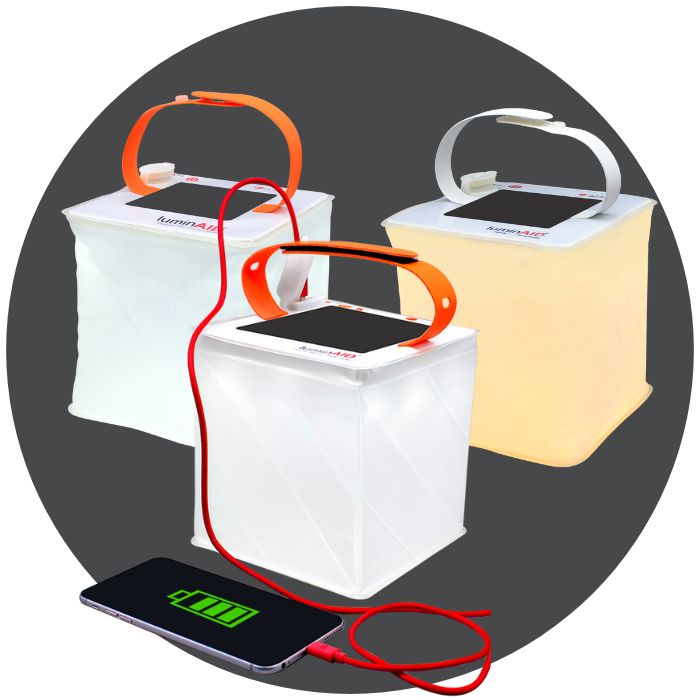
A far more sustainable solution is a device that can both generate and store its own power. For example, many modern solar lanterns are now designed as 2-in-1 power hubs, acting as both a bright light source and a portable phone charger. This dual functionality is a game-changer for any emergency kit. You can explore the solar phone charger you need for power outages to see how these provide a repeatable source of energy. Just set the device out in the sun during the day, and you'll have a power to top off your phone when you need it.
Finding Official Information When The Internet Is Down
When cell towers get overloaded or lose power themselves, your internet access can vanish right when you need it most. This is where old-school tech really shines. A battery-powered or hand-crank radio is an absolutely indispensable tool for getting emergency broadcasts and official updates.
Authorities use the Emergency Alert System (EAS) to send out critical information over AM/FM radio waves, which are often much more resilient than cellular networks. A small, portable radio ensures you can tune into sources like the National Oceanic and Atmospheric Administration (NOAA) Weather Radio. This can be your only source for life-saving news on the cause of the outage, restoration estimates, and instructions from emergency officials. Keep one in your emergency kit with a spare set of batteries, and you’ll always have a way to stay informed, even when every digital device has gone dark.
Illuminating Your Home Safely And Sustainably
When the lights go out, your first instinct is to find a source of light. For many of us, that means digging through drawers for candles. But in an already tense situation, bringing an open flame into your home introduces a completely unnecessary risk. A simple inconvenience can turn into a genuine disaster in a heartbeat.
Safe, dependable lighting is non-negotiable in an emergency. Thankfully, modern solutions have made candles an outdated choice for preparedness. The focus now should be on sustainable, fire-safe options you can count on when you need them most. Solar-powered lighting is the clear winner here, giving you a repeatable and safe way to light up your home without worrying about fire or dead batteries.
From Fire Hazard To Family Haven
The difference between a candle and a solar lantern is really the difference between anxiety and peace of mind. A single tipped-over candle can lead to a devastating fire—a risk that skyrockets when you have kids or pets running around, or when you’re just trying to get your bearings in the dark.
LuminAID products are designed from the ground up to eliminate that danger. Our area lanterns can brighten an entire room, making it easy to prepare food, play a board game, or just move around without tripping over furniture you can't see. They give you the light you need without any of the risk.
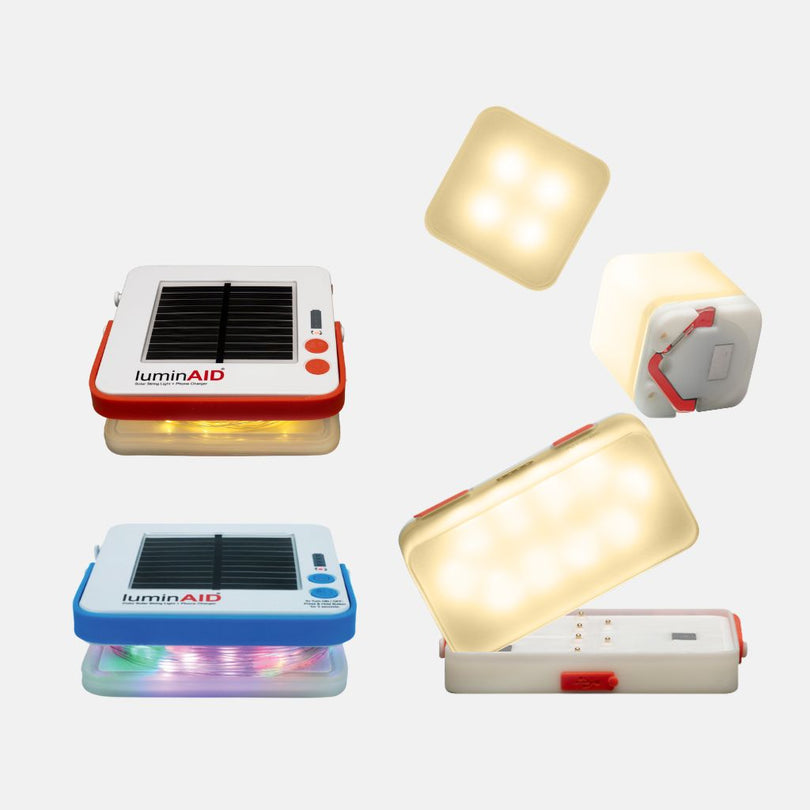
The quality of light matters for morale, too. Soft, ambient light, like the kind from our Solar String Lights, can transform a dark, intimidating space into a cozy and secure one. This is huge, especially for kids who might find a sudden blackout pretty frightening. Creating a comfortable, well-lit "home base" helps bring back a sense of normalcy and keeps everyone’s spirits up.
Strategic Lighting For A Darkened Home
Once you’ve got your safe light sources, think strategically about where to put them. You don’t have to light the whole house like a Christmas tree. Just focus on key areas to make the outage much easier to handle.
- The Kitchen: Put a bright area lantern on the counter. This will give you enough light to safely make some no-cook meals and find supplies without fumbling around in dark cabinets.
- The Bathroom: A small, waterproof solar lantern is perfect for this spot. It’s way safer than a flashlight that can roll off a counter and gives you consistent, hands-free light.
- Central Living Area: This is probably where the family will gather. Use string lights or a lantern on a low setting to create a pleasant atmosphere for reading, talking, or just hanging out.
- Hallways and Stairs: Make sure these paths are lit. Trips and falls are incredibly common during power outages, and a little light goes a long way in preventing them.
The goal is to create pockets of safe, usable light. You’re not trying to replicate daylight; you’re making your home navigable and comfortable until the power is back on.
When it comes to emergency lighting, not all options are created equal. Let's break down some of the most common choices.
Comparing Emergency Lighting Solutions
| Lighting Option | Safety Risk | Power Source | Best For |
|---|---|---|---|
| Solar Lanterns | Very Low | Solar/USB | All-around emergency use, sustainable, versatile |
| Battery-Powered Lights | Low | Disposable Batteries | Quick, short-term use if batteries are fresh |
| Flashlights | Low | Disposable Batteries | Focused, directional light for specific tasks |
| Candles | Very High | Open Flame | Last resort only; high fire hazard |
| Kerosene Lamps | High | Kerosene/Oil | Outdoor use only; emits fumes, fire hazard |
As you can see, solar lanterns stand out as the safest and most reliable option for keeping your home lit during an outage. They remove the risk of fire and fumes, and you never have to scramble to find fresh batteries.
Gear That Works Beyond The Blackout
One of the best things about investing in high-quality solar lighting is how versatile it is. The same gear that keeps your family safe during a storm is perfect for your next camping trip. A LuminAID Power Lantern is just as useful at a campsite as it is in your kitchen during a blackout. Those Solar String Lights that made your living room feel cozy can bring a little magic to your backyard, RV, or van any night of the week.
This multi-purpose value is what makes for truly smart preparation. When you're putting together your emergency kit, choose items that also serve you in your everyday life and adventures. Essential gear from trusted brands like Survive Outdoors Longer can round out your supplies, ensuring you have reliable tools for any situation, planned or unplanned.
By choosing versatile gear, you’re not just preparing for an emergency; you’re investing in all of your adventures. To make the best choice for your needs, check out our solar lantern buyer's guide.
Building Your Ultimate Power Outage Kit
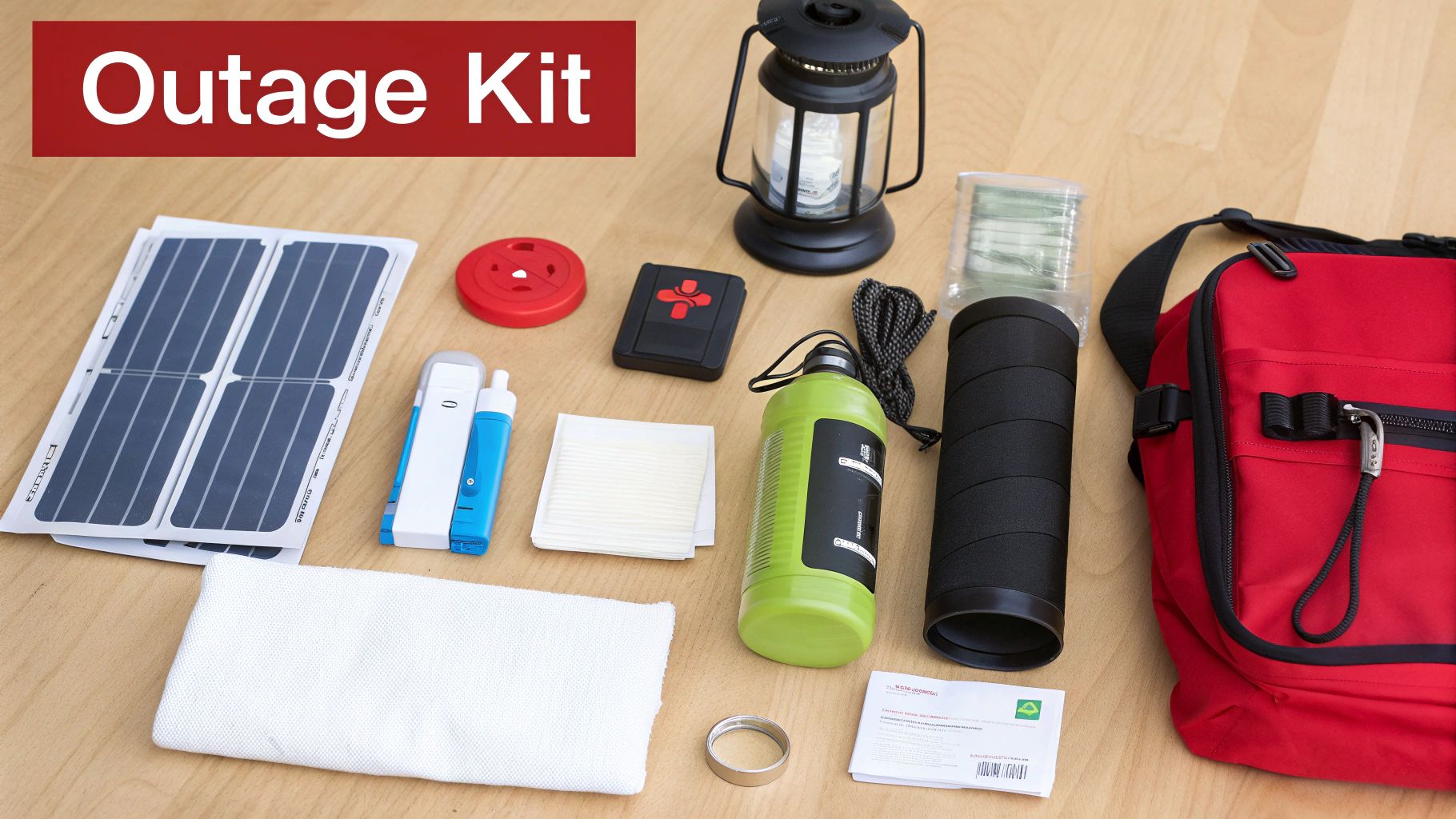
True confidence when the lights go out isn't about hoping it will be over soon. It comes from having a well-stocked, organized kit ready to go, giving you everything needed to be self-sufficient for at least 72 hours. A grab-and-go kit can transform a stressful situation into a manageable one, ensuring you and your family are safe, fed, and comfortable.
Building this kit isn’t about just hoarding supplies; it’s about thoughtful preparation. Let's break it down category by category, focusing on reliable, multi-purpose items that give you the most bang for your buck. Think of this as your blueprint for a power outage kit that’s always ready.
The Five Pillars of a Power Outage Kit
A solid kit really comes down to covering five fundamental areas: lighting, first aid, food and water, communication, and sanitation. Get these right, and you’ll be in great shape for almost any common outage scenario.
- Lighting and Power: As we've touched on, safe lighting is priority number one. Your kit should have a few different options. A LuminAID solar lantern is fantastic for bright, sustainable area light, while a good LED headlamp keeps your hands free for other tasks. A 2-in-1 power lantern that can also charge your phone is a non-negotiable item in my book.
- First Aid and Medical: A minor cut or scrape can become a much bigger problem without the right supplies. A comprehensive first-aid kit is essential. Pre-assembled options from a reputable brand like Adventure Medical Kits are a great starting point since they’re thoughtfully organized for emergencies. Don't forget to add a seven-day supply of any prescription medications for each person in your family.
- Food and Water: The gold standard is one gallon of water per person, per day. For food, pack non-perishable items that don’t require any cooking or refrigeration. We're talking protein bars, canned goods (with a manual can opener!), dried fruit, and peanut butter. If you have an infant, formula and sterile water are absolute must-haves.
- Communication: A battery-powered or hand-crank radio is your most reliable link to the outside world for official updates. Keep your phone topped up with a solar power bank or a device like a LuminAID Power Lantern.
- Sanitation and Hygiene: Simple hygiene makes a huge difference in comfort and health. Pack moist towelettes, garbage bags with plastic ties, and hand sanitizer. If you rely on a well, remember your toilets won't flush, so having a plan B for this is critical.
A great kit is an organized kit. I recommend using a large, durable container like a plastic tote or a big duffel bag. Pack smaller items in clear, labeled zip-top bags to keep everything dry and easy to find in the dark.
Often-Forgotten but Critical Items
Once you have the basics down, a few extra items can make a world of difference. These are the things people often wish they had when they're figuring out what to do when electricity goes out for more than just a few hours.
A small stash of cash is incredibly useful, as credit card readers and ATMs will be down. It’s also wise to make both digital and physical copies of important documents—think IDs, insurance policies, and birth certificates. Keep the physical copies in a waterproof bag and the digital versions on a password-protected USB drive.
Finally, think about comfort and entertainment. A deck of cards, a book, or a board game can be a massive morale booster, especially if you have kids. Never underestimate the power of a little distraction.
Customizing Your Kit for Your Life
There’s no such thing as a one-size-fits-all kit. The best emergency kit is tailored to your specific life, whether you live in an apartment, a sprawling home, or on the road in an RV.
For Families with Children:
- Include diapers, wipes, and formula if you have an infant.
- Pack familiar comfort items like a favorite stuffed animal or blanket.
- Add some non-electronic entertainment like coloring books, crayons, and simple card games to keep them occupied.
For RVers and Outdoor Users:
- Your rig is likely already well-stocked with camping gear, but double-check your propane levels and water purification systems.
- Ensure your solar charging setup is in good working order. For those looking at more robust solutions for a home base, a solar panel installation guide can offer great insights into generating your own backup power.
- Keep extra fuel for your generator in a safe, well-ventilated space, far from your living area.
Your power outage kit should be a living thing. Review and refresh it every six months—a good time to do this is when you change the clocks for daylight saving time. Swap out any expired food, water, and medications, and test all your batteries to make sure they’re fresh. This simple habit ensures your kit is ready the moment you need it.
Common Questions About Power Outages
Even with a solid plan in place, questions always seem to pop up right in the middle of a blackout. Having clear, straightforward answers ready can make all the difference, helping you manage the situation with confidence. Here, we tackle some of the most frequent questions people have when the lights go out.
How Soon Should I Report A Power Outage?
The second you realize the power is out, do a quick check of your circuit breakers. This rules out an issue inside your own home. If the breakers are fine, a peek out the window to see if your neighbors are also dark is the next step. If they are, you know it’s a wider problem.
Once you’ve confirmed it's a grid issue, report it to your utility company right away. Don’t just assume someone else has already called it in. The more reports they get early on, the faster they can map the outage area and pinpoint the source of the problem. Most utility providers have automated phone lines or online systems that make reporting fast and simple.
Is It Ever Safe To Run A Generator Indoors?
No. Absolutely not. This is probably the most critical safety rule to remember during a power outage. Portable generators produce carbon monoxide (CO), a colorless, odorless gas that is incredibly deadly.
You must always operate a generator outdoors, at least 20 feet away from any doors, windows, or vents. This prevents the poisonous fumes from seeping into your home. As a non-negotiable backup, make sure your home is equipped with working carbon monoxide detectors on every level.
There are zero exceptions to this rule. Running a generator indoors, even in a garage with the door wide open, can be fatal. Prioritize your family’s safety above everything else.
Can I Use My Car To Charge My Phone?
Yes, you can, but think of it as a last resort. Your car's USB port will certainly charge a phone, but running the engine just for that purpose wastes precious fuel. You also risk draining your car’s battery if you’re not careful.
And just like a generator, never run your car in a closed garage—it produces the same deadly carbon monoxide. A much better and more sustainable option is a solar-powered charger, like the one built into many LuminAID lanterns. It provides repeatable charging without any fuel or risk. Plus, using a reliable light from brands like Survive Outdoors Longer helps you save your phone's battery by not having to use its built-in flashlight.
How Do I Protect My Appliances When The Power Returns?
When electricity is restored, it often comes back with a sudden voltage spike or surge that can instantly fry sensitive electronics. This is exactly why you should unplug major appliances like computers, televisions, and gaming consoles as soon as the power goes out.
Once the lights come back on, give it a few minutes to make sure the power is stable. Then, you can start plugging your devices back in, one at a time. Using high-quality surge protectors on all your valuable electronics adds a crucial layer of defense against these damaging power surges.
At LuminAID, we believe in being prepared for any situation. Our solar lanterns and 2-in-1 phone chargers are designed to provide reliable light and power when you need it most. Equip your home and emergency kit today at https://luminaid.com.