


A lot of people start looking for outdoor lighting solutions when something goes wrong. The patio dinner runs later than expected. The dog needs to go out after the power cuts. A campsite setup takes longer than planned. A driveway, deck stair, or trail to the shed suddenly feels less familiar in the dark.
That's why outdoor lighting is no longer just a landscaping accessory. It's part comfort, part safety gear, and part preparedness tool. The right setup can make a backyard usable, a campsite manageable, and an outage far less disruptive, especially when that setup doesn't depend on wall power.
Table of Contents
Why Outdoor Lighting Is More Than Just a Bulb
A good outdoor light does more than make a space visible. It helps people move safely, identify hazards, cook after dark, find gear, secure an entry point, and keep routines intact when utility power fails.
The market reflects that shift. The global outdoor lighting market was valued at USD 17.06 billion in 2024 and is projected to reach USD 28.43 billion by 2030, with growth tied to energy-efficient products like LEDs that can reduce electricity use by up to 75% compared to traditional fixtures, according to Grand View Research's outdoor lighting market analysis.
That growth matters because it has widened the field. Homeowners aren't limited to hardwired path lights and floodlights anymore. Campers and families can now choose from portable lanterns, rechargeable area lights, solar string lights, task lights for cooking or repairs, and low-glare fixtures that work without trenching wire across a yard.
Practical rule: Match the light to the job. Area light for gathering. Focused beam for work. Low-level marker light for walking. Backup off-grid light for outages.
A common mistake is treating all outdoor lighting as decorative. That approach usually leads to poor coverage in the places that matter most, such as steps, gates, gear tables, and routes between the house and driveway. It also leads to overlighting, which creates glare and kills night vision.
Reliable outdoor lighting solutions work best when they're planned like a small system, not bought as isolated gadgets. Comfort, safety, runtime, power source, and weather exposure all matter. So does portability. A light that works on the patio but can also move into a tent, garage, or emergency tote is often more useful than a fixed fixture that never leaves one spot.
A Breakdown of Modern Outdoor Lighting Types
Modern outdoor lighting falls into two broad groups. One is installed lighting for homes and properties. The other is portable lighting for travel, recreation, and outages. The best choice depends less on style and more on whether the light needs to stay in one place, move with the user, or work when the grid doesn't.

What each type does well
Wired systems still make sense for permanent perimeter lighting, driveway coverage, and outdoor layouts that need predictable nightly operation. Low-voltage systems are easier to scale than line-voltage installs, but both require planning, routing, and maintenance. They're dependable once installed, but they're not flexible.
Battery-powered lights are simple and fast. They work well for sheds, stair railings, temporary task lighting, and emergency storage. Their weak point is power management. If users don't keep them charged or stocked with fresh batteries, they fail at the wrong moment.
Solar lights are the most useful option for people who want low-hassle outdoor lighting solutions without wiring. They're well suited for ambient backyard use, RV setups, campsites, and backup lighting. The trade-off is charging dependency. Tree cover, winter sun angle, and panel placement all affect performance.
String lights are mostly about atmosphere, but they can still be practical. On a patio, at a picnic table, or under an awning, they create usable low-level light with broad coverage. They're not a replacement for a task lantern or a security light, but they do a job that harsh floodlighting never will.
LEDs dominate nearly every category for good reason. The U.S. Department of Energy notes that LED outdoor luminaires offer lifespans of 50,000 hours or more, compared with 15,000 to 35,000 hours for high-intensity discharge sources. They also contain no mercury or lead and turn on instantly.
Harsh, single-source lighting usually makes outdoor spaces less usable, not more. It throws glare in the eyes and leaves deeper shadows just beyond the beam.
Outdoor Lighting Types at a Glance
| Lighting Type | Power Source | Installation | Best For | Pros | Cons |
|---|---|---|---|---|---|
| Wired low-voltage lights | Transformer and cable | Moderate | Paths, gardens, permanent accent lighting | Stable, scalable, clean look | Requires layout planning and cable runs |
| Wired line-voltage fixtures | Household electrical service | Complex | Security, large areas, fixed structures | Strong output, reliable fixed power | Hardest to install and modify |
| Battery lanterns and task lights | Rechargeable or replaceable batteries | Easy | Outages, sheds, campsites, repairs | Portable, immediate, no wiring | Needs charging or battery discipline |
| Solar lanterns and area lights | Solar panel, often USB backup | Easy | Off-grid use, patios, camps, emergency kits | No outlet needed, portable, low operating hassle | Charging varies with sunlight |
| String lights | Plug-in, solar, or battery | Easy to moderate | Patios, pergolas, awnings, dining spaces | Soft coverage, easy ambiance | Limited task lighting value |
| Spotlights | Wired, solar, or battery | Moderate | Trees, flags, focal points | Strong emphasis, controlled direction | Easy to mis-aim and create glare |
| Floodlights | Wired or solar | Moderate | Security zones, driveways, work areas | Broad illumination | Can feel harsh and waste light |
How to Choose the Right Light for Your Needs
The right light starts with the job. People often buy by brightness alone, then end up with lighting that's annoying to live with, awkward to carry, or useless in a blackout. Outdoor lighting solutions work better when they're chosen around actual use conditions.

Backyard comfort and ambiance
For patios, decks, and small yards, broad soft light usually beats a bright central source. String lights, low-output path lights, and a movable area lantern create a space that feels usable without feeling overlit.
A practical setup usually includes:
- Ambient light overhead: String lights over a dining or seating zone reduce harsh contrast.
- Low guidance light below: Steps, edges, and transitions need subtle marking, not spotlight treatment.
- One movable task light: Grills, serving tables, and cleanup areas benefit from focused light that can be repositioned.
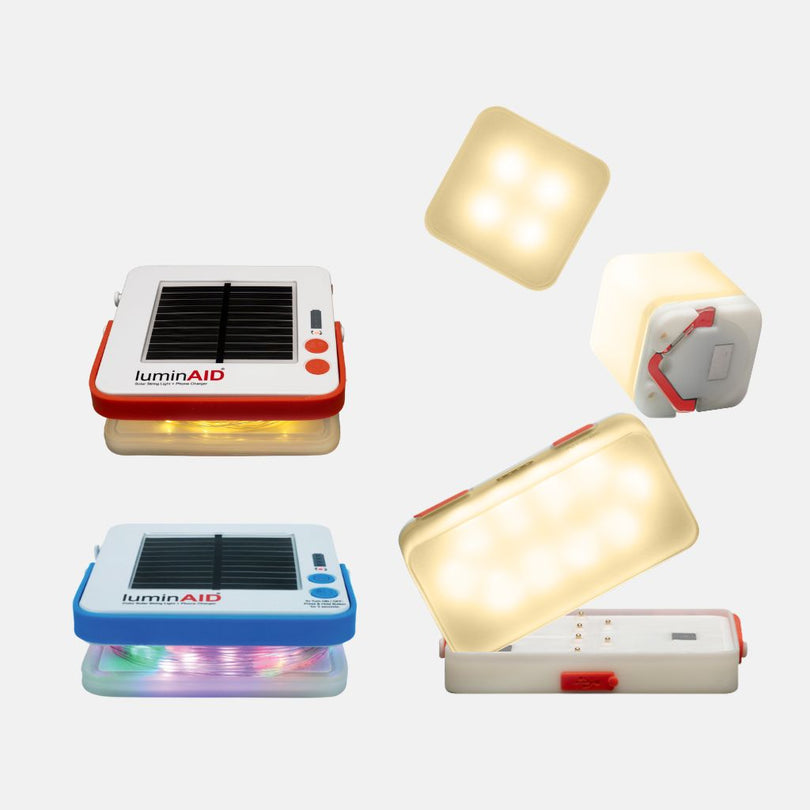
For this kind of use, a portable option such as the LuminAID Solar String Lights can make sense because it provides soft lighting without requiring an outlet, which is especially useful on fences, pergolas, campsites, and temporary setups.
Camping trailheads and mobile setups
Camp lighting needs to do several jobs at once. It should help with setup, food prep, navigation, and late-night movement to and from tents or vehicles. Fixed permanent fixtures don't help here. Packability, recharge options, and hanging flexibility matter more.
A strong mobile setup usually separates lighting into zones:
- Camp hub light: Hang a lantern over the table or under a shelter.
- Personal light: Keep a small light in a pocket, pack, or tent.
- Perimeter marker: Use low, warm light to identify guy lines, vehicle edges, or the path to the restroom.
Portable off-grid lighting is also useful alongside other compact field essentials. For general outdoor preparedness gear, Adventure Medical Kits is a relevant resource for building a more complete camp and emergency setup.
Emergency readiness at home
Emergency lighting should be boring in the best way. It needs to be easy to find, easy to operate, and independent of household power. Decorative patio lights don't automatically fill that role.
Look for three things:
- Simple charging options: Solar plus USB charging adds flexibility.
- Area lighting first: In outages, room-filling light is usually more useful than a narrow beam.
- Storage readiness: Keep at least one light where people naturally reach during a blackout, such as near the kitchen, stairs, or emergency bin.
The best outage light isn't the brightest one on the shelf. It's the one that's charged, reachable, and useful without any setup.
Design Tips for Placing and Sizing Your Lights
A lot of poor lighting plans fail for the same reason. They try to solve everything with one fixture type and one brightness level. Good outdoor lighting solutions rely on contrast, restraint, and placement.

Layer light instead of blasting everything
Outdoor spaces work better when light is layered by function. Task lighting helps with cooking, locks, steps, and gear sorting. Accent lighting highlights trees, walls, or posts. Ambient lighting fills the space and keeps it comfortable.
Color temperature matters just as much as placement. TCP's outdoor lighting guidance recommends warm white bulbs between 2700K and 3000K for the most natural and balanced outdoor appearance. It also notes that varying brightness across fixtures creates texture and depth, which is why a yard or campsite looks better with mixed levels than with uniform output everywhere.
For more examples of how soft overhead lighting changes a space, these outdoor string lighting ideas show how to create usable gathering areas without turning the yard into a parking lot.
Use color beam spread and spacing on purpose
Beam spread changes everything. Narrow beams isolate a tree trunk, sign, or architectural feature. Wider beams wash a fence line or sitting area. Problems start when installers aim wide beams at reflective walls, textured stone, or eye level seating.
The most overlooked variable is season. Dense summer foliage absorbs and blocks light differently than bare winter branches, so a layout that looked balanced in one season can create dark gaps or hot spots later. Textured materials also need more care than smooth surfaces. Tight beam control and close fixture placement usually produce a cleaner result than a generic wide-angle approach.
A few placement habits consistently work:
- Keep glare out of sightlines: Don't aim fixtures where seated guests or approaching walkers look directly into the source.
- Light the destination: Gates, steps, and table surfaces matter more than empty lawn.
- Test at night: A fixture that looks well placed during the day often needs adjustment after dark.
Understanding Power Durability and Weatherproofing
Durability separates gear that survives one season from gear that becomes e-waste. Outdoor lighting solutions live with rain, dust, pollen, irrigation spray, temperature swings, and physical handling. A fixture that looks sturdy on a product page may still fail if its seals, hardware, or charging components aren't built for exposure.
Power choices under real conditions
Power source affects reliability more than many buyers expect. Wired systems avoid charging concerns, but they can fail at connectors, transformers, or buried runs. Battery-powered lights are convenient, though they depend on charge habits and spare power availability. Solar lights remove outlet dependence, but they need thoughtful panel placement and occasional cleaning to stay useful.
For people assembling storm kits, vehicle bins, or bug-out gear, it helps to think in layers:
- Primary light: A rechargeable lantern or area light for normal use
- Backup light: A compact secondary light stored separately
- Backup power path: Solar charging, USB charging, or both
- Durable storage: Keep lights with other field-ready essentials such as those found through Survive Outdoors Longer
What weather resistance actually means
Weatherproofing isn't just about a label. PacLights explains that outdoor fixtures need a high Ingress Protection (IP) rating, along with sealed joints and corrosion-resistant hardware, to prevent moisture intrusion that causes electrical failures.
That matters in practical terms. Cheap fixtures often fail at the seams, screws, and cable entries long before the LED itself wears out. The electronics may be fine, but a weak gasket or rusting fastener lets water in and the fixture is done.
For permanent residential layouts, it's useful to discover outdoor lighting designs that show how fixture placement and finish choices affect long-term performance as much as style.
A durable light isn't just bright and weather resistant on paper. It stays sealed after months of sun, grime, handling, and real storms.
The Eco Benefits and Safety of Smart Lighting
Outdoor lighting should make a place safer without wasting power or flooding the neighborhood with glare. That balance is where smart choices matter. Better fixtures, better color, and better control reduce waste while improving actual usability.
Lower impact lighting choices
Responsible lighting starts with direction and spectrum.
That doesn't mean every property needs to look dim. It means light should stay where people need it. Downward-directed fixtures on paths, entries, and outdoor work zones do more useful work than exposed bulbs spraying light sideways and upward.
People interested in lower-waste setups can also explore sustainable outdoor lighting practices that reduce reliance on disposable batteries and unnecessary runtime.
Safer properties without overlighting
Security lighting works best when it supports awareness, not when it creates visual chaos. Entrances, side yards, stairs, and parking areas benefit from controlled illumination. Overly bright floodlighting can make movement outside the beam harder to read.
The same principle applies to vehicles and towing. Anyone managing utility trailers, camp trailers, or cargo setups should understand the basics of essential trailer wiring and lights so marker, brake, and connector lighting don't become a roadside problem.
A thoughtful safety setup often includes:
- Entry lighting: Clear visibility at doors, locks, and thresholds
- Movement lighting: Steps, paths, and grade changes marked without glare
- Portable backup: A lantern or area light ready for outages or outdoor repairs
Maintenance Tips and Emergency Preparedness
The most common lighting failures aren't dramatic. Panels get dirty. Connectors loosen. Gaskets age. Fixtures shift after yard work. Then the system underperforms just enough that people stop trusting it.

A simple upkeep routine
NSL USA reports that over 70% of homeowners skip annual lighting maintenance due to cost, contributing to a 45% fixture failure rate within two years. The same source notes that simple DIY cleaning and connector checks can prevent many issues.
A practical routine doesn't need to be complicated:
- Clean solar surfaces: Dirt and pollen cut charging efficiency.
- Inspect seals and connectors: Look for moisture, corrosion, or looseness.
- Realign fixtures: Plants grow, furniture moves, and beams drift.
- Test stored lights: Emergency lanterns should be checked before storm season, not during it.
Why every emergency kit needs reliable light
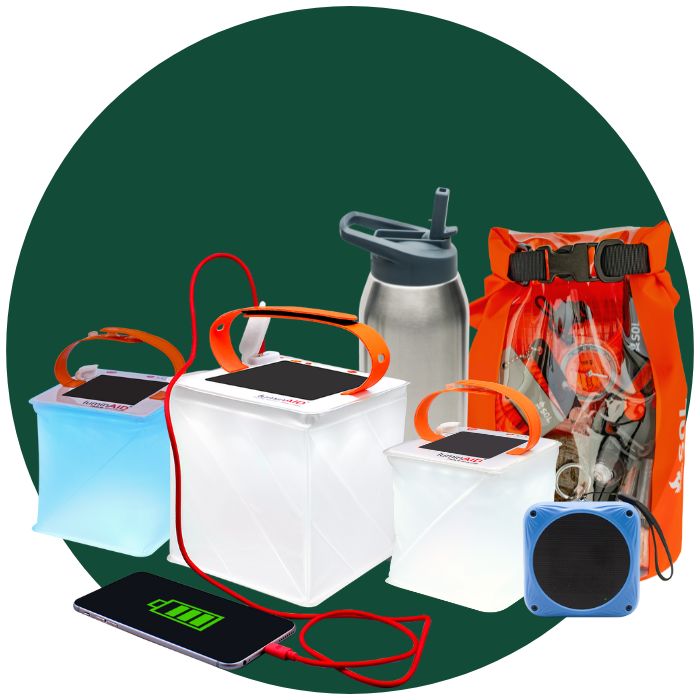
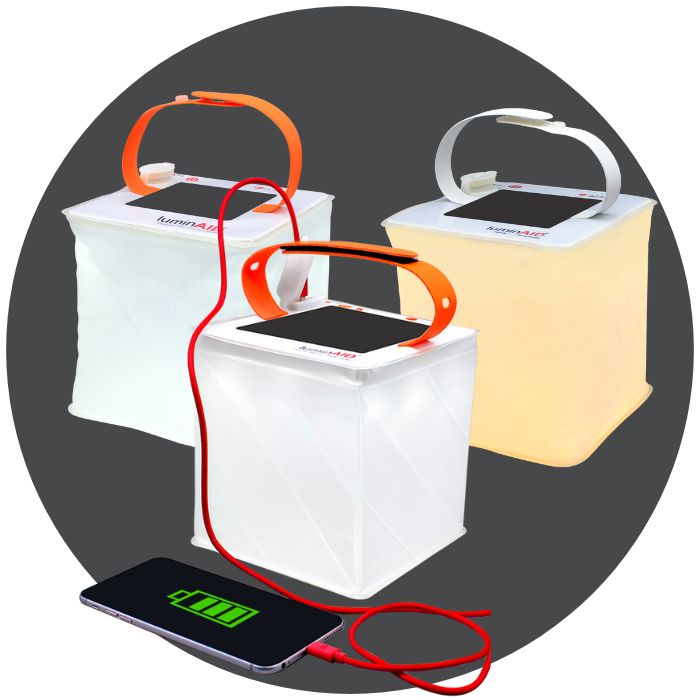
Emergency lighting should live where people can grab it in seconds. A good lantern or area light belongs in a storm bin, car kit, or hallway cabinet right alongside water, first aid, and backup power. For a closer look at where portable off-grid lights fit into a home readiness plan, this guide to a portable solar emergency light is a useful reference.
Reliable light also has a humanitarian side. LuminAID's Give Light program supports access to off-grid lighting for people affected by disasters and displacement. That matters because in a crisis, light isn't decorative. It helps families move safely, charge critical devices, and regain basic control after dark.
Frequently Asked Questions
Are solar outdoor lights reliable enough for emergencies
They can be, if they're treated as part of a system. Solar is strongest when paired with good storage habits, occasional panel cleaning, and a backup charging option.
What color light is easiest to live with outdoors
Warm light is usually easier on the eyes and better for relaxed spaces than cool, stark light.
Are string lights enough for a backyard
They're enough for ambiance and low-level area lighting. They usually aren't enough for steps, cooking, repairs, or security on their own.
What fails first in outdoor lights
Usually the weak points are seals, connectors, charging components, and hardware, not the LED itself.
How often should outdoor lights be checked
A quick seasonal inspection is a smart minimum. High-exposure setups near sprinklers, salt air, or heavy dust deserve more frequent checks.
LuminAID makes practical off-grid lighting tools for campsites, backyards, vehicles, and emergency kits. To explore portable solar lanterns, string lights, and backup lighting options that work without disposable batteries or fixed outlets, visit LuminAID.