

The power goes out just as dinner is being served. One phone is at 18%, the children are asking where the flashlights are, and the emergency supplies are scattered between a kitchen drawer, the garage, and an upstairs closet. A family can have plenty of useful items and still lose valuable time because nobody knows what to grab, what works, or who handles each task.
An emergency preparedness kit for family should function as a timeline-based household system. The first layer supports evacuation or the first 72 hours without dependable utilities, transportation, or retail access. The second layer supports sheltering at home for two weeks, with enough water, food, medication, light, information, and documentation to reduce unnecessary trips outside.
Table of Contents
- Why Every Family Needs a Ready Kit Before Disaster Hits
- Building Your Core Kit for 72 Hours and Two Weeks at Home
- Customizing Your Kit for Infants Children Elderly and Pets
- Staying Powered and Connected When the Grid Goes Down
- Organizing Documents Medications Storage and Rotation on a Budget
- Keeping Your Family Kit Ready With Communication and Evacuation Plans
Why Every Family Needs a Ready Kit Before Disaster Hits
The power fails during dinner. One phone shows 18% battery, the children cannot find the flashlights, and supplies sit across the kitchen, garage, and upstairs closet. A family may own useful gear yet lose time because no one knows what to grab, what still works, or who handles each task. A ready kit turns that confusion into a routine.
An emergency preparedness kit for family works best as a timeline-based system. The 72-hour grab-and-go layer supports evacuation or the first three days without dependable utilities, transportation, or stores. A separate two-week home reserve supports sheltering in place. Power and communication belong in both layers, because food and water do little if the household cannot see, receive instructions, charge phones, or contact one another.
FEMA's household guidance centers on a 72-hour standard, with food, water, medications, flashlights, batteries, a radio, documents, cash, and other supplies for temporary self-sufficiency while services recover. The FEMA emergency kit guidance gives families a practical starting point.
Scattered supplies aren't a usable system
A flashlight without working batteries is not a lighting plan. Food without a manual can opener may be difficult to use, and medication locked in an inaccessible cabinet will not help during a rapid departure. The working system is gathering, labeling, carrying, and checking supplies together.
Preparedness remains uneven across the United States. A summary of FEMA's 2023 National Household Survey reported that only 48% of Americans had a three-day supply of food and water, while 61% had no emergency plan. A separate 2020 U.S. study reported that 54.8% of households had a carry-on emergency preparedness kit, with hurricane-prone areas such as Miami and Tampa near 70%. Those findings appear in the household emergency preparedness study.
Practical rule: A kit counts only when a household member can locate it, carry it, and explain what each essential item is for.
Use the family emergency preparedness resource to strengthen the household plan, then adjust supplies for local hazards, health needs, transportation, and housing. Adults and children may also be separated when an incident begins, so responsibilities should extend beyond the home. ProMed Certifications' workplace emergency readiness guide provides context for coordinating during that separation.
A capable system has a grab-and-go layer, a home reserve, and a maintenance habit. Keep the first layer light enough to carry. Let the home reserve hold heavier supplies. Check both regularly, since expired food, flat batteries, and missing prescriptions create false confidence.
Building Your Core Kit for 72 Hours and Two Weeks at Home
A power outage can change the kit you need within hours. The first timeline is a 72-hour grab-and-go layer for evacuation or a short disruption. The second is a two-week home reserve for staying put. Food and water support both timelines, but power, lighting, and communication determine whether a family can use those supplies safely and make decisions as conditions change.
Build in order of consequence. Start with water, food, medications, first aid, light, communication, documents, sanitation, and tools. Keep the evacuation bag compact enough for the least mobile household member who may need to carry it. Store the heavier reserve in separate containers where adults can reach it quickly.
FEMA specifies 1 gallon of water per person per day for at least three days, plus a three-day supply of non-perishable food. The FEMA family supply list also includes a battery-powered or hand-crank radio, NOAA Weather Radio with tone alert, flashlight, first aid kit, extra batteries, whistle, dust mask, plastic sheeting and duct tape, moist towelettes, garbage bags and plastic ties, manual can opener, local maps, and a cell phone with chargers and backup battery.
A two-week home reserve needs more than duplicate grab-bag items. Plan for repeated charging, several usable light sources, sanitation after trash service stops, and food that can be prepared without relying on the electric range. The home layer should stay usable even when phones are unavailable, so printed maps, contact information, and instructions belong with the supplies.
Use two layers instead of one oversized bag
A family should not put its entire home reserve into one backpack. The load becomes difficult to carry, and the bag may be abandoned during a rushed departure. Pack a clearly labeled evacuation bag, then keep the larger reserve in stable, accessible containers.
| Item | 72-Hour Evacuation Kit | 2-Week Home Supply |
|---|---|---|
| Water | 1 gallon per person per day for at least 3 days | 1 gallon per person per day, with storage sized for two weeks at home |
| Food | Non-perishable, easy-to-prepare food for 3 days | Non-perishable, easy-to-prepare food for 2 weeks |
| Light | Flashlight or headlamp, plus spare batteries or a rechargeable option | Multiple lights positioned in sleeping, cooking, and communication areas |
| Communication | Battery-powered or hand-crank radio, contact card, phone charger, and backup battery | Radio, charging system, printed contacts, and local maps |
| Medical | First aid kit, medications, and personal care supplies | Larger first aid reserve, medication management, and health records |
| Tools and hygiene | Whistle, manual can opener, duct tape, plastic sheeting, moist towelettes, waste bags, and dust mask | Extra sanitation supplies, household tools, and additional cooking and waste capacity |
Food should require little water, fuel, or preparation. Choose items household members already eat. Pack a manual can opener and utensils instead of depending on an appliance. The go-bag essentials guide helps families review the evacuation layer without turning it into an unmanageable camping load.
Keep the radio, flashlight, first aid supplies, medications, documents, and keys near the top or in dedicated pouches. Store heavy water and home food separately. Label containers by function, such as “light and power” or “medical,” so a tired adult can find the right supplies without opening every box.
The CDC adds two items that can be missed during a rushed departure: spare car and house keys, plus printed family and emergency contact information. Its emergency kit guidance supports keeping those details on paper, especially when evacuation happens before phones can be charged or shared contacts can be reached.
Customizing Your Kit for Infants Children Elderly and Pets
A core kit becomes useful when it reflects the people and animals who depend on it. A toddler, an older adult with mobility limitations, and a dog may share the same water and communication plan, but each needs a separate pouch with supplies that another household member can't substitute at the last minute.
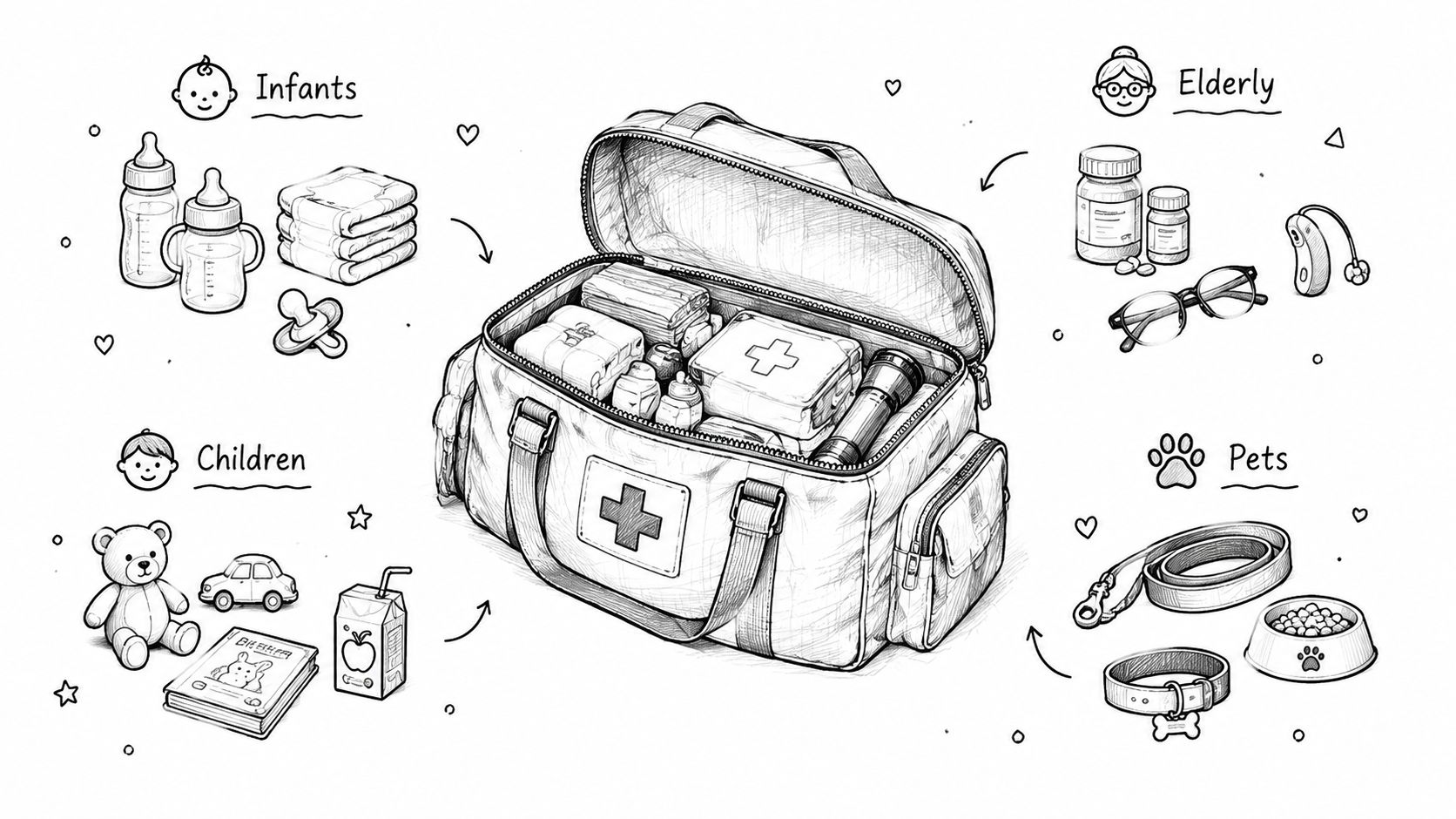
Pack personal pouches inside the main kit
Infants need feeding and hygiene continuity. Pack diapers, wipes, formula or feeding supplies, bottles, age-appropriate medication guidance, spare clothing, and a familiar comfort item. Keep instructions and pediatric information with the child's pouch, not only on a parent's phone. Caregivers can also review reputable infant first-aid education, such as Bornbir's guide to baby CPR, before an emergency occurs.
Young children need both function and reassurance. Include snacks they already tolerate, a comfort object, simple entertainment that doesn't require electricity, spare clothes, and a small flashlight they can use safely. Give children a clear role, such as carrying a light item or staying beside a designated adult, rather than expecting them to make decisions under stress.
Older adults may need access more than extra volume. Store prescriptions, glasses, hearing-aid supplies, mobility aids, care instructions, and copies of medical information in a clearly marked pouch. Place the kit where it can be reached without stairs or heavy lifting if possible, and keep essential equipment from becoming buried under general supplies.
Pets need their own transport plan. Keep leashes, harnesses, carriers, food, water bowls, waste bags, medications, vaccination records, and a current photo together. A pet that normally hides during storms may not respond predictably, so carriers and leads should remain accessible rather than stored in a difficult-to-open shed.
Reduce mistakes with labels and duplication
Use waterproof labels with each person's name, critical medication details, allergies, and emergency contacts. Separate daily-use medical items from backup supplies so a child or visitor doesn't accidentally consume the emergency reserve. Comfort items aren't frivolous. Familiar food, a blanket, or a small toy can make an unfamiliar shelter or dark room easier to manage.
The right customization doesn't create four separate kits. It creates one shared system with clearly marked personal modules.
Staying Powered and Connected When the Grid Goes Down
Food and water keep a household functioning, but power and connectivity resilience determine whether people can see, charge, listen, and coordinate. UK survey findings reported that 60% of respondents had spare batteries for a radio or torch in 2026, while 48% had emergency contacts or medical information stored on a mobile phone. In 2025, only 47% reported having essential power-cut items gathered in one place, according to the UK public survey of risk perception, resilience, and preparedness.
Those figures point to a common failure. Families often own a torch, a phone cable, and spare batteries, but the items aren't organized into a dependable lighting and charging system. A 2025 U.S. hurricane poll found that only 42.0% of households had boarded up or otherwise completed a core mitigation step, another sign that last-mile execution matters as much as good intentions.
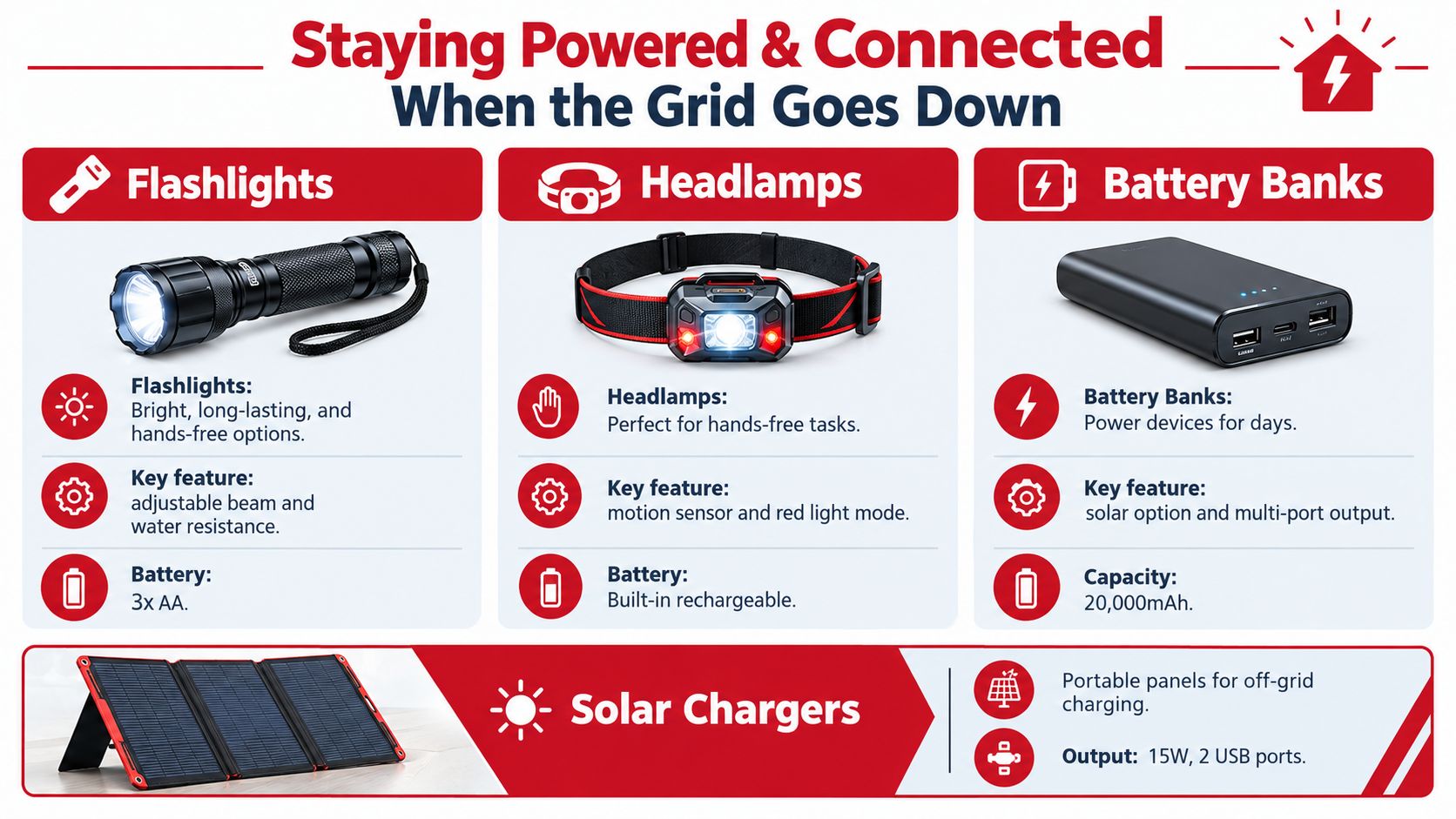
Build a small power hub
Place the radio, lights, charging cables, backup batteries, and device priorities in one waterproof container. Keep one light beside sleeping areas and another with the grab-and-go bag. A headlamp works well for cooking, carrying supplies, or assisting a child because it leaves both hands free, while a flashlight offers a stronger directional beam for checking rooms or walking outdoors.
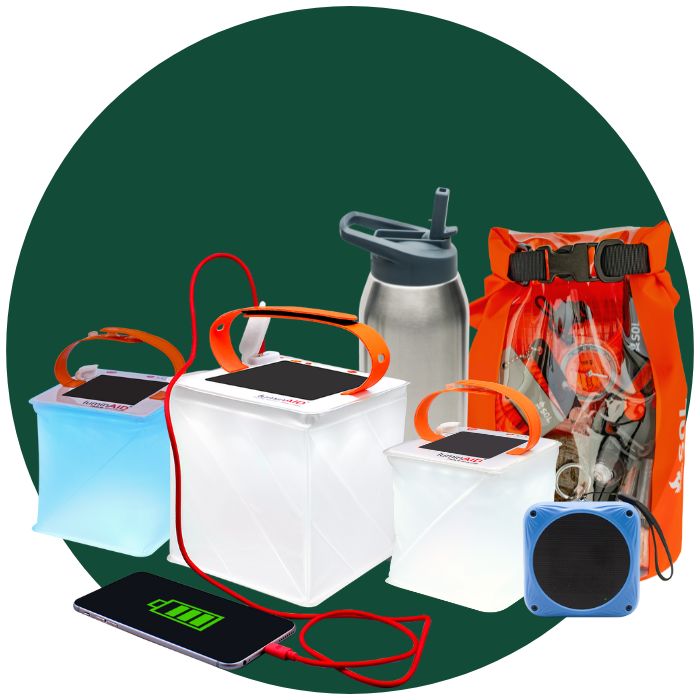
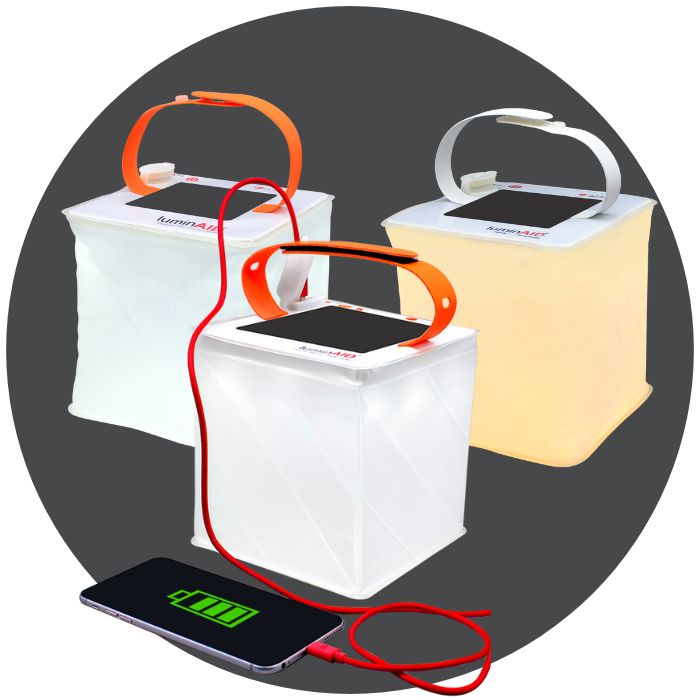
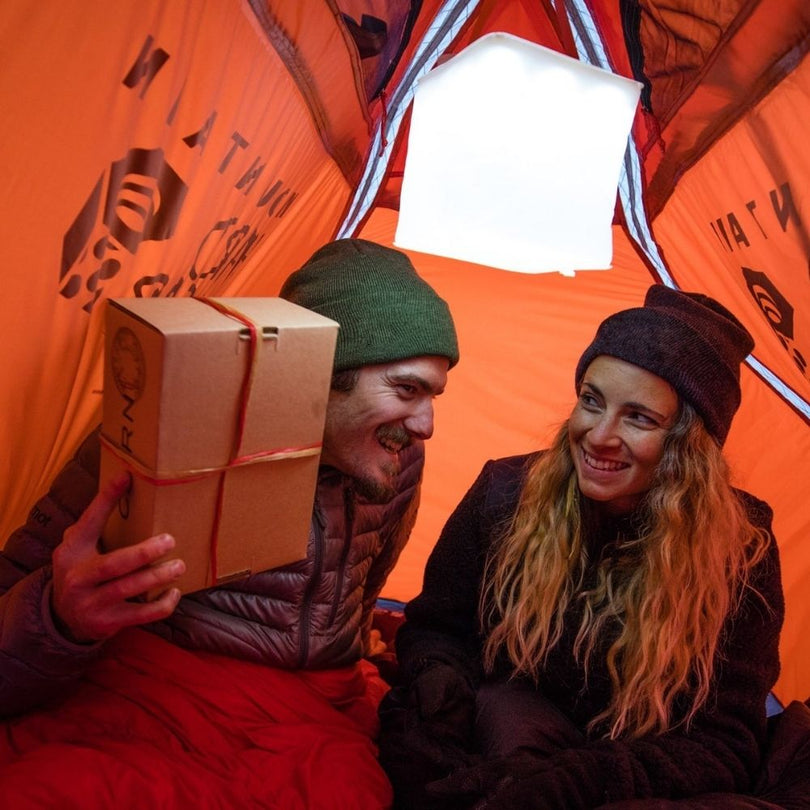
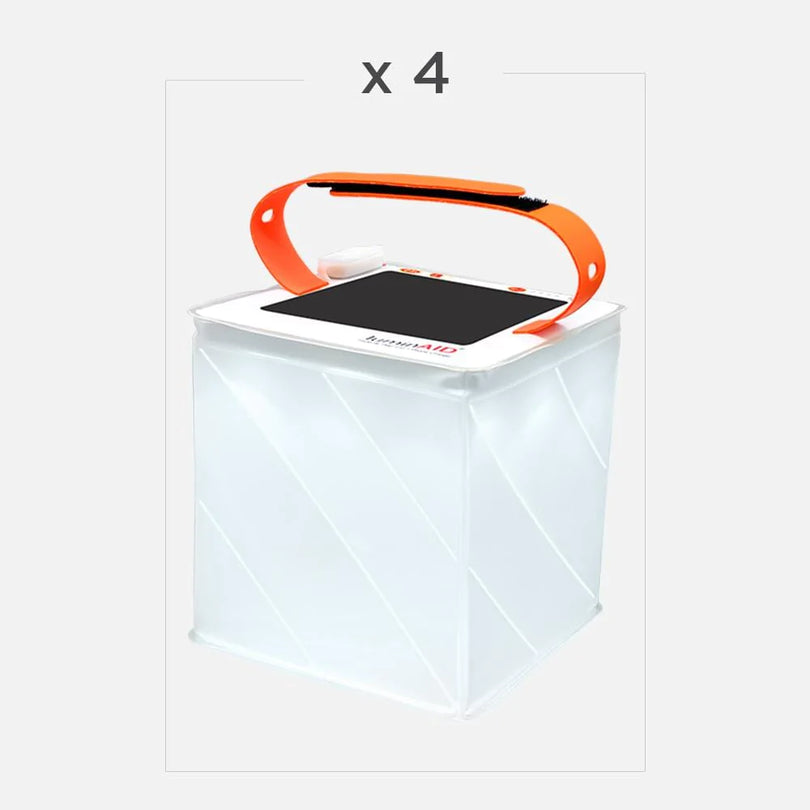
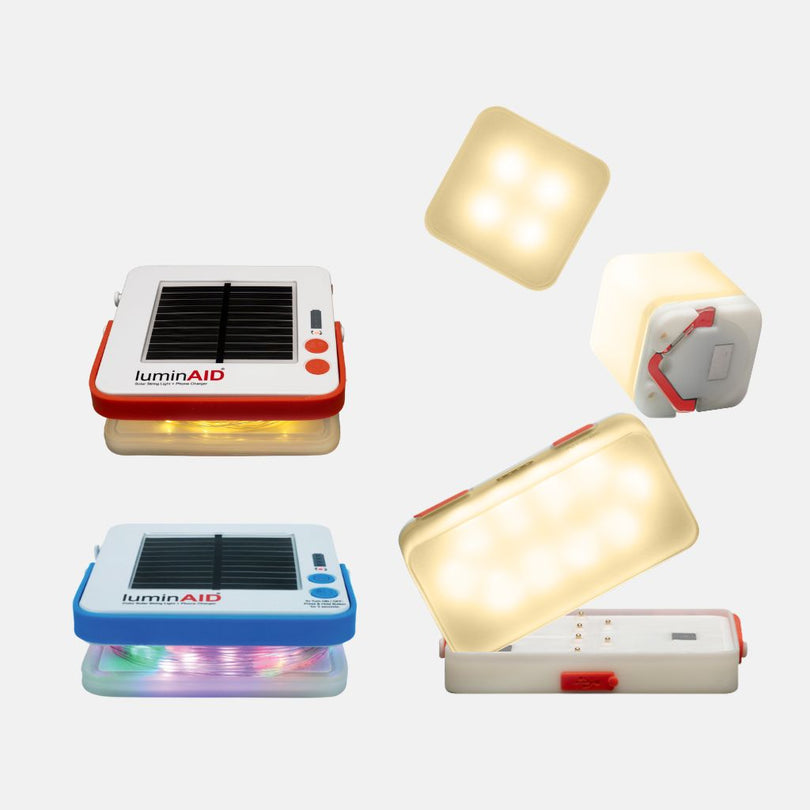
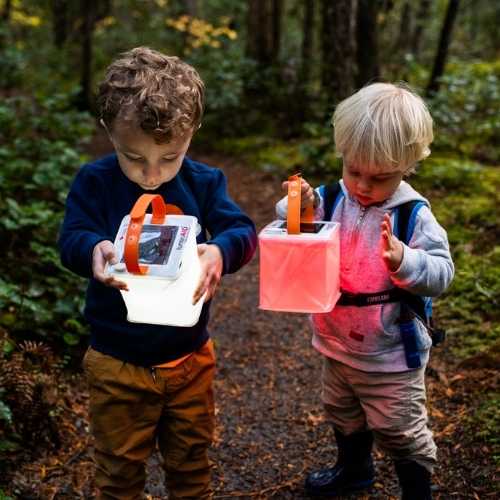
Battery-only systems are familiar and often inexpensive, but they depend on a stored supply of matching batteries. Rechargeable systems reduce disposable-battery dependence, yet they need charging before the outage and may recharge slowly in poor weather. A portable solar lantern with phone-charging capability, such as a LuminAID Power Lantern, can combine illumination and USB charging in one packable device, but it shouldn't replace a radio, a dedicated backup battery, or a lighting option that works when sunlight is unavailable.
| Approach | Works well for | Main trade-off |
|---|---|---|
| Disposable-battery lights | Immediate, simple illumination | Requires correct spare batteries and regular testing |
| Rechargeable lights | Routine use and repeated outages | Must be charged before the grid fails |
| Solar charging | Extended off-grid replenishment | Depends on daylight, placement, and weather |
| Hand-crank radio | Receiving information without wall power | Requires effort and may charge devices slowly |
| Battery bank | Prioritized phone and small-device charging | Its stored capacity is finite and needs rotation |
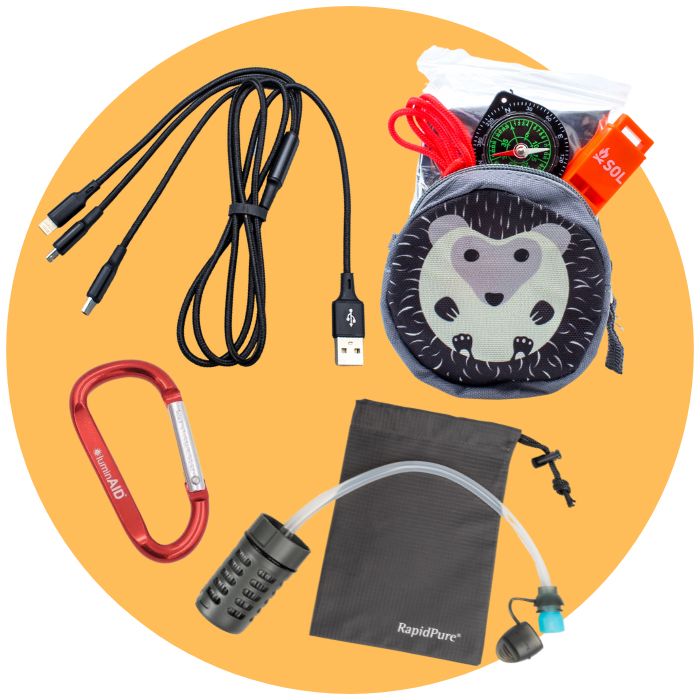
Use power deliberately. Preserve a phone for essential calls, texts, alerts, and medical information rather than entertainment. Keep the radio available for official updates, and download or print key contacts and maps before an outage. The off-grid phone charger guide provides a practical reference for organizing charging away from wall outlets.
Organizing Documents Medications Storage and Rotation on a Budget
A kit becomes expensive when families buy duplicates without a storage plan. A better approach uses ordinary bins, labeled pouches, and a written inventory. One container can hold evacuation items, another can hold home reserves, and a smaller waterproof pouch can protect documents and medication information.
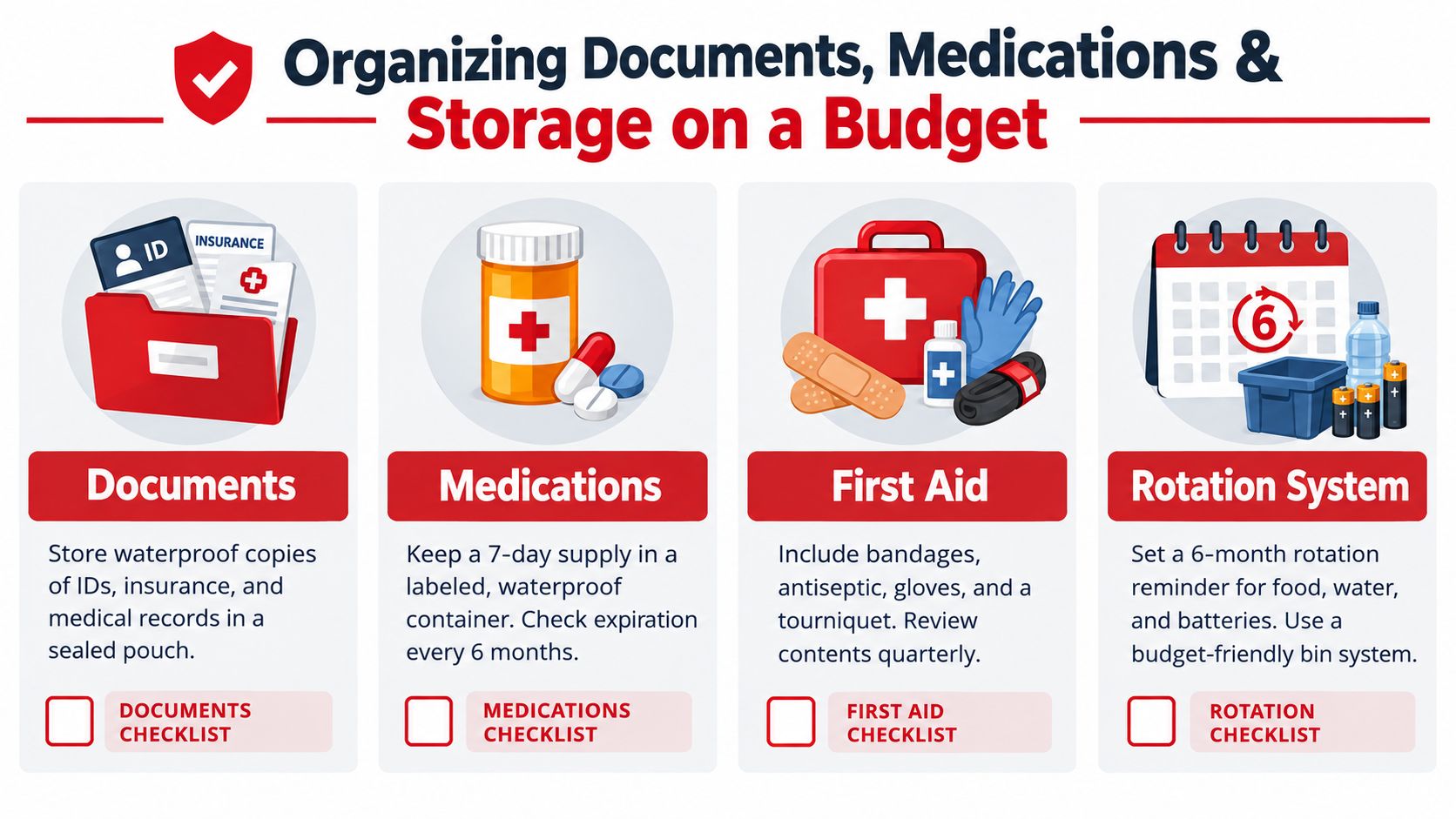
Protect the information people can't replace
Store waterproof copies of identification, insurance details, medical records, prescriptions, emergency contacts, custody information where relevant, and key household instructions. Include spare car and house keys, local maps, and cash, then protect the pouch from heat and moisture. Digital copies can help, but a printed backup matters when a phone is damaged or uncharged.
Medication management requires coordination with clinicians and pharmacies. Keep medications in labeled, waterproof containers, record dosing instructions and allergies, and ask a pharmacist how to maintain an appropriate emergency reserve. Families who face an interruption can review practical guidance on how to get an emergency prescription refill, while recognizing that refill rules vary by medication and location.
The kit should also contain a deliberate first-aid baseline, not a random collection of adhesive strips. The Red Cross first-aid kit anatomy lists 25 adhesive bandages, 10 yards of adhesive cloth tape, 5 antibiotic ointment packets, 5 antiseptic wipe packets, 2 packets of 81 mg aspirin, 1 emergency blanket, 1 breathing barrier, 1 instant cold compress, 2 pairs of nonlatex gloves, gauze rolls, gauze pads, an oral thermometer, 2 triangular bandages, tweezers, and emergency first-aid instructions.
Make rotation automatic
Authoritative preparedness guidance recommends reviewing supplies every six months, replacing expired products, and checking water and medications regularly. The household emergency preparedness instrument research treats preparedness as a broader system that includes food and water, backup power, lighting, first aid, fire protection, evacuation knowledge, and a household evacuation plan. Its Delphi panel included 154 experts from 36 countries, and the resulting instrument reported internal consistency reliability of α = 0.96.
Use the six-month check to move approaching-expiration food into ordinary meal planning and replace it with new stock. Test lights, radios, chargers, and batteries at the same time. Outdoor suppliers such as Adventure Medical Kits and Survive Outdoors Longer can help families compare specialized medical or water-storage equipment, but a labeled household system often matters more than premium gear.
Keep supplies cool, dry, and accessible. Avoid placing the only kit in a locked garage, beneath flood-prone shelving, or behind heavy furniture. A low-cost bin system works when every adult knows its location and the inventory is simple enough to update.
Keeping Your Family Kit Ready With Communication and Evacuation Plans
A packed bag cannot tell a separated family where to meet. Contacts, meeting places, routes, and assigned responsibilities turn supplies into a usable plan. Build it to work when calls connect, when texts work but calls fail, and when every electronic device is unavailable.
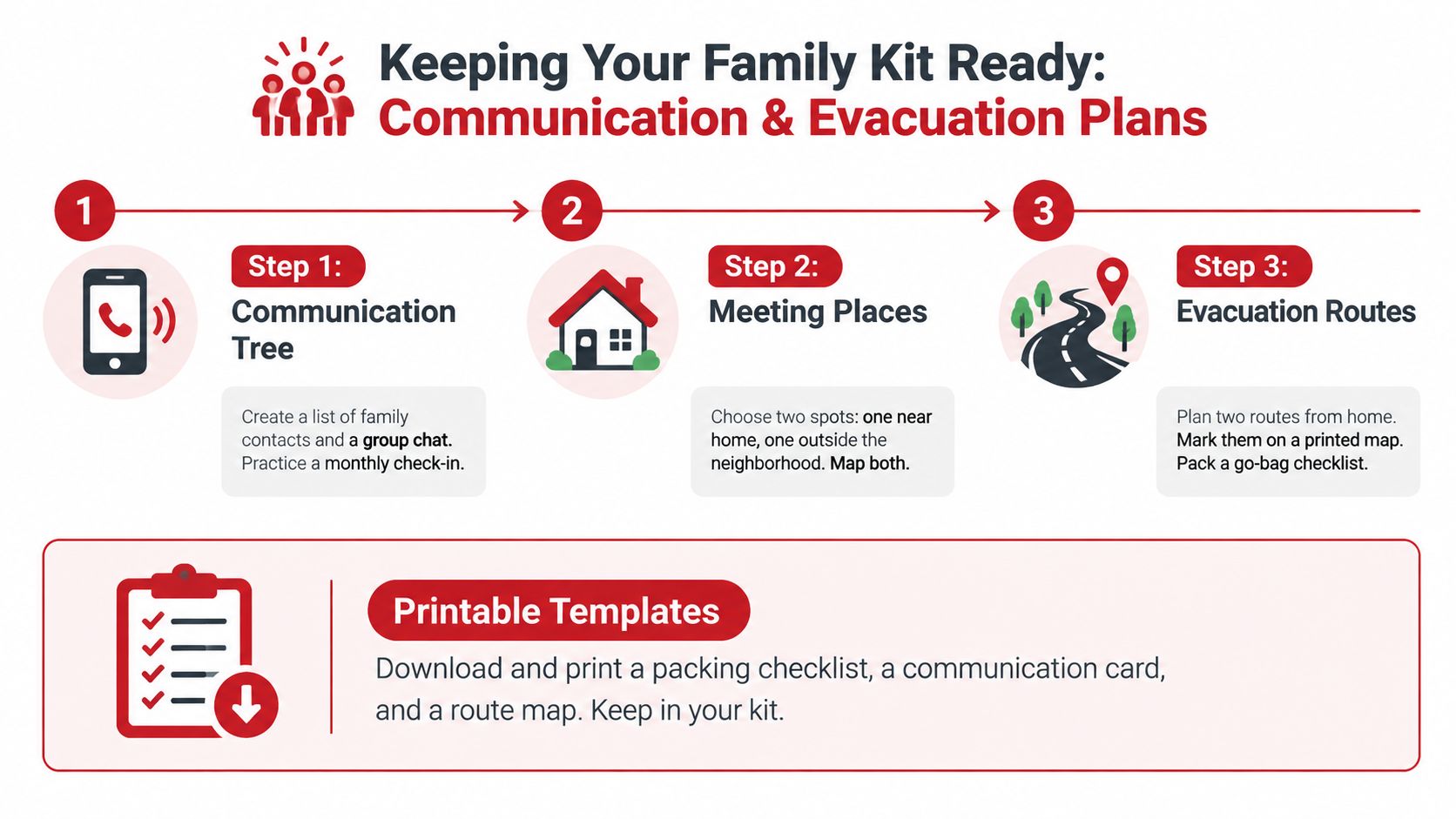
Write the plan where everyone can use it
Make a communication card for each family member's wallet, backpack, or school bag. List household contacts, an out-of-area contact, medical alerts, both meeting locations, and instructions for checking in. Choose one meeting place near home and another outside the neighborhood, then mark them on a printed map.
Set two evacuation routes from home. Assign one person to grab the kit, another to account for children, and specific adults to handle each pet. Give children simple duties, such as staying with a designated adult or carrying a comfort pouch. Practice without relying on normal traffic, open stores, working elevators, or phone service.
Keep current digital photos of loved ones, especially children, with household records. Store printed contact information as well, so identification and check-in do not depend on a charged phone.
Run a simple household drill
Choose a quiet day. Ask each person to locate the kit, retrieve a personal pouch, identify the nearest light, and state the meeting location. Check whether the bag can be carried, pets can be secured, and printed contacts can be found without using a phone.
Time the drill. If locating the kit and printed contacts takes more than five minutes in daylight, it will not happen in the dark. Repeat the exercise until every person can reach the supplies, follow the route, and report to the assigned meeting place without prompting.
Equip the family system with portable light, phone charging, and practical emergency supplies through LuminAID. Place those items where the evacuation bag and home reserve are easy to reach, print the communication cards, and schedule the first drill.