


Your phone usually dies at the wrong time. Not at home beside an outlet, but during a blackout when you need updates, on a trail junction when you need your map, or halfway through a long drive when smoke, storms, or road closures change the plan. In those moments, an off grid phone charger stops being a gadget and becomes part of your safety kit.
A lot of buying guides get this wrong. They compare products as if all charging problems are the same. They aren't. The right setup for a week-long backpacking trip isn't the right setup for a family emergency bin, and neither one looks much like a van setup or a disaster-response loadout. Reliability comes from the whole system: how you generate power, how you store it, how you deliver it to the phone, and how much power the phone burns while you're off the grid.
Why You Need a Reliable Off-Grid Power Source
A dead phone changes the situation fast. During a city-wide outage, it cuts you off from alerts, weather updates, and family check-ins. In the backcountry, it can mean losing GPS, offline maps, and the ability to call for help when someone turns an ankle or misses a trail marker.

Phones now carry too many essential jobs to treat charging as an afterthought. They hold route plans, medical information, emergency contacts, boarding passes, cash apps, and two-factor logins. If the power is out or you're days from an outlet, you need a backup plan that works under stress.
Power resilience matters more than convenience
The useful mindset is power resilience. That means you aren't asking, "What charger should I buy?" You're asking, "How do I keep one critical device working when the grid is down, weather is poor, or travel runs long?"
That same preparedness mindset applies across your whole kit. If you're also thinking about water security during outages or remote travel, this guide for DIY water purification is worth reviewing alongside your power plan.
A phone with no charge is just extra weight. In an outage or remote camp, stored power is part of communications planning.
This isn't a fringe category anymore. The global cell phone charger market reached USD 18.5 billion in 2023 and is projected to reach USD 41.3 billion by 2032, according to cell phone charger market data. That scale tells you something practical. People increasingly need charging options away from wall outlets, whether for travel, preparedness, or day-to-day mobility.
Where people get caught short
The common failure isn't forgetting a charger. It's bringing the wrong kind.
- Blackout planning: A tiny battery bank helps for a night. It won't carry a household through a multi-day outage.
- Trail use: A direct solar panel sounds smart until tree cover, clouds, or afternoon storms cut output.
- Vehicle travel: A car charger works until you don't want to idle the vehicle or risk draining the starter battery.
An off grid phone charger should reduce uncertainty, not add another thing to manage.
Understanding the Types of Off-Grid Chargers
The easiest way to understand this gear is to think in terms of generation, storage, and delivery. Some products only generate power. Some only store it. The dependable ones do both.

Solar panels
A folding solar panel is like a rain tarp for sunlight. It collects energy when the conditions cooperate. That's useful, but it doesn't mean it will charge your phone well in real time.
Portable panels are often marketed with 20% to 25% efficiency, but independent testing found real-world efficiency closer to 14% in REI's solar charger guidance. Under favorable conditions, one tested panel produced 9.3 watt-hours in an hour, which is close to an iPhone XS battery at 9.8 Wh. That's encouraging, but only when sunlight is strong, panel angle is good, and shadows stay off the cells.
What works:
- Sunny basecamps: You can set the panel out for hours and harvest energy while you cook, hike, or rest.
- Long trips: REI notes that for week-long or longer trips off the grid, you'll likely need a solar charger or other generator.
What doesn't:
- Dense forest travel: Shade crushes performance.
- Direct charging while moving: Panels on a pack often underperform because angle and sun exposure keep changing.
Battery banks
A power bank is a canteen for electricity. You fill it before you need it, then use it when conditions are bad or timing matters.
This is the simplest answer for overnight trips, urban outages, and daily carry. It doesn't depend on weather, and it charges when you want, not when the sun happens to cooperate. The trade-off is obvious. Once empty, it's empty unless you have another power source.
For readers who want a plain-English primer on how cell and charging chemistry has evolved, this overview of advanced battery technologies gives useful context.
A practical camping example is pairing a battery bank with a lightweight light source instead of carrying separate single-purpose devices. That's the same logic behind a solar power bank for camping, where stored energy matters more than panel claims alone.
Hand-crank chargers
Hand-crank units are emergency tools, not comfort tools. They make sense for radios, signaling kits, and last-ditch phone charging when every other system has failed.
Their strength is independence from sun and outlets. Their weakness is labor. If you've ever cranked for several minutes to gain a tiny amount of charge, you already know the limitation. This often serves as backup of backup gear.
If your plan depends on muscle power to recharge a modern smartphone, your plan is already thin.
Integrated devices
Some of the most practical field options combine functions. Solar lanterns with USB output, small panels with built-in batteries, and compact power systems all reduce the number of separate items you need to track.
These make sense when light is as important as phone power, which is common in outages, camps, and evacuation kits. A charger that also handles tent light, room light, or path light solves two problems with one packed item.
Thermoelectric chargers
These use temperature difference rather than sunlight. They can be interesting in niche conditions, but for most campers and homeowners they aren't the first place to start. They tend to be more situational than a straightforward battery-bank-plus-solar setup.
The bottom line is simple:
| Type | Best use | Main weakness |
|---|---|---|
| Solar panel | Longer sunny trips | Weather and angle dependent |
| Battery bank | Short trips and outages | Finite stored power |
| Hand-crank | Last-resort emergencies | Slow and tiring |
| Integrated system | Camps, kits, outages | Usually a bit heavier than single-purpose gear |
How to Compare Technical Specifications
Boxes and product pages love to throw numbers at you. Most of them matter, but only if you translate them into field use. The useful question isn't "How many specs does it list?" It's "What will this do in rain, cold, shade, and bad timing?"
Start with stored power
For off-grid use, battery capacity is your buffer against bad conditions. A direct panel can only work when the sun is available. A battery-backed system lets you collect power when conditions are good and use it later when they're not.
The most effective off-grid chargers are designed as battery-bank solar chargers, not direct-to-phone panels. A technically sound design regulates output to a stable 5V, which smartphones need for safe, reliable charging, as described in this portable solar charger design reference. In one design example, the charger delivered 5.05 V at 1.51 A, or 7.61 W, through USB. That's a useful benchmark because it shows modest wattage can still be practical if regulation is solid.
That same paper supports a field rule I use all the time: stable output beats optimistic panel claims.
Then check output and port types
Your phone may charge through USB-C, USB-A, wireless charging, or a built-in cable from the charger itself. Compatibility matters because off-grid gear often has to power more than one item.
Look for:
- USB-C support: Common on newer phones and accessories.
- USB-A output: Still useful for older cables, headlamps, radios, and smaller electronics.
- Multiple outputs: Helpful when one power source has to support a phone and another device during an outage.
Some rugged power banks now combine USB-C, USB-A, wireless charging, and built-in cables in one enclosure. That kind of flexibility matters in family kits, shared camps, and vehicle setups where not everybody carries the same cable.
Durability is not optional
A fragile charger belongs on a desk, not in a go-bag.
Look at enclosure quality, water resistance, dust protection, and impact tolerance. In practical terms, this tells you whether the unit can survive a wet pack, a dusty trail, or the bottom of a crowded emergency tote. If a product is meant for preparedness or backcountry use, durability should rank alongside capacity.
Keep the charger dry when you can. Buy one that can handle getting wet when you can't.
Weight and form factor
Smaller isn't always better. A thin charger that's hard to use in the field can be less useful than a slightly larger one with good ports, easier controls, and a dependable battery.
For backpacking, every ounce matters, so compact gear wins. For home emergencies, weight matters less than grab-and-go simplicity. For anyone comparing battery sizes across products, this guide on how to calculate watt-hours of a battery helps convert marketing language into something more comparable.
A quick buyer's filter helps:
- If you need charging at night: choose built-in storage.
- If you'll be in mixed weather: prioritize regulated output and rugged housing.
- If you charge more than a phone: make sure the ports match the rest of your kit.
- If you're carrying it all day: weight may matter more than raw capacity.
Choosing the Right Charger for Your Scenario
The best off grid phone charger depends on what failure you expect. Weight. Storm reliability. Multi-device charging. Long stretches without sun. Those are different problems, so they need different systems.
For true off-grid reliability, especially during storms or winter, it's smarter to buy a power system with storage than a bare charger. An integrated solar panel and battery bank smooths out sunlight variability and can recharge a phone multiple times, which is why Treeline Review's guidance on portable solar panels points people toward stored power rather than panel-only expectations.
The ultralight backpacker
If you're covering miles every day, weight drives the decision. A large folding panel may look efficient on paper, but in forested terrain or on moving travel days it often becomes dead weight. Many hikers do better with a charged battery bank and disciplined phone use.
Priorities:
- Low weight
- Simple cable setup
- Enough stored power for navigation, photos, and emergency communication
What usually works is a compact battery bank, with a small panel only if the trip is long enough and sunny enough to justify it.
The family emergency kit
A blackout kit sits for long periods, then needs to work immediately. That pushes you toward straightforward, durable gear with built-in storage and simple operation. If several family members may need it, multiple output options help.
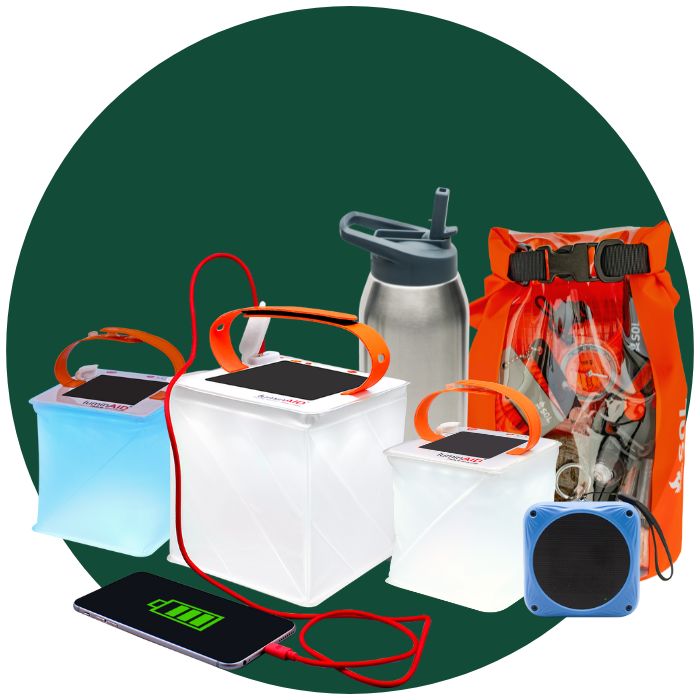
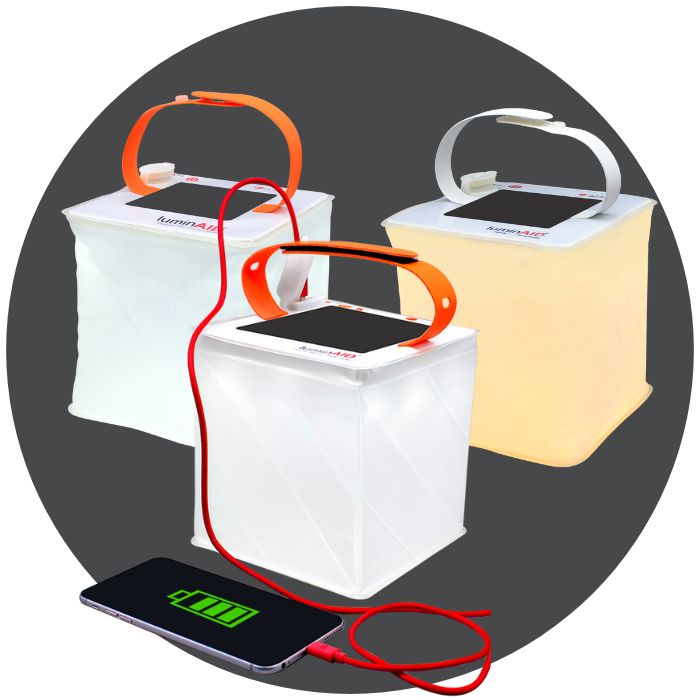
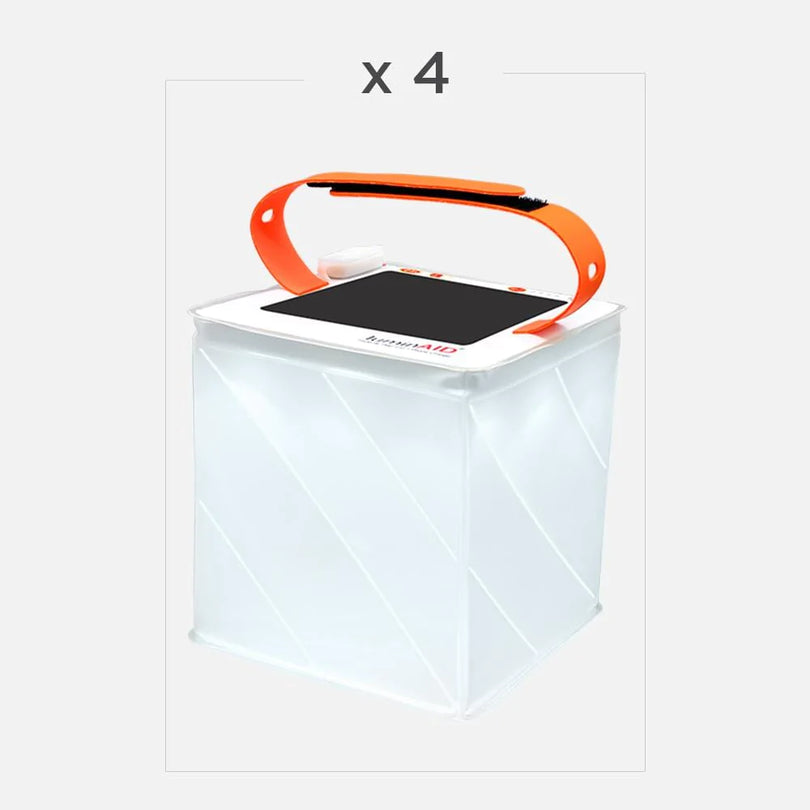
This is also where combined light-and-power gear earns its keep. One practical example is a solar lantern with USB charging, such as LuminAID's PackLite Max 2-in-1 Power Lantern, because it covers room light and phone charging in one item. In a home outage, that can be more useful than carrying a separate lantern and charger.
The RV or van setup
Vehicle-based travel gives you more room and more charging opportunities, but it also creates more demand. Phones, lights, fans, small electronics, and navigation all compete for power.
A better fit here is a layered system:
- A larger battery bank or onboard house battery for daily use
- A solar input option to replenish during stops
- A smaller personal backup power bank for hikes or side trips
That keeps the phone from depending on the entire vehicle system every time you leave camp.
The disaster-response or field-work kit
For response work, reliability and ruggedness outrank sleek design. You want gear that tolerates wet, dirty, repeated use and can charge more than one class of device.
Look for:
- Tough enclosure
- Modern and legacy ports
- Storage first, solar second
- Clear controls that work under stress
The charger should integrate into a broader kit that includes medical supplies, lighting, and personal protection. For field kits and vehicle bags, compact trauma and first-aid supplies from Adventure Medical Kits are a sensible companion to your power setup.
Off-Grid Charger Recommendations by Use Case
| Scenario | Recommended Type | Key Priority | Ideal Capacity | Ideal Weight |
|---|---|---|---|---|
| Ultralight backpacking | Battery bank, sometimes paired with a small panel | Low carry weight and simple charging | Small to medium | As light as practical |
| Family emergency kit | Integrated solar charger with battery storage | Reliability during outages | Medium to large | Weight matters less than ease of use |
| RV or van travel | Larger stored-power system with solar replenishment | Continuous daily power | Large | Less critical than versatility |
| Disaster response | Rugged battery-backed charging system | Durability and multi-device compatibility | Medium to large | Portable, but not ultralight |
Buy for the worst likely day, not the best sunny day.
Setup, Maintenance, and Best Practices
A good charger can still disappoint if you use it badly. Off-grid power is part hardware, part habits. The habits matter more than generally assumed.
Get more from solar input
Solar gear needs placement, patience, and realism. Keep panels clean, keep them out of partial shade, and adjust them toward the sun when you can. A flat panel can still work, but it will usually produce less than a well-aimed one.
If you have storage built into the system, use the sunny part of the day to charge the battery, not necessarily the phone. That gives you a buffer for evening use and protects your phone from the erratic behavior that comes with shifting clouds and weak sun.
Cut the phone's power draw first
Most guides put all the attention on generation. In practice, the fastest way to extend runtime is often to make the phone consume less.
Simple actions like airplane mode, offline maps, and keeping the phone warm in cold weather can often double a phone's battery life, according to this backcountry phone charging guide. That matters because every watt-hour you don't burn is one you don't have to generate later.
A practical field checklist:
- Use airplane mode early: Don't wait until the battery is low. Searching for signal drains power fast.
- Download maps before the trip: Offline navigation uses less power and still works without service.
- Lower screen brightness: Screens are one of the biggest power draws.
- Keep the phone warm in cold weather: Battery performance drops when the phone gets cold.
- Close nonessential apps: Background activity adds up over a long day.
- Use the charger as a buffer, not a crutch: Save charging for planned windows instead of topping off constantly.
Store and rotate your gear
Emergency chargers need periodic attention. Charge them, check cables, and test output before the season when you'll likely need them. If the charger lives in a vehicle or garage, remember that heat and cold are hard on batteries over time.
For a broad look at practical backup gear categories, this guide to off-grid power solutions is a useful companion read.
Build around light, not just charging
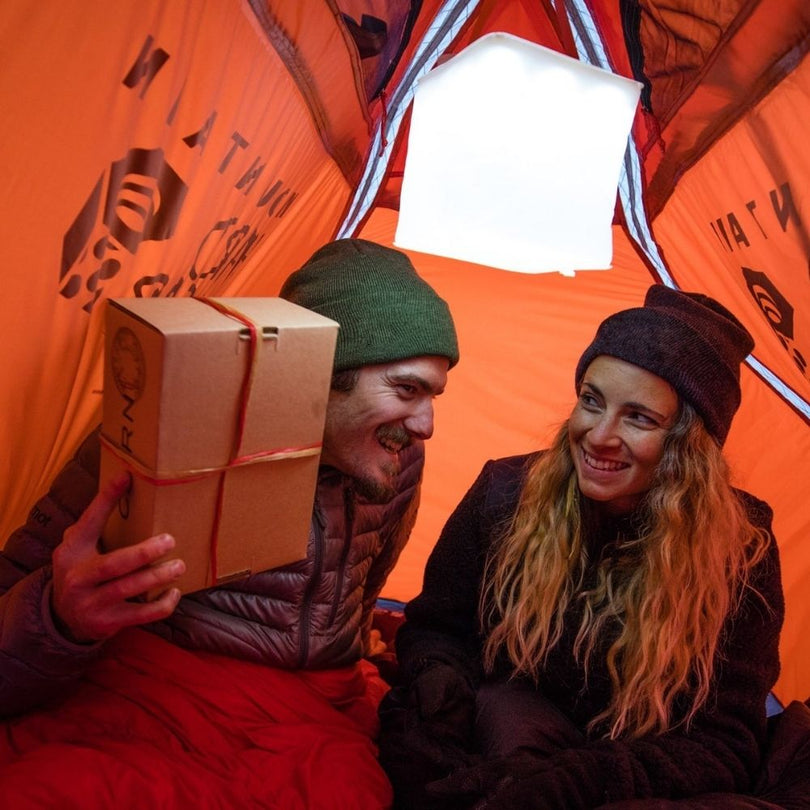
People often focus on the phone and forget the environment around it. During a blackout or camp setup, light changes everything. If your charger also provides area light, your phone can stay in low-power mode while a separate device handles visibility.
That is usually the smarter system. Use the phone for communication and navigation. Use lantern light for camp tasks, room light, and moving around safely.
Dependable Power and Light with LuminAID
The strongest off-grid setups do more than charge a phone. They cover the other thing people immediately need when outlets disappear, which is light. That combination matters in a tent, in a stairwell during a blackout, or in a family emergency kit where one item has to do more than one job.

A battery-backed solar lantern with USB output fits the system approach better than a standalone panel for many users. It gives you stored power, stable charging, and useful light in one packable device. That's why compact 2-in-1 tools make sense for camping kits, grab-and-go blackout bins, and travel bags that need to stay simple.
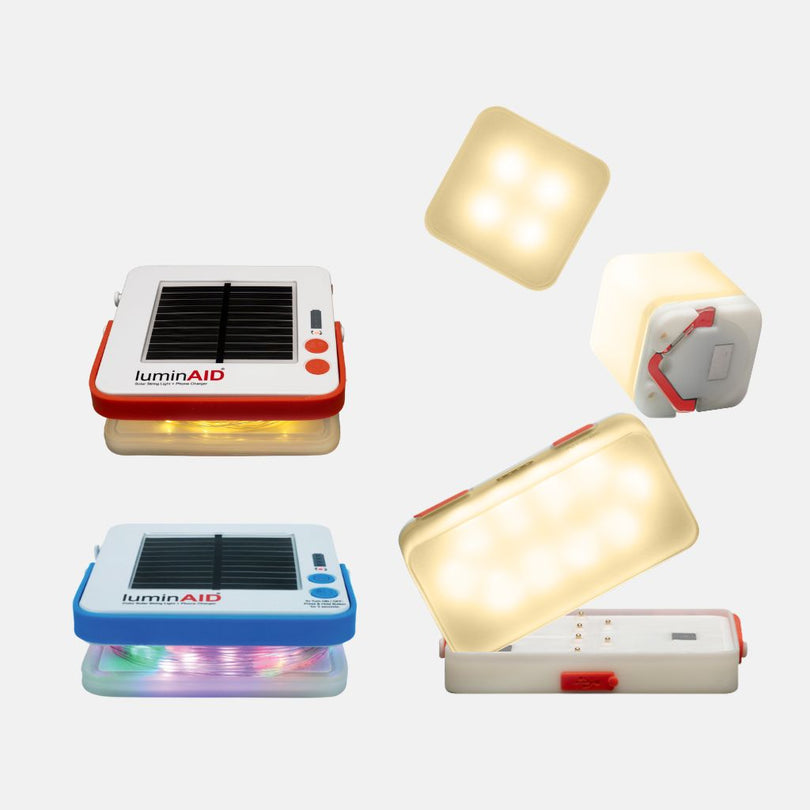
LuminAID's phone-charging lantern line is built around that idea. Their solar phone chargers combine solar charging, battery storage, and lighting in a single unit, which aligns with the practical advice throughout this guide: store energy when conditions are good, then use it when timing matters.
In the field, the gear you reach for first is usually the gear that solves two problems at once.
If you're comparing options, look at the total job the product is doing. A lantern-plus-charger can replace separate light and power items in a bag. That's not just convenient. It also cuts down on cable clutter, duplicate batteries, and the chance that one critical item gets left behind.
If you want an off-grid setup that handles both phone charging and dependable light, explore LuminAID and build around a simple rule: stored power first, charging second, light always.