


Family emergency preparedness isn't about fear. It's about empowerment.
It’s about creating a simple, realistic plan that gives you the confidence to handle the unexpected. This isn't about dwelling on doomsday scenarios; it's about shifting your mindset from anxiety to a feeling of control. Frankly, this proactive approach is a core part of modern parenting, ensuring your family is safe and resilient, no matter what.
Beyond Fear: Why Preparedness Is Modern Parenting
Let’s cut through the scary headlines and talk about what family preparedness actually means. It’s not about fixating on worst-case scenarios. It’s about taking practical, common-sense steps now so you can respond with confidence when it truly counts. Having a solid plan is one of the most reassuring things you can do for your loved ones.
This guide is designed to help you build that confidence. We'll break down the common mental hurdles, like the classic "it won't happen to us" feeling. We'll show you how a straightforward plan can reduce anxiety for everyone. When a power outage hits, for example, knowing how to help your kids feel safe makes all the difference in the world.
Shifting From Worry to Action
The journey starts by acknowledging a simple truth: while we can't control disasters, we can control our readiness. That mental shift is powerful. Instead of feeling overwhelmed by potential threats, you can focus on what you can do right now to keep your family safe.
True preparedness isn’t about expecting the worst. It’s about building the confidence to handle whatever comes your way, knowing you’ve given your family the best possible foundation for safety and resilience.
This approach transforms a daunting task into a series of small, manageable actions. It's less about a giant, scary project and more about integrating smart habits into your family's routine.
The Reality of Household Readiness
Unfortunately, most households just aren't prepared. A global study revealed that only 9.9% of households in one region were well-prepared. Over half admitted they wouldn't know what to do in an emergency.
Here in the U.S., the numbers aren't much better. A shocking 12.3% of households reported having key items like a three-day water supply and an evacuation plan. You can read the full research on these preparedness gaps to understand why planning is so vital.
These statistics aren't meant to scare you—they're meant to highlight a huge opportunity. By taking the steps in this guide, you put your family in a much stronger, more secure position. Your plan doesn't need to be perfect overnight. It just needs to start.
Building a resilient family ready for anything is an achievable goal. Throughout this guide, we'll walk you through practical, empowering steps that make sense for your unique situation. Whether you're putting together a first-aid kit with essentials from Adventure Medical Kits or mapping out an evacuation route, each step builds on the last, creating a comprehensive safety net you can rely on.
Crafting Your Family's Core Emergency Plan
Alright, let's get down to business and build your family’s playbook. A truly solid emergency plan isn’t some generic template you download online. It’s a custom strategy that fits your family, your home, and your unique needs. This is where we turn those vague worries into real, concrete actions.
Think of this as a team effort. Getting everyone involved—from your youngest kids to older relatives living with you—is key. When everyone has a hand in creating the plan, they're much more likely to remember it. Plus, it turns what could be a scary chore into an empowering family project.
Identifying Safe Zones Within Your Home
First things first: you need to know your home’s strengths and weaknesses. Different emergencies call for different reactions, and the safest place in a tornado is definitely not the safest place in a flood.
Do a walkthrough of your house as a family and point out the best spots for various scenarios. This simple tour can make all the difference when every second counts.
- For Tornadoes or High Winds: Your go-to spot is a basement, storm cellar, or an interior room on the lowest floor with no windows. A bathroom or closet often fits the bill perfectly.
- For Earthquakes: The immediate drill is to "Drop, Cover, and Hold On." Find sturdy furniture, like a heavy desk or solid table, to get under. Make sure everyone knows to stay clear of windows, tall bookcases, or anything else that could topple over.
- For Floods or Hurricanes: If you're riding out the storm at home and not evacuating, get to the highest level of your house. Just be sure to avoid enclosed attics where you could get trapped by rising water.
Mapping Your Evacuation Routes and Meeting Places
Sometimes, the smartest move is to get out. Your family plan absolutely must include crystal-clear instructions for evacuation. You don’t want to be scrambling to figure this out in the middle of a crisis.
My rule of thumb is to think in twos: two escape routes and two meeting places. Redundancy is your best friend here.
Your Evacuation Routes
Map out at least two different ways to drive out of your neighborhood. One route could easily be blocked by downed trees, traffic jams, or flooding, so a backup is non-negotiable. It’s a great idea to actually drive these routes every so often so they become second nature.
Your Meeting Places
Designate two specific, unmistakable spots where your family will regroup if you get separated.
- A Neighborhood Spot: This needs to be close and easy to get to right outside your home. Think of a specific landmark like your neighbor's big oak tree or the mailbox at the end of the block. This is for sudden emergencies like a house fire.
- An Out-of-Neighborhood Spot: Pick a place farther away, like a local library, community center, or a relative’s house across town. This is for larger disasters where you can’t get back to your immediate area for a while.
Establishing a Communication Strategy
When a disaster hits, cell towers get jammed and power lines go down. Communication can become nearly impossible. A pre-planned communication strategy ensures everyone knows how to check in and stay informed.
Your plan needs to answer the question: "How will we get in touch if local systems are totally overloaded?"
A brilliant and effective strategy is to designate an out-of-state contact. It's often much easier to make a long-distance call than a local one during a regional disaster. Every single family member should have this person’s name and number saved in their phone and written down on a card in their go-bags.
A quick reference card or a note in everyone's wallet can be a lifesaver. Here’s a simple table to guide what that should include.
Family Communication Plan Essentials
| Information Type | Details to Include | Where to Store |
|---|---|---|
| Out-of-State Contact | Name, Phone Number, Email | Phones, Wallet Card, Go-Bags |
| Local Meeting Places | Neighborhood & Regional Spots with Addresses | Phones, Wallet Card, Go-Bags |
| Emergency Services | Police, Fire, Poison Control, Local Hospital | Programmed in Phones, Posted in Home |
| Key Family Contacts | Immediate Family, Nearby Relatives' Numbers | Phones, Wallet Card, Go-Bags |
| Work/School Info | Addresses and Phone Numbers for Each Location | Wallet Card, Go-Bags |
Having this information physically written down is just as important as having it in a phone, since batteries can die.
Thinking through these things now, while everything is calm, is the single most important step you can take. Preparing for emergencies of all durations in our guide is a crucial part of the process, ensuring you're ready for anything from a quick power outage to a multi-day evacuation.
Your family’s core emergency plan is the foundation for everything else. It provides a clear, steady path forward when times feel uncertain.
Assembling Kits That Actually Make Sense
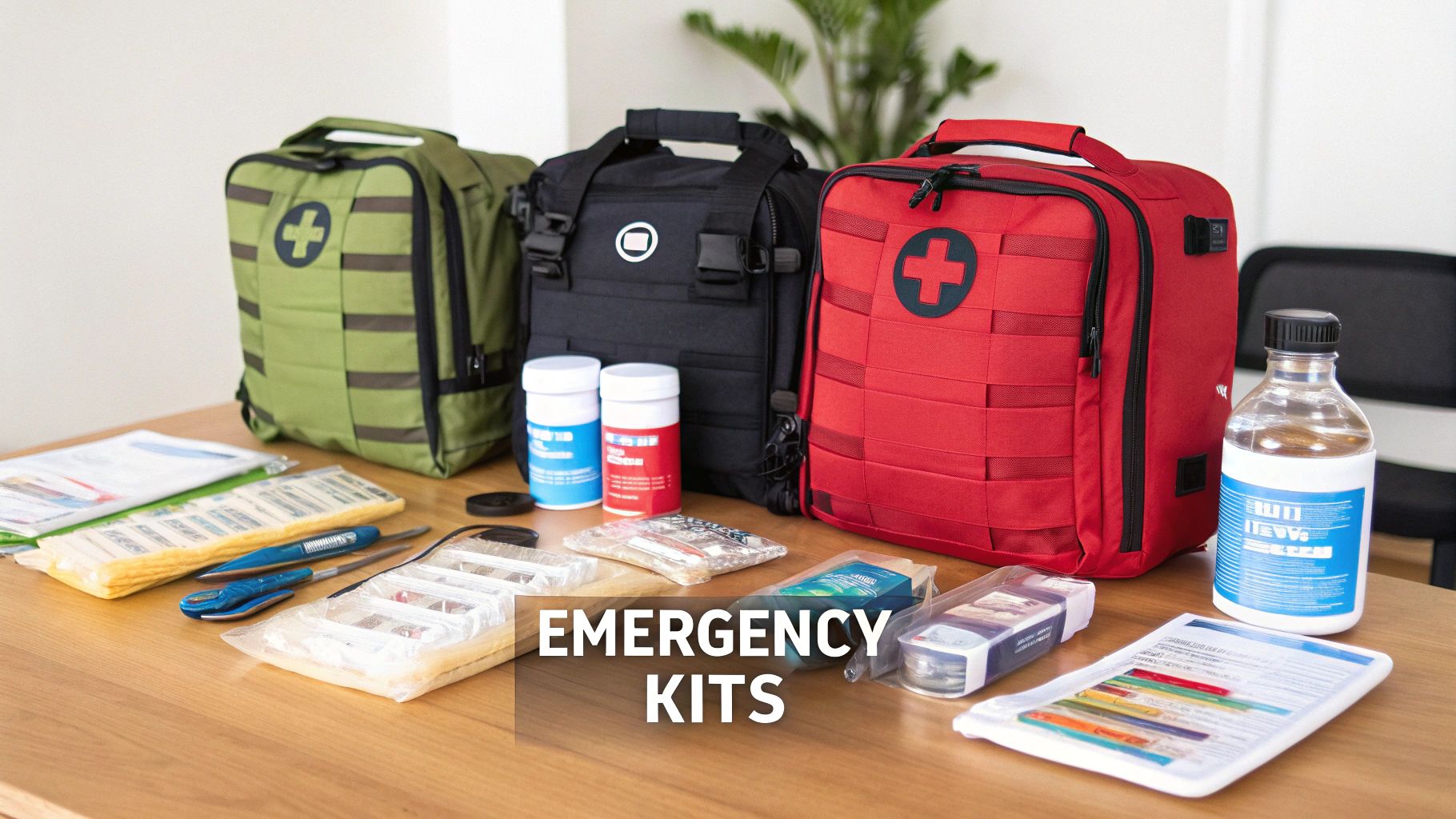
Once you have your family's core emergency plan mapped out, it's time to gather the physical tools and supplies that bring it to life. This isn't about just buying a generic, pre-packaged kit and calling it a day. Real preparedness means creating a system of kits that fits your actual life—your daily routines, your family members' specific needs, and the places you all spend the most time.
The goal is to move beyond a simple checklist and build a support system you can truly rely on. We'll break this down into three key parts: a personalized 'Go-Bag' for each person, a robust 'Stay-at-Home' supply bin for sheltering in place, and a compact kit for your vehicle.
The Go-Bag: A Personal Lifeline
A Go-Bag, sometimes called a "bug-out bag" or "72-hour kit," is a backpack that's always ready for a sudden evacuation. Every single person in your household, including kids old enough to carry one, should have their own. Giving everyone their own bag not only makes items easy to find in a hurry but also gives children a sense of control and responsibility.
While some items are universal, customization is what makes a Go-Bag truly useful. Think about what each person would genuinely need to be safe and reasonably comfortable for three days away from home.
For a great deep dive into the basics, our guide on what to pack in your go-bag offers a detailed checklist to get you started.
A common mistake is overpacking. A Go-Bag has to be light enough to carry on foot for a good distance. Focus on multi-use items and true necessities. The goal is survival and safety, not five-star comfort.
Here’s how you can tailor these bags for different family members:
- For Infants: Go beyond the standard diaper bag. You'll need ready-to-feed formula, plenty of diapers and wipes, rash cream, a portable changing pad, and crucial comfort items like a pacifier or their favorite soft toy.
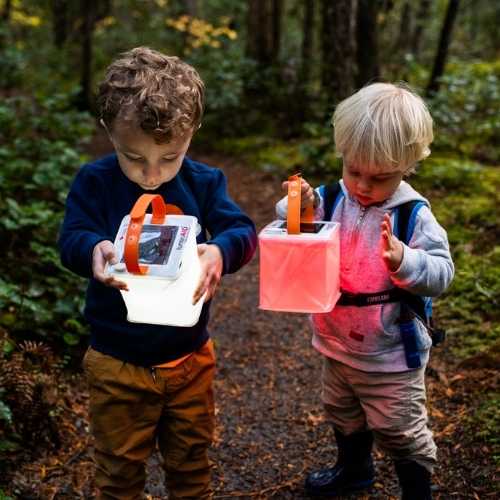
- For Kids: Get them involved in packing! Let them pick out a small, comforting toy, a book, or a simple card game. You should also add a family photo with contact info written on the back, an emergency whistle, and an extra warm layer of clothing.
- For Seniors: This kit absolutely must include a complete list of medications, dosages, and doctor information. Pack extra prescription glasses, hearing aid batteries, and any necessary medical supplies. Don't forget copies of Medicare/Medicaid cards and other vital documents.
- For Pets: Your pet’s Go-Bag needs a three-day supply of food and water, a collapsible bowl, a sturdy leash and collar with ID tags, a favorite toy to reduce stress, and copies of their vaccination records.
The Stay-at-Home Kit: Your Home Base Fortress
Sometimes, the safest place during an emergency is right where you are. A Stay-at-Home kit is usually a large bin or a dedicated closet shelf stocked with everything your family needs to shelter in place for up to two weeks without power or running water.
This is where you store the heavier items that would never fit in a Go-Bag. The foundation of this kit is water and food. The standard rule is one gallon of water per person, per day. For food, stick to non-perishable items that don’t require any cooking or refrigeration.
When assembling kits that actually make sense, it's crucial to include long-lasting and lightweight food supplies. For instance, exploring reliable freeze-dried fruit options can add vital nutrients and variety to your emergency food supply.
Managing Your Food and Water Supply
A common problem is keeping your supplies from expiring. No one wants to find out their emergency food went bad two years ago. The fix is a simple rotation schedule.
The Rotation Rule: Every six months—a great time is when you change your clocks for daylight saving—follow these steps:
- Use Your Stock: Take the food and water from your kit and incorporate it into your regular meals.
- Replenish and Replace: Buy fresh supplies to replace everything you just used.
- Check Expirations: Look over all items, especially medications and batteries, and swap out anything that's getting close to its expiration date.
The Vehicle Kit: Your Safety Net on Wheels
Emergencies often strike when you're on the road or away from home. A compact kit in the trunk of each car provides a critical safety net. It doesn't need to be as massive as your home kit, but it should cover the basics for getting stranded.
Key Vehicle Kit Items:
- Jumper cables and basic auto repair tools
- A well-stocked first-aid kit
- Non-perishable snacks and water bottles
- Warm blankets or emergency space blankets
- A flashlight with extra batteries or a hand-crank model
This three-part system—Go-Bag, Stay-at-Home, and Vehicle—creates a complete safety net. Yet, data shows there's still a ways to go. FEMA’s 2023 National Household Survey found that while 51% of U.S. adults believed they were prepared for a disaster, a significant gap remains. One of the key factors for being prepared was feeling capable of handling emergencies, which comes directly from taking actionable steps like building these very kits.
Preparing for Specific Regional Threats
A generic emergency plan is a great start, but a truly solid plan is one that’s built for the world right outside your front door. The core ideas—having a kit, a way to communicate, a place to meet—are universal. But what you do in the first five minutes of a wildfire warning is completely different from how you’d react to an earthquake.
Let's get specific. We'll break down the immediate actions and preparations for the most common threats so your family can build the right muscle memory for the right disaster.
Tailoring your plan to your region is what turns a checklist into a genuine, life-saving strategy.
Preparing for Wildfire Zones
If you live in a wildfire-prone area, your prep work goes way beyond just packing Go-Bags. It’s about actively managing the space around your home and being mentally ready for an evacuation order that could come with only minutes to spare.
Your first and best defense is creating defensible space. Think of it as a buffer zone around your property. Clear out dead leaves and brush, trim tree branches that hang low over your roof, and move flammable things like firewood piles far from the house. It's a simple weekend project that can dramatically improve your home's chances of surviving.
Then there's the air. Even if the flames are miles away, the smoke can make the air dangerous to breathe.
- Breathe Safely: Have N95 or P100 respirator masks in your Go-Bags, your car, and your home.
- Create a Safe Room: A good air purifier with a HEPA filter can create a clean-air sanctuary inside your home for when the smoke is thick.
- Know the Numbers: Pay attention to the local air quality index. When it's bad, stay inside and limit your activity.
When it's time to go, you need multiple ways out. Wildfires are unpredictable and can block roads in an instant. Have a primary and secondary escape route planned.
Hurricane and Tropical Storm Readiness
For those in hurricane country, preparation is a countdown that can start days before landfall. This heads-up is a critical window to secure your home and make the tough call: evacuate or shelter in place.
Battening down the hatches is priority one. This means getting hurricane shutters up or boarding windows with plywood. It means tying down or bringing in anything that could become a projectile, like patio furniture or grills. Don't forget to clear your gutters so torrential rain has somewhere to go besides inside your walls.
Knowing the lingo is key. A hurricane "watch" means a storm is possible within 48 hours—this is your cue to finalize preparations. A "warning" means a storm is expected within 36 hours, and you should be either evacuating or hunkering down.
If you’re not in a mandatory evacuation zone and decide to ride it out, assume the power will go out for an extended period. Stock up on non-perishable food, charge all your devices and power banks, and you can even fill bathtubs with water for flushing toilets and basic washing.
Earthquake Country Protocols
Unlike storms you can track, earthquakes hit without any warning. This means your prep has to be entirely focused on instinctual, immediate action and what to do in the moments after the shaking stops. The single most important thing you can drill with your family is "Drop, Cover, and Hold On."
- DROP to the ground before the earthquake does it for you.
- COVER your head and neck by getting under a sturdy desk or table.
- HOLD ON to your shelter and move with it until the shaking is over.
Practice this. When the ground is moving, you won't have time to think—you'll only have time to react. Drilling this builds the reflex that can prevent serious injury.
After the shaking subsides, the danger isn't over. Be ready for aftershocks. Before you do anything else, check for the smell of gas. If you smell it and know how, shut off the main gas line and get everyone out of the house immediately. Do a visual check for cracks in the foundation or walls before you decide it's safe to stay inside.
When an emergency strikes, confusion is the enemy. The initial moments are critical, and knowing the correct first move for different disasters can save lives. This table breaks down the immediate actions your family should take.
Disaster Preparedness Action Comparison
| Disaster Type | Immediate Action | Top Priority |
|---|---|---|
| Wildfire | Monitor alerts, grab Go-Bags, and prepare to evacuate immediately if ordered. | Safe and timely evacuation. |
| Hurricane | Follow evacuation orders or secure your home (shutters, loose items) if sheltering in place. | Protection from high winds and flooding. |
| Earthquake | Drop, Cover, and Hold On. | Immediate personal safety from falling objects. |
| Winter Storm | Hunker down, check alternative heat/power sources, and insulate against cold. | Staying warm and preventing frozen pipes. |
Reviewing this with your family helps build the right "if-then" responses, ensuring that no matter the scenario, everyone's first step is the correct one.
Severe Winter Storms and Power Outages
For a huge portion of the country, the most likely emergency is a bad winter storm that cuts power for days. It might not feel as dramatic as a hurricane, but a long outage during a deep freeze is incredibly dangerous.
Your entire focus here is on staying warm and safe indoors.
- Find Another Heat Source: Have a safe way to heat at least one room. This could be a properly ventilated fireplace, a wood stove, or a generator-powered space heater. Never, ever bring outdoor heaters, charcoal grills, or camp stoves inside. The risk of deadly carbon monoxide poisoning is just too high.
- Protect Your Pipes: To prevent pipes from freezing and bursting, let faucets drip ever so slightly. Open the cabinet doors under sinks to let the warmer air from the room circulate around the plumbing.
- Save Your Food: Keep the refrigerator and freezer doors shut. Food in a full, closed freezer will stay frozen for about 48 hours; a half-full one will last about 24 hours.
By focusing on the threats you're most likely to face, your family's emergency plan transforms from a generic document into a sharp, practical strategy. This is how you build real confidence and resilience for whatever comes your way.
Making Your Plan a Living Habit
A well-written emergency plan tucked away in a binder is a nice start, but that’s all it is—a start. True preparedness comes from turning that document into a living, breathing habit. Practice is what builds the muscle memory and confidence that will see your family through a real crisis, transforming a scary, chaotic situation into something you can manage.
The key is to treat practice not as a terrifying simulation, but as a normal part of your family's routine. Think of it like the fire drills your kids do at school. They're calm, orderly, and familiar, which is precisely why they work so well. You can build that same sense of calm competence right at home.
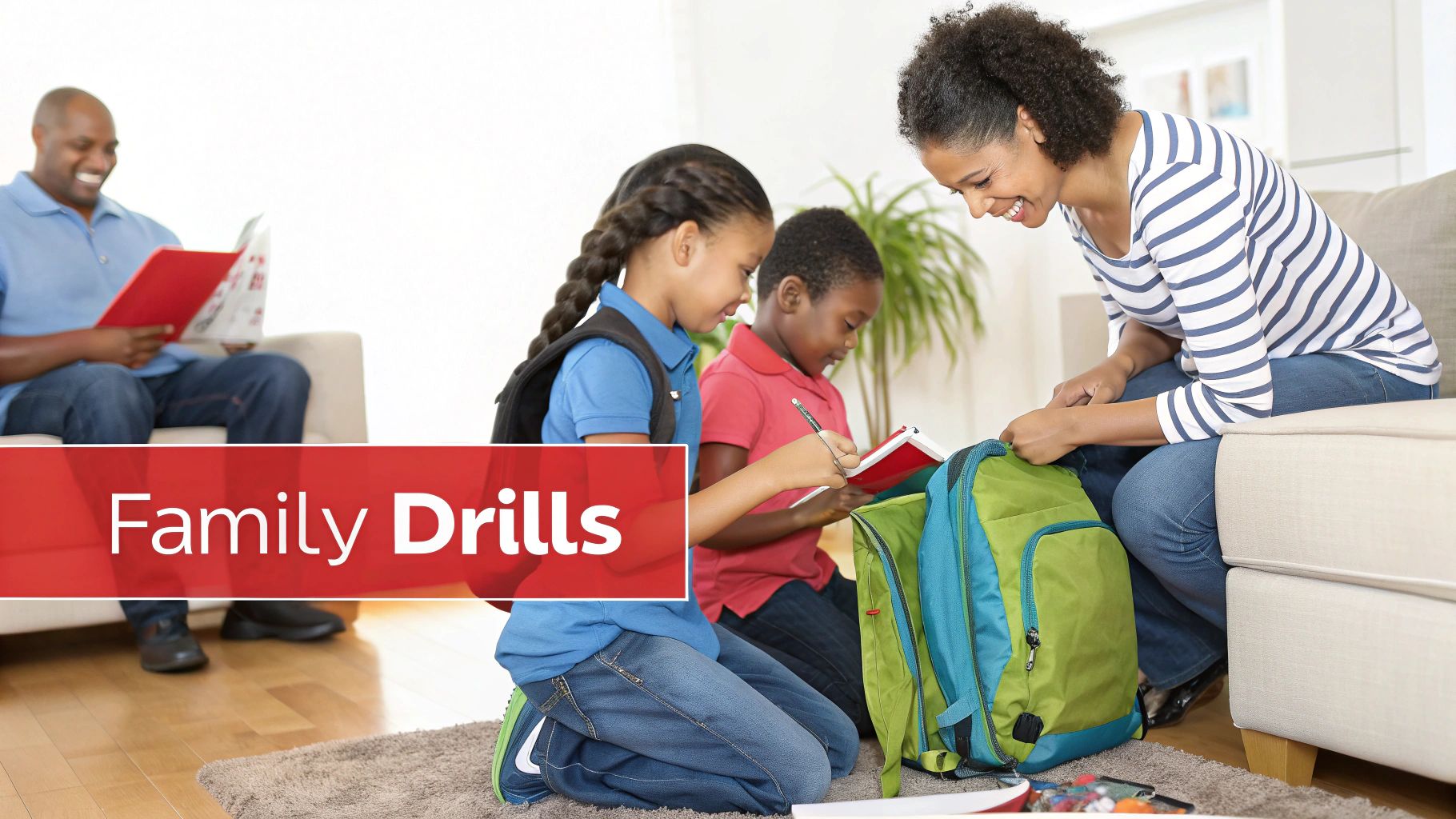
Conducting Low-Stress Family Drills
The goal here is familiarity, not fear. Try framing these exercises as games or team challenges to keep the mood light and engaging, especially for younger kids. You don’t have to do it all at once; start small and build up.
A great way to begin is with a "beat the clock" challenge. See how quickly everyone can get to your designated neighborhood meeting spot after you give a pretend alert. This simple activity reinforces your evacuation routes and meeting place without any real pressure.
Another easy drill is to test your communication plan. Once a quarter, just send a group text to your family and your out-of-state contact saying something like, "Quarterly communication drill. Everyone check in!" It takes less than a minute but confirms everyone has the right numbers saved and knows the protocol.
Remember, the point of a drill is to find the gaps in your plan while you're safe. If something doesn't work—a blocked route, a forgotten number—that’s a win. You’ve just discovered a weak spot you can fix before it becomes a real problem.
Building a Simple Maintenance Schedule
Your emergency kits and plans aren't static. They need to evolve as your family grows and your needs change. A simple semi-annual check-in is the perfect way to keep everything current. I find the easiest trigger for this is when we change the clocks for daylight saving time.
Use this twice-yearly check-in to run through these key tasks:
- Rotate and Replenish: Swap out the food, water, and medications in all your kits. Don't just toss the old stuff—use it in your daily life and replace it with fresh supplies.
- Update Documents: Take a quick look at the copies of your important documents. Have you moved? Did a child start a new school? Make sure all contact info and records are current.
- Test Your Gear: Go around and press the test button on your smoke and carbon monoxide detectors. Check the batteries in your flashlights, weather radio, and any other electronics. If you have specialized gear, like items from Survive Outdoors Longer, give it a once-over to ensure it's in good working order.
- Review the Plan: Sit down as a family for just 15 minutes and walk through the plan again. This is a quick refresher on meeting spots, the out-of-state contact, and the designated safe zones in your home.
This simple, consistent maintenance transforms preparedness from a one-and-done project into an ongoing family habit. By practicing your responses and regularly refreshing your supplies, you ensure that your plan remains a reliable and powerful tool, ready whenever you might need it.
Got Questions? We’ve Got Answers.
Even the best-laid plans bring up questions. It's totally normal. Getting clear on these common sticking points is the final piece of the puzzle, turning a plan on paper into real confidence. Let's tackle some of the most frequent questions we hear from families just starting out.
How Do I Talk About This Stuff Without Scaring My Kids?
This is a big one. The trick is to frame it all around safety and teamwork, not fear. Think of it like a fire drill at school—it’s just a normal practice run to keep everyone safe. Keep the language simple and positive.
The best way to do this is to get them involved. Let your little ones pick a special stuffed animal or a favorite card game for their personal go-bag. Walk to the park together and decide on the perfect tree to be your family meeting spot. When kids feel like they have a job and are part of the solution, it replaces anxiety with a sense of control.
My Budget Is Tight. What Are the Absolute Must-Haves?
If you're watching your spending, focus on the things that become priceless—or impossible to find—when a disaster hits. You can always add more to your kits later.
Start with these non-negotiables:
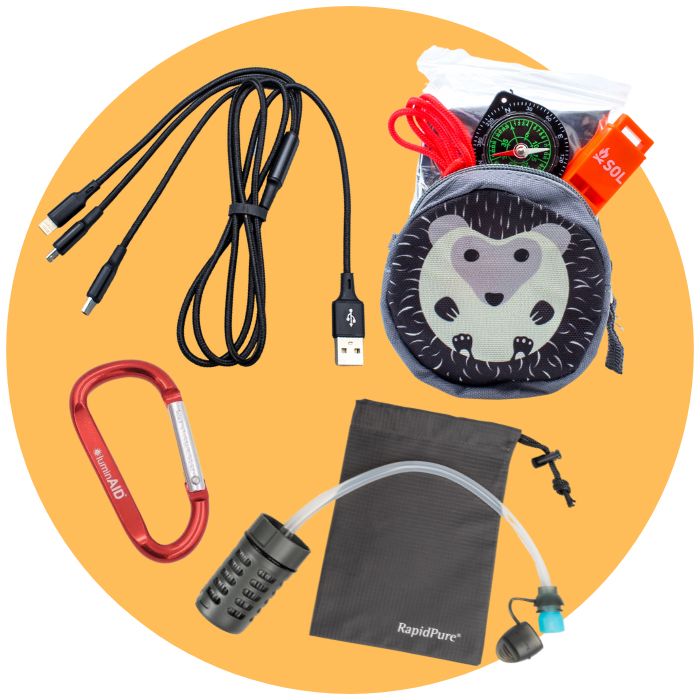
- Water: This is #1 for a reason. Plan for one gallon per person, per day, aiming for a three-day supply. You can even invest in a reliable water filter from a brand like RapidPure as a backup.
- Food: Stick to non-perishable foods that don't need cooking. Think protein bars, dried fruit, nuts, and canned goods.
- First-Aid: When 911 is overwhelmed, a solid first-aid kit is your best friend. You can grab a comprehensive one from a company like Adventure Medical Kits to make sure you have what you need.
- Medications: Make sure you have at least a one-week supply of any critical prescription meds for every family member.
Don't try to buy everything at once. Just toss an extra item or two into your grocery cart each week. In a few months, you'll have a solid starter kit without feeling the pinch.
How Often Should We Revisit Our Family Plan?
Life changes, and so should your plan. Kids get older, schools change, and you might even move. A good rule of thumb is to review and update everything at least once a year.
An easy way to remember? Tie it to daylight saving time. When you’re already swapping out smoke detector batteries, spend an extra hour going through your kits and plan. You'll also want to do a quick update after any big life event, like moving to a new house or changing jobs.
Where’s the Best Place to Store Our Stay-at-Home Kit?
You need to be able to grab it, fast. Your main kit should be in a cool, dark place that’s easy for every adult to access. A designated shelf in the garage, a hall closet, or the bottom of the pantry are all great spots.
Just be sure to avoid places with wild temperature swings, like the attic or a backyard shed, which can ruin food, water, and batteries. Most importantly, make sure everyone in the house knows exactly where it is. The last thing you want during an actual emergency is to be hunting for your supplies.
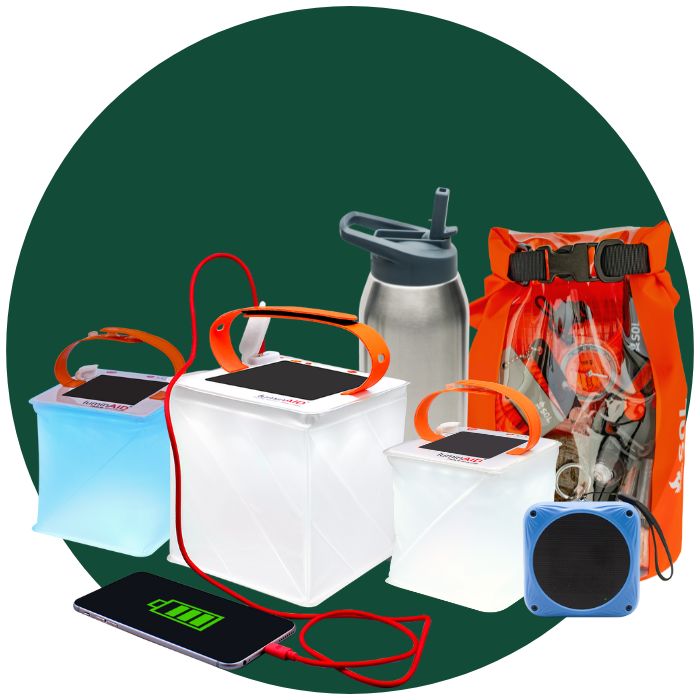
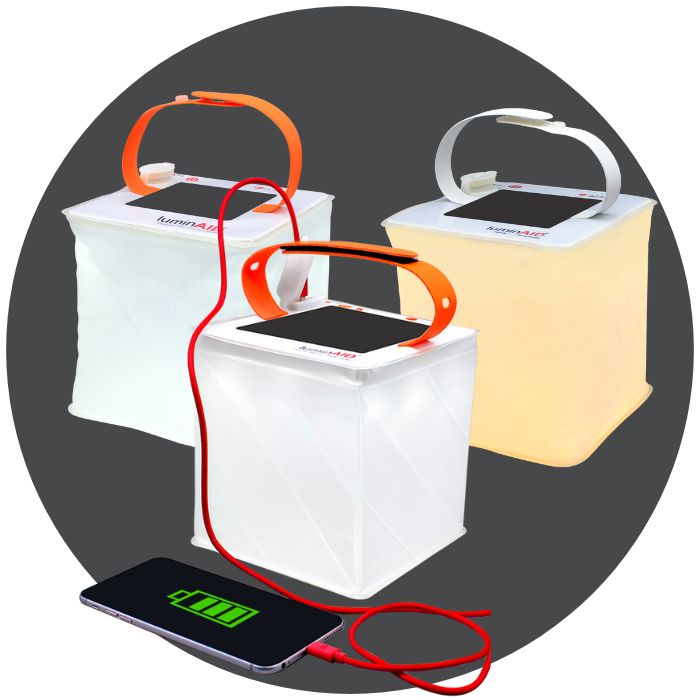
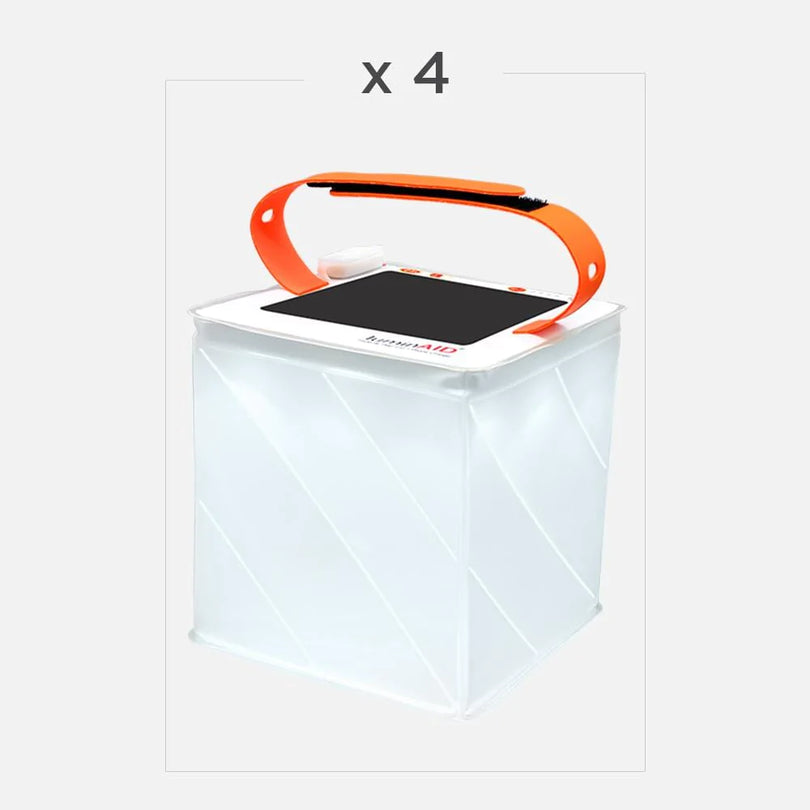
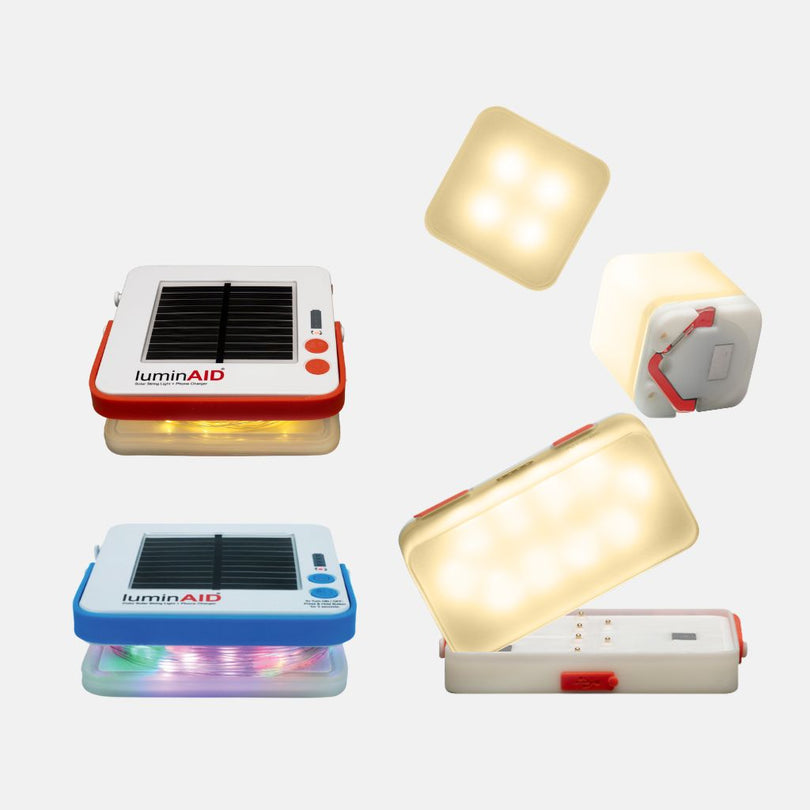
Here at LuminAID, we know that being prepared is about having peace of mind. Our solar lanterns and phone chargers are built for reliability, giving you light and power right when you need it most. They're a core part of any family's emergency kit. Get your home ready for anything at https://luminaid.com.