

Your Ultimate Camping Gear Guide: Never Forget a Thing
You've driven for hours, found a great site, and started unloading just as the light drops. Then you reach for the headlamp and realize it's sitting on the kitchen counter at home. One missed item can turn a smooth camp setup into a clumsy scramble.
That's why a good checklist for camping gear shouldn't be a random pile of products. It should work like a system. Pack by function, not by memory. Shelter protects sleep. Water supports cooking and health. Lighting supports movement, safety, and backup plans when things go sideways.
Modern camping lists have grown far beyond “tent, sleeping bag, lantern.” Many mainstream guides now organize gear into about nine categories, including shelter, sleep, kitchen, food, water, clothing, lighting, safety, and personal items, with practical basics like a tent, a sleeping bag rated for the expected nighttime low, a sleeping pad, a headlamp, a stove with fuel, a lighter or matches, a first-aid kit, and water planned at about 1 gallon per person per day. That category-based approach is better because it catches weak spots before you leave the driveway.
This guide takes that idea one step further and organizes your checklist for camping gear into 10 working systems. It fits car camping, lighter backcountry setups, and even home emergency kits built around the same off-grid basics. The point isn't to pack more stuff. The point is to pack gear that solves real problems, works together, and still makes sense when weather changes, batteries die, or camp gets dark fast.
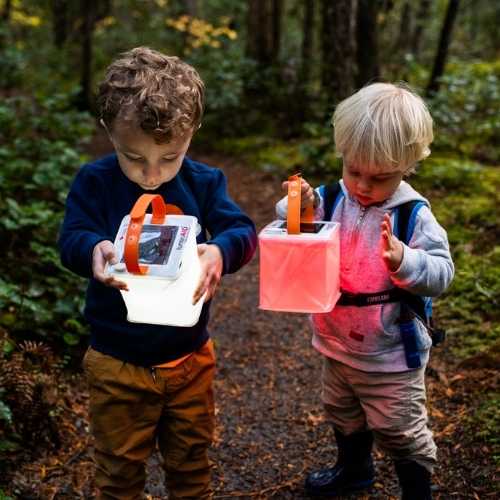
1. Portable Solar Lighting
Light is one of the first systems I check because mistakes here show up fast. You feel them when you're cooking after sunset, walking to the restroom, sorting gear in the tent, or dealing with a dead phone and no spare batteries.
A solid camp lighting setup should cover more than one use. Mainstream checklists consistently treat lighting as a core safety item, not an accessory. REI's family checklist includes headlamps or flashlights with extra batteries and a separate lantern, which is a good reminder that camps work better when you have hands-free light, area light, and backup power in the same system. You can see that approach in REI's family camping checklist.

What works in camp
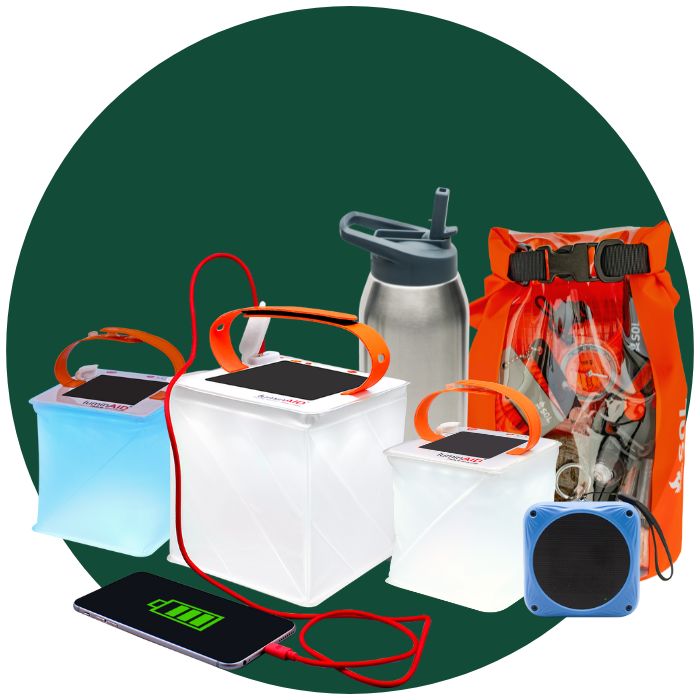
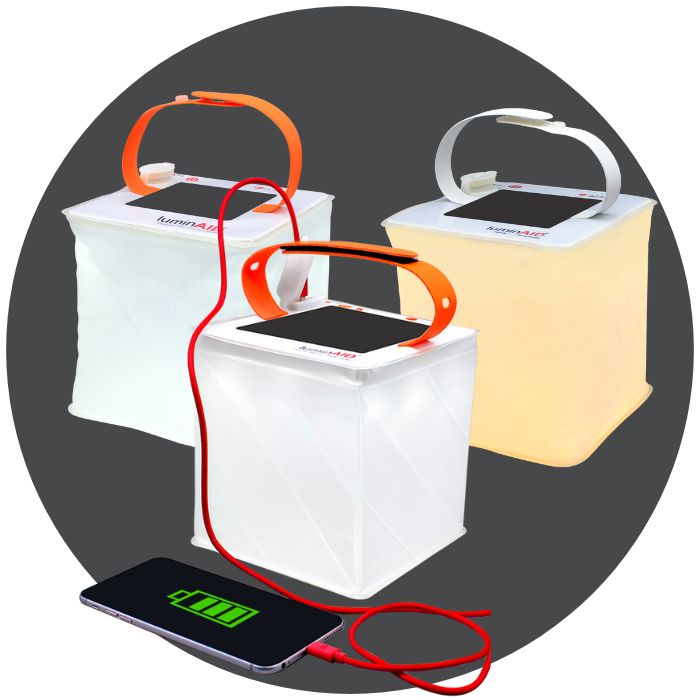
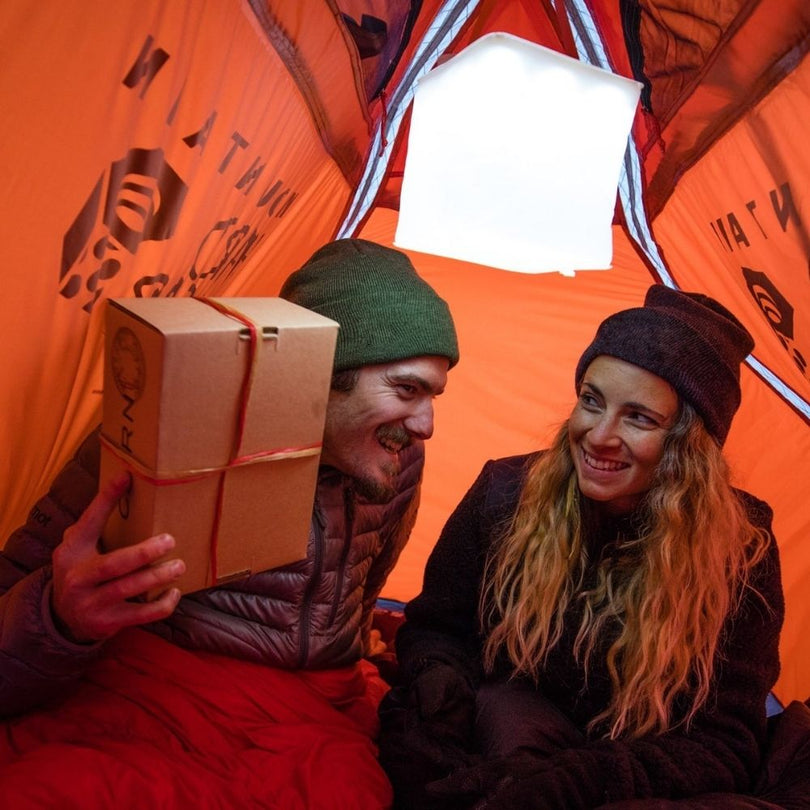
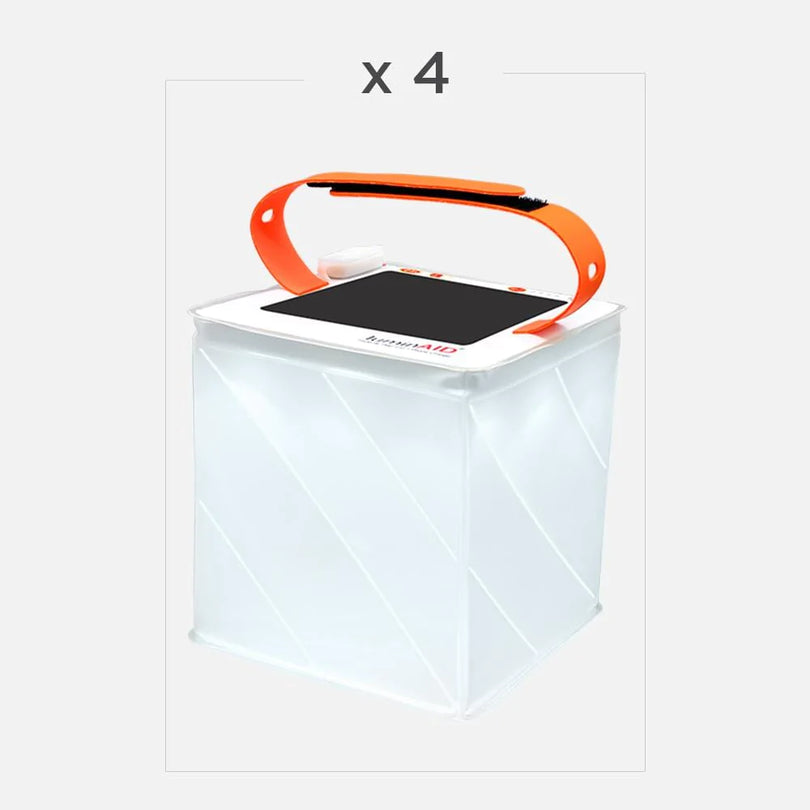
Solar lanterns make the most sense when you want lower battery management and better redundancy. A hanging lantern lights a cooking zone or picnic table better than a headlamp alone, and it keeps both hands free. Models with USB charging add another layer of utility because the same item can support light and emergency phone power.
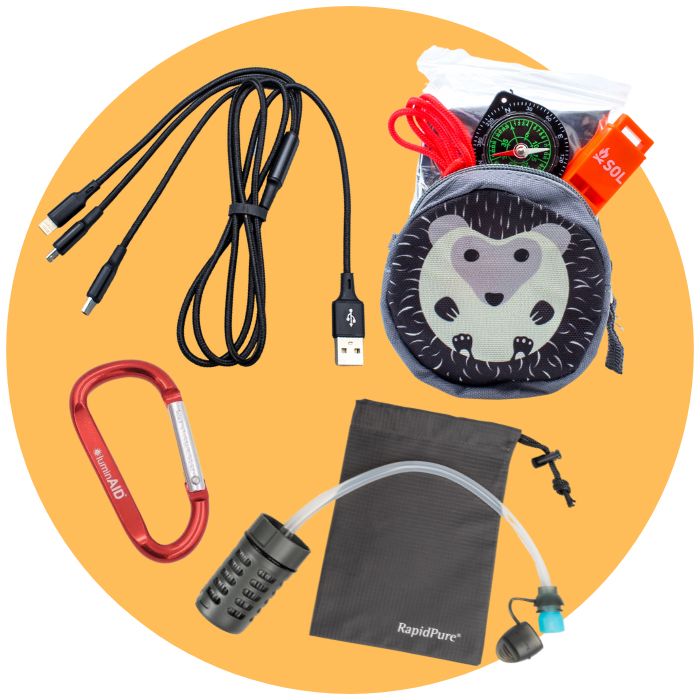
LuminAID's solar lanterns for camping fit neatly into that role, especially for car campers, families, and anyone building a backup kit that can move between camping and home outage use.
Practical rule: Don't rely on one light source. Carry a personal light, a shared camp light, and a charging plan.
Common mistakes
Campers often treat lighting as a yes-or-no item. They pack one lantern and assume the problem is solved. It isn't. Runtime matters. Charging method matters. So does placement.
A better setup usually looks like this:
- Task light: A headlamp for cooking, walking, and gear sorting
- Area light: A lantern for the table, tent, or common area
- Backup plan: A solar or rechargeable option that reduces dependence on disposable batteries
If you use solar, charge before the trip, then top off whenever you have good sun. Clip lights where you can reach them quickly after dark. Keep panels clean. And don't burn the brightest setting all evening if the trip is longer than expected.
2. Sleeping Bag and Insulation System
Most bad camping nights come from poor insulation, not from a bad tent. Campers focus on the sleeping bag and forget that the ground pulls heat away just as fast. A warm bag on a weak pad still sleeps cold.
The safest baseline is simple. Bring a sleeping bag rated for the expected nighttime low and pair it with a sleeping pad. That combination shows up in standard packing guidance for good reason. It protects comfort, recovery, and decision-making the next day.
Build the system, not just the bed
Sleeping insulation works best when all parts support each other. A summer bag like The North Face Blue Kazoo can work well for warm trips, while a three-season option such as the Kelty Cosmic or REI Co-op 650 Down covers a broader range of conditions. For colder shoulder seasons, bags like the Marmot Never Summer make more sense.
The trade-off is weight versus forgiveness. Lighter bags pack smaller, but they leave less room for weather surprises. Bulkier bags weigh more, yet they're often easier for newer campers because they tolerate small planning mistakes.
Here's the practical setup to think through:
- Bag choice: Match the bag to expected nighttime conditions, not daytime highs
- Ground insulation: Use a sleeping pad every time, even in mild weather
- Sleep clothing: Keep one dry set reserved for camp and sleep only
If you go to bed wearing damp socks and expect the bag to fix it, you'll still sleep cold.
What doesn't work
Oversized air mattresses look comfortable in the garage but often underperform in camp. They're bulky, slow to inflate, and not always great at insulating from the ground. For car camping, a thick camping pad or insulated cot setup is usually more reliable. For backpacking, a well-chosen pad matters almost as much as the bag itself.
Test the full sleep setup before a remote trip. Lie on it. Inflate the pad. Zip the bag fully. See how easy it is to get in and out in the dark. Sleep systems fail in small, annoying ways before they fail in big ones.
3. Tent and Shelter System
A tent is more than a place to sleep. It's your weather buffer, bug barrier, gear storage, and reset point when camp gets cold, windy, or wet. Good shelter choice starts with how you camp, not with what looks best online.

A Coleman Sundome can be perfectly reasonable for straightforward car camping. An REI Half Dome gives more refinement for general three-season use. If you're carrying shelter on your back, tents like the MSR Hubba Hubba NX 2 or Big Agnes Tiger Wall UL2 make more sense because packed weight and setup speed matter more every mile.
Site choice matters as much as the tent
A mediocre tent on good ground often performs better than a premium tent pitched badly. Look for level ground, decent drainage, and some wind protection. Avoid low spots that collect water and cold air.
Practice setup before the trip. That advice sounds basic, but it saves time and frustration when you arrive late or set up in wind. Also use the rainfly even when the forecast looks clean. It protects against surprise weather, dew, and falling debris.
- Footprint use: A groundsheet helps protect the tent floor from abrasion
- Ventilation: Keep airflow moving to reduce condensation
- Stake check: Confirm stakes, guylines, and poles are in the bag before departure
A quick visual on setup basics helps if you're dialing in your system:
Shelter trade-offs that matter
Large tents feel luxurious, but they need more space, more time, and often more attention in wind. Ultralight shelters reduce pack weight but usually sacrifice headroom and interior convenience. Families often do best with a slightly oversized tent for gear organization, while backpackers usually benefit from restraint.
The wrong move is buying for the rare trip instead of the common one. Choose shelter for the conditions you'll use most.
4. Water and Hydration Systems
A weak water plan shows up fast. Breakfast gets delayed, cleanup gets skipped, and small dehydration mistakes turn into headaches, fatigue, and poor decisions by midafternoon.
For trip planning, use the common rule of about 1 gallon per person per day when you're car camping, dealing with heat, or staying somewhere without a reliable spigot. That number is only the starting point. A good packing system also defines how you will carry water, treat more, and separate dirty water from clean water once camp is set.
Build the system in three parts
The most reliable setup has three pieces. Carrying capacity. Water treatment. Backup purification.
A simple example works well for many camps: one bottle or hydration reservoir for active use, one larger jug or collapsible container for camp, and one treatment method such as a Sawyer Squeeze or gravity filter. Then add purification tablets as the failure backup. Filters can clog, freeze, crack, or get misplaced. Tablets weigh almost nothing and solve a real problem.
Keep treated water containers clearly separate from dirty ones. Label them if the group is large. I've seen camps contaminate their own clean supply because one bottle got refilled from the wrong bucket.
Match the setup to the trip
Backpackers usually benefit from a lighter, modular setup. A squeeze filter, smart bottle capacity, and one backup treatment option cover most trips if water sources are frequent.
Car campers and family groups usually do better with bulk storage and easy dispensing. Water jugs with spigots save time at camp and make cooking, handwashing, and cleanup less wasteful. Group camps also benefit from gravity filters because they process larger volumes with less effort than having everyone pump separately.
Source quality matters too. Moving water is often easier to collect and filter than stagnant water because filters clog less quickly. If the source is silty, pre-filter through a bandana, coffee filter, or clean cloth before running it through the main filter.
The trade-offs that matter
Reservoirs make it easier to drink regularly while hiking, but they are harder to monitor and clean. Bottles are simpler, tougher, and easier to refill from shallow sources. Gravity systems are excellent in camp, but less useful on the move. Chemical treatment is light and dependable, but it usually takes longer and can affect taste.
That's why water belongs in a systems-based checklist, not as a single line item. You are not just packing “water.” You are packing a way to collect it, make it safe, store it, and keep the whole camp functioning if the first method fails.
Older public camping guidance still gets one point right. Redundancy matters across camp systems, including water. That same mindset shows up in this archived camping guidance archive. Pack one primary method, one backup, and enough capacity for the conditions you expect.
5. Cooking and Food Preparation Equipment
Food changes morale fast. A cold, disorganized camp dinner makes people tired and sloppy. A simple hot meal settles the whole site down.
Your cooking kit doesn't need to be elaborate. It needs to be stable, familiar, and matched to the trip. For fast coffee-and-boil-water use, a Jetboil Flash or MSR PocketRocket Deluxe makes sense. For car camping, a two-burner Coleman stove gives more control and lets you cook real meals without balancing pots like a circus act.

Pack for the food you'll actually make
Many campers overpack cookware and underplan meals. That's backward. Decide the menu first, then bring only the gear it requires. If every dinner needs one pot and one pan, don't haul a full kitchen box.
A practical cook system usually includes:
- Stove and fuel: Confirm fuel compatibility before leaving home
- Ignition: Pack a lighter or matches in a dry place
- Basic cook kit: Pot, pan, spatula, knife, cutting surface, mugs, and cleanup supplies
If campfire cooking is part of the plan, still bring a stove. Fire bans, wet wood, and bad weather can shut down your backup dinner plan quickly.
Wildlife, storage, and safer camp habits
Food storage is part of cooking, not a separate afterthought. Keep stoves away from tents and sleeping areas. In bear country, store food properly and carry bear spray only where it's appropriate and legal, and know how to use it. Counter Assault bear spray resources are a useful starting point for that side of trip prep.
If you like open-fire cooking at camp, it also helps to understand flame control and ignition basics. These tips for perfect grilling translate well to campground cooking where fuel choice and fire management matter.
6. Navigation and Positioning Tools
Phones have made navigation easier, but they've also made some campers lazy. A blue dot on a screen is helpful until the battery dies, the map never downloaded, or the trail junction isn't where you expected.
Reliable navigation starts before the trip. Download maps, check the route, and tell someone where you're going. Then carry a physical backup. That usually means a printed map and a compass, even if your main tool is an app like Gaia GPS or AllTrails.
Use layers of navigation
For frontcountry camping, navigation might be as simple as campsite directions and a local park map. For bigger terrain, layering tools is smarter. A Garmin inReach Mini 2 adds communication and route support. A Suunto MC-2G compass gives a non-electronic fallback. Benchmark maps or other regional topographic maps stay useful when screens don't.
What works best is redundancy with purpose:
- Primary navigation: Phone app or handheld GPS
- Analog backup: Physical map and compass
- Route safety: Shared itinerary with someone at home
The real failure point
The problem usually isn't getting completely lost. It's making a small wrong turn late in the day, when people are tired and less careful. That's when batteries are lower, attention is worse, and the weather may be changing.
Mark camp, trailheads, water access points, and vehicle location. Those waypoints matter more than people think. They save time when visibility drops or when you return after dark.
Know how to get back without cell service. If your plan depends on signal, it isn't a complete plan.
7. First Aid and Emergency Medical Kit
A first-aid kit isn't dead weight. It's the gear you hope stays untouched and the gear you're grateful to have when someone slices a finger, rolls an ankle, or reacts badly to a sting.
Prebuilt kits are a good starting point because they cover common outdoor problems in one package. Adventure Medical Kits makes outdoor-focused options that are easy to scale up or customize. You can also build your own, but if you do, don't make the classic mistake of packing random supplies without structure.
Pack for what actually happens outdoors
Most camp medical issues are small but disruptive. Blisters, cuts, splinters, headaches, minor burns, bug bites, stomach trouble, and medication needs are the routine problems. A useful kit handles those first.
You'll also want personal layers around the kit:
- Medication support: Bring personal prescriptions and a few basics you know how to use
- Environmental protection: Insect repellent, sunscreen, and after-bite care belong in the same readiness mindset
- Group awareness: Note allergies, asthma, and other conditions before the trip
If bugs are a recurring issue where you camp, Natrapel insect repellent options are one practical example of the kind of item worth packing intentionally, not as an afterthought.
Knowledge matters more than gear quantity
The best medical kit in the world won't help much if nobody knows what's in it or how to use it. Keep the kit organized, labeled, and easy to reach. Don't bury it under cookware or extra clothes.
A wilderness first aid course is one of the few camping upgrades that improves every trip, no matter what tent or stove you carry. Skills travel farther than gear.
8. Portable Phone Charging and Power Banks
A phone used to be optional camp gear. For many campers now, it's map, camera, weather source, emergency contact tool, and sometimes permit record all in one. That means power planning belongs on any serious checklist for camping gear.
The modern shift is clear in mainstream packing lists. Backcountry's car-camping guide includes items like a flashlight, jumper cables, and fix-a-flat in the vehicle kit, while REI and Minnesota DNR include extra batteries, portable power, or phone charging among standard prep. Some published guides in 2026 have even expanded to 100+ item checklists, which shows how much broader camping prep has become.
Match the charger to the job
A small power bank works for short trips and basic top-offs. A larger bank suits longer camps, heavy phone use, and multi-device groups. The weak point isn't usually capacity alone. It's forgetting cables, using the wrong charging priority, or assuming a tiny solar panel will fully recover everything overnight.
For most camps, this sequence works well:
- Pre-charge at home: Start with every device and bank full
- Protect the essentials: Keep your phone, GPS, or communicator above convenience items
- Use efficient gear: Combined light-and-power devices reduce duplication
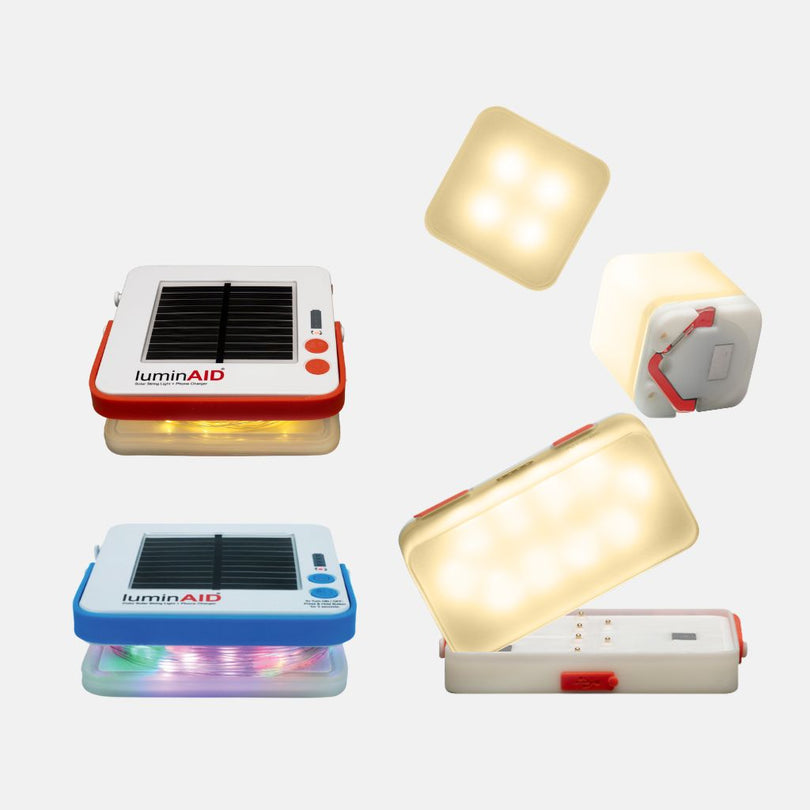
LuminAID's solar power bank guidance for camping is useful if you're trying to build a lighter setup around charging and lighting together instead of carrying separate single-purpose devices.
What doesn't work
Don't assume camp sun will fix bad planning. Trees, weather, and short winter daylight all cut into charging opportunities. Solar is best treated as support and extension, not as magic. Keep cables in one pouch. Label them if multiple people are sharing power.
9. Weather Protection and Clothing Layers
Clothing mistakes are easy to make because the parking lot lies. Warm afternoons turn into cold evenings. Dry forecasts turn damp. A short walk becomes a sweaty one, then a chilly one when you stop moving.
That's why clothing should be packed as a system. Base layer, insulation, shell, dry backup. Not fashion. Not “what I might wear.” Just pieces that solve changing conditions.
Dress for camp, not just the drive
Merino or synthetic base layers manage moisture better than cotton. Fleece and insulated jackets trap warmth. A shell blocks wind and rain. A hat and gloves earn their keep more often than new campers expect.
The most reliable habits are simple:
- Avoid cotton: It holds moisture and stays cold once damp
- Carry a spare dry layer: Reserve it for camp or sleep
- Adjust often: Add and remove layers before you get sweaty or chilled
If foot comfort tends to be your weak point, these supportive insoles for hikers are worth considering alongside socks and footwear fit.
The trap to avoid
Many people pack too many duplicate clothes and not enough functional layers. Extra shirts don't help if none of them block wind. A thick cotton hoodie feels cozy at home but often performs poorly outside once it gets damp.
Keep one full set of dry clothes protected in a waterproof bag. That single habit solves a surprising number of miserable camp nights.
10. Backup Power and Emergency Preparedness Systems
Camping gear and emergency gear overlap more than people think. A lantern that works at camp also works in a power outage. A power bank carried on a road trip also matters during a vehicle breakdown. That overlap is useful, and smart packing takes advantage of it.
Modern checklists now routinely include backup lighting, charge retention, and emergency-readiness items as standard gear rather than nice extras. Minnesota DNR includes a flashlight or headlamp, spare batteries, a phone charger, and a lantern with fuel on its packing list. That reflects a broader shift toward resilience-minded camp prep.
Build a tiered system
The most practical approach is to build in layers. One layer lives in your personal kit. Another supports the family or group. A third covers home or vehicle emergencies.
That system can include a solar lantern, rechargeable power bank, spare charging cables, a vehicle emergency pouch, and hard-copy critical information. LuminAID's off-grid camping gear ideas fit well into that kind of crossover kit because they sit between camping utility and outage readiness.
The best backup gear is gear you already know how to use in the dark, under stress, and without instructions.
Make preparedness realistic
Emergency prep fails when it's too complicated. If your backup system needs a checklist just to operate, it probably won't get used well when something goes wrong. Keep it simple, tested, and accessible.
A practical emergency layer often includes:
- Lighting backup: Rechargeable or solar lantern plus personal light
- Power continuity: Phone charging plan and spare cords
- Non-digital basics: Printed contacts, route notes, and key medical info
10-Point Camping Gear Checklist Comparison
Use this table as a packing system check, not a shopping list. Complexity rates the skill and practice needed to use the item well. Resource load separates pack burden from time, so you can compare weight and cost on one line, and setup, recharge, or treatment time on another.
| Item | 🔄 Implementation Complexity | 🎒 Resource Load (weight/cost) | ⏱ Time Factor | ⭐ Expected Outcomes | 📊 Ideal Use Cases | 💡 Key Advantages / Quick Tip |
|---|---|---|---|---|---|---|
| Portable Solar Lighting | 1/5: Charge, place, and aim for sun exposure | Low weight, medium cost | Recharge time is slow and weather-dependent | ⭐⭐⭐⭐, dependable camp light with daylight recharge | Extended trips, ambient campsite lighting, outage backup | Quiet, fuel-free lighting. Tip: top it off before the trip and treat solar as recharge support, not your only light source. |
| Sleeping Bag & Insulation System | 2/5: Match temperature rating, pad R-value, and sleep style | Medium to high weight, medium to high cost | Setup is fast. Performance depends on dry storage and good camp selection | ⭐⭐⭐⭐⭐, better sleep and better cold-weather margin | Overnight trips, shoulder seasons, cold camps | Warmth comes from the bag and the pad together. Tip: pick a bag rated below expected lows and protect insulation from moisture. |
| Tent & Shelter System | 3/5: Requires site judgment, stake work, and practice pitching | Medium to high weight, medium to high cost | Typical setup is moderate. Faster with practice, slower in wind or rain | ⭐⭐⭐⭐⭐, weather cover, bug protection, and gear storage | Backpacking, car camping, family camps, rough weather | A good shelter system includes the tent, stakes, guylines, and ground protection. Tip: do one full practice pitch at home. |
| Water & Hydration Systems | 3/5: Filters and purifiers need correct use and maintenance | Low to medium weight, medium cost | Treatment time varies by method. Pumps are quicker. Gravity systems save effort. Chemical backup takes longer | ⭐⭐⭐⭐⭐, safe drinking water and less carried weight | Backcountry travel, multi-day trips, group camping | Water planning is a system, not one bottle. Tip: carry a primary filter and one backup treatment method. |
| Cooking & Food Preparation Equipment | 3/5: Fuel choice, stove safety, and cleanup matter | Low to medium weight for backpacking, medium to high for basecamp. Cost varies widely | Boil and cook times depend on stove type, wind, and temperature | ⭐⭐⭐⭐, hot food, safer water heating, better morale | Basecamp cooking, fast-and-light trips, group meals | Match the cook kit to the trip length and menu. Tip: test fuel use at home so you do not guess in camp. |
| Navigation & Positioning Tools | 4/5: Map and compass skills take practice. Devices need power discipline | Low weight for analog tools, medium to high cost for GPS devices | Analog tools are always ready. Digital tools are fast but battery-limited | ⭐⭐⭐⭐, stronger route control and fewer location errors | Off-trail travel, remote areas, long day hikes, multi-day routes | Redundancy matters here. Tip: carry a paper map and compass even if you use a phone or GPS. |
| First Aid & Emergency Medical Kit | 2/5: Easy to carry, harder to use well without training | Low to medium weight, low to medium cost | Immediate access matters more than setup time | ⭐⭐⭐⭐⭐, faster response to cuts, burns, blisters, and sprains | Every trip, especially remote travel and family camping | The kit only works if you can find and use it fast. Tip: pack for the injuries you are likely to manage in the field. |
| Portable Phone Charging & Power Banks | 1/5: Charge ahead, protect ports, manage cable compatibility | Low to medium weight, medium cost | Wall charging is fast before departure. Field recharging is slower | ⭐⭐⭐⭐, longer phone uptime for maps, weather, and emergency contact | Weekend trips, longer travel, phone-based navigation | Power banks are more predictable than solar alone. Tip: keep one reserve charge untouched for emergencies. |
| Weather Protection & Clothing Layers | 3/5: Requires good layering decisions and fabric choices | Medium weight, medium to high cost | Clothing changes are quick. Drying time can be slow in cold or wet conditions | ⭐⭐⭐⭐⭐, better temperature control and lower cold-stress risk | Variable weather, wet trips, exposed terrain, high-output hiking | Clothing is part of the shelter system. Tip: avoid cotton and keep one dry sleep layer sealed in a bag. |
| Backup Power & Emergency Preparedness Systems | 4/5: Requires planning, compatibility checks, and regular testing | Medium to high weight, high cost | Setup and recharge times vary by battery size and charging method | ⭐⭐⭐⭐, longer off-grid resilience and better failure backup | Long remote trips, vehicle-supported camps, storm-prone areas | This category covers redundancy across lighting, charging, and emergency communication. Tip: test the full power chain before every trip. |
From Checklist to Confidence: Pack for Your Next Adventure
Packing gets easier when you stop treating it like a memory test. That's the core value of a systems-based checklist for camping gear. Instead of asking, “What am I forgetting?” you ask better questions. Where will I sleep? How will I stay warm? What's my water plan? What happens if my main light fails? How do I keep a phone alive if I need it for navigation or emergencies?
That shift matters because the strongest camping kits aren't built around brand hype or overpacking. They're built around coverage. Shelter covers weather and rest. Water covers hydration, cooking, and cleanup. Lighting covers movement, camp chores, and emergency use. Power covers communication and continuity. Safety gear supports everything else. Once those systems are in place, the small comfort items become easier to judge. You can bring them if they fit, and skip them if they don't.
It also helps to think about where your camping kit overlaps with everyday preparedness. A lantern that hangs in your tent can also sit in a hallway during a blackout. A packed first-aid kit in the camp bin can move to the car for road travel. A charged power bank can support a weather alert app at camp just as easily as it can support a phone during a home outage. Good gear earns space when it works in more than one setting.
The best checklist for camping gear is one you'll use. Keep it close to the gear bins. Print it and store it in your camp box. Add notes after every trip. If you forgot dish soap, a lighter, extra socks, or a phone cable, fix the checklist instead of trusting yourself to remember next time. That habit is what makes your kit better season after season.
It's also worth being honest about your camping style. Car campers can carry more convenience and redundancy. Backpackers need tighter discipline. Families need more organization than solo campers. Shoulder-season trips need more insulation and weather protection than midsummer weekends. The list should adapt, but the systems stay the same. That's why this framework works so well. You're not rebuilding from scratch every trip. You're scaling a proven kit up or down.
If light and power tend to be weak spots in your setup, LuminAID is one relevant option to consider in that system. Portable solar lanterns and 2-in-1 charging models make sense for campers who want area light, lower battery dependence, and gear that can move from campsite use to emergency readiness without much fuss.
Confidence at camp doesn't come from packing the most. It comes from knowing the essentials are covered, the backups are sensible, and the gear you brought is gear you can use. Once that part is handled, it's easier to enjoy the trip, adapt when conditions change, and focus on the reason you went outside in the first place.
Print your list. Keep it with your gear. Update it after every trip. That's how a checklist stops being a piece of paper and starts becoming part of how you camp well.
If you want to tighten up the light-and-power side of your checklist for camping gear, take a look at LuminAID. Their portable solar lanterns and 2-in-1 phone chargers are built for camping, emergency kits, and off-grid use where simple, rechargeable gear makes life easier.