
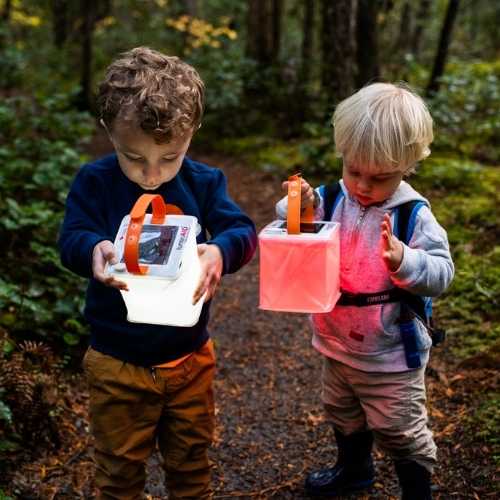

When you're looking for reliable, off-grid lighting, the best solar powered lantern isn't a one-size-fits-all gadget. It’s the one that perfectly matches what you need it for—whether that's an ultralight model for through-hiking, a bright area light for the family campsite, or a dependable source of light during a power outage.
Top-tier options, like LuminAID's inflatable lanterns, really shine because of their smart blend of portability, toughness, and innovative design. The trick is to stop searching for a single "best" lantern and start focusing on the features that solve your specific problems.
Why Solar Powered Lanterns Are Essential for Modern Adventures
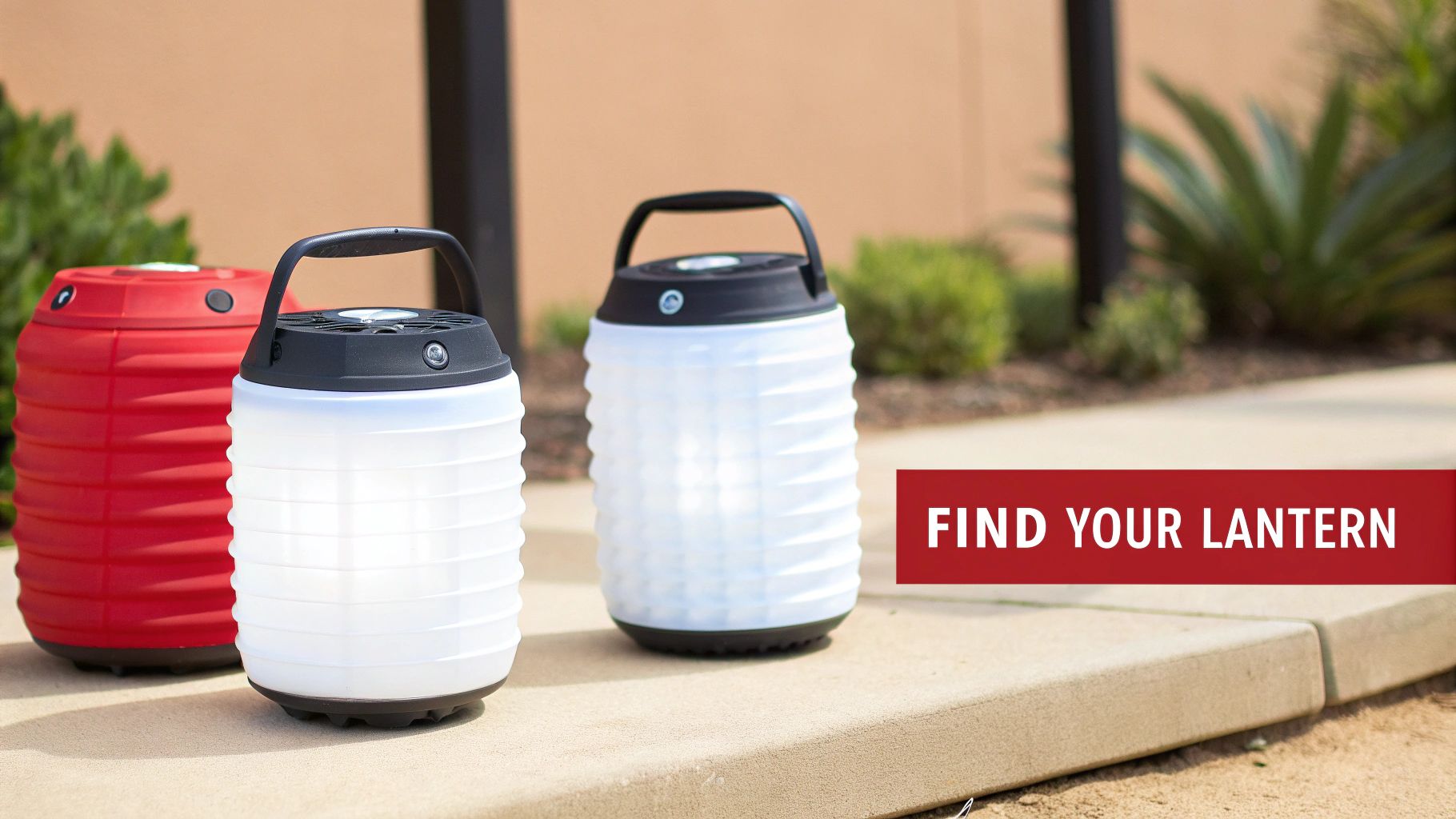
The days of fumbling with dead batteries or lugging around bulky, fuel-burning lamps are over. Today’s solar lanterns are a smarter, more sustainable, and surprisingly powerful lighting solution for just about any situation.
By harnessing the sun's energy, they provide hours of light without ever needing an outlet, making them perfect for campsites, backyard get-togethers, and your emergency kit.
This move toward off-grid gear isn't just a passing trend; it's a reflection of how we're all looking for more practical, sustainable tools. Thanks to big leaps in solar and battery tech, a modern lantern can easily give you 8–12 hours of light on a single day's charge.
What Makes a Solar Lantern a Must-Have Item
Choosing the right solar-powered light is an investment in more than just illumination. It's an investment in peace of mind. A well-chosen lantern becomes a critical part of your preparedness strategy, whether you're planning a weekend getaway or stocking a go-bag for emergencies.
A reliable light source is one of the most critical pieces of gear for both recreation and readiness. It ensures safety, extends your activities past sundown, and provides comfort during uncertain situations like a power failure.
That's exactly why it’s so important to understand what makes a particular lantern right for you. Before you decide, it’s worth checking out a detailed solar lantern buyer's guide that breaks down all the essential features.
Think of it like building a complete safety system; your lantern is just as important as a well-stocked first-aid kit. Throughout this guide, we’ll walk through the key specs—from brightness to battery life—to help you find the perfect match for your adventures.
Decoding the Specs: What Really Matters in a Solar Lantern
Choosing the right solar lantern can feel like trying to decipher a secret code of numbers and acronyms. But here’s the thing: understanding these specs is the key to finding a light that won’t leave you in the dark. Instead of getting bogged down in technical jargon, let's translate these numbers into what they actually mean for you out in the real world.
Think of it this way: you wouldn't bring a tiny reading light to illuminate a whole campsite, and you definitely don't need a stadium floodlight just to read in your tent. The specs simply help you match the tool to the job.
Brightness, Measured in Lumens
Lumens are the standard for measuring brightness, but bigger isn't always better. It’s all about having the right amount of light for what you’re doing.
A soft glow of 30-50 lumens is perfect for reading inside a tent or creating a cozy vibe without blinding your campmates. On the other hand, you’ll want a powerful beam of 150-300 lumens for tasks like cooking, setting up gear, or lighting up a larger area for your whole group. The best, most versatile lanterns give you multiple brightness settings, letting you switch from a low-power nightlight to a high-power work light with a simple push of a button.
Runtime and Battery Capacity
How long will your lantern actually last? That crucial question is answered by two specs that work together: runtime (in hours) and battery capacity (in milliamp-hours, or mAh). Think of a bigger mAh number like having a bigger fuel tank in your car—it means more stored energy.
A lantern with a 2000 mAh battery, for instance, might give you up to 50 hours of light on its lowest setting, but maybe only a few hours on its brightest. This is a critical trade-off to consider. For a weekend trip, a lantern that runs for 10-15 hours on a medium setting will do just fine. But for an emergency kit, you'll want the longest possible runtime to make sure you have light for multiple nights.
The real magic is in the balance. A great solar lantern pairs an efficient LED with a high-capacity battery to deliver practical, long-lasting light without needing constant recharging.
Charging Options: Solar and USB
The "solar" in a solar lantern is what gives you true off-grid freedom. Most quality lanterns need around 7-10 hours of direct sunlight to get a full charge. Of course, the weather doesn't always play along.
This is exactly why having dual charging (solar and USB) is such a game-changer. A USB port lets you top up the battery in just 1-2 hours from a power bank, your car, or a wall outlet before you even leave home. This way, you start your trip with a full battery and can rely on the sun to keep it topped off.
Durability and IP Ratings
Your gear needs to be tough enough to handle whatever the elements throw at it. That's where IP ratings come in. An IP (Ingress Protection) rating is a straightforward way to tell how well a device is protected against solids (like dust) and liquids (like water).
- IPX4: This means the lantern is splash-resistant from any direction. It can handle a rain shower with no problem.
- IP67: This is a much tougher rating. The "6" means it's completely dust-tight, and the "7" means it can be fully submerged in up to one meter of water for 30 minutes. An IP67-rated lantern is truly built for rugged adventures.
When you're building a reliable kit, you choose gear that can handle tough conditions. A durable, waterproof lantern is a foundational piece of that system.
To make things even clearer, let's break down which specs are most important for different activities.
Matching Solar Lantern Specs to Your Needs
Use this quick reference guide to compare ideal technical specifications for different activities, helping you match the right features to your adventure.
| Feature | Backpacking / Hiking | Family Camping / Basecamp | Emergency Preparedness Kit | Backyard Ambiance |
|---|---|---|---|---|
| Lumens (Brightness) | 50-75 (Lightweight & functional) | 150-300+ (Bright area lighting) | 75-150 (Versatile for tasks & area light) | 30-75 (Soft, warm glow) |
| Runtime (Low Setting) | 24+ hours (Multi-night use) | 15-24 hours (Sufficient for evenings) | 50+ hours (Maximum longevity is key) | 10-15 hours (Lasts all evening) |
| Battery (mAh) | 1000 mAh (Compact & efficient) | 2000-4000 mAh (Powers bright light & charges devices) | 2000+ mAh (Reliable power source) | 1000 mAh (Enough for ambient light) |
| Charging | Solar & USB (Versatility on the trail) | Solar & USB (Convenience at the campsite) | Solar & USB (Redundancy is crucial) | Solar (Set it and forget it) |
| IP Rating | IP67 (Waterproof & dustproof for trail abuse) | IPX4 or higher (Splash-proof for rain) | IP67 (Must be reliable in any disaster) | IPX4 (Weather-resistant for outdoor use) |
| Weight | Under 6 oz (Every ounce counts) | Under 1 lb (Portability is still useful) | Under 1 lb (Storeable and easy to carry) | N/A (Weight is not a primary concern) |
This table should help you zero in on the perfect lantern, ensuring you get a light that's not just bright, but right for your specific needs.
Matching Your Lantern to Your Next Adventure
Knowing the specs of a solar lantern is one thing, but seeing how it holds up in the real world is the real test. The best solar lantern isn't just a list of impressive numbers; it's a reliable companion that feels like it was made for exactly what you're doing. A lantern that’s a star at the family campground might be a brick in your pack on a multi-day trek, and an emergency light needs features a backyard lantern simply doesn't.
Let's bridge the gap between the features on the box and how they actually perform in the field. This is where the theory gets put into practice, ensuring you pick a light that won't let you down.
This simple decision tree can help you zero in on what matters most for your primary use.
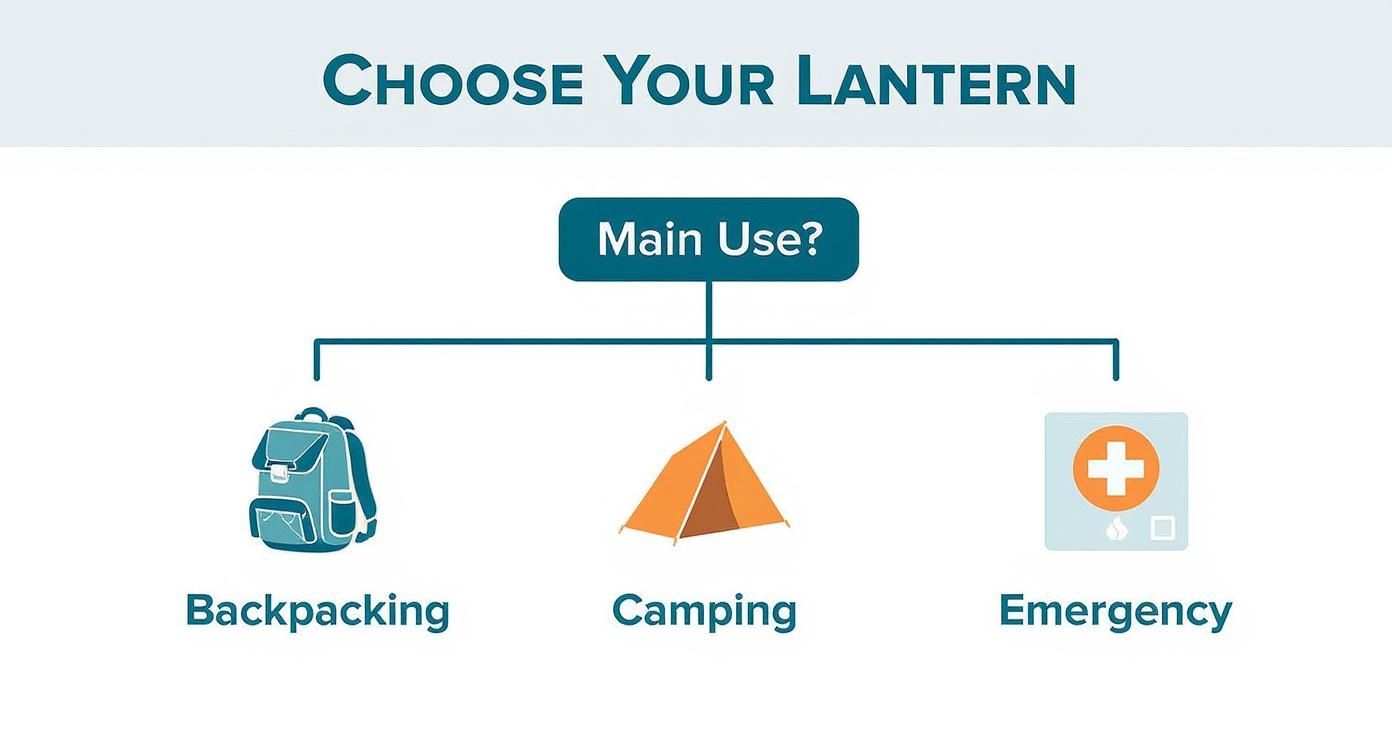
As you can see, different adventures call for different priorities. Let's break down what to look for in each scenario.
For Camping and Backpacking
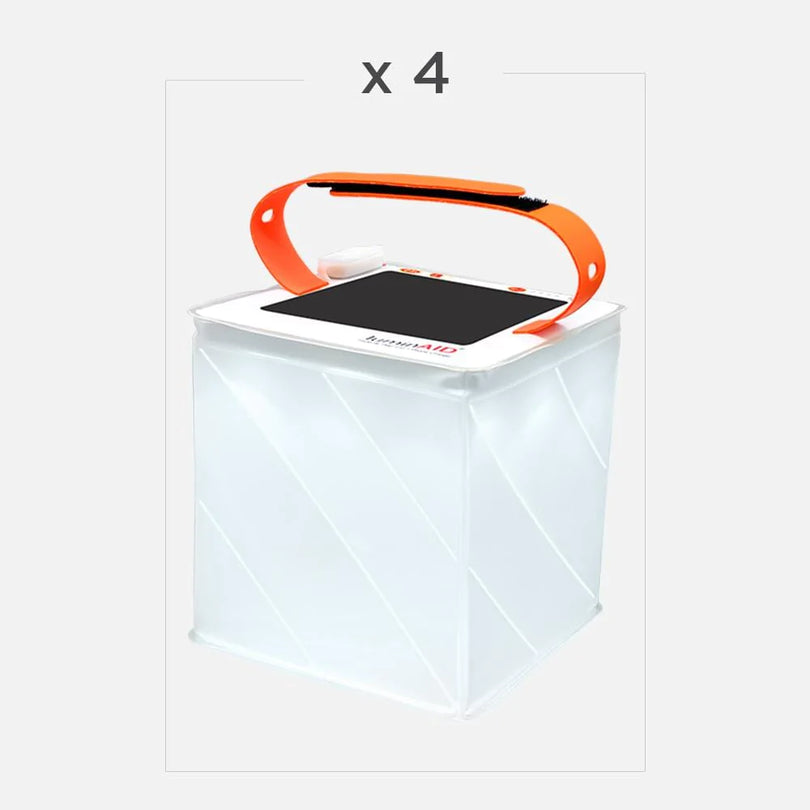
When you’re carrying your world on your back, every single ounce counts. For backpackers and minimalist campers, the perfect lantern is lightweight, compact, and tough. This is exactly why inflatable designs, like the ones we make at LuminAID, have become a go-to for so many adventurers. They pack down flat to save precious room in your pack and weigh next to nothing, but still throw off fantastic, diffused light.
For those longer trips, you're likely already curating a set of ultralight backpacking gear, and your light source should be no exception. You want the best possible brightness for the lowest possible weight. To learn more about what makes a great trail companion, check out our complete guide on choosing the best solar lanterns for camping.
For Emergency and Survival Kits
In an emergency situation, reliability is everything. The best solar lantern for your go-bag is the one you can pull out after months (or even years) of storage and know it will work. Look for a beefy, long-lasting battery (2000 mAh or higher), a seriously durable and waterproof build (IP67 rating), and the ability to do more than just shine a light.
A lantern that can also charge your phone is a literal lifeline during a power outage. It gives you both light to see by and a way to call for help or connect with loved ones. It’s a foundational piece of any emergency kit, just as critical as the supplies you’d find in a well-stocked kit from Adventure Ready Brands.
For Humanitarian and Off-Grid Living
For people living in remote areas without reliable electricity or those affected by natural disasters, a solar lantern is far more than a convenience—it's a critical tool for safety, education, and community life. In these situations, durability and consistent, long-term performance are paramount.
This is also where social impact comes into the picture. Through programs like our own Give Light initiative, our customers can help sponsor lights for humanitarian partners, delivering safe and sustainable lighting to communities that need it most all over the globe.
For Ambient Outdoor Lighting
Sometimes, you just want to create a warm, inviting vibe in your backyard or at a laid-back campsite. For this kind of use, you can worry less about extreme technical specs and more about the atmosphere the light creates.
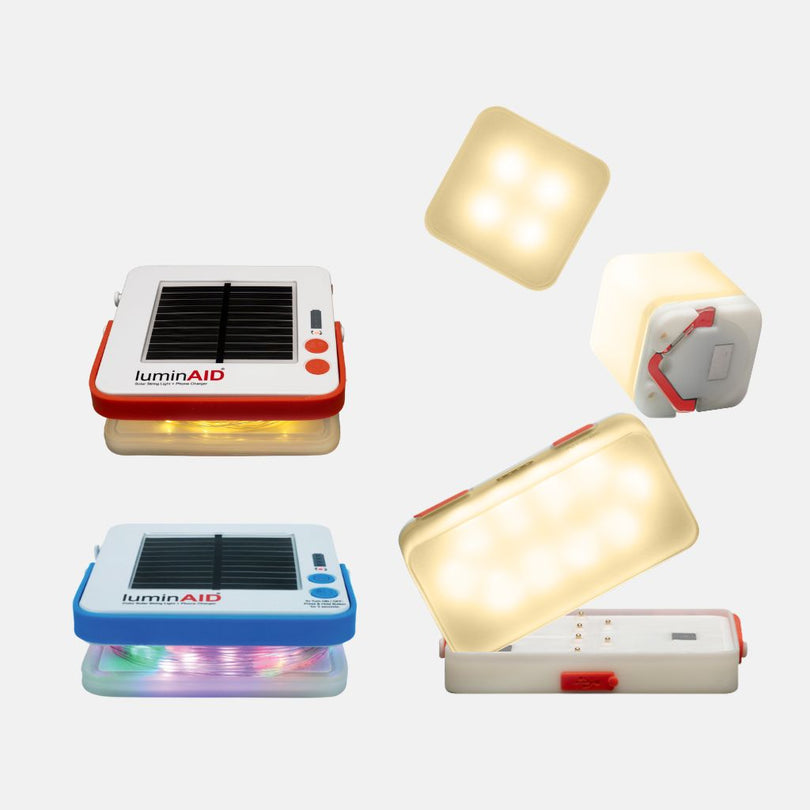
Features like warm light settings, different color modes, and stylish designs become the main event. And it's not just a niche interest; creating beautiful outdoor spaces with solar lighting is a huge consumer trend. The North American outdoor solar LED market was worth about USD 1.58 billion in 2024 and is only expected to grow. It’s clear these versatile lights are here to stay.
Why LuminAID Lanterns Stand Out From the Crowd
In a sea of solar lanterns, it’s the smart details and real innovation that make a product feel different. Plenty of lights can give you basic illumination, but LuminAID has really carved out a unique space by solving real-world problems. This isn't just about making another light; it's about building a reliable tool you can count on, whether you're miles from the nearest outlet or dealing with a sudden power outage at home.
What really sets LuminAID apart is a deep focus on versatility and sheer resilience. The features aren’t just bullet points on a box—they're practical solutions that you can tell were born from experience.
Patented Design for Portability and Performance
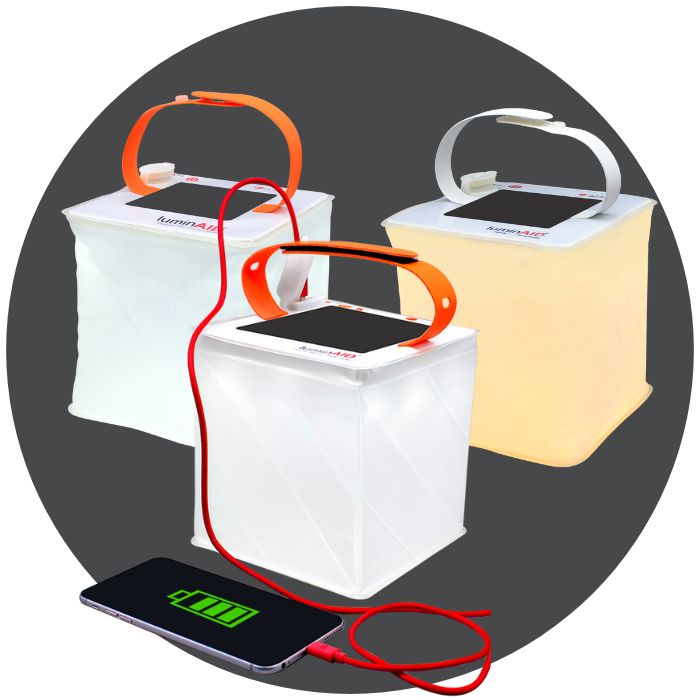
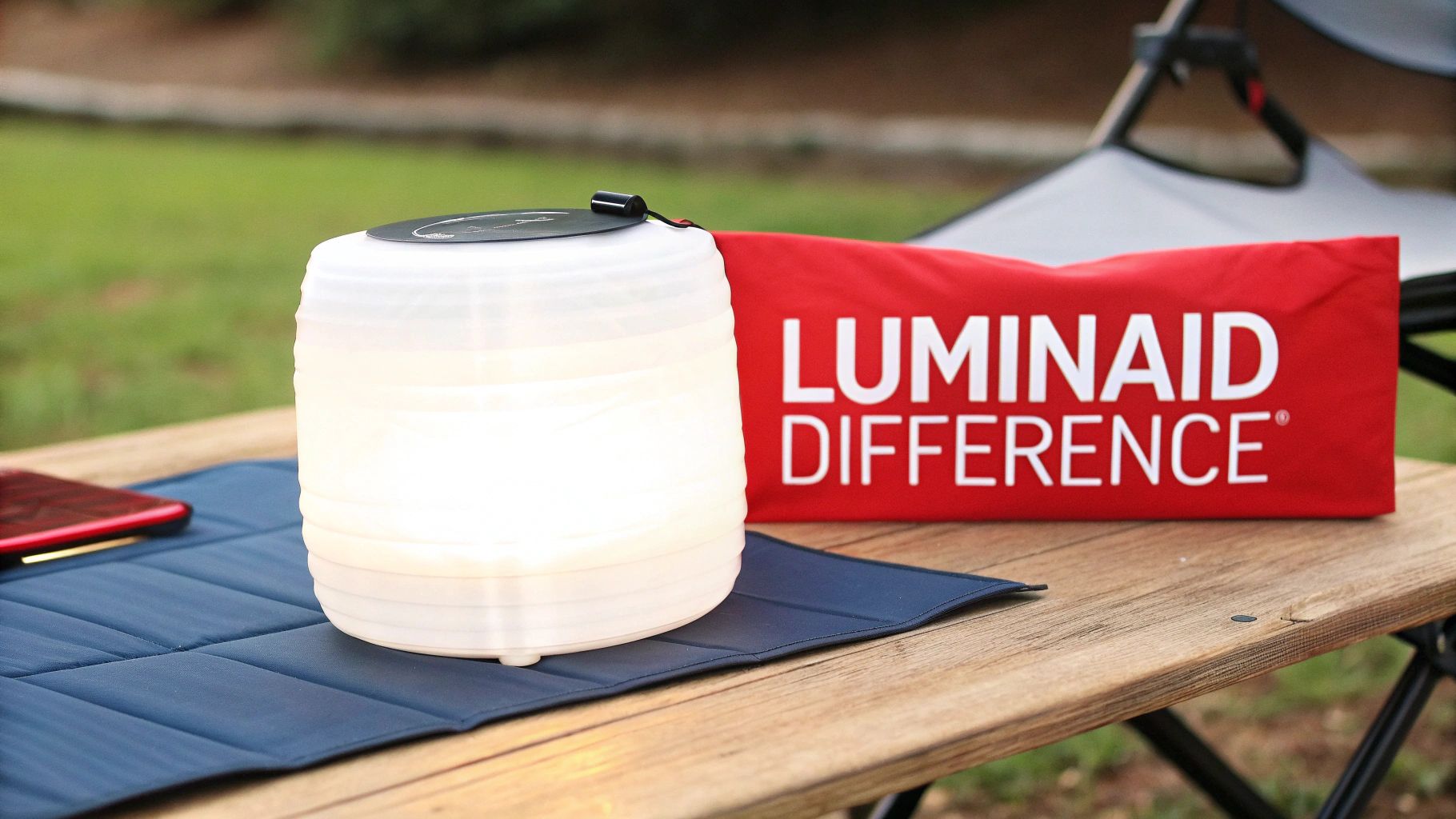
The first thing you’ll notice is the patented inflatable design. This isn't just a gimmick; it's an absolute game-changer for anyone who needs to pack light. When deflated, the lanterns squish down completely flat, taking up almost no space in a backpack or go-bag. That’s a huge deal when every inch of space counts.
But once you inflate it, the chamber does more than just give the lantern its shape. It brilliantly transforms the harsh, pinpoint glare of a typical LED into a soft, diffused glow that lights up a surprisingly wide area without creating those annoying, harsh shadows. It's perfect for illuminating an entire tent, a picnic table, or a small room.
Built for Unpredictable Environments
Adventures and emergencies are, by their very nature, unpredictable. So, your gear has to be ready for anything. LuminAID lanterns are engineered to handle the worst of it. They boast a rugged IP67 rating, which means they're completely sealed against dust and are fully waterproof. You can literally submerge them in water without a problem.
That level of durability means you don't have to panic about a sudden downpour on the trail or an accidental drop into a river. This commitment to resilience is why these lanterns are such a smart addition to any safety plan. A dependable light source is just as critical as a first-aid kit, which is why experts at Survive Outdoors Longer always stress the importance of building kits with gear you can trust in any condition.
A truly great piece of gear doesn't just work when conditions are perfect—it performs flawlessly when they're not. This is the core principle behind building for resilience, whether it's a light source or a survival shelter.
Smart Solutions and Social Impact
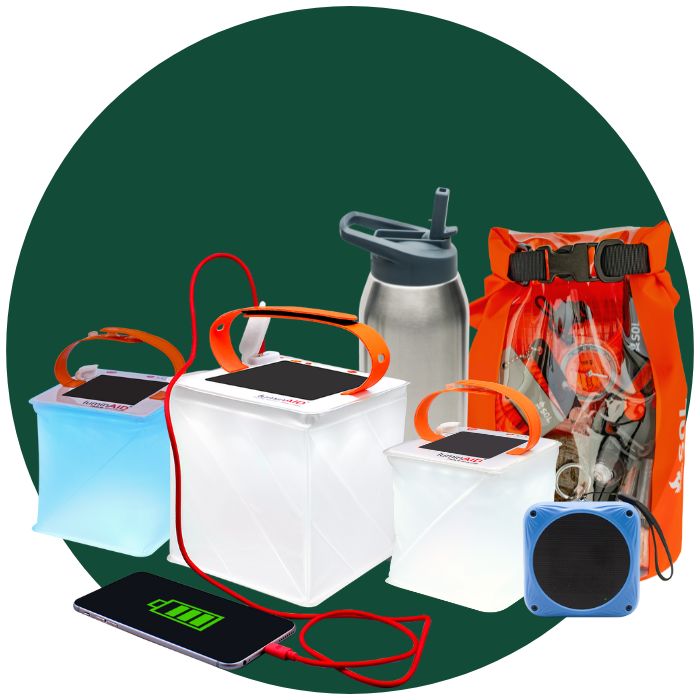
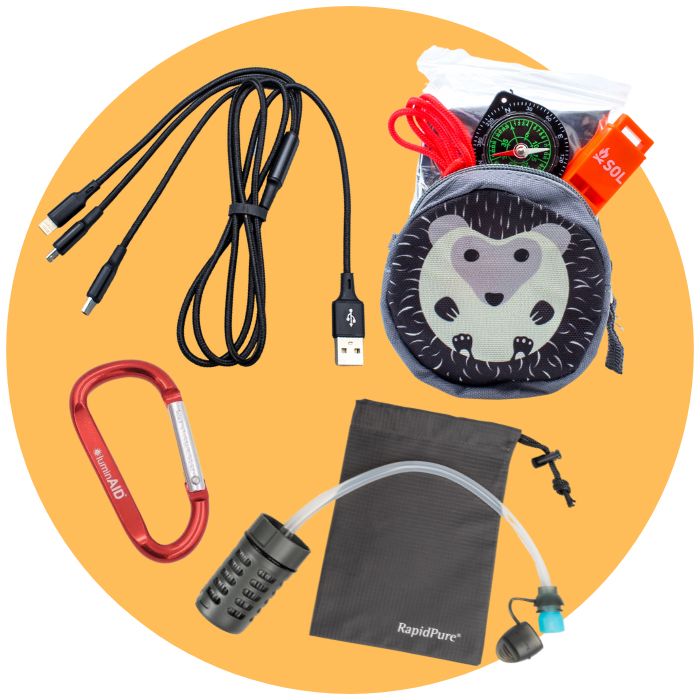
Beyond the tough-as-nails design, LuminAID just gets what people need. Their product bundles, like the Emergency Preparedness Bundle, are thoughtfully put together to give a family a complete lighting and power solution. It takes all the guesswork out of getting prepared.
And here’s something that makes the choice even easier: your purchase has a ripple effect. Through the Give Light program, the company partners with humanitarian organizations to get safe, reliable light into the hands of communities hit by disasters and crises. This social mission adds a powerful layer of purpose, connecting your own adventures or preparations to a global cause. For many of us, that makes LuminAID not just a good choice, but a truly meaningful one.
Getting the Most From Your Solar Lantern
Having a great solar lantern is one thing, but knowing how to take care of it is what guarantees you'll have reliable light for years. Proper use and maintenance aren't difficult, but a few smart habits will make a huge difference in your lantern's lifespan and performance.
Think of it like tuning a guitar—a little attention keeps it sounding perfect. These simple practices help you squeeze every last drop of power from the sun, so your lantern is always ready when you are.
It’s a good time to get the most value from your gear, too. The global market for outdoor solar LED lighting was valued at USD 9.78 million in 2024 and is expected to explode to nearly USD 58.67 million by 2032 as more people look for sustainable options.
Optimal Solar Charging
Getting a full, efficient charge is the foundation of your lantern’s performance. The process is dead simple, but a few details can really make or break your charging speed.
- Angle for Success: Position the solar panel to face the sun as directly as you can. As the sun moves, try to adjust the lantern’s angle a couple of times during the day to catch the most direct rays.
- Keep It Clean: A dirty solar panel is like a dusty window—it just doesn't let enough light through. Give the panel a quick wipe with a soft, damp cloth to clear off any dust, dirt, or water spots before you set it out to charge.
- Avoid the Shadows: Even a small shadow from a tree branch or another piece of gear can seriously slow down charging. Find a clear, wide-open spot for the best results.
For more detailed tips, you can always check out our complete guide on how to charge your LuminAID lantern.
Long-Term Storage and Battery Care
If you’re stashing your lantern in an emergency kit or packing it away for the winter, a little battery care goes a long way. The lithium-ion batteries that power most high-quality lanterns have specific needs to stay healthy over time.
Just like you wouldn't leave a car sitting for a year without starting it, you shouldn't store a solar lantern with a completely dead or fully charged battery. A partial charge of around 50-70% is the sweet spot for long-term battery health.
On top of that, be sure to store your lantern in a cool, dry place. Extreme heat or freezing temperatures can damage the battery and shorten its lifespan. It’s a good idea to check on it and top it off every few months to keep it ready for action.
Creative Usage and Placement Tips
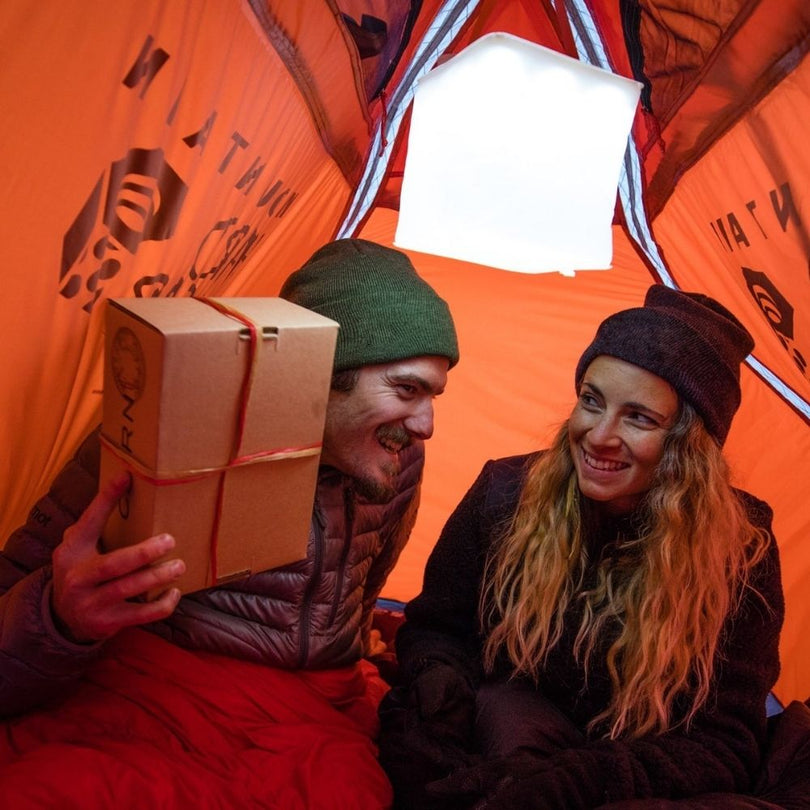
Where you put your lantern can completely change its effectiveness. Inside a tent, for instance, hanging it from the center loop on the ceiling is your best bet. This spreads the light evenly, gets rid of harsh shadows, and creates a much more comfortable space.
For outdoor gatherings, don't just rely on one light. Create layers by using multiple lanterns—place one on a table, hang another from a tree branch, and set a third to light up a pathway. This creates a warm, inviting atmosphere and makes it easier for everyone to see. A good lantern isn't just a tool; it's a key part of your adventure setup.
Answering Your Top Questions About Solar Lanterns
Even after digging into all the specs, you might still have a few things you’re wondering about. To make sure you feel totally confident picking out your lantern, we’ve rounded up the questions we hear most often and answered them straight up.
How Long Does a Solar Lantern Take to Charge?
This really depends on the size of the solar panel and just how bright the sun is that day. As a rule of thumb, a quality lantern needs about 7-10 hours of direct sunlight to go from empty to a full charge.
But the best lanterns have a trick up their sleeve: a secondary USB charging port. This is a huge advantage. It means you can plug into a power bank, your car, or a wall outlet and be fully juiced up in just 1-2 hours. It’s the perfect backup plan for those gray, cloudy days or when you need to pack up and go in a hurry.
Do Solar Lanterns Work in Winter or on Cloudy Days?
Yes, they absolutely do—they just won’t be at peak performance. Modern solar panels are pretty sensitive and can still generate power even when the light is low. Think of it like trying to fill a bucket with a slow trickle instead of a powerful hose. It still gets the job done, but it’s going to take a lot longer.
This is exactly why having a lantern with a big battery and a USB charging option is a game-changer if you’ll be using it in the winter or live somewhere with a lot of overcast days. That combo ensures you’ve got light when you need it, no matter what the sky looks like. It’s all about being prepared, just like packing extra layers or a reliable fire starter from Survive Outdoors Longer.
Are Inflatable Solar Lanterns Like LuminAID Actually Durable?
Absolutely. It’s easy to hear "inflatable" and think "fragile," but these things are built tough for real-world use. High-quality inflatable lanterns are made from a rugged, puncture-resistant material called TPU (Thermoplastic Polyurethane).
LuminAID lanterns are a great example of this. They’re fully waterproof and dustproof with an IP67 rating, which means they can be completely submerged in water and come out shining. Plus, that inflatable design acts like a built-in cushion, protecting all the electronics inside if you happen to drop it.
What Is the Difference Between Lumens and Watts?
This is a common point of confusion, but the difference is actually pretty simple. Lumens measure how bright the light is—more lumens means a brighter light. Watts, on the other hand, measure how much energy the light is using.
The secret to a great solar lantern is the incredible efficiency of modern LEDs. They can blast out a high number of lumens while sipping a tiny amount of wattage. That’s how they manage such long runtimes, giving you hours and hours of light on a single charge.
Ready to find a lantern that’s as resilient and prepared as you are? The team at LuminAID has designed a range of solar-powered lanterns and phone chargers that are tough, reliable, and ready for any adventure or emergency.
Explore the full collection of LuminAID solar lanterns and find the perfect light for your needs.