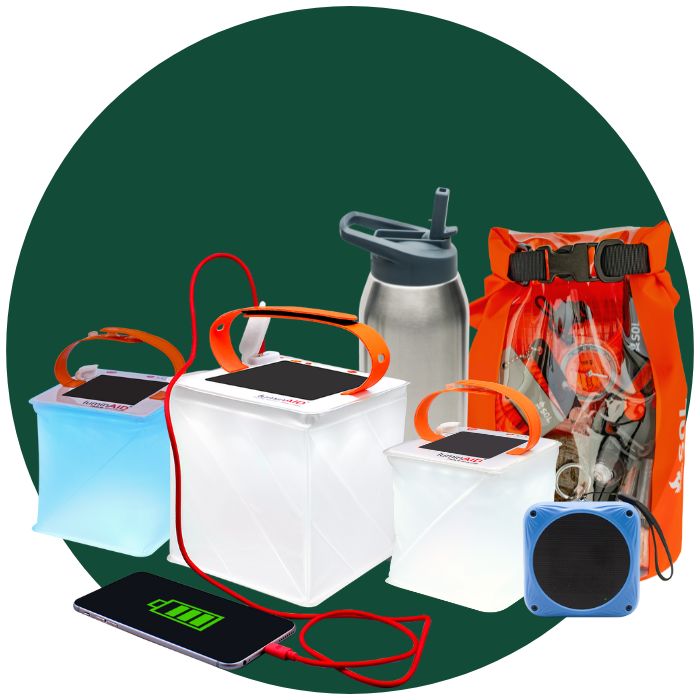
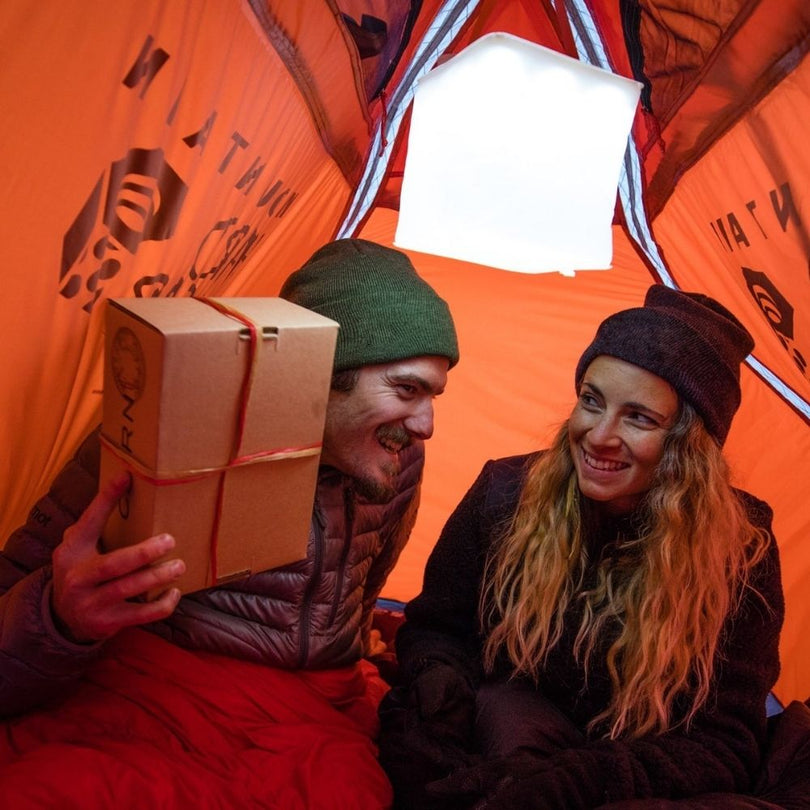
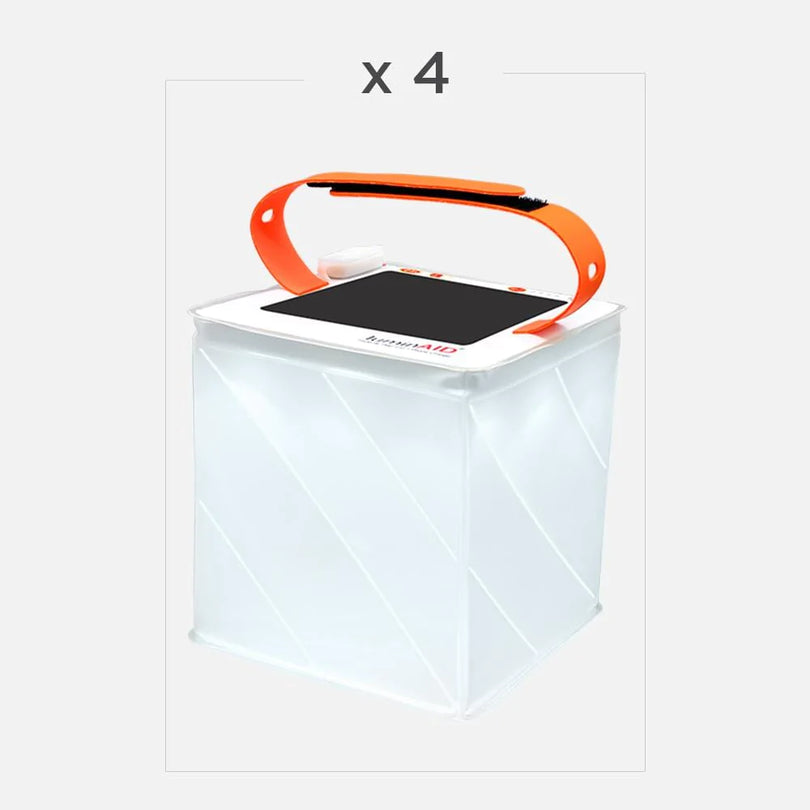

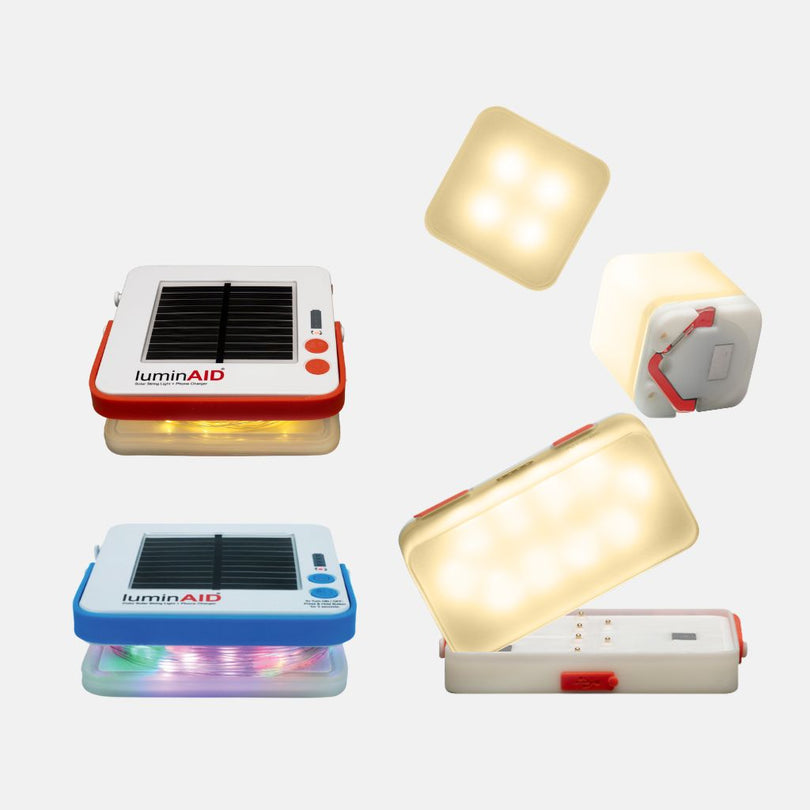


You're miles from the nearest outlet, your phone is down to the last sliver of battery, and the sun is already dropping behind camp. A flashlight alone won't solve that problem, and a power bank without a way to recharge won't carry you far enough in a longer outage. That's where a solar lantern with phone charger earns its place, because it combines light and backup power in one item that's easier to pack, easier to store, and easier to rely on when the evening gets messy.
For off-grid buyers, the appeal is practical, not flashy. UN-Habitat notes that high-quality solar lanterns can retail for as little as US$10, that 1 Wp of PV can provide enough electricity for a small light and a phone charger, and that a 20 Wp module can supply about 50 Wh per day while a small lamp cell provides about 1 Wh per day (UN-Habitat PDF). That scale matters because it shows how little solar capacity can still cover basic lighting and mobile charging for households, campers, and emergency kits.
A good reference point for rural and off-grid planning is off grid power for rural land, which frames the broader challenge clearly. For product-specific guidance, LuminAID's own off-grid phone charger resource fits well with the gear-buying question many are asking, which is whether a compact lantern can do more than just glow.
Table of Contents
- Why You Need Reliable Off-Grid Light and Power
- How Solar Lanterns With Phone Chargers Actually Work
- Key Specifications That Determine Real-World Performance
- Matching the Right Lantern to Your Specific Use Case
- The Truth About Solar Phone Charging Expectations
- How to Choose a Quality Solar Lantern That Lasts
- Beyond Personal Use The Broader Impact of Quality Solar Lighting
Why You Need Reliable Off-Grid Light and Power
A dead phone and a dark campsite create a bad combination fast. You need enough light to cook, move around guy lines, find a first-aid kit, or check a trail map, and you need enough phone power to handle weather alerts, messaging, or an emergency call. A solar lantern with phone charger solves both problems in one device, which matters when every ounce and every cubic inch in a pack or emergency bin already has a job.
The category isn't new, either. UN-Habitat says there are probably more than 10 million solar home systems in use globally and that “millions” of solar lanterns are already in circulation (UN-Habitat PDF). That history matters because it shows the product has moved well beyond novelty gear and into a mature part of the off-grid lighting market.
Why the combination works in the field
A separate lantern and power bank can work, but it also doubles the chance that one of them is missing, dead, or buried at the bottom of a dry bag. Integrated gear reduces friction. A single unit with light plus USB charging is easier to find in the dark, easier to keep topped up, and easier to hand to a family member during a power outage.
Practical rule: if the product is going into a backpack, a hurricane kit, or a vehicle bag, simplicity often beats feature overload.
That's why procurement has standardized around this product type in some emergency contexts. UNHCR’s technical specifications for a multi-functional solar lamp with phone charger show that refugee and emergency-response agencies have treated the format as a real operational tool, not a gimmick (UNHCR technical specifications).
What cheap alternatives usually miss
Low-cost lanterns often look fine on a product page, then disappoint where it counts. The light output can be weak, the battery can fade quickly, and the charging port can be little more than a marketing checkbox. A buyer who wants reliable off-grid use should care less about extras and more about whether the unit can stay lit, recharge sensibly, and survive rough handling.
How Solar Lanterns With Phone Chargers Actually Work
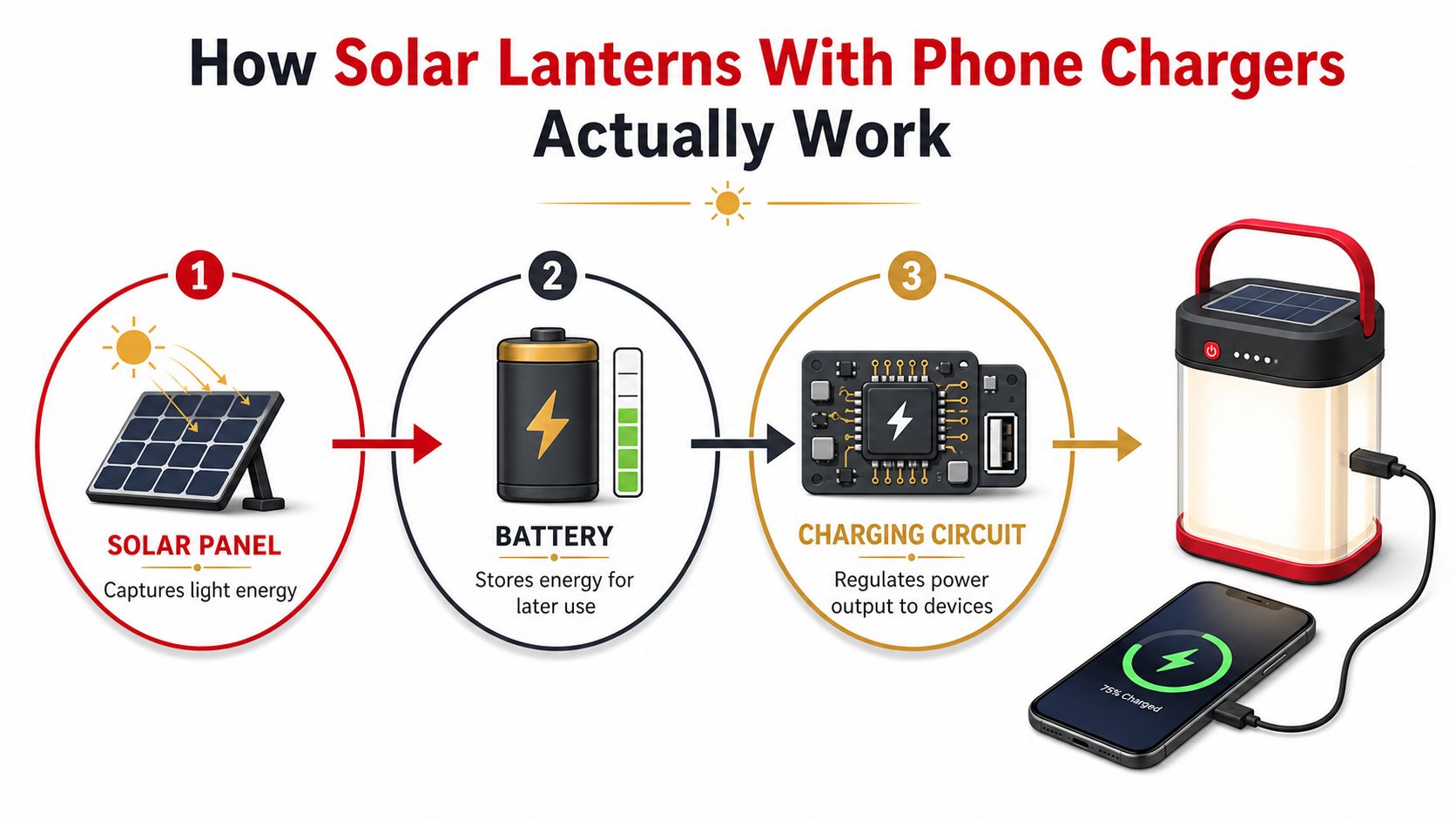
A solar lantern with phone charger has three jobs. The solar panel captures energy, the battery stores it, and the USB circuit hands power to a device in a controlled way. If any one of those parts is weak, the whole product feels disappointing in real use.
The three parts that matter
Think of the panel as the intake valve, the battery as the tank, and the USB port as the tap. A bigger panel usually recharges faster, but it does not create usable phone power by itself. The battery capacity decides how long the light runs and how much charging reserve is available once the sun is gone.
That's why watt-hours and milliamp-hours matter. UN-Habitat explains that even a 1 Wp module can support a small light and a phone charger, while a 20 Wp module can supply about 50 Wh per day (UN-Habitat PDF). In plain terms, small solar systems can do useful work, but only if the battery and circuit are matched to the panel.
Solar recharge versus USB recharge
Solar recharge is usually the slow, maintenance-level path. USB input is the faster recovery path after the lantern has been depleted. That distinction matters on trips and during outages, because a lantern that takes all day to recover from the panel alone can leave the user stuck if weather turns cloudy or if the lamp was drained overnight.
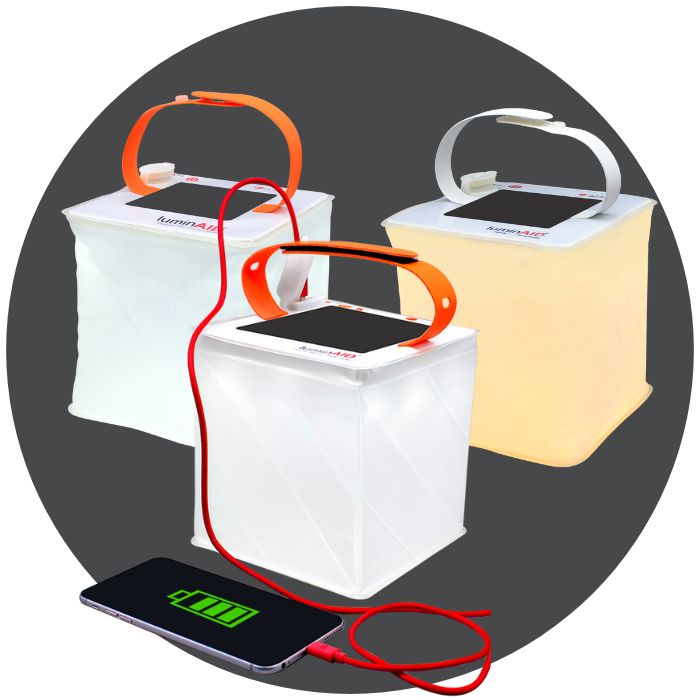
The same logic applies to phone charging. A 5V USB output can support a phone top-up, but the battery size determines how many partial charges are available, not just whether a port exists. LuminAID's PackLite Max 2-in-1 Power Lantern lists a 2,000 mAh battery, 150 lumens, and about 50 hours of runtime, with solar recharging marketed at roughly 14 hours of sunlight or 1 to 2 hours via USB input (LuminAID PackLite Max 2-in-1 Power Lantern).
A simple field example
On a two-night camping trip, a lantern can be used lightly for dinner setup, then left to recharge during the day. If the battery is big enough and the charging circuit is efficient, the same unit can also give a phone enough juice for navigation or messaging. If the battery is tiny or the port is sluggish, the product becomes a light source first and a charger only in the most generous conditions.
For readers who want a deeper utility overview, LuminAID's off-grid solar power system guide is a useful complement to the gear logic here.
Key Specifications That Determine Real-World Performance
Specs tell the story, but only if they're read in the right order. Brightness matters, battery capacity matters, panel size matters, and USB output matters. A product page that leads with a huge lumens number and hides the battery details is usually telling buyers what it wants them to notice, not what they need to know.
The specification that usually gets oversold
Lumens describe visible light, but they do not tell the whole runtime story. A lantern can be bright for a short period and still be a poor buy for emergency use if the battery is small or the light output drops fast on lower settings. For camping, a lower mode that stretches runtime often beats a dazzling high mode that burns the battery before bedtime.
A lantern that looks impressive at the trailhead can still disappoint at 2 a.m. if the battery and charging path were never strong enough to begin with.
Battery capacity is the practical anchor. LuminAID's PackLite Max 2-in-1 Power Lantern, for example, is listed with a 2,000 mAh battery and about 50 hours of runtime (LuminAID product page). REI's listing for the LuminAID Max Quick Inflate Solar Lantern says it provides up to 50 hours of light on low mode, recharges via solar power in 16 hours of sunlight or via USB input in 2 hours, and can recharge a phone in about 2.4 hours depending on the device (REI listing).
Specification comparison guide
| Specification | What It Means | What to Look For |
|---|---|---|
| Lumens | How bright the lantern can get | A useful low mode, not just a peak number |
| Battery capacity | How much energy is stored | A clear battery datasheet, not vague battery language |
| Solar input | How fast sunlight can refill the unit | Realistic recharge times in the field, not just ideal lab conditions |
| USB output | How the lantern charges a phone | A usable 5V port and clear charging behavior |
| Durability | How well it survives outdoor use | Water resistance, rugged housing, and compact carry size |
For the math behind capacity, the most useful starting point is battery energy, not marketing wording. LuminAID's how to calculate watt-hours guide is worth checking when a listing mixes mAh, runtime, and phone-charging claims in a way that feels hard to compare.
Questions worth asking before buying
- Is the battery capacity published clearly? If not, the charging promise is hard to trust.
- Does the lamp show USB input and output behavior separately? That matters more than a generic “phone charger” label.
- Are runtime numbers tied to specific modes? Low, medium, and high mode should not be treated as interchangeable.
- Is the casing built for outdoor use? Water resistance and rugged construction matter when the lamp is packed with metal cookware, sleeping pads, and cables.
Matching the Right Lantern to Your Specific Use Case
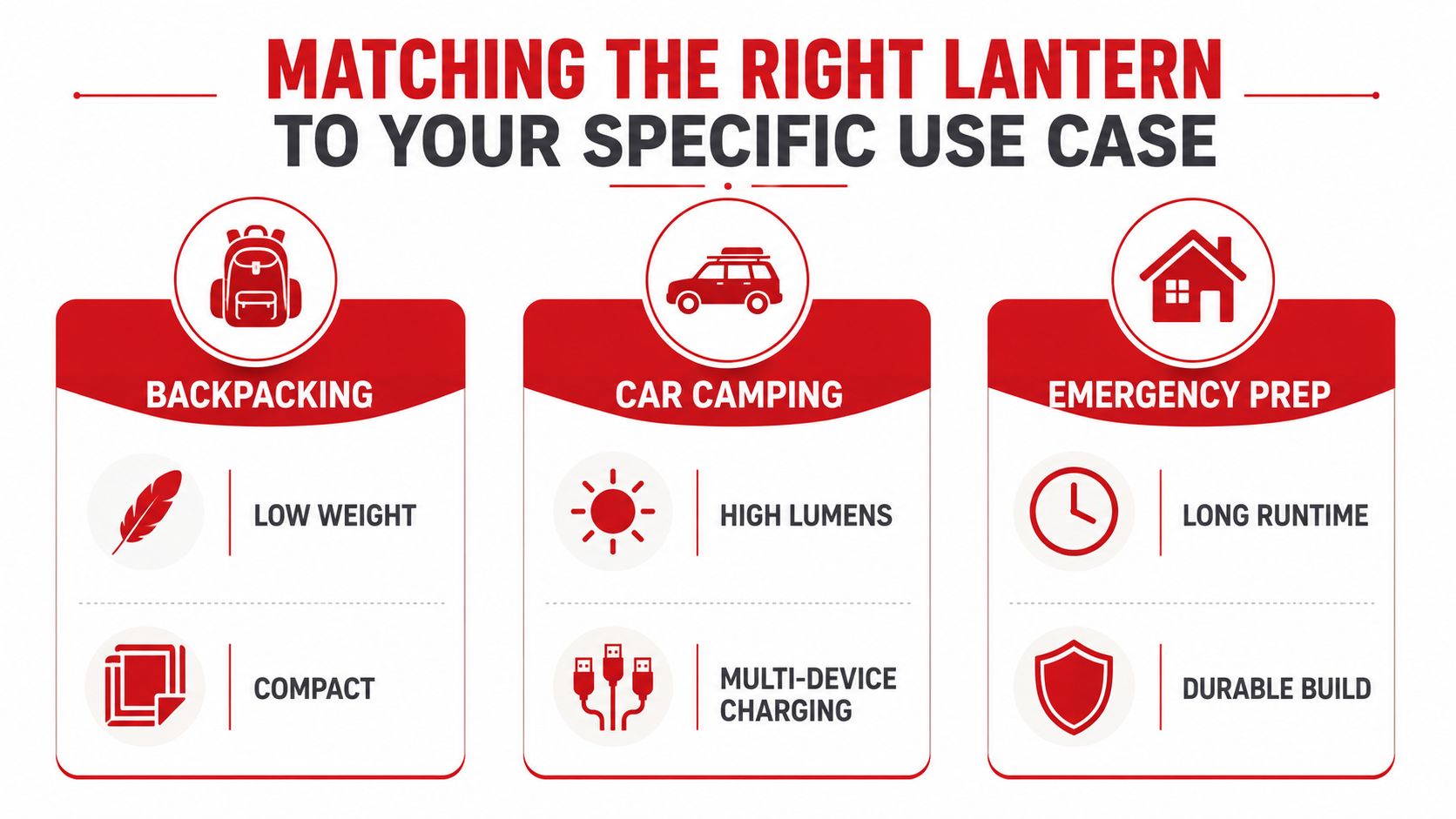
The right choice depends on where the lantern will live most of the time. A backpacker, a car camper, and a family preparing a storm kit are shopping for different outcomes, even if the same product appears on all three shortlists. Weight, runtime, and charging behavior do not carry equal importance in every scenario.
Backpacking
Backpacking rewards compact gear above almost everything else. A lantern that packs flat, weighs little, and still gives enough light for a tent or trail-side meal makes sense. Phone charging becomes a bonus function, not the main reason to carry the unit, because long-distance hikers usually manage power carefully and rarely want a bulky all-in-one device.
Car camping
Car camping gives a buyer more room to prioritize brightness and atmosphere. A brighter lantern with multiple modes can work as table light, tent light, and evening ambience. If the vehicle carries other charging options, a solar lantern with phone charger can serve as a backup rather than the only power plan.
Useful filter: if the lantern is riding in a trunk, more features can be acceptable. If it's riding in a pack, every extra ounce has to earn its keep.
Emergency preparedness
Emergency kits are about reliability first. Long runtime, simple controls, and a charging port that can handle actual recovery duties matter more than novelty features. Families building hurricane or outage kits should also think about storage life, clear operation in the dark, and whether each person can use the lamp without a manual.
Backyard and everyday use
Backyard use is often gentler, but that doesn't mean quality stops mattering. A durable lantern that can be grabbed for a porch outage, a power failure, or a late-night repair is more useful than a decorative light that cannot survive a dropped deck chair or a wet weekend. A product can be perfect for casual patio use and still be the wrong choice for off-grid travel, which is why use case should drive the shortlist.
The Truth About Solar Phone Charging Expectations
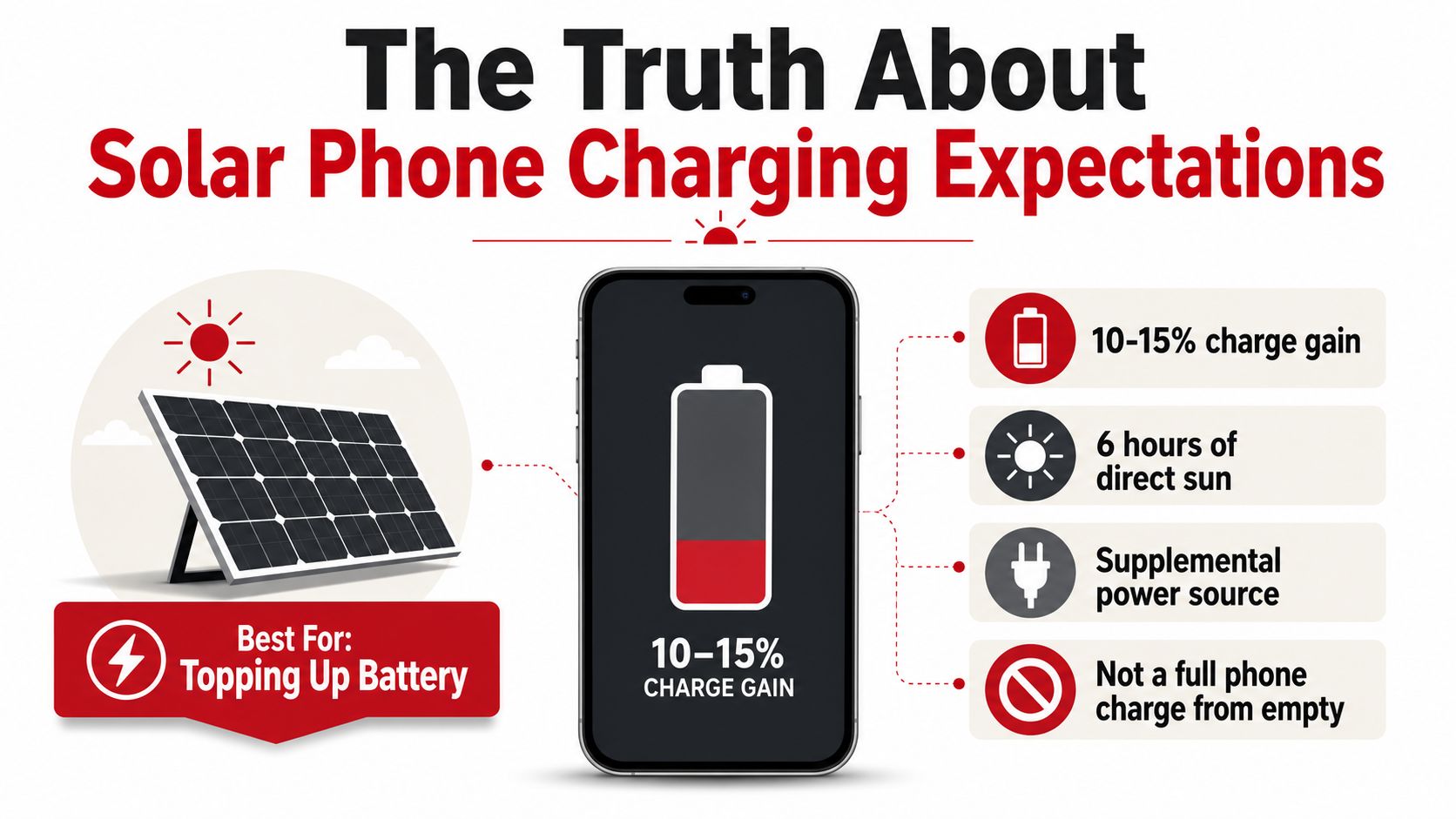
Most disappointment starts with one assumption, that the panel on the lantern will keep a phone powered like a wall charger does. It won't. A solar lantern with phone charger is usually a maintenance charger, not a replacement for mains power, and that difference should shape the purchase.
What the solar panel can realistically do
Solar input is best treated as a slow refill strategy. A product can absolutely keep a phone from dying, but that is different from taking a phone from empty to full on panel power alone. Independent buying guidance says shoppers should verify the battery datasheet, not just the marketing copy, and should assume a 25% capacity derating if the manufacturer does not provide real test data (Alibaba solar-light buying guide).
That caution matches the way field gear behaves. Clouds, panel angle, partial shade, and discharge conditions all reduce performance. A lantern that sounds generous in a listing can feel modest after a full day of actual outdoor use.
Why USB input usually matters more
USB input can be the smarter recovery path after a depleted battery. REI's listing for the LuminAID Max Quick Inflate Solar Lantern says USB recharge takes 2 hours, while solar recharge takes 16 hours of sunlight (REI listing). That gap explains why many experienced users treat the panel as a backup recharge path, not the only one.
A phone charger built into the lantern is still useful, but the expectation should be partial top-ups, not unlimited power. The best use is extending battery life during a trip or stretching remaining charge during an outage.
What happens after cloudy days
If the sun doesn't cooperate, a lantern with a small panel becomes a light source that may not fully replenish itself. That's when the battery reserve and USB architecture start to matter more than the solar branding. Products with a clear charging path and sensible storage capacity hold up better than those that rely on optimistic panel claims.
For a broader battery-use perspective beyond lanterns, the battery-life tips at Van Dyke Outdoors are a helpful companion read for anyone building a dependable off-grid kit.
How to Choose a Quality Solar Lantern That Lasts
The easiest way to avoid a bad purchase is to ignore the prettiest claims and read the smallest print. A durable solar lantern with phone charger usually reveals itself through honest specs, clear construction details, and charging behavior that makes sense on paper. Vague language and oversized promises are the first warning signs.
What good quality usually looks like
Construction should feel appropriate for outdoor use, not just indoor shelf display. Water resistance, rugged casing, and a stable stand or hanging system make a real difference when the lantern gets moved around camp or tossed into an emergency bag. A battery that is clearly described is better than a generic “high capacity” label that never says how much energy is stored.
The guide should also answer the USB question directly. Some dual-port products share a low-current circuit, which can make charging slower or less useful than buyers expect. For shoppers who want a quick check on practical battery behavior across outdoor devices, extend battery life for outdoor gear offers a useful mindset for managing charge instead of assuming every port performs the same way.
Red flags worth walking away from
- Vague capacity claims: If the listing won't name the battery clearly, the runtime promise is harder to trust.
- Overheated language: Words like “unlimited,” “always ready,” or “full charge in any sunlight” usually signal a weak spec sheet.
- Missing USB details: If the product does not clearly explain input and output, the charger may be an afterthought.
- No real-world documentation: A product with no meaningful charging notes invites disappointment.
What justifies spending more
A stronger shell, better battery disclosure, and clearer warranty terms can be worth the extra money because they reduce uncertainty. The user is buying function, but also buying confidence that the lamp will work when the power fails or the weather turns ugly. That is especially true for emergency kits, where a single bad accessory can undermine the whole setup.
Beyond Personal Use The Broader Impact of Quality Solar Lighting
Solar lanterns with phone charging started as practical off-grid tools, but their value now reaches into humanitarian response and disaster recovery. UNHCR’s standardized technical specifications for a multi-functional solar lamp with phone charger show how the product type has been woven into emergency procurement (UNHCR technical specifications). That matters because the same gear that helps a camper finish dinner after sunset can also help a displaced family keep a phone alive and a room lit.
Quality also matters for distribution and trust. A lantern that lasts, charges predictably, and survives rough use is more useful in a relief context than a cheaper one that fails early. Better construction supports broader access to safe, sustainable light, especially in places where electricity is scarce or unreliable.
For consumers, choosing reliable gear has a ripple effect. Products with stronger warranties and clearer performance data support the market for durable off-grid lighting instead of disposable-feeling gadgets. That aligns with the broader reality UN-Habitat describes, where millions of solar home systems and solar lanterns are already in use and where small amounts of PV can still deliver basic lighting and charging (UN-Habitat PDF).
LuminAID sits inside that same practical world. Its lanterns are built as portable lights with USB phone charging and solar or USB recharge, which makes them relevant for campsites, outage kits, and emergency use. The bigger point is simple, quality in this category serves both personal preparedness and people who need light during real crises.
If you want a lantern that balances off-grid lighting with usable phone charging, explore the current lineup at LuminAID. The product details matter more than the marketing claims, and the right choice is the one that fits your pack, your outage plan, and your charging habits.