


The outage usually starts the same way. A few lights flicker, the Wi-Fi drops, and someone starts checking drawers for flashlights that may or may not have working batteries. For a household, a campsite, or an emergency kit, that moment makes one thing obvious. Light matters most when it's reliable, simple, and ready without a scramble.
A portable solar home lighting system solves that problem without tying lighting to fuel runs, disposable batteries, or a functioning grid. It can be as small as a packable lantern kept in a go-bag, or as large as a multi-light kit for a cabin, RV, or blackout-prone home. That range is where many buyers get stuck. They shop one category as if every solar lighting setup does the same job, then end up with gear that's too bulky, too weak, or too complicated.
That confusion is worth clearing up because this isn't fringe equipment anymore. The global market for solar energy kits, which includes portable solar home lighting systems, reached $2.1 billion annually in 2021, serving over 490 million people by the end of that year, while 733 million people worldwide still lack access to clean, modern, and reliable electricity according to the World Bank report on solar energy kits and energy access.
Table of Contents
- The Power of Light Anywhere Anytime
- What Is a Portable Solar Lighting System
- Key Benefits of Going Solar for Light
- How to Choose the Right Solar Lighting System
- Real-World Scenarios for Portable Solar Light
- Installation and Maintenance Best Practices
- Your Next Step Toward Energy Independence
The Power of Light Anywhere Anytime
A portable lighting system changes the mood of an outage fast. A dark hallway becomes manageable. A child's room feels normal again. A storm prep bin stops being a pile of gear and starts acting like a plan.
That same tool also works far from emergencies. It lights a tent after sunset, keeps an outdoor meal going after dusk, and gives an RV owner a way to place light where wiring doesn't reach. The appeal isn't only about resilience. It's about flexibility.
When fixed lighting isn't enough
Hardwired lights fail with the house. Battery flashlights work, but only if they were checked, stocked, and stored well. Fuel lanterns add brightness, but they also add heat, odor, and one more consumable to manage.
A portable solar home lighting system sits in the middle. It stores energy during the day and gives it back at night. No outlet required.
Practical rule: The right light is the one that stays useful when the grid, the charger, and the hardware store are all unavailable.
Why more people rely on portable systems
The strongest reason is practical. These systems don't all belong in one bucket. A whole-home emergency kit might need a panel, battery, and several lights. A hiker or evacuation bag needs something far smaller and lighter.
That's why portability has to be treated as a spectrum, not a label. Someone preparing a hurricane tote has very different needs from someone outfitting a van, a remote clinic, or a backyard gathering.
What Is a Portable Solar Lighting System
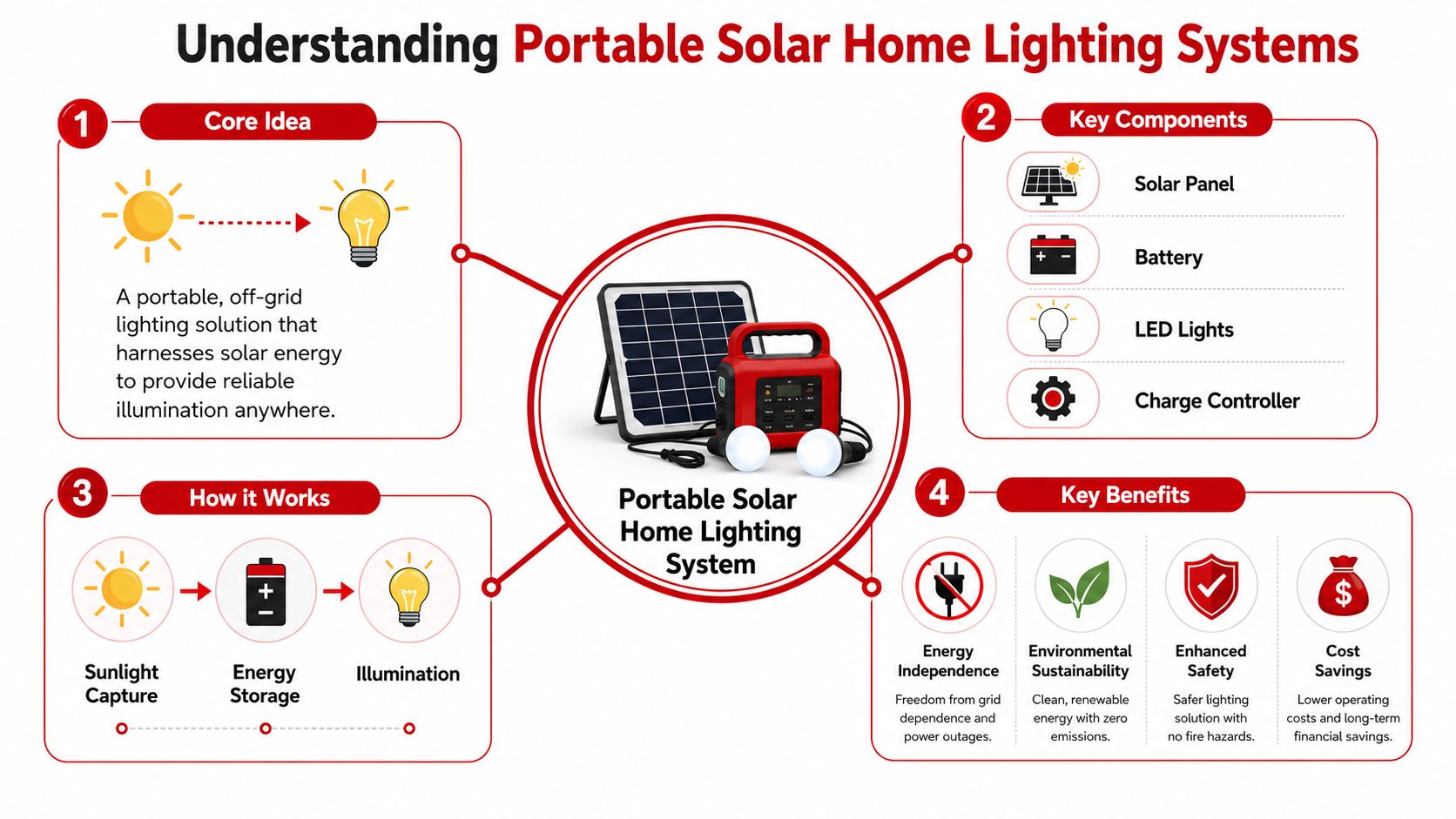
A portable solar home lighting system works a lot like a rain barrel for sunlight. The panel collects energy instead of rain. The battery stores it. The lights draw from that stored supply when the sun is gone.
At the core, the idea is simple. Portable solar home lighting systems use photovoltaic cells in solar panels to harvest sunlight, storing that energy in a battery that powers LED or CFL lights at night, with runtime depending on panel efficiency and battery storage capacity, as explained in this overview of solar-powered lighting basics.
The basic idea
Most systems have four working parts:
- Solar panel: This is the collector. It captures sunlight and turns it into usable electrical energy.
- Battery: This is the storage tank. It holds power for later, which is what makes the system useful after dark or during outages.
- Charge control hardware: This is the regulator. It manages charging so the battery isn't stressed unnecessarily.
- Light output: This is the part the user sees. It may be a fixed LED lamp, a string light, a lantern body, or a small detachable lamp.
The portability spectrum
This category gets clearer when it's split into sizes and jobs.
At one end are home-style kits with separate panels, batteries, and lamp heads. These make sense for cabins, blackouts, remote workspaces, clinics, schools, and other places where light stays in one general area. Solar DC home lighting systems are used in settings such as remote villages, emergency urban homes, clinics, schools, police stations, military outposts, and agricultural extension work, according to this solar DC home lighting overview.
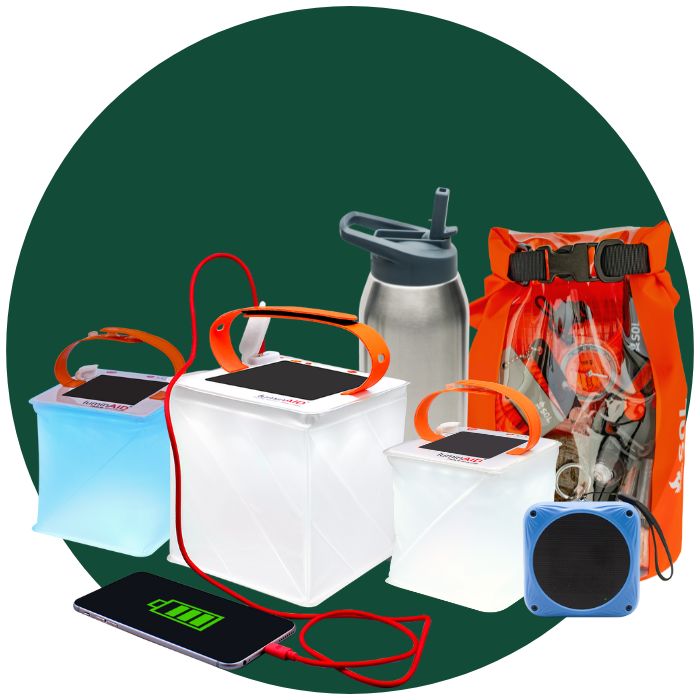
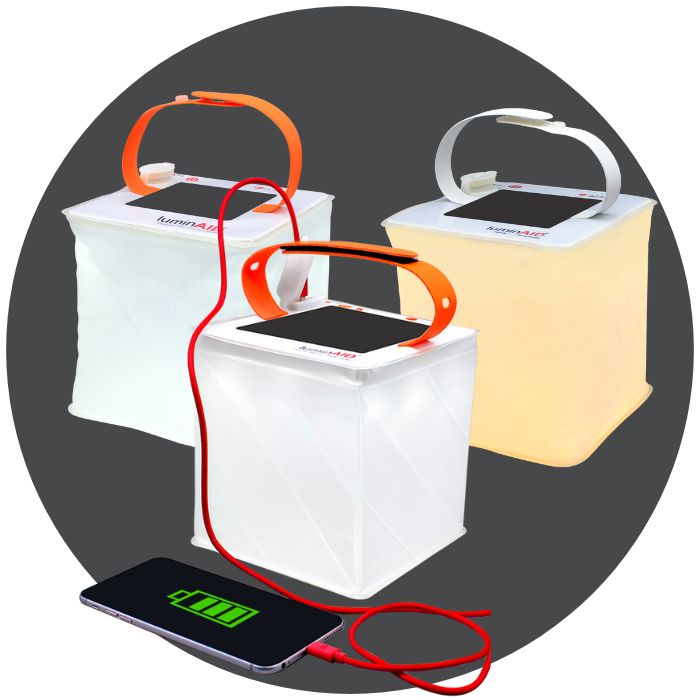
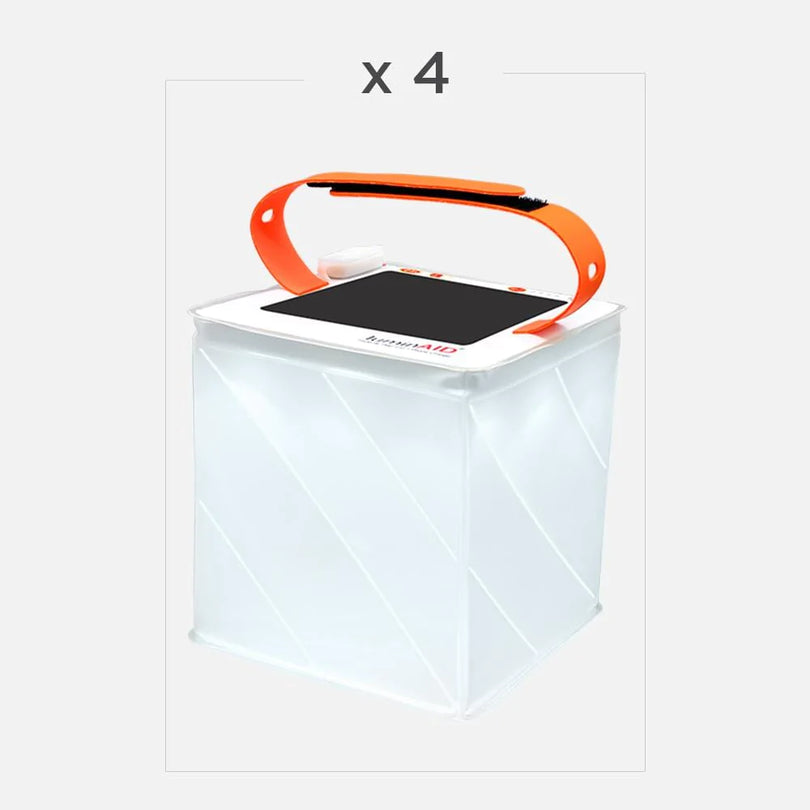
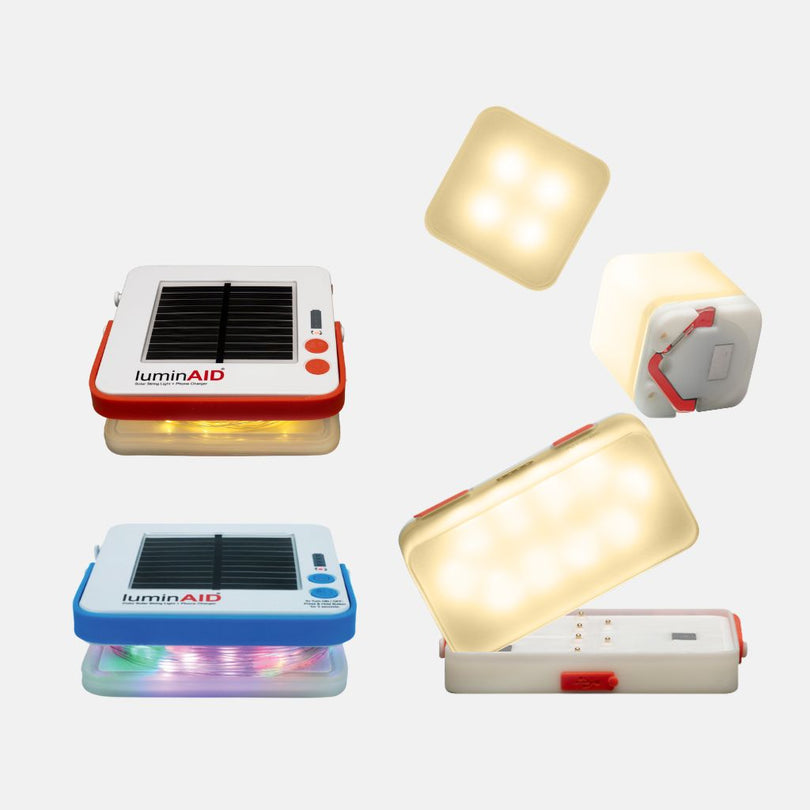
At the other end are integrated portable lights that combine panel, battery, and LED into one compact unit. Those are easier to stash in a glovebox, bug-out bag, or camp bin. For buyers sorting through that smaller end of the market, LuminAID's portable solar power lights guide is a useful reference for understanding packable formats and use cases.
A buyer doesn't need “solar lighting” in general. A buyer needs a light that fits a real carry method, storage space, and runtime expectation.
Key Benefits of Going Solar for Light
The value of solar lighting isn't just that it turns on. A key advantage is that it removes several failure points at once. No fuel to store. No disposable batteries to rotate. No outlet needed at the moment the power goes out.
Reliability without fuel runs
A grid outage exposes every weak link in a lighting plan. If the flashlight batteries are dead or the fuel can is empty, the plan wasn't ready. Solar changes that pattern because daylight itself becomes the resupply.
That doesn't make every unit equally capable. A small lantern handles navigation, cooking, and room light. A larger kit supports longer routines and multiple users. What works is matching the system to the job instead of expecting one light to cover everything.
Safety matters more than brightness charts
Many buying guides spend too much time on brightness and too little on risk reduction. That misses one of the strongest reasons people switch away from fuel-based lighting.
Existing coverage often overlooks the lack of hard safety and health guidance when comparing solar with kerosene, even though that information matters in emergency preparedness and disaster decisions, as noted in this research summary on off-grid solar and health considerations.
For households, that translates into a simple point. Safer light isn't only about seeing better. It's about avoiding indoor combustion, avoiding open flame, and reducing the need to store consumable fuel around children, pets, or emergency supplies.
Clean light has a preparedness advantage. It reduces the number of things that can go wrong in a confined space.
Lower running costs and cleaner daily use
Solar also changes the economics of everyday lighting. In off-grid areas, access to a standard solar light reduces household energy spending by about US $0.5 to US $1.5 per month, or 25% to 60% of total household energy expenditure, according to the global solar home lightings market report.
That same source notes a 5 to 10 month simple payback period depending on previous candle use. For households replacing kerosene, the financial case becomes even more concrete.
A smaller integrated light won't replace every wired fixture in a home. It can, however, replace a surprising amount of routine dependency on throwaway batteries and backup fuel.
How to Choose the Right Solar Lighting System
Buying the right system starts with one question. Where will this light live when it's not being used? A kitchen drawer, a go-bag, an RV cabinet, and a garage shelf all push the decision in different directions.
Go-bag and emergency drawer use
For a personal emergency kit, compactness matters more than raw output. The light has to fit into a bag that already carries water, first aid, layers, and documents. If it's awkward, heavy, or fragile, it gets left behind.
That's where integrated lantern-style units make sense. A packable light is easier to store, easier to hand to a child or neighbor, and easier to keep charged without a separate cable chain. One option in this category is LuminAID, which makes portable solar lanterns and 2-in-1 phone chargers for camping and emergency use.
RV camp and extended off-grid use
An RV, van, or longer camp setup has different needs. There's more room for a separate panel and a larger battery, and there's a stronger case for multi-point lighting that can cover cooking, table use, outdoor setup, and interior tasks.
Battery service life also matters more in these setups because the system sees repeat use instead of sitting idle for months. For readers comparing long-term battery expectations, this explanation of Australian solar battery lifespan gives helpful context on how storage habits and usage patterns affect longevity.
What to check before buying
Durability is the first filter. For portable solar home lighting systems to meet international durability benchmarks, the PV module should conform to standards such as IEC 61215, helping the panel withstand thermal cycling and humidity freeze testing while maintaining more than 90% power output after years of exposure, according to this solar home light systems specification document.
That matters most in emergency storage and outdoor use. A panel that looks fine but degrades early is a poor tool.
A practical buyer's checklist looks like this:
- Storage fit: Will it live in a drawer, tote, trunk, or cabinet without special handling?
- Deployment speed: Can someone set it up quickly in the dark or under stress?
- Charging flexibility: Does it depend on separate components, or is it self-contained?
- Durability proof: Is there any indication the panel and housing were built for real exposure?
- Use pattern: Is the need occasional outage lighting, nightly camp use, or broader off-grid living?
For a deeper product-level comparison on smaller formats, LuminAID's solar lantern buyer's guide is helpful because it separates occasional emergency use from heavier outdoor use.
Choosing Your Portable Solar Lighting System
| System Type | Best For | Typical Power | Portability | Example |
|---|---|---|---|---|
| Integrated solar lantern | Go-bags, short outages, backpacking, tent use | Lower output focused on personal or small-area light | Very high | Packable lantern |
| Mid-size portable kit | Family emergency lighting, car camping, outdoor work areas | Moderate output with one or more light points | Moderate | Panel plus battery plus lamp kit |
| Larger solar home kit | RV setups, cabins, remote rooms, longer off-grid use | Higher capacity for repeated or multi-light use | Lower | Separate panel, battery, and multiple lights |
The wrong purchase usually isn't “bad solar.” It's a mismatch between storage reality and the job the light needs to do.
Real-World Scenarios for Portable Solar Light
The right system becomes obvious when it's tied to a real scene instead of a spec sheet.
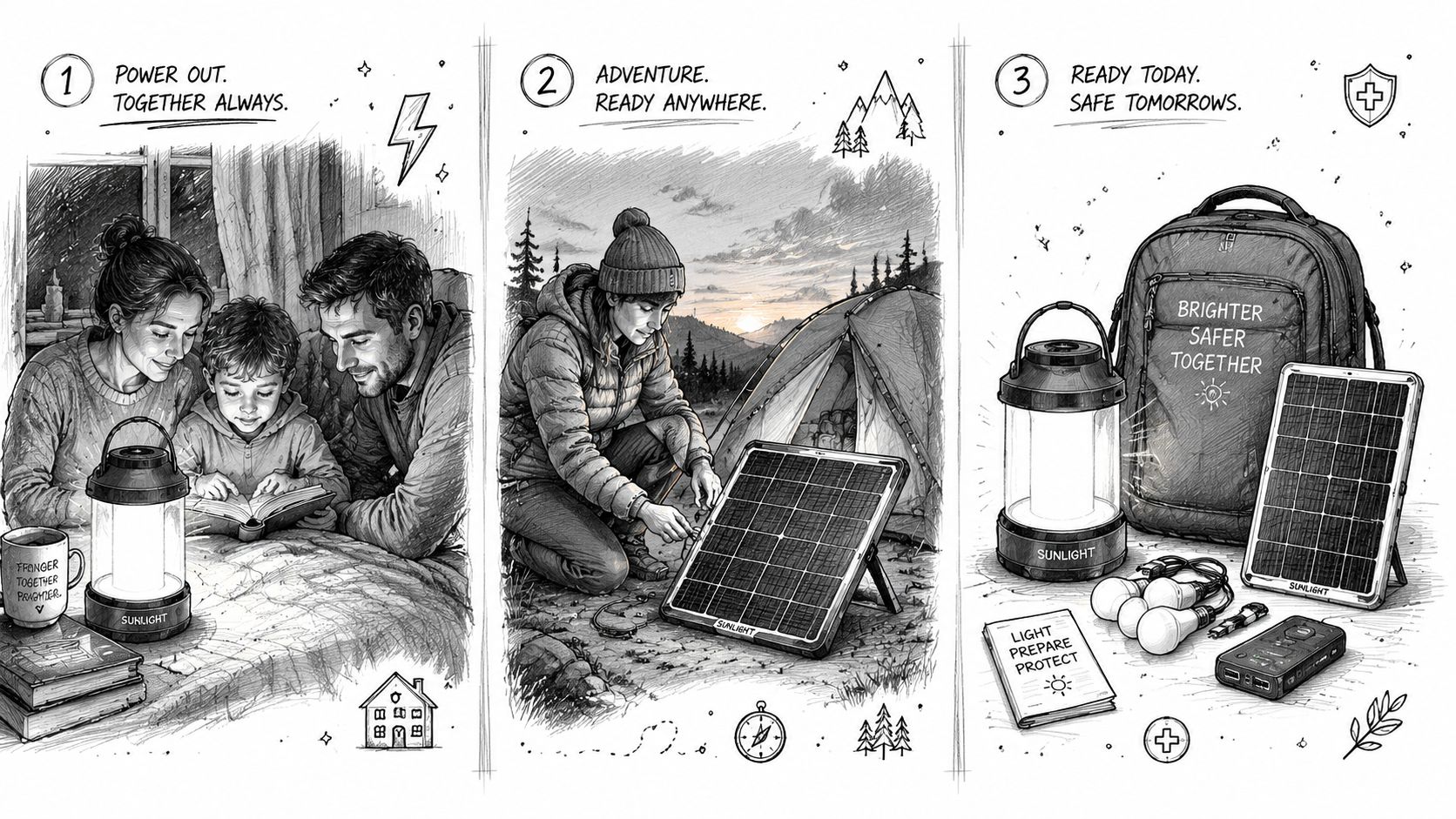
A family outage kit that actually gets used
A family dealing with a storm outage doesn't need laboratory-perfect lighting. It needs safe light in the rooms people move through most. Kitchen. Bathroom. Hallway. Bedroom.
A compact solar lantern works well here because it's familiar and fast. It can charge near a sunny window, move from room to room, and stay in the same emergency bin as radio, batteries, and first aid. For households building that kind of setup, this portable solar emergency light resource shows how portable lighting fits into broader outage planning.
Camp light that earns space in the pack
Campers and overlanders judge gear differently. Every item competes for room, and every item has to justify its weight. A larger home-style kit can make sense for base camp or vehicle-supported setups, but it's overkill for many trips.
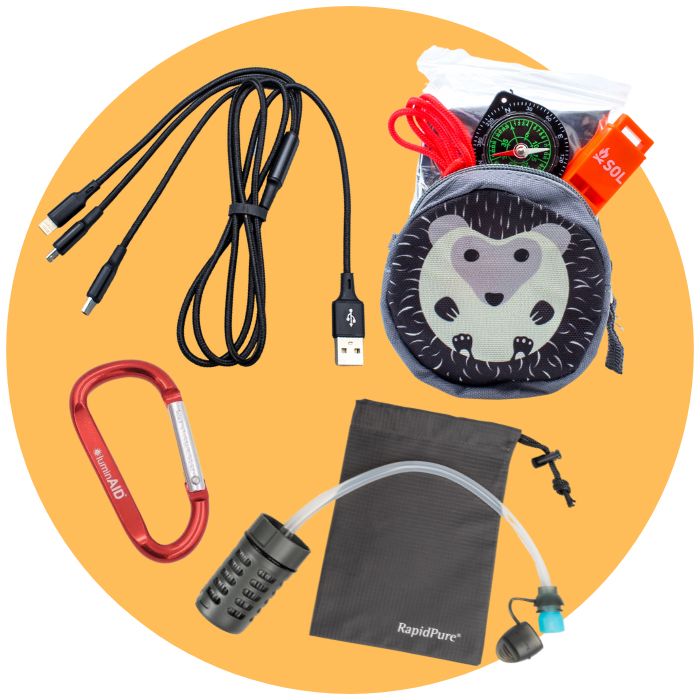
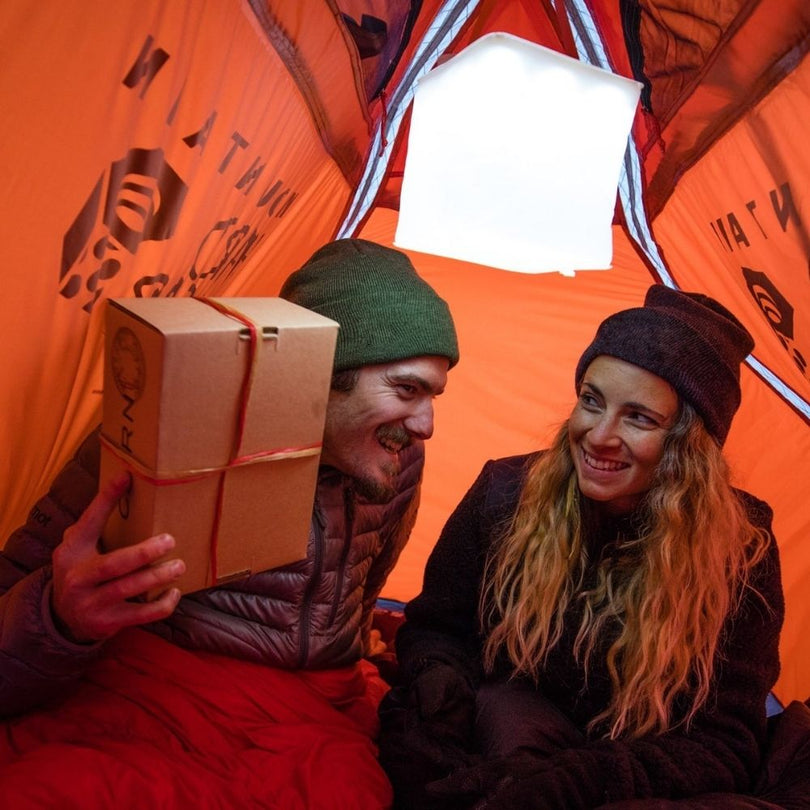
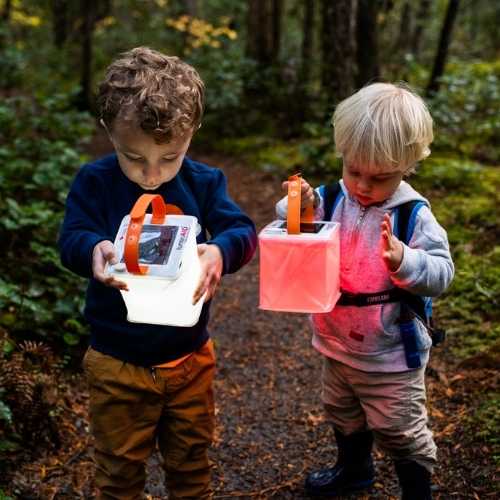
A packable solar light earns its place when it can hang inside a tent, sit on a picnic table, or clip near the cook area without adding much bulk. It also pairs well with a broader survival kit. For that reason, many outdoor users keep lighting alongside compact emergency gear from Survive Outdoors Longer, where shelter, signaling, and fire tools round out the same preparedness system.
Disaster response and weight limits
Humanitarian teams work under a different set of constraints. In that setting, a light isn't just a convenience item. It's cargo, payload, and deployment speed.
In humanitarian and emergency response, a key constraint for portable solar lanterns is a maximum weight of 1kg, which drives the use of high-energy-density batteries and still allows 10 to 15 hours of illumination while keeping systems light enough for transport, according to the UNHCR portable solar lantern guidance.
That's a useful lesson for civilian buyers too. If a lantern is meant for evacuation bags, relief bins, or quick handoff to others, low weight isn't a luxury feature. It's the reason the system remains deployable when time and carrying capacity are limited.
Installation and Maintenance Best Practices
Portable solar lighting is usually easy to live with, but simple mistakes can cut performance fast. Most problems come from poor panel placement, dirty surfaces, or storage habits that slowly drain the battery.
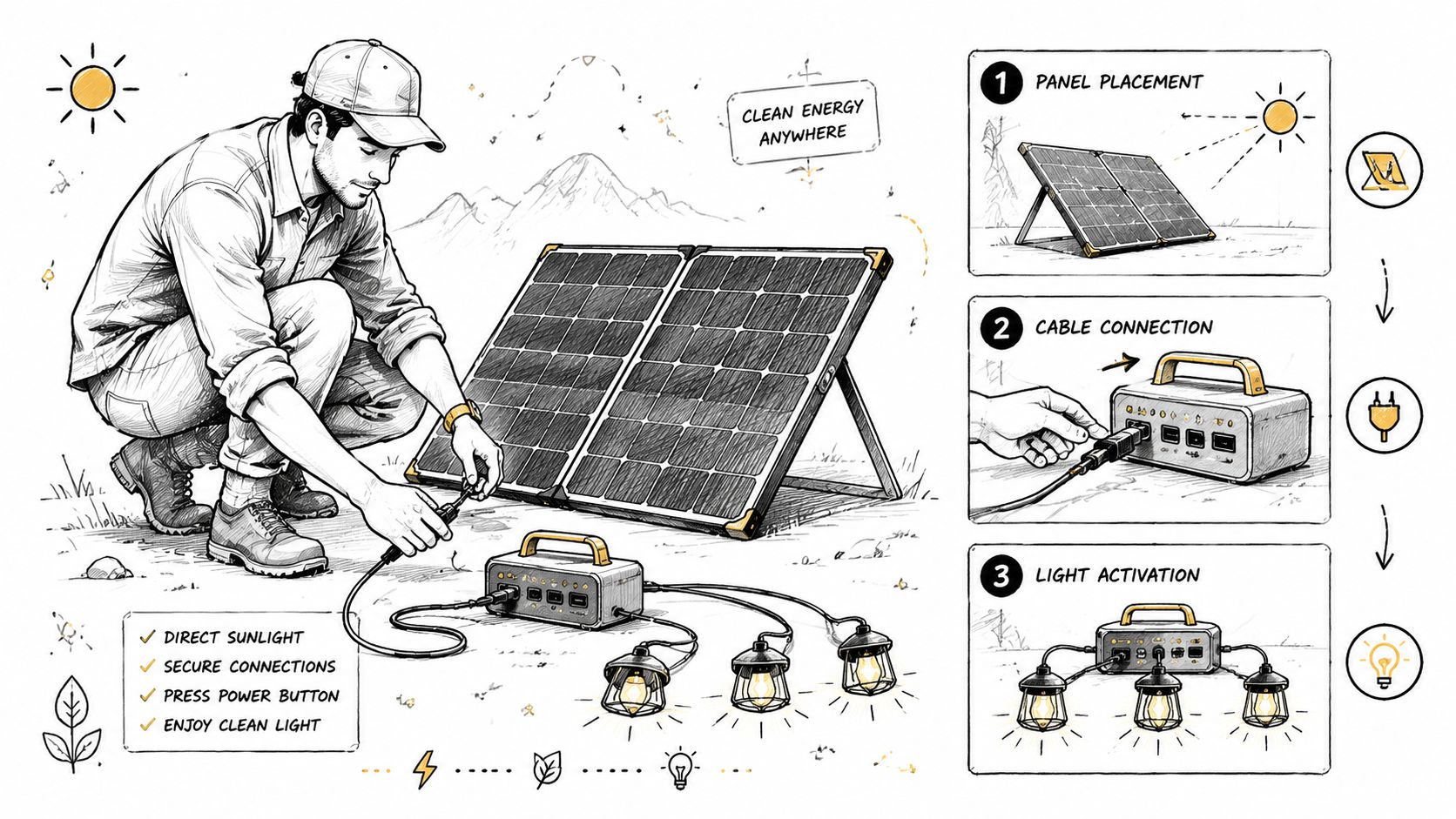
Charging setup that works
Charging starts with placement. To ensure normal charging, the panel needs to face direct sunshine with no obstructions. Once connected to the solar input port, a charge indicator lights up, and LED lamps can then be connected to the DC 6V port for lighting, according to this portable mini solar light kit charging guide.
Three habits make the biggest difference:
- Choose open sun: Partial shade, branches, rooflines, and window screens can all reduce charging effectiveness.
- Check the indicator: If the system has a charge light, use it. It confirms that the panel is feeding the battery.
- Avoid casual placement: Leaning a panel anywhere convenient often means poor angle, blocked exposure, or accidental disconnection.
A dim light at night often points to weak charging during the day, not a defective lantern.
Simple habits that protect the system
Maintenance is mostly about prevention. Keep the panel clean, protect connectors from grit and moisture, and store the system where it won't be crushed under other gear. A basic wipe-down can go a long way, especially after dust, pollen, or beach use.
For homeowners who want a plain-English checklist on panel upkeep, South Mountain's solar care insights offer a practical maintenance overview that applies well to small portable panels too.
A few final habits are worth keeping:
- Don't bury the kit in a dark closet for long periods: Recharge it occasionally so it's ready when needed.
- Inspect before storm season or trip season: A quick test beats finding a dead light during an outage.
- Store cables and lamps together: Portable systems fail as a package when one small accessory goes missing.
Your Next Step Toward Energy Independence
A portable solar home lighting system isn't one product. It's a category that runs from larger home-style kits to compact lanterns that fit in a glovebox or go-bag. That's the main decision point. Buyers who match the system to the job usually end up with gear they use.
For a household, that may mean simple blackout lighting that can move room to room. For an RV owner, it may mean a larger kit with more runtime and more flexibility. For a camper or evacuee, it may mean a light that packs flat, stores easily, and works without fuss.
The practical next step is small. Pick the use case first, then choose the light that fits that carry method and storage space. A versatile solar lantern is often the easiest entry point because it covers emergencies, outdoor use, and travel without adding much complexity.
A good place to start is with LuminAID, especially for readers who want a portable option that can move between outage kits, campsites, road trips, and everyday outdoor use.