

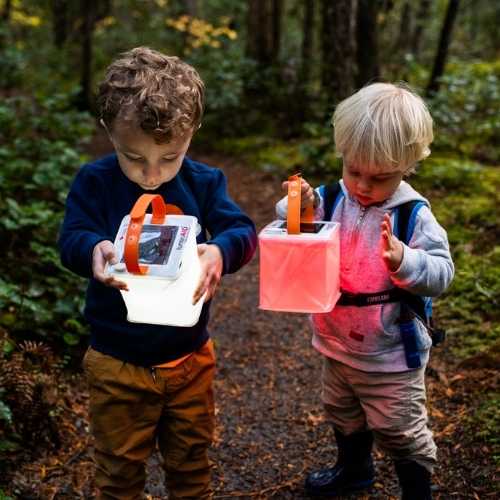

A festival day often begins with a small logistical puzzle. A traveler arrives with a backpack, a phone running low on power, a tent to find, a meeting point to remember, and a crowd that seems to stretch in every direction. As daylight fades, the same person needs enough light to locate a zipper, walk safely to the toilets, find friends, and settle down without turning the campsite into a floodlit parking lot.
Festival lighting is usually discussed as a stage spectacle, but attendees experience it at ground level. A dependable lantern can support camp comfort, wayfinding, phone charging, and blackout readiness. A restrained string light can mark a tent boundary without shining into a neighbor's sleeping area. A simple plan can prevent heat, crowd, health, and power problems from becoming the event's defining memory.
This guide is written for first-time festival campers, returning attendees, families, day visitors, and event teams. It moves from festival types and planning decisions to safety controls, packing checklists, sleep-friendly lighting, and emergency resilience. Readers should finish with a practical way to choose a festival, prepare for its conditions, organize camp, and carry light that works when outlets and disposable batteries aren't available.
Table of Contents
- Introduction What Makes a Festival More Than a Big Party
- Understanding Festival Types and How They Work
- Planning Your Festival Before You Go
- Staying Safe in Crowds Heat and Health Risks
- Festival Camping and Day Trip Checklists That Actually Work
- Sustainable Lighting and Power Without Outlets or Batteries
- Bringing It All Together for Attendees Teams and Emergencies
Introduction What Makes a Festival More Than a Big Party
A festival is a temporary settlement with music, food, movement, work areas, sleeping areas, medical services, toilets, transport routes, and communication systems. The audience sees the performances first, but the experience depends on the less visible network underneath. Staff must move people through entrances, vendors need power, performers need reliable production systems, and attendees need clear routes after sunset.
That scale explains why festival-related events have become a major global tourism and live-entertainment category. One industry estimate places festivals at over 30% of the global event tourism economy, while another reports 5.1 billion attendees at global live events in 2023, with festivals representing 21% of that total. In Europe, reported festival attendance reached 850 million in 2023, a 19% year-over-year increase. These figures come from festival industry statistics compiled by Easol, and they help explain why festival planning now resembles planning for a short-lived city.
A first-time visitor may focus on the lineup, then discover that the decisions involve transport, weather, sleep, hydration, phone power, and meeting points. A family may need short walking routes and predictable medical access. A returning camper may care most about reducing pack weight and avoiding glare. An event team faces a larger version of the same questions, with crowd flow, emergency announcements, auxiliary power, and public safety added to the list.
Practical rule: The right festival setup makes ordinary tasks easy in the dark, not just the headline performance brighter.
A useful starting point is to read music festival preparation tips from LuminAID, then adapt the ideas to the event's format. After that, attendees can identify the festival type, plan transport and accommodation, prepare for health and crowd conditions, pack for either camping or a day visit, and select lighting that supports sleep and safe movement.
Understanding Festival Types and How They Work
Different festivals create different practical problems. A multi-day music festival in an open field behaves like a temporary town, while a food festival in a city street works more like a series of connected public spaces. A film festival may rely on indoor venues and timed seating, while a cultural or community festival may spread activities across neighborhoods, parks, processions, workshops, and shared gathering areas.
The label matters because it predicts crowd flow, schedule pressure, infrastructure, and personal equipment. Music festivals often concentrate people near stages and disperse them between performances. Food festivals create queues and slow-moving lanes. Film festivals depend on punctual transitions between venues. Community events can involve road closures, local transport changes, and a mix of planned and informal gathering points.
The festival model changes the day
A single-day festival reduces the need for shelter and camp storage, but it can create a longer day on foot. A multi-day festival shifts attention toward sleep, food storage, clothing changes, sanitation, and charging. Open-field events often expose attendees to sun, wind, mud, and uneven ground. Urban festivals may offer nearby shops and public transport, but streets, buildings, and road closures can make navigation less intuitive.
Access also shapes preparation. A ticketed event may use controlled entrances, bag policies, and designated camping zones. A free-access festival may have open public routes and less obvious boundaries between event space and ordinary city movement. Neither format is automatically easier. The useful question is whether the event's structure matches the attendee's energy, mobility, budget, and tolerance for uncertainty.
A festival can also be understood by its operating layer:
- Program layer: performances, screenings, parades, talks, competitions, or food service.
- Movement layer: entrances, exits, queues, corridors, crossings, transport, and meeting points.
- Support layer: water, toilets, shade, medical services, charging, lighting, waste collection, and staff communications.
- Overnight layer: camping, hotels, hostels, late transport, quiet hours, and personal security.
Once those layers are visible, planning becomes more precise. A day visitor mainly manages movement and support. A camper must also manage the overnight layer. An event team must understand all four, including how a power failure could affect lighting, announcements, and exits.
Planning Your Festival Before You Go
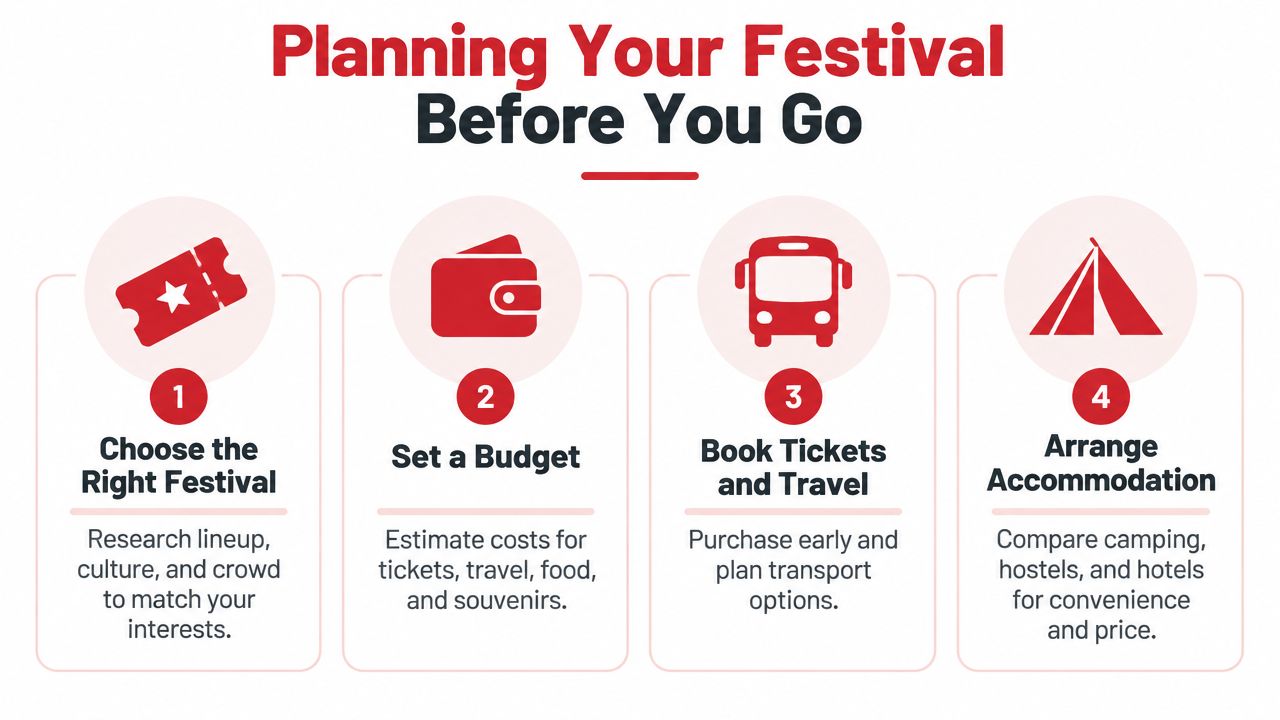
Good festival planning starts before gear shopping. The first decision is fit. The lineup matters, but so do the location, surface, expected weather, camping rules, transport options, accessibility information, quiet-hour policies, water arrangements, and restrictions on power banks or lighting equipment.
Build the trip around fixed decisions
- Choose the event and access format. Confirm whether the festival is single-day or multi-day, urban or open-field, ticketed or free access, and whether camping is included or separate. Those details determine how much equipment must be carried and how far attendees may walk between services.
- Set a realistic budget. Include tickets, transport, accommodation, food, water, storage, weather gear, and replacement costs for forgotten essentials. A simple budget protects the safety items that are hardest to improvise, such as suitable footwear, sun protection, first aid, and reliable light.
- Book transport and sleeping arrangements. Public transport may reduce parking stress, but a late return can require a charged phone and a clear meeting plan. Camping offers proximity to the site but adds shelter, sleep, lighting, and organization responsibilities. Hotels and hostels may simplify recovery while increasing travel time or cost.
- Prepare health and communication details. Attendees should share the itinerary with a trusted contact, note allergies and medications, identify personal limits, and agree on a meeting place that doesn't depend entirely on mobile service. Families can write essential contact information on a card inside a child's bag.
- Test equipment at home. Pitch the tent, check closures, charge devices, inspect cables, and use every lantern or string light in a dark room. A product that seems simple in a living room may be awkward when hands are cold, the ground is wet, or a queue is waiting.
Weather planning deserves more than a last-minute forecast check. Heat guidance for mass gatherings recommends practical planning and response actions to reduce heat-related illness among attendees and staff, while festival guidance identifies shade structures, misting stations, industrial fans, air conditioning, and limits on pyrotechnic effects as possible controls where heat exposure could worsen. Those measures are summarized in mass-gathering heat guidance from the Kerala State Disaster Management Authority.
Event teams also need clear visual communication. Durable printed business promotional banners can mark entrances, meeting points, first-aid locations, or quiet zones when wording and placement are planned alongside the site map. The banner isn't a substitute for staff or illuminated signs, but it can reduce hesitation in a busy environment.
Staying Safe in Crowds Heat and Health Risks
A crowded festival can change quickly. A queue grows, shade disappears, and a tired attendee may not notice heat illness until help is harder to reach. Public-health research on mass gatherings identifies delayed emergency response, temperature, humidity, high decibel levels, overcrowding, and infectious disease as distinct risks. Research on mass-gathering health risks links those hazards with access routes, environmental stress, and the challenge of reaching people promptly.
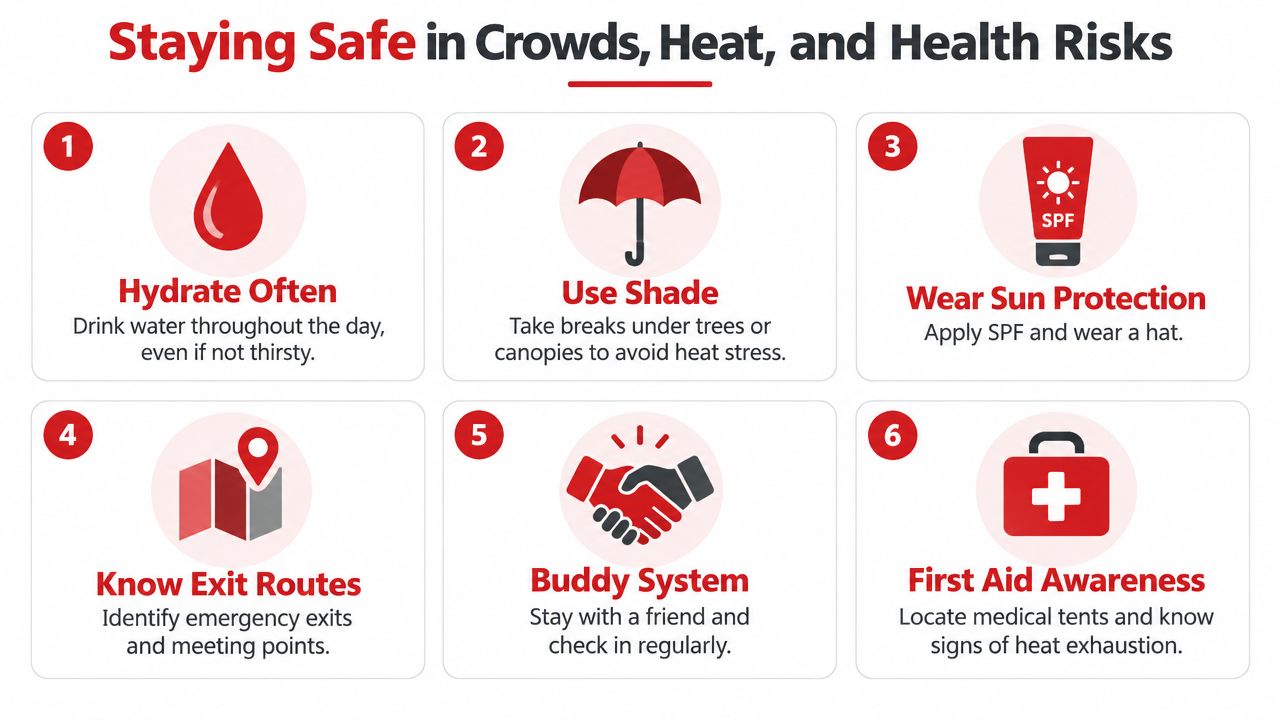
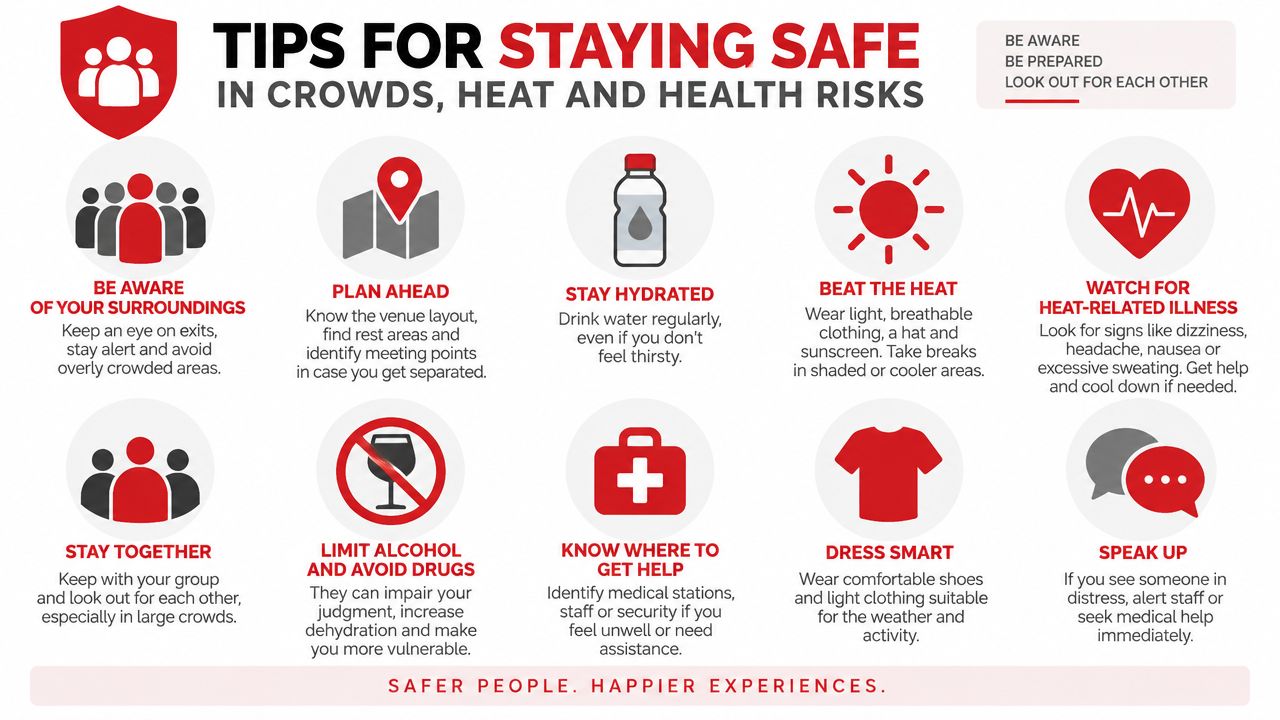
Heat also affects decisions. People may continue walking between stages, overlook early symptoms, or wait in direct sun. Attendees can lower exposure by drinking regularly, resting in shade, wearing sun protection, slowing down before exhaustion, and telling a friend or staff member when symptoms appear.
Organizers must plan the site around those choices. Event-specific heat planning can include shade, misting, fans, cooling spaces, and careful control of heat-producing effects. Water points need clear signs, routes must stay usable, and staff need a defined process for escalating concerns rather than improvising at the busiest moment.
Response time is part of site design
Medical access should be measured on the site plan, not assumed from a tent's presence. Victoria's music festival safety guidance recommends keeping on-site health services accessible within five minutes from all sections of the crowd. Victoria's music festival safety guidance treats event-specific health services as part of the design.
Infection prevention requires its own plan. The World Health Organization recommends pre-event advice, hand and respiratory hygiene, early detection and isolation, vaccination or post-exposure prophylaxis when relevant, and quarantine in rare cases. Its mass-gathering guidance also calls for real-time crowd monitoring, with attendance information reaching an operational command centre. WHO mass-gathering guidance connects public-health preparation with visible operating procedures.
A blackout tests all these arrangements at once. Emergency lighting and auxiliary power should keep exits, corridors, and public-address systems working when normal power fails, as described in Canadian emergency planning guidance for mass gatherings. Pair that provision with a documented risk assessment in evacuation, covering accessible routes, staff positions, backup communications, and meeting areas.
Good safety is visible before an incident. Attendees should find water, medical care, exits, and staff without solving a puzzle under pressure.
Festival Camping and Day Trip Checklists That Actually Work
A camping list and a day-trip list shouldn't look alike. Campers carry a small living system, while day visitors need mobility, hydration, protection from weather, and a way to find their way after sunset. Separating the lists prevents attendees from carrying unnecessary equipment while still covering the tasks that become difficult in the dark.
Multi-day camping checklist
- Shelter and ground protection: Pack the tent, stakes, mallet or suitable alternative, groundsheet, and a way to secure loose items. A stable shelter protects sleep and keeps clothing and lighting equipment organized.
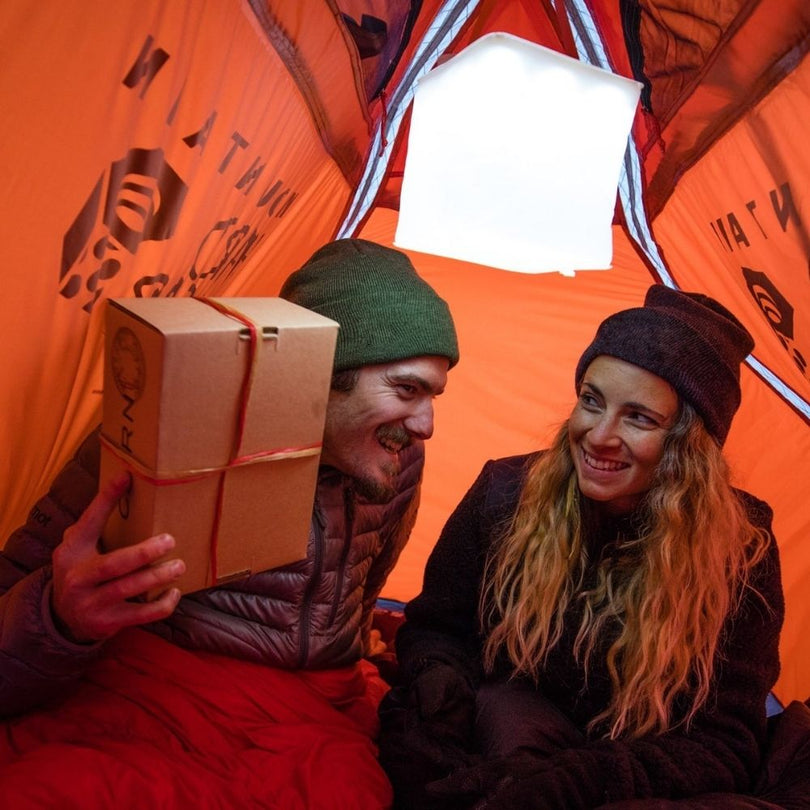
- Sleep kit: Bring a sleeping bag or blanket suited to the forecast, a sleeping mat, ear protection, and an eye mask. A bright camp can make rest harder, so lighting should be controllable rather than permanently high-output.
- Clothing system: Include dry layers, rain protection, sturdy footwear, and spare socks. Mud, temperature changes, and long walks can make a small clothing reserve more valuable than extra entertainment gear.
- Water and food basics: Carry a refillable bottle and food that can be stored safely under the festival's rules. A hydration plan works better when the bottle remains easy to reach.
- First aid and personal medication: Pack prescribed medication, blister care, basic wound supplies, and any personal health items. Adventure Medical Kits provides a useful reference point for thinking about first-aid contents by activity and trip type.
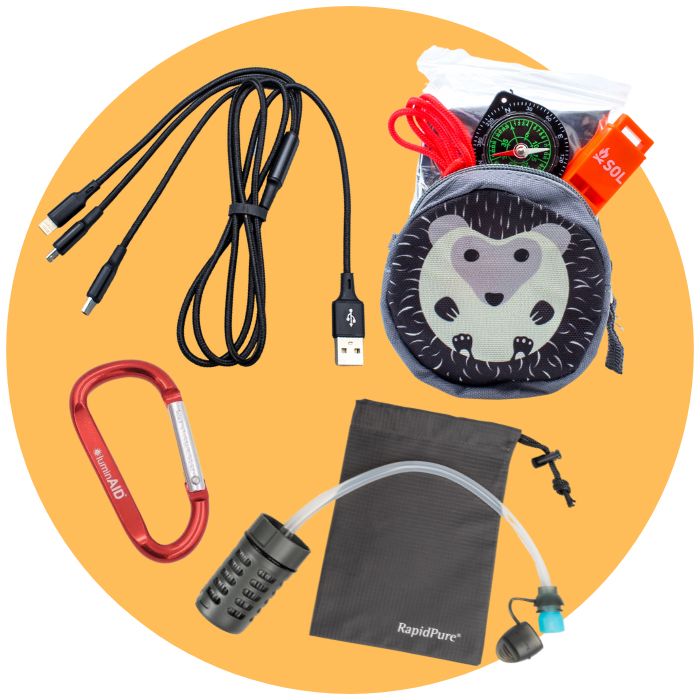
- Light and power: Use one main lantern for camp tasks, low-level string lighting for tent boundaries, and a phone-charging option that can be recharged between uses. Keep lighting where it can be found quickly, not buried in the bottom of a duffel.
- Camp organization: Add a small repair kit, waste bags, toiletries, identification, and a printed emergency contact card. A consistent storage place reduces nighttime rummaging.
The Coachella camping essentials guide can help campers compare comfort items with genuine campsite needs. The important test is simple: each item should solve a known problem involving shelter, sleep, hygiene, food, safety, navigation, or communication.
Single-day visitor checklist
- Small bag: Choose a bag that meets the venue policy and leaves both hands available for balance and movement.
- Water and weather protection: Carry a refillable bottle where permitted, sun protection, a hat, light rainwear, and a layer for the evening.
- Phone and identification: Bring identification, payment, tickets, emergency contacts, and a charging plan. A phone with no power can turn a minor separation into a serious communication problem.
- Personal health items: Include medication, ear protection, and small blister supplies. Hearing protection is especially useful near loud stages.
- Night navigation: Carry a compact light for the walk to transport, toilets, or a meeting point. Keep the beam aimed at the ground and use the lowest practical brightness.
- Meeting plan: Agree on a landmark and backup time before the crowd becomes dense. A landmark should remain recognizable if a stage schedule or route changes.
Sustainable Lighting and Power Without Outlets or Batteries
A dark campsite changes quickly after sunset. Someone needs light inside a tent, another person is looking for the toilets, and a phone may need enough charge to receive an emergency message. A small solar lantern, carefully placed string lights, and a charging plan can solve those tasks without connecting to the mains or carrying a large supply of disposable batteries.
Personal camp power and festival production power are separate systems. A major stage may run audio, lighting, motors, heating or cooling, and LED panels at the same time. Organizers therefore need three-phase site power, with load sizing that accounts for starting currents and demand rather than adding equipment nameplates. Event power distribution guidance applies to organizers and contractors. It is not a sizing method for a camper's tent light.
At campsite scale, choose equipment by the job. A lantern provides area light for cooking, reading, or finding gear. A string light marks a tent, shade structure, or shared camp boundary. A phone charger protects communication capacity during a blackout or an unexpected separation from friends. One intense beam can solve a single task while producing glare for everyone nearby.
Choose light by task, not brightness
A useful setup feels more like trail markers than a floodlit stage. Independent camping guidance recommends warm color modes around 2200 to 3000K, red LEDs for movement after dark, shielding below eye level, and lower brightness when full output is unnecessary. Dark-sky-friendly camp lighting guidance supports a practical rule: light the surface that needs attention, rather than the whole campsite.
| Option | Best For | Power Source | Key Trade-off |
|---|---|---|---|
| Portable solar lanterns | Tent tasks, cooking areas, reading, emergency light | Integrated solar charging and internal battery | Needs daylight charging and careful placement |
| Solar string lights | Camp boundaries, shade structures, gentle ambience | Solar charging and internal battery | Covers an area well but offers less task-focused light |
| Disposable-battery lights | Backup use when charging conditions are poor | Replaceable batteries | Simple to restart, but creates battery waste and requires spares |
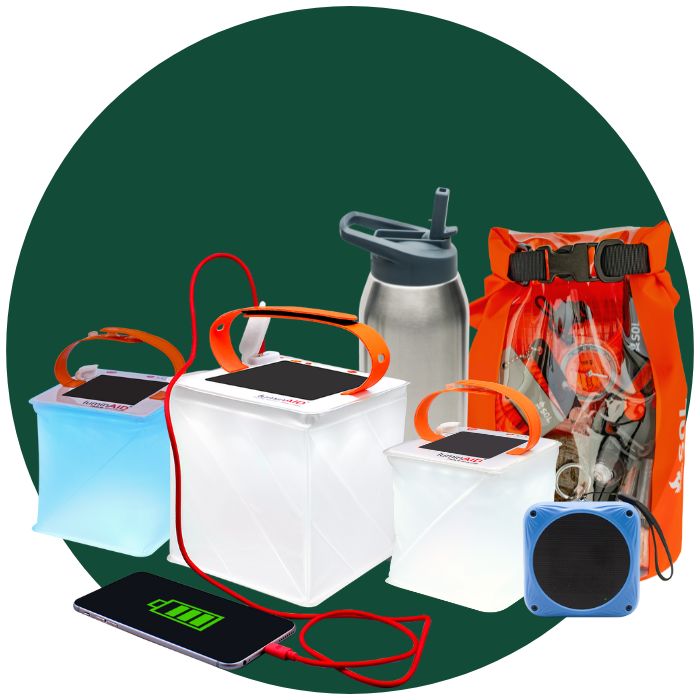
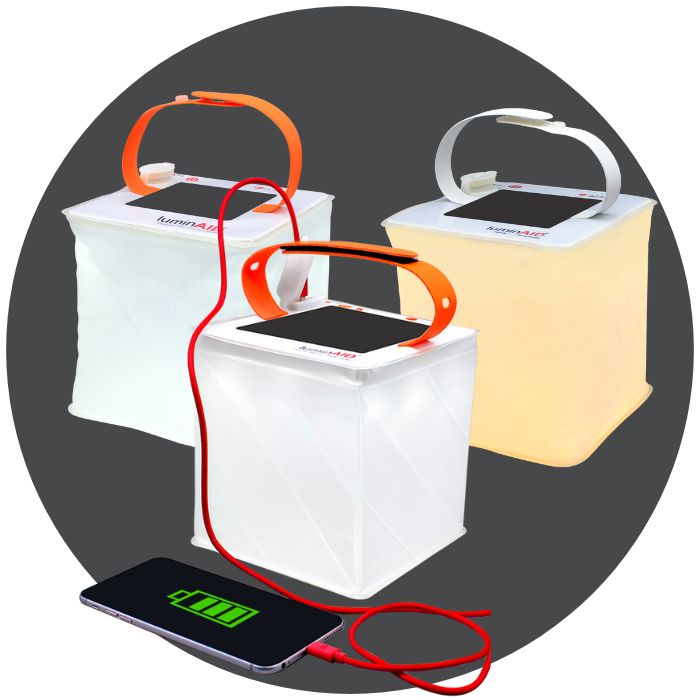
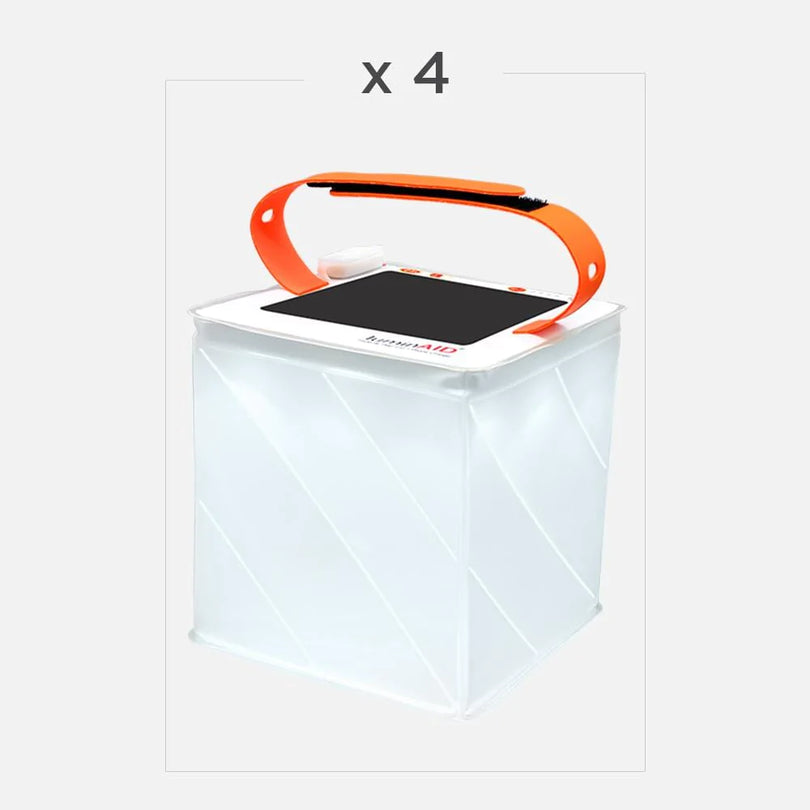
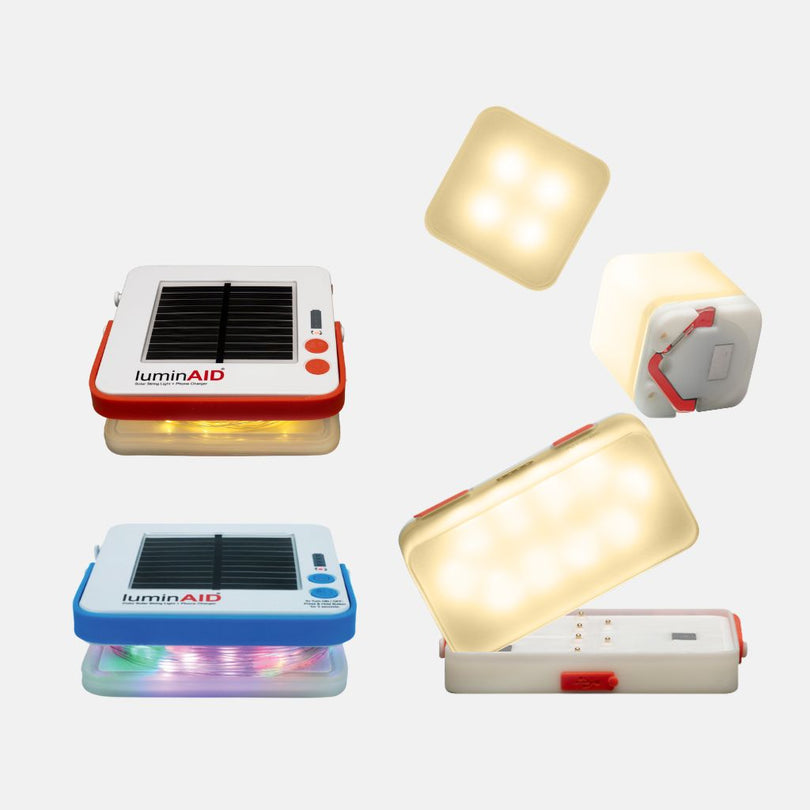
LuminAID 2-in-1 Power Lanterns are one example of a portable solar format that combines adjustable light with USB phone charging. LuminAID Solar String Lights serve the separate purpose of soft boundary or ambient lighting. The product category is explained in this solar camping light and charger guidance. Charge devices before departure, check venue rules, and use the lowest setting that lets you see safely.
LED fixtures can also reduce power demand compared with older discharge lamps, which helps event teams plan limited supplies. For attendees, the more useful question is simpler: will the light run through the night, recharge in daylight, and remain available if the main supply fails?
Open-air installation still creates physical hazards. Festival safety guidance requires decorative and festoon lighting to remain at least 150 mm from flammable materials, reach 6 m where vehicles may pass, and maintain 2.7 m clearance where people may stand. South Australia's festival electrical safety guidance treats lamps as both electrical loads and heat-producing equipment. Keep cords and lights away from walkways, fabric, cooking equipment, and places where people can snag them.
Bringing It All Together for Attendees Teams and Emergencies
The same principle works at every festival scale: light should support a task, remain available during disruption, and avoid creating a new hazard. An attendee may need a charged lantern for a tent, a low setting for a path, and USB power for a phone. A campsite lead may use marked lighting to make a shared area easier to identify. An event team needs emergency lighting and auxiliary power for exits, corridors, and public-address systems if the main supply fails.
Load planning is part of that resilience. Inadequate calculations can cause festival power failures, especially when teams overlook starting currents and demand rather than relying only on equipment labels. Personal equipment can't replace a properly engineered event distribution system, but a charged lantern and phone power can give an attendee a useful fallback while staff restore safe operations.
Event teams can use a venue emergency response guide to review roles, communications, evacuation procedures, and equipment checks. Attendees can mirror that discipline in a smaller form:
- Pack light that handles camp tasks and low-level wayfinding.
- Charge it and test every mode before leaving home.
- Keep it accessible, not buried under clothing.
- Share the meeting point and emergency contact plan.
- Use warm, shielded, low brightness settings near sleeping areas.
- Treat a blackout as a reason to follow staff instructions, not to rush.
Festival preparation doesn't need to remove spontaneity. It gives attendees enough control to enjoy the music, food, community, and late-night conversations while remaining ready for heat, separation, darkness, or a failed outlet. Through programs such as Give Light, portable illumination can also support disaster and refugee relief beyond the campsite, connecting a small outdoor decision with broader emergency preparedness.
LuminAID offers portable solar lanterns, 2-in-1 phone chargers, and Solar String Lights for camping, festival wayfinding, blackout preparation, and low-glare outdoor ambience. Visit LuminAID to choose a packable lighting setup that fits the festival plan and helps keep reliable light available when outlets aren't.