
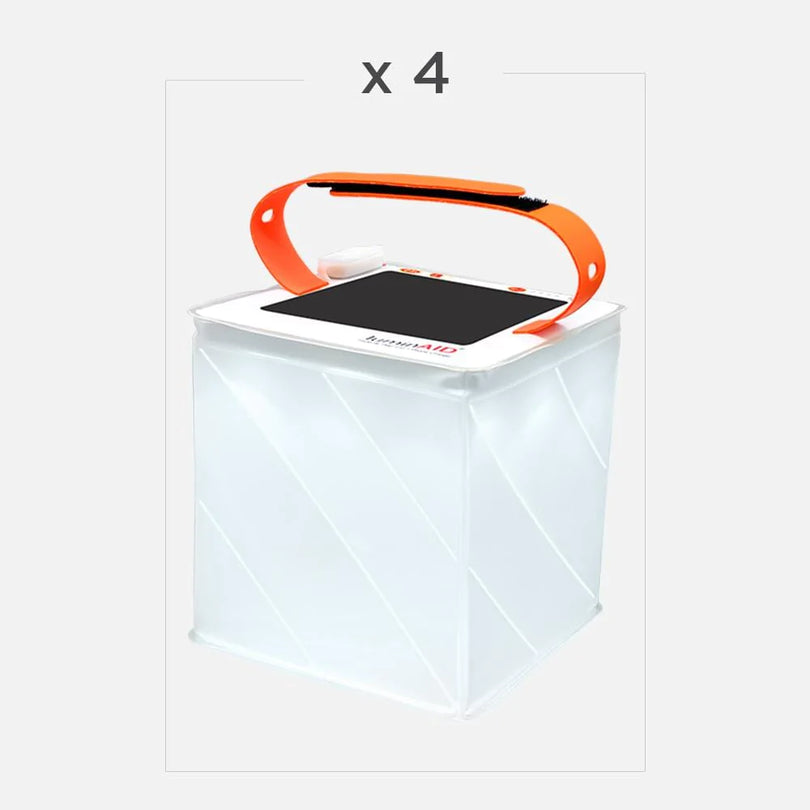

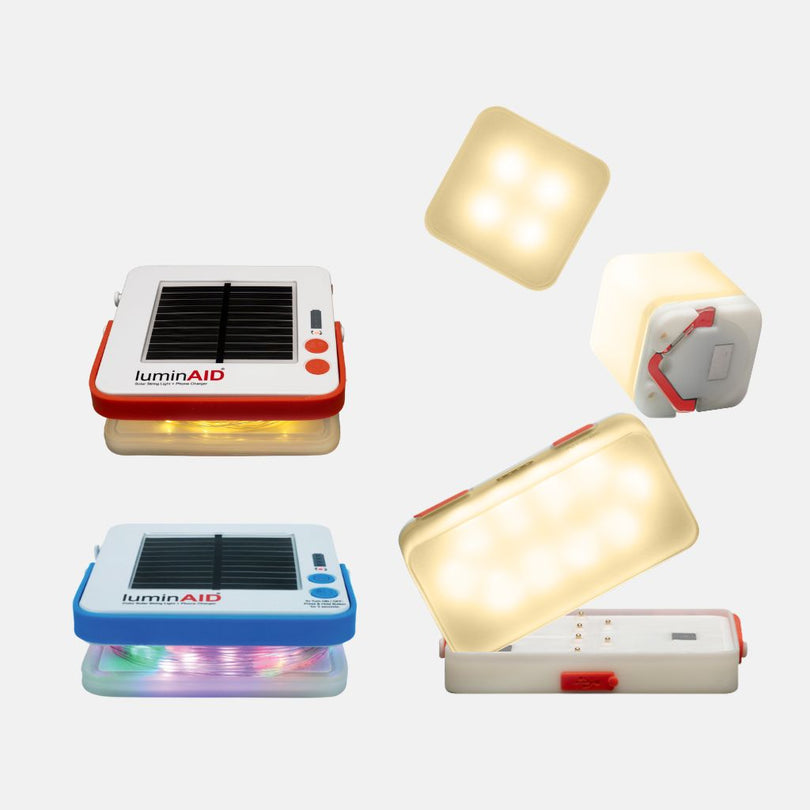


Most homeowners notice the same thing after dark. The porch looks beautiful in daylight, the string lights come on at dusk, and the space still feels oddly unusable once someone tries to read a menu, set down a plate, or walk to the steps without squinting. Outdoor string lights for porch use can solve the mood problem quickly, but they usually fall short on visibility unless the layout is planned around actual tasks, not just photos.
That gap explains why some porches feel finished and others feel frustrating. A well-lit porch needs ambient light, yes, but it also needs directed light near doors, stairs, and seating areas so the space works for reading, dining, and safe movement after dark. The best installations look relaxed and inviting, but they also solve the practical problems that decorative-only setups leave behind.
Table of Contents
- Why Most Porch String Light Installations Fall Short
- Choosing Between Solar and Plug-In Power Options
- Planning Your Layout and Spacing for Best Results
- Safe Mounting Methods and Hardware Selection
- Weatherproofing and Long-Term Maintenance
- Creating Functional Lighting with Layered Design
Why Most Porch String Light Installations Fall Short
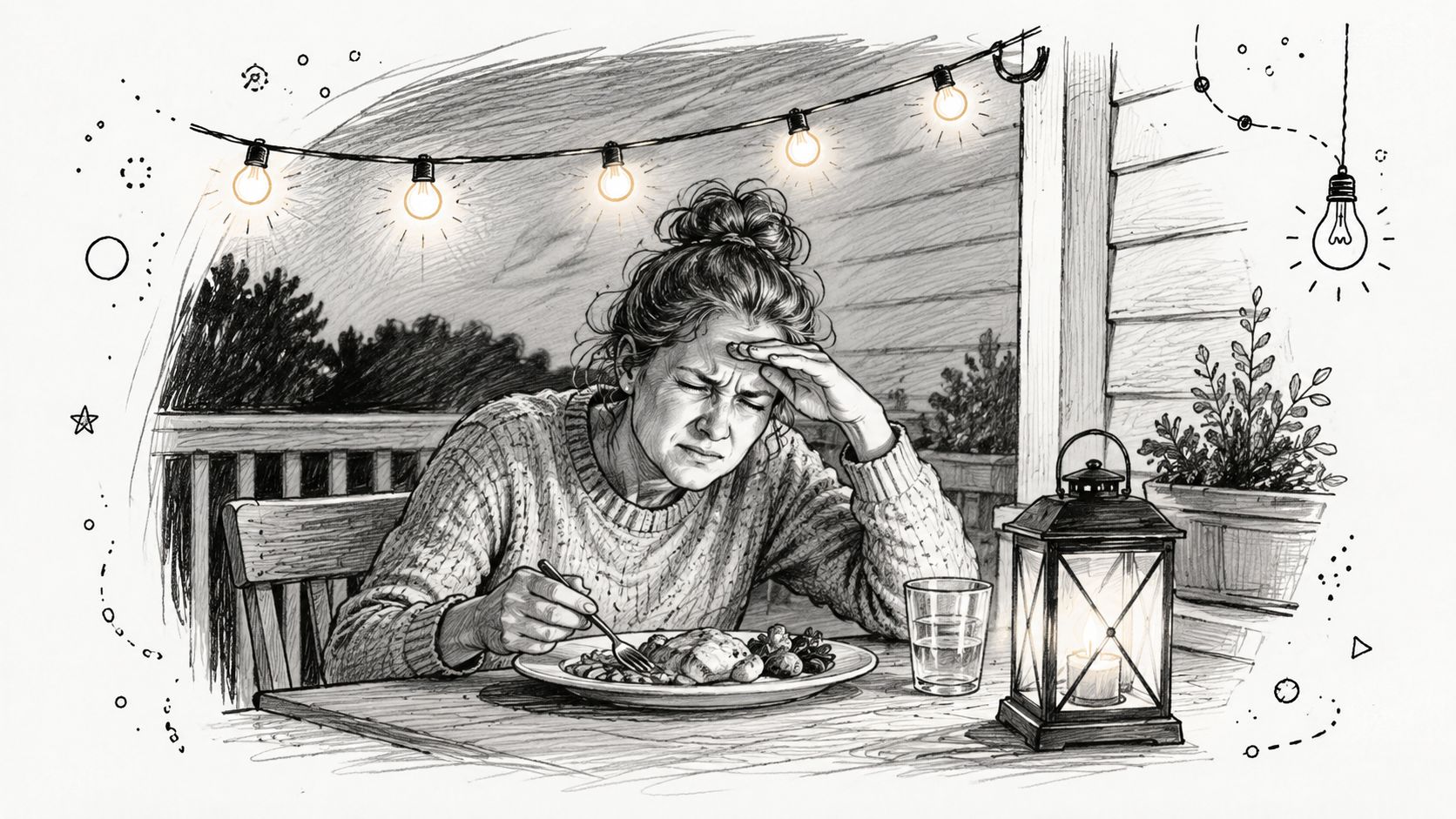
A porch can look perfect in the evening and still be annoying to use. The bulbs cast a warm glow, the trim glints softly, and then someone tries to read a card or carry a drink to the table and realizes the light is only doing half the job. That's the core mismatch with many outdoor string lights for porch installs, they deliver atmosphere, not enough utility.
Atmosphere and usability are not the same thing
Warm-white bulbs are popular because they soften hard edges and make a porch feel calm. The problem is that a cozy glow does not automatically help with reading, dining, or navigation, especially when the lights are hung high and spread wide. A porch that looks great in a photo can still leave the tabletop dim and the stairs shadowed.
Practical rule: if the porch has to function after dark, string lights should be treated as background lighting, not the only source.
The most common mistake is assuming more strands fix everything. More strings can improve coverage, but they rarely solve the need for a brighter, directed source near a table, a door, or steps. Another mistake is placing bulbs too far apart, which creates bright points with dark patches between them instead of a smooth wash of light.
A third misstep is choosing the look before the use case. Porch lighting needs change depending on whether the space is for drinks, homework, late dinners, or just walking in from the driveway. The right setup starts with a simple question, what does the porch need to do after sunset?
What a usable porch actually needs
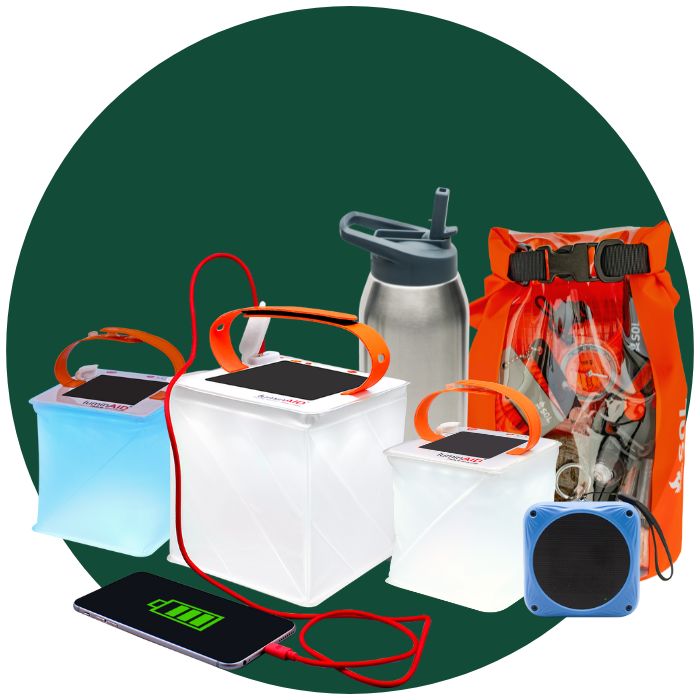
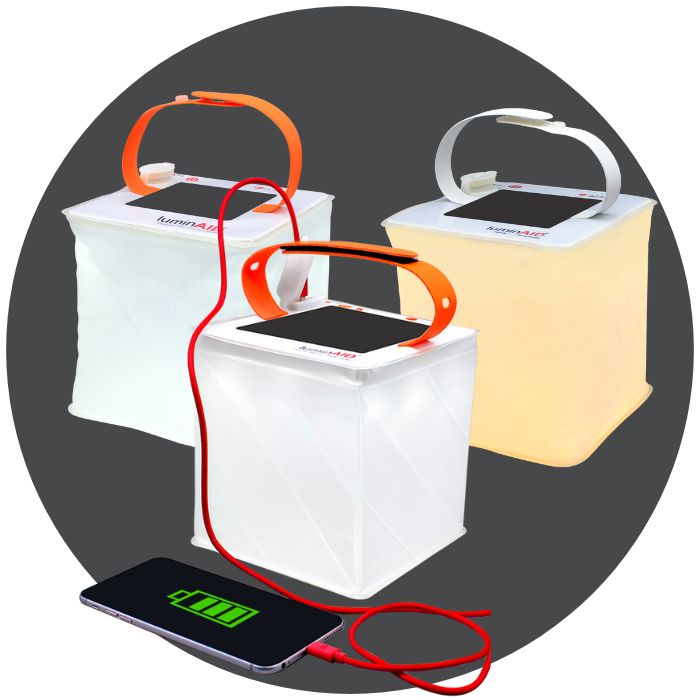
A practical porch usually needs two lighting layers. The first is the string-light layer, which gives the space character and a comfortable sense of scale. The second is a task layer, a brighter fixture or portable light aimed where people sit, step, or eat.
That second layer is what most guides skip. One independent outdoor-lighting guide recommends warm-white bulbs and adding one extra light source for layered lighting, which lines up with the practical problem most porches face, ambience alone doesn't make a space usable. For a deeper set of decor ideas that still keep function in mind, the outdoor string lighting ideas guide is a useful companion piece.
The clearest way to judge a porch is to test it in the dark. If someone can sit down, identify what's on the plate, and walk to the door without feeling around, the layout is working. If not, the strings are decorating the porch, not lighting it.
Choosing Between Solar and Plug-In Power Options
The power choice shapes the whole installation. Solar is easier to place where outlets are awkward, but plug-in setups are usually steadier for long-term use on covered porches with access to power. The right answer depends on sun exposure, weather, and how much maintenance the homeowner wants to handle.
Solar works best when placement freedom matters
Solar string lights are attractive for renters, temporary setups, and porches where running a cord would look awkward. They let the strand go where the structure makes sense, not where the outlet happens to be. That flexibility matters on older porches, detached structures, and side entrances with limited access to power.
The trade-off is maintenance and exposure. A product guide notes that solar models commonly see their first component degradation after two to four years Yardtopia outdoor string lights guide, so they're not a set-it-and-forget-it option. If the porch gets regular sun and the lights are used mostly for ambience, solar can make sense. If the space needs reliable lighting every night, that maintenance curve matters.
Plug-in setups favor consistency
LED string lights are the stronger long-term choice for most permanent porches. One outdoor-lighting guide says LED outdoor string lights typically last three to five seasons of nightly use, or about 25,000 to 50,000 hours of illumination, while incandescent sets usually last one to two seasons Yardtopia outdoor string lights guide. That difference is hard to ignore when the lights stay up year-round.
Plug-in lights also tend to be easier to integrate with timers, smart plugs, and dimmers. The downside is obvious, the cord has to reach an outlet safely, and that means planning for weather exposure and a clean route that doesn't create a trip hazard. For more on solar-focused considerations from a string-light perspective, the LuminAID solar outdoor string lighting guide offers a helpful reference point.
Good fit rule: solar suits flexibility, plug-in suits consistency. A porch that gets used often usually benefits from the steadier option.
A second practical point is bulb construction. Outdoor guidance recommends looking for outdoor-rated, shatterproof bulbs because they're the first line of defense in exposed conditions Christmas Lights Etc outdoor string lights guide. That matters whether the source is solar or plug-in.
Solar vs Plug-In String Lights Comparison
| Factor | Solar String Lights | Plug-In String Lights |
|---|---|---|
| Placement | Works where the sun reaches the panel | Works where an outlet is accessible |
| Maintenance | More component upkeep over time | Less upkeep when installed well |
| Reliability | Depends on charging conditions | Usually steadier for nightly use |
| Best use case | Flexible or temporary porch layouts | Frequent use and permanent installations |
The bottom line is simple. If the porch is a daily living space, plug-in LED usually wins. If the porch is a flexible, less-demanding space, solar can still be the better fit.
Planning Your Layout and Spacing for Best Results
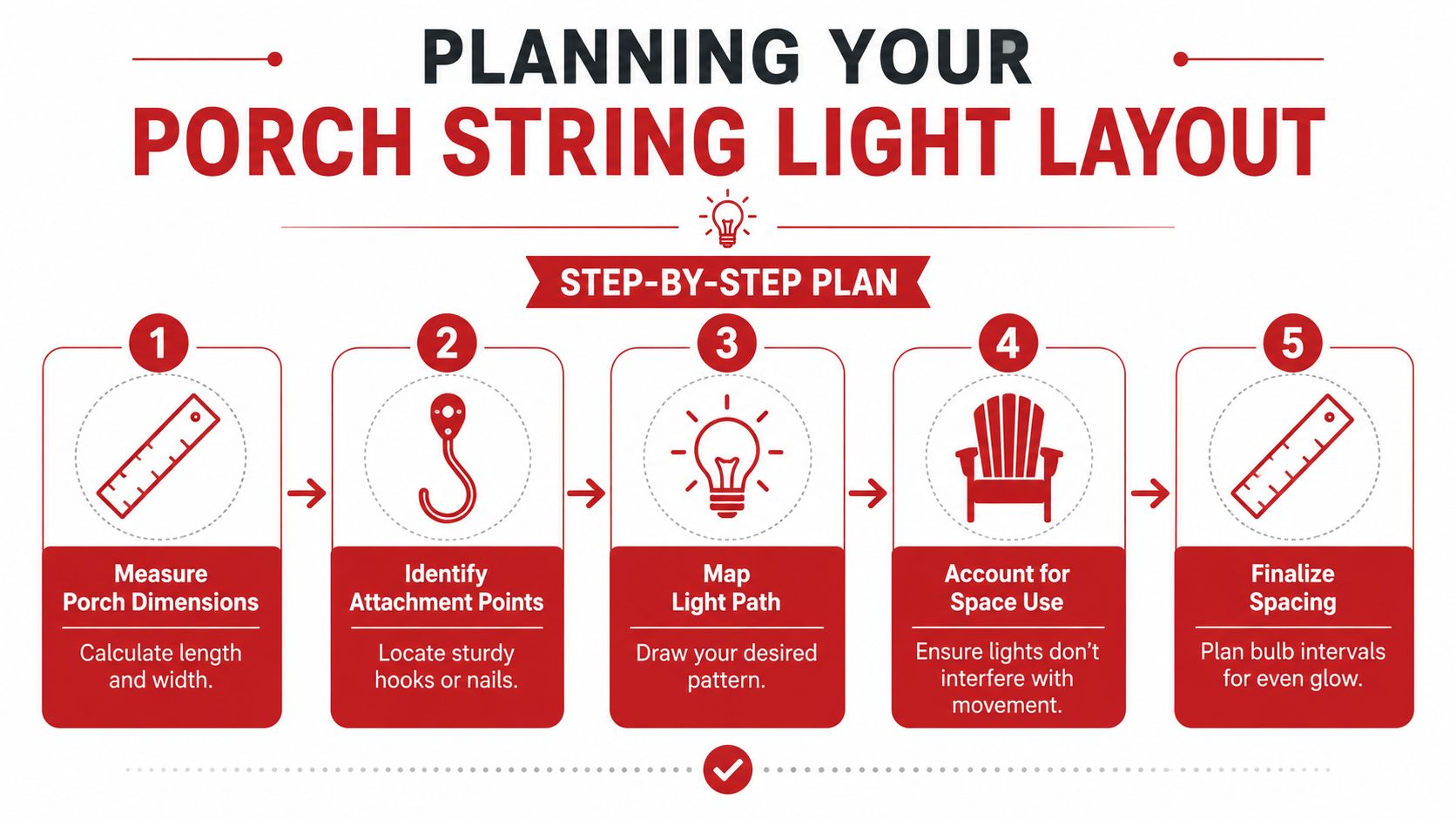
Good planning saves money and avoids the classic problem of buying one strand too few. A porch needs measurements, attachment points, and a decision about how people will move through the space. Once those three things are clear, the layout becomes a lot easier to build.
Measure the usable space, not just the footprint
Porch measurements should focus on the zones that matter, seating area, doorway, steps, and any walkway. That's where lighting gaps become obvious. A long porch with a narrow seating corner doesn't need the same pattern as a square front stoop, and the difference changes how many strands are needed.
A comfortable visual rhythm usually comes from bulb spacing of 12 to 18 inches, which creates ambient light without large dark gaps Yardtopia outdoor string lights guide. Wider spacing can feel sparse, especially on smaller porches where every bulb is visible. Tighter spacing reads fuller and usually gives the porch a more finished look.
Useful habit: mark the start and end points with painter's tape before buying anything. It makes missed coverage obvious fast.
Choose the pattern that matches the porch structure
Perimeter runs work well on narrow covered porches because they frame the space without crowding it. Zigzag layouts add visual density overhead, but they only work when the porch structure can support the anchor pattern. Overhead crisscrosses can look dramatic, yet they're a poor fit under ceiling fans and in low-clearance areas.
The attachment plan matters as much as the shape. Decorative trim is not the same as a load-bearing support point, and overloading weak trim leads to sagging, pulled fasteners, or damage. A porch with strong posts or beams can handle a cleaner run, while a lighter structure may need more attachment points to distribute weight.
For another planning reference on outdoor string-light layouts in a different setting, the tree-hanging guide helps illustrate how anchor points change the whole design.
Leave room for the next layer
A porch layout works better when it assumes future additions. Maybe the first season uses only ambient strings, then later a wall sconce, clamp light, or table lamp gets added for reading and dining. Planning a little extra room keeps the final setup from feeling crowded or improvised.
The right layout is the one that still works when the porch is full of people, not just empty and photographed from the yard.
Safe Mounting Methods and Hardware Selection
A good installation starts with secure attachment points and the right hardware for the porch material. Wood, vinyl, brick, and metal all behave differently, and the wrong fastener can leave visible damage or fail under wind. Safety matters here because porch string lights hang over places people walk, sit, and open doors.
Height and clearance come first
Outdoor patio-lighting guidance recommends hanging string lights at least 7 feet above walking surfaces, with 7.5 to 8 feet preferred over dining areas EcoFlow patio string lights safety guide. It also says to keep them at least 3 feet away from heat sources such as grills or fire pits EcoFlow patio string lights safety guide. Those clearances reduce contact risk and make the layout feel less cramped.
If the porch sees high wind, attachment points need to be closer together. The same safety guide recommends securing points more frequently in windy conditions and considering taking the lights down during severe weather EcoFlow patio string lights safety guide. That advice is especially useful on exposed front porches and upper-level balconies.
Match the hardware to the structure
Wood trim can take cup hooks or screw hooks when the placement is sensible and the board is strong enough. Vinyl usually needs clips or other non-penetrating solutions to avoid cracking. Brick calls for masonry-friendly hangers, while metal often works best with clamps or magnetic solutions if the surface supports them.
A practical baseline for exposed installs is outdoor-rated, weatherproof sockets and heavy-duty wire, because insulation quality and wire gauge affect sag and failure risk over time Party Lights commercial-grade string lights. That is one of those details homeowners notice only after the first season, when a flimsy run starts drooping or a weak connection begins to fail.
Installation rule: use guide wire when the span is long or the lights need support independent of the bulbs. Use direct mounting when the structure is short, sturdy, and already aligned with the path.
For a different outdoor mounting reference that shows how attachment needs change with the setting, the tree lighting guide is a useful comparison.
Keep the install serviceable
The best hardware is the kind that makes later maintenance easier. Clips that let the cord be removed without prying, hooks that don't chew through insulation, and brackets that can be checked visually all make the system more durable. On a porch, convenience and safety tend to point in the same direction.
Weatherproofing and Long-Term Maintenance
Outdoor lights live through rain, wind, UV exposure, and temperature swings, so long-term performance depends on more than the first install. Weatherproofing is mostly about preventing small failures from becoming expensive replacements. Once a porch lighting system is exposed year-round, every weak point shows up eventually.
Read the rating, then inspect the parts
For porch use, IP65 or higher is the practical weather-resistance baseline Yardtopia outdoor string lights guide. That rating helps indicate better protection against outdoor exposure, which is especially important on unshielded edges of a porch where wind-driven rain reaches the wiring.
Outdoor-rated shatterproof bulbs are the next layer of protection Christmas Lights Etc outdoor string lights guide. They matter because accidental contact, swinging branches, and gusty conditions are part of normal porch life, not rare exceptions. A bulb that can handle impact without shattering is safer and easier to live with.
Wire quality matters too. Heavy-duty wire and better insulation reduce sag and lower the chance of failure at exposed connections Party Lights commercial-grade string lights. That's why commercial-grade specs keep emphasizing those features.
Treat maintenance as a seasonal task
A quick check before heavy-use months is usually enough to catch the obvious problems. Look for frayed insulation, loose connectors, cracked sockets, and corrosion at plug points. Clean off pollen, debris, and grime so the bulbs and panels, if present, can do their job without buildup interfering.
Solar models need extra attention at the panel, because the panel is the part most exposed to dirt and degradation. The earlier solar discussion noted that solar components commonly start to degrade after two to four years Yardtopia outdoor string lights guide, so a dimming strand may be telling you the system is aging rather than just dirty.
A simple replacement decision helps. Replace a single bulb when the rest of the strand is healthy and the socket is intact. Replace the whole strand when the wiring is brittle, multiple sections fail, or the plugs show wear. That's usually the point where repair turns into false economy.
If the porch lights come down for winter or severe weather, store them dry, loosely coiled, and away from sharp bends. That one habit preserves the cord better than most homeowners expect.
Creating Functional Lighting with Layered Design
The cleanest porch lighting setups use string lights for mood and separate fixtures for tasks. That combination keeps the porch soft and welcoming without turning dinner into guesswork. It also solves the safety issue near steps and doors, where ambient light alone often isn't enough.
Build zones instead of relying on one glow
A porch works better when each activity has a lighting role. The string lights handle the overall feel, a brighter source covers the table, and a focused light near the entry helps with keys, locks, and footing. That layered approach avoids the flat, underlit look that happens when the strings try to do everything.
Most decorative-only installs break down here. They look good from the curb, but the moment someone reads, serves food, or checks a package, the limitations show up. The fix is not necessarily more brightness everywhere, it's better placement.
One useful outdoor-lighting guide recommends warm bulbs and a second light source for layered lighting, which reflects how porches function as real outdoor rooms, not just facades Govee backyard string light ideas. For more styling approaches that still support usability, the outdoor string lighting ideas page is worth a look.
Keep the layers from fighting each other
Color temperature should stay in the same family so the porch doesn't look patchy. Warm string lights paired with a harsh cool-white floodlight usually clash, especially in a small covered space. A softer directional fixture near the table or steps tends to blend better.
A porch feels more expensive when each light has a job.
Dimmers make the final result more adaptable, especially for porches that shift from weekday entryway to weekend dining zone. Brighten the task light when food is on the table, then dim it back when the goal is conversation. The strings stay constant, while the supporting light does the work.
Match the setup to how people actually use the porch
A reading porch needs stronger light near the seat. A dining porch needs better coverage over the table. A front porch used mainly for arrivals needs emphasis on steps, thresholds, and door hardware.
That's also where design support matters. For readers building the rest of the outdoor space around the lighting, creating ultimate outdoor spaces offers a helpful broader perspective on how lighting fits with furniture and outdoor living pieces. The main idea holds either way, string lights are strongest when they shape the mood and let another light source handle the work.
For a porch that looks good and functions after dark, start with a layout built around activity, not just appearance. LuminAID offers portable solar lighting and warm outdoor light solutions designed for real-life use, from backyards to off-grid spaces. Visit LuminAID to find lighting that helps a porch feel inviting and usable at the same time.