

The power goes out after dinner, or the campsite gets dark right when the cards come out. Someone reaches for a phone flashlight, then realizes the beam is too harsh, too narrow, or pointed at the wrong thing. That's usually the moment portable outdoor lighting ideas stop feeling decorative and start feeling useful.
Portable outdoor lighting has grown into a real category because people want light that moves with them, packs away easily, and works without fixed wiring. The market data backs that shift, with portable lighting moving from a niche into a sizable global segment, and with LED-based products accounting for more than 82% of total unit shipments in 2024 according to one market estimate (Business Research Insights). For outdoor use, the big idea is simple, light should go where the people are, not where the electrician left a junction box.
Table of Contents
- What Counts as Portable Outdoor Lighting
-
Placement Ideas for Camping, Backyards, RVs, and Emergency Kits
What Counts as Portable Outdoor Lighting
A camper clips a lantern to the tent ridge, sets a second one on the picnic table, and keeps a flashlight within reach for the walk to the restroom. A homeowner does something similar during a blackout, moving a small light from the kitchen counter to the hallway, then to the back door. Same habit, different setting. The light follows the task.
Portable outdoor lighting is lighting that can be carried, repositioned, and set up outdoors, and it is usually lightweight, compact, battery-operated, or rechargeable rather than fixed in place (PACLights). That definition matters because it separates these products from hardwired patio fixtures. A wired wall light can be useful once it is installed, but it cannot move with someone from a campsite to a van to a power outage at home.
The category is also broad enough to cover very different jobs. A handheld torch, a hanging lantern, a clip-on reading light, and a solar accent lamp all count, but they solve different problems. One lights the path. One lights the table. One sits in an emergency kit and waits.

| Aspect | Portable | Fixed |
|---|---|---|
| Setup | Moves where needed | Stays installed |
| Power | Battery, rechargeable, or solar | Usually wired |
| Best use | Camping, emergencies, flexible seating | Patios, porches, permanent zones |
| Trade-off | More flexibility, less permanence | More convenience, less mobility |
That flexibility is why portable lights show up in so many places at once. A camp lantern can hang inside a tent, then move to the picnic table after dark. A van light may need to clip to a shelf one moment and sit on the floor the next. Even a home emergency light needs to change rooms as people move.
A useful way to sort the category is by movement, not by brand. If a light needs to follow the person instead of the building, it belongs here. If it stays put and depends on fixed wiring, it does not.
For readers who want a closer look at off-grid options, this portable solar camping light guide is a natural follow-up to the basics above.
Practical rule: if the light needs to follow the person instead of the building, it belongs in the portable category.
Lumens and Color Temperature
A lantern that feels perfect on a picnic table can look weak across a yard, while a bright beam that helps on a trail may feel harsh beside a dinner setup. Lumens measure total visible light output. They do not tell you beam distance or power use, so the number only makes sense once you match it to the space and the job.
How bright the space really needs to be
A small social setup needs a different amount of light than a work zone. For outdoor string lights, a soft glow of about 50 to 100 lumens per bulb is usually enough for atmosphere, according to outdoor lighting guidance from City Lights SF. Tent and picnic lighting usually calls for more output, while task and flood-style area lighting often sits in the 700 to 1,300 lumen range, and driveway or broad-path coverage can require about 1,200 to 2,400 lumens. The useful question is simple, how much ground does the light need to cover, and how much detail do people need to see at that distance?
That is the brightness math behind real placement decisions. A campsite table needs enough light to see food, cords, and hands, but the whole tent does not need to feel like a workbench. A backyard seating area can stay comfortable with gentler output, while an RV step or van storage shelf may need a stronger beam in a tighter cone. An emergency kit sits at the other end of the scale, where one compact light may need to switch from room lighting to close-up task lighting as people move around.
Warm light feels different from cool light
Color temperature changes how that light feels on skin, food, fabric, and plants. Warm white in the 2700K to 3000K range is the safer default for social outdoor spaces because it feels softer and less harsh, which is also the recommendation in garden lighting guidance from Ideal Home. Cooler white belongs in task zones where clarity matters more than atmosphere.
Warm light flatters people and softens edges, cool light sharpens contrast and reveals detail.
A short rule helps when you are comparing products. Lights near chairs, food, or a fire pit usually work better in warmer tones. Lights for finding tools, checking hookups, or reading a map after dark usually work better with a cooler tone, because the extra contrast makes small details easier to see. That same idea shows up in tent setups, and LuminAID's LED tent lighting guide is a useful follow-up if you want to think through interior tent placement as well.
The same garden guidance also gives practical brightness targets of about 50 lumens for low background lighting, 100 to 200 lumens for a path, and up to 700 lumens for a small patio. Those figures help translate a product listing into a placement choice. A low reading works for a relaxed backyard corner, a medium reading suits a walkway or RV entry point, and a higher reading belongs where people need to see clearly enough to handle gear, food, or repairs. For a design perspective on how portable light can fit into a broader room or outdoor plan, the Jennifer Gilmer Kitchen & Bath design insights page offers a useful contrast in how lighting changes a space.
Product Types Worth Knowing
A campsite at dusk, a backyard table after sunset, and an RV aisle during a late stop all ask for different kinds of portable light. The shape matters first. A lantern spreads light outward, a headlamp sends light where you look, and string lights soften a larger area without trying to do everything at once.
Lanterns, string lights, and the job each one does
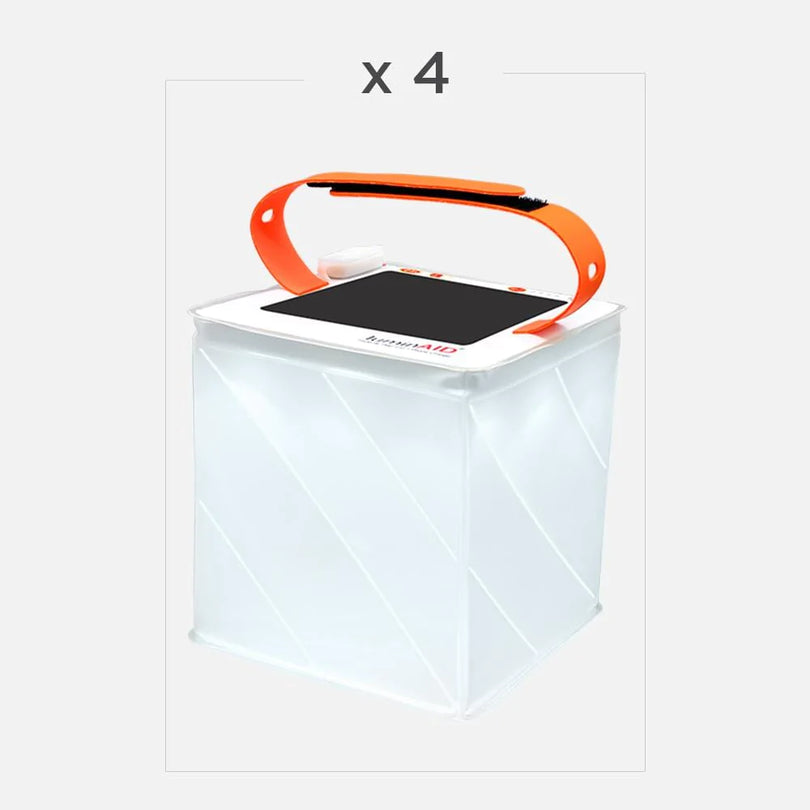
Lanterns are the steady all-around choice. They cast an even glow in tents, on picnic tables, and in outage-ready corners of a house, so they work well wherever several people need to see the same space. A lantern is a shared light, and that is exactly why it feels natural at camp or in a backyard gathering.
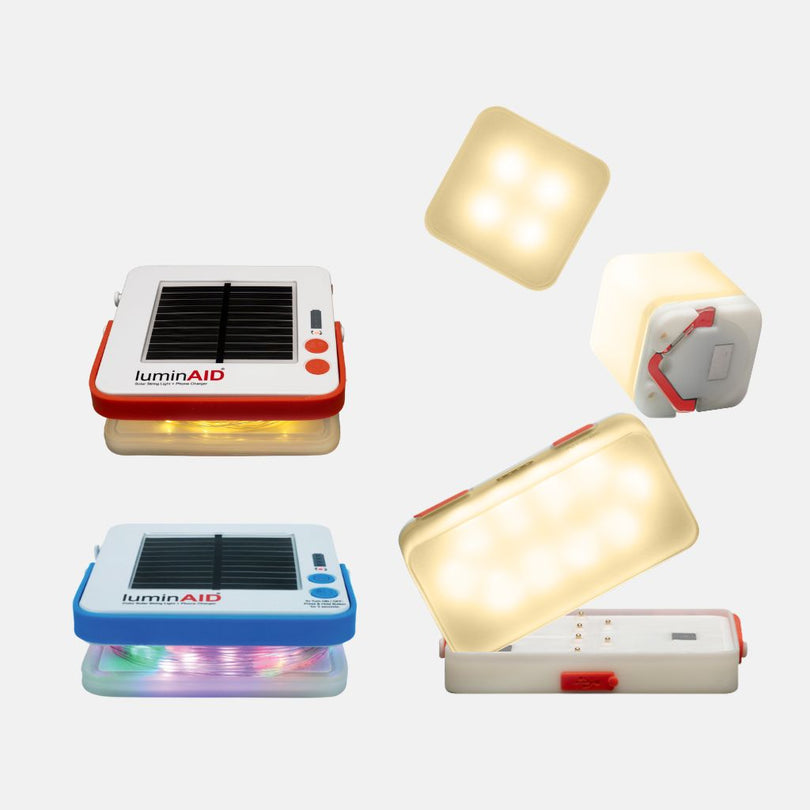
String lights do a different job. They add low-intensity atmosphere over patios, pergolas, RV awnings, and backyard seating, and they are often the first option people reach for because they make a space feel settled. They help a scene feel complete, but they do not replace a light meant for safe footing or close work.
Headlamps and clip lights solve the hands-free problem. They are useful for cooking, setting up camp, reading a map, or handling gear in a dark van. Headlamps work well for close tasks, yet they fall short in social settings, so it makes sense to keep them for work and not for ambiance.
Where ground lights and flood lights fit
Stake and path lights guide movement along edges, steps, and walkways. They work best when they mark direction instead of trying to light an entire yard. Flood or area lights sit at the other end of the range, where a campsite work zone, driveway, or emergency perimeter needs stronger directional light.
The best portable setups borrow from interior design, where layers make a room easier to use and more comfortable to spend time in. Jennifer Gilmer Kitchen & Bath makes that layering mindset easy to see in a different setting through its bathroom lighting design insights, because the same idea carries outdoors, no single light has to do everything.
A small kit usually works better than one oversized light. A warm lantern handles shared light, a headlamp covers close work, and a string of lights or a path marker adds comfort and orientation. That mix gives you more control over brightness and placement, whether the goal is a campsite, a backyard, an RV, or an emergency kit.
A portable lighting kit works better when each piece has one job.
Power Sources and What They Mean
A portable light can look right on paper and still be annoying in use if the power choice does not match the job. Power affects how often you recharge, how long the light stays on, how it handles weather, and how much attention it needs once it is packed away. Treat it as part of the design, the same way you would think about brightness or beam spread.
Rechargeable, USB, solar, and disposable each solve a different problem
Rechargeable lithium-ion has become the common default because it fits well with LEDs and compact housings. In the portable lighting market, rechargeable lithium-ion designs make up about 64% of new product launches, while battery-powered devices represent nearly 91% of global portable lighting installations (Business Research Insights). That pattern matches what outdoor users usually want, less bulk, fewer throwaway batteries, and a kit that is easier to carry from the car to the campsite or out to the patio.
USB power adds flexibility. A light that can top up from a power bank, car charger, or laptop is easier to keep going when outlets are scarce or unreliable. That makes sense for road trips, festivals, and emergency kits, where the nearest plug is often nowhere useful.
Solar works well when daylight is reliable and cords would get in the way. It suits a lantern left out during the day or string lights along a sunny fence line. Shade, winter weather, and poor placement can all reduce output, so solar tends to work best when you choose its spot with care. For RV and van setups, RV outdoor lighting ideas often start with that same question, where the sun reaches during the day and where the light needs to land at night.
Disposable batteries still earn a place in emergency kits because they hold charge for long periods without regular top-ups. They are less elegant than rechargeable systems, but they can sit in a drawer and still be ready later. That matters for a go-bag, a glove box, or a backup kit that may not be touched for months.
The category has also gotten brighter without getting much bigger. One market estimate notes the average flashlight output moved from 250 lumens in 2018 to over 600 lumens in 2024 (Business Research Insights). That shift comes from better LED efficiency and smarter battery use, not just larger housings.

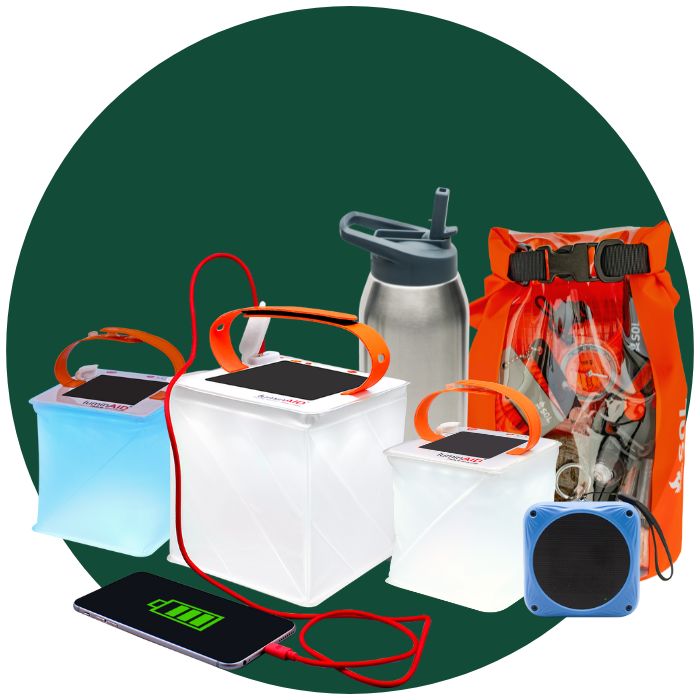
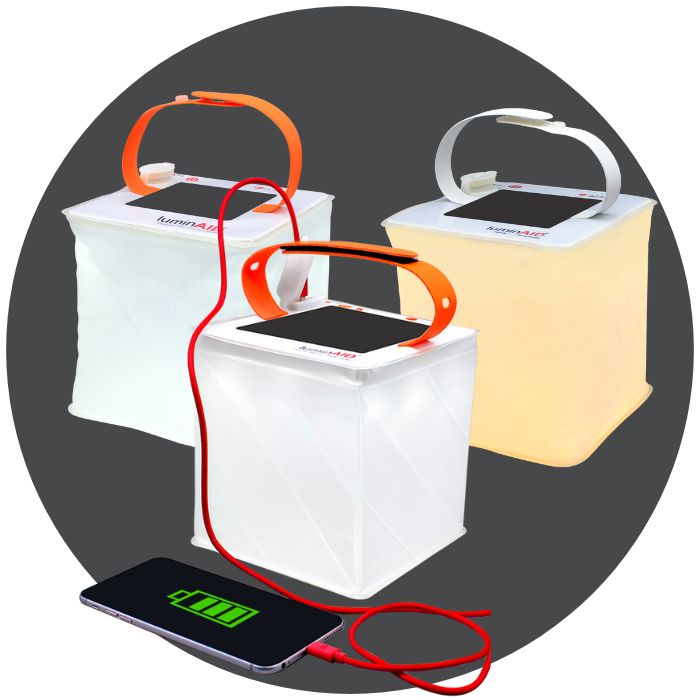
For portable kits that combine light and charging, LuminAID solar lanterns fit the rechargeable and off-grid side of the market without depending on disposable cells.
Placement Ideas for Camping, Backyards, RVs, and Emergency Kits
The right portable light can still feel wrong if it sits in the wrong place. Placement turns a product into a system. One lantern on the ground does not do the same job as three lights at different heights, and outdoor users feel that difference immediately.
A useful way to judge placement is to start with brightness and then ask what area that light has to cover. A small glowing circle on a table asks for far less output than a whole cooking area, a path, or the inside of an RV. That is why the same lantern can feel perfect in one spot and weak in another. Once you match lumen demand to coverage area, the layout becomes easier to picture.
Camping and backyard use need different light layers
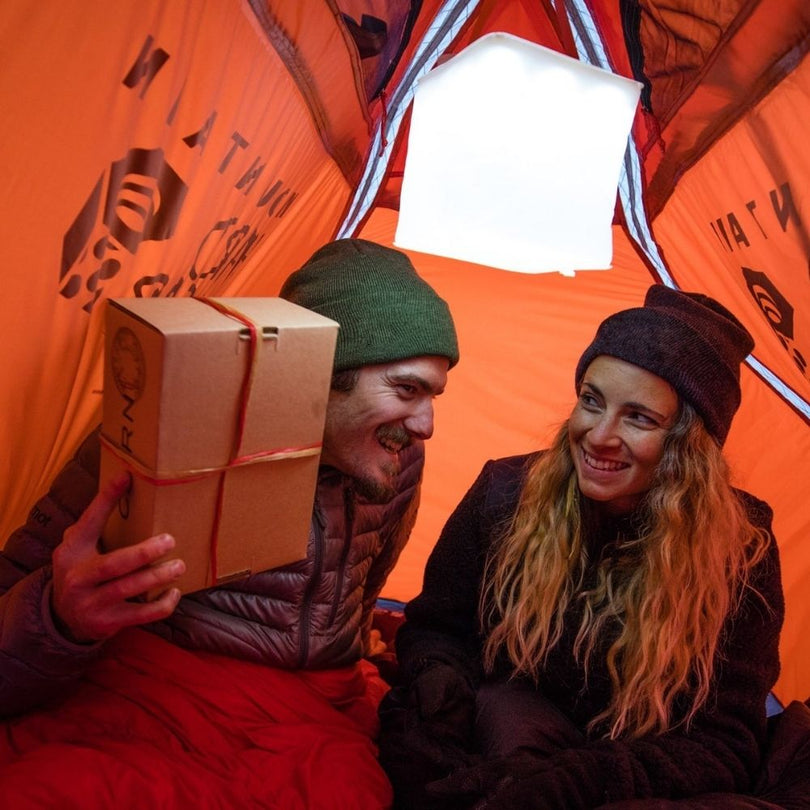
At a campsite, the cleanest setup usually starts overhead. A lantern hung from the tent ceiling gives soft ambient reading light, another placed on the picnic table supports cooking and cards, and a headlamp stays reserved for tasks and late-night walks. That layering keeps harsh beams out of everyone's face while still leaving the camp usable.
A backpacking stop, a family campsite, and a festival pitch each ask for a slightly different balance. If the table is the center of activity, the brightest light belongs there. If the tent is doing most of the work, overhead placement matters more than sheer output. Brightness on its own can mislead here, because a strong beam aimed the wrong way often wastes more light than it uses.
Backyards call for a friendlier mix. Warm-white string lights overhead define the social zone, low stake lights guide the path from the back door, and a tabletop lantern can stand in for candles without the risk of a pet or child knocking it over. String lights create atmosphere, but path safety still needs dedicated task lighting. In that setting, the goal is comfort first, with enough light to show where people are walking.
RVs, vans, and emergencies reward compact gear
RVs and vans usually have the same limitation, limited space and limited power. Compact USB-rechargeable string lights and pack-flat lanterns solve that problem because they can tuck away when the vehicle is moving and come back out without adding clutter. For van life, the best lights are often the ones that disappear during the day and reappear when the sun goes down. LuminAID's RV outdoor lighting ideas lines up well with that kind of setup, especially when storage space is tight and every item needs a clear job.
Emergency kits need a different mindset. Lights with higher weather resistance, batteries that hold charge for a long time, and red or warm modes that preserve night vision are the pieces that matter most. Those choices make power outages easier to handle without lighting up the whole house. A good emergency layout also keeps the light easy to grab, because the best backup lamp is the one you can find quickly in the dark.
- Campsite checklist: overhead lantern, table lantern, headlamp.
- Backyard checklist: string lights, path markers, tabletop lantern.
- RV or van checklist: pack-flat lantern, USB charging, low-storage footprint.
- Emergency kit checklist: weather-resistant light, spare power, night-preserving mode.
LuminAID's solar lanterns and warm string lights fit naturally into the campsite, backyard, and emergency-kit roles because they're built for off-grid use without permanent installation.
Setup Tips and Safety That Save Your Gear
A light can still let you down if you skip a quick check before heading out. Full charge, every seal closed, backup cable packed, and any solar panel placed where it can catch daylight long enough to recharge. That small routine saves time later, especially when a lantern has to work after a wet trip or a long day in storage.
IP ratings matter more than most buyers think
IP ratings tell you how much weather a light can handle. An IP67 lantern is fully dust-tight and can handle temporary immersion, while IPX4 or IP44 devices are only protected against splashing rain, which makes them better for fair-weather patio use than storm exposure (Wirecutter). A light that survives drizzle may still struggle on a puddled deck or a campsite table after a storm.
That difference matters because placement and rating have to match the same job. A lantern hanging under a covered patio can live with lighter protection, while a unit sitting near tent fabric, wet grass, or an exposed table needs stronger weather resistance.
Don't match a light to the brochure, match it to the weather it will actually face.
Trip hazards matter just as much. String-light cords should run above head height or along wall edges, never across a main walkway. LEDs run cooler than old incandescent bulbs, but they still should not sit in direct contact with fabric or paper.
A backyard setup has the same rule set, even if the scene feels calmer. For readers thinking through backyard lighting for new build homes, the safer approach is to keep cords out of traffic paths, anchor hanging runs securely, and leave enough clearance around anything warm, wet, or movable. The light may be portable, but the risk pattern is the same as a campsite.
Battery care keeps the kit ready
Battery safety mostly comes down to temperature and storage. Charging in freezing conditions or in a sealed hot car is a bad idea, and long-term storage is easier when rechargeable lights sit around 50 to 80% charge instead of empty or fully maxed out. Solar panels also need a quick wipe now and then so dust does not steal performance.
Disposable-battery lights need their own maintenance rhythm. Replacing them yearly keeps corrosion and dead cells from turning an emergency light into clutter. That is especially useful for households building storm kits and backup drawers, where a dead battery can hide in plain sight until the power goes out.
Keep the kit where you can reach it fast. A light that is rated well, charged correctly, and stored in a predictable spot is far more useful than a brighter one buried under other gear.
How to Choose the Right Portable Lights for You
A smart lighting choice starts with a simple scene check. A tent that feels too dim, a patio that needs a little atmosphere, an RV that lives on limited charging options, and a storm kit that has to sit ready for months all ask for different things. Once you sort out where the light will work hardest, how it will be powered, and whether you need glow, task light, or both, the shortlist gets much clearer.
Match the location first
The place sets the shape of the kit. A campsite usually works best with a lantern for shared light and a headlamp for hands-free chores. A backyard usually does better with string lights, a path marker, and one tabletop light, especially for readers thinking through backyard lighting for new build homes. An RV or van usually needs pack-flat pieces and USB rechargeability because storage is tight and charging often has to happen on the move. An emergency kit benefits from weather resistance, long storage life, and at least one light that can sit unused until the moment it is needed.
Location also changes how bright a light needs to be. A small tent or a narrow van aisle can feel comfortable with less spread, because the beam only has to cover a short area. A larger backyard table, a cooking zone, or a wide campsite gathering spot asks for more output, or for several smaller lights placed where the eye needs them. That is why coverage matters as much as raw brightness. A single lamp with higher lumens can still feel weak if it is aimed badly or left too far from the people using it.
Match the power situation second
Power limits often decide the final setup more than style does. If the space gets regular sun, solar starts to make sense, especially for lights that can stay out during the day and charge while you are not thinking about them. If there is a USB outlet or a power bank close by, rechargeable gear usually fits better because it avoids the ongoing shuffle of spare cells. If neither option is dependable, disposable batteries or a hybrid setup can fill the gap without making the light useless when the weather changes or the outlet is out of reach.
The easiest way to compare options is to ask how often you want to think about them. A campsite lantern that can charge from sunlight and also take USB backup gives you more flexibility than a light that depends on one source. An RV reader lamp may never need solar at all if the van already carries charging gear. An emergency drawer is different again. It should hold a light that can wait for a long time and still work without a fresh charge on the night it matters.
Match the role last
After location and power, the last question is the job. Ambient light should feel soft and social, the kind that lets people talk or settle in without squinting. Task light should be brighter and more directional, because it has to show a map, a stove, a fuse box, or a walking path. Mixed-use spaces, such as a patio that turns into a game table or a campsite that shifts into a cooking area, usually work better with two or three lights rather than one oversized fixture.
- Start with one lantern for shared light.
- Add one hands-free light for chores and nighttime movement.
- Use one accent or path light if the space needs guidance or mood.
That three-piece approach often works better than buying a single powerful light and asking it to do everything. Each piece can stay in its lane, and that usually gives you better control over glare, shadows, and battery life. The category keeps improving, too, with LEDs using less power, batteries taking up less space, and solar gear becoming easier to live with over time.
For homeowners building out a permanent outdoor atmosphere alongside portable pieces, Pool & Landscaping of Vistancia LLC's outdoor lighting tag gives a useful contrast between fixed schemes and portable setups. When the goal is dependable off-grid light for camping, backyard evenings, road trips, or emergency prep, LuminAID makes packable solar lanterns and warm string lights that fit those jobs without needing an outlet.
If this topic is on the shopping list, visit LuminAID to explore portable solar lanterns, warm string lights, and light-and-power options built for campsites, backyards, road trips, and emergency kits. A small, well-chosen lighting kit can make dark spaces feel calm, safe, and usable again.