


A power outage is not a rare inconvenience anymore. U.S. major power outages increased 10-fold between 1984 and 2012, and by 2017 the average household experienced 470 minutes without power in a year, a reminder that grid failure is now part of normal household risk, not an edge case (research summary). Families that treat blackout readiness as a routine home-safety task tend to make better decisions under pressure, because they already know what must stay on, what can wait, and when the clock starts working against them.
Table of Contents
- Why Power Outages Demand Serious Preparation
- Conducting a Critical Load Inventory for Your Home
- Building and Maintaining Your Emergency Power Kit
- Navigating the Outage Timeline From Hours to Weeks
- Choosing the Right Backup Power and Lighting Solutions
- Adapting Your Plan for Seasonal and Regional Risks
- Your Complete Pre During and Post Outage Action Plan
Why Power Outages Demand Serious Preparation

A power outage is only a minor inconvenience if it ends quickly. Once the outage stretches, the risks change fast. County-level research found many outages lasting more than an hour and a meaningful share lasting long enough to disrupt refrigeration, communications, and medical equipment (research summary). Families need a plan that can hold up for a full day and, in some cases, much longer.
Practical rule: if a household plan only covers a single evening, it isn't a preparedness plan yet. It's a hope.
The core issue is the timeline. The first four hours are usually about information, light, and keeping everyone calm. By 24 hours, food safety, phone charging, and medication routines start to matter. At 72 hours, the question changes again, because the house may still be liveable, but comfort, communication, and backup power start to run thin. After a week, the household is no longer managing an inconvenience, it is managing a sustained disruption.
That shift is why the outage clock matters more than a generic checklist. CISA's catastrophic outage study describes cascading failures that can slow restoration and strain supply chains, mutual aid, and other support systems (CISA study). A plan built only around the first night can fall apart once the outage becomes a second-day or third-day problem.
Preparedness also lags behind what people think they have covered. A survey of New York City residents found that many households had flashlights, food, or water on hand, yet fewer had a workable outage system that could carry them through a longer disruption (survey summary). That gap shows up in real life when a family has supplies but no decision rules for rationing, charging, or checking on medical needs.
For a broader home-preparedness mindset that pairs well with outage planning, see how to prepare for natural disasters. The same approach applies here, identify the likely failures, decide what the house must keep running, and make those choices before the grid goes down. For a clearer way to spot the household risks that deserve attention first, use our home safety guide.
Conducting a Critical Load Inventory for Your Home

A good outage plan starts with a load inventory, not shopping. CISA and EPA guidance both emphasize documenting resilience needs, performing a gap analysis, estimating load demand under different conditions, and testing the plan before an event (CISA best practices). Families can use the same method at home by sorting every device into four tiers, life-sustaining, safety and communication, process-critical, and non-essential.
Start with the room-by-room audit
Walk the house with a notepad and ask one question at each device: does this need power to keep someone safe, preserve food, keep communication alive, or maintain comfort? Medical devices come first, especially CPAP machines, oxygen equipment, infusion pumps, and medication refrigeration, because those are not convenience loads. Then list phones, radios, Wi-Fi gear if it supports work or school communication, sump pumps, well pumps, garage door openers, furnace ignitors, and freezers.
The point is not to make the list long. The point is to make it honest.
For each item, write down the device name, its power draw if known, how many hours it needs support, and whether it can be reduced or skipped during a long outage. That is where families usually find hidden dependencies, like a gas furnace that still needs electricity for ignition or a garage door that traps the car during an evacuation. If the load is not obvious, the battery label, user manual, or manufacturer website often gives the clue.
Classify the loads in priority order
A simple worksheet works well:
- Life-sustaining: medical devices, refrigerated medication, anything tied directly to health or safety.
- Safety and communication: phones, radios, flashlights, sump pumps, weather alerts.
- Process-critical: freezers, well pumps, furnace ignitors, garage access, selective lighting.
- Comfort and convenience: entertainment, decorative lighting, most HVAC loads, small appliances.
Household test: if the outage forces a choice between lighting a room and keeping medication cold, the inventory should already have made that choice for the family.
The hazard-vulnerability approach works here too, because every home has different weak points. A family with a basement sump pump has a very different risk profile from a family with refrigerated medication, and a rural house with a well pump has different priorities than a city apartment. Once the inventory is done, the family can estimate backup energy needs and stop guessing.
Building and Maintaining Your Emergency Power Kit

A practical emergency power kit does three jobs. It lights the room, keeps communication going, and protects food and medication long enough for the household to make better decisions. Independent preparedness guidance notes that a refrigerator should stay closed as much as possible and that perishables can become unsafe after about four hours without power, so food safety tools belong in the same kit as chargers and lights (county guidance). Build the kit around actual use, not storage convenience.
Build around lighting, charging, and food safety
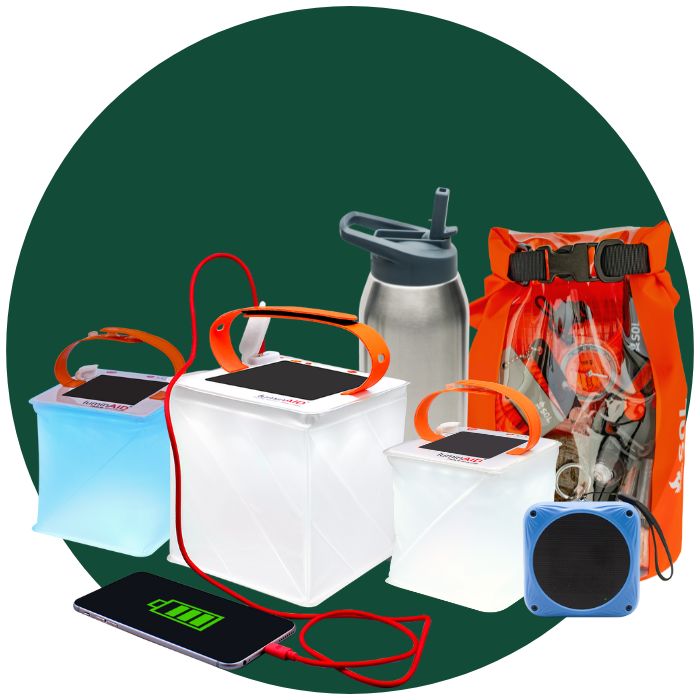
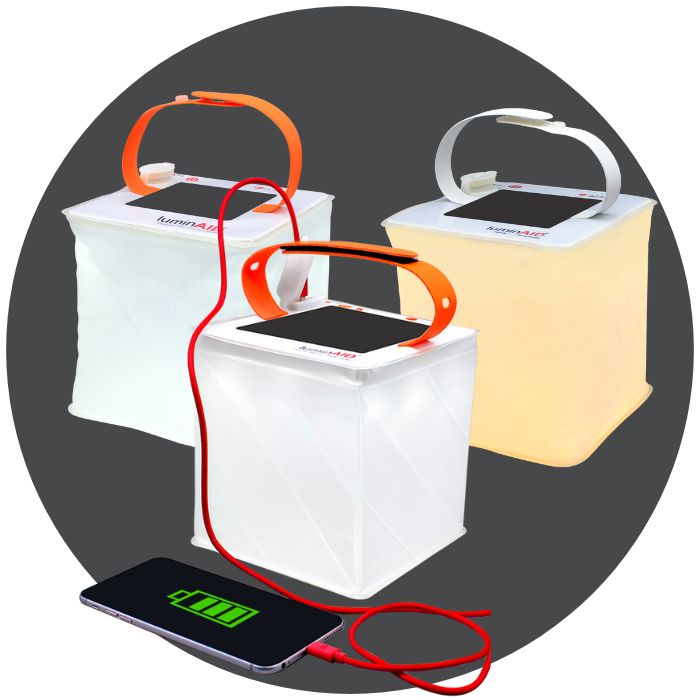
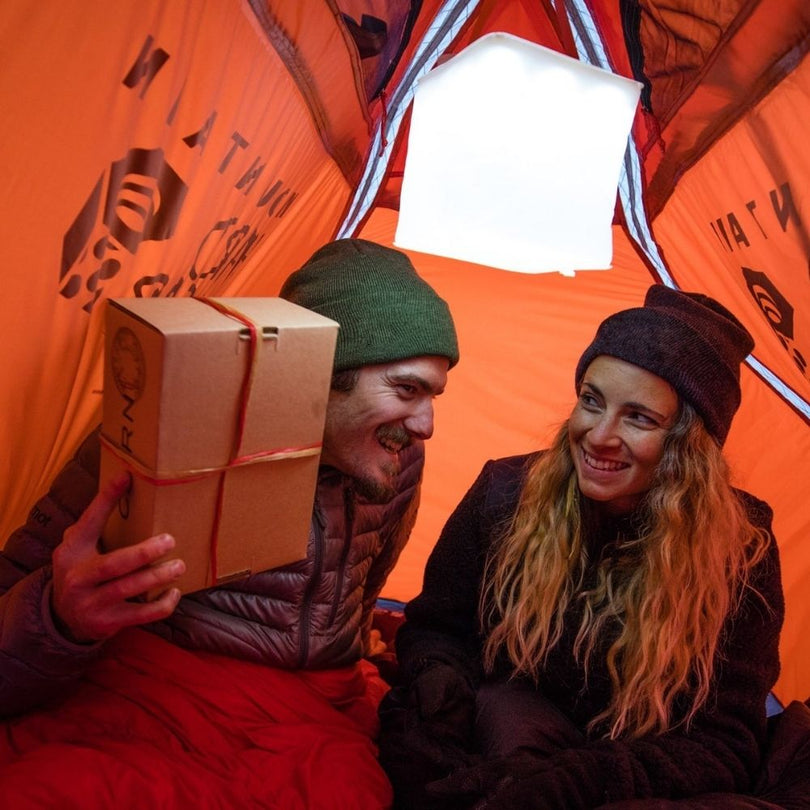
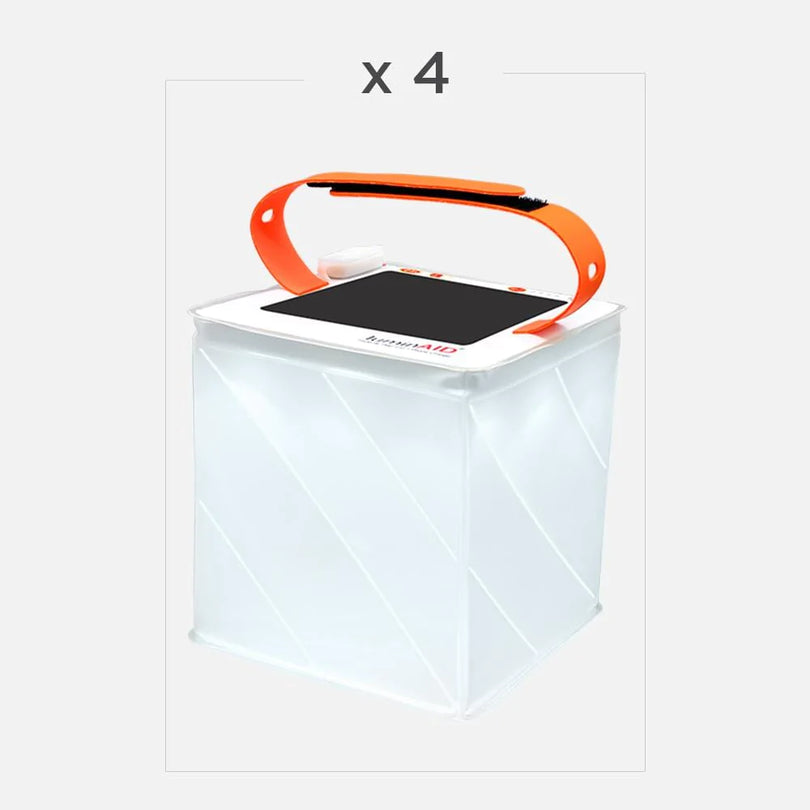
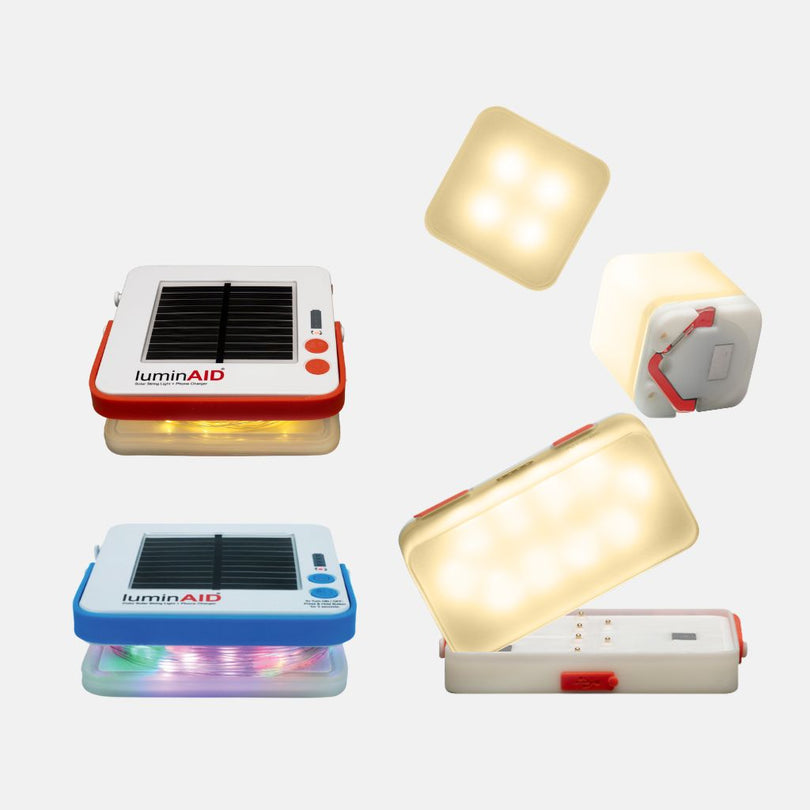
Lighting should cover more than one use case. An LED lantern can light a room, a headlamp keeps both hands free, and a solar string light can make a shared area usable without draining phone batteries. LuminAID's portable solar lanterns and 2-in-1 phone chargers fit that pattern because they provide light and USB charging in one item, which reduces the number of separate devices a family has to manage during a blackout.
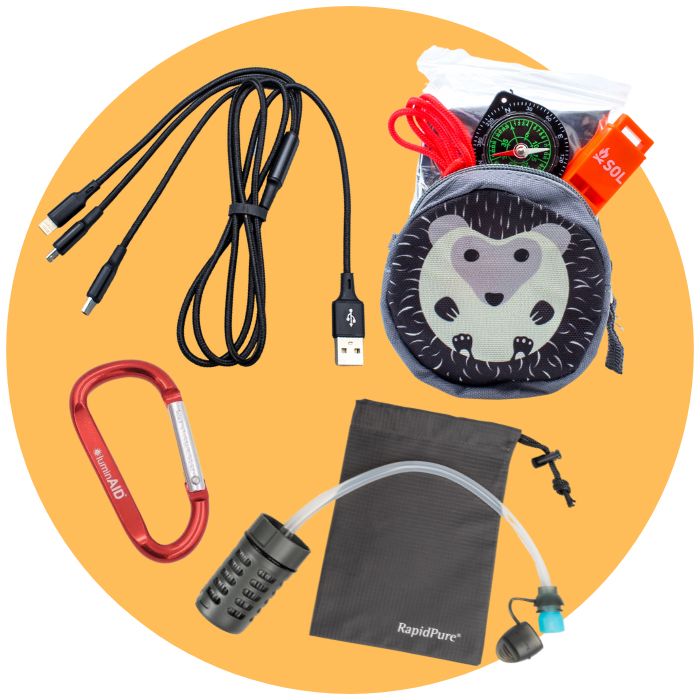
Phones need a separate charging plan. Count the number of people who will need regular access to a charged phone, then add room for a caregiver, a child's device, or a spare phone kept for emergency calls. Families that rely on phones for alerts, navigation, telehealth, and contact with relatives should keep a power bank and at least one alternate charging method, such as solar or auto charging, as public-safety guidance recommends.
Food protection belongs in the kit because refrigeration failure changes fast. An appliance thermometer, a cooler, and reusable ice packs help preserve the food window while the household decides whether the outage is short or turning into a longer event. USDA food safety guidance says a fully stocked refrigerator stays cold for about 4 hours, a full freezer for about 48 hours, or 24 hours if half full, and food exposed to 40°F (4°C) or higher for 2 hours or more should be discarded (USDA food safety).
Store, rotate, and test the kit
Maintenance matters more than the shopping list. Batteries should be checked on a schedule, power banks should be topped off regularly, and solar lights should be put in the sun before storm season so nobody learns in the dark that a battery is dead. The essential portable solar emergency light guide is useful because it shows how lightweight solar lighting can be staged with the rest of the household gear instead of being buried in a closet.
Keep the kit where everyone can reach it quickly, not just in the garage. One bin in the kitchen or mudroom works for many homes, and a smaller copy can stay in the car. Families that live with medical devices or older adults should also keep printed instructions, spare cables, and labeled chargers together so a helper can step in without searching through drawers.
Navigating the Outage Timeline From Hours to Weeks

A blackout changes character as it lasts. The first few hours are about preserving what you already have. By the first day, food, charging, and communication start to narrow. By the third day, fuel, water, and fatigue shape every decision. After a week, the outage is no longer just a household inconvenience, it is a planning problem with real limits. That is why a timeline works better than a generic checklist.
0 to 4 hours
The first move is simple, keep cold air inside and keep people informed. Do not open the refrigerator unless you have to, because a closed fridge holds temperature for only so long, and there is no reason to waste that window on unnecessary checking. Keep phones on low-power mode unless they are needed for alerts or family coordination, and use flashlight light sparingly instead of draining every battery at once.
Use this window to find out whether the outage is local or part of a wider event. A neighborhood trip can clear quickly, while a regional failure points to longer waits and more uncertainty. If the home depends on a medical device or a sump pump, the situation changes right away. A short outage can turn into a safety issue fast when electricity is tied to health or flood control.
4 to 24 hours
Food and communication move to the front of the line. If ice is available, move perishables into a cooler, especially after the refrigerator has been opened more than once. Shift the household into planned power use rather than casual use, because every phone charge and every light matters once the outage stretches. Public-safety guidance also supports charging devices early and using alternate charging methods before the grid or cell backup weakens.
This is usually when the hidden costs show up. Gas station pumps may stop working, ATMs may go offline, and routines that usually feel automatic start breaking down. If wildfire, flooding, or a hurricane is part of the picture, staying home may stop being the safest option. The right call depends on what is happening outside the house, not just whether the lights are still off.
24 to 72 hours
By the third day, the household is managing reserves instead of improvising. Water storage, fuel use, and a tighter lighting schedule matter because each choice has a trade-off. A generator, battery station, or solar setup becomes more than a convenience at this point. It can be the difference between keeping a few critical loads running and losing them altogether.
The home backup power guide is useful here because it helps households match power options to actual needs instead of buying gear that looks good but will not cover the important loads. For homes that may need a generator for uncertain utility power, the decision has to account for fuel, placement, and the loads that must stay on.
CISA's catastrophic outage study warns that long outages can trigger cascading failures, strained mutual aid, and supply-chain disruption, so the family should reassess whether the original plan still fits the conditions on the ground (CISA study). If temperatures are extreme, or if someone in the home cannot stay safe without powered equipment, relocation may be the better choice.
72 hours to 1 week
After a week without power, the question shifts from comfort to sustainability. Food loss, poor sleep, and stress start to wear down judgment, and the household needs a realistic plan for fuel, water, charging, and sleeping arrangements. That is also the point when alternate shelter, a neighbor with power, or a community support site may make more sense than trying to hold out at home.
The mistake to avoid is waiting for the grid to come back soon while the plan stops working. If the home cannot protect medication, keep occupants warm or cool enough, or maintain communication, the family should move before exhaustion and poor decisions pile up. Long outages force a choice between endurance and drift, and the better plan is usually the one that gives the household more room to act early.
Choosing the Right Backup Power and Lighting Solutions
The right backup system depends on what the load inventory said had to stay on. A small apartment with phone charging and light needs one answer, while a house with refrigerated medication and a sump pump needs another. The comparison below keeps the trade-offs clear.
| Solution | Best For | Runtime | Safety Considerations | Maintenance |
|---|---|---|---|---|
| Solar lanterns | Lighting, basic phone charging, compact kits | Renewable with sun access | No fuel, no carbon monoxide, quiet | Keep charged, test panels, store clean and dry |
| Portable power stations | Phones, radios, small medical or communication loads | Limited by battery capacity | Indoor safe, but must be sized correctly | Recharge regularly, store at healthy charge level |
| Gas generators | Whole-home or heavier loads | As long as fuel is available | Use outdoors only, manage carbon monoxide risk | Fuel storage, oil checks, periodic run tests |
| Battery banks | Phones, small accessories, quick support | Limited charge cycles | Indoor safe, silent | Refill often, rotate cables, check for swelling |
Solar lanterns make the most sense for extended outages when the goal is steady light with almost no maintenance burden. They don't need fuel, they don't create noise, and they avoid carbon monoxide risk, which makes them easy to stage in bedrooms, kitchens, and evacuation bags. LuminAID's home backup power guide fits into this decision point because it ties lighting and charging to real outage use, not just product specs.
Generators are still useful, but they demand discipline. Families that want a generator for uncertain utility power should think through placement, ventilation, fuel access, and noise before the outage begins, because running one safely requires more than plugging it in and hoping for the best. The key safety point is simple, generators belong outside, away from doors, windows, and vents, with carbon monoxide protection in place.
Portable power stations sit between those two extremes. They're a strong fit when the household needs indoor-safe backup for phones, radios, and a few critical items, but not a whole-house solution. Battery banks can fill small gaps, yet they should be treated as support gear, not the main plan.
Adapting Your Plan for Seasonal and Regional Risks
Season changes what fails first. Summer outages bring heat illness, faster food spoilage, and a bigger hydration burden, while winter outages raise the risk of frozen pipes and unsafe heating improvisation. Wildfire season adds smoke management and evacuation timing to the mix, which means the same kit has to behave differently depending on the region and the month.
In hot weather, the plan should prioritize shade, airflow, and drinking water before comfort. Fridges warm faster when doors are opened repeatedly, so summer households should use a cooler early if the outage looks long, not after the food has already been compromised. In cold weather, families should protect plumbing, layer clothing, and avoid using unsafe indoor heating sources.
Regional rule: the backup plan should reflect the most likely disaster, not the most convenient one.
Wildfire-prone homes need a ready evacuation path, clean air supplies where appropriate, and a go-bag that can move with the family instead of staying home with the generator. Coastal areas and storm corridors should pay closer attention to long-duration outages, while homes with wells, sump pumps, or medication refrigeration need to rehearse the exact point where staying home stops being reasonable. A seasonal calendar helps because it turns readiness into a habit, test the lights before storm season, refresh batteries before winter, and inspect charging gear before summer heat arrives.
Your Complete Pre During and Post Outage Action Plan
Before an outage, the family should check the kit, confirm who needs powered support, and make sure everyone knows the meeting point and out-of-area contact. During the outage, the household should protect food, conserve power, communicate early, and move to a safer location if medical, temperature, or evacuation triggers appear. After power returns, the family should inspect food, reset equipment carefully, and note what failed so the next plan is better than the last one.
A simple family communication plan should include a local meeting place, one out-of-area contact, and a backup method if cell service is down. That piece matters because the first outage lesson is often not about gear, it's about coordination. A laminated copy in the kit keeps the plan visible when the house is dark and stress is high.
LuminAID makes portable solar lanterns and 2-in-1 phone chargers that fit directly into a household outage plan, especially when light and charging need to work without outlets or disposable batteries. For families building a realistic kit for storms, blackouts, and travel, LuminAID is worth a look as one practical option for off-grid lighting and backup power.