

If you've ever dreamt of ditching the noisy generator and truly unplugging, your outdoor lighting is the perfect place to start. Making the switch to solar power is one of the simplest, most effective ways to create a bright, welcoming campsite without being tied to shore power. It’s all about gaining true off-grid freedom.
Why Solar Lighting Is a Game Changer for RVers
Picture this: you pull into a beautiful, remote boondocking spot after a long day on the road. Instead of fumbling around in the dark or shattering the peace with a loud generator, a simple flip of a switch does the job. Instantly, your campsite is bathed in a warm, inviting glow, powered completely by the sun.
This isn't some far-off dream. It's the reality for thousands of RVers who have discovered solar lighting. This move away from outlet dependency isn't just a trend, it's a smart, practical evolution in how people camp, thanks to modern solar and LED technology.
The Freedom of Self-Sufficiency
At its core, the appeal of solar lighting is freedom. Campers are no longer tethered to campgrounds with electrical hookups or forced to listen to the constant drone of a generator while trying to enjoy a quiet evening.
- Go Off-Grid for Longer: Solar power lets RVers stay out in the wild without constantly worrying about draining house batteries. This is a huge deal for boondockers who want to explore remote places for more than a night or two.
- Instant Ambiance: With portable solar string lights and lanterns, any functional campsite can become a personalized, cozy outdoor living room in minutes.
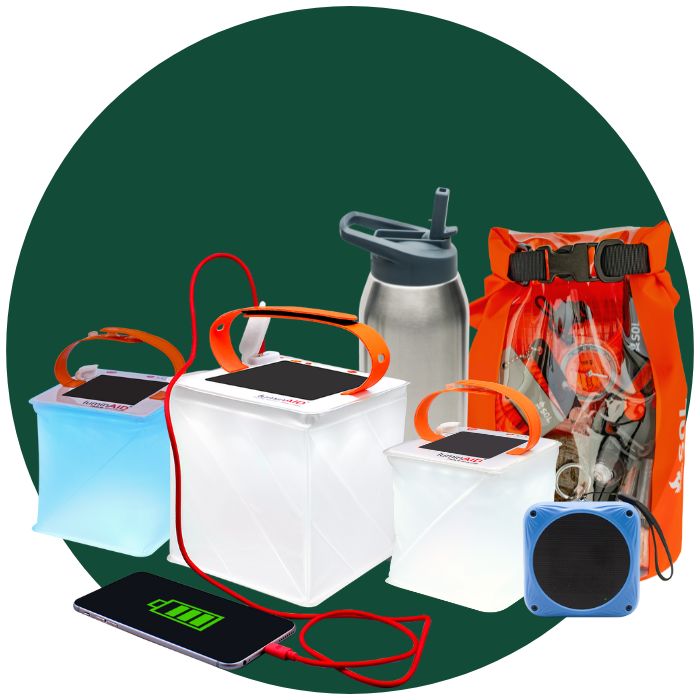
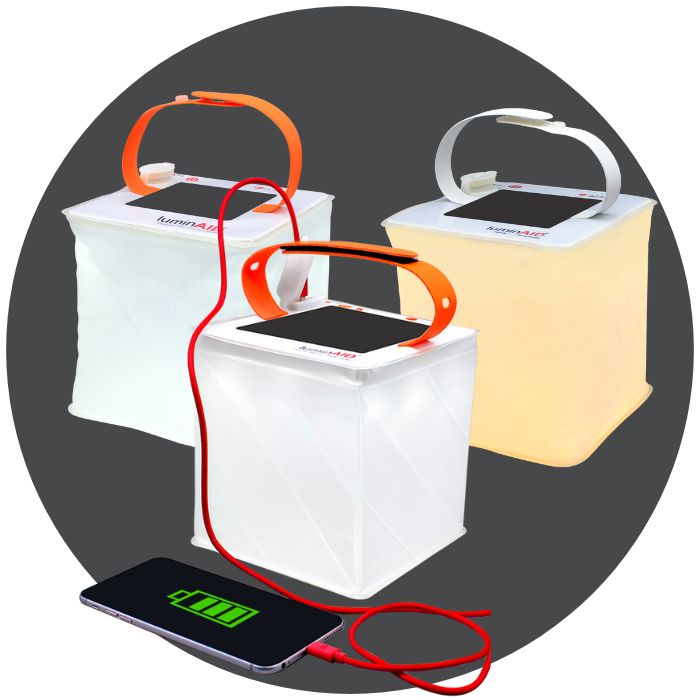
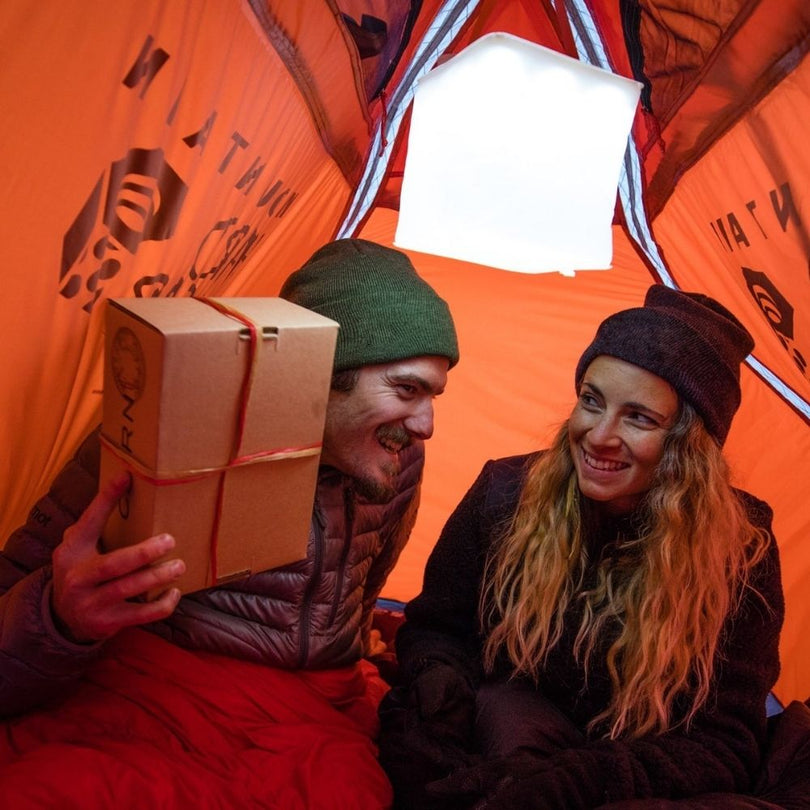
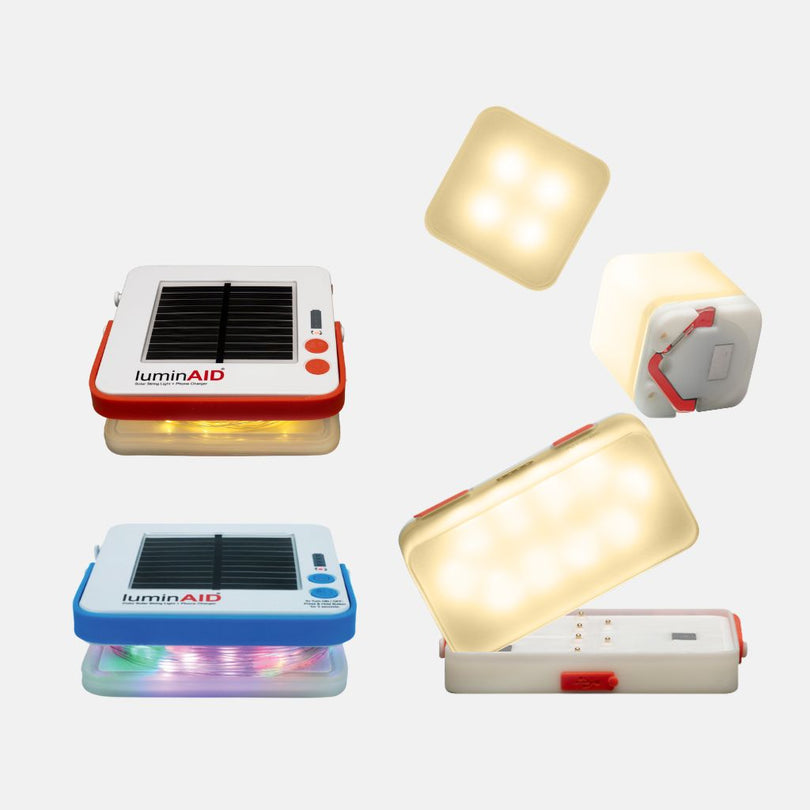
- Power in Your Pocket: Many modern solar lanterns, like the ones from LuminAID, also work as power banks. Phones and other small gadgets can be charged right from the light, which adds a fantastic layer of convenience and safety.
Choosing solar for RV lighting is a smart move that fits right in with other eco-friendly products that help you save money and become more self-sufficient on the road.
RV Lighting Quick Comparison Old vs New
It's amazing to see how far lighting technology has come. A quick look at the old vs. the new really highlights why so many RVers are making the switch to solar.
| Feature | Traditional Lighting (Incandescent/Halogen) | Modern Solar LED Lighting (LuminAID) |
|---|---|---|
| Power Source | RV battery, generator, or shore power | Built-in solar panel and rechargeable battery |
| Energy Efficiency | Low; drains batteries quickly | Very high; provides hours of light on a single charge |
| Portability | Often fixed or requires extension cords | Lightweight, packable, and completely wire-free |
| Setup Time | Can be cumbersome and require wiring | Instant; just turn it on |
| Environmental Impact | Higher energy consumption, generator noise | Silent, clean energy from the sun |
| Extra Features | Limited to providing light | Many models double as phone chargers and have multiple light settings |
The benefits are clear. Modern solar lights aren't just an alternative, they are a significant upgrade in almost every way, giving RVers more freedom with less hassle.
The real game-changer is reliability. Knowing there is a dependable light source that doesn't rely on the RV's main power system provides immense peace of mind, especially during unexpected power outages or when arriving at a site after dark.
This move toward generator-free camping is a big deal. The market for camping lights is expected to grow by $95.4 million between 2024 and 2029, driven by the explosion in RV ownership.
With over 11 million U.S. households now owning an RV, more and more campers are choosing lightweight, hassle-free solar solutions. Just upgrading to LEDs can slash campsite power use by 50-70%. That’s huge when nearly 70% of RVers admit to feeling "battery anxiety" on their trips.
To get a better idea of how to put these lights to use, check out our guide on solar lanterns for camping.
Choosing Your Perfect Campsite Lighting Mix
The best campsite setups are not lit by one harsh porch light. They create an atmosphere that feels both functional and inviting by layering different kinds of light. Think of it like setting the stage for an outdoor living room, each light has a job to do.
The trick is to think in layers: ambient, task, and security. This simple method means there will always be the right light for the moment, whether the evening calls for relaxing under the awning or cooking dinner after a long day of hiking.
The Three Layers of RV Outdoor Lighting
A great lighting system is all about combining different lights to cover all the bases. Here’s how this approach works for an RV setup.
- Ambient Lighting: This is the foundation, the light that sets the whole mood. Solar string lights are a go-to option here. Hung under the awning or around the edge of the site, they create a soft, warm glow that makes the whole space feel cozy.
- Task Lighting: For those times when clear visibility matters, while grilling, reading, or sorting gear, bright, focused light is essential. A powerful solar lantern on the picnic table or near the camp stove is perfect.
- Security Lighting: This layer is all about safety and a little peace of mind. Small, mounted LEDs are fantastic here. Motion-activated lights near the steps and storage bays help avoid trips and keep curious critters away, all without blasting the campsite with light all night. For wildlife that's more than just curious, having something like bear spray from a reputable brand like Counter Assault can be an important part of a safety toolkit, especially when boondocking in bear country.
Creative Installation for Maximum Impact and Style
Having the right lights is a great start, but how they are set up is what really gives a campsite its personality. This is where an RV’s exterior transforms from a simple parking spot into a stylish and functional outdoor lounge.
This is how RV outdoor lighting ideas come to life. It doesn't matter if the rig is a massive Class A or a nimble camper van, the right installation techniques make all the difference.
Damage Free Installation Techniques
An RV's awning is prime real estate for creating that perfect ambient glow, but the last thing anyone wants is to puncture that expensive fabric. Luckily, there are plenty of simple, damage-free ways to hang lights.
- Awning Track Clips: Most RV awnings have a built-in utility track running along the roller tube. Specialized clips slide right into this channel, giving secure anchor points for string lights, wind chimes, and other decorations.
- Outdoor Adhesive Hooks: High-quality, removable adhesive hooks (like the ones from 3M Command) are perfect for smooth, non-porous RV surfaces. They hold a surprising amount of weight and peel off cleanly when it’s time to hit the road.
- Magnetic Hooks: If the rig has steel surfaces, like a slide-out frame or bumper, strong magnetic hooks are incredibly handy. They offer instant, movable anchor points that can be repositioned in seconds.
Even with the best plans, setting up and tearing down camp can lead to the occasional scrape or cut. Keeping a good first-aid kit nearby is always a smart move. Excellent, compact options from brands like Adventure Medical Kits are perfect for stashing in an RV drawer.
Pro Tip: Layer your light! Use soft, ambient string lights for general atmosphere, a bright lantern for tasks, and a small motion-activated light for safety near the steps.
Strategic Placement for Function and Flair
Once the mounting methods are figured out, it’s time to think about placement. Go beyond simply draping a single strand of lights across the awning and start thinking like a designer.
A well-lit campsite is a safe campsite. Position lights to prevent accidents and make the space more usable after the sun goes down.
- Illuminate Your Slide-Outs: Use magnetic hooks or adhesive LED strips to add light under slide-outs. This not only creates a beautiful "underglow" effect but, more importantly, makes the edges of the rig visible so no one walks into them at night.
- Create a Lighted Path: Small solar-powered stake lights are perfect for marking a clear path from the main living area to the campfire or a guest's tent. It's a simple touch that prevents trips and adds a touch of class.
- Target Your Task Lighting: When grilling or cooking outside, position the task lantern to the side of the workspace, not directly above or behind. This simple trick stops shadows from falling across the work area and gets rid of annoying glare.
- Accentuate Your Steps: A small, motion-activated puck light attached to or near the RV steps is a non-negotiable safety feature. It provides just enough light to see where each step lands without being harsh or waking up the whole campground.
By combining these creative installation ideas, campsite lighting moves beyond basic illumination. The result is an experience that’s safer, more functional, and uniquely personal. For more inspiration, our article on using string lights for tents has some great tips that are just as useful for RVs.
Powering Your Lights the Off Grid Way

The best part about today's RV lighting isn't just the beautiful glow it casts on a campsite, it's how that lighting is powered. True off-grid freedom means lighting up a spot without ever needing to find an outlet. This is where quality solar gear with built-in batteries really makes a difference, even when the clouds roll in.
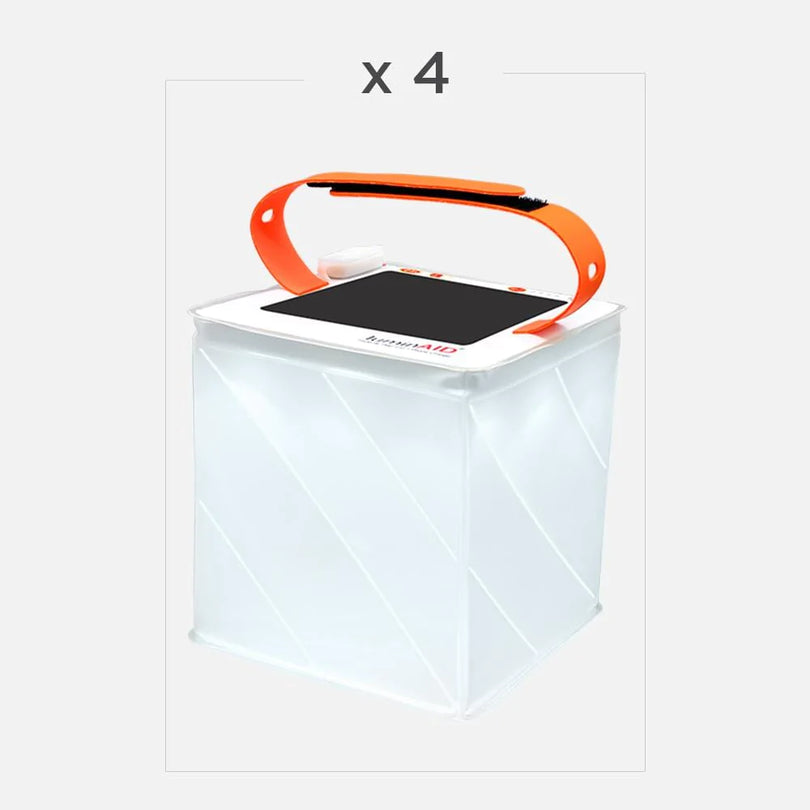
Think about it. Products like LuminAID’s Power Lanterns pack a solar panel, a battery bank, and a bright light into a single, compact unit. They charge themselves all day long and can even top off a phone, giving campers complete independence from the RV's electrical system.
Decoding the Specs for Real World Use
When shopping for solar lights, the technical specs can feel a bit overwhelming. Here’s what those numbers actually mean at the campsite, so it’s easier to pick gear that won’t leave anyone in the dark.
- Lumens (Brightness): This is simply a measure of light output. For general ambient lighting around camp chairs, 100-200 lumens is perfect. For cooking or other close-up tasks, a brighter light in the 150-300 lumen range is a better fit.
- Battery Capacity (mAh): Milliamp-hours tell you how big the "energy tank" is. A bigger number, like the 2000mAh battery in many 2-in-1 lanterns, translates to longer runtimes and enough spare juice to charge a phone.
- Runtime (Hours): This is simple, how long it lasts. Look for lights that offer 24+ hours on lower settings. That’s enough to get through the night and well into the next day.
This combination of features is a game-changer for the 11.2 million U.S. households with an RV. Modern solar lanterns can run for up to 48 hours and charge a phone, all in one packable device. With the residential outdoor lighting market growing at a 10.1% CAGR and IP67 waterproofing becoming standard, having reliable off-grid power is no longer a luxury, it’s an expectation.
Planning for a Week Off Grid
So, what if the plan is to boondock for a full week? An energy plan becomes everything. This is where having multiple, dependable power sources becomes non-negotiable. A sudden storm can knock out campground power or block the sun for a day, and preparation matters.
A reliable, rechargeable power source is more than a convenience, it’s a critical piece of safety gear. When unexpected events happen, knowing there is a light that works and can charge a phone, no matter what, is priceless.
For longer trips, charging speed also matters. The size of a solar panel directly affects how quickly it can recharge a battery. There is a full article that explains how a bigger solar panel can make a difference for a large battery pack. It’s worth a read to make sure lights are always ready for the next adventure.
Weatherproofing Your Gear for All Seasons

An RV is built to take on the elements, and outdoor lighting should be just as tough. Whether the trip includes a surprise downpour in the Pacific Northwest or dusty conditions at a desert campsite, the gear needs to perform. Weatherproofing isn't just a bonus feature, it’s essential for any reliable RV lighting setup.
The secret to picking durable lights is understanding IP ratings. This stands for Ingress Protection, and it’s a simple code that tells you how well a light is sealed against solids (like dust) and liquids (like rain). A light with an IP67 rating, for example, is completely dust-tight and can even be dunked in up to a meter of water without failing.
Safe Installation for Any Weather
It's not just the lights themselves, how they are installed is a huge part of staying safe. Always secure wiring with clips or zip ties to prevent it from becoming a tripwire, especially when it gets windy or wet. A loose cord can easily snag on people or gear, creating a totally avoidable risk.
It also helps to stick with lights that stay cool to the touch. LEDs are fantastic for this because they produce very little heat compared to old-school halogen bulbs. This is especially important for protecting an awning, since a hot light can easily damage or even melt delicate fabric over time.
Winter Trips and Emergency Preparedness
Cold-weather camping comes with its own set of challenges, but lighting does not have to be one of them. High-quality solar lights are designed to work even in freezing temperatures. Just look for models with robust batteries that hold their charge well, since cold can sometimes reduce battery efficiency.
Even with the best plans, stuff happens. It's always a good idea to pack a reliable insect repellent, like a spray from After Bite, for those unexpected mild-weather breaks when the bugs come out.
The real test of outdoor gear comes when the power unexpectedly goes out. A dependable, off-grid solar lantern instantly becomes a critical piece of emergency equipment, giving campers light and a way to charge a phone when all other sources fail.
The big push for energy efficiency is completely changing the outdoor LED lighting market. Modern energy-saving LEDs can cut power use by up to 80%, which is a game-changer for RVers who are carefully managing their battery banks. During major weather events that cause widespread outages, having reliable, off-grid lights is absolutely crucial for safety. You can read more about market trends in outdoor LED lighting to see where the industry is heading.
Your Top RV Outdoor Lighting Questions Answered
When you're dialing in that perfect campsite vibe, a few questions about RV outdoor lighting tend to pop up again and again. Getting these details right makes all the difference between a campsite that’s just functional and one that truly feels like home.
Let's clear up some of the most common things RVers ask.
How Many Lumens Do I Really Need for My Campsite?
This is the big one, and the real answer isn't about chasing the highest number. It’s about matching the light to the task at hand.
- For Ambience: To get that perfect, soft glow under the awning for relaxing in the evening, something in the 100-200 lumen range is plenty. This is where string lights shine.
- For Tasks: When grilling dinner, reading a book, or getting gear organized, a more focused light works better. A good lantern providing 150-300 lumens is perfect for this.
- For Area Lighting: Want to light up a larger social space for a group, maybe away from the fire? Look for a light source that can put out 400+ lumens.
The best approach is to bring a mix of lights, especially ones with adjustable brightness. That way, there is a lighting option ready for anything.
Can I Leave My Solar RV Lights Installed Permanently?
While some permanently mounted, hardwired lights are meant to stay on the rig, all portable lights need to be packed away before hitting the road. This goes for solar string lights, lanterns, and anything else not bolted down.
Taking a few minutes to pack them up protects them from bumpy roads, bad weather, and anyone who might want to grab them. The good news is that quality portable lights are built for this. A well-designed solar lantern or string light set should go up and come down in just a couple of minutes.
Will Solar Lights Actually Work in Winter or on Cloudy Days?
They sure can. Modern solar panels are far more efficient than older versions and can still pull in a charge even when it's overcast. Of course, direct sun is always best, but a cloudy day will not leave a campsite in the dark.
For winter camping, the best option is to choose lights with both a large battery and a USB-charging port. This hybrid approach makes it easy to top off the battery at home, so the campsite starts with a guaranteed full charge.
This is also a good time to make sure other off-season gear is packed, like a reliable bug repellent from a brand like After Bite in case of an unseasonably warm spell.
What Is the Best Way to Hang String Lights on My RV Awning?
Here’s the golden rule: never, ever puncture your awning fabric. It's an expensive mistake to make.
Instead, use awning clips that are made to slide right into the utility track on the awning roller. This is the safest and most secure method. Another great, damage-free option is to use strong, removable outdoor adhesive hooks.
At LuminAID, solar lanterns and string lights are designed to be durable, portable, and incredibly easy to use. That means less time spent fiddling with setup and more time enjoying a perfectly lit campsite.
Find the perfect light at https://luminaid.com.