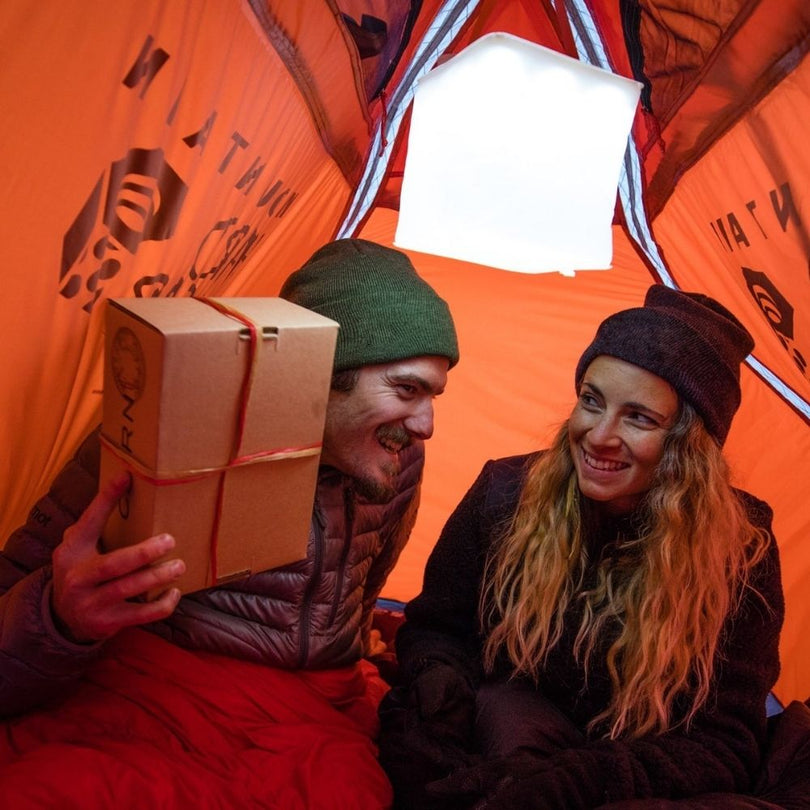



Most people start thinking about off-grid solar in one of two moments. The power goes out after a storm, or a trip is coming up where the nearest outlet is miles away. In both cases, the question is the same. What kind of off grid solar power kit is enough?
That question gets confusing quickly because the same phrase can describe a tiny phone charger, a solar lantern, an RV setup, or a full home system with batteries, panels, and an inverter. The good news is that the basics stay the same. Sunlight comes in, electricity gets stored, and devices draw power back out. The main difference is scale.
Demand for that kind of personal energy independence has grown quickly. In the second half of 2022, global sales of off-grid solar energy kits reached 5.2 million units, a 20% increase from the first half of the year, according to GOGLA's sales and impact report for H2 2022. That includes lanterns, multi-light systems, and solar home systems. It's a wide category because real needs sit on a wide spectrum.
Table of Contents
The Quest for Power Beyond the Grid
A blackout changes priorities in minutes. At first, people look for flashlights and phone chargers. An hour later, they start thinking about refrigerated food, medications, fans, radios, and whether the outage will last through the night. The same mental shift happens at a remote campsite. Convenience stops being the point. Reliable power becomes the point.
That's why off-grid solar appeals to so many different people. Campers want quiet power without fuel. RV owners want more freedom to park away from hookups. Homeowners want backup when the grid fails. Cabin owners want electricity where utility lines don't make sense.
The market reflects that broad appeal. The global off-grid solar kit market was valued at USD 3.9 billion in 2024 and is projected to reach USD 10.2 billion by 2033, with the Asia Pacific region accounting for about 42% of total revenue in 2024, or roughly USD 1.64 billion, according to Dataintelo's off-grid solar kit market report.
Why people look beyond outlets
Some people want resilience. Others want mobility. Others just want fewer single-use batteries and less dependence on a gas generator. Those motivations look different on the surface, but they all lead to the same toolset.
Practical rule: The right off grid solar power kit isn't the biggest one. It's the one that covers the loads that matter most, for the amount of time that matters most.
A family preparing for storm season might care about light, phones, and a small radio first. An overlander may care about a compressor fridge and navigation gear. A rural homeowner may care about the refrigerator, well pump, and basic lighting circuits.
The real advantage
Off-grid power gives people options. It lets them decide which comforts stay available when infrastructure doesn't.
That doesn't mean every setup has to power a whole house. A compact light-and-charging kit still counts. So does a larger battery-and-panel system in an RV. The useful way to think about solar isn't “small versus serious.” It's “what problem needs solving?”
What Exactly Is an Off-Grid Solar Power Kit
An off grid solar power kit is a self-contained electricity system that can generate power, store it, and deliver it without relying on the utility grid. It usually combines four core parts: solar panels, a charge controller, a battery, and an inverter.
A simple mental model helps. Imagine it as a rainwater setup for electricity. The panels catch the energy, the controller manages the flow, the battery stores the supply, and the inverter makes it usable for common household devices.

What makes it different from grid-tied solar
A grid-tied system works with utility power. If it doesn't make enough energy at a given moment, the home can draw from the grid. An off-grid system doesn't have that fallback. It has to be sized for real conditions, including nights and poor weather.
That's where beginners often get tripped up. They look at panel wattage first, when battery storage and load planning are usually what determine whether the system feels dependable.
What comes in a kit
The word “kit” can mean different things depending on size and purpose:
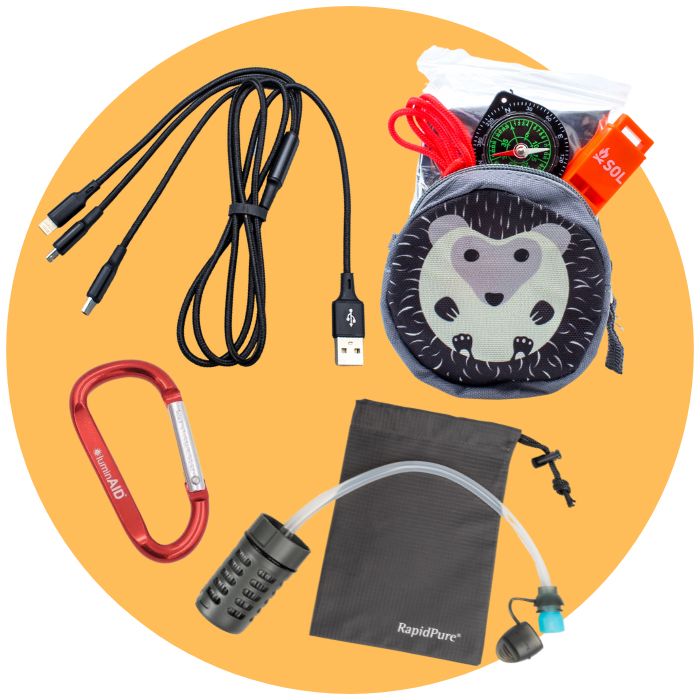
- Small personal kits might include a folding panel, charging cables, and built-in lighting or USB output.
- Portable power kits often pair panels with an all-in-one battery station.
- Fixed home or cabin kits usually include separate components that need installation and wiring.
An off-grid kit isn't one product category with one shape. It's a family of systems built around the same job, making and storing power away from the grid.
For someone charging a phone at camp, that family starts small. For someone running split-phase home loads, it gets much more technical. The underlying idea is still straightforward. Produce electricity when the sun is available. Save it for when it isn't.
That's also why off-grid systems show up in preparedness planning. A lantern, a battery bank, and a larger home backup system aren't competing ideas. They're layers. Each one covers a different problem.
The Four Pillars of an Off-Grid Solar System
Every off-grid setup, from a tiny emergency kit to a cabin system, depends on the same four building blocks. Once those parts make sense, the whole category becomes far less intimidating.
Early in the learning process, many readers find it useful to compare these parts with the basics in this solar power charger guide, then translate those ideas into larger systems.

Solar panels as the collectors
Solar panels are the harvest side of the system. They take sunlight and turn it into direct current, or DC electricity.
The easiest analogy is a set of buckets in the rain. Bigger buckets catch more water. Better sun catches more energy. But buckets alone don't guarantee supply at night. They only collect while conditions are right.
For camping, that might mean a compact panel topping up a battery pack during the day. For an RV or cabin, it means a roof or ground array gathering enough energy to refill batteries after overnight use.
Charge controller as the traffic cop
The charge controller sits between panels and batteries. Its job is protection and control. Without it, batteries can get overcharged or stressed.
Sizing starts to matter. For a 400W solar array on a 12.8V battery, the system requires about 31.25A of current. With a 25% safety margin, a 35A MPPT charge controller is the correct choice, according to this charge controller sizing walkthrough on YouTube.
That example matters because it shows how off-grid design works in practice. The controller can't be guessed at. It has to match the electrical reality of the array and battery.
A reader planning a rolling setup can pair that with this ultimate RV battery buyer's guide to better understand battery options before buying the controller around them.
Battery bank as the reservoir
The battery bank stores power for later use. This is the system's water tank.
A tiny kit may have a built-in battery that runs lights and charges a phone. A larger RV system may store enough energy for fans, laptops, and a fridge overnight. A house system may need enough stored energy to cover critical circuits until the next strong charging window.
Battery questions usually matter more than panel questions because storage determines how the system feels after sunset. A kit with plenty of charging ability but too little storage will still feel unreliable.
Small systems fail from empty batteries more often than from lack of panel wattage on a sunny afternoon.
Inverter as the translator
Batteries store DC power, but most household appliances use AC power. The inverter handles that translation.
Some devices, such as USB-powered electronics, can bypass a large inverter entirely. Others, such as kitchen appliances, refrigerators, or pumps, depend on it. That's why inverter size should follow the loads, not the other way around.
A phone charger has a tiny appetite. A coffee maker or induction plate has a very different one. Off-grid buyers often make better choices when they list appliances first and choose the inverter second.
Sizing Your System From Backpacks to Backups
Sizing is where interest turns into a workable plan. The central question isn't “How big a solar kit should someone buy?” The better question is “What must this system power, and for how long?”
That shift changes everything.
The basic math that matters
The simplest planning formula is:
Watts × hours of use = watt-hours
If a device draws modest power but runs for many hours, it can use more daily energy than a short burst appliance with a higher wattage. This is why a fan or fridge often matters more than a phone.
Readers new to battery planning often find it useful to review how to calculate watt-hours of a battery before shopping. That one concept makes panel, battery, and runtime claims much easier to compare.
Micro-grid for camping and emergency bags
A backpack or emergency tote is the smallest version of off-grid thinking. The loads are usually simple:
- Lighting: Camp tasks, tent lighting, or outage lighting
- Phone charging: Communication, maps, weather alerts
- Small electronics: GPS units, rechargeable headlamps, radios
In this category, portability matters more than maximum output. People aren't trying to recreate household power. They're trying to keep essential functions alive with the least weight and fuss.
A useful preparedness setup often pairs solar charging with non-power gear. Adding a compact first-aid kit from Adventure Medical Kits rounds out the same grab-and-go mindset. Light, power, and medical basics solve very different problems, but they belong in the same planning conversation.
A camping kit succeeds when it's simple enough to use every time, not when it looks impressive on paper.
Mobile grid for RVs and vans
RVs and vans are where many buyers first outgrow small gadgets. They need a system that can support recurring daily loads, not just emergency charging.
Below is a planning example that shows the method.
| Appliance | Power (Watts) | Hours of Use/Day | Daily Energy (Wh) |
|---|---|---|---|
| Mini-fridge | Varies by model | Regular cycling use | Daily energy depends on model and ambient temperature |
| Roof fan | Varies by model | Evening and overnight use | Daily energy depends on runtime setting |
| Laptop | Varies by charger and use | Work or entertainment sessions | Daily energy depends on charging pattern |
| Phone charging | Varies by device | Short charging windows | Usually a modest share of total use |
| LED lights | Low draw | Several evening hours | Often small compared with cooling loads |
The table is intentionally qualitative because actual appliance labels differ widely. That's the point. Two RVs can look similar and have very different electrical needs depending on fridge type, work habits, climate, and cooking choices.
For readers comparing those loads room by room, determining electrical capacity for new appliances is a helpful companion resource because it frames load calculation in practical terms instead of abstract theory.
Home grid for backup and full off-grid living
A home system changes the stakes. Refrigerators, freezers, sump pumps, well pumps, routers, medical devices, and lighting circuits all create a bigger planning burden. At that scale, voltage choice matters too.
A standard 5kW off-grid solar kit for a home typically requires a 48V battery system with 10–20kWh of storage to sustain loads overnight. Using a lower voltage like 12V would create excessive current, requiring thick and expensive cables, as shown in this 48V off-grid kit example from Sungold Power.
That's one of the most important scaling lessons in off-grid solar. Small systems can live comfortably at lower voltages. Whole-home systems usually can't. The current becomes too high, the cable demands become awkward, and efficiency suffers.
Home buyers also need to separate backup from autonomy. Backup means covering selected essentials during outages. Full autonomy means the system supports living without grid support for extended periods. Those are not the same design challenge.
A family that wants lights, phones, and refrigeration during outages may need a manageable system. A family trying to live year-round off-grid with electric-heavy habits faces a much bigger project.
Portable vs Fixed Kits Which Is Right for You
The biggest buying fork usually isn't panel brand or battery chemistry first. It's form factor. Should the buyer get a portable all-in-one system or build around fixed components?

Where portable kits shine
Portable kits work well when the top priorities are simplicity, mobility, and low commitment. They're common for:
- Camping and tailgating: Easy transport and fast setup
- Emergency preparedness: Store-ready systems for outages
- Short trips: Power for lights, phones, laptops, and small gear
A portable setup usually asks less of the user. Plug in the panel. Charge the battery unit. Run the devices. That simplicity is a real advantage for families, occasional campers, and anyone who doesn't want to wire a system from scratch.
Readers comparing small outdoor-focused options can also skim the best solar power for camping to see how portability and runtime trade off in real use.
Where fixed kits take over
Fixed kits win when power demand is steady, larger, or expected to grow. They're a better fit for cabins, full-time RV use, workshops, and homes that need meaningful backup.
They also offer something portable units rarely match well. Repairability and customization. If one component needs replacement, the whole system doesn't necessarily get sidelined.
The caution is that fixed systems punish vague planning. Many beginner guides miss seasonal reality. True year-round energy autonomy in colder climates often requires 3-5 days of battery storage and 40-60 kWh of capacity, which can cost $10k–$30k, according to Shop Solar Kits' off-grid solar FAQ. That's far beyond what many people picture when they first hear “DIY off-grid.”
Portable kits are often best for convenience. Fixed kits are often best for commitment.
That doesn't mean one is “better.” It means they solve different problems. A family preparing for blackouts may be perfectly served by a portable setup plus smaller personal lights. A property owner trying to run pumps, refrigeration, and daily household loads needs a fixed design with careful seasonal planning.
The mistake is expecting a portable station to behave like a whole-house system, or expecting a bargain fixed kit to deliver winter autonomy without serious storage.
Installation Maintenance and Safety Essentials
Off-grid systems reward careful setup and punish shortcuts. Even small systems deserve attention to wiring, ventilation, weather exposure, and overcurrent protection. Larger systems deserve professional review at minimum, and often professional installation.
When DIY makes sense
DIY works best when the system is small, low-voltage, and clearly documented. A portable panel charging a self-contained battery unit is one thing. A home battery bank with inverter wiring is another.
Homeowners who want a broader grounding in residential electrical decisions may benefit from this ultimate homeowner electrical guide. It helps frame when a project stays in the comfort zone and when licensed help becomes the safer route.
A good rule is simple. If the project involves permanent home wiring, high-capacity battery banks, or uncertainty about code and protection devices, it's time to bring in a qualified electrician.
A simple maintenance rhythm
Solar gear isn't maintenance-free, but it is manageable when checked regularly.
- Clean panel surfaces: Dust, pollen, and debris reduce collection.
- Inspect cable runs: Look for abrasion, loose fittings, or weather damage.
- Check mounting hardware: Wind and vibration can loosen fasteners over time.
- Review battery behavior: Sudden drops in runtime usually signal a problem worth investigating.
- Confirm ventilation: Batteries and power electronics need appropriate operating conditions.
A seasonal walkaround is often enough for a small portable setup. A larger fixed system deserves a more disciplined checklist and log.
Safety rules that deserve respect
DC electricity can be deceptive because the system may look quiet and harmless. It isn't. Incorrect fusing, poor cable sizing, and rushed connections can damage equipment and create fire risk.
The earlier charge-controller example shows why detail matters. For a 400W array on a 12.8V battery, the selected controller size needs that safety margin because solar conditions can spike output. Matching components properly isn't optional.
Preparedness also works better when power planning sits beside general emergency planning. A blackout kit should include light, charging, first aid, weather-ready clothing, and shelter basics. Outdoor emergency gear from Survive Outdoors Longer fits naturally into that wider approach.
A solar kit is part of preparedness. It isn't the whole preparedness plan.
Your Off-Grid Buying Checklist and Starting Small
The smartest buyers usually don't start with product catalogs. They start with questions.

The checklist that keeps decisions grounded
- Know the job: Is the system for camping, an RV, outage backup, or full off-grid living?
- List the loads: Write down what must run, not what might be nice someday.
- Estimate runtime: A phone for a weekend and a refrigerator through an outage are different problems.
- Choose the form factor: Portable is easier. Fixed is stronger and more scalable.
- Respect budget reality: The cost of a complete off-grid solar system can range from a few thousand dollars for a small setup to over $30,000 for a system capable of powering an entire home, according to Off Grid Source's guide to off-grid solar systems.
- Plan for real use: Weight, storage space, weather, repairability, and ease of setup matter as much as specs.
For many people, the best first step isn't a roof full of panels. It's a dependable small solar light or charger that gets used often, lives in an emergency kit, and proves its value before a bigger purchase ever happens.
That approach builds skill without forcing a huge commitment. It also turns “off-grid” from a complicated dream into a practical habit.
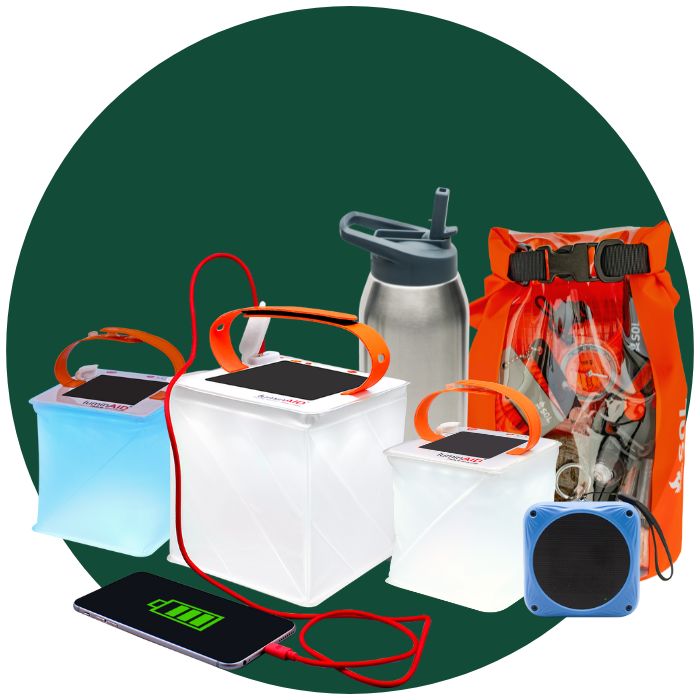
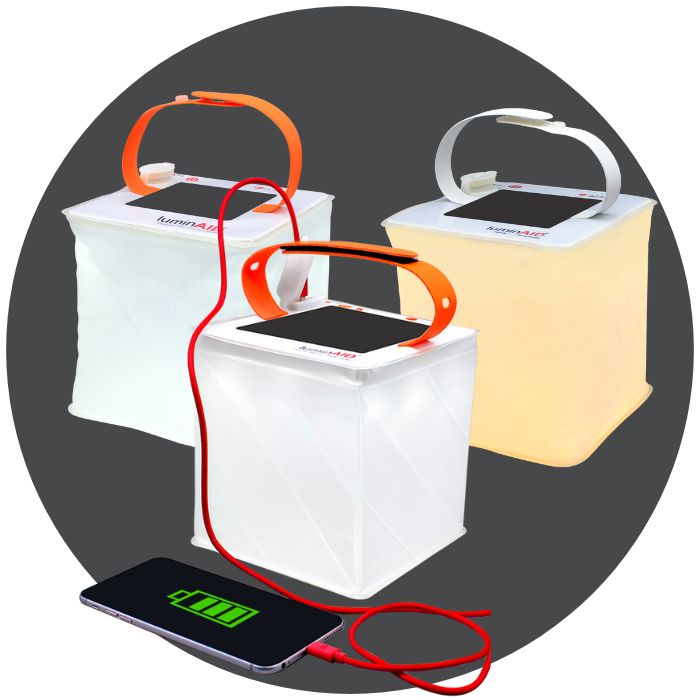
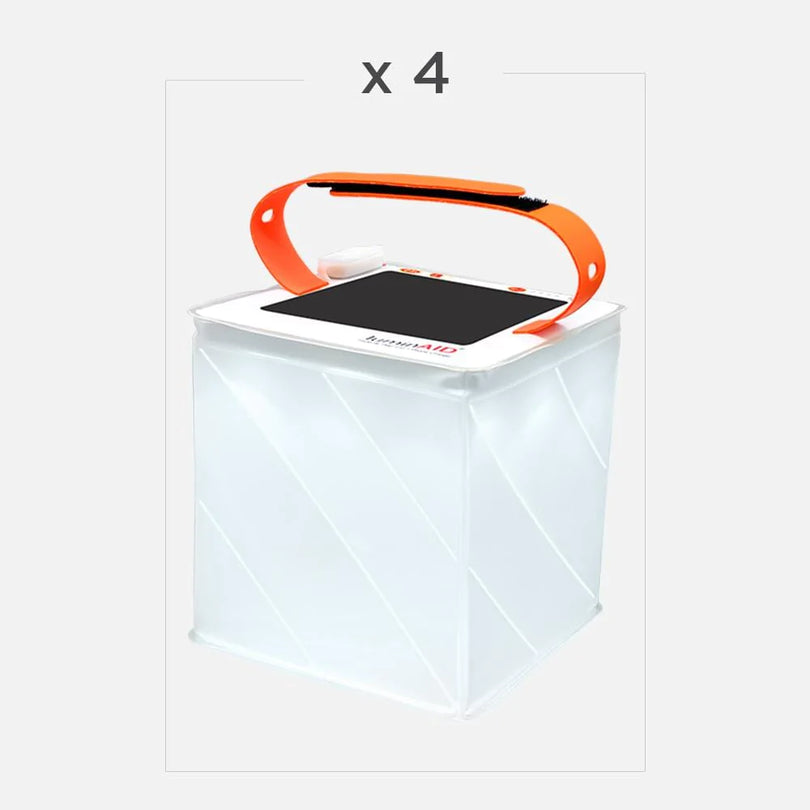
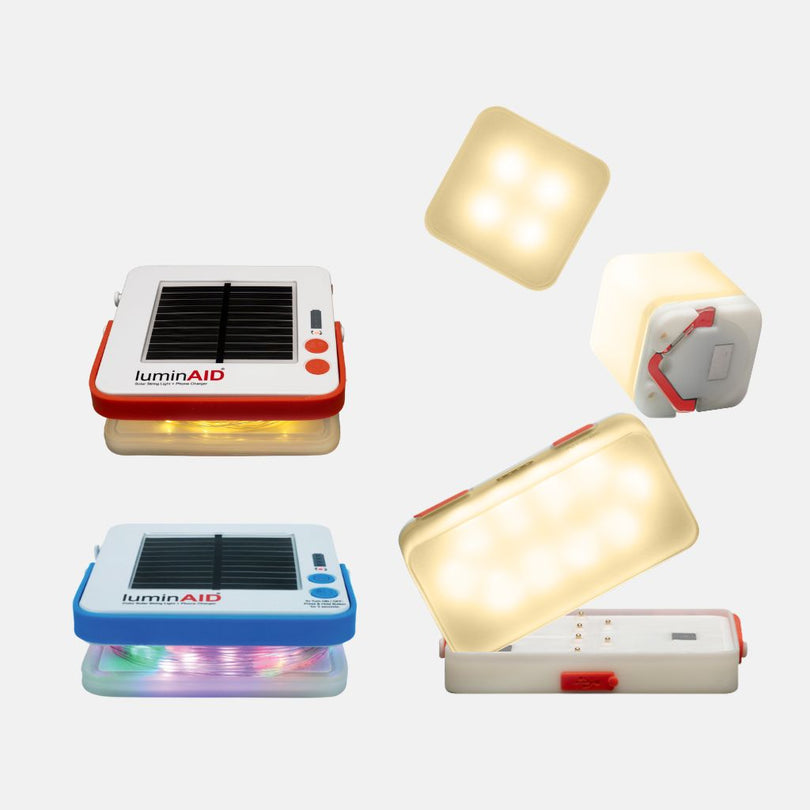
LuminAID makes that first step easy with portable solar lanterns and 2-in-1 phone chargers built for camping, emergency kits, power outages, and everyday backup. Readers who want a reliable, low-barrier entry into off-grid power can explore LuminAID for packable lighting and charging tools that fit naturally into preparedness plans.