
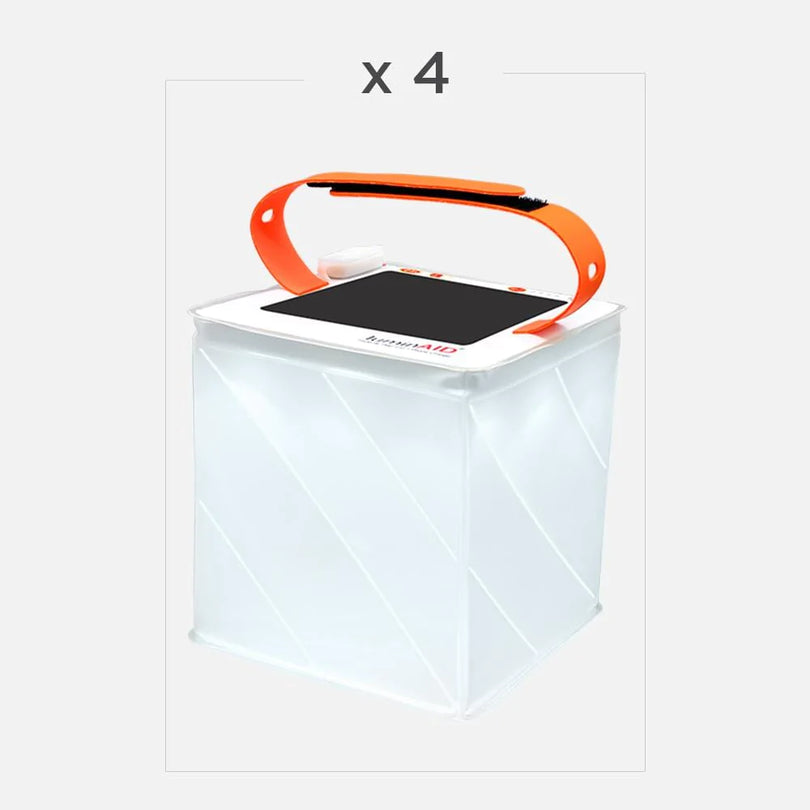

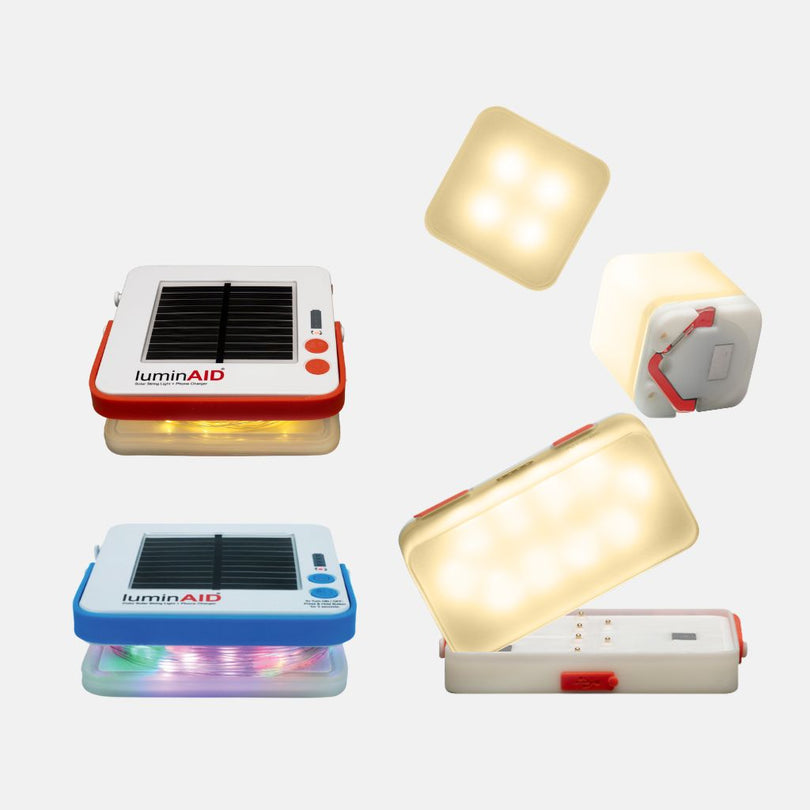


Picture this: you're days into a backcountry trip, but your GPS and phone are still at 100%. That’s not magic; it’s the power of the sun, harnessed by a portable solar power charger. Think of it as your own personal power plant, one that fits right in your backpack and keeps your essential gear running, no matter how far you are from an outlet.
Your Guide to Portable Solar Power Chargers
Being able to generate your own electricity off-grid is a total game-changer, whether you're deep in the wilderness or dealing with a power outage at home. A solar power charger is a brilliant all-in-one device that pairs photovoltaic (PV) panels, which capture sunlight, with a built-in battery to store that energy for later.
This stored power is then ready to go, charging up your phone, tablet, GPS, and other USB devices whenever you need it. It's a simple idea, but it’s made these chargers a must-have piece of gear for everything from multi-day hikes to just hanging out in the backyard. You’re no longer tied to a wall socket or forced to guess how many heavy power banks you’ll need.

Why Solar Chargers Are Essential Gear
The real value of a solar power charger goes way beyond convenience. For anyone who loves the outdoors, it’s a critical piece of safety equipment that keeps navigation and communication tools online in remote spots. For homeowners, it’s a vital part of any emergency kit, guaranteeing you have light and a way to stay connected when the grid goes down.
A reliable source of off-grid power is a cornerstone of modern self-sufficiency. Having a solar power charger in your emergency kit means you can keep your family connected and informed when traditional power sources fail.
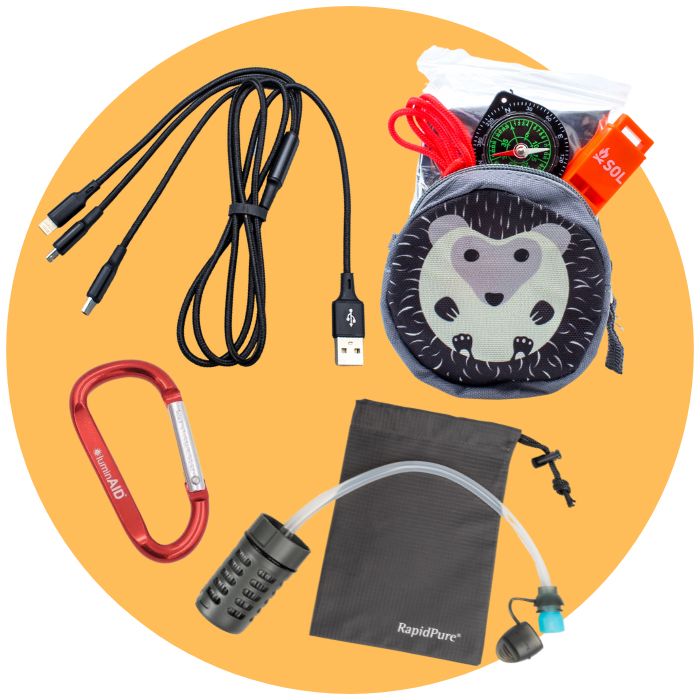
This guide is designed to walk you through everything you need to know, from picking the right solar charger to using it effectively. We'll cover how they work, which specs really matter, and how to make one a seamless part of your gear. Many experienced adventurers pair their power sources with other specialized gear, like first-aid supplies from Adventure Medical Kits or water filters from RapidPure Water, to build a complete preparedness system.
Understanding these devices prepares you for:
- Outdoor Adventures: Keeping your GPS, headlamp, and phone powered during camping, hiking, or boating.
- Emergency Situations: Providing critical light and communication during hurricanes, blackouts, or wildfires.
- Everyday Convenience: Offering a sustainable way to charge devices in your backyard, at the park, or on the road.
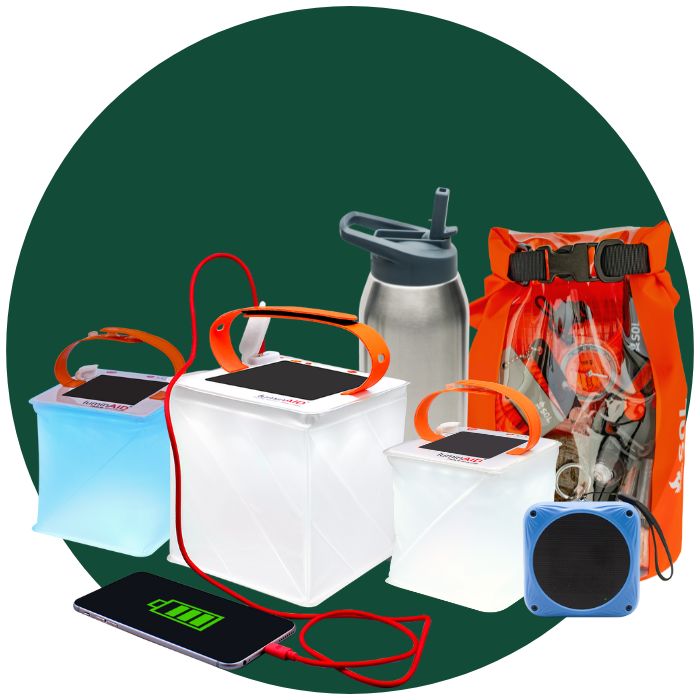
Innovative products, like LuminAID’s 2-in-1 Power Lanterns, take this a step further by combining reliable lighting and device charging into a single, waterproof, and packable unit. As we dig in, you'll get the confidence you need to choose the solar charger that’s a perfect fit for you.
A solar power charger might look simple, but what it does is pretty incredible: it turns pure sunlight into power for your gadgets. The magic behind it all is a process called the photovoltaic (PV) effect.
Think of it this way: at the core of a solar panel, you have special materials—usually silicon—that are full of tiny particles called electrons. These electrons are just sitting there, waiting for a job.
When sunlight hits the panel, its photons (which are basically particles of light) slam into those electrons. This impact gives the electrons a jolt of energy, knocking them loose and getting them to move. This flow of moving electrons is what we call an electrical current—the very power your devices need to charge.
Once that current is flowing, it needs a place to go. In a solar power charger, the electricity is directed from the panel straight into a built-in battery. The battery acts like a reservoir, collecting and storing all the solar energy as it's generated. This means you have power ready to go, even long after the sun has set.
Understanding Solar Panel Types
Not all solar panels are the same, and the type used in your charger makes a big difference in how well it performs, especially when you're off-grid. The two main types you’ll run into are monocrystalline and polycrystalline.
- Monocrystalline Panels: These are the high-performers. Made from a single, pure crystal of silicon, their uniform structure is super efficient at turning sunlight into electricity. This means they generate more power from a smaller surface area and work better on overcast days. You can spot them by their dark, even color and rounded corners.
- Polycrystalline Panels: These panels are made by melting down multiple silicon fragments. While this process is cheaper, it makes them slightly less efficient. They usually have a marbled, bluish appearance. They get the job done in bright, direct sun, but their performance tends to drop more than monocrystalline panels when it gets cloudy.
For a portable solar power charger, where you need to squeeze every bit of power from the sun you can get, monocrystalline panels are almost always the better choice. They give you the best shot at capturing energy, whether you’re under a bright sun or a cloudy sky.
Key Takeaway: A panel’s efficiency is all about how quickly it can charge its battery and your gear. A more efficient panel means more power, faster—which is exactly what you need when you're depending on the sun.
The Importance of System Design
The real secret to a great solar power charger isn't just the panel or the battery—it's how they're designed to work together. With an all-in-one unit like a LuminAID Power Lantern, the panel, battery, and outputs (both the light and the USB port) are engineered to be a perfectly matched system.
This integrated approach makes sure the power from the panel gets stored in the battery with minimal energy loss. A tiny internal brain, called a charge controller, manages the flow of electricity to protect the battery from overcharging and deliver a safe, steady charge to your phone or GPS. To get the most out of your portable solar power charger, understanding the factors that can help to increase solar panel efficiency is crucial for optimal energy capture.
In the end, turning sunlight into electricity is a journey that starts with a photon and ends with your phone coming back to life, miles from the nearest outlet. By understanding the whole process—from the PV effect to panel types—you'll know exactly what to look for in a solar charger that will keep your adventures powered.
Decoding Solar Charger Specs and What They Mean
Choosing the right solar power charger can feel like trying to read a foreign language. With terms like wattage, mAh, and USB-PD, it’s easy to get lost in the technical details. But understanding these numbers is the key to finding a charger that actually works for you out in the wild.
Think of it this way: buying a solar charger is like buying a car. You wouldn't pick one without knowing its engine size or fuel tank capacity, right? The same logic applies here. The specs tell you everything about a charger's power, storage, and speed. Let's break down what these critical numbers really mean for you.
This simple flowchart shows how a solar power charger turns sunlight into usable power for your devices.

As you can see, the process flows from the panel capturing sunlight to converting it into electricity. That power can either charge your phone directly or get stored in the internal battery for later.
Solar Charger Specs at a Glance
Navigating the tech specs is the first step to finding a reliable solar charger. This table breaks down the most important numbers and translates them into what you actually get on a camping trip or during an emergency.
| Specification | What It Means for You | What to Look For |
|---|---|---|
| Panel Wattage (W) | The "engine" of your charger. Higher wattage means faster solar charging for the internal battery. | 5W for basic use; 15W or more for quicker, more reliable charging in variable conditions. |
| Battery Capacity (mAh) | Your "fuel tank." This is the total energy stored for charging your devices when the sun isn't out. | 5,000mAh for a single phone charge. 10,000mAh+ for weekend trips or multiple devices. |
| USB Output / PD | The speed at which the charger sends power to your devices. | Standard USB-A (5-12W) for basic charging. USB-C with Power Delivery (PD) for fast-charging modern phones (18W+). |
Think of these three specs as a balancing act. You need to find the right combination of panel size, battery storage, and charging speed that fits how you plan to use it.
Panel Wattage: The Engine Size
The first number to look at is panel wattage (W). This is the "engine size" of your solar charger, measuring how much power the panel can generate under ideal, sunny conditions. Simply put, a higher wattage means the panel can generate electricity faster.
For example, a 5W panel will charge the internal battery much slower than a 15W panel. If your goal is to quickly top off devices while hiking in direct sun, a higher-wattage panel is essential. Keep in mind, higher wattage often means a larger, heavier panel, so there's always a trade-off with portability.
Battery Capacity: The Fuel Tank
Next up is battery capacity, measured in milliampere-hours (mAh). Think of this as your charger's "fuel tank." It tells you how much energy the built-in battery can store when it's full. The higher the mAh, the more times you can charge your devices.
When you're packing for extended trips, it's wise to think beyond just power. A good solar charger is a cornerstone of your kit, but don't forget other essentials like insect repellent from brands such as Natrapel. Building a complete kit ensures you're ready for anything the trail throws at you.
Output Ports and Charging Speed
Finally, look at the output ports. These are the USB ports you plug your devices into, and their type and power determine how fast your gadgets will charge.
- USB-A: The classic rectangular port you know and love. Standard USB-A ports typically deliver around 5W to 12W of power, which is fine for basic charging.
- USB-C: The newer, oval-shaped port. Many USB-C ports support Power Delivery (PD), a fast-charging standard that can push 18W or more. If your phone supports fast charging, a USB-C PD port can get it to 50% battery in just 30 minutes.
Finding the right solar power charger is all about balancing these three key elements—panel wattage, battery capacity, and output speed—with your personal needs. For a deeper dive into the basics, you can check out our beginner's guide to solar phone chargers for more insights.
Solar Chargers Versus Traditional Power Banks
When you're deciding how to keep your devices charged on the go, it really comes down to one choice: a trusty traditional power bank or a versatile solar power charger. They both promise to keep your gadgets running, but they work in fundamentally different ways. Knowing their strengths and weaknesses is the key to picking the right one for your trip.
Think of a standard power bank like a pre-filled water bottle. It's incredibly convenient, reliable, and ready to go the second you need it. You charge it up at home, throw it in your bag, and you have a guaranteed amount of power—but once it’s empty, it’s just dead weight until you find another wall outlet.
A solar power charger, on the other hand, is like having a stream flowing right next to your campsite. It offers a potentially limitless supply of energy, but you're entirely dependent on the "flow"—in this case, sunshine. It takes a bit more planning and patience, but it delivers true off-grid independence that a finite power bank can never match.
When to Pack a Power Bank
For a lot of trips, a traditional power bank is the obvious winner. Its grab-and-go simplicity makes it perfect for situations where you have a good idea of what your power needs will be.
You should consider a power bank for:
- Short Trips and Commutes: If you're just heading out for a day or a weekend in the city, a fully charged power bank is all you'll ever need to keep your phone topped off.
- Air Travel: A power bank is a lifesaver for long flights or layovers, giving you reliable power when outlets are nowhere to be found.
- Predictable Power Needs: When you know you’ll just need one or two full phone charges before you’re back near an outlet, a power bank is the simplest and most direct solution.
The biggest plus is instant, predictable power. There's no waiting for the sun to come out; you just plug in your device and you're good to go. But its main strength is also its greatest weakness: that charge is finite. For any trip that takes you away from the grid for more than a couple of days, you’ll find it runs out of juice fast.
When a Solar Power Charger Is the Smart Choice
This is where a solar power charger truly proves its worth. It’s built for those times when you have no access to the grid for long stretches and need a sustainable, renewable source of energy. It’s the ultimate tool for long-term power independence.
A solar charger is the better option for:
- Multi-Day Backpacking and Camping: On a long trek, a solar charger lets you recharge your GPS, headlamp, and phone day after day—something a power bank just can't do.
- Emergency Preparedness: During a power outage from a storm or natural disaster, a solar charger becomes a critical lifeline for light and communication.
- Off-Grid Living: For anyone living the van life, sailing, or staying in a remote cabin, a solar charger is an essential part of a self-sustaining power system.
While solar chargers are fantastic for off-grid power, it’s good to know what other portable options are out there. For a deep dive into what traditional models offer, you can find great guides on the best portable phone chargers that are perfect for daily use. It's a market that's growing for a reason.
The demand for this kind of off-grid freedom is exploding. The global portable solar charger market was valued at a massive USD 6.0 billion in 2025 and is projected to hit USD 23.5 billion by 2034, growing at a 15.79% CAGR from 2026 to 2034.
The Best of Both Worlds: A Hybrid Approach
Here's the thing: you don't always have to choose one over the other. The most capable and resilient setup is often a hybrid model that combines the best of both. This is exactly where products like LuminAID’s 2-in-1 Power Lanterns come in.
These devices work just like a traditional power bank—you can charge them at home via USB for guaranteed power on day one. But once you’re off-grid, the built-in solar panel takes over, constantly refilling the battery so you never run out of light or a charge for your phone.
This hybrid approach gives you the instant-on convenience of a power bank with the long-term sustainability of a solar charger. It completely removes the anxiety of a dying battery, whether you're on a week-long camping trip or dealing with a prolonged power outage at home. For today’s adventurers and preppers, that kind of versatility isn't just a nice feature—it's a necessity.
Building Your Outdoor and Emergency Preparedness Kits
A solar power charger isn't just another cool gadget—it’s a critical piece of gear for safety and staying connected. When you add one to your pack or home kit, you're not just collecting supplies; you're building a reliable system for any situation, from a weekend in the woods to a serious power outage. The goal is always the same: power you can count on, no matter what.
For those who love the outdoors, a solar charger means longer and safer trips. The key is making charging a natural part of your day. Just clip a lightweight, portable solar charger to the top of your backpack while you hike. This way, you’re passively soaking up sunlight all day long. By the time you make camp, your charger’s battery is full and ready to power up your GPS, headlamp, and phone for the night.

Creating Your Home Emergency Kit
Every homeowner should have a solid power outage kit ready to go. A solar power charger should be a cornerstone of that kit, right next to the other essentials. When a hurricane, wildfire, or winter storm knocks out the grid, having a way to get light and keep your phone charged can be a true lifeline.
Make sure your emergency kit is easy to grab and includes these must-haves:
- A fully charged solar power charger to keep your devices running and lines of communication open.
- A complete first-aid kit from a trusted brand like Adventure Medical Kits.
- A reliable water filter, like those from RapidPure Water.
- Non-perishable food, flashlights, and any personal medications.
It's no surprise that more people are getting prepared. The market for solar mobile chargers, which was valued at $625.0 million in 2025, is expected to explode to $6,940.6 million by 2035. That's a 27.3% CAGR driven by folks just like us wanting to be more self-reliant. This is part of a huge global trend, with 507 GW of new renewable capacity added in 2023 alone.
Maintaining Your Solar Power Charger
A solar charger is only helpful if it works when you actually need it. Luckily, maintenance is simple but absolutely crucial for keeping it reliable. A little neglect can leave you in the dark at the worst possible moment. For more on choosing the right charger, read our guide on the solar phone charger you need for power outages.
Just like any other critical piece of gear, your solar charger needs regular attention. A few simple maintenance steps can mean the difference between having power and being left in the dark during an emergency.
Follow these tips to keep your charger ready for action:
- Keep the Panel Clean: Dust and grime block sunlight. Gently wipe the solar panel with a soft, damp cloth to keep it clean. A clean panel is an efficient panel.
- Cycle the Battery: Every few months, let the battery run all the way down, then charge it back to full. This is called battery cycling, and it helps keep the battery healthy and the power reading accurate.
- Store It Properly: When you’re not using it, store your charger in a cool, dry spot with about a 50% charge. Try to avoid leaving it in a scorching hot car or a freezing garage for long periods.
Which LuminAID Solar Charger Is Right For You?
Now that you’ve got a handle on how solar chargers work, it’s time for the fun part: picking the right LuminAID for your adventures. We designed each of our 2-in-1 Power Lanterns to solve a specific problem, whether that’s keeping a solo hiker connected or lighting up a family campsite.
Let's find your perfect match.
Our whole approach is about creating lightweight, packable power that you can take anywhere. It’s no surprise that the wider solar charger market is booming—it was valued at USD 7.02 billion in 2025 and is expected to hit USD 24.07 billion by 2030. While clunky rigid panels still make up a 37.8% share of that, it's the flexible, packable models like ours that are really taking off, growing at an incredible 27.95% CAGR. People want power that moves with them.
The Solo Backpacker And Weekend Warrior
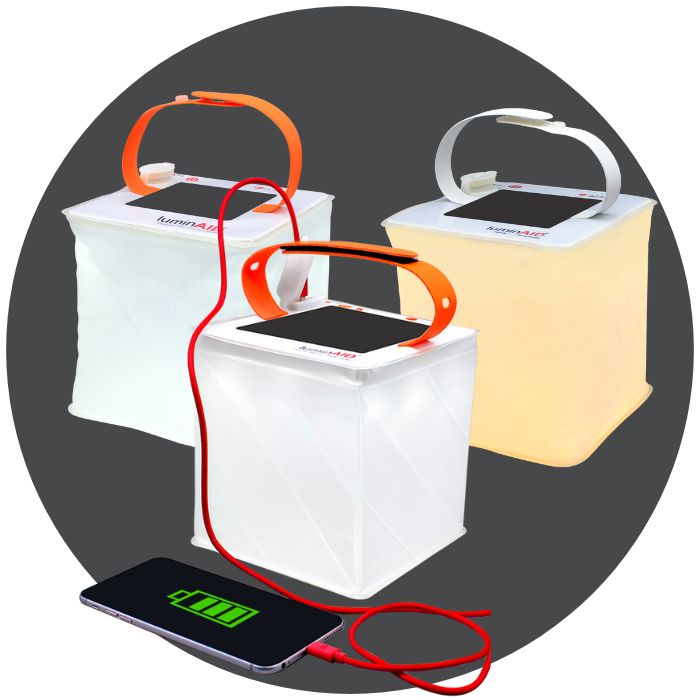
When you’re moving fast and traveling light, every single ounce counts. For you, the PackLite Max 2-in-1 Phone Charger is the perfect trail companion. It’s unbelievably lightweight and collapses down to the size of a small book, so it takes up virtually no space in your pack.
But don't let its size fool you. It throws off a bright, reliable light and has enough juice to give your phone a critical top-up. Think of it as your safety net, making sure your map and emergency contacts are always available.
Families, RV Campers, And Backyard Entertainers
Need to light up a bigger space or keep multiple phones charged? That calls for more power. The Titan 2-in-1 Power Lantern is our heavy-hitter, built for exactly these moments. It blasts out up to 300 lumens of bright, ambient light that can easily fill a large tent or illuminate the whole picnic table.
With a beefy 4000mAh battery, the Titan can fully charge a smartphone and still have more than enough power left for hours of light. It’s our go-to for family camping trips, RV life, or just setting the mood at a backyard get-together.
This blend of powerful light and serious charging capacity has made it a fan favorite, with thousands of five-star reviews from people who rely on it for everything from remote adventures to power outages at home.
The Emergency Preparedness Pro
If you’re serious about being ready for anything, you know that one device is rarely enough—you need a full system. The Emergency Light & Power Kit is your all-in-one answer for total peace of mind.
This bundle includes multiple solar power charger lanterns, so every room has light and your family can stay connected during a blackout. Having a comprehensive setup of LuminAID solar phone chargers means you're truly prepared when the unexpected happens.
Your Solar Charger Questions, Answered
Getting into solar power for the first time can bring up a few questions. We've been there. Here are some straightforward answers to the most common things people ask, so you can feel totally confident choosing and using your gear.
How Long Does It Take to Charge a Solar Power Charger?
This really depends on three things: the solar panel’s wattage, the battery's capacity (measured in mAh), and—most importantly—how much direct sun you’re getting.
A lot of experienced users find it's more practical to just "top off" their phones and other devices directly from the panel during the sunniest hours. For a much faster charge, hybrid models like ours at LuminAID can be fully charged at home via USB in just 1-2 hours before you even head out the door.
Will My Solar Charger Work on Cloudy Days?
It will, but don't expect the same performance. Modern solar panels, especially the efficient monocrystalline types, are pretty good at generating some power even when it’s overcast. The charging speed will be much slower, though—think of it as more of a trickle charge than a full-on power-up.
A great strategy for cloudy weather is to pick a charger with a bigger battery. This lets you bank as much energy as you can during sunny spells, giving you a solid power reserve when the clouds roll in.
Are Solar Power Chargers Waterproof and Durable?
The good ones are. If a charger is built for the outdoors or for emergencies, it should be tough. Always look for an IP rating, like IP67, which means it has a high level of protection against both dust and water.
LuminAID gear, for example, is engineered to be fully waterproof and can even float. That makes our products exceptionally reliable for boating, camping, or whatever unpredictable weather you might run into.
Ready to power your next adventure with the sun? Take a look at our full line of reliable, packable solar lanterns and 2-in-1 phone chargers at LuminAID and find the perfect gear for your outdoor and emergency needs.