



About 33.9 million U.S. households, or one in four, experienced a complete power outage in the 12 months before the Census Bureau's 2023 survey. Roughly 70% of those households, about 23.6 million, reported an outage lasting at least six hours (U.S. Census Bureau). That changes the buying question. The issue isn't which gadget has the most impressive specification, but which emergency power solution can keep a particular household task running for the required number of hours.
A reliable plan usually combines light, communications, device charging, and a way to support critical appliances. A lantern may be perfect for a tent, a battery bank may be enough for an evacuation, and a generator may be necessary for a well pump or refrigerator. The right setup starts with the job, then works backward to runtime, safety, charging, and maintenance.
Table of Contents
- Why Emergency Power Planning Matters Now
- The Five Main Emergency Power Options
- Side-by-Side Comparison of Emergency Power Options
- Sizing Your Power Kit for Home, Car, and Camping
- Matching Emergency Power to Real Scenarios
- Storage, Safety, and Maintenance Best Practices
- Recommended Emergency Power Kits by Budget
- Frequently Asked Questions About Emergency Power
Why Emergency Power Planning Matters Now
The U.S. Energy Information Administration reported that customers experienced an average of 11 hours of electricity interruptions in 2024, nearly twice the annual average of the prior decade. Major events, including Hurricanes Beryl, Helene, and Milton, accounted for 80% of those outage hours (U.S. Census Bureau summary of outage data). A blackout can last a short evening or stretch across several days, so a kit built only for phone charging leaves important gaps.
Start with the loads that protect health, food, water, and communication. Phones need power for alerts and calls. Refrigerators need intermittent power to protect food. CPAP machines and other medical equipment may require dependable overnight energy. Sump pumps, well pumps, fans, routers, and lighting can each become essential depending on the home and season.
Build the plan around hours
The first step is a written list of critical devices. The second is to estimate how many hours each device must operate, not merely how many watts it draws at startup. The third is to separate continuous loads from occasional loads, because a refrigerator cycles while a lamp may run only after dark.
Practical rule: Identify critical loads first, then match battery capacity and fuel supply to runtime in hours. Peak watts matter for starting motors, but watt-hours determine how long the kit lasts.
A layered plan beats a single oversized purchase. A rechargeable lantern can handle room lighting without consuming the main battery. A power bank can preserve phone access while a power station runs a router or medical device. A fuel generator can support heavy loads, but it needs outdoor operation, fuel, ventilation, and maintenance.
Households considering permanently installed storage can review this explanation of a solar battery for blackout protection to understand how home batteries differ from portable equipment. For practical preparation steps covering communication, food, lighting, and charging, the LuminAID power outage preparedness guide provides a useful checklist.
Backup power is already a mainstream resilience measure. A 2020 national study found that 14.3% of U.S. households had a backup generator, an increase of 2.5 percentage points from 2015 (Journal of Politics study). Portable and lower-maintenance options matter because many families want useful backup capability without the fuel storage, noise, or upkeep associated with a full generator.
The Five Main Emergency Power Options
Emergency power solutions fall into five practical families. Each one solves a different problem, and each has a trade-off that should be accepted before purchase.
Portable solar lanterns and phone chargers
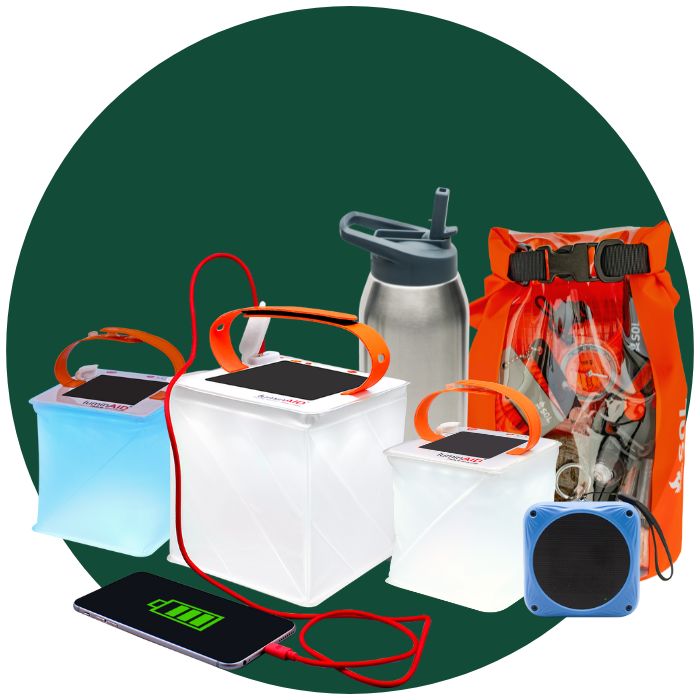
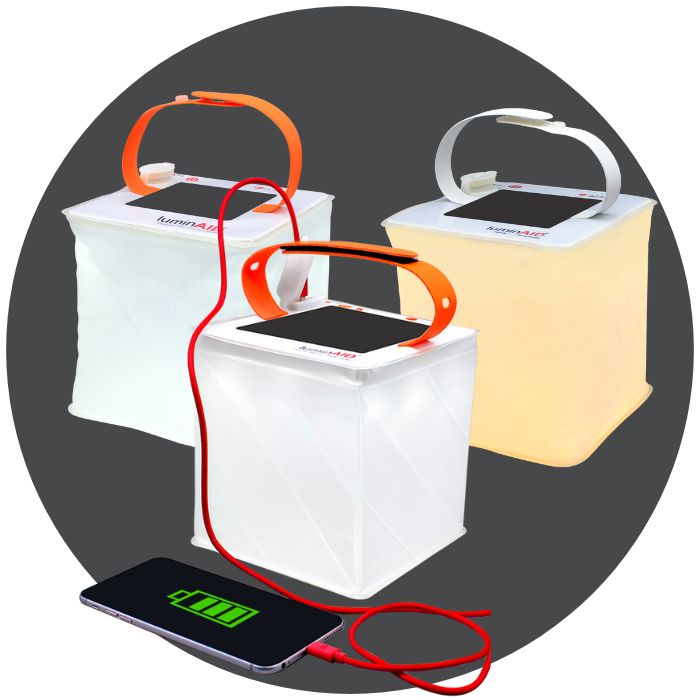
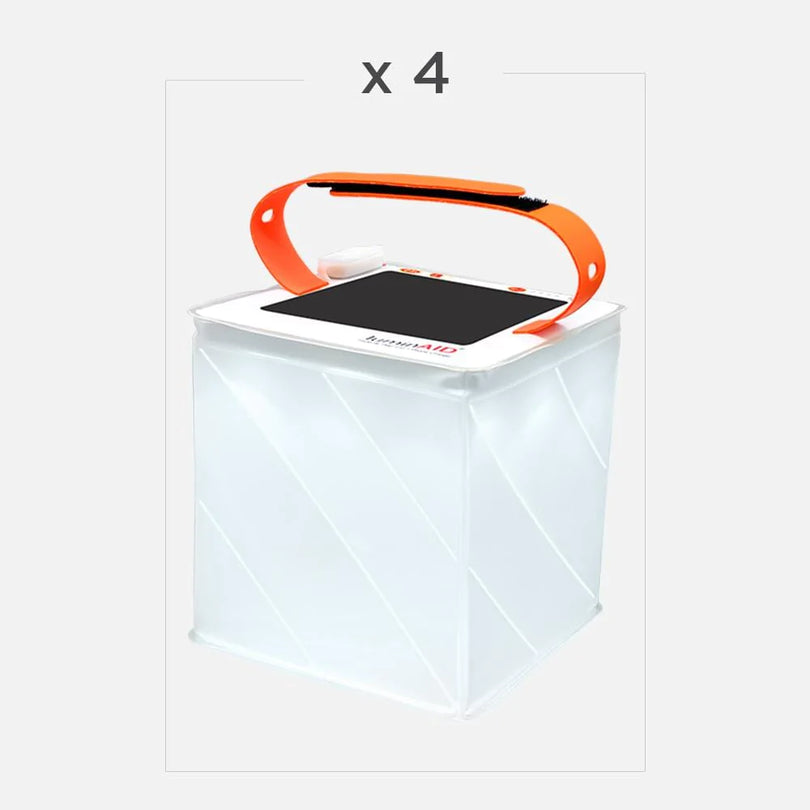
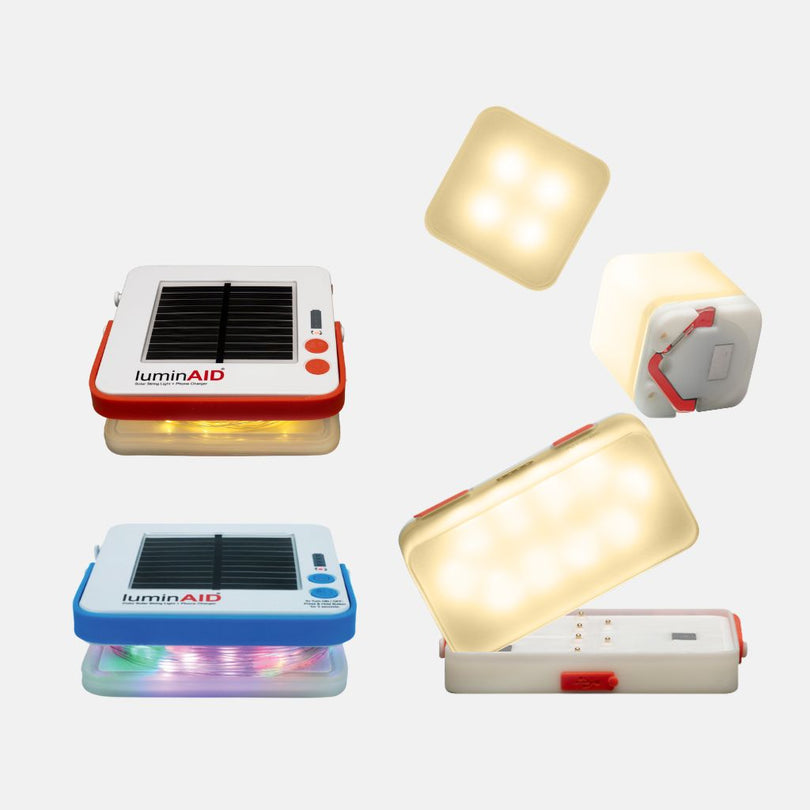
These combine LED lighting with a small internal battery, and some include USB phone charging. They handle tent lighting, hallway illumination, phone top-ups, and basic emergency-kit duties. The catch is limited energy capacity. They aren't designed for refrigerators, heaters, pumps, or extended medical loads.
A rechargeable lantern with a low-output setting can be more useful than a very bright lamp that drains quickly. Independent runtime testing found one high-end solar rechargeable lantern delivered 250 hours at its dimmest setting, while other popular models lasted 39 to 54 hours under the same low-output benchmark (Camping Guidance lantern testing). For long outages, usable low-light endurance matters more than headline brightness.
Solar panels paired with batteries
A panel converts sunlight into stored energy, while a battery supplies devices when the panel isn't producing. This arrangement works well for quiet, fuel-free charging at a campsite, during daylight outage recovery, or as part of a larger home battery system. Its weakness is dependence on sun, with clouds, winter conditions, smoke, and poor panel placement reducing practical output.
Fuel generators
A gasoline, propane, or dual-fuel generator produces electricity for high-draw appliances and longer interruptions. It can support refrigerators, pumps, freezers, and selected circuits more effectively than small batteries. The trade-offs are noise, exhaust, fuel storage, starting procedures, and regular servicing. A fuel generator must never operate indoors or in an attached garage.
Portable power stations
A portable power station combines a battery, inverter, charging system, and multiple outlets in one enclosure. It suits phones, laptops, routers, lights, small coolers, medical devices, and selected household appliances, with no exhaust and little operating noise. Battery wear, recharge time, weight, and finite capacity are the costs.
Round-trip efficiency is a key buying metric. Independent testing found some units returned only about 67% of their stated watt-hour potential at a consistent 34W draw, while higher-performing models approached the low-to-mid 90% range under similar conditions (CNET portable power station testing).
Car-based solutions
A 12V adapter, USB outlet, or properly sized inverter turns a vehicle into a charging source. It can keep phones, radios, cameras, and small battery packs operating during travel or evacuation. The limitation is dependence on the car, the alternator, and safe engine operation. Running an engine in an enclosed space is dangerous, and repeatedly using an inverter with the engine off can drain the starter battery.
The LuminAID home backup power guide offers another practical way to compare small lighting and charging needs with larger household backup requirements.
Side-by-Side Comparison of Emergency Power Options
The best emergency power solution depends on the load, the outage duration, and whether operation must happen indoors. A lantern wins for instant light. A generator wins for sustained heavy loads. A power station wins for quiet indoor-adjacent use, provided the device itself is used according to its manual and isn't treated as a substitute for a fuel generator.
| Option | Power Output | Runtime | Fuel/Charge Source | Noise | Indoor Safe | Maintenance | Cost Band | Best For |
|---|---|---|---|---|---|---|---|---|
| Portable solar lantern or charger | Low | Long for lighting, limited for charging | Sun or USB | Silent | Yes, when used as directed | Low | Low | Tents, rooms, phones |
| Solar panel and battery | Low to high, depending on battery | Tied to stored capacity and solar conditions | Sun and stored battery energy | Silent | Battery-dependent | Low to moderate | Moderate to high | Quiet renewable charging |
| Fuel generator | Medium to high | Limited by fuel supply and load | Gasoline, propane, or dual fuel | Loud | No | High | Moderate to high | Refrigerators, pumps, critical circuits |
| Portable power station | Low to high, depending on inverter and battery | Tied to battery capacity and load | AC, solar, or vehicle charging | Silent to low | No combustion, but follow the manual | Low to moderate | Moderate to high | Electronics, lights, small appliances |
| Car inverter or 12V adapter | Low to moderate | Tied to vehicle fuel and safe engine use | Vehicle battery and alternator | Vehicle-dependent | No vehicle exhaust indoors | Low | Low | Evacuation and mobile charging |
Where each option earns its place
Solar equipment is quiet and simple, but it won't replace stored energy during prolonged cloud cover. Fuel generators deliver the strongest answer for continuous heavy loads, yet fuel handling and carbon monoxide safety make them unsuitable for indoor use. Portable power stations are cleaner and quieter for electronics, but their usable energy can fall well below the advertised capacity depending on conversion losses and load conditions.
Car-based charging is underrated because it gives an evacuation kit a mobile power source without requiring a large battery. It also has a hard boundary: the vehicle must remain available, fueled, and operated safely.
A household should choose based on its worst realistic scenario, not its easiest one. If the worst case is a dark tent, buy a lantern. If it's a two-day outage with a CPAP and refrigerator, calculate watt-hours and consider a power station. If it includes a well pump or sump pump, evaluate generator capacity and professional electrical installation.
Sizing Your Power Kit for Home, Car, and Camping
Watt-hours make emergency power planning concrete. A device's watts multiplied by operating hours gives its approximate energy demand, while charging and inverter losses require additional capacity. A phone and a refrigerator shouldn't be treated as equivalent loads just because both plug into a USB or AC outlet.
| Scenario | Core Devices | Daily Wh Target | Suggested Kit Size |
|---|---|---|---|
| Home blackout | Phone, router, laptop, lights, CPAP, refrigerator | Calculate from actual devices | 300 Wh station plus 100 W panel for modest needs |
| Car kit | Phone top-ups, radio, small inverter, medical device | Calculate from actual devices | 20 to 40 Wh battery bank and 12V inverter |
| Camping | Headlamp, phone, camera batteries, lantern | Calculate from actual devices | 10 to 20 Wh lantern plus small panel |
Home calculation
List each load and its expected use. A router may operate continuously, a laptop may run during work periods, lights may run after sunset, and a refrigerator may cycle rather than draw its rated power constantly. CPAP equipment can dominate the budget, especially if it uses a heated humidifier.
A practical small build is a 300 Wh power station with a 100 W panel for modest one to two-day household events. It isn't a whole-home system. It won't reliably run central air conditioning, electric heating, a large water heater, or a pump without a separate load assessment.
Car and campsite calculation
A car kit can stay compact. A 20 to 40 Wh battery bank handles phone top-ups and small electronics, while a 12V inverter can support a compatible medical device or charger when the vehicle is operated safely. The vehicle should be treated as the charging source, not as an unattended indoor generator.
Camping usually prioritizes portability. A 10 to 20 Wh lantern with a small panel can cover lighting and limited charging, while a 100 to 300 Wh station makes sense for cameras, phones, and a small cooler. The biggest sizing error is counting only phones and forgetting well pumps, sump pumps, refrigerator startup demand, or electric medical gear.
For a clear calculation method, use this guide on how to calculate watt-hours of a battery.
Matching Emergency Power to Real Scenarios
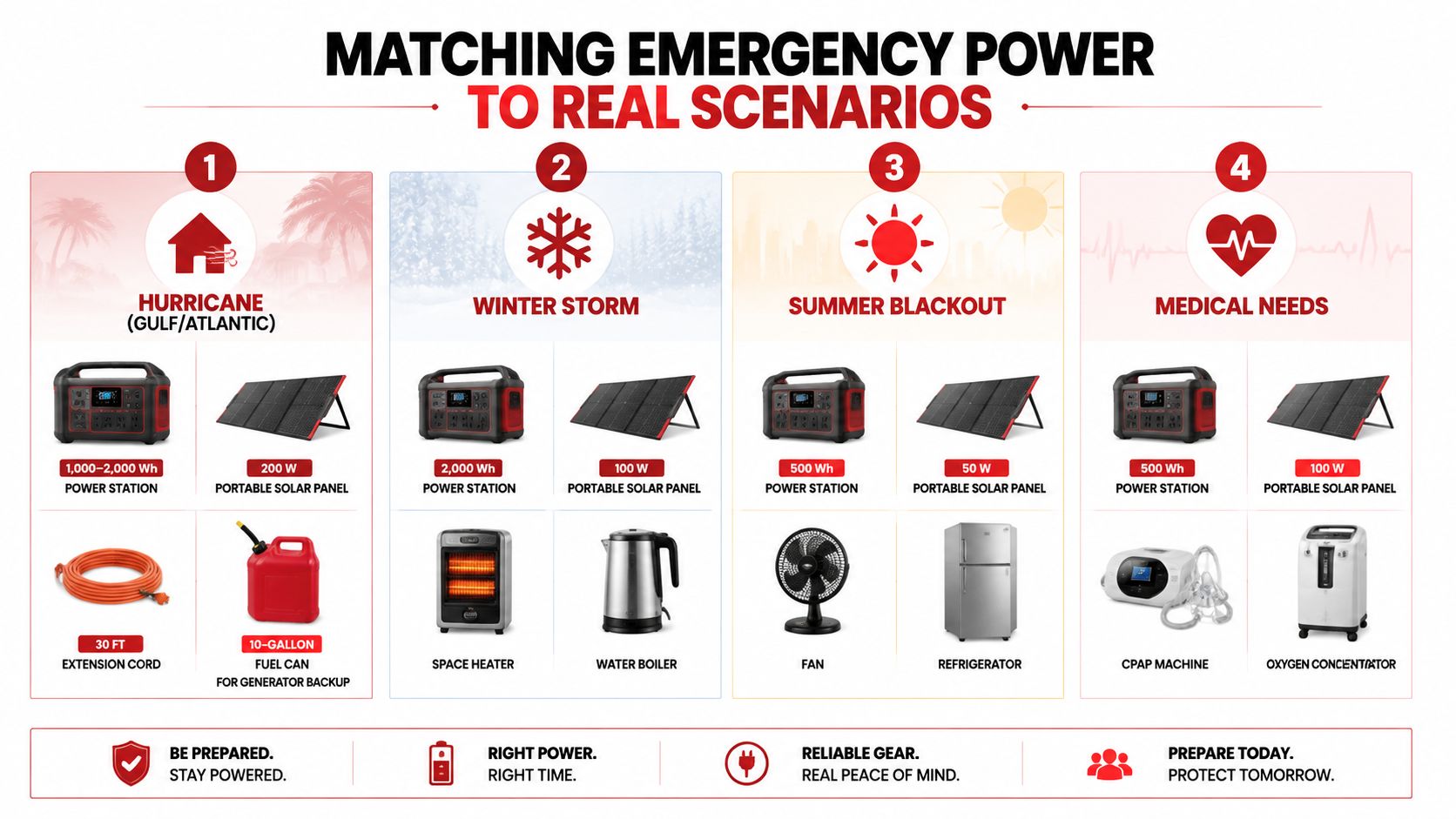
The same household can need four different kits depending on the situation. A hurricane plan emphasizes long outages, fuel access, and communications. A camping plan emphasizes weight and quiet charging. An evacuation plan favors mobility over capacity.
Hurricane on the Gulf or Atlantic coast
A coastal hurricane kit should start with a 1,000 to 2,000 Wh power station, a 200 W portable panel, a hand-crank radio, and a fuel generator as a separate heavy-load backup. The station can cover phones, lights, networking equipment, and selected medical devices while the generator handles larger appliances outdoors.
The forgotten addition is a long extension cord and a fuel-handling plan. A generator without a safe place to operate, stored fuel, and a way to connect only approved loads isn't a complete solution.
Winter blackout in a northern climate
Cold weather changes the priority order. A mid-size station and panel can preserve refrigerator service, phones, and router access, but most portable batteries shouldn't be expected to run a high-draw space heater for extended periods. A small propane heater may help only when its manufacturer permits the intended setting and ventilation is adequate, and it still requires carbon monoxide protection.
The commonly missed item is a non-electric heat and water plan. Power can restore communications without restoring safe indoor temperature, so households should plan separately for warmth, drinking water, and cooking.
Camping weekend
Camping calls for a 100 to 300 Wh station, a foldable 50 to 100 W panel, and a solar lantern. This combination handles phones, lights, camera batteries, and a small cooler without adding a fuel generator to the campsite.
The overlooked item is a second lighting source. A headlamp lets a camper keep both hands free for cooking, walking, or first aid while the main lantern remains in camp.
Evacuation
An evacuation kit should shrink to a 20 to 40 Wh battery bank, a car inverter, and a headlamp. The car becomes the charging source, and the smaller battery is easier to carry between the vehicle, shelter, and temporary lodging.
The forgotten addition is a radio with spare batteries or hand-crank capability. Phone networks can become congested or unavailable, so communications need more than one path.
Storage, Safety, and Maintenance Best Practices
Emergency equipment fails most often when owners store it poorly and test it rarely. Official guidance emphasizes accessible lighting, spare batteries, backup communications, and advance charging. Ready.gov power outage guidance recommends batteries or power banks, flashlights for household members, and planning for phone battery backup, while Canada's outage guidance advises unplugging electronics before restoration and leaving one light on to identify when service returns.
Store equipment where it can be used
Avoid hot attics, damp sheds, and freezing garages for lithium equipment. Follow the manufacturer's storage charge and temperature requirements rather than relying on a generic rule. Store batteries in their original packaging when possible, and keep flashlights, batteries, and glow sticks in accessible locations, as recommended by Utah's Be Ready light and power guidance.
Fuel generators belong outdoors, away from doors, windows, and vents. Carbon monoxide can accumulate indoors even when a garage door is open, so ventilation isn't a substitute for outdoor placement. Install and test carbon monoxide and smoke alarms, and follow the generator manual for extension cords, grounding, load limits, and transfer equipment.
Use a simple maintenance cycle
A quarterly checklist keeps the plan practical:
- Cycle batteries: Exercise stored batteries according to the manufacturer's instructions, then return them to the recommended storage charge.
- Test generators: Start the generator and run an appropriate load, following the manual and local safety requirements.
- Inspect supplies: Check fuel condition, propane containers, cables, connectors, panels, and adapters.
- Test alarms: Confirm that smoke and carbon monoxide alarms operate correctly.
- Update equipment: Check firmware only through the manufacturer's official application or instructions.
The CDC recommends emergency lighting such as a flashlight, headlamp, or battery-powered lantern, extra AA and AAA batteries, backup smoke and carbon monoxide detectors, and a battery-powered or hand-crank NOAA weather radio with USB ports (CDC power-source guidance). FEMA's minimum kit includes water at one gallon per person per day, a flashlight, batteries, and a hand-crank or solar-powered radio (FEMA emergency-kit guidance).
Every cable should have a label. Twice-yearly cable checks prevent the avoidable failure where the battery is charged but the correct adapter is missing, damaged, or buried in another kit.
Recommended Emergency Power Kits by Budget
A useful kit doesn't need to begin with whole-home backup. The right tier depends on the load that must remain available and the amount of maintenance the household will perform.
| Tier | Total Budget | Core Components | Best Use Case |
|---|---|---|---|
| Starter | About $150 to $250 | 300 Wh power station, foldable 100 W panel, two solar lanterns | Light, phones, and small electronics |
| Mid-Range | About $600 to $900 | 1,000 Wh LiFePO4 station, 200 W bifacial panel, 2,000 W inverter generator, car jumper pack | Repeated outages and vehicle readiness |
| Full-Prep Home | About $2,000 to $3,000 | 2,000 to 3,000 Wh station, transfer-switch-ready inlet, 400 W portable array, dual-fuel generator, critical-loads panel | Extended outages with selected household circuits |
Starter tier
The starter kit is the sensible choice for apartments, campers, and households focused on light and communications. The 300 Wh station supports modest electronics, the panel adds daytime replenishment, and two lanterns prevent the main battery from being wasted on room lighting. It won't run central air conditioning, electric heat, pumps, or a large refrigerator for an extended period.
Mid-range tier
The mid-range setup adds meaningful redundancy. The LiFePO4 station provides more stored energy, the bifacial panel expands solar collection options, and the inverter generator covers loads the battery can't handle. The jumper pack keeps the car useful during an evacuation. This tier costs more because it solves both quiet indoor-adjacent charging and outdoor high-load power.
Full-prep home tier
A full-prep setup is for households with critical circuits, medical equipment, pumps, or repeated severe-weather exposure. A transfer-switch-ready inlet and critical-loads panel should be installed by a qualified professional, not improvised with unsafe backfeeding. Even this tier isn't a promise of whole-home comfort. Central air conditioning, electric resistance heat, and large water heaters can exceed portable system limits and require a separate electrical design.
Frequently Asked Questions About Emergency Power
How often should lithium power stations be tested?
Check the manual for storage charge, temperature, and exercise requirements. A practical household routine is to inspect the station several times a year, verify its charge, test its outlets under a modest load, and recharge it before storm season or travel. Don't leave it forgotten until a blackout begins.
Can a power station charge from a car?
Many stations accept vehicle charging through a 12V outlet, but the vehicle should be running so the alternator supplies the load. A 100 Wh pack's charging time depends on the outlet, cable, station input limit, and conversion losses, so the manual's stated input rate is the only reliable estimate. Avoid draining the starter battery with the engine off.
What generator size supports a refrigerator, modem, and lights?
A small inverter generator may support a refrigerator, internet modem, and a few lights if its continuous and surge ratings cover the refrigerator's startup demand. The exact requirement depends on the appliances, so households should read nameplates or measure loads before buying. A two-day outage also requires enough fuel and a safe operating plan.
Can a generator run in a garage or near windows?
No. Never run a fuel generator indoors, in a garage, under an attached carport, or close to windows and vents. Carbon monoxide is odorless and can enter a home quickly, so outdoor placement, alarms, and the manufacturer's clearance requirements are mandatory.
LuminAID offers portable solar lanterns and 2-in-1 phone chargers that combine adjustable emergency lighting with USB charging for outage kits, camping, and evacuation bags. Households can add a compact light-and-charging layer by visiting LuminAID, then pair it with a properly sized battery or generator for larger loads.