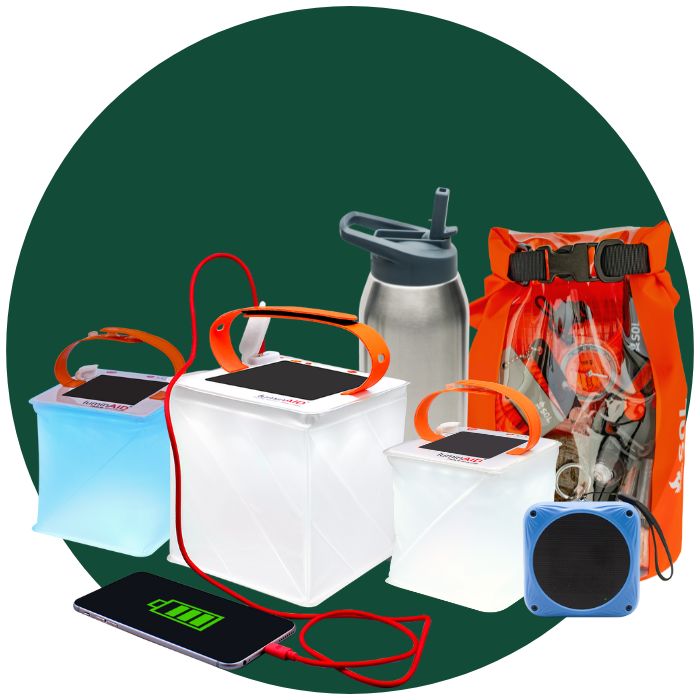
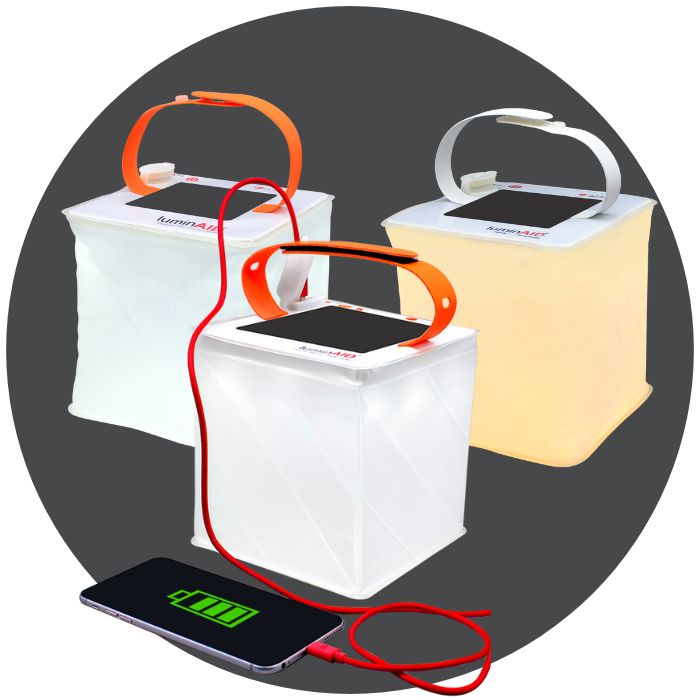

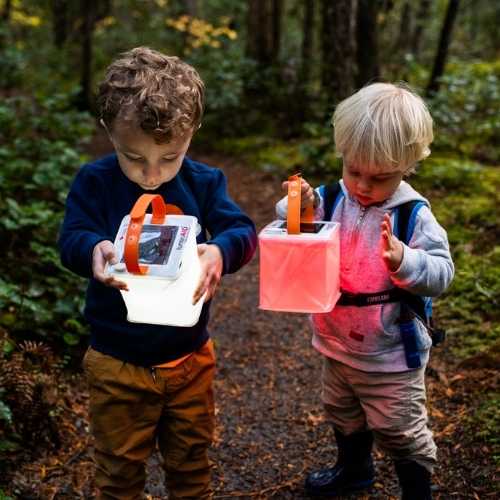

When you're searching for the best solar camping lights, the top contenders always manage to blend portability, long-lasting battery life, and brightness you can count on. It's no surprise that inflatable lanterns like LuminAID often top the list—their lightweight, waterproof, and packable designs make them a perfect fit for just about anything, from rugged backcountry treks to casual family car camping trips.
Why Choose Solar for Your Next Camping Trip
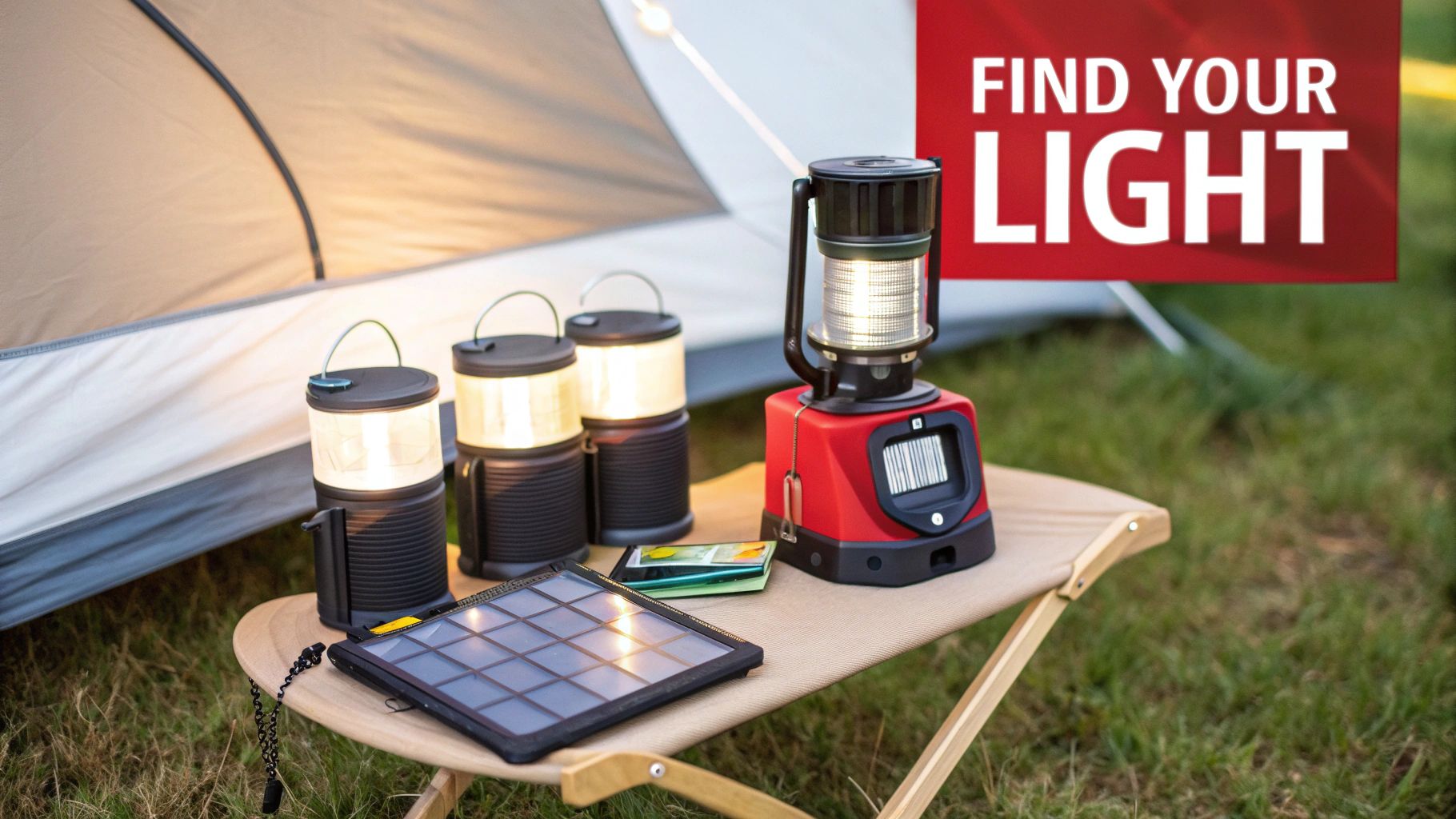
Opting for a solar camping light isn't just about convenience—it's a smart move toward a more reliable, sustainable, and genuinely hassle-free outdoor experience. Forget packing extra batteries or bulky fuel canisters. With solar, you’re free from that extra weight and the waste it creates.
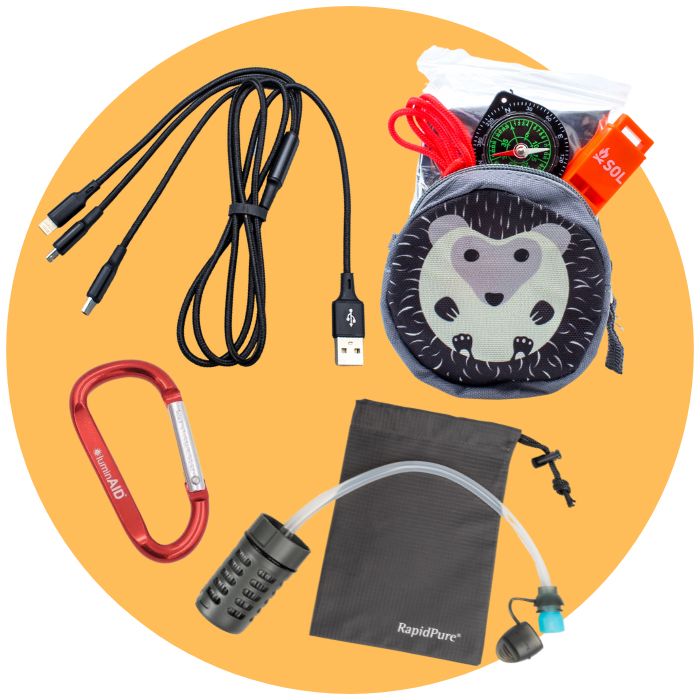
Today's solar technology is incredibly efficient. These lights soak up the sun's power all day to deliver hours of steady light after dark, making sure you're never left fumbling around when the sun goes down. This kind of self-sufficiency is priceless, whether you're deep in the wilderness or just putting together a solid emergency kit at home. Packing essentials like a water filter from RapidPure Water and a reliable light source is a core part of any preparedness plan.
Our partners at Survive Outdoors Longer have some great resources for building out a complete emergency bag if you want to make sure you're ready for anything.
Comparing Your Solar Light Options
The market for solar camping lights is booming, which shows a real shift in how campers think about their gear. Valued at $233.8 million in 2024, the camping lights and lanterns market is expected to skyrocket to nearly $499.8 million by 2033. This growth is all thanks to adventurers who want reliable, eco-friendly equipment. You can dig into more of the market data over at DataHorizzon Research.
To help you cut through the noise, we've broken down the main types of solar lights you'll find. Each style serves a different need, and figuring out their strengths will get you to the perfect light for your adventures. For a deeper dive, check out our complete guide on solar lanterns for camping.
Key Takeaway: The best solar light for you comes down to how you camp. An ultralight backpacker is going to obsess over weight and packability, while a family heading to a state park will care more about broad area lighting and durability.
Quick Guide to Solar Camping Light Types
To get you started, here's a quick rundown of the different categories of solar lights. This table should help you quickly pinpoint which type of light is the best match for your typical trips.
| Light Type | Best For | Typical Lumens | Key Feature |
|---|---|---|---|
| Inflatable Lanterns | Backpacking, emergency kits, kayaking | 50–300 | Ultralight, waterproof, and packs flat |
| String Lights | Campsite ambiance, van life, group areas | 20–100 (total) | Creates wide, decorative illumination |
| Fixed Lanterns | Car camping, basecamps, power outages | 100–1000+ | High brightness and rugged construction |
| Hybrid Task Lights | Overlanding, camp cooking, repairs | 150–600 | Focused beams and multiple mounting options |
Each of these lights has its place, from the tiny, packable lantern that lives in your go-bag to the powerful fixed lantern that becomes the heart of your basecamp. It's all about matching the tool to the task at hand.
What to Look for in a Solar Camping Light
Picking the right solar camping light isn't about finding the flashiest one. It's about digging into the specs that actually matter when you're miles from the nearest outlet. Get these right, and you’ll have a reliable beacon in the dark. Ignore them, and you might be left fumbling for a flashlight.
Let's cut through the jargon. Terms like lumens, mAh, and IP ratings might seem technical, but understanding them is the key to choosing a light that won't let you down. I'll walk you through what each one means in the real world.
Brightness (Lumens)
First up is brightness, measured in lumens. Put simply, more lumens means a brighter light. But bigger isn't always better—what you need really depends on the job at hand.
- 15-50 Lumens: This is your sweet spot for personal space. It’s perfect for reading in your tent or casting a gentle, ambient glow around your campsite that won’t blind your neighbors.
- 50-150 Lumens: This range is the workhorse for most campsite activities. It’s bright enough to light up a picnic table for a late-night card game or give you enough visibility to cook dinner without being overwhelming.
- 150+ Lumens: When you need to illuminate a whole pop-up shelter or a larger group campsite, this is where you should be looking. Our LuminAID Titan, for instance, pumps out a powerful 300 lumens, which is more than enough for these situations.
Matching lumens to your needs means you get the right amount of light without draining your battery or causing unnecessary light pollution.
Battery Life and Runtime
A super-bright light is no good if it dies before you do. That’s where battery capacity—measured in milliamp-hours (mAh)—and runtime come into play. A bigger mAh number usually points to a longer life, but how efficiently the light uses that power is just as important.
Look for a light that gives you clear runtimes for its different brightness settings. A good lantern might last 50+ hours on its lowest setting but only a few hours on its highest. That flexibility is key. On long trips with unpredictable weather, a long runtime on low is a true lifesaver, ensuring you always have enough light to find your gear in the tent. A reliable light source is as critical as a good first-aid kit, like the ones from Adventure Medical Kits.
Pro Tip: Many solar lanterns now come with a USB port to charge your phone. It's a fantastic feature, but remember that charging your phone will drain the lantern's battery much faster. If you're counting on it for both light and power, plan your usage carefully.
Charging Speed and Options
For a solar light to be truly dependable, it has to charge efficiently. Most give you two options: solar and USB.
A high-quality solar panel is non-negotiable for off-grid adventures. The panel's size and efficiency dictate how quickly it can soak up the sun's rays. In direct, bright sunlight, a good lantern can get a full charge in around 10-14 hours.
But let’s be real—sometimes the sun doesn’t cooperate. That's why USB charging is such a game-changer. It lets you top off the battery from a power bank or your car before heading out, often in just 1-2 hours. This dual-charging setup gives you the flexibility you need for any situation.
Durability and Weatherproofing
Your gear has to be tough enough to handle whatever nature throws at it. For camping lights, we look at the Ingress Protection (IP) rating. This two-digit code tells you how well it’s protected from solids (like dust) and liquids (water).
For camping, the second number—water resistance—is the one to watch.
- IPX4: This means the light can handle water splashes from any direction. It’s the bare minimum for camping, tough enough for a rain shower or heavy morning dew.
- IP67: Now we’re talking serious protection. An IP67-rated light is completely dust-tight and can be submerged in a meter of water for up to 30 minutes.
This level of waterproofing is what makes LuminAID lanterns a favorite for kayaking and fishing trips. They don’t just resist water—they actually float.
Comparing the Best Solar Lights for Every Use Case
Not all camping trips are the same, and neither are solar camping lights. The perfect light for a minimalist backpacker is going to be wildly different from what a family needs for a comfortable weekend at a state park. So, instead of a one-size-fits-all list, let's break down the top contenders based on how you actually camp.
We'll go beyond basic feature lists to show you how certain specs translate into real-world advantages for different adventurers. You'll see how a light's weight, brightness, and durability directly impact its performance in the field, helping you choose a model that truly fits your style.
The Ultralight Backpacker Showdown
For the ultralight backpacker, every single gram matters. Choosing gear is a careful dance between performance and weight, and your light source is no exception. The ideal light has to be incredibly compact, practically weightless, and totally reliable after being strapped to a pack all day.
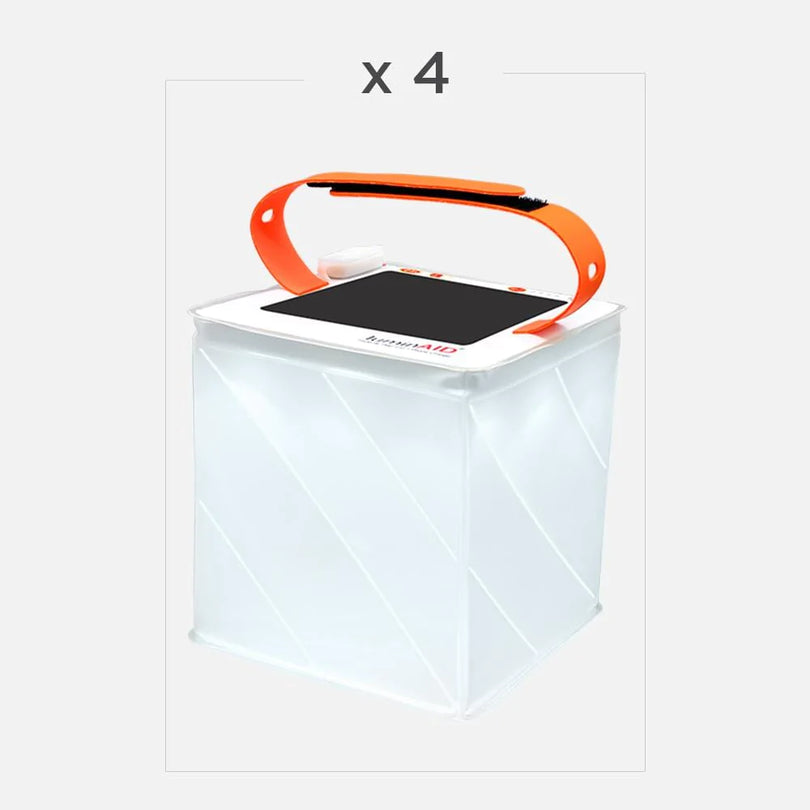
This is where inflatable lanterns, like the LuminAID PackLite series, really shine. They pack down to the thickness of a wallet, weigh just a few ounces, and are naturally durable thanks to their flexible, waterproof design.
- Weight and Packability: An inflatable lantern weighing around 5 ounces (142g) is barely noticeable in a pack. Compare that to a rigid lantern, which can easily top a pound and hog valuable space you need for food or an extra layer.
- Multi-Functionality: Many ultralight options double as diffusers, casting a soft, even glow inside a small tent without creating harsh shadows. This is way more comfortable for reading or organizing gear than the intense, focused beam of a headlamp.
- Durability: Unlike a rigid plastic lantern that can crack if you drop it or stuff it in a full pack, an inflatable design just absorbs the impact. Its waterproof nature also means it won't flinch at rain or an accidental river crossing.
Key Differentiator: The biggest trade-off for an ultralight design is usually max brightness. While an inflatable lantern gives you plenty of light for a tent or a small cooking area, it won't illuminate a large group campsite. For backpackers, this is a worthy sacrifice for the huge savings in weight and space.
The Family Car Camper Comparison
Family camping shifts the focus from minimalism to comfort, area illumination, and pure ruggedness. When you have a car to haul your gear, you can afford to prioritize features that make the campsite feel a little more like home. The best solar lights for this crowd need to be bright, long-lasting, and tough enough to survive curious kids.
Fixed lanterns and powerful string lights are the top dogs here. A high-lumen lantern can light up a big picnic table for dinner and card games, while string lights add a warm, festive vibe and make it safer to walk around after dark.
When picking a light for family use, keep these factors in mind:
- Area Illumination: A lantern with 200-300 lumens can easily light up a 10x10 foot area, making it easy to cook, play, and hang out after sunset.
- Durability and Safety: Look for lights with sturdy construction and shatterproof materials. Going solar also gets rid of the risks that come with fuel-burning lanterns, making them a much safer choice around children.
- Runtime on High: Unlike a backpacker who might only use their light for a few minutes, a family might leave a lantern on for hours. A model that can keep a high-lumen output going for at least 4-6 hours is a must.
While preparedness is smart for any outdoor trip, it’s especially vital in remote areas. Having essential safety gear, like effective bear spray from a trusted brand like Counter Assault, provides critical peace of mind when camping in bear country.
The Emergency Prepper's Choice
For emergency preparedness, reliability is the only thing that truly matters. The best solar light for a go-bag or home emergency kit has to be absolutely dependable, offering incredibly long runtimes, multiple charging options, and features that help you stay self-sufficient.
This is where hybrid lanterns with phone-charging capabilities are worth their weight in gold. During a power outage, a light source that can also keep your phone powered up is a critical lifeline.
Here’s what to look for in a light for an emergency kit:
- Maximum Runtime: The most important feature is a long-lasting battery on a low-light setting. You want lanterns that can provide a usable amount of light for 50 hours or more. This ensures you can ration power over several days if you need to.
- Charging Redundancy: Solar is your main off-grid power source, but having a USB input for a quick charge from a car or power bank is a vital backup. A hand-crank charger, while less common, is the ultimate fail-safe.
- Power Bank Functionality: A built-in USB output with at least 2000 mAh can provide a solid emergency charge to a smartphone, letting you make calls or get information when you need it most.
The flashlight part of the camping lighting world, often driven by solar tech, was valued at an impressive $92.40 million in 2019. These compact powerhouses are popular because they often weigh under 150g and use modern LEDs that can last 50,000 hours—a massive jump from the 1,000-hour lifespan of old-school bulbs. You can discover more insights about the global camping lighting market to see how the technology keeps evolving.
What Makes LuminAID Technology Different?
In a crowded market, LuminAID solar lights stand out because they solve real-world problems for campers, backpackers, and anyone preparing for an emergency. The brand built its name on a patented inflatable design that’s brilliantly simple yet incredibly effective, answering the call for lighting that is both portable and powerful.
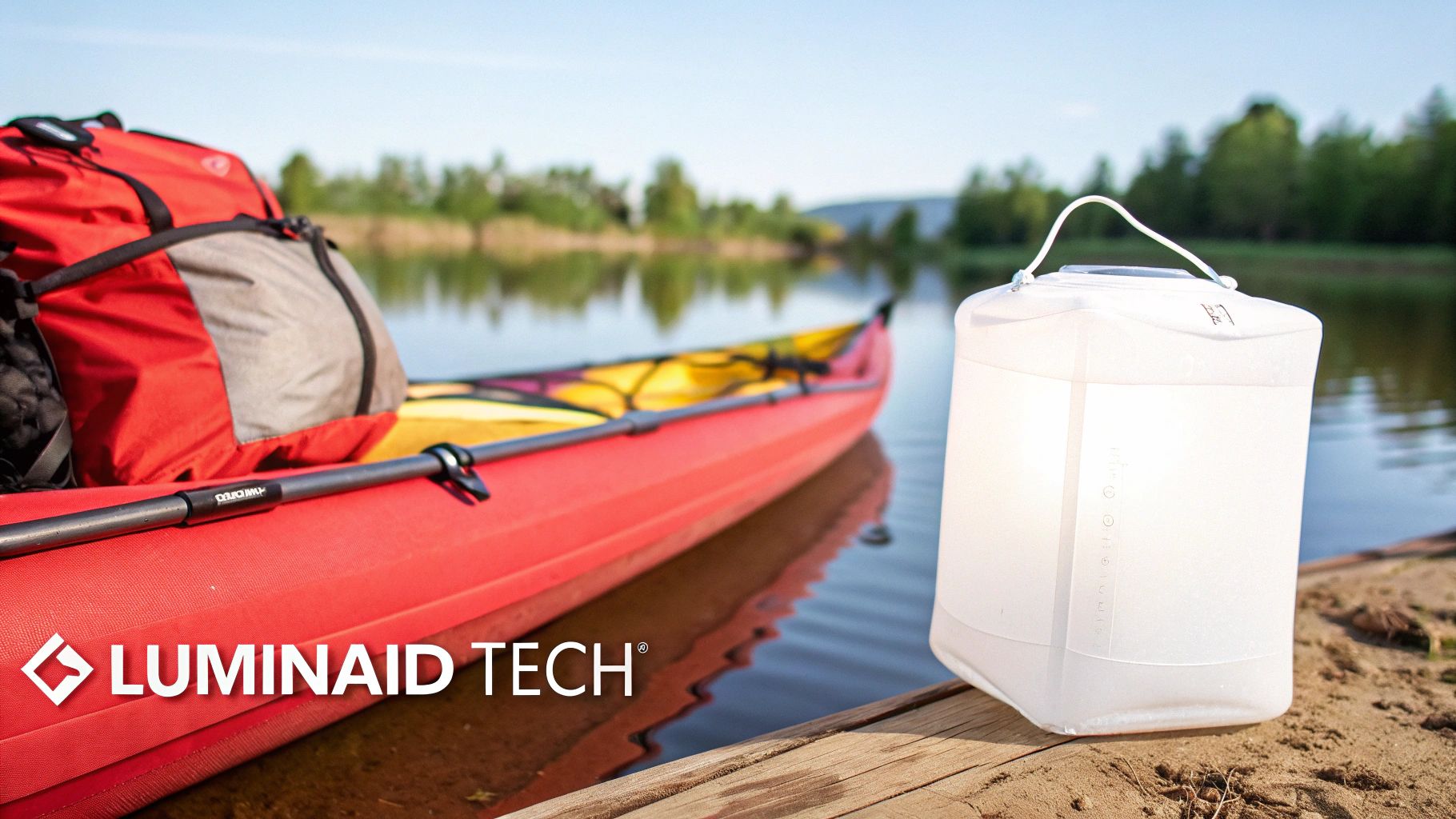
Forget rigid, bulky lanterns that hog precious pack space. LuminAID lights pack down to about the thickness of a wallet, making them easy to tuck into a backpack pocket, glove box, or emergency kit without a second thought. When you need light, they inflate in seconds to create a diffused lantern that casts an even, glare-free glow.
This unique form factor is more than just a space-saver—it’s central to the lantern’s toughness. The flexible material absorbs impacts that would crack a traditional plastic lantern, and its waterproof construction is built to handle serious weather.
Unmatched Durability for Any Adventure
LuminAID’s commitment to durability is obvious in their designs, which often carry an IP67 rating. This means they are completely dust-tight and can be submerged in a meter of water. That level of weatherproofing gives you total peace of mind when conditions get unpredictable.
For anyone kayaking, paddleboarding, or trekking through the rain, LuminAID's floatable and fully waterproof design offers reliability you can count on. If a lantern goes overboard, it simply floats on the surface. That makes it easy to retrieve and ensures you won’t lose your light source to an accident—a game-changer for time spent on or near the water.
Real-World Reliability: Having gear that can withstand the elements is non-negotiable for safety. Just as you wouldn't leave without a proper first-aid kit and insect repellent like Natrapel, your lighting should be equally dependable.
Powering More Than Just Light
Modern adventurers often need more than just illumination, and LuminAID gets that. They’ve integrated power bank functionality into their flagship models, making their lanterns even more valuable when you're off the grid.
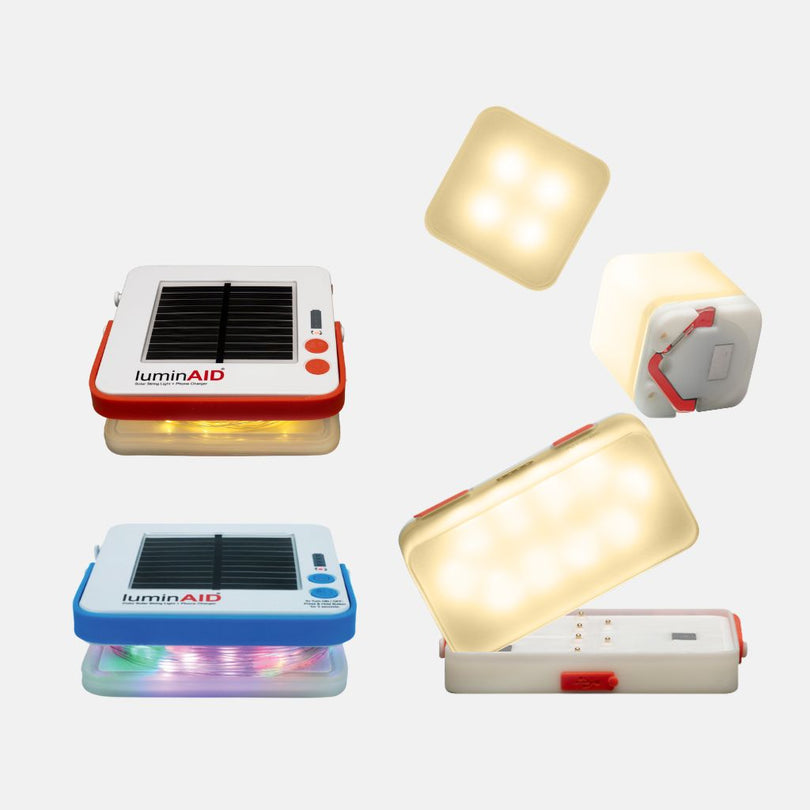
The PackLite Max 2-in-1 Phone Charger is a perfect example. It provides up to 150 lumens of bright light and has a 2000 mAh battery that can give your smartphone an emergency boost. This dual functionality is essential for anyone who relies on their phone for navigation, communication, or photos in the backcountry.
For those needing to light up a larger area, the Titan 2-in-1 Power Lantern delivers an impressive 300 lumens and boasts a 4000 mAh battery. This gives you even more charging power and a runtime of up to 100 hours on its low setting. These innovations show how the brand keeps evolving based on what users actually need, a process you can read more about by learning how LuminAID has updated its light designs over the years.
A Commitment to Sustainable Innovation
The rise of solar technology reflects a bigger shift in outdoor ethics. Solar camping lights are carving out a significant niche, with the market estimated at $250 million in 2025 and projecting an 8% growth rate through 2033. This growth is a testament to campers worldwide ditching disposable batteries for the sun's clean power.
LuminAID embodies this sustainable spirit, creating products that reduce waste while providing reliable, off-grid power. Their blend of thoughtful design, rugged durability, and practical features makes them a top choice for anyone who takes their gear seriously.
How to Maximize Your Solar Light's Performance
Owning a great solar camping light is just the first step. Knowing how to take care of it is what makes it a reliable piece of gear you can count on for years to come.
A few simple habits make a world of difference, from how you charge it out on the trail to how you tuck it away for the off-season. Let's walk through the essentials to keep your lantern in peak condition.
Optimizing Solar Charging in the Field
Getting a quick, full charge from the sun is all about strategy. Your goal is to give that solar panel as much direct sunlight as possible, which means thinking about placement and timing.
Just tossing your lantern on the ground won't cut it. To get the best results, you need to angle the panel directly at the sun. Since the sun moves, a little repositioning throughout the day can seriously speed things up.
- Morning and Afternoon: When the sun is low, tilt the panel to face east in the morning or west in the afternoon.
- Midday: When the sun is high overhead, lay the panel flat for maximum absorption.
Even on cloudy days, your light will still charge, just much more slowly. A good panel can pull in ambient UV light, but you have to be patient. If you're facing a few overcast days, it's a good idea to conserve power by using a lower brightness setting.
Smart Battery Care for Longevity
The lithium-ion battery is the heart of your solar light, and taking care of it is key to its long-term health. How you use it and store it directly impacts its ability to hold a charge, trip after trip.
Unlike old-school batteries, modern lithium-ion cells don't have a "memory effect," so you don't need to drain them completely before charging. In fact, partial charges are healthier for the battery. Giving it a full top-off with a USB cable before you head out is always a smart move.
To keep the battery in good shape, try to avoid letting your lantern sit completely dead for long periods. When you store it for the winter, make sure it has at least a 50% charge. Topping it up every few months keeps the battery active and ready for your next adventure.
Proper storage is just as crucial. Keep your lantern in a cool, dry spot, away from extreme heat or cold. Leaving it to bake in a hot car or freeze in a garage can slowly chip away at the battery's capacity. For more specific tips, you can always learn about the best ways to charge your LuminAID to make sure you're doing it right.
Troubleshooting Common Issues
Even the most reliable solar lights can have a hiccup now and then. The good news is that most problems are easy to figure out and fix yourself.
If your light isn't turning on or seems dim, the first thing to check is the charge level. It's possible it got switched on by accident in your pack or just didn't get enough sun. Give it a full charge via USB to get a solid baseline.
Common Problems and Solutions:
- Won't Hold a Charge: This is often a sign of an aging battery. If you've had the light for several years, the battery might be nearing the end of its lifespan. Before anything else, try a full USB charge to see if it makes a difference.
- Dim or Flickering Light: A low battery is the usual suspect here. But if you know it's charged, flickering can sometimes point to moisture inside if the waterproof seal has been damaged. Give the casing a quick visual inspection.
- Slow Solar Charging: Check that the solar panel is clean. A thin layer of dust, dirt, or grime can block a surprising amount of sunlight. A gentle wipe with a soft, damp cloth is all it needs. And for any other minor repairs or personal needs on the trail, it's always smart to have a solid first aid kit handy, like the ones from Adventure Medical Kits.
Got Questions? We've Got Answers.
Even after sorting through all the details, you might have a few questions rolling around. That's perfectly normal. Let's tackle some of the most common ones to give you total confidence in picking the right solar light.
How Long Does a Solar Light Take to Fully Charge?
This one really depends on two big things: the size and quality of the solar panel, and just how bright the sun is. For a lantern with a high-efficiency panel soaking up direct, strong sunlight, you're looking at about 10 to 14 hours to go from empty to full.
Of course, life isn't always perfect sunshine. Passing clouds, the time of day, or even the season can stretch that time out. For the best results, always try to angle the panel directly at the sun, and move it a few times during the day to keep it happy. A great pro-tip is to top off your lantern using its USB port before you even leave the house.
Can Solar Camping Lights Charge on Cloudy Days?
Absolutely. Solar camping lights will still charge on cloudy days, but you'll need to be patient—it's a much slower process. Modern solar panels are pretty sensitive and can capture the ambient UV light that makes it through the clouds, so they're definitely still working for you.
Just don't expect the same zippy charging speed you'd get on a clear day. The power output can drop by 50% or more, depending on how thick the cloud cover is. On a really overcast day, you might only collect enough juice for a few hours of light on a low setting, which makes battery conservation key.
Expert Tip: On multi-day trips with iffy weather, get used to your light's lowest setting. It's way better to have a dim light for three nights than a bright one for just a single night before it dies.
What Is the Typical Lifespan of a Solar Light's Battery?
The rechargeable battery—usually a lithium-ion or lithium-polymer—is the heart of your solar lantern. Its lifespan is measured in charge cycles. A quality battery, like the ones we use in LuminAID lanterns, is typically rated for 300 to 500 full charge cycles. That means you can drain it and recharge it that many times before the capacity starts to noticeably dip.
With just a little care, that translates into years of reliable light. To get the most out of it, try to avoid storing the lantern completely dead for long stretches. It's much healthier for the battery to be stored with at least a 50% charge. Give it a little top-up every few months in the off-season, and it'll be ready for action when you are.
How Should I Clean and Maintain My Solar Light?
Keeping your solar light in top shape is easy and makes a huge difference in performance. The number one rule is to keep that solar panel clean. A simple layer of dust, dirt, or campsite grime can seriously cut down on how much sunlight it can absorb.
- Cleaning the Panel: A soft, damp cloth is all you need. Gently wipe the solar panel clean. Steer clear of harsh chemicals or anything abrasive that might scratch the surface.
- Checking Seals: Give the waterproof seals and casing a quick look-over now and then, especially if you've been using it in wet weather.
- Proper Storage: When you're not using it, store your lantern in a cool, dry spot away from crazy hot or cold temperatures. This protects the battery and all the internal bits.
A little bit of care goes a long way. Think of it like any other piece of essential gear, like your first aid kit from Adventure Medical Kits—look after it, and it will look after you.
Ready to light up your next adventure? LuminAID has a whole range of innovative, tough, and dependable solar lanterns built for everything from deep backcountry trips to casual backyard hangouts. Check out our collection and find your perfect light.