



A lot of people start this search in the same place. The lights went out for longer than expected, a campground had fewer hookups than promised, or a remote cabin plan started to feel more serious than theoretical. At that point, “off grid power” stops sounding like a hobby topic and starts sounding like food storage, refrigeration, phone charging, heat, water, and basic comfort.
The hard part is that the best off grid power system isn't a single product category. It might be a permanent solar-and-battery installation, a portable power station, a fuel generator, or a layered mix of all three. What works for a full-time homestead usually makes no sense for a weekend camper. What feels affordable at kit price can become expensive once batteries, inverters, permitting, wiring, and backup power enter the picture.
A practical buying decision starts with two realities. First, off-grid power is about matching a system to actual loads, not buying the most attractive spec sheet. Second, reliability has a total cost of ownership, not just a purchase price. Readers comparing options can get a useful baseline from this guide to off-grid solar power, but the decision gets clearer when the trade-offs are laid out side by side.
Table of Contents
- Choosing Your Path to Energy Independence
- How to Size Your Off-Grid Power System
- Comparing the Main Off-Grid Power Contenders
- Deep Dive into DIY Solar Systems
- The Convenience of Portable Power Stations
- Matching Your Power System to Your Lifestyle
- Safety Installation and Long-Term Maintenance
Choosing Your Path to Energy Independence
Choosing off-grid power usually starts with frustration. Utility outages expose how dependent a house is on a live panel, and remote travel exposes how fast phones, lights, refrigeration, and communication gear drain limited battery reserves. The wrong response is buying a random “solar generator” and hoping it covers everything.
The better response is sorting systems into the jobs they do well.
Some people need a fixed home system that can run daily life without a utility connection. Others need a portable power station for mobility and easy setup. Some still benefit from a gas or diesel generator because fuel gives predictable backup during long storms, heavy tool use, or seasonal low-sun periods. Then there are small solar chargers and lanterns, which don't replace a house system but solve specific problems cleanly and reliably.
Practical rule: The best off grid power system is the one that matches the way power gets used on an ordinary day, not on the best-weather day.
Three questions narrow the field fast:
- How permanent is the setup? A cabin, homestead, and detached workshop call for different infrastructure than a tent, SUV, or evacuation kit.
- How technical is the owner willing to get? Wiring a battery bank, setting protections, and integrating an inverter isn't the same as unfolding a panel and plugging in a cooler.
- What happens when the sun doesn't cooperate? Any serious off-grid plan needs an answer for nights, storms, smoke, winter, or dense cloud cover.
That last point matters more than most marketing pages admit. “Off grid” doesn't mean solar panels alone. It means power production, storage, and backup all work together well enough to cover the load when conditions are poor.
How to Size Your Off-Grid Power System
A sizing mistake usually shows up at the worst time. The fridge cycles on after sunset, the well pump kicks in, battery charge drops faster than expected, and suddenly the system that looked affordable on paper needs more panels, more battery, or a generator run. That is why sizing starts with daily use, not kit marketing.
Start with essential loads
Begin with the loads you need to live safely and comfortably. In practice, that usually means refrigeration, water pumping, lighting, phone and internet charging, fans, medical devices, and any appliance that has to work every day. The first sizing pass should ignore luxuries. A system built around needs is cheaper to buy and much easier to live with long term.
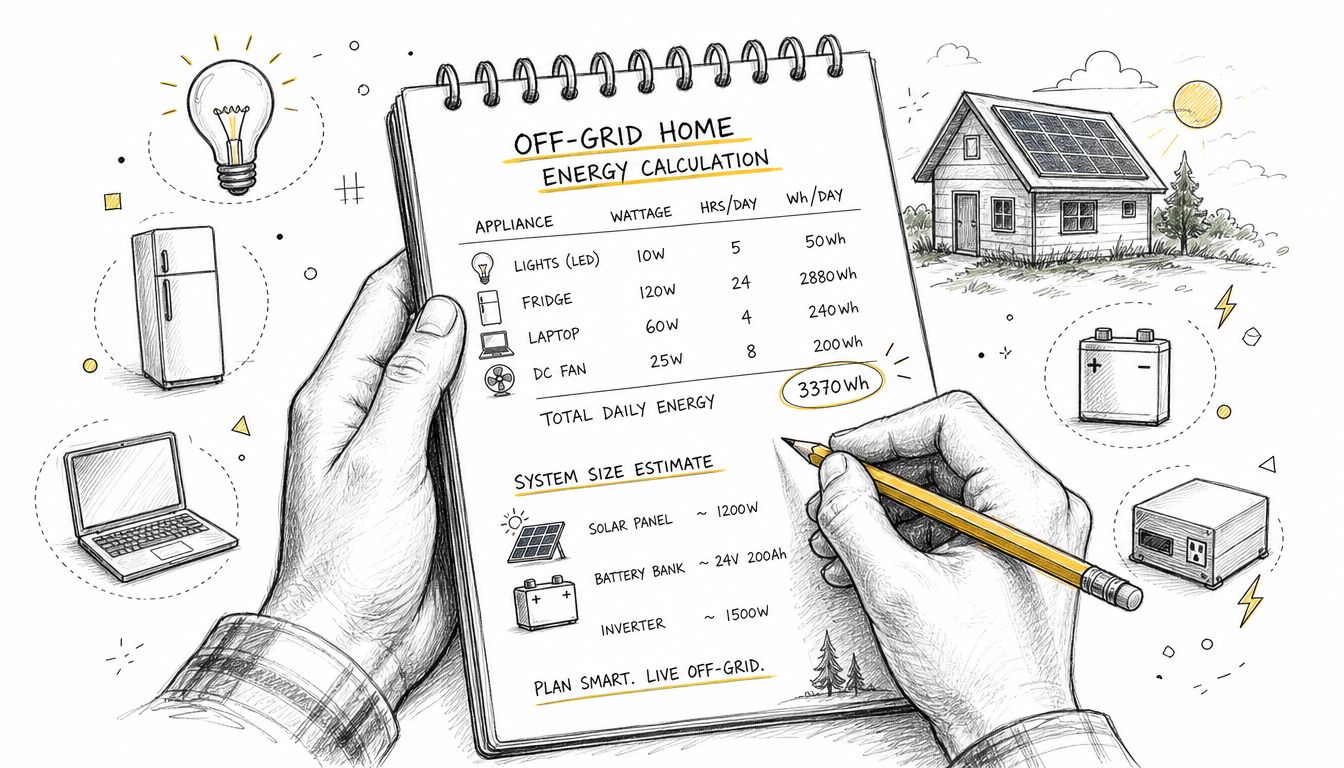
A simple load audit works:
- List each device you expect to run.
- Find its wattage on the nameplate, power brick, or manual.
- Estimate daily runtime based on real use, not best-case guesses.
- Multiply watts by hours to get daily watt-hours.
- Separate surge loads such as pumps, compressors, and power tools so inverter sizing stays realistic.
If the math feels rusty, this guide on how to calculate watt hours of a battery helps turn appliance use into a daily energy budget.
Two errors drive a lot of expensive upgrades later. One is using average consumption without accounting for startup surges. A pump that runs briefly can still force you into a larger inverter. The other is treating every convenience item as if it belongs in the base system. Streaming devices, extra freezers, and decorative lighting can wait until the core system has enough production and storage to support them.
That distinction matters for total cost of ownership. Every added load can ripple through the whole design. More watt-hours often mean more panel area, more battery capacity, heavier wiring, larger charge control, and more replacement cost years later.
Match solar production to your site
Once the load list is honest, panel sizing depends on the site. Sun hours, seasonal cloud cover, shading, roof angle, wildfire smoke, and winter conditions all affect how much energy you can collect. A system that feels oversized in July can feel undersized in December.
Use local peak sun hour estimates and then apply some caution. Panel output on a product page is lab output, not daily field performance on a real roof or rack. Wire losses, dust, heat, snow, poor orientation, and shading all cut production. Off-grid systems need margin because there is no utility line covering the shortfall.
Battery sizing follows the same logic. Do not size for one sunny afternoon. Size for your actual routine and for the stretches when charging is poor. Beginners often focus on battery chemistry and overlook autonomy. The practical question is simpler: how many low-production days can the system cover before you must reduce use or start backup generation?
For readers comparing rough solar sizing methods before talking with an installer, AdVoltage Electrical offers a helpful outside reference.
A larger inverter does not fix undersized storage or weak charging. It only allows larger loads to turn on.
A sound sizing process should give you three numbers:
- Daily watt-hours required
- Continuous and surge inverter demand
- Real charging potential for the property and season
Get those numbers right and the buying decision gets much clearer. Get them wrong and the cheap system usually becomes the expensive one.
Comparing the Main Off-Grid Power Contenders
There are three main contenders in most buying decisions: DIY solar plus battery systems, portable power stations, and fuel generators. They solve different problems. Confusion starts when people expect one category to perform like another.
Off-Grid Power System Comparison
| System Type | Upfront Cost | Power Output | Portability | Best For |
|---|---|---|---|---|
| DIY Solar + Battery | High and variable | High, expandable | Low | Full-time living, cabins, serious backup |
| Portable Power Station | Lower than full fixed systems, but capacity-limited | Moderate | High | RV use, car camping, outages, apartment backup |
| Gas or Diesel Generator | Moderate entry cost, ongoing fuel cost | High while fuel lasts | Moderate | Tool loads, storm backup, supplemental resilience |
A fully off-grid setup has a stricter standard than many buyers expect. EnergySage's explanation of going off the grid states that a functional off-grid power system must produce 100% of electricity with no utility connection, which requires substantial battery storage and backup power beyond just solar panels. It also notes that without that battery buffer, systems fail during extended low-light periods.
That's the dividing line. A portable station can be excellent backup gear and a fuel generator can be a dependable emergency workhorse, but a permanent residence needs enough generation and storage to survive ordinary bad weather.
A deeper look at home backup power options is useful for readers who are still deciding whether they need full independence or just outage resilience.
What separates workable from disappointing
DIY solar systems win on scalability. A properly designed installation can grow with changing loads, support household circuits, and integrate better long-term storage. The downside is complexity, cost, permitting, and the need to get electrical details right.
Portable power stations win on speed and simplicity. They arrive assembled, usually charge from wall, vehicle, or solar input, and don't ask the owner to build a system from scratch. The trade-off is limited capacity.
Fuel generators win on predictable output. If there's fuel and the machine is maintained, they produce power regardless of cloud cover. The trade-offs are noise, exhaust, fuel logistics, and maintenance.
The biggest buying mistake is comparing these categories as if they compete head-to-head. They don't. They overlap, but they serve different reliability levels.
For many households, the strongest answer isn't one contender. It's a layered setup where each fills a gap the others leave exposed.
Deep Dive into DIY Solar Systems
A DIY solar build often looks affordable on paper. Then the first long stretch of clouds hits, the well pump kicks on, and a bargain system starts showing its limits.
That gap between purchase price and ownership cost is what trips up beginners. A fixed off-grid solar system can be an excellent long-term choice for a permanent property, but only if the design matches the way the household lives.
What the core components actually do
Panels get most of the attention, but panels only collect energy. A workable off-grid system also needs a charge controller sized to the array, an inverter that can handle startup surges as well as steady loads, a battery bank with enough reserve for poor-weather days, and the disconnects, breakers, grounding, and cabling that keep the system safe.
For residential off-grid systems built for full-time living in major U.S. markets, Rocksolar's overview describes a 10kW split-phase inverter configuration as the benchmark for handling high-load appliances. It also notes that systems exceeding modest loads require at least 415Ah at 48V battery capacity to match inverter input requirements, and that 48V is the preferred architecture because it reduces current draw and resistive loss compared with 24V or 12V systems.
In practice, 48V is usually the right starting point for a house, not a hobby cabin. It keeps wire sizes and current more manageable, scales better as loads grow, and fits the equipment choices used in serious residential systems.
Battery chemistry shapes cost over time, not just on day one. Lithium usually costs more upfront but takes less maintenance, accepts charging better, and lasts longer in regular cycling. Lead-acid can still make sense for tight budgets or light seasonal use, but it asks for more maintenance and usually reaches replacement sooner.
Why kit pricing misleads beginners
Low advertised kit prices create false confidence. A Reddit SolarDIY discussion on real off-grid costs highlights a common problem: many articles advertise $10k kits but omit another $7k to $13k for batteries, inverters, grounding, and professional permitting. The same discussion describes used panels for about $5,000, batteries at $10,000, and a whole-house inverter at about $7,000, putting realistic functional totals around $20k to $30k.
That is still only part of the budget for many full-time homes. PVcase's off-grid solar cost breakdown says a U.S. residential off-grid solar system typically costs $45,000 to $65,000 upfront, with battery storage as the biggest cost component. It lists a 20 kWh battery system at at least $20,000, a 10 kW solar array at a minimum of $5,000, and an inverter with a built-in charge controller at at least $4,000. The same source notes installation and labor often account for about 7% of total price, or $3,200 to $4,600, and that engineering, logistics, and overhead can add 40% more.
Those numbers explain why cheap panel pricing can be so misleading.
Panels are often the least painful part of the purchase. Storage, inverter capacity, mounting hardware, overcurrent protection, permitting, trenching, and generator integration are what push a system from a simple project into a serious household utility. If the property is remote, freight and service access raise costs again.
- Panels no longer dominate the budget: Batteries and power electronics usually cost more than the array.
- DIY rarely means zero professional labor: Many owner-builders still hire licensed electricians for service equipment, final connections, or inspections.
- Oversizing one part does not fix the rest: Extra solar production will not cover for undersized batteries, poor surge handling, or bad wiring decisions.
The best DIY solar systems hold up because they fit the owner's routine. A household that cooks with propane, line-dries clothes, and avoids electric heating can live well on a much smaller system than a house trying to run standard suburban loads off batteries. That difference changes not only the upfront bill, but also battery replacement timing, generator runtime, and how often the owner has to think about power at all.
A DIY system can absolutely be the best off grid power system for a permanent property. Buy it as a complete power system with realistic reserves and a maintenance plan, and the long-term value is far better than any bargain box of panels.
The Convenience of Portable Power Stations
A storm knocks the grid out at 9 p.m. The fridge is warming, phones are at 18%, and nobody wants to drag a generator into the rain. This is the kind of problem portable power stations solve well. They give renters, travelers, and homeowners a quick source of indoor-safe electricity without fuel storage, transfer equipment, or a custom-built battery room.
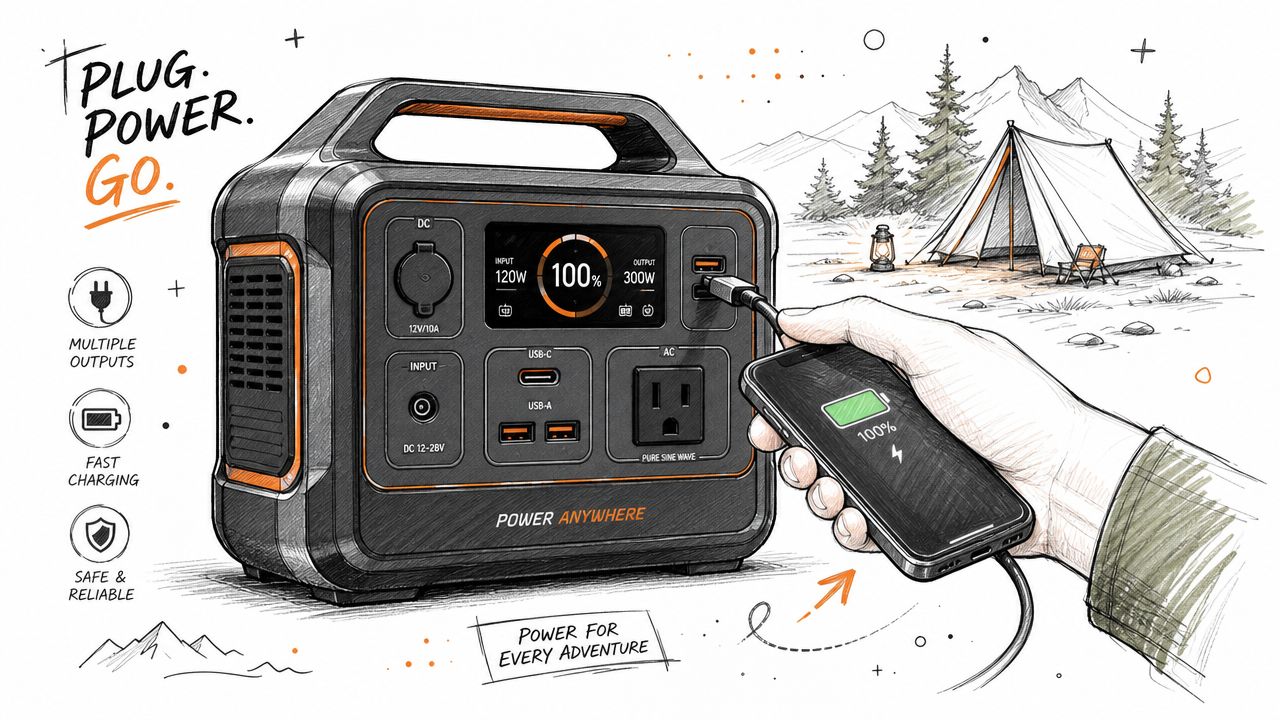
A good unit packages the battery, inverter, charge controller, and outlets in one case. That simplicity has real value. Setup is usually limited to charging it, plugging in loads, and learning its limits before an emergency hits.
For light-duty use, that trade-off makes sense. Portable stations work well for phones, laptops, lights, routers, camera gear, CPAP machines, and other modest loads that need clean AC or DC power. They also fit situations where drilling holes, mounting panels, or modifying a service panel is not practical.
The biggest mistake is buying one as if it were a small whole-house system.
Battery capacity disappears faster than new buyers expect, especially once a unit is running anything with a heating element, compressor, or long daily runtime. A refrigerator, coffee maker, microwave, induction burner, or space heater can drain a portable station in a hurry. Surge loads matter too. A unit may advertise a healthy output number and still struggle with startup demands from pumps, freezers, or power tools.
That is where total cost of ownership matters more than sticker price. A portable station can be the cheaper choice if it covers your real needs for a few years with no installation labor and very little maintenance. It can also become an expensive detour if you buy one, then add extra panels, expansion batteries, adapters, and eventually a second larger unit because the first one never matched your routine.
I usually suggest portable systems for three situations:
- Short outages at home: Keep communications, lighting, internet, medical devices, and a few food-storage loads running.
- Mobile use: RV travel, car camping, overlanding, vendor booths, and temporary work sites benefit from quiet power and easy transport.
- First-step backup: A household can start with a portable unit now, then later decide whether a fixed battery system is worth the cost.
Permanent off-grid living is different. Once power needs include well pumps, laundry, workshop tools, electric cooking, or several days of poor solar production, the economics shift toward installed infrastructure. At that point, buyers are no longer choosing a gadget. They are choosing a household utility, and that decision often intersects with transfer equipment, generator tie-in, and in some homes, professional electrical panel installation.
This walkthrough gives a closer look at real-world portable use cases:
A portable power station is often the best first purchase for someone who needs cleaner backup power, but it's rarely the final answer for full off-grid living.
Used for the right job, portable stations are practical, quiet, and low-friction. Used as a substitute for a properly sized off-grid system, they usually disappoint. The best choice comes down to how you live, what must stay on, and how much inconvenience you are willing to accept when the battery gets low.
Matching Your Power System to Your Lifestyle
The best off grid power system depends less on brand and more on daily rhythm. A family preserving freezer food during outages has different priorities than a couple camping out of a hatchback. Lifestyle fit decides whether a system feels dependable or frustrating.
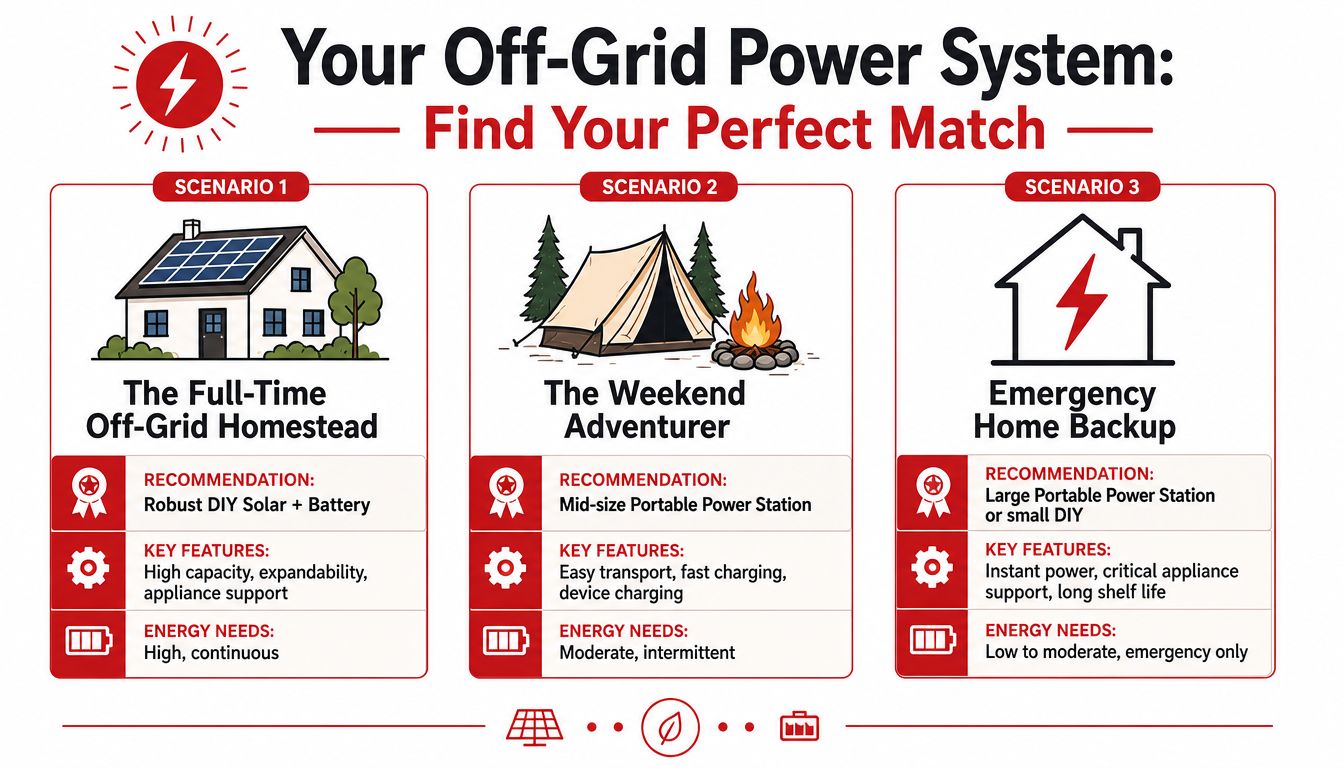
Full-time off-grid homestead
A homestead needs infrastructure, not gadget power. The right foundation is usually a fixed solar-and-battery system designed around year-round essentials, with a realistic backup source for bad production windows.
That backup matters in cloudy regions. A 2025 analysis of off-grid cabin performance in the Pacific Northwest found that solar-only systems failed to meet baseline energy needs for 18 to 24 days annually during winter months, while hybrid systems using solar plus wind or propane generator backup maintained more than 95% reliability.
For this lifestyle, a single-source plan is usually too fragile. Solar plus battery plus generator, or solar plus battery plus wind where conditions justify it, is the more durable path.
Weekend RVer or van traveler
Mobility changes the answer. Portable power stations make sense here because they're compact, easy to recharge, and simple to move between vehicle use and campsite use. They support fans, lights, device charging, and selected small appliances without turning the trip into an electrical project.
A modest roof or portable panel setup can complement that system well, especially for topping up during daylight stops. The key is staying honest about runtime and weather limits.
Backcountry camper
Backcountry users need low weight, low complexity, and gear that survives rough handling. That points away from heavy battery boxes and toward compact lighting, phone charging, and emergency redundancy.
A basic preparedness kit also matters more the farther the user gets from roads. Supplies from established outdoor safety brands such as Adventure Medical Kits and Survive Outdoors Longer fit naturally into the same planning mindset as off-grid power. In the backcountry, light, communication, warmth, and first aid support the same goal.
The best system for a backpacker is often the one with the fewest failure points, not the most features.
Emergency-prepared household
For outage planning, the most practical choice is often a large portable power station or a small fixed backup setup dedicated to essentials. Refrigeration, communications, lighting, and medical devices usually matter more than trying to power the whole house.
A prepared household also benefits from layered lighting, spare charging options, and a non-electric fallback plan. That approach is less glamorous than a giant inverter, but it performs better under stress.
Safety Installation and Long-Term Maintenance
Reliability doesn't come from buying expensive equipment. It comes from safe installation, regular inspection, and accepting that every power system needs upkeep.
Safety first during setup
DIY off-grid systems involve both DC and AC hazards. Battery banks can deliver dangerous fault current, inverter circuits can injure or kill, and poor terminations create heat that shows up later as equipment damage or fire risk. Proper fusing, disconnects, grounding, cable sizing, and ventilation aren't optional.
When a system connects to household circuits or a main service panel, professional review is the sensible move. Homeowners comparing service work can use practical references like this guide to electrical panel installation to understand what qualified panel work involves before hiring an electrician.
Maintenance that prevents failure
Different systems fail in different ways, so maintenance should match the hardware.
- For fixed solar systems: Clean panels when dirt or debris reduces output, inspect wiring and terminals, and check mounting hardware for movement or corrosion.
- For battery systems: Follow the maker's storage and charging guidance, watch for abnormal heat, and verify that protections and monitoring still function correctly.
- For generators: Rotate fuel, run the machine periodically, and keep oil, air filtration, and starting systems in working order.
- For portable stations and lighting gear: Recharge on schedule, store them out of extreme heat, and test them before storm season or a long trip.
A final safety habit matters just as much as maintenance. Keep redundancy in the plan. If the inverter fails, there should still be light. If the weather turns, there should still be a backup charging path. The best off grid power system is never a single point of failure.
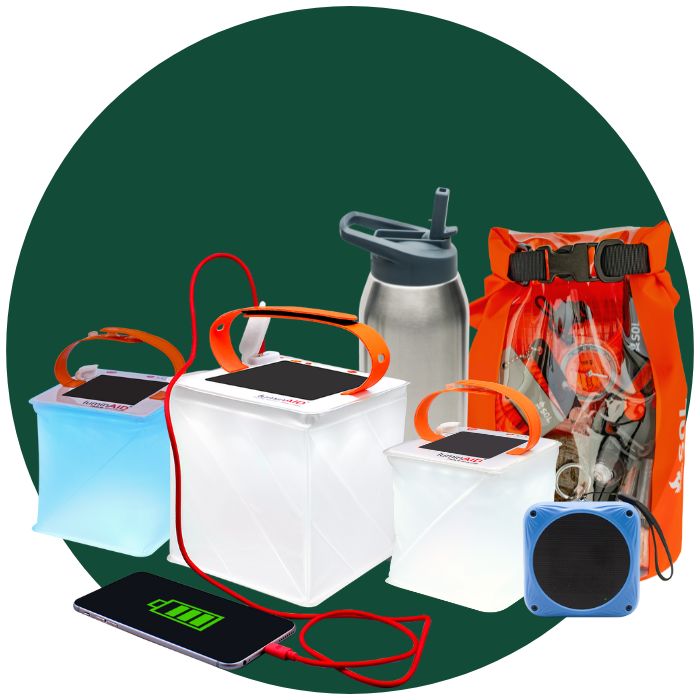
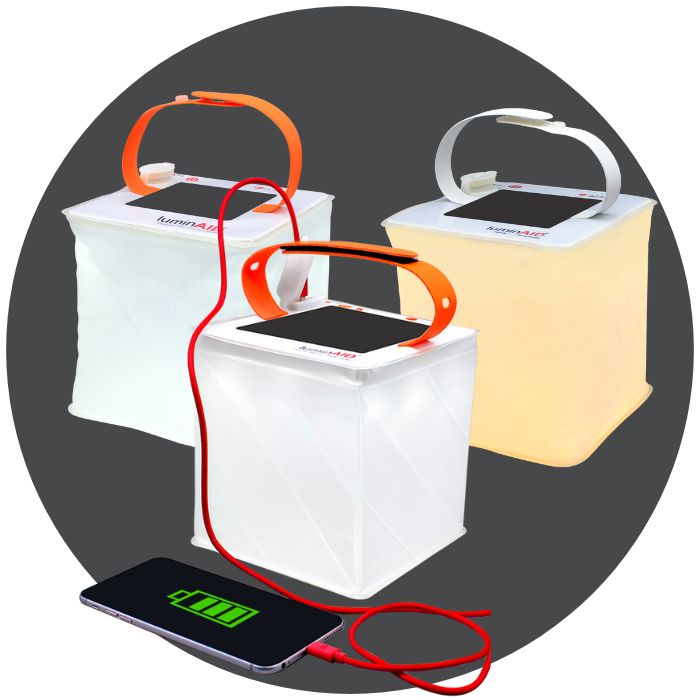
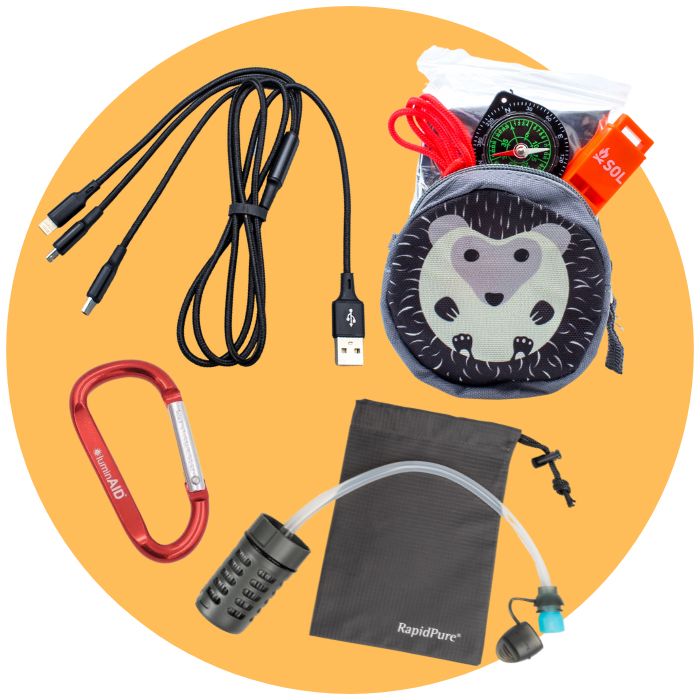
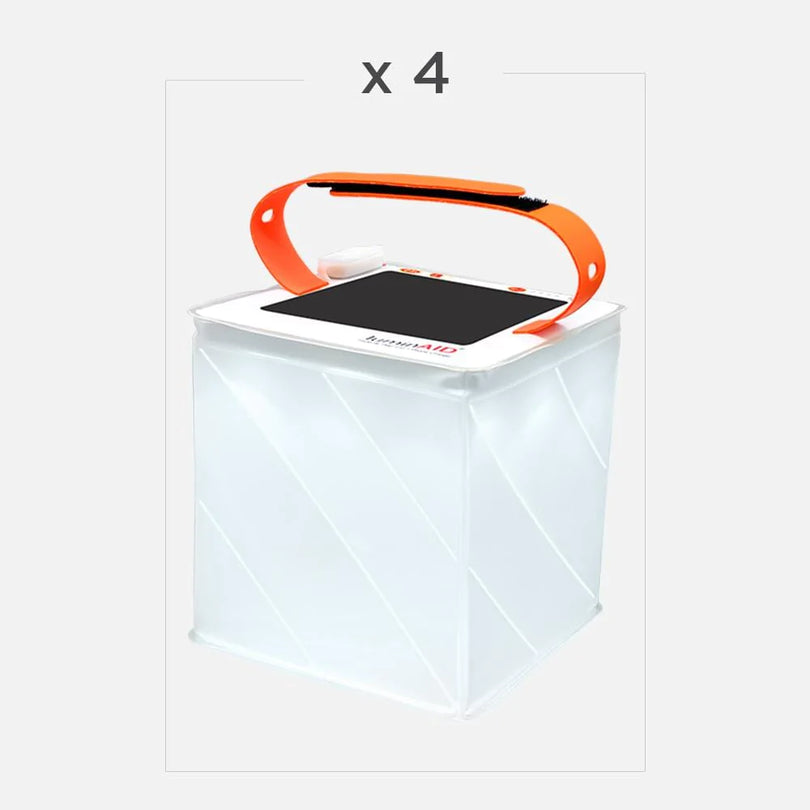
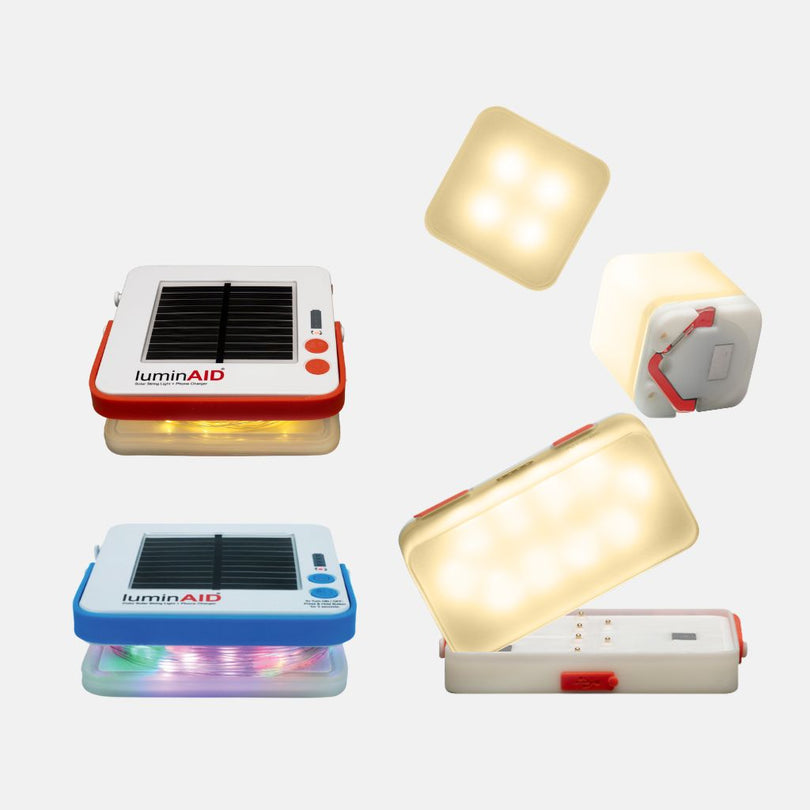
For dependable off-grid lighting and backup charging that fits camping kits, emergency bins, road trips, and everyday outages, LuminAID is worth a close look. Its portable solar lanterns and phone-charging lights are compact, simple to store, and easy to deploy when the main system is unavailable or power needs stay small.