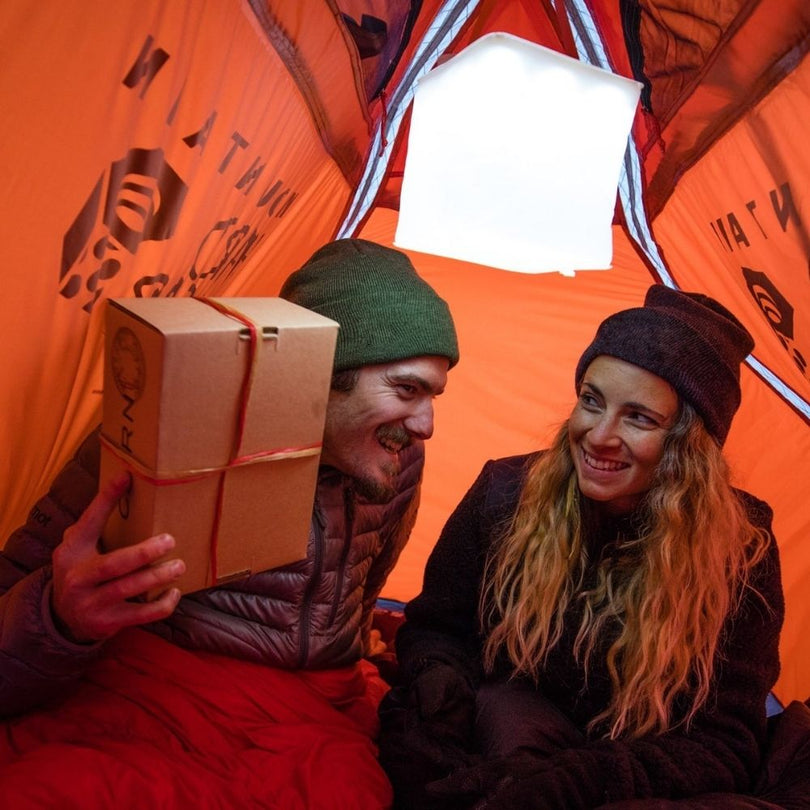
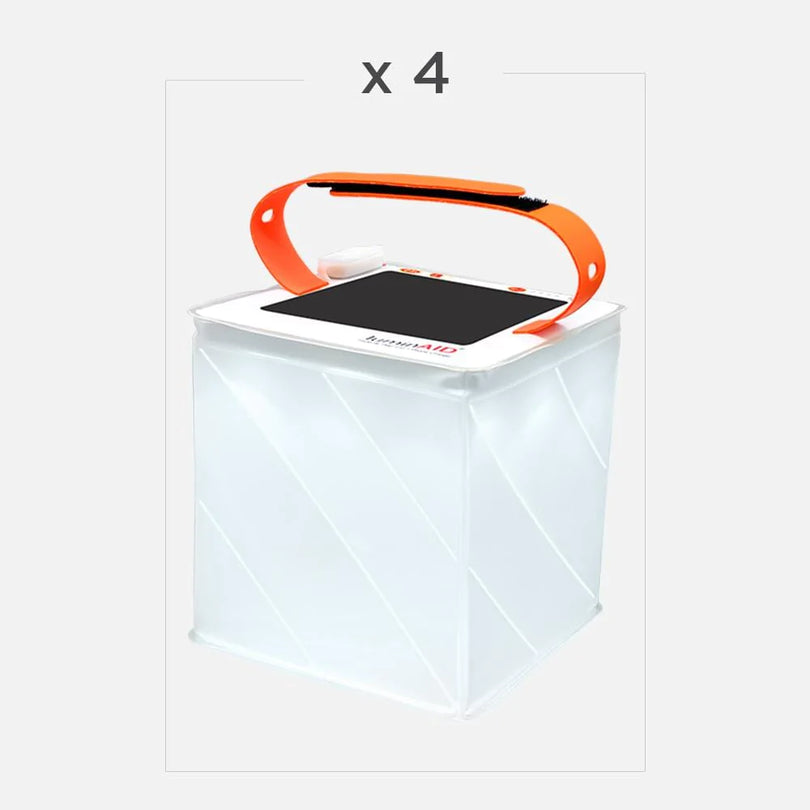

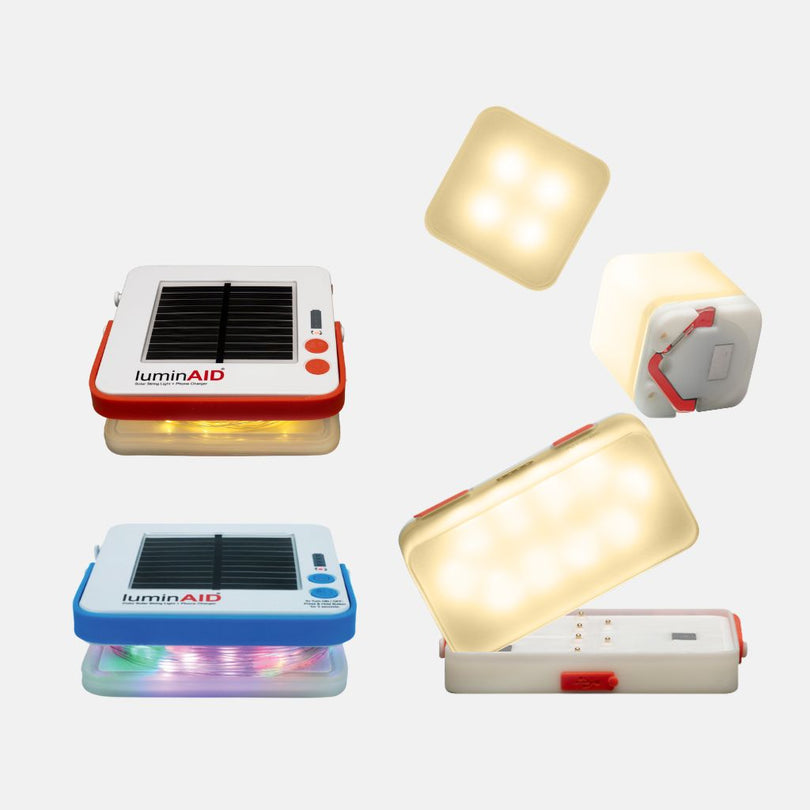


At sunset, a campsite can become a small exercise in power management. The lantern needs to stay bright enough for cooking and finding gear, while a phone may still need enough charge for navigation, weather updates, or an emergency call. A solar camping light and charger brings those jobs together, but it works best when campers understand what the device can and can't do.
This guide starts with the energy path from sunlight to battery, light, and USB output. It then translates lumens, battery capacity, charging current, weather protection, and portability into practical decisions for backpacking, family camping, vehicle-based trips, and emergency kits. The central idea is simple: a solar hybrid device isn't just a lamp. It's a heat-sensitive battery system that collects energy slowly, stores it, and shares that reserve between illumination and charging.
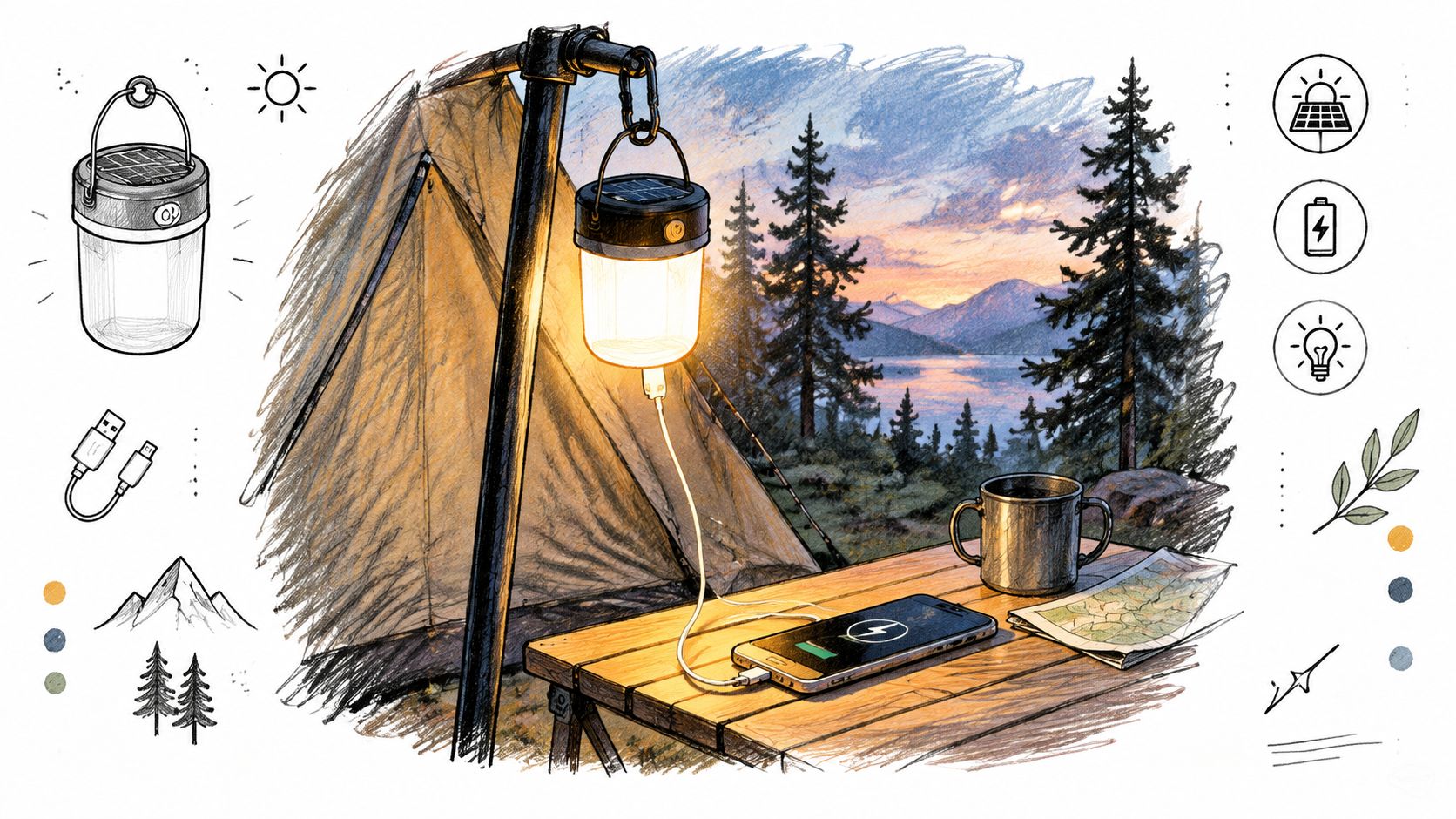
Table of Contents
- Introduction to Solar Camping Lights With Built In Charging
- How a Solar Camping Light and Charger Actually Works
- Key Features That Determine Performance and Reliability
- Where a Solar Camping Light and Charger Shines Brightest
- How to Choose the Right Solar Camping Light and Charger
- Practical Tips for Charging Using and Storing Your Light
Introduction to Solar Camping Lights With Built In Charging
A standard flashlight mainly answers one question: where should the beam point? A power bank answers another: which device needs energy? A combined solar lantern and charger handles both, usually through a broad LED light and a USB output connected to an internal rechargeable battery.
That combination makes sense at camp. A lantern can illuminate a tent or picnic table, while the same stored energy can provide a phone top-up. The solar panel adds off-grid flexibility, although it shouldn't be treated like a wall outlet. Built-in panels collect energy gradually, so the device is most useful when charged before the trip and then replenished whenever conditions allow.
The category also reflects a wider change in outdoor lighting. The global camping lanterns market was valued at $1.82 billion in 2025 and is projected to reach $3.14 billion by 2034, with a projected 6.2% CAGR, according to Dataintelo's camping lanterns market analysis. LED lanterns represented 48.3% of revenue in 2025, or about $879.1 million, while recreational camping accounted for about 46.1% of global demand and North America contributed roughly 34.6% of revenue in that market.
Those figures describe the wider lantern category, not every solar model. They do show why rechargeable LED products have become central to modern camp lighting. Solar models add another useful layer, they collect off-grid energy and can direct part of that reserve toward a phone.
Practical rule: Treat the device as a rechargeable lantern with supplemental solar charging, not as a miniature generator.
That mindset prevents the most common disappointment. A compact unit can be lightweight, pack-flat, and valuable during a trip or outage, but its usefulness depends on brightness settings, battery condition, sun exposure, and sensible heat management.
How a Solar Camping Light and Charger Actually Works
The easiest way to understand the system is to picture a water tank. The solar panel is the inlet pipe, the battery is the tank, the LED array is one faucet, and the USB port is another faucet. Sunlight fills the tank slowly, then the device releases stored energy as light or electrical output.
The process has four linked stages:
- Sunlight capture: The panel converts available sunlight into electrical energy.
- Energy storage: A rechargeable battery holds that energy for use after dark.
- Light output: LEDs draw from the battery and turn electricity into illumination.
- Device charging: USB circuitry sends part of the battery's reserve to a phone or other compatible device.
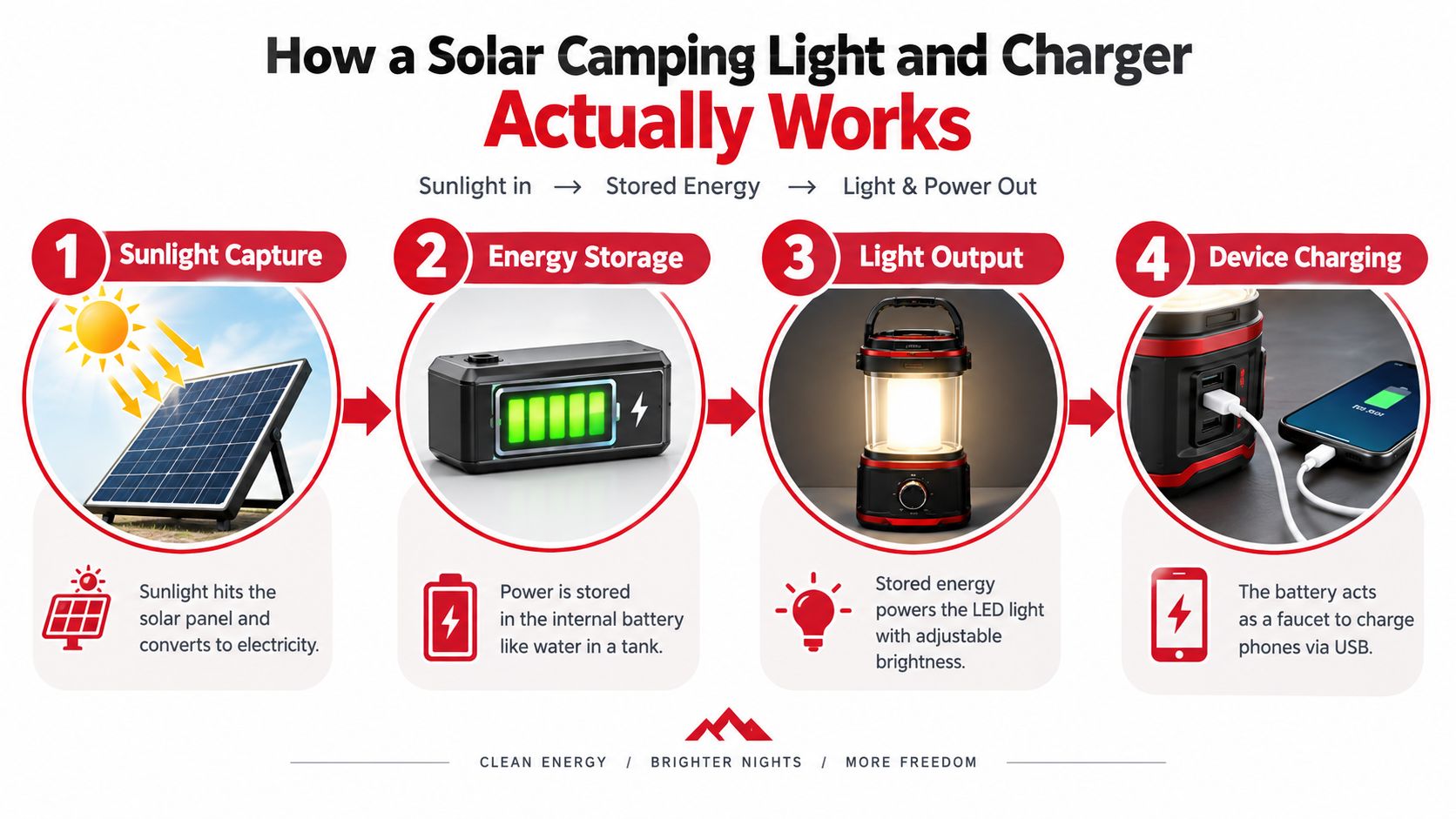
The tank analogy explains why panel size alone doesn't tell the whole story. Sun intensity, panel efficiency, battery charge efficiency, and the device's electrical controls all affect how much energy reaches the battery. If a camper runs the lantern while trying to charge a phone, both outputs draw from the same stored reserve. Variable cloud cover makes that balance harder.
Initial charging also takes patience. Solar lighting instructions commonly call for several hours of full sun before first use. One product manual specifies at least 8 hours for the initial charge and 6 to 8 hours for later full charges, as described in the Livarno Home solar light manual.
A solar panel attached to a lantern is therefore best viewed as a maintenance and backup input. It can restore some energy during a sunny day, but a camper shouldn't assume that a short period outdoors will fully refill a depleted battery.
The same principle applies to phone charging. A solar power bank is generally a backup device for camping, not the primary source of phone power. Independent camping guidance describes 20,000 to 30,000mAh lithium-ion power banks, approximately 74 to 111Wh, as common capacities for multi-day backcountry or car-camping trips, as summarized in Verified Market Reports' solar camping lamp overview.
Key Features That Determine Performance and Reliability
A product listing can make a lantern sound powerful without showing how it will behave inside a tent or beside a cooking area. The useful question is always, what does this specification change at camp?
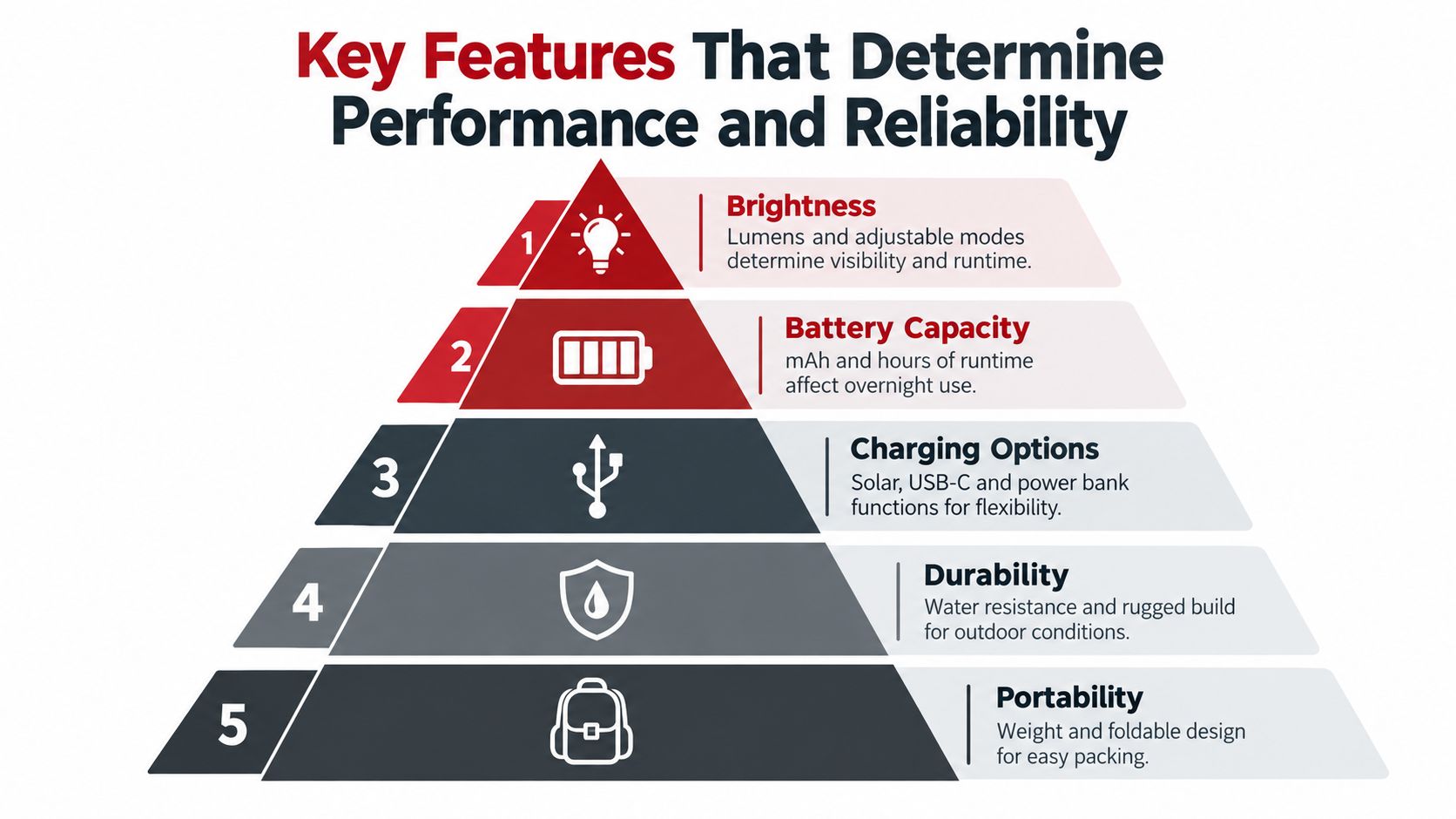
Brightness affects visibility and runtime
Lumens describe the amount of visible light produced. More lumens generally mean a brighter space, but brightness isn't automatically better. A high setting can use the battery faster, while a lower, diffused setting may be comfortable for reading, eating, or moving around a tent.
An engineering analysis identified a practical design target of about 18 lumens with roughly 4 hours of runtime for many users. The analysis estimated manufacturing cost near US$9 and retail pricing around US$18 to US$20, with a modeled payback period of about 5 months in off-grid use. Its model examined 81 PV, battery, and controller combinations, with runtime ranging from 3.0 to 8.7 hours. 57 combinations met the minimum 4-hour requirement, showing how battery efficiency, LED performance, and daily sun hours work together. See the UC Davis engineering analysis for the underlying model.
Battery capacity is the reserve
Battery capacity tells campers how much energy the device can store, but runtime depends on the selected brightness and whether the USB port is active. A lantern with adjustable modes gives users a way to reserve energy for later rather than spending the whole battery at maximum brightness.
For a phone charger, the USB output specification deserves close attention. A field-tested 20W portable solar charger delivered up to 5V/2.1A through USB, while expert reviews recommend at least 2.4A for efficient charging of common USB devices, according to Treeline Review's portable solar panel comparison. A lower-output charger may work, but variable sunlight and simultaneous lantern use can make charging slow.
Packability and protection complete the picture
Backpackers usually prioritize low bulk and a pack-flat design. Car campers can accept a larger body if it offers a broader light spread or more battery reserve. For either user, check the handle, hanging loop, port cover, controls, and battery compartment.
Weather protection matters too. Safety guidance identifies IP44 as suitable for covered use and IP65 for more exposed conditions, while recommending gasketed battery bays and protected cells. The solar light safety guidance from Heoxo explains why seals and battery protection deserve as much attention as the LED rating.
Where a Solar Camping Light and Charger Shines Brightest
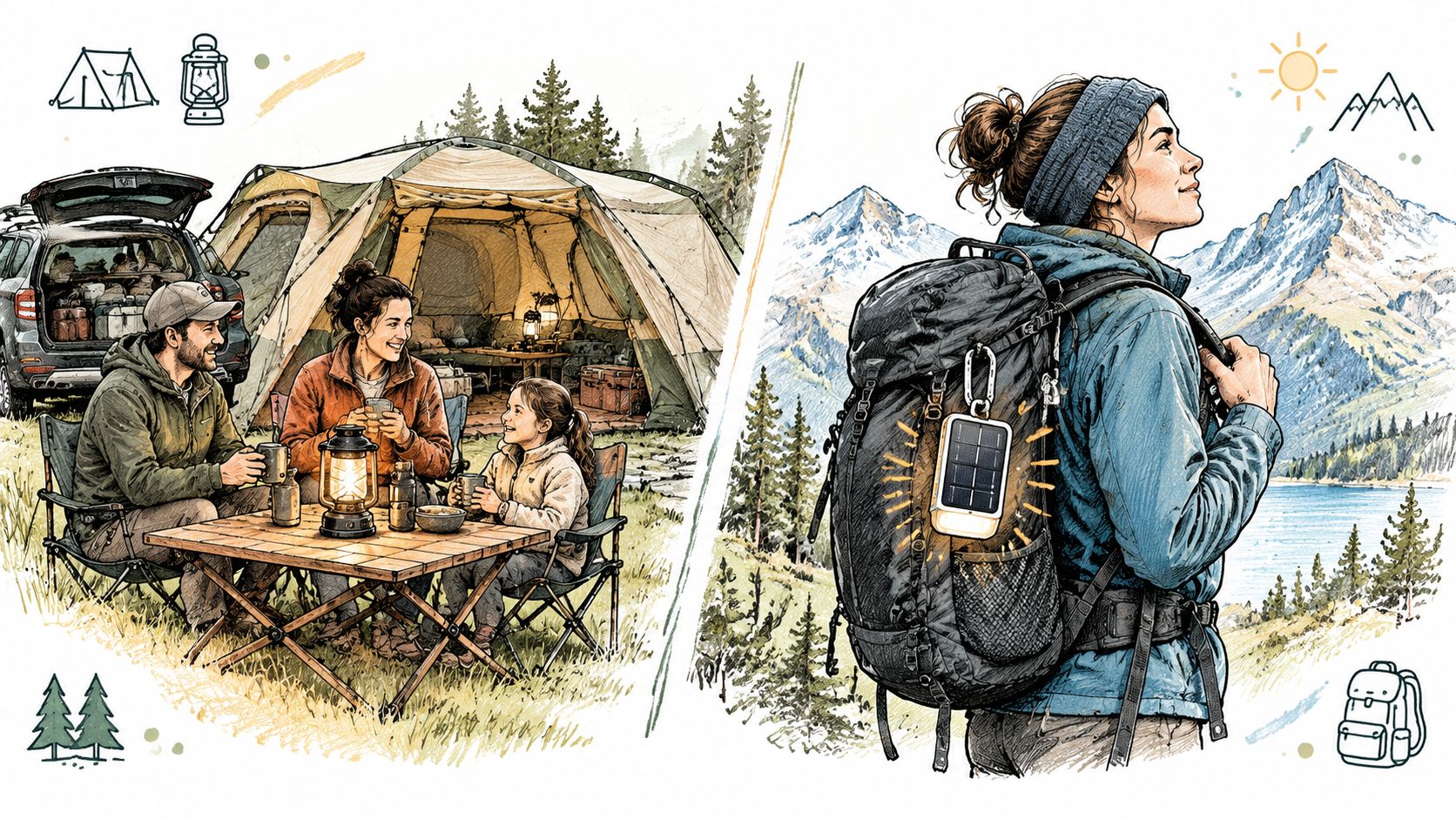
The right use depends on what the camper values most. A family at a drive-in campsite may care about broad illumination and simple controls. A backpacker may care more about packability and whether the device can provide useful light without becoming another heavy item in the bag.
Car and family camping
At a family campsite, the lantern may serve several roles over one evening. It can hang near the tent entrance, move to the picnic table for meal preparation, and provide gentle light inside the tent. Weight matters less than a stable body, a wide light pattern, and controls that are easy for different people to use.
A phone-charging port adds convenience when the campsite has no outlet. It can help preserve access to maps, messages, and weather information, although the charger should be treated as a reserve rather than a replacement for pre-trip charging.
Backpacking and remote travel
Backpackers need a tighter match between features and actual tasks. A compact lantern with a low-light mode may be more useful than a brighter, heavier unit that stays buried in the pack. Solar collection can help during a multi-day trip, but the panel needs unobstructed exposure and enough time to collect meaningful energy.
Remote travel also makes redundancy valuable. Campers planning an expedition can review planning a Botswana safari for broader preparation ideas, then decide whether lighting, phone power, and emergency signaling should share one device or be split across several.
Outages, RVs, and vans
During a power outage, a solar lantern can illuminate a hallway, countertop, or charging station without fuel or a mains connection. In an RV or van, the same device can move between indoor and outdoor spaces. Backyard users may want warm ambient light, while emergency users generally prioritize clear controls, battery reserve, and weather protection.
For a broader equipment checklist, the off-grid camping gear guide from LuminAID can help campers think about lighting alongside cooking, shelter, communication, and first aid.
How to Choose the Right Solar Camping Light and Charger
Selection becomes easier when the device is matched to the trip before the specifications are compared. A lantern for a single evening at a family campsite has different requirements from a charger expected to support a phone during a remote multi-day trip.
Start with the job
A buyer can begin with four questions:
- Trip length: Will the lantern be used for a brief overnight stay, or must it conserve energy across multiple nights?
- Group size: Does one person need a small personal light, or does a family need broad illumination around shared space?
- Charging demand: Is the USB port for an occasional emergency top-up, or will it be part of the daily power plan?
- Weather exposure: Will the device sit under a tent shelter, or could it face open rain, splash, and damp ground?
The answers determine which specifications deserve priority. A solo backpacker may favor a pack-flat body and adjustable low mode. A family may prefer easy hanging, a diffused beam, and simple controls. A phone-dependent traveler should inspect USB output current instead of focusing only on the solar panel's advertised wattage.
Use this comparison checklist
| What to compare | Suitable signs | Why it matters |
|---|---|---|
| Light output | Adjustable brightness and a diffused lantern mode | Helps balance visibility with battery use |
| Battery | Published capacity and realistic runtime information | Shows how much reserve the device has |
| USB charging | Output current appropriate for common devices | Determines whether phone charging is practical |
| Solar input | A panel that can receive clear daylight | Makes off-grid replenishment more useful |
| Weather protection | A relevant IP rating, sealed ports, and a gasketed battery bay | Reduces exposure-related risk |
| Carrying design | Pack-flat construction, handle, loop, or compact shape | Controls how easily the device travels |
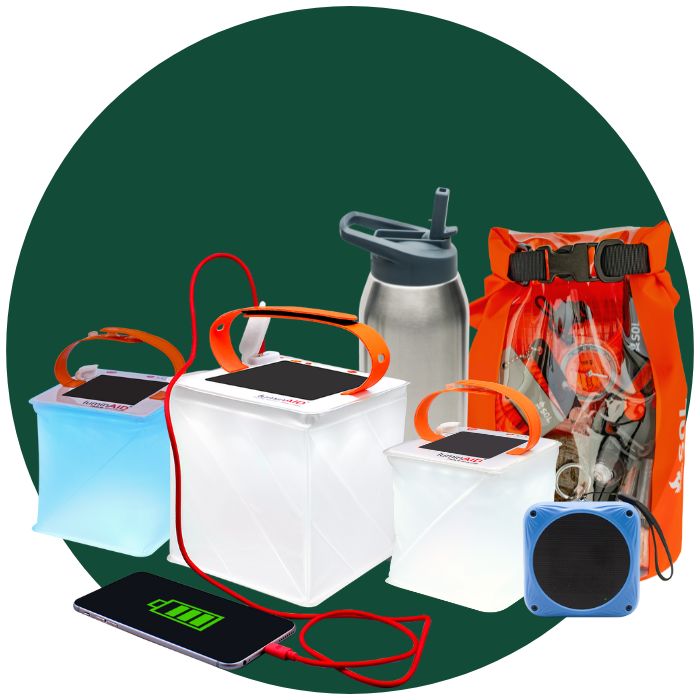
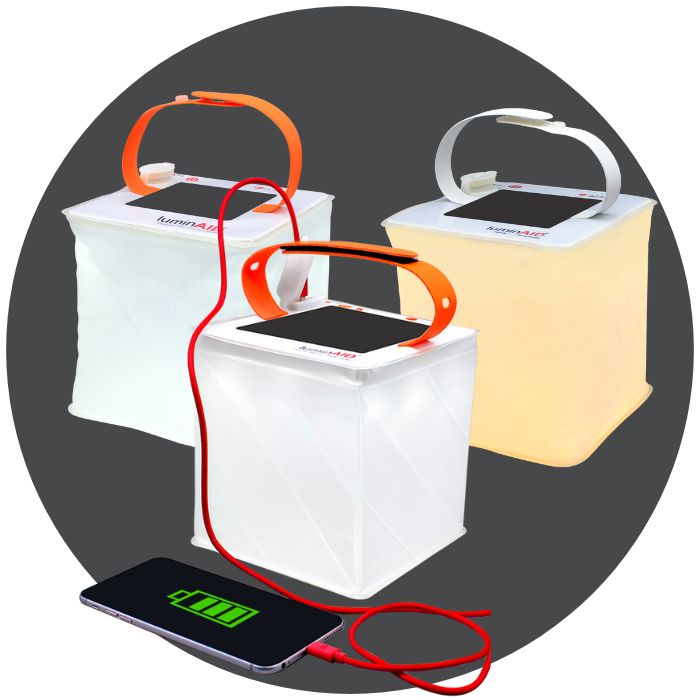
A buyer comparing LuminAID should also consider its pack-flat, waterproof design and Off-Grid Guarantee alongside the technical specifications. Those features matter only when they match the intended use, so the same checklist should be applied to any product under consideration.
The phrase “2-in-1” can create unrealistic expectations. A lantern and charger share one battery, so using both functions at once divides the available reserve. The LuminAID guide to 2-in-1 solar lantern chargers offers useful context for weighing that convenience against charging limits.
Practical Tips for Charging Using and Storing Your Light
Good care starts with separating the panel from the battery's heat exposure. The panel needs sunlight, but the integrated lithium-ion battery shouldn't bake in direct heat all day. Independent battery guidance warns that lithium-ion charging above 45°C, or 113°F, can degrade performance, while dashboards and asphalt can reach 60 to 70°C. The solar power bank battery health guidance from Chargie recommends placing the panel in sun while keeping the battery shaded.
A simple camp routine helps:
- Charge before departure: Give the device the full initial charging period specified by its manual.
- Position for open daylight: Keep the panel clear of branches, gear, and shade during the strongest available sun.
- Shade the battery: Hang or place the battery section under cover while leaving the panel exposed.
- Prioritize the reserve: If power is low, avoid running bright light and charging a phone at the same time.
- Inspect weather protection: Confirm that seals, port covers, and the battery bay are closed before exposed use.
- Store thoughtfully: For longer storage, guidance recommends keeping the battery around 60 to 80% charge rather than fully charged.
The solar input should be considered a top-up opportunity, not a promise of daily full recharge. A cloudy day, poor panel angle, shade, and active USB use can all leave less energy available after dark.
For a focused explanation of solar phone charging during camping, the solar power bank camping guide from LuminAID provides a useful reference. With reasonable brightness settings, shaded battery storage, and planned charging, a solar camping light and charger can remain a dependable part of a camping or emergency kit.
LuminAID offers portable solar lanterns and 2-in-1 phone chargers for camping, outages, and everyday outdoor use, with adjustable light, USB charging, and packable designs. Visit LuminAID to compare lanterns and bundles, then choose the setup that fits the trip's lighting, phone-power, and emergency needs.