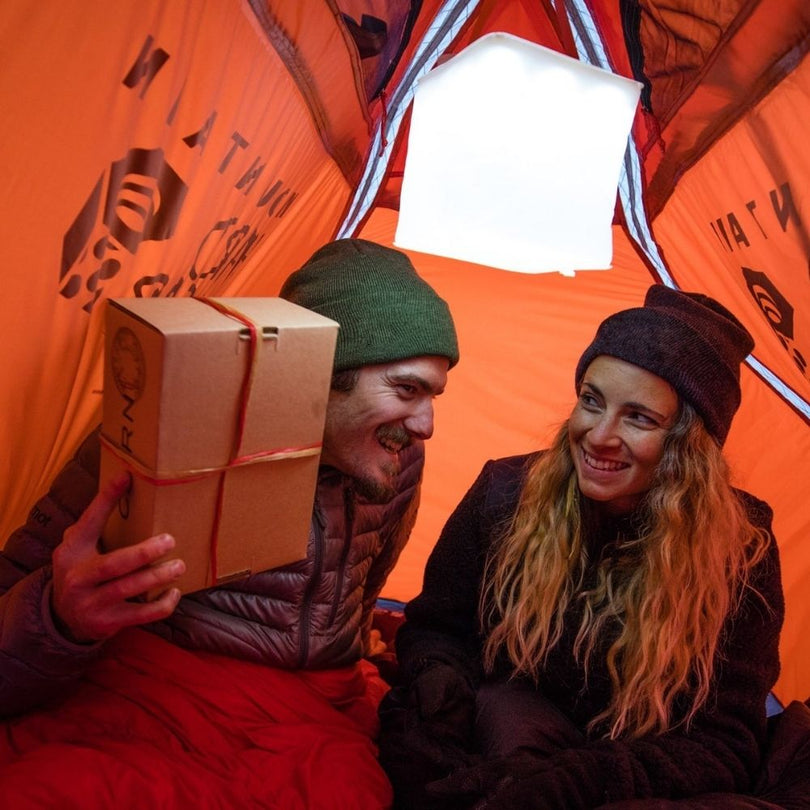



You're standing on a dark patio after dinner, or crouched in a tent with one dim flashlight and a dead phone. That's usually when ambient lighting stops feeling decorative and starts feeling useful. The best ambient lighting ideas don't just make a space look better, they help people move, relax, cook, read, gather, and sleep with less friction.
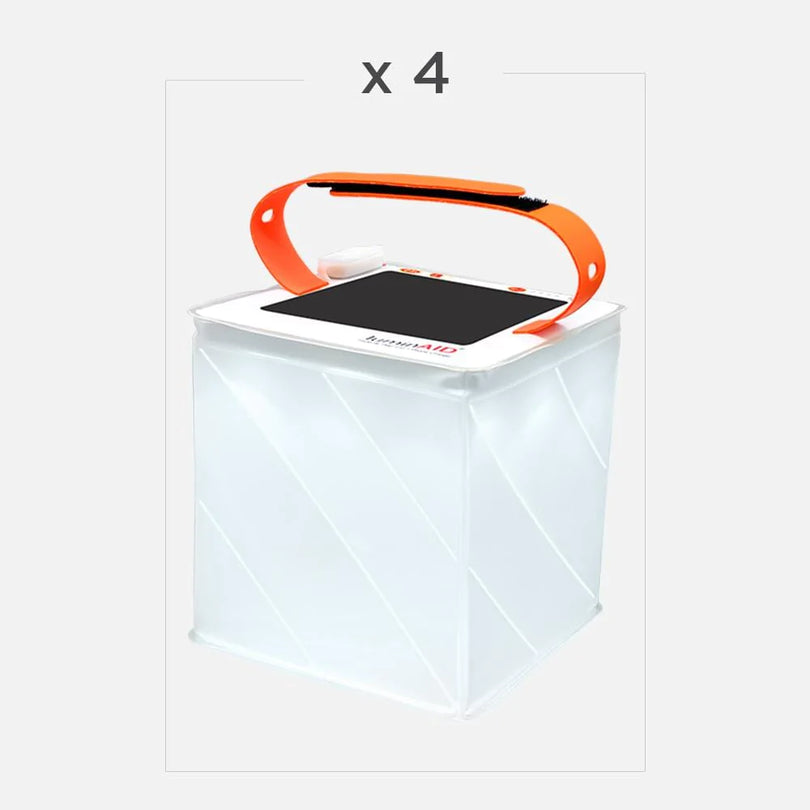
A solid lighting plan usually starts with ambient light as the room's primary layer, then adds task and accent lighting where needed, which matches the broader lighting guidance that ambient light provides overall brightness before other layers do their work human-centric lighting overview. The same logic works outside, in a backyard, at a campsite, or during an outage. Warm, layered light can make a patio feel finished, a tent feel calmer, and a blackout feel manageable.
The ten ideas below are grouped by real-life scenarios, home, backyard, camping, and emergency use, so the reader can build a lighting setup that fits how the space is used. Some ideas lean on solar power, some on placement, some on color temperature, and some on redundancy. A few are purely about making a better evening feel easy to reach, without hardwiring anything.
Table of Contents
- 1. Solar Lanterns with Adjustable Brightness and Integrated Phone Charging
- 2. Solar String Lights for Outdoor Ambiance
- 3. Ambient Warm White Lighting Design
- 4. Layered Ambient Lighting with Multiple Fixtures
- 5. Pathway and Accent Solar Lights
- 6. Portable Lantern Placement for Ambient Zones
- 7. Circadian-Rhythm-Friendly Evening Lighting
- 8. Overhead Hanging Ambient Lighting Systems
- 9. Color-Adjustable Ambient Lighting for Versatility
- 10. Emergency Preparedness Ambient Lighting Systems
- 10-Item Ambient Lighting Ideas Comparison
- Bringing It All Together Build Your Ambient Lighting Plan
1. Solar Lanterns with Adjustable Brightness and Integrated Phone Charging
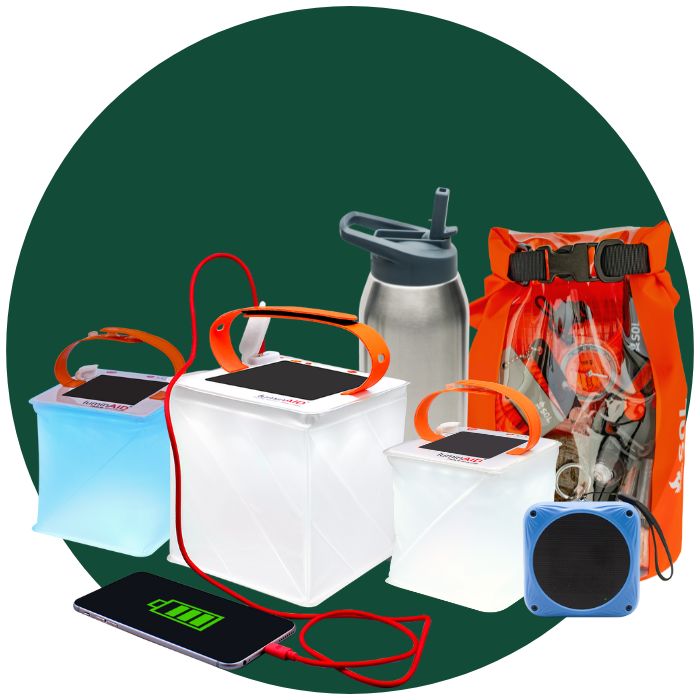
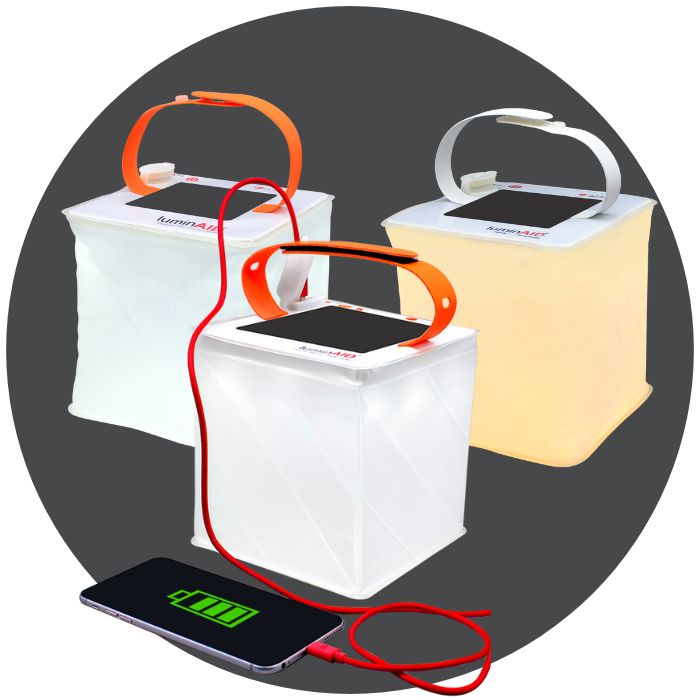
A solar lantern with adjustable brightness earns its keep fast because it solves two problems at once, light and phone power. That matters on a multi-day camp trip, during hurricane prep, or in a van where every watt has to work harder than the last. For off-grid use, the smartest setup is the simplest one, a lantern charged in daylight, then dimmed at night so the battery isn't wasted on more brightness than the scene needs.

The practical trade-off is obvious. Bright light drains reserve power faster, and phone charging can take priority over a brighter glow if communication matters. That's why a portable model like the one described in LuminAID's multi-purpose light guide fits emergency kits and camping loads better than a lantern that only lights the table.
Practical rule: charge the lantern fully during the day, then use the lowest setting that still lets people move, cook, or read safely.
A few habits make the lantern more dependable. Keep the solar panel aimed at direct sun, wipe dust or salt spray off the panel, and stop charging non-essential devices when the battery gets low. In family emergency kits, it helps to charge the most important device first, then use remaining capacity for backup power or a second phone. For humanitarian work, remote cabins, RVs, and storm kits, that dual-purpose design reduces what has to be packed and maintained.
2. Solar String Lights for Outdoor Ambiance
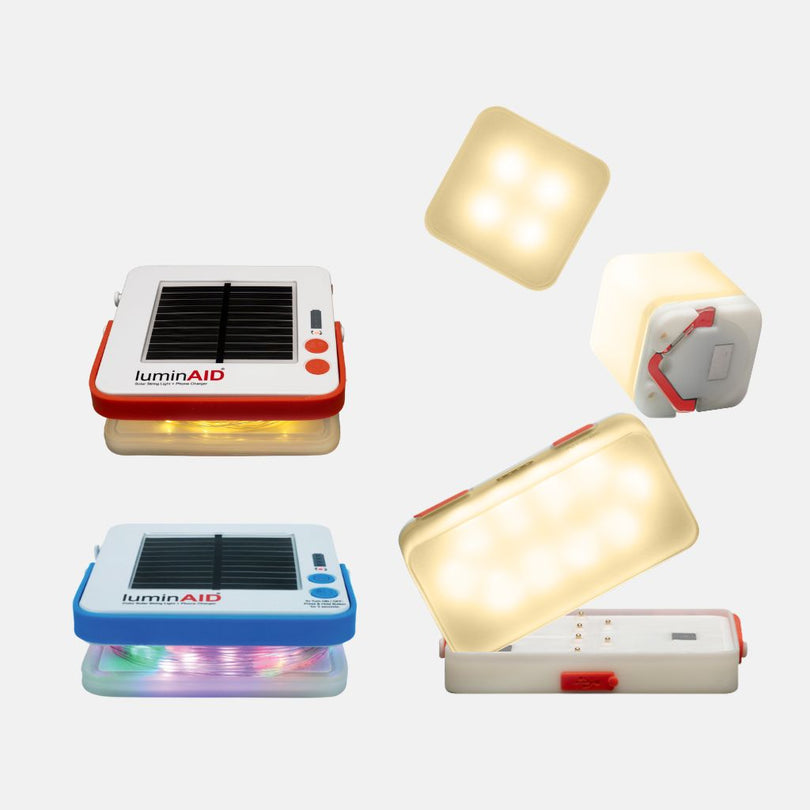
Solar string lights work best when the goal is atmosphere, not brute-force brightness. They're the easiest way to turn a patio, fence line, pergola, or RV awning into a space people want to stay in after sunset. In backyard dinner setups, they can replace the flat look of a single porch light with something that feels softer and more intentional.
A clean installation starts with sunlight, not with the light run itself. Put the panel where it gets long, unshaded exposure, then plan the string so the bulbs create shape instead of random loops. The installation becomes more convincing when the line has geometry, especially if the bulbs change height across a fence, tree, or deck railing.
The right comparison here is with permanent bistro lighting. A product like Forever Party Rentals' bistro string lights is useful for wired event work, but solar string lights win when the space needs quick setup, less maintenance, or no outlet at all.
Learn how LuminAID frames solar outdoor string lighting for patios, events, and outdoor living.
Where they work best
- Backyard dining areas: Use them above a table or along a fence so guests get a glow that feels welcoming instead of harsh.
- Garden paths and edges: Hang them low enough to define the space, but not so low that they become visual clutter.
- Camp and RV setups: String them near awnings or picnic areas when the goal is shared ambiance after dark.
- Outage backup lighting: Keep them on hand for supplemental light on porches or covered patios.
A monthly panel cleaning helps keep charging consistent. For events, test the lights the day before, not the day of the party, because a half-charged battery will always look weaker than expected. If the setup must cover a larger area, combine more than one string rather than stretching one line too far.
3. Ambient Warm White Lighting Design
Warm white light around 2700K is the easiest color temperature to live with when the goal is comfort. It gives off a golden tone that reads as relaxed, especially in outdoor dining spaces, glamping areas, and backyards where the evening is meant to slow down. The reason it keeps showing up in good lighting plans is simple, it flatters wood, stone, plants, and skin better than a cool, blue-white beam.
A lot of lighting gets ruined. A space can have good fixtures and still feel cold if the bulbs are too white or too harsh. The better move is to choose fixtures labeled warm white and use them where people sit, talk, or unwind, then reserve brighter or cooler light for places that need visibility, like steps or work surfaces.
Warm light isn't just a style choice. It's usually the better default for social spaces because it feels less clinical and more livable.
The easiest way to build warmth is to mix heights. A string of warm bulbs overhead, a lantern at table level, and a softer glow near the ground makes the whole area feel deeper. That layered look also makes a backyard entertaining area read as one finished space instead of a random collection of fixtures.
A Wedding Studio project style often leans on this exact approach, warm light, flattering materials, and a calm background that doesn't fight the setting. The same idea translates cleanly to campsites and patios. Use warm white where people gather, and let the scene do the rest.
4. Layered Ambient Lighting with Multiple Fixtures
A single fixture rarely gives a space enough shape. Layered ambient lighting works because it spreads brightness across different heights and different functions, so the eye doesn't stop at one obvious source. That matters in multi-zone backyards, outdoor dining areas, boutique hospitality spaces, and glamping setups where people need to read the room instantly.

The broad rule from home-lighting guidance is to use at least two to three ambient sources at varying heights, and many rooms do better with three or more fixtures, especially when the space opens up and needs even coverage ambient lighting layering guidance. Outdoors, that usually means one source overhead, one at seated height, and one near the ground or in the planting beds. In larger open areas, the point isn't more brightness, it's less visual dead space.
A practical three-part split works well, ambient as the base, task where people need to see clearly, and accent to highlight trees, walls, or architectural edges. There's no need to make every light do everything. A lantern shouldn't have to light the whole yard, and a string light shouldn't have to replace pathway markers.
The other advantage is control. With more than one fixture type, the user can turn parts of the setup on or off depending on whether the night is casual, busy, or quiet. Dimmers help here, and so does testing the full system at dusk, when dark corners and over-lit spots become obvious fast.
5. Pathway and Accent Solar Lights
Pathway lights aren't just about safe footing, they also give an outdoor space a readable edge. That makes them useful along garden walks, driveways, parking areas, and RV campsite perimeters where people need to know where to step and where not to. Solar versions are especially handy because they can be moved without trenching, wiring, or an electrician.
The placement matters more than the hardware style. A few lights spaced with intention will look better than a scattered line that tries to cover too much. Use them to guide movement first, then use a few extra fixtures to highlight a rock, statue, tree, or water feature if the scene needs a focal point.
Placement that usually works
- Group them in odd numbers: Clusters of 3 or 5 usually look more natural than even rows.
- Keep spacing consistent: Along walkways, regular intervals help the light feel functional and calm.
- Match color temperature: Warm white at 2700K keeps the path lighting consistent with other outdoor fixtures.
- Check the ground contact: Dirt, mulch, and debris can block charging if the panel sits too low.
This kind of lighting does two jobs at once. It helps a guest find the door after dark, and it gives the property a soft outline that makes the whole area feel more finished. For event venues, that same effect can also guide foot traffic without adding a lot of visual noise.
The mistake to avoid is overdoing it. Too many stake lights can flatten a garden and make every edge feel busy. A smaller number, placed well, usually looks more expensive and works better.
6. Portable Lantern Placement for Ambient Zones
Portable lanterns are the easiest way to make a temporary lighting zone feel deliberate. Put one on a picnic table, one on a camp kitchen shelf, and another on a hook or stake, and the whole area stops feeling improvised. That flexibility is why portable lanterns show up in camping, van life, backyard hosting, and emergency kits alike.
The placement is the whole trick. On a table, a lantern should sit roughly at seated eye level so it lights faces and food without blasting directly into everyone's eyes. On a light-colored surface, the glow bounces better and the surrounding area looks softer. Hung from a shepherd's hook, tree branch, or pergola beam, the lantern turns into overhead ambient light without a permanent install.
Best use case: portable lanterns work when the setup changes from night to night, or when the same light has to move from a tent to a table to a hallway during an outage.
A typical backyard entertaining space often feels balanced with a few lanterns spread across the seating area, rather than one centerpiece trying to cover everything. That same approach helps in emergency prep, because multiple small lights are easier to reposition if a room changes purpose. A dining room can become a charging station, a hallway can become a navigation lane, and a tent can become a cooking nook.
The best lantern setups are boring in the right way. They're charged ahead of time, easy to reach, and simple enough for another person to use without instructions. If a backup lantern is stored fully charged, it can fill a dark corner fast when plans change or power goes out.
7. Circadian-Rhythm-Friendly Evening Lighting
Evening lighting should help the body wind down, not fight it. That's why warm color temperatures at 2700K or lower are the safest default for outdoor spaces used late at night, especially around bedrooms, retreat spaces, RVs, and campsites where sleep quality matters. Cool-white porch lighting and bright screens can push a space in the wrong direction after sunset.
The cleanest method is to dim gradually. Turn the lights down as the night goes on, and keep the brightest sources away from the spots where people settle in for the evening. Fixtures that send light downward are usually easier on the eyes and better for dark-sky-aware setups than exposed bulbs that throw glare across the whole yard.
A useful habit is to reduce ambient lighting by about half before sleep time, then leave only the minimum needed for safe movement. The point isn't total darkness, it's a smoother transition. That works at home, in an RV, or in an off-grid cabin where the evening routine matters.
Keep cool-white light out of the last hour before sleep whenever possible, because the space feels calmer when the lighting matches the body's wind-down pace.
This approach also makes mixed-use spaces easier to live with. A patio can stay bright enough for conversation, then shift into a softer mode when the table clears. A campsite can support dinner, then settle into a lower, calmer glow without requiring a full reset.
8. Overhead Hanging Ambient Lighting Systems
Overhead lighting creates the feeling of a room, even outside. When string lights or hanging lanterns are suspended from a pergola, gazebo, tree line, or temporary frame, the result is a canopy effect that pulls the space together. That's why these systems work so well for covered decks, outdoor dining pavilions, wedding setups, and garden lounges.

Height matters here. Lights hung at about eye-safe overhead height give the room definition without feeling intrusive, and evenly spaced bulbs keep the visual rhythm steady. For a polished look, multiple suspension points help create the soft curved lines that make a setup feel intentional instead of improvised.
The best overhead systems usually aren't used alone. Pair them with uplighting, lanterns, or pathway fixtures so the eye has more than one layer to read. That keeps the dining surface bright enough, while the perimeter and nearby plants still hold some depth.
Solar string lights are especially useful when the structure doesn't have easy power access. They remove one of the biggest barriers to a clean setup, which is getting light overhead without exposing cords. Before finalizing the run, someone should walk under the full layout and look for glare, sagging lines, or spots where people would instinctively duck.
9. Color-Adjustable Ambient Lighting for Versatility
Color-adjustable fixtures are the most flexible option when one space has to do a lot of jobs. A backyard that hosts dinners, kids' games, and quiet evenings benefits from a light system that can shift between warm white, cooler white, and color modes without rebuilding the whole setup. That same flexibility helps in RVs, vans, event spaces, and multifunction patios.
The smartest default is still warm white at 2700K for everyday use. Color mode should stay reserved for special occasions, themed events, or moments when the space needs a clear visual change. Cool white can be useful where visibility matters, but it usually feels too sharp for relaxed ambient lighting.
Grouping is an advantage. If the fixtures can change together, the whole space keeps visual coherence. If they change independently, the look can become noisy very quickly. Memory settings help too, because a routine entertainment scene or a security setting is easier to bring back with one button than with a reset every time.
A good color-adjustable setup doesn't try to impress people with novelty all the time. It behaves like a regular warm light most nights, then expands when a party, project, or task calls for something different. That makes it more useful than a fixture that stays in novelty mode and never settles into the background.
10. Emergency Preparedness Ambient Lighting Systems
Emergency lighting works best as a system, not as one flashlight in a drawer. A proper setup spreads solar-powered fixtures across the house and property so people can move, charge, cook, and communicate during an outage. That matters during hurricane season, earthquakes, wildfire disruptions, and long grid failures where one dark room can quickly become a safety problem.
The design should start with the rooms people rely on first, such as the kitchen, main living area, and any medical or charging station. Then it should extend to pathways, entrances, and outdoor transition points so people can still move safely between spaces. Covered structures can carry string lights or lanterns better than exposed fixtures, especially when weather is part of the emergency.
The other essential element is redundancy. Battery level, location, and fixture type all need to be known ahead of time, because nobody wants to search for a working lantern during a blackout. A quarterly test helps reveal dead batteries, weak charging habits, and missing hardware before an actual emergency arrives.
See how LuminAID organizes emergency lighting for power outages for a practical off-grid reference.
A simple emergency routine keeps the setup reliable:
- Map the fixtures: Write down where each light lives and what it powers.
- Rotate charging: Keep a schedule so every light stays topped up.
- Store backup batteries separately: That reduces the chance of one failure taking out the whole system.
- Teach the household: Everyone should know where the lights are and how to turn them on.
This is the category where portable dual-purpose lights matter most. LuminAID's solar lanterns and 2-in-1 charging products fit the kind of preparedness setup that needs light, power, and portability in the same kit. The market for ambient lighting is also clearly more than a fad, with one forecast placing it at USD 75.76 billion in 2025 and another projecting USD 155.11 billion by 2032, which shows why resilient, off-grid lighting keeps gaining practical relevance market forecast source.
10-Item Ambient Lighting Ideas Comparison
| Item | Implementation Complexity | Resource Requirements | Expected Outcomes | Ideal Use Cases | Key Advantages |
|---|---|---|---|---|---|
| Solar Lanterns with Adjustable Brightness and Integrated Phone Charging | Low, plug-and-play portable devices | Solar exposure, built-in rechargeable battery, occasional USB input | Portable LED illumination plus USB phone charging; moderate runtime | Camping, emergency kits, humanitarian relief, van-life | Off-grid dual-function lighting and charging; portable and durable |
| Solar String Lights for Outdoor Ambiance | Low–Medium, panel placement and string layout | Central solar panel, battery, multiple weatherproof bulbs and mounts | Warm, decorative dusk-to-dawn ambient lighting | Patios, gardens, events, RVs | Easy aesthetic upgrade without wiring; automatic operation |
| Ambient Warm White Lighting Design | Low, select 2700K fixtures and dimming | Warm-white (≈2700K) LEDs, dimmers optional, compatible fixtures | Cozy, circadian-friendlier ambiance with reduced blue light | Social outdoor areas, hospitality, relaxing patios | Comfortable atmosphere; better for evening sleep cycles |
| Layered Ambient Lighting with Multiple Fixtures | High, coordinated planning and installation | Multiple fixture types, power/charging management, possible professional install | Sophisticated, zoned lighting with depth and redundancy | Multi-zone backyards, resorts, event venues | Visual hierarchy, functional flexibility, redundancy |
| Pathway and Accent Solar Lights | Very Low, simple stake installation | Many small solar stakes, minimal tools, direct sun exposure | Defined walkways and accents with low-to-moderate brightness | Garden paths, driveways, budget landscaping, campsites | Affordable, easy to reposition, improves safety |
| Portable Lantern Placement for Ambient Zones | Low, no wiring, placement strategy only | Multiple portable lanterns, charging locations, storage | Reconfigurable ambient zones; instant setup for events or emergencies | Renters, campers, temporary events, emergency use | Highly portable, adaptable, instant deployment |
| Circadian-Rhythm-Friendly Evening Lighting | Low–Medium, fixture selection plus timers/dimmers | 2700K-or-lower fixtures, dimmers/timers, low-blue output bulbs | Reduced melatonin suppression; improved sleep-friendly evenings | Wellness-focused homes, retreats, RVs, off-grid living | Health-oriented lighting; reduces light pollution |
| Overhead Hanging Ambient Lighting Systems | Medium–High, structural mounting and safety considerations | Overhead supports (pergola/trees), string/hanging fixtures, hardware | Even canopy illumination; intimate, enclosed ambiance | Pergolas, covered patios, event canopies, venues | Even distribution, strong visual impact, defined outdoor room |
| Color-Adjustable Ambient Lighting for Versatility | Medium, controls and configuration required | RGB/tunable fixtures, controllers/apps, power source, waterproofing | Flexible scenes: warm ambient, cool task, themed color effects | Events, versatile homeowners, RVs, commercial spaces | Single system serves many uses; programmable scenes |
| Emergency Preparedness Ambient Lighting Systems | Medium–High, strategic planning and maintenance | Multiple distributed solar fixtures, spare batteries, inventory and testing | Reliable, redundant illumination and device charging during outages | Disaster-prone homes, remote properties, NGOs, shelters | Resilience-focused; supports safety, communications, prolonged outages |
Bringing It All Together Build Your Ambient Lighting Plan
The easiest way to build an ambient lighting plan is to match the lighting to the setting instead of shopping by product category. A home that needs cozy evenings can start with warm white fixtures, a dimmer, and a few layered lamps. A backyard that hosts dinners will usually benefit from solar string lights, overhead hanging light, and pathway markers. A campsite needs portable lanterns first, then maybe a small string setup. An emergency kit needs a system that can be charged, moved, and explained to another household member fast.
The strongest plans usually begin with one portable, dual-purpose solar lantern and expand from there. That's a sensible first step because it covers both ambient light and phone charging, which are the two things people notice first when the sun goes down or the power cuts out. From there, the setup can grow outward with warm white string lights, path lights, and overhead pieces that define the space more clearly.
If budgets are tight, buy for the most common night first. That usually means a lantern for portable light, a string light for the social zone, and a pathway fixture for safety. Once those basics are in place, add layers only where the space still feels flat or hard to use. The point is not to fill every corner. It's to make the space feel calm, readable, and ready.
Charging routines matter as much as the lights themselves. Solar gear needs daylight, clean panels, and occasional testing, while battery-backed setups need rotation and storage discipline. A well-run lighting kit is the kind people stop thinking about because it works when they need it, whether they're on a deck, on the road, or waiting out a storm.
For readers ready to start small, LuminAID offers portable solar lanterns, solar string lights, and off-grid lighting options that fit campsites, backyards, and emergency kits without relying on outlets or disposable batteries. Browse LuminAID to pick a first light that can handle both atmosphere and backup use, then build the rest of the setup as the space and the season demand.