

The evacuation alert arrives while the household is asleep. Smoke presses against the windows, a phone battery is nearly empty, and everyone starts searching for shoes, prescriptions, identification, pet supplies, and a working flashlight at the same time. A wildfire emergency kit earns its place before that moment, not during it.
The most reliable plan uses three coordinated kits, not one overloaded duffel. A stay-at-home kit supports sheltering and recovery, a vehicle kit stays ready for departure, and each person carries a grab-and-go bag. This arrangement keeps essential items accessible, distributes weight, and gives the household options when smoke, road closures, or a power outage changes the plan.
Table of Contents
- What a Wildfire Emergency Kit Actually Has to Do
- The 3-Day Standard and Why a Week Is the New Target
- Core Items to Pack in a Wildfire Go-Bag
- Light and Power Options for Smoke, Grid Loss, and Long Outages
- How to Pack, Stage, and Refresh the Three Kits
- What the Kit Has to Survive Real Wildfire Moments
- Maintenance, Alerts, and Frequently Asked Questions
What a Wildfire Emergency Kit Actually Has to Do
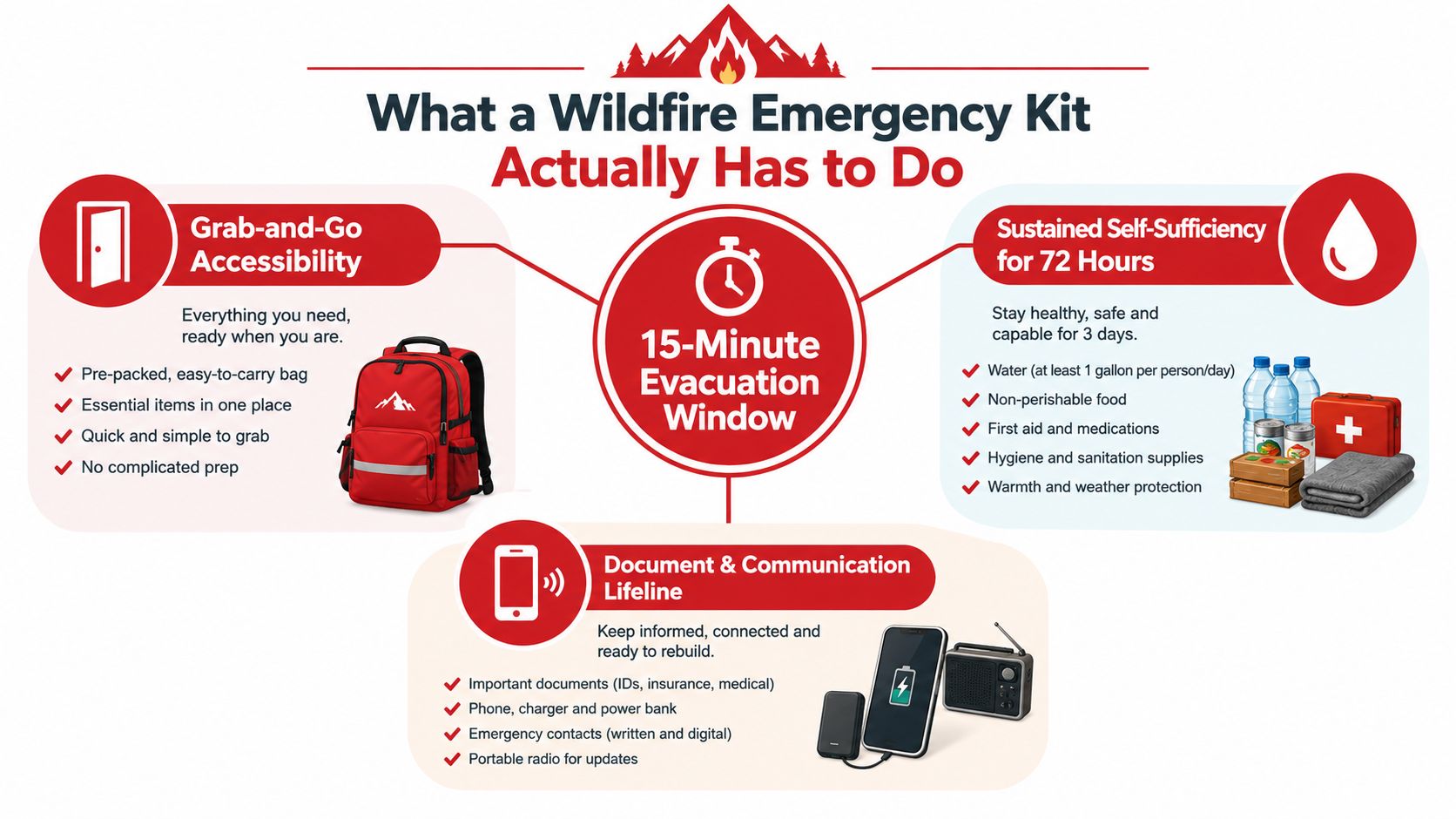
A wildfire evacuation can turn a normal home into a hurried loading zone. The American Red Cross recommends that evacuees keep three days of supplies that they can easily carry, while FEMA advises households to prepack emergency supply kits before an evacuation order arrives. The practical test is simple: can each person find the right bag in darkness, carry it to the vehicle, and leave without sorting through loose supplies?
Three containers, three jobs
The stay-at-home kit holds bulkier supplies that support the household if roads are blocked or residents must wait for instructions. It can include stored water, food, sanitation supplies, extra lighting, backup power, household first aid, and document copies.
The vehicle kit belongs in the trunk or another protected vehicle compartment. It should contain water, food, lighting, chargers, masks, eye protection, sturdy shoes, a map, and supplies that make an unplanned stop safer. California guidance specifically recommends keeping an evacuation bag in a vehicle, and this evacuation planning guide reinforces the value of preparing before a warning becomes an order.
The per-person grab-and-go bag stays light enough for its owner to carry. It holds personal medication, clothing, identification copies, a respirator, a phone cable, snacks, water, and comfort items. Children can carry lightweight versions, while adults take responsibility for heavier shared supplies and pet equipment.
Practical rule: The first kit to build is the per-person grab-and-go bag. It solves the most urgent problem, getting people and irreplaceable essentials out quickly.
A wildfire kit must support more than eating and drinking. It has to help people breathe more comfortably around smoke, receive alerts, keep phones working, find documents, and function without normal lighting. That makes it distinctly different from a camping kit, which usually assumes planned travel and more predictable conditions.
The 3-Day Standard and Why a Week Is the New Target
The three-day standard remains the minimum floor. The Red Cross frames wildfire evacuation supplies around three days of portable supplies, and emergency checklists commonly pair that food with water, medication, lighting, communications, first aid, sanitation, and documents. FEMA and emergency agencies use the same short-term self-sufficiency model because an evacuation bag must remain portable.
A stronger household target is at least a week of supplies when storage space, budget, and carrying capacity allow it. Recent preparedness guidance has moved beyond the traditional 72-hour model and specifically includes portable battery banks and solar chargers, reflecting the possibility that displacement and recovery can last longer than an initial evacuation period. Recent emergency preparedness guidance describes this broader approach.
The difference isn't just adding more cans. A longer plan requires more water management, medication planning, charging capacity, and document redundancy. It also requires separating what stays in the home from what travels in the vehicle and what each person carries.
| Resource | 3-Day Minimum | 7-Day Recommended |
|---|---|---|
| Water | 3 gallons per person, based on roughly 1 gallon per person per day, as outlined by Ready for Wildfire's supply guidance | 7 gallons per person, when storage and transport allow |
| Food | 3 days of non-perishable food | At least a week of non-perishable food, divided between home, vehicle, and personal bags |
| Medication | Necessary prescriptions for the evacuation period | A longer reserve of essential medication, with Sonoma County guidance identifying a 3 to 7 day supply for life-saving medications in personal go-bags, as stated in its personal go-bag checklist |
| Power | Charged phones, spare batteries, a radio, and a charger | Battery banks, vehicle charging, spare cables, and solar or hand-crank backup |
The three-day figure assumes that roads, shelters, stores, and electrical service will become usable soon. Wildfire conditions can disrupt each assumption. A week target gives the household more room to handle a hotel stay, a move to relatives, delayed travel, or a grid outage without abandoning medication, communication, or basic lighting.
Canadian guidance uses a different water benchmark, 2 liters per person per day, and also recommends a 72-hour supply of food, lighting, radio, first aid, keys, cash, and documents in its wildfire emergency-kit guidance. The exact water container can vary by household and jurisdiction, but the operational lesson stays consistent: water is heavy, so it needs a deliberate home, vehicle, and carrying strategy.
Core Items to Pack in a Wildfire Go-Bag
Smoke is already in the air, the power is out, and the evacuation order leaves minutes to load the car. A per-person go-bag should hold the items that person needs first, with shared supplies divided between adults and the other two coordinated kits. Do not turn one bag into a miniature household. If someone cannot carry it safely, the packing plan has failed. Use a complete go-bag essentials checklist to audit the contents, then adjust for your household.
Water and food
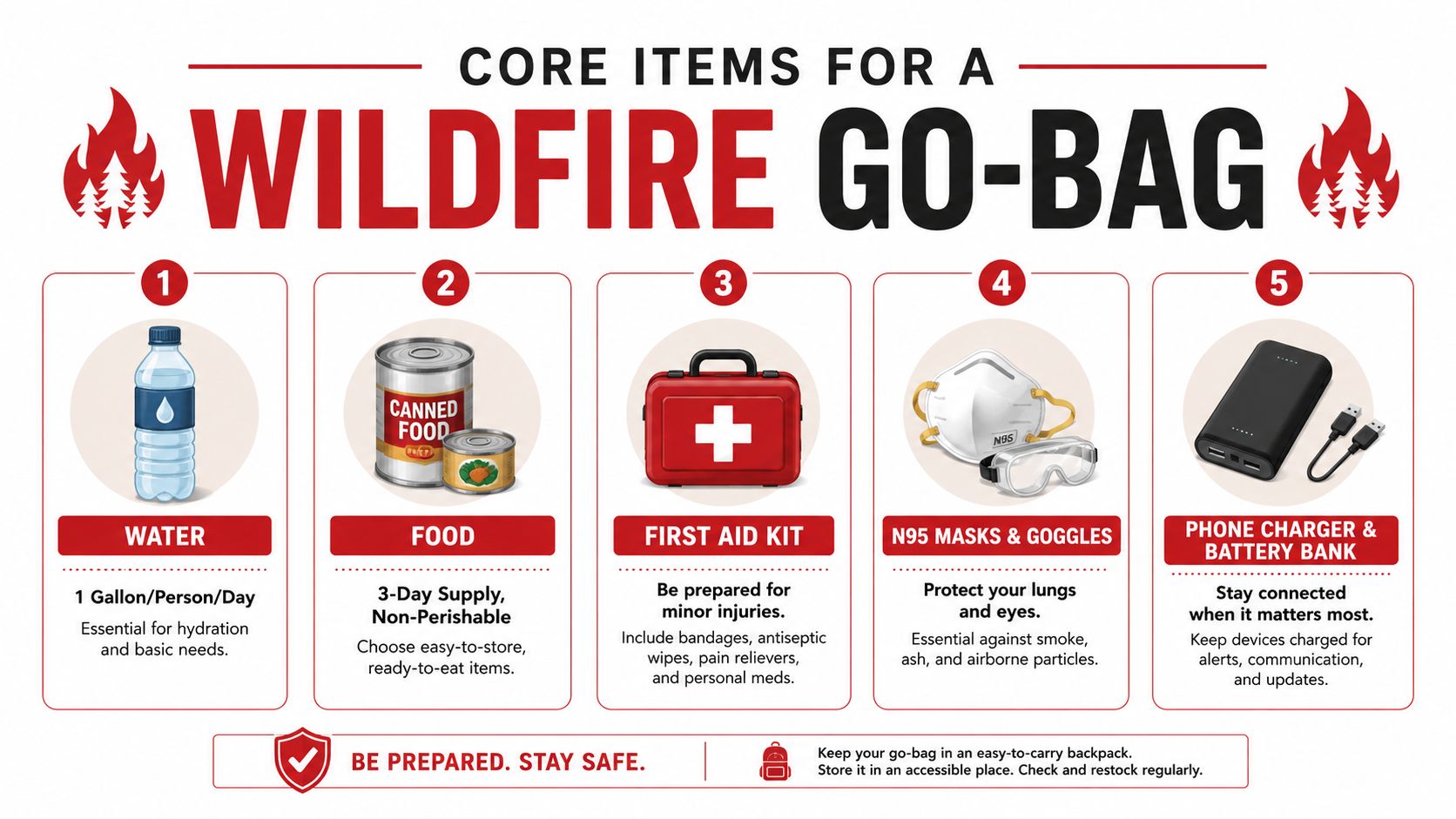
Water carries the most weight, so bulk storage belongs mainly in the stay-at-home and vehicle kits. Keep a refillable bottle or collapsible bladder in each personal bag, with larger containers staged near the exit or already packed in the vehicle. That split protects carrying capacity without leaving evacuees dependent on finding water immediately.
Choose non-perishable and ready-to-eat food. Energy bars, nut-butter pouches, dried fruit, crackers, shelf-stable meals, and electrolyte powders work better during an evacuation than food needing cooking, refrigeration, or utensils. If canned food is part of the household or vehicle kit, add a manual can opener. It is easy to forget and useless to improvise.
Light and power
Give each person a headlamp. It keeps both hands free for children, pets, doors, and bags. Put a compact flashlight with spare batteries in every personal bag, then assign separate lights to the vehicle and stay-at-home kits. Redundant lighting matters when people separate, batteries fail, or smoke makes a single dark corner difficult to manage.
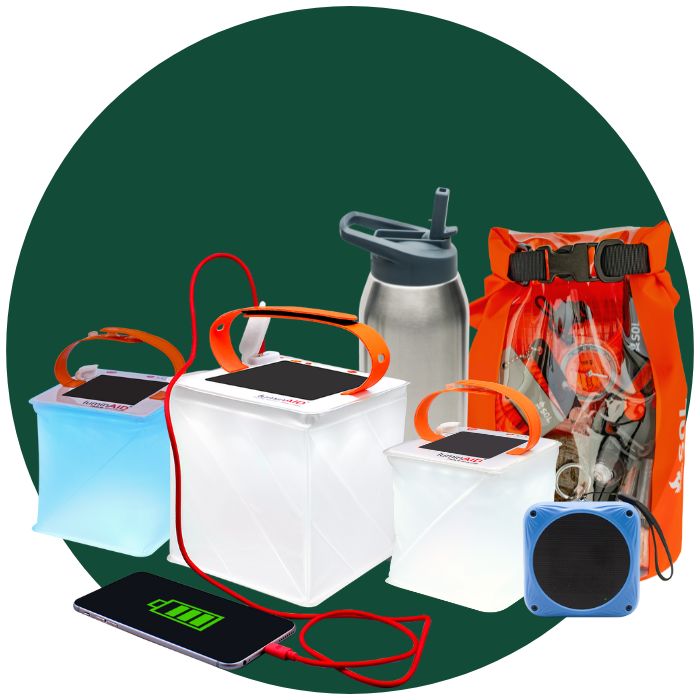
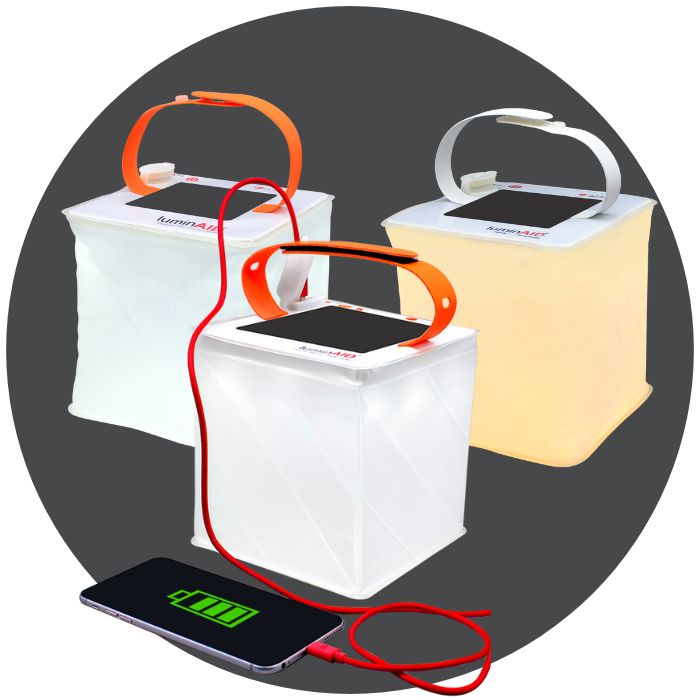
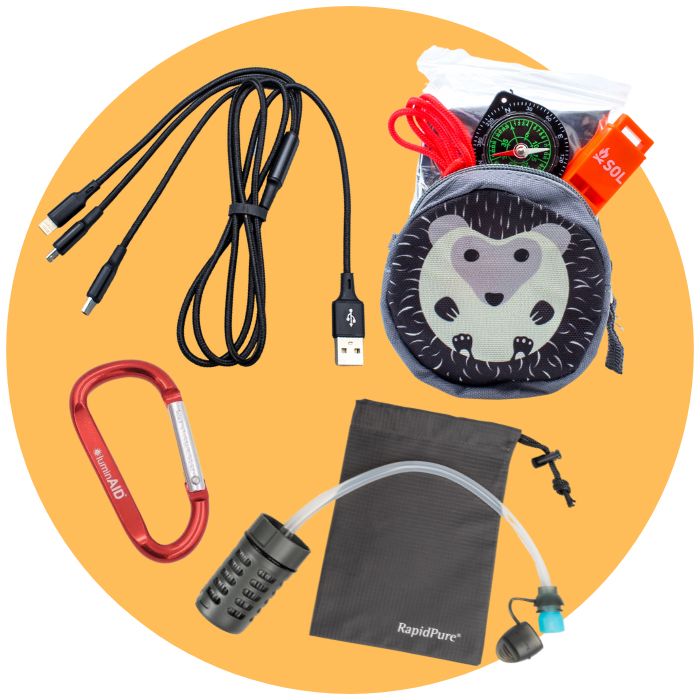
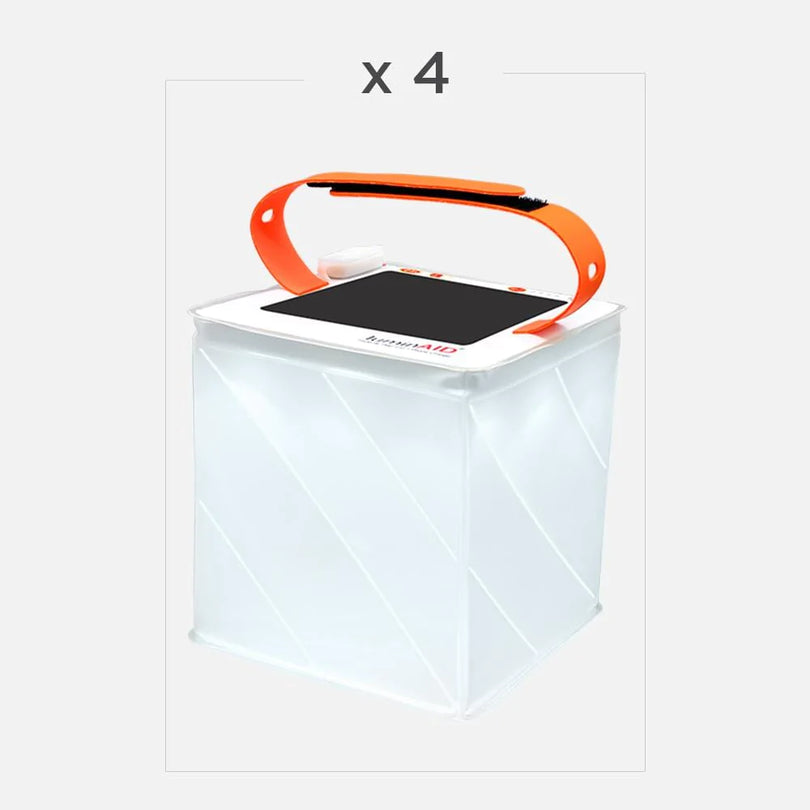
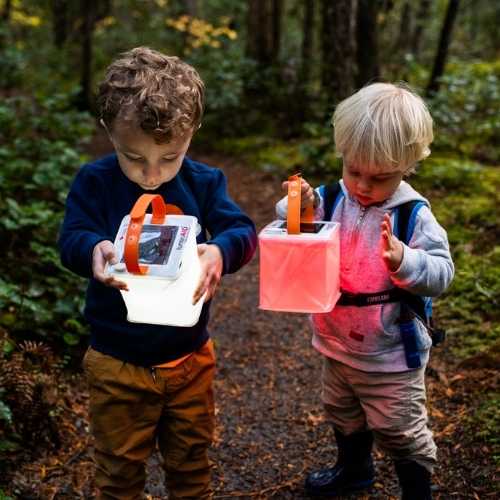
A 10,000 mAh power bank is a practical personal charging option, provided it starts charged and has the correct cable. Keep a second cable in the vehicle kit, not only in the household charging drawer. A compact solar lantern can light a shelter, hotel room, or vehicle stop, while a hand-crank radio offers another way to receive information when phones and networks are unreliable.
First aid and smoke protection
Pack gauze, burn dressings, basic wound supplies, and household-specific medical items. An adult should carry a tourniquet only if that adult knows how to use it. Each personal bag also needs N95 respirators, goggles or glasses, and a spare face covering. These reduce exposure while people move through smoky conditions or wait for transport, but they do not replace evacuation.
Add a change of cotton clothing, hand sanitizer, tissues, and sealed bags for dirty or smoke-exposed items. Keep medical supplies with the person who needs them, rather than burying every prescription in one shared case.
Communication and documentation
Put a whistle, printed contact list, local map, and radio in the communications group. Keep identification, insurance information, medical records, prescriptions, and emergency contacts in a waterproof pouch. Paper copies remain usable when devices are dead or damaged. A USB drive with scanned copies adds redundancy, but it should supplement paper rather than replace it.
Pet records, lease information for renters, and custody or access documents may also matter during displacement. Pack pet food, water, medications, records, a leash, and comfort items beside the human bags in a clearly labeled container. Scattered pet carriers and supplies can delay departure, so stage them before fire season.
Light and Power Options for Smoke, Grid Loss, and Long Outages
Lighting and power systems fail in different ways. A flashlight may run for a long time but illuminate only one direction. A headlamp helps with loading and walking, but it still depends on batteries. A solar lantern avoids disposable batteries, yet smoke and shade can limit solar charging. A crank radio provides communications redundancy, but hand-cranking is a backup method, not a comfortable primary power source.
| Option | Weight | Runtime / Capacity | Recharges From | Best Kit Position |
|---|---|---|---|---|
| LED flashlight | Light | Depends on battery and brightness setting | Replaceable batteries | Per-person bag and vehicle |
| Headlamp | Light | Depends on battery and brightness setting | Replaceable or rechargeable battery | Per-person grab-and-go bag |
| Hand-crank radio | Moderate | Radio runtime depends on stored power and cranking | Hand crank, batteries, or USB on some models | Stay-at-home kit |
| USB power bank | Moderate | Capacity depends on model and device use | Wall, vehicle, or compatible solar input | Personal bag and vehicle |
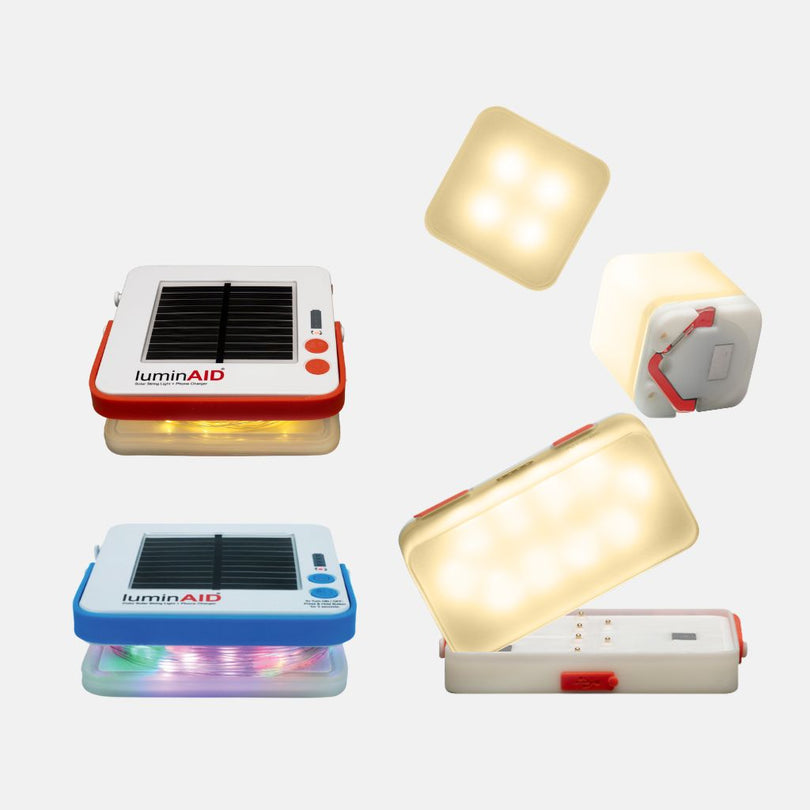
| Inflatable solar lantern | Light | Several hours vary by brightness and charge | Sunlight or USB on some models | Stay-at-home kit and shelter use |
The best arrangement uses different tools for different jobs. A headlamp belongs with the person loading the car. A flashlight belongs in each personal bag because people may separate. A radio stays in the home kit or vehicle so the household has a dedicated information device rather than draining a phone for updates.
A power bank should be tested with the household's actual phones and cables. Capacity labels don't guarantee a particular number of charges because screen use, signal strength, temperature, and device condition change consumption. A 72-hour plan should include a full charge before departure, vehicle charging when available, a spare cable, and a lantern that can handle room lighting without consuming phone power.
Power rule: Keep one charging path independent of the wall outlet. That can mean vehicle charging, a charged power bank, solar input, or a hand-crank backup.
For smoke-heavy conditions, place solar equipment where it can collect available daylight without leaving the household exposed. Don't treat solar charging as the only plan during dense smoke or continuous cloud. Emergency lighting guidance from LuminAID provides a useful comparison of portable lighting needs during outages.
How to Pack, Stage, and Refresh the Three Kits
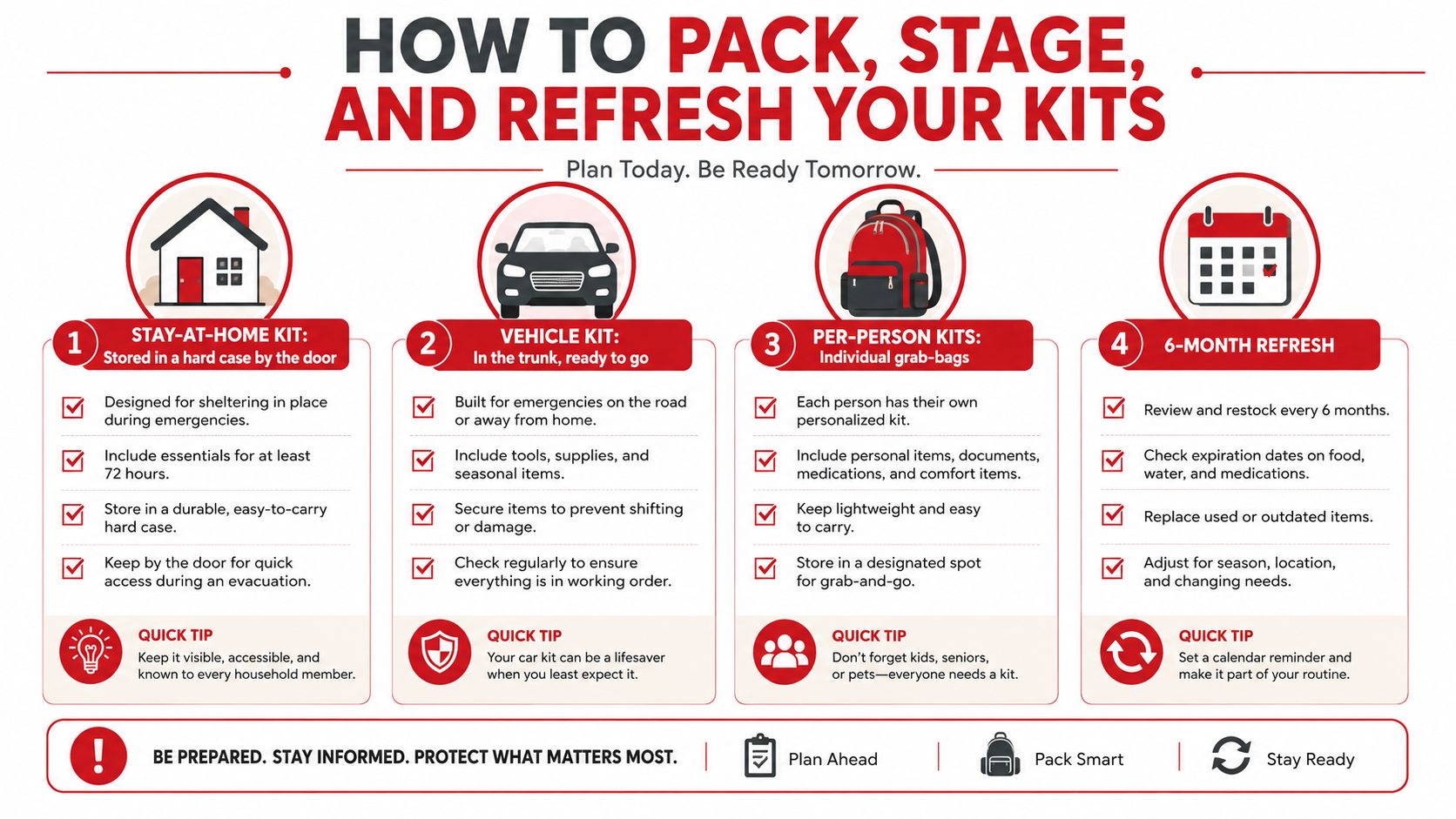
Container choice determines whether a kit gets used. A duffel works well for the stay-at-home supply because it opens quickly and accommodates irregular items. A hard case protects the vehicle kit from crushing and makes its contents easier to identify. Each person needs a small daypack or similarly manageable bag with a name label.
Give every kit a fixed location
The stay-at-home kit should sit near an exit, not in a distant basement or locked storage area. The vehicle kit stays in the trunk year-round, protected from leaks and extreme heat as much as possible. Personal bags belong beside the bedroom door or another route that remains accessible when smoke or darkness makes searching difficult.
The vehicle load order should protect speed:
- Personal bags first, so each person can carry their own essentials.
- Medication and document pouch next, kept visible and easy to retrieve.
- Water and food after that, placed where they won't crush lights or electronics.
- Pet carriers and supplies last, unless a carrier is needed immediately.
- A final exit check, covering people, pets, phones, keys, and alerts.
Label every container with the owner's name, contents, and packing date. The label matters when several identical bags sit in a hallway or trunk. It also exposes missing categories before the next warning.
Use a short refresh cycle
A practical refresh routine checks batteries, water rotation, medication expiration, food dates, document changes, and power-bank charge. The planning notes call for a 90-day refresh checklist, with water rotated every six months and batteries, food, and medications checked every quarter. A 60-second open-and-lift test for each personal bag reveals broken zippers, missing cables, excessive weight, and items that no longer fit the owner's needs.
Children's bags should be adjusted as they grow. Pet supplies need the same attention because food, medication, carriers, and comfort items can become unsuitable. The household should also reweigh bags and remove duplicated heavy items that belong in the vehicle or stay-at-home kit instead.
What the Kit Has to Survive Real Wildfire Moments
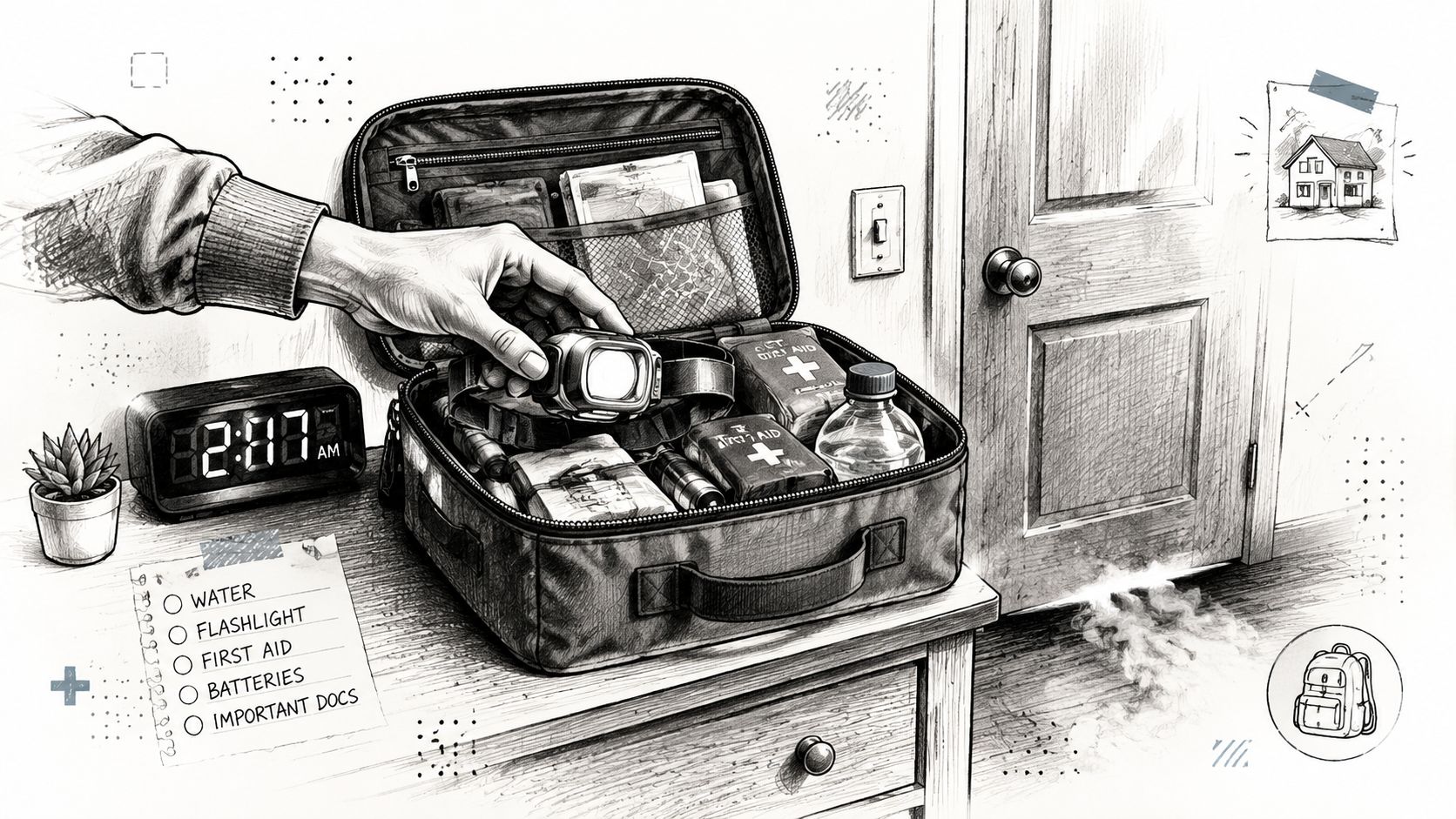
The midnight departure
An alert arrives, and the household has little time to decide what matters. The labeled personal bags provide medication, identification, masks, clothing, snacks, and charging cables without opening every cupboard. A headlamp beats a phone flashlight because the phone remains available for alerts and calls while both hands handle doors, children, pets, and luggage.
The vehicle kit then supplies shared water, food, a radio, extra lighting, a map, and first aid. The plan doesn't depend on one person remembering every item under stress. The staging decision is clear: every bag must be reachable without moving boxes, bikes, or seasonal equipment.
A short demonstration can help households visualize how emergency lighting and charging fit into an evacuation routine:
The smoky shelter
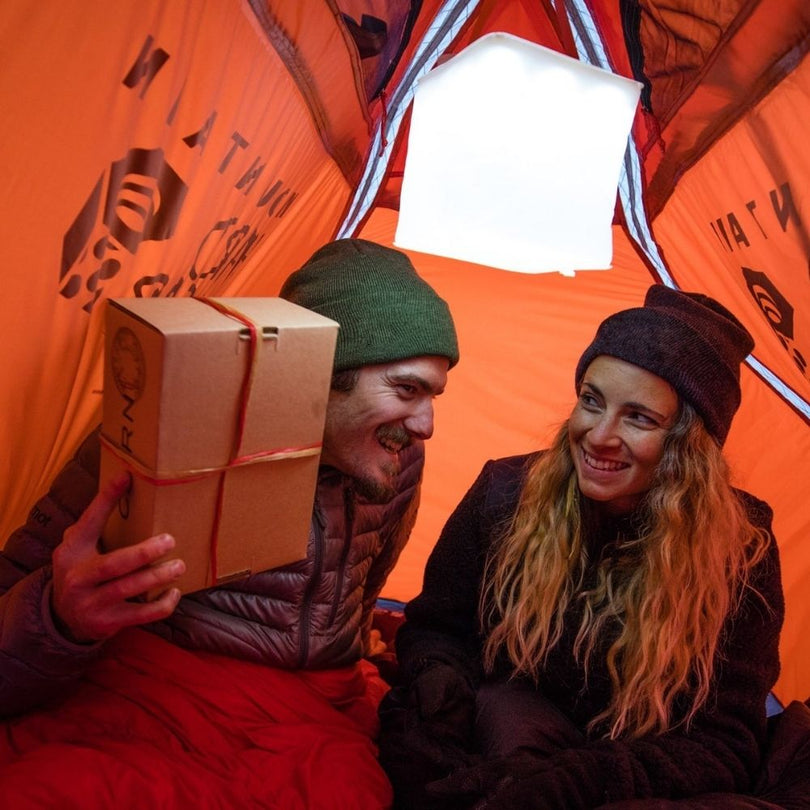
At a shelter, hotel, or relative's home, the family needs clean personal supplies, safe lighting, and working phones. Spare respirators and eye protection prevent one person from using the only mask in the household. A portable lantern creates room light while the power bank preserves the phone for evacuation updates and contact with relatives.
A second charging cable is easy to dismiss until the first one is lost, damaged, or incompatible with another device. The vehicle kit should carry a spare, while each personal bag carries the cable used by its owner.
The longer displacement
After the first night, the household starts consuming and replacing supplies. Water and food move from the stay-at-home reserve or vehicle stock into personal bags. Batteries get tested, power banks get recharged whenever a safe outlet or vehicle is available, and paper documents remain protected rather than exposed on a counter.
The forgotten items tend to be mundane: prescription refills, clean socks, glasses, pet food, cash, and a way to separate smoke-contaminated clothing. The specific staging decision is to make replenishment easy. A labeled reserve box should show what has been used and what needs replacement before the household returns home or moves again.
Maintenance, Alerts, and Frequently Asked Questions
A wildfire emergency kit fails when it sits untouched. Every 90 days, open the stay-at-home, vehicle, and per-person grab-and-go kits. Test each light, recharge power banks, check food and medication dates, update paper documents, and confirm that each person can carry their assigned bag. Rotate water every six months. Check batteries, food, and medications quarterly.
Alerts also need redundancy. Monitor National Weather Service red flag warnings, AirNow smoke ratings, and county evacuation-zone maps. Pair phone alerts with a NOAA weather radio and a hand-crank backup. Phone notifications can fail when the battery is empty, the network is congested, or the device is buried in a bag.
Frequently asked questions
How large should an adult go-bag be?
A 30 to 40 liter bag per adult holds personal essentials without inviting unnecessary weight. Choose based on strength, mobility, climate, medical needs, and how much water the vehicle kit carries.
What should a pet kit contain?
Pack food, water, medications, veterinary and identification records, a carrier or leash, waste supplies, and comfort items. Keep the carrier accessible, not folded behind storage.
How can phones and lanterns stay charged during displacement?
Charge in the vehicle whenever conditions are safe, top up power banks before departure, and pack the correct cables. Portable solar lanterns can provide room lighting without draining a phone, but solar charging should supplement vehicle and battery options when smoke or shade limits daylight.
What gets forgotten most often?
Medication, document copies, chargers, cash, masks, pet supplies, and sturdy shoes deserve separate checklist lines. Keep duplicates across the three kits where weight allows, especially for documents, charging cables, and light.
LuminAID offers portable solar lanterns and 2-in-1 power lanterns that combine off-grid light with USB phone charging. They can suit a stay-at-home kit, vehicle kit, or smoky shelter setup. Visit LuminAID to compare emergency lighting and charging options, then stage the selected device and test it before fire season.