

When a storm knocks out the power, the last thing you want to discover is that your flashlight batteries are dead. A solar powered emergency light is your self-sufficient solution, giving you reliable light without ever needing a wall outlet or a pack of disposable batteries. It runs on free, renewable energy from the sun, so you know you'll have light when it matters most.
Why Solar Power Is Your Most Reliable Emergency Light Source
Think about the peace of mind that comes from knowing you have a light source you can count on, no matter what. Let’s be honest, traditional emergency options have some serious flaws. Batteries corrode or just die in storage, candles are a huge fire risk, and those old fuel lanterns need good ventilation and constant refueling.
A solar powered emergency light completely sidesteps those problems.
Its reliability comes from a simple, elegant design. A small photovoltaic panel gathers sunlight, turning it into electricity that gets stored in a built-in rechargeable battery. This means your light can be ready to go at a moment's notice, passively charging during the day for any unexpected outage.
To help you quickly grasp what makes these lights so effective, here's a rundown of their key features. This table breaks down the essential specs, what they mean for you in practical terms, and why they are absolutely critical when the lights go out.
Key Features of a Solar Powered Emergency Light at a Glance
| Feature | What It Means for You | Why It's Critical in an Emergency |
|---|---|---|
| Lumens | Measures brightness. More lumens mean a brighter light to illuminate larger areas. | A bright light is essential for navigating safely in the dark, performing tasks, or signaling for help. |
| Runtime | The number of hours the light can operate on a full charge. | Long runtime ensures you have continuous light through the night or during multi-day outages. |
| Battery Type | Typically Lithium-ion (Li-ion) or Lithium Polymer (LiPo) for better energy density and longevity. | A high-quality battery holds its charge longer in storage and provides consistent power when you need it. |
| Charging Time | How long it takes to fully charge the battery using solar power or a USB backup. | Faster charging means your light is ready to use again quickly, even with limited daylight. |
| IP Rating | Indicates its resistance to dust and water. IP67, for example, is fully dustproof and waterproof. | In a storm or flood, a waterproof light will continue to function, making it truly all-weather reliable. |
Understanding these specs is the first step to choosing a light that won't let you down.
Unmatched Readiness and Cost-Effectiveness
The real game-changer with a solar light is its constant state of readiness. As long as there's daylight—even on cloudy days—it can be charging. This self-sufficiency is priceless during extended blackouts when a trip to the store for more batteries just isn't happening.
Plus, you can't beat the long-term savings. After the initial purchase, the energy it uses is 100% free. That’s a stark contrast to battery-powered gear that requires you to keep buying replacements.
By drawing energy directly from the sun, solar lights provide true energy independence. This is a key benefit for emergency preparedness, freeing you from reliance on a vulnerable power grid or a finite supply of disposable batteries.
An Eco-Friendly Preparedness Tool
Choosing a solar powered emergency light is also a smart move for the planet. Think about all the single-use glow sticks and disposable batteries that end up in landfills. Solar lights are designed for years of reuse, cutting down on waste and your carbon footprint.
It’s a responsible choice for your family's safety and for the environment. Bringing these lights into your home is a great first step toward better energy efficiency. If you want to take it further, check out other top energy-efficient home features that can work alongside your solar setup.
By building a reliable, off-grid lighting system, you’re not just preparing for an emergency—you’re investing in a more resilient and sustainable future.
How a Solar Light Turns Sunlight Into Safety
Ever wondered how a simple little device can soak up sunlight all day and then turn it into a comforting glow at night? The whole process is surprisingly clever, a bit like how a plant uses photosynthesis to bank energy from the sun. A solar powered emergency light works on a similar idea: collect, convert, and store energy for the exact moment you need it.
This journey from sunbeam to safety light starts with the photovoltaic (PV) cells on the solar panel. Just think of these as thousands of tiny energy collectors. When sunlight hits the panel, these cells get to work absorbing photons and creating an electric current. This is called the photovoltaic effect, and it’s the first step in creating your own personal, off-grid power source.
From Collection to Conversion
Once the sunlight is captured, it’s in the form of direct current (DC) electricity. But you can't just dump that raw power straight into a battery. It needs to be managed first.
That's where the charge controller steps in. It’s basically the brain of the whole system, regulating the flow of electricity from the solar panel to the battery. Its job is absolutely critical—it prevents overcharging, which can wreck a battery and shorten its life, and it also stops the battery's power from leaking back into the solar panel at night. Making sure you have reliable solar panel connectors is fundamental to ensuring a solid, effective flow of energy at this stage.
Storing Power for a Rainy Day
The managed electricity then flows into the internal rechargeable battery, which is the real heart of your light's reliability. Picture the battery as a water tank, slowly but surely filling up with energy whenever it's light out. Most modern solar lights use lithium-ion batteries for a good reason—they’re lightweight, they hold a charge for a long time, and they can be recharged hundreds of times.
A high-quality battery is the difference between a light that lasts for a few hours and one that shines brightly through an entire night-long power outage. It's your personal energy reservoir, ready to deploy at a moment's notice.
This stored energy is exactly what makes a solar-powered light so dependable. You can leave it on a windowsill or in your backyard, and it will passively keep itself topped up, ready for any unexpected blackout.
Illuminating Your Space
Finally, when it gets dark or the power cuts out, you just flip the switch. The stored DC electricity flows from the battery right to the Light Emitting Diodes (LEDs). LEDs are fantastic because they're incredibly efficient. They turn a huge percentage of that stored energy into light instead of wasting it as heat, which is why they can give you hours of bright light from a single day's charge.
This whole cycle—capture, convert, store, and illuminate—all happens seamlessly inside one self-contained gadget. The efficiency and reliability of this tech are why it's becoming so popular. The global market for emergency lighting is projected to hit $292.2 million by 2025, largely driven by the demand for dependable, off-grid solutions like these. You can explore the full market analysis on Archive Market Research to see just how vital this technology has become for both public and personal safety.
Decoding the Tech Specs on the Box
Walking down the aisle or browsing online, the technical specifications listed on a solar-powered emergency light box can feel like a foreign language. But understanding these numbers is the key to picking a light that actually performs when you need it most. Let's translate this jargon into real-world performance so you can buy with confidence.
The goal isn't just to buy a light; it's to secure a reliable tool for your emergency plan. This is where the details matter, transforming a simple gadget into a lifeline.
Lumens and Brightness
The first spec you'll likely see is lumens (lm), which simply measures the total amount of visible light a source puts out. Think of it as a direct indicator of brightness. A higher number means a brighter light, but more isn't always better—it all comes down to what you'll be doing.
- Low Lumens (20-50 lm): Perfect for reading in a tent or casting a soft, ambient glow in a small room. This setting is all about conserving battery for the long haul.
- Medium Lumens (50-150 lm): This is your versatile, all-purpose range. It's bright enough to light up a standard living room for tasks like cooking or finding supplies.
- High Lumens (150+ lm): Ideal for lighting up larger outdoor areas, signaling for help, or performing detailed work in the dark.
Basically, lumens are the difference between a nightlight and a floodlight. Choosing the right level ensures you have the visibility you need without burning through the battery.
Runtime and Battery Life
Runtime is the promise on the box: how many hours of light you can expect on a single full charge. This number is tied directly to the battery's capacity, usually measured in milliamp hours (mAh), and which brightness setting you're using. A higher mAh means the battery can store more juice.
For instance, a light might offer a whopping 50 hours of runtime on its low setting but only 6 hours on its brightest. When you're comparing models, look for a runtime that will get you through at least one full night (8-12 hours) on a medium setting. For a deeper dive, our comprehensive solar lantern buyer's guide can help you compare options effectively.
The battery is the heart of your solar light. Most high-quality lights today use Lithium-ion (Li-ion) or Lithium Polymer (LiPo) batteries. They're chosen for their high energy density, low self-discharge rate, and long lifespan, often lasting for hundreds of charge cycles.
This means your light can hold its charge for months in storage and will be ready to perform when disaster strikes.
Charging Time and Solar Panel Quality
Charging time tells you how many hours of direct sunlight it takes to completely fill the battery. This can range anywhere from 7 to 14 hours, depending on the size and efficiency of the solar panel and the battery's capacity.
The quality of the photovoltaic panel is critical here. A more efficient panel can generate more power even in less-than-ideal conditions, like on an overcast day. Many modern lights also include a USB port as a backup, letting you top up the battery from a wall outlet or power bank before a storm hits.
IP Ratings and Durability
Finally, the IP Rating (Ingress Protection) tells you how well the light is sealed against solids (like dust) and liquids. You'll see it written as "IP" followed by two numbers.
- First Digit (Solids): This ranges from 0 (no protection) to 6 (completely dust-tight).
- Second Digit (Liquids): This ranges from 0 (no protection) to 8 (can be submerged in water).
A light rated IP67, for example, is fully protected from dust and can be dunked in up to one meter of water for 30 minutes. For emergency use, you'll want a rating of at least IPX4, which protects against water splashes from any direction—perfect for a rainstorm. This kind of durability is crucial, as you never know what conditions you'll face. Knowing your light can handle a downpour gives you one less thing to worry about.
Matching Your Light to Your Emergency Plan
Let's be real: a solar powered emergency light isn't a one-size-fits-all gadget. The light you toss in a bug-out bag is going to be wildly different from the one you need to ride out a week-long power outage at home. The key is matching the right light to your specific emergency plan. That's how you make sure it's a reliable tool when you really need it.
Thinking through a few "what if" scenarios is the best way to figure out what features are truly non-negotiable for you. For instance, a super compact design might be the top priority for a car kit, but for keeping your family safe during a blackout, a powerful area light is what really matters.
Your Home Emergency Kit
When you're prepping for a home emergency, think versatility and power. A blackout can drag on for hours, sometimes days, so you need a light that does more than just sit on a table. It needs to be the command center for your family's basic needs.
Look for a multi-functional model that also works as a power bank. The ability to charge a phone is huge—it’s your lifeline for staying in touch with loved ones and getting emergency updates. You'll want a light with a high lumen output (150+ lumens) and a long runtime on a medium setting (at least 12 hours). That’s enough to comfortably light up your living room or kitchen all night.
For a home kit, prioritize these features:
- Phone Charging Capability: A USB output port is a must for communication.
- High Lumen Output: You need it bright enough for tasks and general safety in a common area.
- Long Runtime: Make sure you have light through the night and well into the next day.
- Multiple Light Settings: This lets you switch between a bright area light and a low mode to save battery.
A solid home kit is the bedrock of being prepared. For more great ideas on what to pack, you can learn how to get prepared for emergencies, both short and long term in our complete guide.
Camping and Outdoor Adventures
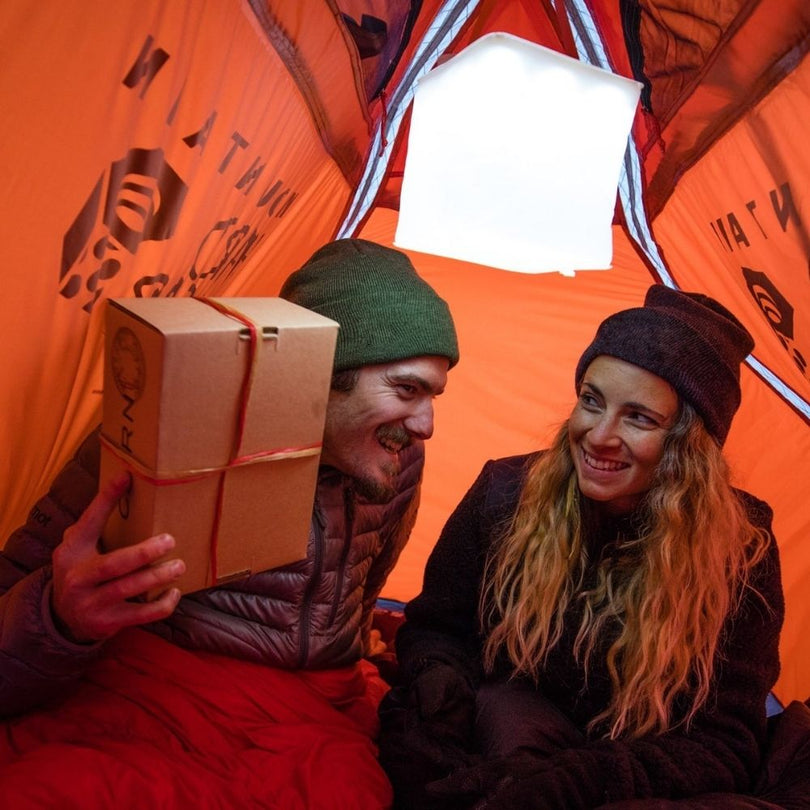
When you're miles from the nearest outlet, every ounce in your pack counts. For camping and backpacking, your solar light has to be lightweight, durable, and weatherproof. A heavy, delicate light is a liability out there, not an asset.
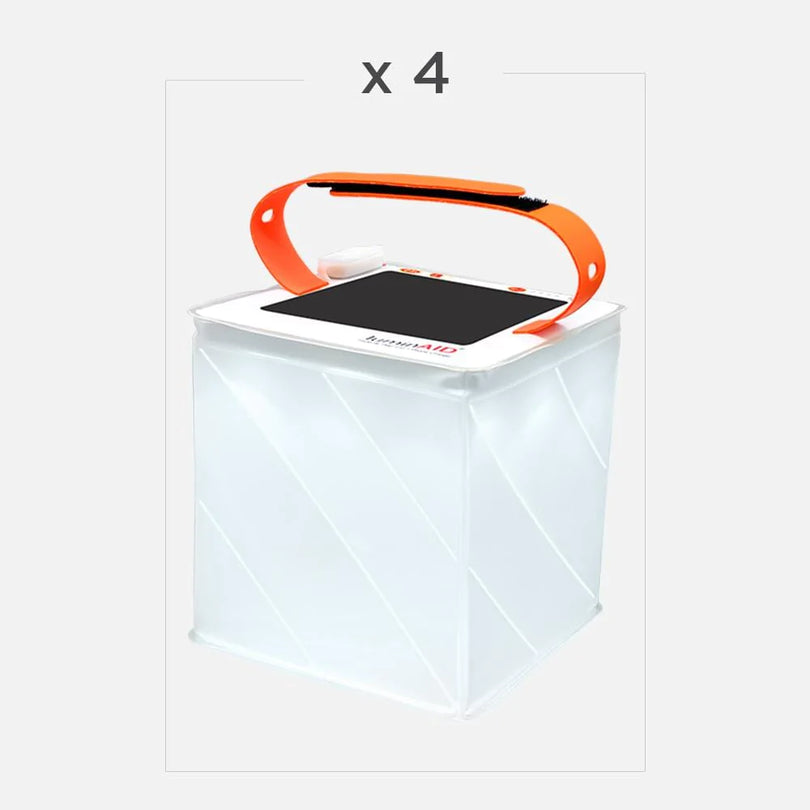
Inflatable or collapsible designs are brilliant space-savers, packing down almost completely flat to slide into any backpack. Durability is just as important. Look for a high IP rating (at least IP67) to guarantee your light can handle a downpour, dust, and even an accidental drop into a stream. It should be as dependable as the rest of your essential gear.
This screenshot from Survive Outdoors Longer shows the kind of crucial survival gear a solar lantern needs to fit in with.
The site focuses on multi-use, tough tools built for survival—which is exactly what you should demand from an outdoor solar light.
Your Vehicle Emergency Kit
A car kit calls for a compact but powerful light with very specific safety features. If you're stranded on the side of a dark road, visibility is everything. A solar light with a red flashing SOS mode can be a genuine lifesaver, alerting other drivers and first responders to your location.
A dedicated light in your car's glove box or trunk ensures you're never caught off guard. It's an essential tool for changing a flat tire at night, signaling for help, or navigating if you have to leave your vehicle.
Find a model that's small enough to tuck away without taking up precious space, but strong enough to be seen from a distance. And since cars can turn into ovens or freezers, look for a light with a durable battery that can handle extreme temperature swings.
The power of solar lighting in emergencies goes far beyond our personal kits. Large-scale systems like solar light towers are now essential in disaster response. The global market for these towers hit $910 million and is projected to climb to $1.36 billion by 2030, showing just how important they've become in everything from wildfire management to lighting up refugee camps. This proves that solar technology is a scalable solution—vital for both individual readiness and massive emergency operations.
How Solar Stacks Up Against Traditional Emergency Lights
To really get why a solar powered emergency light is such a game-changer, it helps to put it side-by-side with the other options you might have tucked away in a junk drawer or a dusty corner of the basement. When the lights go out, your choice of light source can make all the difference. Let’s see how solar compares to the old standbys.
The thing is, traditional lights often have hidden flaws that don't become obvious until you're in a real crisis. That flashlight you bought years ago seems reliable, but its disposable batteries are a huge weak point. They can leak, corrode, and lose their charge over time, leaving you in the dark exactly when you need them most.
Head-to-Head: The Classic Flashlight
Sure, a battery-powered flashlight is bright and feels familiar, but that reliance on disposable batteries is its Achilles' heel. If you haven't checked them in months, they could be dead on arrival. This constant need for replacements adds up in cost and waste over time—a problem a solar light completely sidesteps.
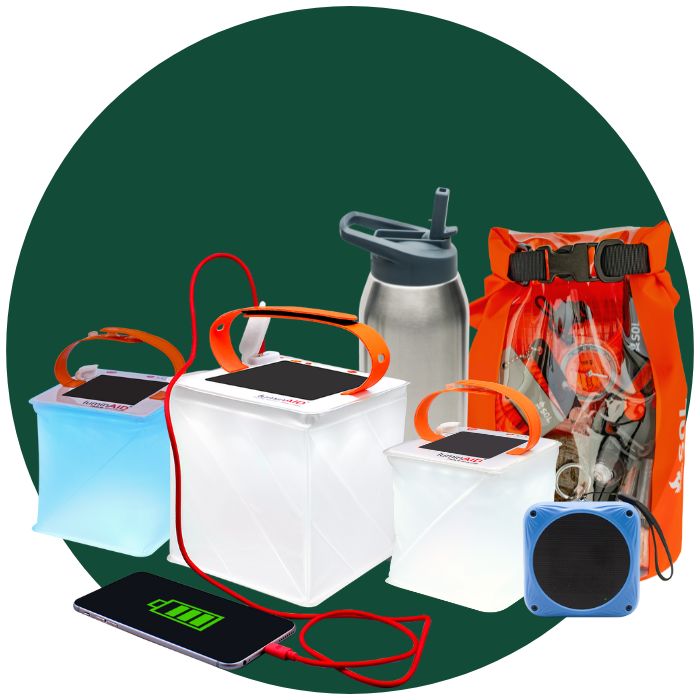
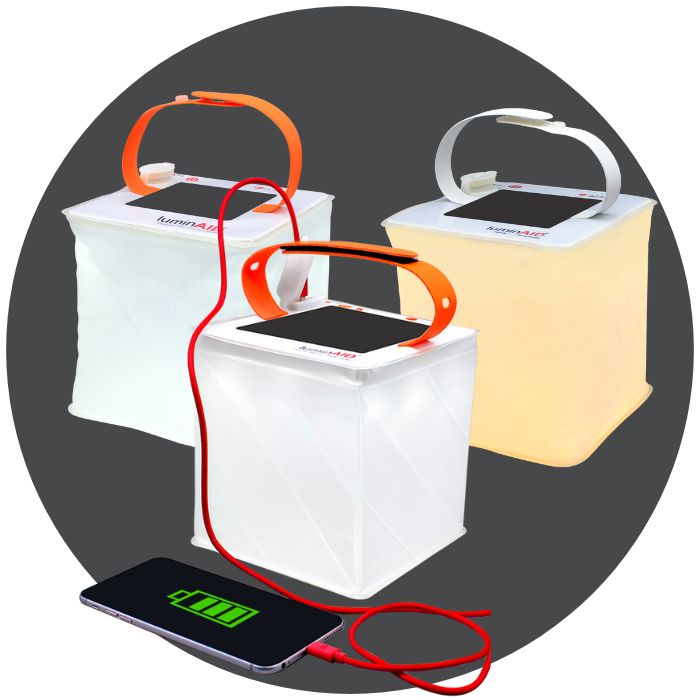
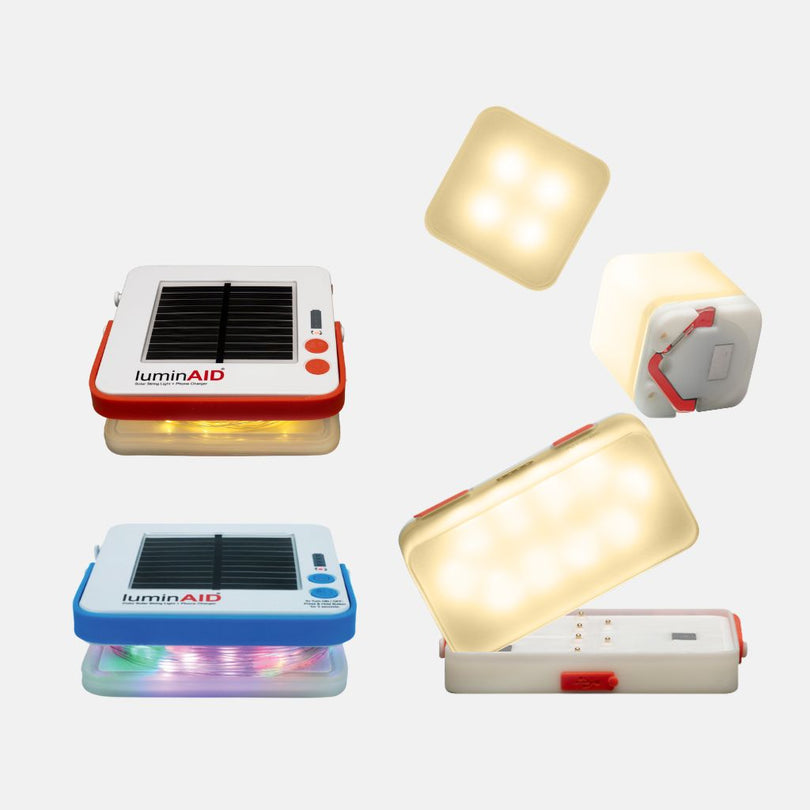
Plus, most flashlights are just single-purpose tools. They give you light, and that's it. In contrast, many solar emergency lights, like those from LuminAID, often double as phone chargers, adding a crucial communication lifeline to your preparedness kit.
The Problem with Chemical Glow Sticks
Chemical glow sticks are cheap and simple, which makes them seem like a good idea for an emergency kit. But they are a classic example of a throwaway, single-use product. Once you snap it, the chemical reaction gives you a few hours of dim light, and then it’s just another piece of plastic headed for the landfill.
A solar powered emergency light is a one-time investment for years of reuse. Unlike glow sticks that you have to continuously restock, a solar light provides a sustainable and far more powerful lighting solution, ready to be recharged again and again by the sun.
This reusability isn't just better for the planet; it’s a more resilient way to prepare. You just need one good solar lantern, not a whole box of disposable sticks. When building out your emergency supplies, it’s always smart to go with durable, multi-use items, a principle that applies to everything from your light source to your first aid supplies from trusted brands like Adventure Medical Kits.
Kerosene Lanterns: A Risky Relic
Kerosene lanterns throw off a bright, warm light, but they bring some serious safety risks to the table. They produce fumes that need proper ventilation—not always easy to manage during a storm—and the open flame is a major fire hazard, especially with children or pets around. You also have to keep a steady supply of fuel, which can be tricky to store safely.
A solar powered emergency light, on the other hand, is completely safe for indoor use. There's no flame, no fuel, and no toxic fumes, making it a much better choice for any enclosed space. The move toward safer, renewable options is clear; the self-contained emergency lighting sector is projected to be worth $3.5 billion in 2025 and is expected to keep growing. Discover more insights about this growing market on Market Report Analytics.
Choosing the right emergency light is about balancing reliability, long-term cost, safety, and your environmental footprint. Let's break it down in a simple table.
Comparison of Emergency Lighting Options
| Lighting Type | Reliability and Shelf Life | Long-Term Cost | Safety Concerns | Environmental Impact |
|---|---|---|---|---|
| Solar Powered Light | High. Rechargeable battery lasts for years. Reliable with minimal maintenance. | Low. One-time purchase, free energy from the sun. | None. No flames, fumes, or fuel storage needed. | Low. Reusable and powered by renewable energy. |
| Battery Flashlight | Moderate. Batteries can corrode, leak, or die unexpectedly. Requires regular checks. | Moderate. Ongoing cost of replacing disposable batteries. | Low. Risk of battery leakage and corrosion. | High. Disposable batteries create chemical waste. |
| Chemical Glow Stick | High when new, but degrades over time. Single-use only. | High. Must be continuously repurchased for each use. | Low. Chemicals can be an irritant if stick breaks. | Very High. Single-use plastic destined for landfills. |
| Kerosene Lantern | Moderate. Depends on fuel availability and wick condition. | Moderate. Requires a constant supply of fuel. | High. Open flame, fire hazard, toxic fumes, risk of spills. | High. Burns fossil fuels and produces emissions. |
When you lay it all out, the solar powered emergency light consistently comes out on top as the most modern, dependable, and responsible choice for any preparedness plan.
How to Maintain Your Solar Light for Peak Performance
A solar powered emergency light is a fantastic "set it and forget it" tool, but a little bit of care goes a long way in ensuring it's ready for action when the grid goes down.
Fortunately, this upkeep is incredibly simple. You’re really just focusing on two things: keeping the solar panel clean and making sure the battery stays healthy over time.
Keep the Solar Panel Clean
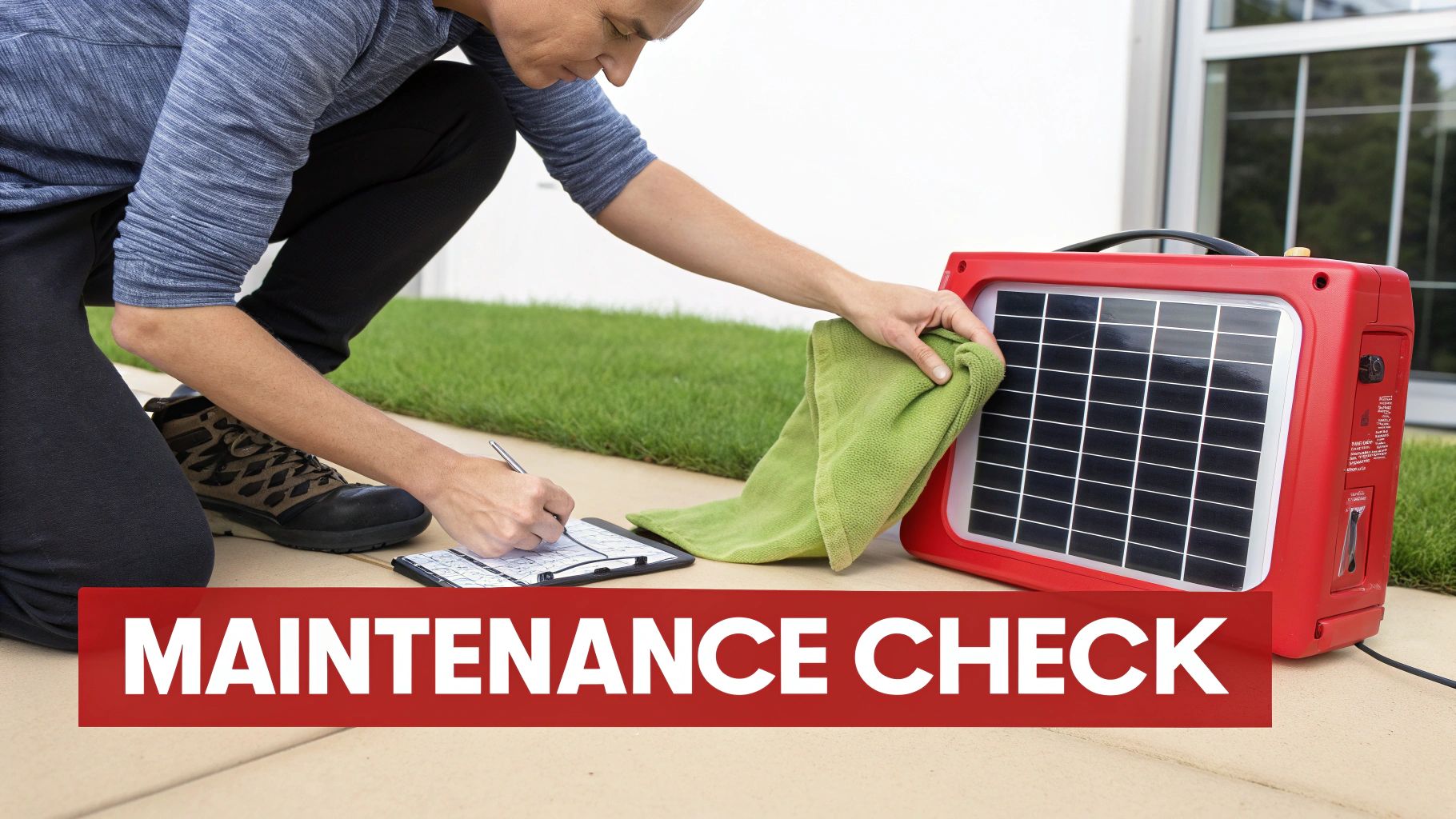
The solar panel is your light's engine, turning sunlight into power. If that panel is caked in dust, dirt, or grime, it's like trying to see through a foggy window—less light gets through, and performance suffers. A dirty panel can seriously slow down charging times.
For most situations, a quick wipe-down is all you need:
- Use a soft, damp cloth to gently clean the surface of the solar panel.
- Steer clear of harsh chemicals or abrasive scrubbers that could scratch the panel.
- For stubborn grime, a little mild soap and water will do the trick. Just be sure to rinse it off afterward.
Make it a habit to clean the panel every few months, or more often if you live in a particularly dusty area or during heavy pollen seasons.
Best Practices for Battery Health and Storage
The lithium-ion batteries in most high-quality solar lights are built to last, but they still benefit from smart storage. Storing your light correctly is the key to preserving the battery's lifespan so it can hold a charge reliably for years.
The single most important maintenance step is what we call a "maintenance charge." Every 3-4 months, take your stored light out and place it in direct sunlight for a full day. This little bit of activity keeps the battery chemistry healthy and prevents it from losing its ability to hold a full charge over time.
When it's time to put your light away, just follow these simple tips:
- Find a Cool, Dry Place: Store your light somewhere with a stable temperature, away from extreme heat, freezing cold, and moisture. A hall closet or a dedicated preparedness bin is perfect.
- Maintain a Partial Charge: Try to avoid storing the battery completely dead or at 100% for long stretches. A charge level somewhere between 50-70% is the sweet spot for long-term battery health.
- Integrate Into Your Routine: The easiest way to remember this is to piggyback it onto another habit. Schedule a reminder to check your solar light when you test your smoke detectors or rotate your emergency water supply.
For more helpful pointers, you can also review our guide on using your solar lantern, which covers everything from initial setup to daily use.
Got Questions About Solar Emergency Lights?
Let's clear up some of the most common questions people have about solar emergency lights. Getting straightforward answers will help you feel confident you're picking the right gear for any situation.
One of the biggest questions is: will a solar light charge on a cloudy day? What about indoors? The short answer is yes, absolutely. But think of it like trying to catch rain in a drizzle instead of a downpour—you'll still get water, but it'll take a lot longer. Direct sunlight will always give you the fastest, most efficient charge.
How Long Will It Last?
Durability is always a top concern for emergency gear. How long do these things really last? A quality lithium-ion battery in a solar lantern is typically built for 500 to 1,000 charge cycles, which easily translates to several years of reliable power. The LEDs themselves are incredibly tough, with a lifespan of 25,000 to 50,000 hours.
Then there's the weather. Is every solar emergency light waterproof? Nope, and this is where you need to pay close attention to the IP rating.
- IPX4: This means it can handle splashes from any direction. It's solid protection against rain.
- IP67: This is serious protection. It's completely dust-tight and can even be submerged in up to a meter of water.
For a light you can truly count on in a storm, look for at least an IPX4 rating. It’s a critical feature that ensures your gear won’t fail you when the weather turns nasty.
Maintenance and Replacing Batteries
Finally, a really practical question: can I replace the battery myself? It really depends on the model. To make them tough and waterproof, many compact lights have a sealed, integrated battery. This design is fantastic for keeping moisture and dust out, but it means you can't swap the battery.
For the kind of reliability you need in an emergency, lights with integrated, high-quality batteries are often the better choice. They have fewer points of failure, which means better long-term performance and weather resistance when it counts.
This focus on out-of-the-box readiness is something you see in other essential preparedness gear. Think about high-quality first aid supplies from a brand like Adventure Medical Kits; they’re often sealed in durable containers so you know they’re ready to go when you need them. Dependability is key.
Ready to add the ultimate reliable light source to your emergency plan? LuminAID offers durable, lightweight, and waterproof solar lanterns and phone chargers designed to perform when you need them most.
Explore LuminAID's collection of solar-powered lights and power banks today.