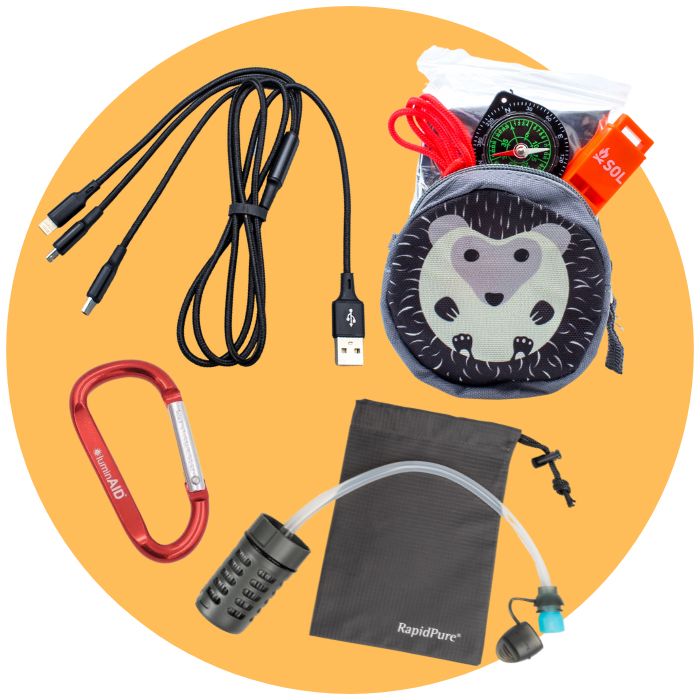
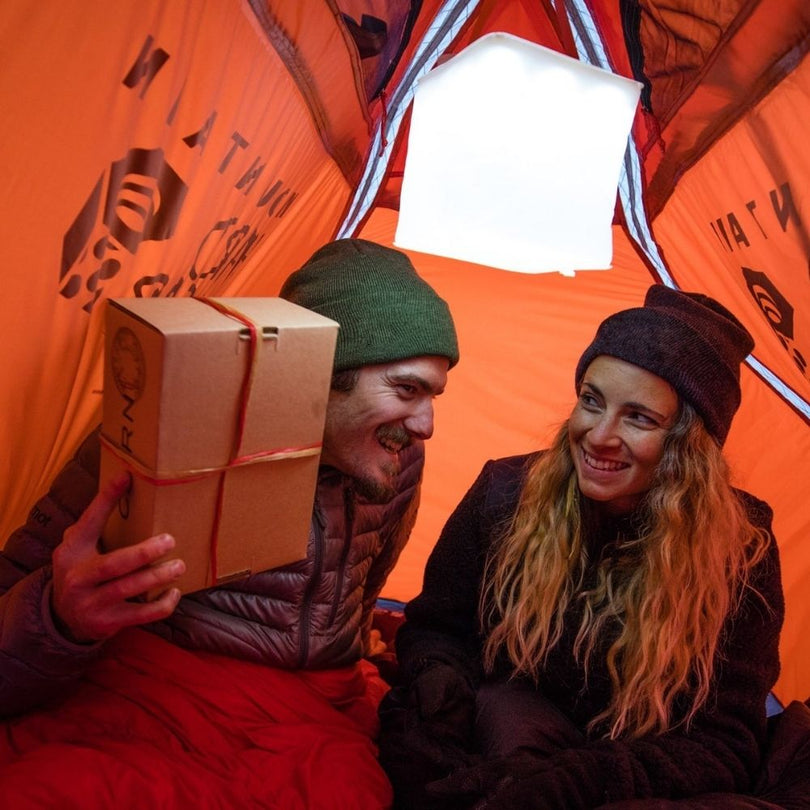
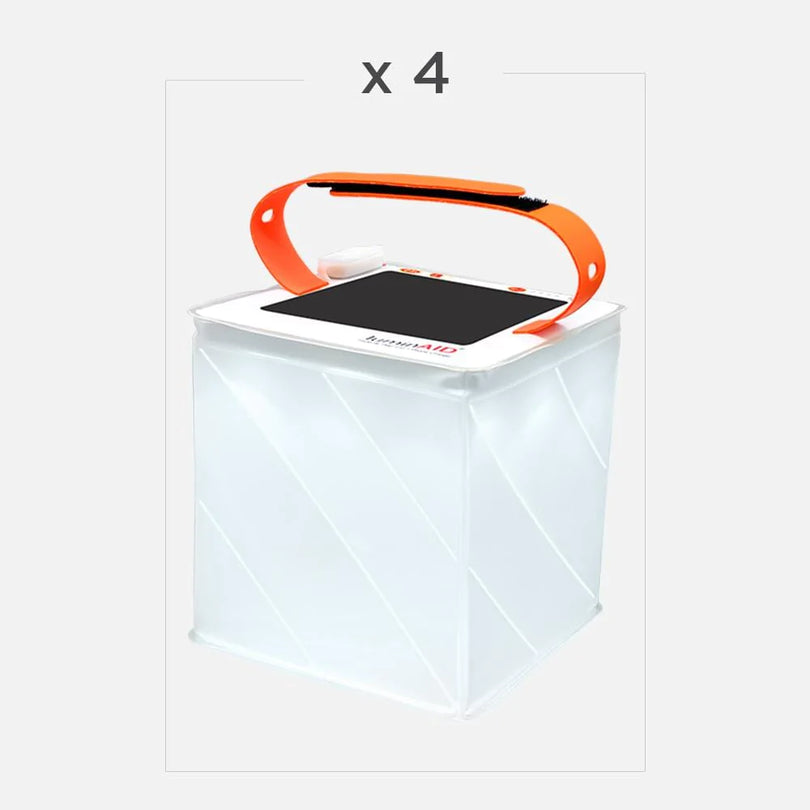

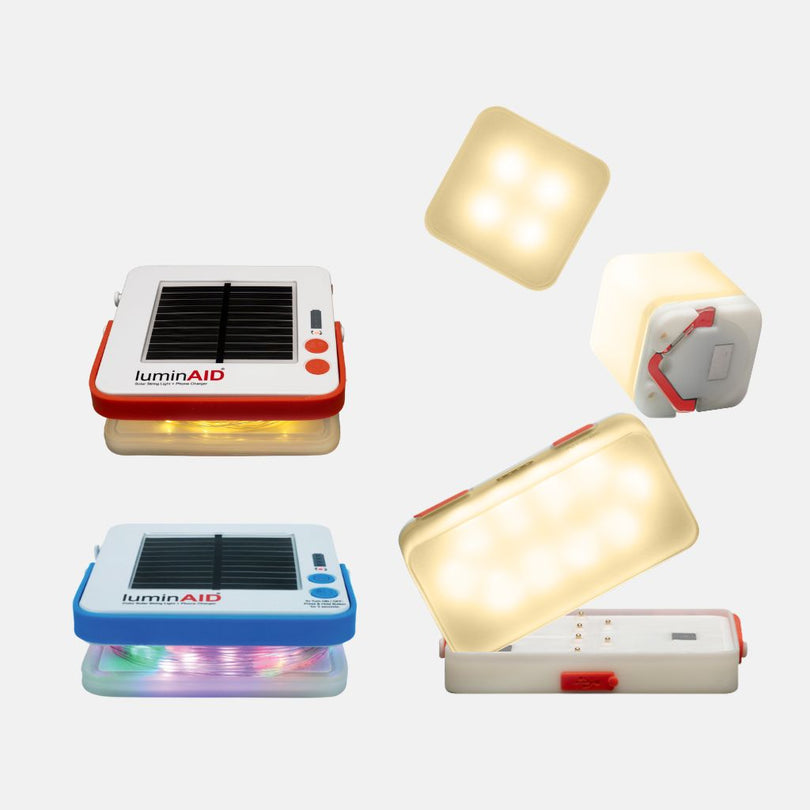
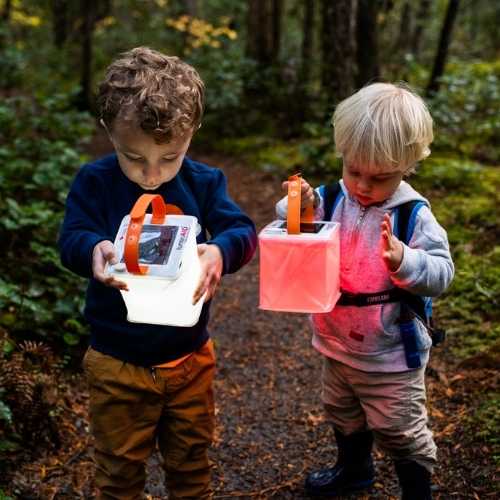

The best gear for a family camping trip nails that sweet spot between durability, ease of use, and comfort. It has to be tough enough for the outdoors but simple enough that you're not wrestling with it while the kids are running wild.
When you get it right, everyone from toddlers to teenagers has a blast. The essentials usually start with a roomy tent (think a 6-person model for a family of four to avoid feeling cramped), cozy sleeping setups for everyone, a dependable camp stove for those crucial morning coffees, and a solid set of safety gear. Investing in quality stuff from the get-go is what turns a potentially frustrating trip into the kind of adventure you'll talk about for years.
Building Your Family's Perfect Camping Kit
Getting ready for a family camping trip should be fun, not another chore on your to-do list. This guide is more than just a checklist; it's a game plan for outfitting your crew for an awesome time outside. We'll get into the why behind the gear, because choosing the right equipment truly makes or breaks the experience, especially if you're just starting out.
Think of it like you're building a temporary home in the woods. You start with the foundation—your tent and sleeping gear—which keeps everyone safe, warm, and rested. Then you add the kitchen for whipping up tasty camp meals. Finally, you bring in the "utilities" like lights and safety tools to make your campsite functional and secure. The whole point is to create a comfy home base where your family can unplug and reconnect with nature.
The Core Gear Categories
Every family camping setup is built on four main pillars. Nail these, and you're well on your way to a fantastic trip.
- Shelter: This is your tent—your family's home away from home. It needs to be big enough for everyone plus their bags, and sturdy enough to laugh off any surprise wind or rain.
- Sleep Systems: A good night's sleep is an absolute must. We're talking sleeping bags rated for the right temperatures, comfy sleeping pads that insulate you from the cold ground, and yes, pillows. Don't forget the pillows.
- Camp Kitchen: This is where the magic happens, from sizzling bacon in the morning to gooey s'mores at night. Your kitchen kit includes the stove, a cooler, cookware, and a smart way to store your food.
- Safety and Lighting: A prepared family is a safe family. This bucket covers everything from a well-stocked first-aid kit and bug spray to reliable lighting for when the sun goes down.
Modern, dependable gear gives you the comfort and peace of mind you need to truly relax. You can find a deeper dive into these essentials by checking out our guide on camping must-haves and essentials. A well-stocked kit, including things like a good insect repellent from a brand like Natrapel, ensures that little annoyances don't turn into trip-ruining disasters.
Choosing Your Family's Home in the Wild
Your tent is more than just fabric and poles. It’s your family’s basecamp, the cozy fort where you’ll share stories, and your safe harbor from whatever the weather throws at you. Getting this decision right is a huge part of a successful trip—it’s like choosing the perfect vacation home for your adventure.
First thing’s first: ignore the person-count on the packaging. A "4-person" tent might technically fit four adults side-by-side in sleeping bags, but for a family with gear, maybe a dog, and the need to not be literally on top of each other, it's going to feel cramped fast. A good rule I always follow is to get a tent rated for at least two more people than are actually in your group. Trust me, that extra space isn't a luxury; it's a sanity-saver on a rainy afternoon.
Decoding Tent Features for Family Comfort
Once you start looking, you'll see a lot of specs. A few key ones really matter for families. Seasonality ratings, for instance, tell you what kind of weather the tent is built for. A 3-season tent is the sweet spot for most families, designed to handle the variable conditions of spring, summer, and fall with a great balance of ventilation and rain protection.
Here are a few other features that make a huge difference in comfort:
- Peak Height: This is the distance from the floor to the highest point inside. Anything over 6 feet is a game-changer. It means adults can stand up straight to change clothes or just move around without crouching.
- Vestibules: Think of this as a covered porch or mudroom for your tent. It's an invaluable spot to stash muddy boots, wet jackets, and extra gear, which keeps your sleeping area clean and uncluttered.
- Ventilation: Good airflow is non-negotiable. It prevents that stuffy feeling and, more importantly, stops condensation from building up inside overnight. Look for tents with large mesh windows and roof vents.
Choosing a tent with ample space and user-friendly features is a top priority for families. Recent market analysis shows that spaciousness is the most praised feature in 20.2% of positive consumer reviews for camping equipment, reflecting a strong preference for comfort and roominess in the wild.
And for those of you camping with the littlest adventurers, a dedicated sleeping space is key. A good portable crib for camping can give your infant a safe, familiar spot to rest, making bedtime in the woods feel a little more like home.
Comparing Popular Family Tent Styles
The two main players in the family camping world are dome tents and cabin tents. They both have their pros and cons, and the right one for you really depends on what you value most.
A dome tent, with its sloped, rounded walls, is a champ in bad weather. That aerodynamic shape helps it stand strong against wind and shed rain effectively. They also tend to be lighter and pack down smaller, which is always a bonus.
Cabin tents, on the other hand, are all about maximizing living space. Their near-vertical walls and high ceilings make the entire floor plan feel open and usable. This is fantastic for families who need some indoor play space for the kids or just don't want to feel boxed in. To dive even deeper into all the gear you might need for your shelter, check out our complete guide on tent camping essentials.
Comparing Family Tent Styles: Dome vs. Cabin
When you're staring at a wall of tents online or in a store, it usually boils down to these two styles. Here’s a quick breakdown to help you understand the key differences and choose the best fit for your family's camping needs.
| Feature | Dome Tent | Cabin Tent |
|---|---|---|
| Weather Resistance | Excellent in wind and rain due to its aerodynamic shape. | Good, but the high, flat walls can catch wind more easily. |
| Interior Space | Less usable floor space and headroom near the walls. | Maximum usable space with near-vertical walls. |
| Peak Height | Typically lower, often requiring adults to crouch inside. | Taller, usually allowing most adults to stand up straight. |
| Setup Ease | Generally simpler and faster to set up with fewer poles. | Can be more complex and take longer to pitch. |
| Portability | Lighter and packs down smaller, making it easier to transport. | Heavier and bulkier when packed. |
| Best For | Smaller families, weekend trips, and windy conditions. | Larger families, longer stays, and comfort-focused campers. |
Ultimately, the choice comes down to balancing weather performance with livable space. If you prioritize a sturdy shelter that's easy to carry and set up, a dome tent is a fantastic choice. If your goal is to create a comfortable, roomy home-away-from-home where the whole family can hang out, a cabin tent is tough to beat.
Mastering the Art of a Good Night's Sleep Outdoors
A successful family camping trip really hinges on one thing: a good night's sleep. When everyone is well-rested, moods are better, adventures feel bigger, and the memories you make are that much sweeter. The secret to a happy campsite is a comfortable and warm sleep system.
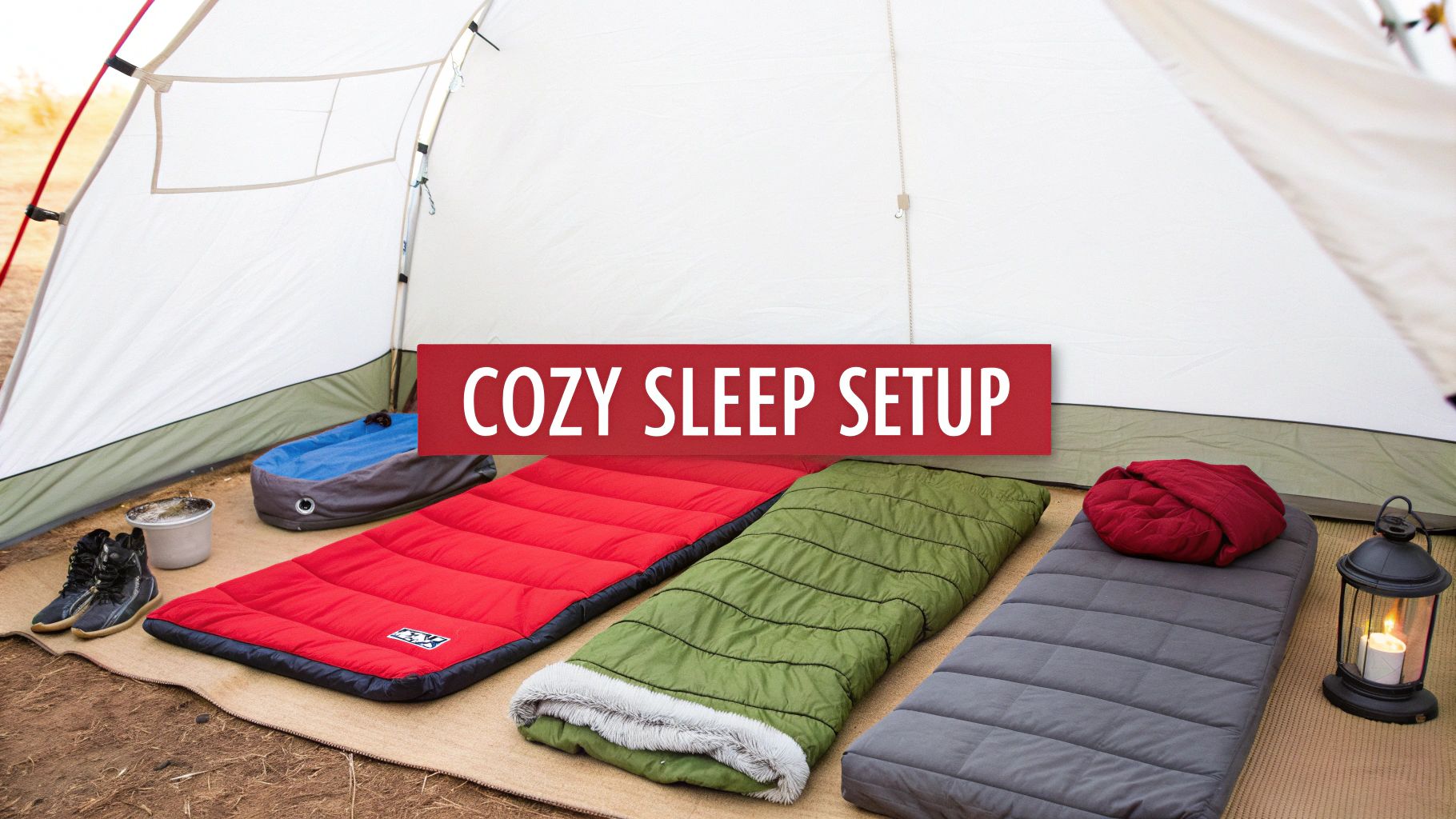
This is about more than just tossing a blanket on the tent floor. It's a strategic combo of a sleeping bag, a sleeping pad, and a few key comfort items that create a cozy nest for everyone in the family. Let's break down how to pick the right gear for your crew.
Choosing the Right Sleeping Bags
Think of a sleeping bag as your own personal cocoon out in the wild. Its main job is to trap your body heat, keeping you warm from dusk till dawn. The single most important feature to understand is its temperature rating.
This number tells you the lowest temperature the bag is designed to keep an "average sleeper" comfortable. But "comfort" is a pretty personal thing. A good rule of thumb is to choose a bag rated for at least 10-15 degrees colder than the lowest temperature you actually expect. It’s way easier to unzip a bag if you're too warm than it is to shiver through the night in one that can't handle the cold.
You'll generally have two choices for insulation:
- Synthetic Insulation: This is the workhorse for family camping. It's affordable, it still works even if it gets a little damp, and it's hypoallergenic. This makes it a fantastic, no-fuss choice for kids and unpredictable weather.
- Down Insulation: Made from goose or duck feathers, down gives you the best warmth for its weight and packs down incredibly small. It's definitely a premium option that's lighter to carry, but it loses all its insulating magic if it gets wet and needs a bit more TLC.
For most families sticking to 3-season car camping, a quality synthetic bag is the most practical and budget-friendly way to go.
The Unsung Hero: The Sleeping Pad
A sleeping pad does so much more than just provide a little cushion between you and the hard ground. Its most critical job is insulation. The ground is like a giant heat sponge, constantly pulling warmth away from your body all night long. A good sleeping pad creates a thermal barrier to stop that from happening.
A pad's insulating power is measured by its R-value, which usually ranges from 1 to 7+. The higher the R-value, the better it insulates you from the cold ground. For most family camping in the summer, an R-value of 2-4 is plenty.
A classic beginner mistake is splurging on an expensive sleeping bag but grabbing a cheap, thin sleeping pad. It doesn't matter how warm your bag is—if the ground is sucking all your body heat away, you're going to be cold. Your sleep system is only as good as its weakest part.
Here are the main types of pads you’ll come across:
- Foam Pads: These are super lightweight, inexpensive, and basically indestructible. You can't pop them, which makes them a great, worry-free option for young kids.
- Self-Inflating Pads: These pads offer a nice balance of foam insulation and air cushioning, giving you solid comfort and warmth. They're a really popular middle-ground choice for family campers.
- Air Pads: The most comfortable and packable option by far, but they can get punctured. That said, modern versions are pretty durable and can offer amazing insulation with their internal baffle designs.
Tips for Keeping Kids Cozy All Night
Getting kids to sleep well in a tent just takes a little extra planning. The key is to mix comfort with a dose of familiarity. Bringing a pillow and a favorite stuffed animal from home can work wonders.
Make sure their gear fits, too. A kid swimming in an adult-sized sleeping bag has way too much empty space to heat up, which almost guarantees a cold night. Kid-specific sleeping bags are a worthwhile investment to keep them snug. And finally, always have a first-aid kit handy. Having sting relief from a brand like After Bite on hand can quickly soothe an itchy bug bite and get bedtime right back on track.
Creating Your Ultimate Camp Kitchen
Let's be honest, food just tastes better outside. There's something about cooking and eating around a campfire that turns a simple meal into a lasting memory. A well-planned camp kitchen is the heart of your campsite, the place where everyone gathers for sizzling bacon in the morning and gooey s'mores under the stars.
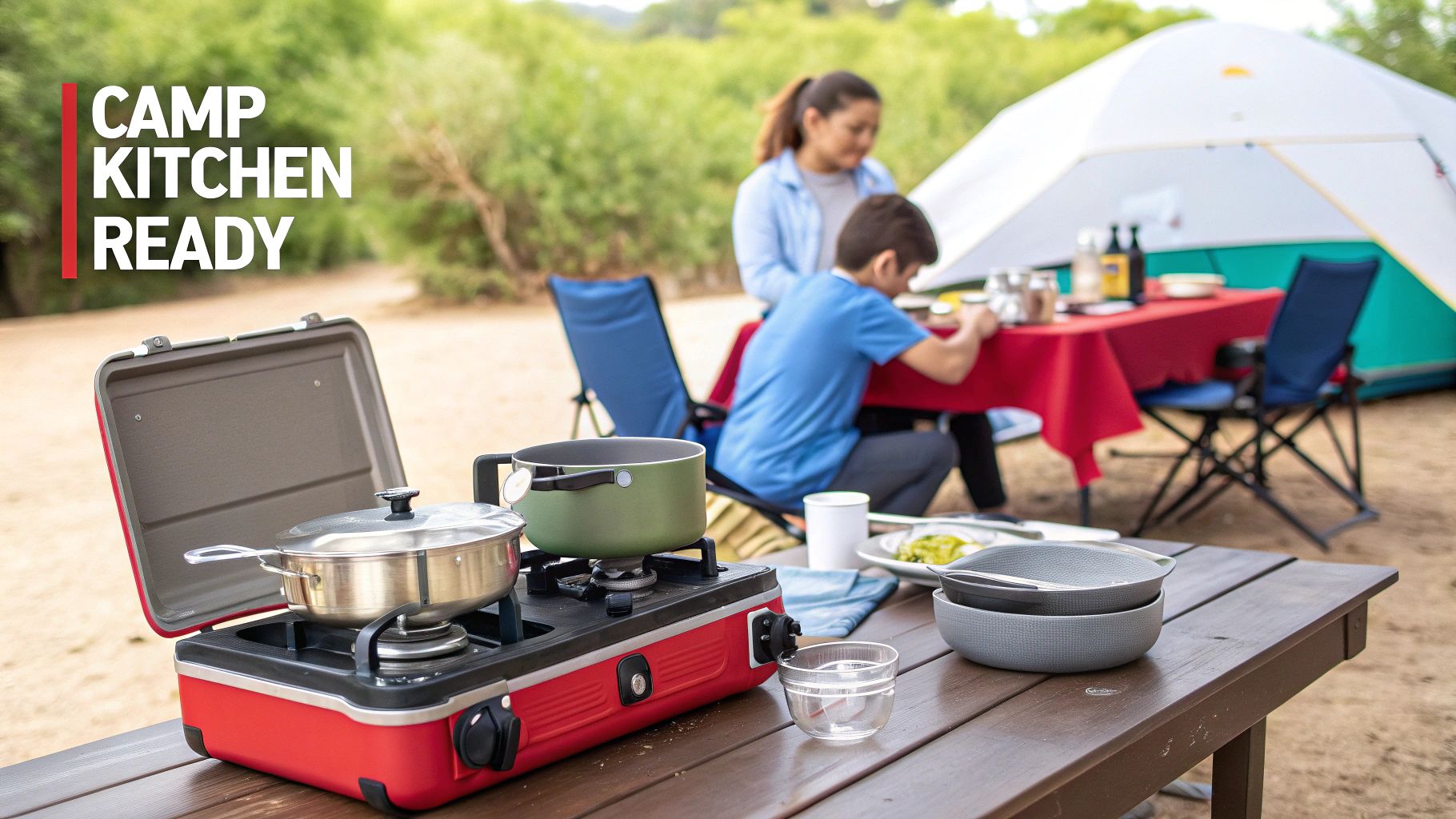
Putting together the best camping gear for families means creating an outdoor kitchen that works for you. You don't need a professional chef's setup, but a few key pieces of gear will make cooking for your crew simple and fun, turning meal prep from a chore into part of the adventure.
The Camp Stove: Your Culinary Centerpiece
The camp stove is easily the most important part of your kitchen kit. For families who are car camping, you really can’t beat a classic two-burner propane stove. It gives you the space to use two pots or pans at once—just like your stovetop at home—so you can boil water for pasta while sautéing veggies at the same time.
Sure, you could get by with a smaller single-burner stove if you’re tight on space or only making one-pot chili. But for most family meals, the sheer convenience of a two-burner model is a game-changer.
Cookware and Cooler Essentials
You don't need to raid your home kitchen before every trip. Investing in a dedicated set of camp cookware is one of the smartest moves you can make. I recommend finding a nesting set that includes a couple of pots and a frying pan that all stack together. It's amazing how much space this saves in your gear bin.
Your cooler is your campsite fridge, and a good one is non-negotiable for keeping food safe and drinks cold. Look for models with thick insulation and a solid seal. Here’s a pro tip I swear by: pre-chill your cooler with a bag of ice for a few hours before you even start packing it with food. Your ice will last way longer.
"A well-organized cooler is an efficient cooler. Pack in layers: frozen items on the bottom, then raw meat, followed by drinks and produce, with delicate items like eggs on the very top. This minimizes rummaging and keeps cold air locked in."
Food Storage and Cleanup Simplified
Smart food storage isn't just about freshness; it's about safety. Never, ever leave food, coolers, or even scented toiletries out at your campsite, especially overnight. This is an open invitation for wildlife, from curious raccoons to much larger animals like bears. Always store your food and scented items in a locked vehicle or a designated bear-proof locker if the campground has one.
The demand for gear that makes outdoor life easier has exploded, which is great for us campers. The global camping equipment market is projected to hit USD 48.026 billion by 2025, and with North America making up 32.59% of that, you can bet companies are innovating. You can discover more insights about camping market trends to see how this growth is leading to better gear for all of us.
Finally, a simple, pre-packed kitchen kit will save you from that "Oh no, I forgot the can opener!" moment.
- Utensils: A good spatula, a big spoon, tongs, and a sharp knife are non-negotiable.
- Tableware: Pack reusable plates, bowls, and cutlery for everyone.
- Cleanup Station: A collapsible sink or wash basin, biodegradable soap, and a sponge make washing up a breeze.
- Fuel: Always bring at least one extra propane canister for your stove. Trust me on this one.
- Essentials: Can opener, bottle opener, and plenty of trash bags to pack everything out and leave your site pristine.
Illuminating Your Campsite for Safety and Fun
When the sun finally dips below the horizon, your campsite takes on a whole new life. Keeping that space well-lit isn't just about being able to see where you're going—it's about creating a warm, secure environment where your family can unwind and soak in the magic of a night outdoors. It’s all about peace of mind.
Think about lighting your campsite in layers, just like you would at home. You wouldn't use a single harsh spotlight to light your entire house, right? The same idea applies here. A smart lighting plan makes cooking easier, prevents trips and falls over tent stakes, and helps keep the spooky shadows from freaking out the little ones.
Layering Your Campsite Light
The best way to light up a family campsite is with three distinct layers. Each layer has a specific job, and together, they turn a simple patch of dirt into your home away from home.
- Ambient Lighting: This is your foundation—the broad, gentle light that defines your main hangout area. Solar-powered string lights are perfect for this. Drape them between a couple of trees or along your tent's awning to cast a warm, welcoming glow that outlines your space without being harsh or glaring.
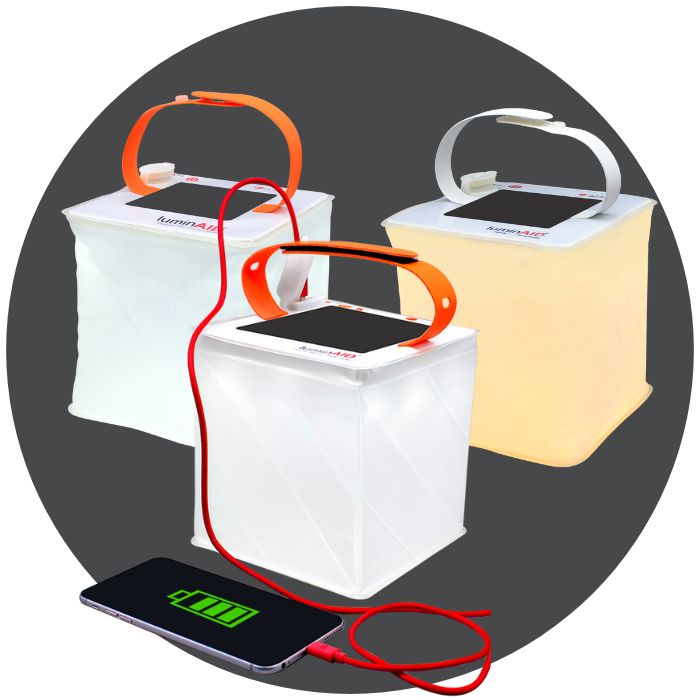
- Task Lighting: When it comes time to cook, read a book, or play a round of cards, you need focused, powerful light. A bright Power Lantern plopped right on the picnic table is the perfect camp kitchen workhorse, making sure you can actually see what you're chopping.
- Personal Lighting: Don't forget that everyone needs their own light. Headlamps are an absolute game-changer for kids. They're hands-free, which means your little one can safely navigate a late-night bathroom run or hunt for a dropped marshmallow without juggling a flashlight. Small personal lanterns work great, too.
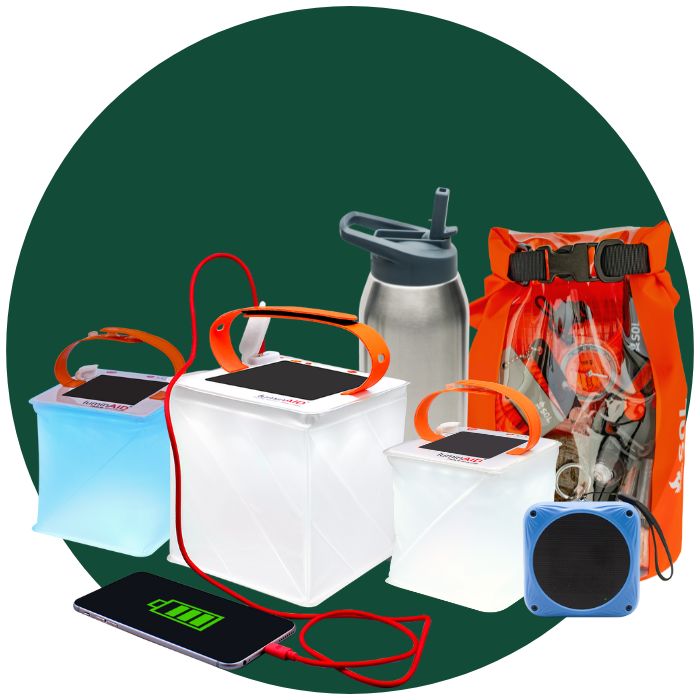
This is where modern gear like LuminAID’s solar-powered lanterns really shines. Having reliable, rechargeable light that also doubles as an off-grid power source is huge. It means you can top off a phone for navigation or emergencies—a critical backup when you're truly away from it all. You can learn more about how to choose the right solar lanterns for camping to fit what your family needs.
Building Your Family Safety Kit
Beyond just lighting, having a solid safety plan is completely non-negotiable for family camping. This all starts at home with a well-stocked first-aid kit and a little research on where you're headed.
A pre-made kit from a brand like Adventure Medical Kits is a fantastic starting point because it covers all the bases. From there, you can customize it for your crew by adding things like children’s pain reliever, any specific allergy meds, and extra blister care for those long hikes.
Notice how this example from Adventure Medical Kits is organized into clearly labeled pockets. That kind of organization saves precious time when you’re trying to find a bandage in a hurry.
A well-prepared first-aid kit isn't just a box of supplies; it's your frontline tool for handling the small scrapes, stings, and bumps that are a normal part of outdoor adventures. Being able to quickly and calmly treat minor issues keeps them from derailing the fun for everyone.
Preparing for Wildlife and Pests
Finally, being ready for the local inhabitants—both the buzzing ones and the furry ones—is key to a safe and happy trip.
Good insect repellent is an absolute must-have. Nothing can ruin a kid's evening faster than a bunch of itchy mosquito bites. Look for formulas designed for family use, like those from a trusted brand like Natrapel. A quick spray-down before dusk makes sitting around the campfire so much more pleasant.
And if you’re camping in bear country, carrying bear spray is an essential safety measure. Products from brands like Counter Assault are designed as a non-lethal deterrent for a worst-case scenario. It's the kind of gear you hope you never, ever have to use, but just having it provides an incredible amount of security.
Gear That Elevates Your Camping Experience
Once you have the essentials handled—shelter, sleep systems, and a way to cook—it's time for the fun part. This is where we get into the gear that takes a good camping trip and makes it a great one.
These are the items that add comfort, convenience, and a dose of fun, turning your campsite from a temporary spot in the woods into a true outdoor home base. Think of it less like survival and more like thriving. You’ve built the house; now it’s time to furnish it with the things that create those perfect moments, like sipping cocoa around the fire or playing a board game as the sun goes down.
Creating a Comfortable Campsite Living Room
Your main outdoor living area will probably be centered around the fire pit or the campsite’s picnic table. Making this space comfortable and functional is the secret to a happy family. Just a few key pieces can completely change the vibe.
- Comfortable Camp Chairs: Getting everyone off a hard picnic table bench is a game-changer. Giving each family member their own camp chair creates a dedicated spot to relax, read a book, tell stories, or just watch the fire.
- A Sturdy Portable Table: Even though most sites have a picnic table, a second, smaller table is incredibly useful. It can become your food prep station, a surface for board games, or just a place to keep lanterns and drinks out of the dirt.
- Reliable Rain Gear: Don't let a surprise shower send everyone scrambling for the tent. With good rain jackets and pants for the whole family, a little drizzle won't stop the fun. You can keep exploring, cooking, and hanging out without getting soaked.
This screenshot from the RapidPure Water website shows their range of water purification products, which are designed for various outdoor situations.
The variety of purifiers highlights how critical clean water is, offering solutions from personal straws to larger systems for group needs.
Adding Convenience and Fun to Your Adventure
Beyond pure comfort, a few extra items can simplify campsite chores and open up new ways to have some screen-free fun, making your family’s time together that much more memorable. One of the biggest convenience items you can pack is a reliable way to get clean water.
Having a dependable water source is non-negotiable for family safety. A high-quality water filter or purifier removes the stress of packing in gallons of water and ensures you have safe, drinkable water for cooking, cleaning, and hydration right from a nearby stream or spigot.
Bringing along a water purifier, like one from RapidPure Water, is a perfect example of how a single piece of gear delivers both convenience and total peace of mind. Instead of carefully rationing heavy water jugs, you suddenly have a nearly endless supply.
For entertainment, think simple. Pack a deck of cards, a frisbee, some binoculars for bird watching, or a guide to local plants and animals. These small additions are what encourage connection and exploration, rounding out the ultimate family camping experience.
Your Top Family Camping Gear Questions, Answered
Heading out on your first family camping trip is exciting, but it also brings up a lot of questions. Don't worry, we've all been there. Getting clear, straightforward answers is the best way to plan with confidence and make sure that first adventure is a huge success.
We've pulled together some of the most common questions we hear from families to help you pick out the right gear.
How Big of a Tent Does My Family Really Need?
When in doubt, go with the "plus two" rule: pick a tent that's rated for two more people than you actually have. So, if you're a family of four, you'll be much happier in a 6-person tent.
That extra space isn't just for stretching out. It's for all the bulky gear, the sprawling sleeping pads, and just giving everyone enough elbow room to move around. Trust us, this is a game-changer for keeping kids happy, especially if a rainy afternoon keeps you all cooped up inside.
What Is the Most Important Piece of Gear to Invest In?
If you have to be strategic with your budget, put your money into your shelter and sleep systems first. A high-quality, waterproof tent and warm, comfortable sleeping bags are the absolute foundation of a great trip.
A leaky tent or a cold, sleepless night can torpedo the whole experience for everyone, especially the little ones. These are the items where quality truly makes the biggest difference in family comfort and morale. A good night's sleep means everyone wakes up rested and ready for adventure.
Investing in a quality shelter and sleep system is a non-negotiable for family camping. It's the difference between creating cherished memories and having a miserable experience you'd rather forget. A dry, warm night is the bedrock of a happy campsite.
How Do We Keep Phones Charged for Emergencies?
When you're off the grid, a solar phone charger or a 2-in-1 solar lantern with a built-in charger is your best friend. Products like the LuminAID Power Lantern soak up sunlight all day, giving you plenty of light for the campsite at night and a USB port to power up your phone.
This is a fantastic, sustainable way to make sure you always have a reliable power source for communication and navigation, all without having to drain your car battery.
What Are the Absolute Essentials for a Family First-Aid Kit?
A great starting point is a pre-made kit from a reputable brand like those from Adventure Medical Kits. From there, you'll want to customize it for your family.
Make sure it has the basics:
- Bandages of all sizes
- Antiseptic wipes
- Gauze and medical tape
- Pain relievers for both adults and children
Then, add your own essentials like personal medications, blister treatment (a must!), tweezers, and sting relief from a product like After Bite. And here’s a pro tip: always check your kit before you leave to restock anything you used on the last trip. You want it fully stocked when you actually need it.
Ready to illuminate your family's next adventure? Explore LuminAID's collection of solar lanterns and phone chargers to find the perfect lighting for your campsite. Shop now.