
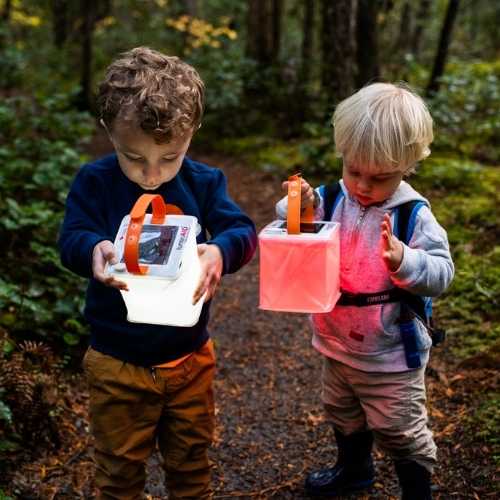

Light Up Your World, No Outlets Required
A lot of outdoor spaces have the same problem. The patio feels dark once the sun goes down, the side yard turns into a tripping hazard, the campsite needs better task lighting, and the emergency bin still depends on old batteries that may or may not work when the power fails.
Solar lighting now covers far more than basic garden stakes. Portable lanterns can live in a go bag, string lights can warm up a pergola without an outlet, and motion lights can add security around doors and sheds without trenching wire. For homeowners, campers, RV travelers, and families building outage kits, the biggest advantage is flexibility. A light can move with the need instead of being locked into one permanent location.
The category is also getting bigger fast. The global outdoor solar LED market was valued at USD 9.8 billion in 2024 and is projected to reach USD 41.12 billion by 2030, with a projected CAGR of 27.5% from 2025 to 2030, according to Grand View Research on the outdoor solar LED market. That kind of growth usually means one thing for buyers. More options, better designs, and more use cases than the old “one path light by the mailbox” approach.
Table of Contents
- 1. Portable Solar Lanterns for Camping and Emergency Preparedness
- 2. Solar String Lights for Ambiance and Outdoor Entertainment
- 3. Solar Path and Ground Lights for Safe Outdoor Navigation
- 4. Solar Spotlights and Accent Lights for Landscape Highlighting
- 5. Solar Powered Charging Lanterns for Multi-Function Emergency Lighting
- 6. Solar Motion-Sensor Lights for Security and Convenience
- 7. Solar Tent and Camping Lanterns for Portable Outdoor Adventures
- 8. Solar Lanterns for Disaster Relief and Humanitarian Response
- 9. Solar Overhead and Pendant Lights for Outdoor Living Spaces
- 10. Solar Lanterns for RVs and Off-Grid Vehicles
- 10-Option Outdoor Solar Lighting Comparison
- Your Next Step to a Brighter, Greener Outdoor Space
1. Portable Solar Lanterns for Camping and Emergency Preparedness
Portable lanterns solve a problem that fixed lighting can't. They go from picnic table to tent, from storm kit to back porch, and from car trunk to blackout use without any installation. That's why they belong near camping gear and emergency supplies, not just in the yard.
A good solar lantern works best when it's treated like part of a routine. It gets charged during the day, wiped off when dusty, and packed where it can be reached fast. For families building an outage kit, a lantern is often more useful than a decorative outdoor light because it can move with the people using it.
Portable use beats fixed placement in a lot of situations
Campers use solar lanterns on multi-day trips to avoid carrying disposable batteries. RV travelers use them outside at camp, then bring the same light indoors at night. Families in hurricane zones often keep one in each bedroom, one in the kitchen, and one in the main emergency tote so a single power loss doesn't create a scramble.
Outdoor solar lights rely on rechargeable batteries for nighttime use, and those batteries typically last 2 to 5 years, while the LED component is designed to last 10 years or more, according to Warehouse Lighting's buying guide for outdoor solar lights. That split matters. If a lantern suddenly seems dim, the battery is often the service item, not the LED.
Practical rule: A portable lantern should be charged before the trip, topped off in sun during the day, and stored where it won't be buried under bulky gear.
For a closer look at current designs and use cases, LuminAID's modern solar lantern guide gives a solid overview of how portable solar lighting fits camping and emergency prep.
2. Solar String Lights for Ambiance and Outdoor Entertainment
String lights are one of the easiest outdoor solar lighting ideas to get right because they don't need precise beam angles. They only need a good support line, a panel that sees real sun, and a layout that makes the space feel intentional instead of cluttered.
On patios, pergolas, fences, and outdoor dining areas, solar string lights work best as ambient lighting, not primary task lighting. They create mood, define a gathering zone, and make a backyard feel finished. For parties, they also remove the usual extension-cord problem.

Placement matters more than bulb style
The common mistake is hanging the lights beautifully while hiding the panel in a bad spot. Solar-powered outdoor lights need unobstructed sunlight, especially between 10 a.m. and 2 p.m., when solar irradiance is strongest, according to Energy Savings' guide to solar-powered outdoor lights. If the panel misses that window, runtimes usually suffer.
That matters even more in entertainment areas where pergolas, umbrellas, and mature trees cast long shadows. A separate panel location is often better than trying to keep everything visually neat in one place.
- Over a dining zone: Hang lights high enough to frame the table without sitting in anyone's direct line of sight.
- Along a fence: Use them to define the edge of the yard, then add one brighter task light near the grill or gate.
- For events: Set the panel on the sunniest side of the space, even if the lights themselves stretch into partial shade.
For layout inspiration, these outdoor string lighting ideas from LuminAID show how solar strings can shape patios and gathering spaces without hardwiring.
3. Solar Path and Ground Lights for Safe Outdoor Navigation
Path lights should do one job first. They should help people walk safely. The decorative side is real, but it comes second on stairs, uneven pavers, gravel runs, garden edges, and the route from driveway to front door.
The most useful installs aren't always the brightest. They create rhythm and orientation. A guest should be able to see where the path turns, where the step starts, and where the walkway ends.
What works on real walkways
Path lights earn their keep on high-traffic routes. Front approaches, side-yard access, deck stairs, and the stretch between the house and detached garage matter more than deep ornamental beds. For campsites and cabins, they also help children and older adults move safely at night without sweeping a flashlight across the whole site.

A lot of generic advice ignores one stubborn reality. Constant shade breaks solar path lighting fast. One underserved issue is how poorly most guides handle north-facing placements and dense tree cover, even though homeowners regularly struggle with those conditions, as reflected in a discussion about solar pathway lights in constant shade. In those areas, solar path lights often disappoint unless the panel can be moved to a sunnier location.
Put path lights where people actually walk, not where the flower bed photo looks nicest.
A practical layout usually starts at the hazard points. Place lights at steps, corners, grade changes, and entry transitions first. If the budget allows for more, fill the spaces between them. That's a better approach than evenly spacing weak lights down a long path and hoping they all perform the same.
4. Solar Spotlights and Accent Lights for Landscape Highlighting
Spotlights are where outdoor solar lighting ideas start to look intentional instead of merely functional. A focused beam can pull a tree trunk forward, add depth to a stone wall, or give a front entry some shape after dark. Used badly, though, spotlights create glare, harsh shadows, and a yard that feels overlit.
The better approach is selective emphasis. One specimen tree, one textured wall, one sculptural shrub. That usually looks stronger than spraying light across everything.
Use spotlights to create depth, not glare
Commercial buyers have pushed a lot of adoption in outdoor lighting. In the broader outdoor lighting market, commercial use is projected to account for 65.53% of the market share in 2025, and the outdoor sector has shown greater LED adoption than indoor applications while contributing 40% of total global LED energy savings, according to the U.S. Department of Energy LED adoption report. For homeowners, the practical takeaway is simple. LED-based outdoor lighting is established, and focused exterior lighting is no longer a niche setup.
Solar spotlights work best when the panel and fixture don't have to face the same direction. The light may need to point north at a facade, while the panel needs southern or open-sky exposure. Models with separate panel placement are often easier to live with in yards with various features.
A related design category worth studying is deck accent lighting, especially when a property already has railings, steps, and layered hardscape that need softer edge definition than a spotlight can provide.
A short visual example helps here:
Use spotlights to highlight vertical texture, not to wash flat lawn. Grass doesn't give much back. Bark, stone, fencing, and architectural siding do.
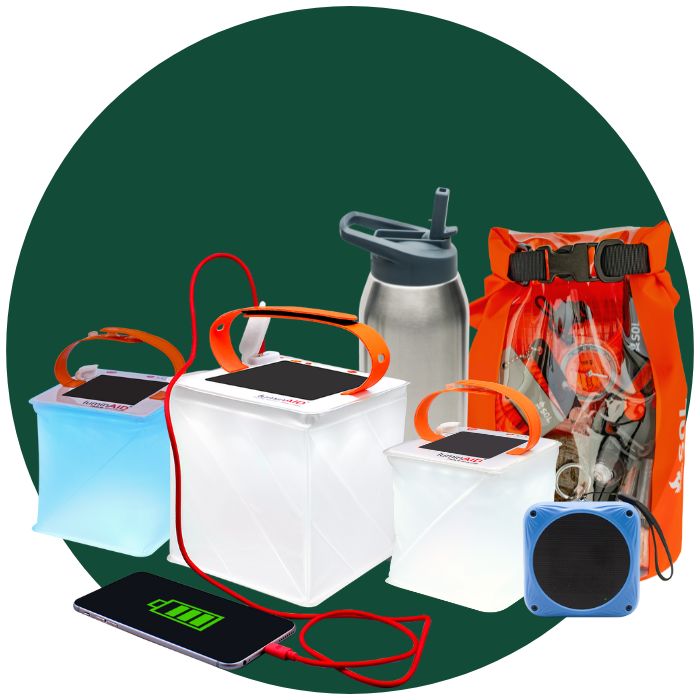
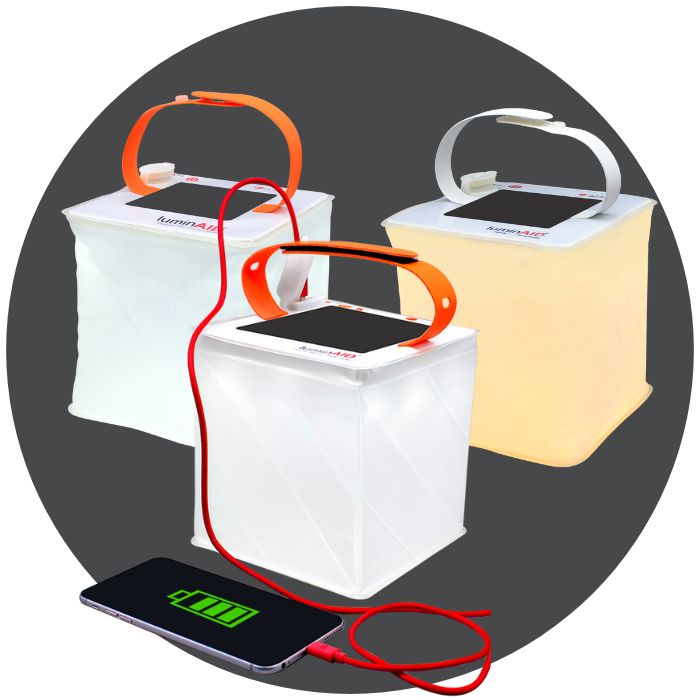
5. Solar Powered Charging Lanterns for Multi-Function Emergency Lighting
The power goes out at 9 p.m., one phone is at 18%, and the only flashlight in the house throws a narrow beam and does nothing for charging. That is the situation a solar charging lantern is built for. It covers area light and basic device power in one unit, which makes it useful for storm kits, vehicles, cabins, and evacuation gear.
These lanterns earn their place when the job is bigger than finding the breaker panel. A standard decorative solar light will not help much if someone needs to keep a phone alive for weather alerts, offline maps, or family check-ins. A charging lantern can.
Demand for portable solar gear has grown well beyond backyard decor. In its Off-Grid Solar Market Trends Report 2024, Lighting Global tracks continued global use of off-grid solar products, including portable lights and systems sold for households that need dependable lighting without grid power. That broader demand lines up with what prepared homeowners already know. A light that also handles small charging tasks solves a real outage problem.
Placement matters more than people expect. I keep one where people naturally gather during an outage, usually the kitchen or living area, and another near an exit path or bedroom. A lantern stored in a garage cabinet may be technically available, but it is in the wrong place when the house goes dark fast.
A few setup choices make these lights more useful:
- Store them where they will be used: Nightstands, kitchen counters, mudrooms, and vehicles beat deep storage bins.
- Charge before the season changes: Test the panel, battery hold, and USB output before storm season or a long road trip.
- Use light levels carefully: Lower brightness usually stretches runtime and leaves more stored power for a phone.
- Split the job in family settings: One lantern can stay dedicated to communication, while another handles room light.
- Check charging expectations: Small lanterns can top up a phone in a pinch, but they are usually for extending battery life, not fully recharging multiple devices.
That trade-off is the part buyers often miss. A lantern bright enough for a table, hallway, or small room may still have limited battery capacity for charging. If phone power is a priority, look closely at battery size, output port type, recharge options, and whether the unit can charge by USB as well as solar. Solar keeps it useful over longer outages. USB charging gets it ready faster before the outage starts.
A good emergency lantern does more than make a room visible. It keeps light and communication available from the same piece of gear.
6. Solar Motion-Sensor Lights for Security and Convenience
Motion-sensor lights are often sold as security tools, and that's fair, but convenience is half the value. They light the route to the trash bins, the side gate, the shed, and the garage door without anyone needing to remember a switch.
They also reduce one common solar-light problem. Constant nighttime drain. A motion light saves stored energy for the moments when light is useful.
The best installs solve two problems at once
For homes, the strongest locations are often the least glamorous ones. Side yards, back steps, garage corners, trash-pad access, and dark approaches to outbuildings matter more than decorative beds. Vacation rentals benefit too because guests don't know the property layout and often arrive after dark.
The hardware still depends on the same charging physics as every other solar fixture. Outdoor solar lights use photovoltaic silicon cells that absorb sunlight, generate electrical current, store it in rechargeable batteries, and power LEDs at night, while panels can still collect energy in cloudy conditions, as explained by Outdoor Solar Store's overview of how solar lights work. Cloud cover doesn't make placement irrelevant, though. A panel in deep shade still underperforms.
- Mount for entry coverage: Position units where they catch a person approaching, not after that person is already at the door.
- Reduce false triggers: Keep sensors away from moving branches and heat sources.
- Think in zones: One light at the garage and another at the side gate usually works better than one oversized unit trying to cover everything.
For households that also keep insect control in camp bins or porch storage, Natrapel outdoor bug protection products are a practical companion category for warm-weather evening use.
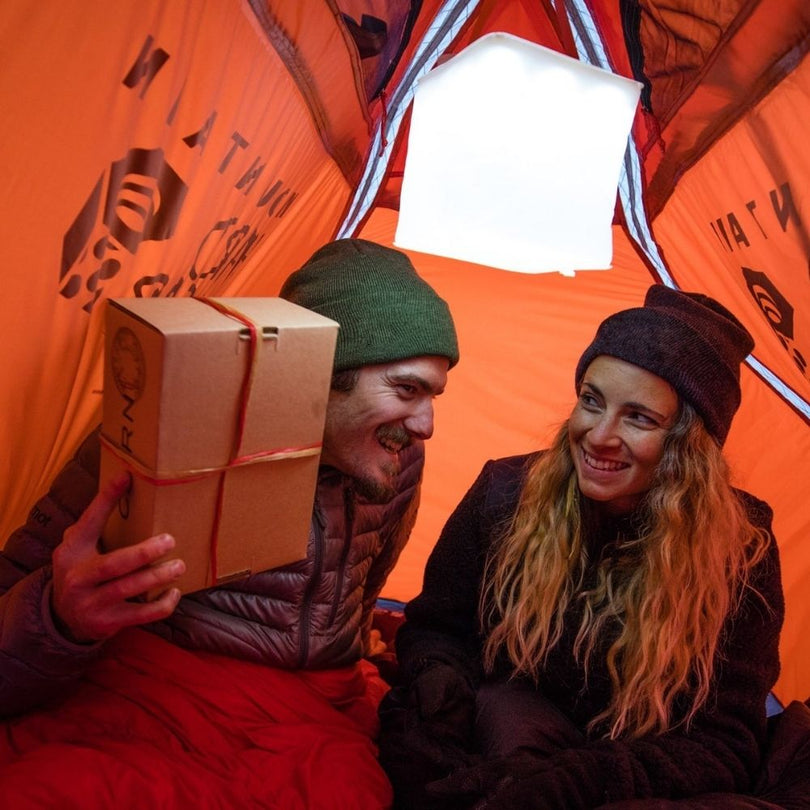
7. Solar Tent and Camping Lanterns for Portable Outdoor Adventures
Tent lighting has a different standard than yard lighting. It needs to be soft enough for close quarters, light enough to pack, and dependable enough to last through a trip where the nearest outlet may be hours away.
A harsh beam inside a tent feels worse than a dim one. Diffused light is usually the smarter choice for reading, sorting gear, cooking just outside the vestibule, or helping kids settle in after dark.
Inside-the-tent lighting needs a different approach
Portable camping lanterns should be treated as layers, not one do-everything fixture. One lantern inside the tent handles general light. Another can sit on the picnic table or hang near the cooking area. Backpackers often value compact, collapsible designs, while car campers can carry a slightly larger unit if it gives longer runtime and easier handling.
One weak spot in most outdoor solar lighting ideas is how rarely they address portable lanterns as part of a permanent outdoor setup. Standard outdoor design guides usually assume fixed stake lights, wired sconces, or mounted fixtures, while movable, battery-backed solar lanterns are often better suited for patios, RV stops, emergency blackouts, and day-to-day repositioning, as noted in City Lights SF's discussion of outdoor solar lighting ideas. That flexibility matters on trips where camp layout changes every day.
Hang the light near the tent centerline if possible. Side placement often creates glare in one person's eyes and leaves the rest of the tent dim.
For camping kits that also cover minor medical needs, Adventure Medical Kits is a useful resource to pair with lighting and emergency essentials.
8. Solar Lanterns for Disaster Relief and Humanitarian Response
Solar lanterns have a role far beyond recreation. In disaster response, light supports movement, communication, hygiene, safety, and basic emotional steadiness after dark. When the grid is down or absent, a lantern isn't a convenience item. It's part of the response infrastructure.
That matters in evacuation shelters, temporary housing, storm-hit neighborhoods, and communities where fuel access is limited or unreliable. Solar lighting avoids the ongoing resupply burden that comes with disposable batteries or fuel-based lamps.
Reliable light matters when infrastructure doesn't
The outdoor solar LED market was valued at USD 9.82 billion in 2024 and is projected to reach nearly USD 68.58 billion by 2032, with a projected CAGR of 27.5% from 2025 to 2032, according to Stellar Market Research on the outdoor solar LED market. For relief planners and community organizations, that growth signals a maturing category with more attention on off-grid applications.
Humanitarian use is different from retail patio use in one important way. Simplicity matters more than style. Lights should be easy to charge, easy to understand, and easy to distribute in volume. Units with charging capability can also help keep phones operational for emergency communication, family contact, and local coordination.
Examples are straightforward. Wildfire evacuation centers need portable room lighting. Hurricane recovery crews need light in damaged neighborhoods. Relief teams working after earthquakes need lanterns that don't depend on fuel deliveries.
A useful preparedness mindset also includes personal outdoor safety during disruptions. For backcountry travel or remote response work in bear country, Counter Assault bear spray resources are worth knowing alongside lighting and emergency gear.
9. Solar Overhead and Pendant Lights for Outdoor Living Spaces
Dinner on the patio usually ends early for one reason. The table is in shadow, the grill area is dim, and nobody wants a bright floodlight blasting across the yard. A solar pendant fixes a different problem than path lights or string lights. It puts useful light where people sit, serve food, and read.
This setup works best in outdoor rooms with a clear focal point. Pergolas, covered decks, gazebos, and patio dining areas all benefit from a single overhead fixture or a small cluster placed with purpose.

Treat the panel and the fixture as two separate design jobs
The mistake most often made is simple. Homeowners center the fixture nicely, then leave the panel in the same shaded structure. The light looks right during the day and performs poorly at night. Covered outdoor living spaces are often the worst charging locations on the property.
Remote-panel designs solve that problem. Mount the pendant where the light is needed, then place the panel where it gets dependable sun, such as a roof edge, outer pergola post, fence line, or a nearby shed roof. If you want a practical overview of how off-grid fixtures are typically set up, this off-grid solar light guide is a useful reference.
Brightness and beam shape matter more here than total fixture count. One pendant with enough downward throw usually works better than three weak decorative lights. For dining areas, centered light helps people see food, utensils, and drink spills without shining straight into their eyes. In lounge zones, a slightly off-center pendant often feels better because it keeps glare out of seated sightlines.
A few placement rules save a lot of frustration:
- Over dining tables: Hang the light high enough to spread across the full tabletop, but low enough to avoid a dim center and dark edges.
- In covered seating areas: Choose warm light and keep the fixture out of direct eye level from the main chairs.
- Under pergolas or gazebos: Use one overhead fixture as task light, then add lower accent lighting only where you need depth or steps marked.
For larger patio upgrades, wiring is not the only cost variable. Mounting points, panel routing, wind exposure, and seasonal sun angles all affect performance. A decorative fixture that charges poorly becomes yard clutter fast. A plain fixture with a well-sited panel gets used night after night.
10. Solar Lanterns for RVs and Off-Grid Vehicles
Pull into camp after sunset and the lighting job changes by the hour. You need one light for the picnic table, another for a quick check under the awning, and something you can carry inside without draining the house battery. That is where portable solar lanterns earn their place in an RV or off-grid vehicle kit.
Vehicle power always has competing priorities. Fridges cycle all night, fans matter in warm weather, and phones still need charging in the morning. A lantern with its own panel and battery takes one more nightly load off the 12V system, which helps on longer stays and cloudy stretches.
Mobility matters just as much as power savings.
Built-in lights stay fixed. A good lantern goes where the task is, outside for cooking, inside during rain, or under the rig when you need to check a hose, leveling block, or storage latch. For this use, two or three smaller lanterns usually work better than one large unit because they spread light where people move and store more easily in tight cabinets.
Mounting and charging are the common failure points. A lantern that slides around during travel or charges in partial shade becomes annoying fast. Soft hooks, gear loops, magnetic mounts where appropriate, and Velcro-backed storage pockets all help keep lights accessible without drilling into panels or cabinets.
The practical setup is simple. Keep one lantern near the side door for arrivals and departures, one outside for cooking or table use, and one as a backup inside the rig. If the lantern uses a separate panel, place that panel where it gets dependable sun before you level chairs and lay out camp gear.
A dedicated resource on off-grid solar light setups from LuminAID is useful for vehicle travelers who want portable lighting that works inside and outside the rig.
In RV and van setups, flexible lighting usually outperforms fixed lighting. The lantern that gets used most is usually the one that charges independently, stores easily, and can move from the cabin to the campsite without any setup.
10-Option Outdoor Solar Lighting Comparison
| Product | Implementation complexity | Resource requirements | Expected outcomes | Ideal use cases | Key advantages |
|---|---|---|---|---|---|
| Portable Solar Lanterns for Camping and Emergency Preparedness | Low, plug-and-play | Daily sunlight (6–8h), light maintenance | Reliable multi-night off-grid illumination | Backpacking, emergency kits, remote camping | Lightweight, durable, no disposable batteries |
| Solar String Lights for Ambiance and Outdoor Entertainment | Very low, simple mounting | Sun exposure (4–6h), central panel | Warm ambient dusk-to-dawn lighting | Patios, events, restaurant patios | Easy install, decorative, automatic operation |
| Solar Path and Ground Lights for Safe Outdoor Navigation | Very low, stake installation | Per-fixture sunlight (8–12h), periodic battery replacement | Low-level pathway illumination, improved safety | Walkways, driveways, garden paths | Low cost per unit, scalable, maintenance-free |
| Solar Spotlights and Accent Lights for Landscape Highlighting | Low–moderate, aiming and placement | Sunlight (6–8h), possible multiple units | Directional highlighting and enhanced curb appeal | Trees, architecture, focal landscape features | Directional beams, repositionable, adds security |
| Solar Powered Charging Lanterns for Multi-Function Emergency Lighting | Low, handheld/portable | High-capacity battery, sunlight or AC for faster charge | Light plus USB device charging in emergencies | Emergency kits, disaster relief, extended trips | Dual-function (light + charger), high capacity |
| Solar Motion-Sensor Lights for Security and Convenience | Low, wall mounting and aiming | Sunlight (6–8h), sensor tuning | On-demand bright illumination for detected motion | Entryways, garages, property perimeters | Energy-efficient, deters intruders, automatic |
| Solar Tent and Camping Lanterns for Portable Outdoor Adventures | Very low, packable, hangable | Modest sun exposure, ultra-lightweight | Compact tent/campsite lighting for backpacking | Backpacking, car camping, lightweight trips | Extremely lightweight, compact, safe for tents |
| Solar Lanterns for Disaster Relief and Humanitarian Response | Low–moderate, distribution logistics | Durable units, multiple charge options, user training | Rapid, sustainable lighting for displaced populations | Disaster zones, refugee camps, relief operations | Robust, multi-charge methods, supports communications |
| Solar Overhead and Pendant Lights for Outdoor Living Spaces | Moderate, mounting to structures | South-facing sun access, higher initial cost | Ambient and task lighting for outdoor living areas | Decks, pergolas, covered patios | Aesthetic, wired-like look without wiring, reconfigurable |
| Solar Lanterns for RVs and Off-Grid Vehicles | Low, portable or vehicle-mounted | Vehicle roof sun exposure, integration with panels | Interior/exterior lighting while conserving vehicle batteries | RVs, vanlife, overlanding, boondocking | Conserves battery banks, portable, integrates with vehicle systems |
Your Next Step to a Brighter, Greener Outdoor Space
The best outdoor solar lighting ideas start with the actual problem, not the product shelf. A dark walkway needs path lights. A patio that feels flat needs ambient overhead or string lighting. A blackout kit needs portable lanterns that can move from room to room. A campsite needs light that packs small, recharges reliably, and doesn't create more battery dependence than it solves.
That's why scenario-based planning works better than shopping by category alone. Fixed lights are great when the need is stable, such as a front path, side gate, or pergola dining area. Portable lights make more sense when the location changes, such as camping, RV travel, storm prep, or outdoor gatherings that shift from the deck to the yard. The strongest setups usually combine both. A home might use path lights and motion lights for navigation and security, then keep solar lanterns ready for outages, backyard dinners, and car trips.
Placement still decides whether solar lighting feels dependable or disappointing. Panels need real sun, especially during the strongest daylight hours. Trees, eaves, fences, and north-facing corners reduce performance fast. In shaded yards, a remote panel or portable lantern often works better than trying to force a stake light into a bad location. Battery maintenance matters too. Rechargeable batteries wear out long before the LED itself, so replacing the battery on time is part of owning solar gear that keeps working season after season.
For homeowners trying to design a more resilient and lower-input yard, this broader guide for sustainable North Georgia homes is a useful companion read because lighting works best when it's part of the whole outdoor plan.
One practical next step is enough. Add path lights to the most-used walkway. Hang solar string lights over the seating area. Put a charging lantern in the emergency closet and another in the car. Test how each one fits real life, then expand from there.
For buyers who want portable solar lighting that fits camping, blackout prep, and outdoor living, LuminAID is one relevant option in this category. The company focuses on portable solar lanterns, charging lanterns, and solar string lighting that align closely with the use cases that matter most here. The value isn't that solar can do everything. It's that the right solar light, in the right place, can solve a very specific problem cleanly and reliably.
LuminAID makes it easy to build a practical solar lighting setup for camping, backyard living, travel, and emergency preparedness. Shoppers looking for portable lanterns, phone-charging lights, or solar string lights can explore the lineup and choose gear that fits the way they use outdoor space.