

A lot of people start planning Coachella with the fun parts. Which weekend, which outfits, which headliners, which group chat is serious this year. Then the practical questions hit all at once. Where does the car go overnight, how does camping really work, what happens after the shuttle stops, and how does a phone stay alive through three long days in the desert?
That's where Festival Coachella catches first-timers off guard. It looks glamorous online, but on the ground it behaves more like a temporary city built around heat, crowds, strict access rules, and a short window to get everything right. A person can absolutely have a smooth, memorable weekend there. That usually comes down to planning for real conditions, not just planning for music.
Table of Contents
- Introduction to Your Festival Coachella Experience
- What Festival Coachella Is and How It Works Today
- Choosing Tickets Passes and Camping Options Wisely
- Getting There Camping Rules and On Site Logistics
- Staying Safe Healthy and Hydrated in the Desert
- Packing Smart for Comfort Power and Sustainability
- Budgeting Scheduling and Making the Most of Your Weekend
Introduction to Your Festival Coachella Experience
A common arrival scene goes like this. A car rolls into Indio late in the day, everyone is excited, the playlist is good, and somebody suddenly realizes nobody has thought through overnight parking, late-night charging, or how far the walk will feel after hours on foot. The festival still feels magical, but small oversights start stacking up fast.
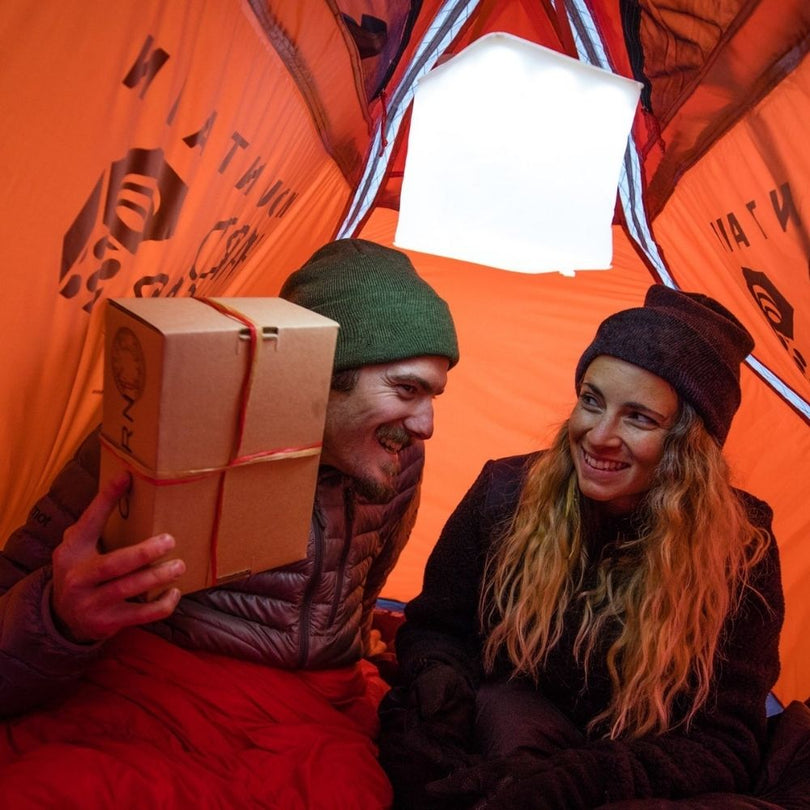
That's why Coachella rewards a camper's mindset. The people who enjoy it most usually aren't the people with the flashiest setup. They're the ones who arrive knowing how the weekend flows. They know where they'll sleep, how they'll move around, when they'll refill water, and what they'll use for light and phone power after midnight.
Why Coachella feels different
Coachella sits in the desert at the Empire Polo Club in Indio, California. That setting shapes almost every decision. Days can feel intense, nights can stretch late, and camp comfort matters more than many first-timers expect.
Three things make the experience easier to understand:
- It's not just a concert: It runs like a full weekend environment with entry rules, parking limits, camping procedures, and crowd pressure.
- Small mistakes get expensive fast: Last-minute transport, premium camping, food, and local lodging can all push a budget much higher than the ticket alone suggests.
- Off-grid comfort matters: Light, charging, water, shade, and sleep aren't extras. They're what keep a great weekend from turning into a draining one.
Practical rule: A Coachella plan should answer three questions before lineup choices matter. How does the group get in, where does the group sleep, and how does the group stay powered after dark?
What helps most
Readers usually get confused in the same places. Passes and camping products sound similar but aren't interchangeable. Parking rules look simple until the overnight cutoff matters. Hydration sounds obvious until the heat, walking, and late nights pile up.
The sections below sort those questions in the order needed. First comes what Coachella is today. Then the ticket and camping decisions. Then arrival logistics, desert safety, packing for power and comfort, and the true cost of the weekend.
What Festival Coachella Is and How It Works Today
By Friday afternoon, Coachella stops feeling like a normal concert and starts operating like a short-lived desert city. People are arriving on the same schedule, sleeping in the same area, charging the same phones, and standing in the same security lines. That is the right mental model to use before you buy anything else.
Coachella began in 1999 at the Empire Polo Club in Indio, California, and it grew from a large music event into one of the biggest recurring festival operations in the country (Coachella history).
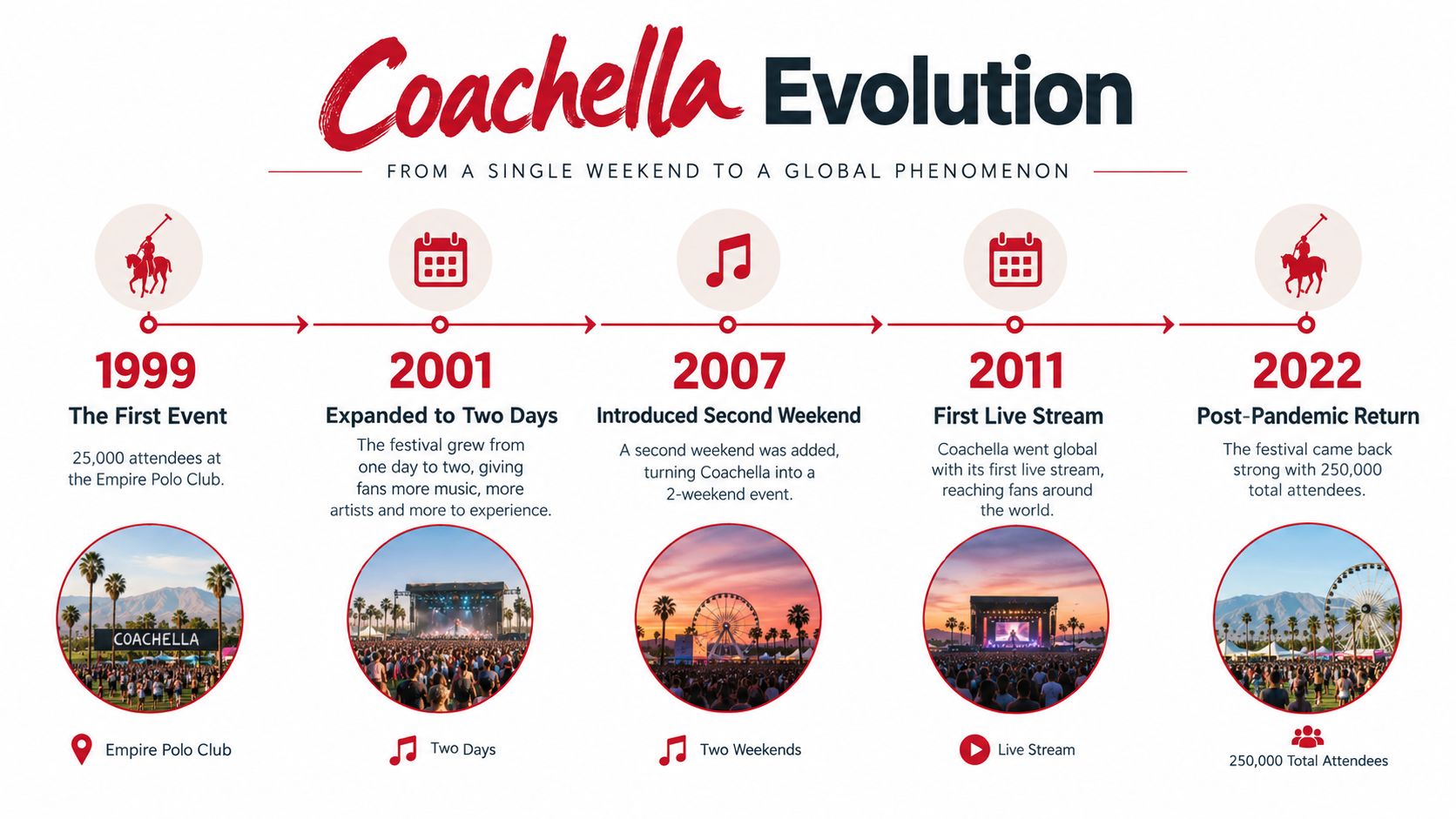
The format people know now took shape when the festival expanded to two weekends. Analysts at Placer.ai describe Coachella as a repeat annual event that creates major visitor surges in the area, with roughly 250,000 total visitors across the festival period (analysis of Coachella crowd patterns). That scale explains why simple tasks, getting through screening, finding a ride, buying ice, or charging a dead phone at night, can take longer than first-timers expect.
Security is part of that city-sized setup. Entry screening, perimeter control, overnight campground rules, and crowd flow are not background details. They shape how fast you get in and how much patience you need at peak times. For a plain-English look at how large live events handle those demands, Overton Security concert security gives helpful context.
One point confuses new attendees every year. Coachella access is sold by weekend, not as a flexible pick-your-days plan.
The festival's official planning information states that passes are valid for the full weekend purchased only (Coachella plan details). That sounds straightforward, but it affects nearly every later decision. Your pass, your campground access, your parking arrangement, and your arrival timing all have to fit the same fixed window.
That fixed-window setup is also where the experience starts to separate from the marketing version. A ticket gets you through the gate. It does not solve where your group rests in the heat, how you keep devices charged after midnight, or what happens when everyone wants power at the same time. Coachella works a lot like a temporary neighborhood running off limited shared infrastructure. If your plan depends on easy wall outlets, quick in-and-out driving, or cheap last-minute fixes, the desert usually corrects that assumption fast.
So the practical way to understand festival Coachella today is simple. It is a weekend-specific, high-density event with strict access rules and a lot of off-grid friction around comfort. The people who do best are usually not the ones with the fanciest itinerary. They are the ones who treated power, sleep, shade, and timing as part of the festival itself.
Choosing Tickets Passes and Camping Options Wisely
A smart Coachella buy starts with one plain question. Where will your group recharge, both physically and figuratively, after the music ends?
New attendees often compare passes the way people compare plane tickets. They look at the checkout total first. For Coachella, that can be misleading because the pass is only one layer of the weekend. Sleep, shade, charging, food storage, and the walk or ride back at night usually shape comfort more than a small difference in ticket tier.
Independent 2025 coverage showed standard GA pricing around $599 to $649 for weekend one and $549 to $599 for weekend two, while shuttle-inclusive GA and VIP could rise to roughly $679 to $1,399+ before food, lodging, and fees (Business Insider ticket guide). Those prices are a starting point, not the full bill.
The main choices that shape the weekend
| Pass Type | Access Included | Best For |
|---|---|---|
| General Admission | Festival entry for the purchased weekend only | Campers or groups already committed to a lower-cost plan and ready to handle their own camp setup |
| GA with Shuttle | Festival entry plus shuttle access | People staying off-site who want less driving and parking stress |
| VIP | Festival access with upgraded festival areas and amenities | Attendees who care more about in-venue comfort than camp comfort |
| Car Camping setup with festival pass | Festival access plus an on-site sleeping base if separate camping access is purchased | Groups that want the shortest trip back to rest, change clothes, or grab food |
| Premium powered camping products | Higher-comfort camping with more built-in convenience | Groups willing to spend more to reduce setup work and overnight power problems |
The key difference is simple. Festival admission gets you into the event. It does not automatically cover where you sleep, how you keep your phone alive for four days, or whether your group has a practical base for the hottest part of the day.
Official Coachella planning information explains that passes are tied to the specific weekend purchased (Coachella plan details). Camping access is a separate choice. That catches first-timers every year because a wristband feels like the big purchase, but it does not solve the logistics that make the weekend livable.
Match the purchase to the pain point
A camper choosing plain GA plus a basic campsite is usually buying lower upfront cost and more responsibility. That trade works well for people who already know how to build comfort from simple gear. They bring their own light, battery power, shade, refillable water setup, and a plan for sleeping after nearby camps are still awake.
A hotel group buying shuttle access is making a different trade. They skip camp setup and some desert rough edges, but they are paying for transport convenience, local lodging prices, and less flexibility once the night ends.
VIP changes the festival hours more than the overnight hours. It can improve the time spent inside the venue, but it does not fix a weak transportation plan or a dead phone at 1 a.m.
Premium camping products can reduce a lot of friction. The question is whether that money saves your group more stress than putting the same budget into reliable off-grid basics you can reuse later.
A practical comparison that first-timers can use
Use this test. Ask what is most likely to go wrong for your group.
- If your group struggles with setup, heat, and keeping devices charged, basic camping only works if you treat power and shade as part of the ticket cost.
- If your group hates late-night driving or parking uncertainty, shuttle access may solve more problems than a higher ticket tier.
- If your group wants comfort during the sets but plans to sleep off-site anyway, VIP may fit better than paying extra for upgraded camping.
- If your group wants the shortest reset time between sets and sleep, on-site camping can be worth more than people expect because it cuts the daily commute.
A lot of people overspend on status and underspend on recovery.
The better approach is to price the full system. Count the pass, camping or hotel cost, transport, food, charging, lighting, cooling, and the backup items that keep a small problem from turning into a bad night. In the desert, a cheap-looking option can become the expensive one fast if it leaves you buying last-minute fixes for power, shade, or basic comfort.
Getting There Camping Rules and On Site Logistics
You get through security, pull into camp, and the sun is already dropping. One person cannot find their ID. Another assumed the car could leave later for ice. Phones are down to twenty percent. That is how a manageable arrival turns into a rough first night.
Coachella logistics reward groups that treat arrival like campsite setup in a state park. The rules are not hard, but the timing and vehicle limits shape everything that happens after you park. If you understand those limits before the drive, you save money, battery, and energy you would rather spend inside the festival.
Arrival timing shapes the whole weekend
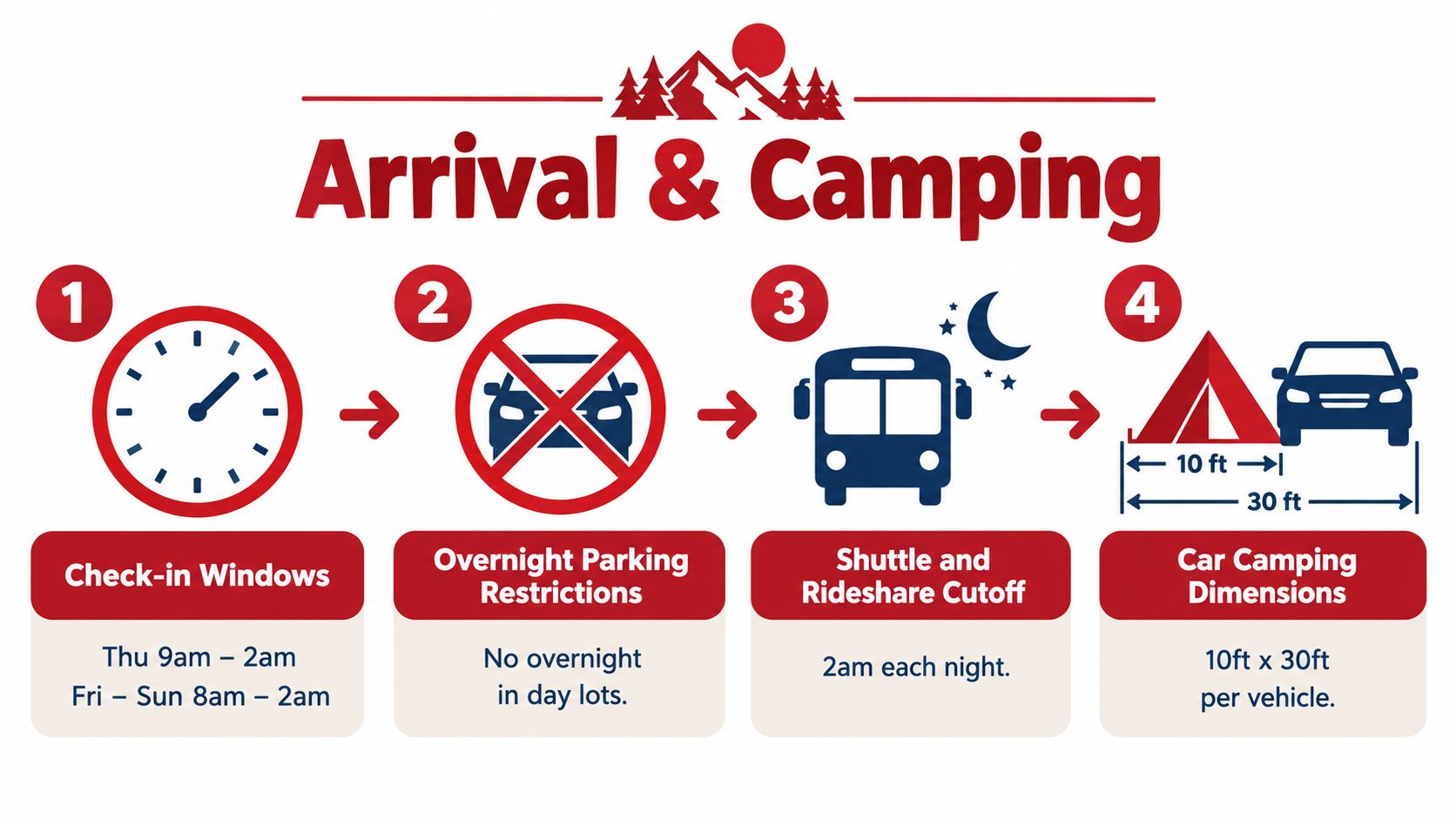
The published camping schedule for 2026 lists Car and Tent check-in on Thursday from 9 a.m. to 2 a.m., Friday and Saturday from 9 a.m. to 8 p.m., and Sunday from 9 a.m. to 3 p.m. Festival access is listed from Thursday morning through Monday morning, as noted earlier in the official camping information.
For first-timers, the practical lesson is simple. Earlier arrivals buy you setup daylight. Daylight matters more than people expect in the desert because camp is your recovery station. You are not just pitching a tent. You are building shade, airflow, lighting, charging, and a place where everyone can find their stuff after midnight.
Late setup costs more than patience. It often leads to rushed store runs before arrival, extra ice purchases, misplaced gear, and a dead phone before the first headliner even starts.
Parking rules matter because your car stops being transportation
A lot of confusion starts with one assumption. People treat the car like a backup plan. In car camping, it works more like part of the campsite.
As noted earlier from the official FAQ, overnight parking is restricted unless you have the correct camping-related parking setup. Day and preferred parking do not function as overnight storage. Shuttle service and rideshare also have late-night cutoffs, so anyone sleeping off-site needs a real return plan before walking into the venue.
That return plan should answer three questions:
- Who is driving, if anyone?
- What is the last realistic ride option after the final set?
- How will your group reconnect if two phones die?
That third question gets skipped all the time. It should not. Official transport information tells you when access ends. It does not solve what happens when your battery is low, the lot is crowded, and your group split during the encore. A small power bank, a car charger for arrival day, and one written meetup point solve more problems than a pricier add-on many campers never really use.
The campsite footprint is tighter than many groups expect
The Los Angeles Times notes that car camping spots are 10 by 30 feet, one pass covers one car, and the vehicle stays in place for the weekend with no driving in and out. The same guide also notes that standard passenger vehicles are allowed, while larger vehicle types like RVs, trailers, buses, motorcycles, and moving trucks are not part of regular car camping access (Los Angeles Times camping guide).
That size helps to picture the setup. A 10 by 30 foot space sounds roomy on paper. Once a car is parked, the remaining living area shrinks fast. Coolers, canopies, chairs, bins, and sleeping space start competing with each other.
A good rule is to pack for one clean walkway, one sleep zone, and one shared utility zone for food, lights, and charging. Camps that sprawl usually feel worse by night two because people keep stepping on cables, digging through bags, and losing track of what still has battery left.
Ground rules that avoid common rookie mistakes
A few habits make arrival much easier:
- Put ID, wristbands, and parking or camping proof in one easy-to-reach pouch before the drive.
- Measure your setup at home if your group wants a canopy, tent, table, and chairs in one spot.
- Assume the car will stay parked the whole weekend. Pack water, snacks, medicine, and charging gear so you do not depend on leaving.
- Treat power like part of camp infrastructure, not a last-minute accessory.
- Pick one meetup point for the campground and one for inside the venue before anyone wanders off.
Campground access rules also matter. Earlier guidance notes that campers need valid festival credentials, and age rules apply for adults and minors in camping areas. Groups with younger attendees should verify those details before arrival, not from the security line.
Cleanliness affects comfort more than people expect by Saturday. Dust, spilled drinks, food scraps, and crowded shared surfaces wear people down fast. Group organizers who want a cleaner base camp can borrow a few practical ideas from these event venue disinfection tips.
The big picture is straightforward. Getting there is not only about reaching the grounds. It is about arriving early enough, packed tightly enough, and powered well enough that your camp still works after dark. That is the logistics gap many first-timers miss, and it is usually where comfort starts or falls apart.
Staying Safe Healthy and Hydrated in the Desert
By midafternoon, the desert can turn a fun day into a sloppy one fast. You stop sweating as much, your feet start rubbing, your phone battery drops into the red, and suddenly a simple walk back to camp feels longer than it should. Coachella goes better when you treat heat management the same way you treat entry logistics. As a system, not a last-minute fix.
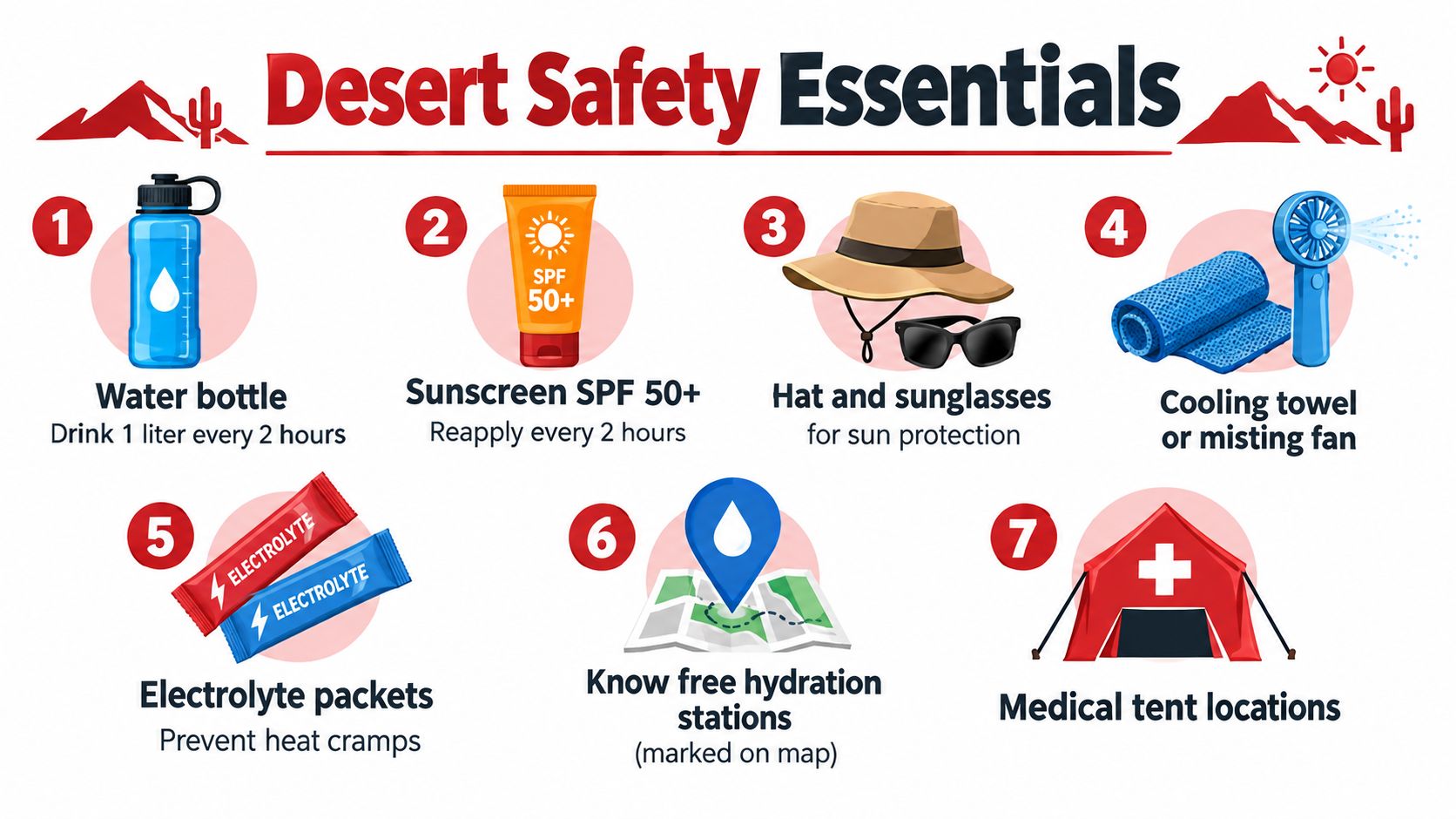
Hydration should be continuous
As noted earlier, the festival provides water access and allows refill-friendly containers. That helps, but the setup only works if people build refilling into their walking pattern instead of waiting until they feel thirsty.
A good rule on the ground is simple. Leave camp already hydrated. Top off whenever you pass a refill station. Drink again when you eat or sit down in shade. In dry air, thirst often shows up late.
Hydration also works better with a little salt and food in the mix. Water alone is not a magic reset button if someone has been in direct sun for hours, skipped lunch, and walked miles between stages.
Heat and health habits that actually help
Desert fatigue sneaks up on first-timers because it rarely arrives all at once. It shows up as a headache, short temper, clumsy decisions, and the feeling that everything is suddenly harder.
A few habits prevent that slide:
- Use shade early: Cool down before you feel cooked.
- Reapply sunscreen: One morning layer usually does not last a full festival day.
- Protect your feet: Dry socks, blister pads, and a quick wipe-down at camp can save the next day.
- Keep a small medical kit handy: A camp pouch with bandages, blister care, pain relief, and basics for minor scrapes is far more useful than a buried box in the trunk.
If you need a practical packing model, this guide to a camping first aid kit covers the kind of basics that are easy to reach when someone needs help quickly.
For the same reason, many campers also carry a small field-ready kit from outdoor-focused companies like Adventure Medical Kits, especially for blisters, scrapes, and minor heat-related issues.
A short visual refresher can help before the trip:
Charging is part of safety
Phone power belongs in the safety plan because Coachella functions like a small temporary city with long walking distances and limited patience for preventable problems. A charged phone helps with meetup changes, camp location photos, digital payment backup, ride coordination, and checking messages after dark.
The mistake many new campers make is treating charging like a venue problem instead of a camp problem. Once the sun goes down, power becomes part of off-grid comfort. If your group returns tired, dusty, and low on battery, the useful setup is the one that already works at camp without hunting for an outlet or waiting in line.
Phones handle maps, meetup plans, payment backup, and emergency contact. At Coachella, battery life is part of personal safety.
That is why the true desert safety kit is broader than water and sunscreen. It also includes enough stored power and camp lighting to get through the late-night hours calmly, when small inconveniences become real problems.
Packing Smart for Comfort Power and Sustainability
Packing for Coachella goes better when it's treated like a compact off-grid camp, not a fashion haul with a tent attached. The most useful gear earns its space more than once. It cools, shades, lights, stores water, or keeps a phone working.
Build the campsite in layers
A workable packing system starts with four layers.
Sleep and shelter. A tent, shade structure, sleeping pad, and bedding that can handle a hot day and a cooler night usually matter more than decorative camp extras. The goal is rest, because poor sleep makes every line, walk, and crowd feel harder the next day.
Sun and heat protection. Wide-brim hats, sunscreen, sunglasses, lightweight long sleeves, and a simple cooling towel do more for daily comfort than most novelty gear.
Hydration and food basics. Refillable bottles, hydration packs, easy snacks, and a camp cooler system reduce expensive and inconvenient scramble-buys.
Solve the overnight power gap
This is one of the most overlooked Coachella problems. Official rules make it clear that overnight transport options are limited and overnight vehicle assumptions can backfire, so campers need camp lighting and charging that doesn't depend on finding an outlet at the right moment.
A simple power kit usually includes:
- A lantern for camp visibility: Enough to find shoes, chargers, and tent zippers after dark.
- A phone-charging option: Useful when a group returns late and everyone needs battery for the next morning.
- A low-waste setup: Rechargeable gear cuts down on disposable batteries and camp trash.
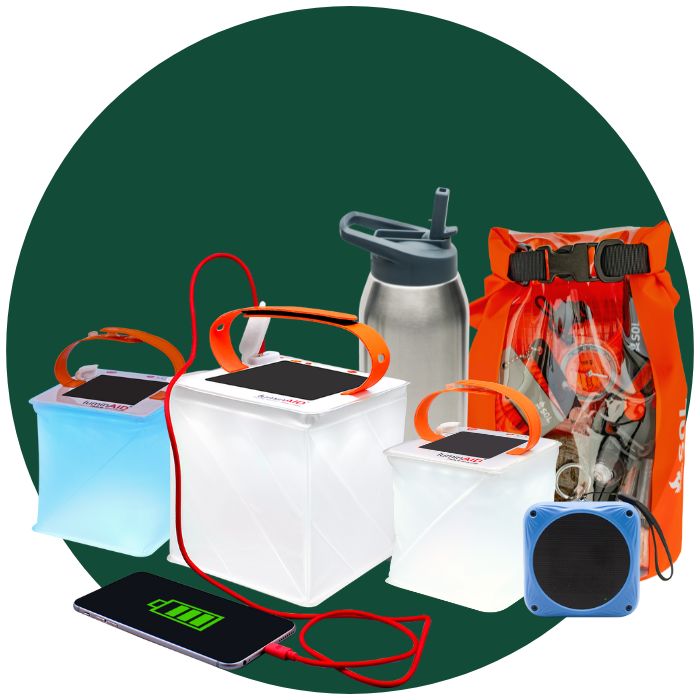
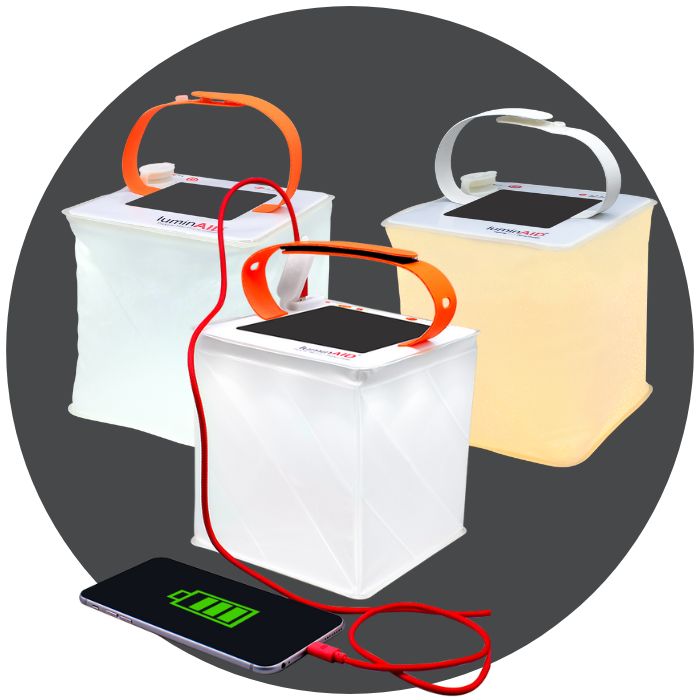
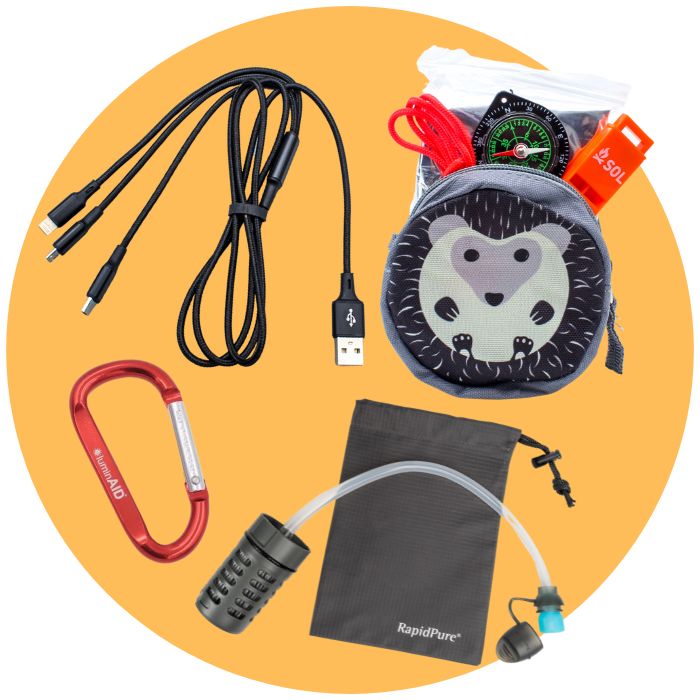
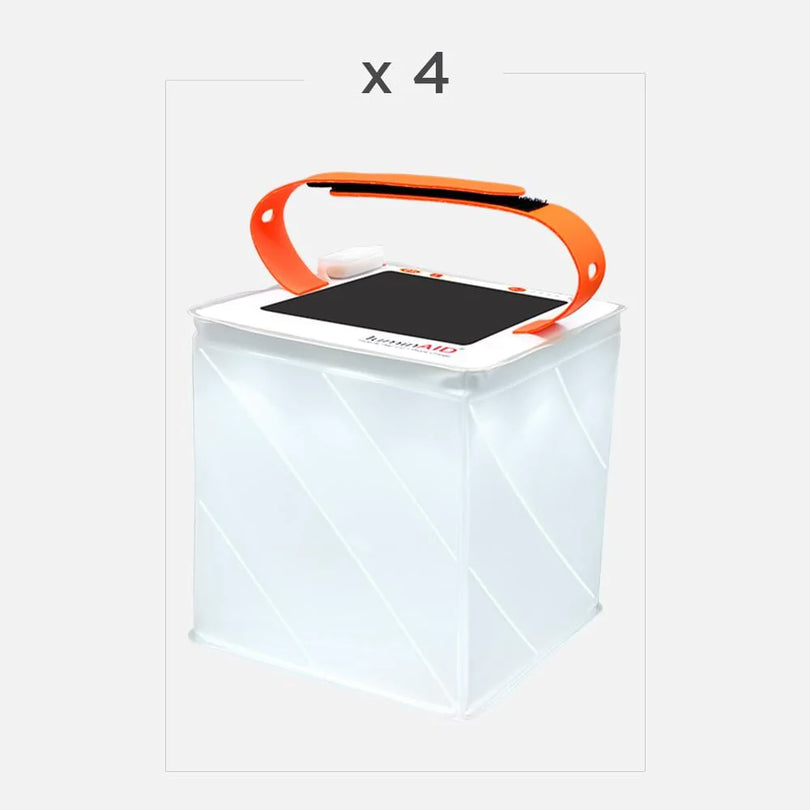
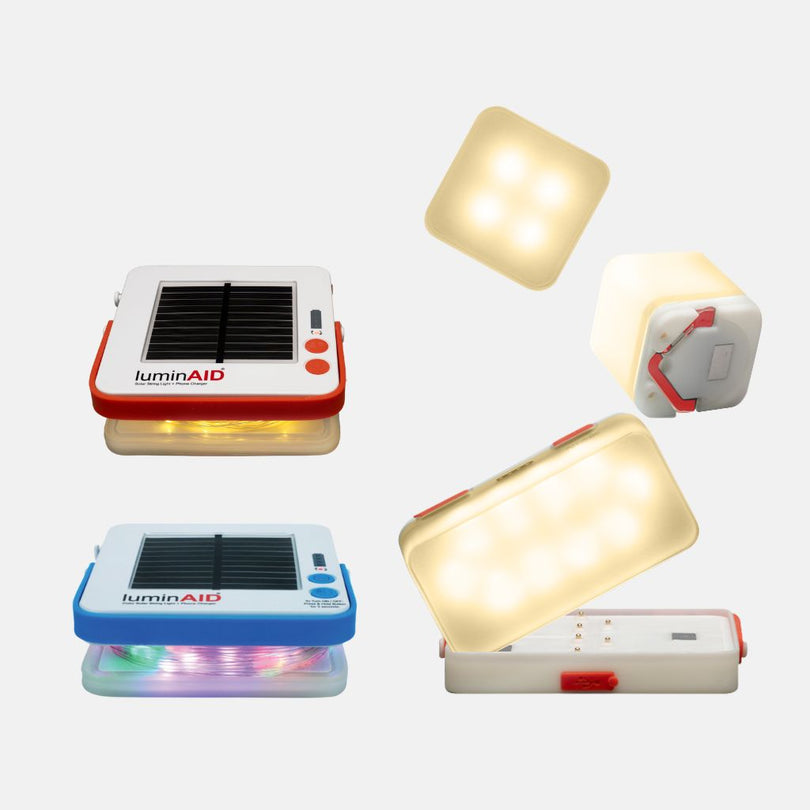
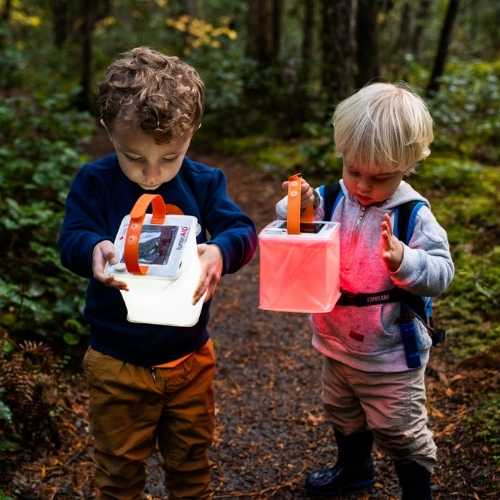
One practical option in that category is a LuminAID PackLite Max 2-in-1 Power Lantern, which combines packable light with USB phone charging. For Coachella-style camping, the appeal is functional rather than flashy. It addresses the exact overnight gap that catches many campers off guard. For a more powerful option step up toe the LuminAID Survivor.
Readers wanting a broader gear checklist can use this roundup of Coachella camping essentials as a planning reference.
Bring less throwaway gear
Festival camping gets messy when every small problem is solved with a single-use item. Better habits usually look like this:
- Refill instead of rebuying: Use the refill stations and bring containers that survive the whole weekend.
- Recharge instead of replacing: Lanterns and chargers that can be reused reduce waste and simplify packing.
- Pack around restrictions: Leave behind vehicle types and oversized assumptions that aren't allowed. Simpler setups tend to work better.
A compact personal-care setup also helps. For example, After Bite can make sense in a general camping kit for skin irritation after time outdoors, even though desert festival needs usually center more on sun, dust, and hydration than on insects.
Budgeting Scheduling and Making the Most of Your Weekend
A strong Coachella weekend usually comes from two things working together. The budget stays realistic, and the daily plan stays flexible. People get frustrated when either one gets too rigid.
The true cost is wider than the ticket
Ticket pricing gets the headlines, but the local market pressure is where many budgets slip. Independent tourism and economic analysis projected that for 2026, bars and restaurants would capture 55% of event-driven spending, hotel rates could rise up to 61.6% versus the prior two weeks, and rates could be about 26% higher than equivalent festival weekends in 2025 (Datappeal analysis of Coachella's local economic impact).
That tells a clear story. Coachella creates a short, intense demand shock. If someone waits too long to solve lodging, meals, or transport, the market usually punishes that delay.
A practical budget usually accounts for:
- Festival access and add-ons
- Sleep setup, whether camp or lodging
- Food and drinks across multiple long days
- Transport in and out of Indio
- Comfort gear that prevents expensive last-minute buying
For groups driving in, planning food ahead helps more than people expect. This expert guide to road trip snacks is useful because the right snacks reduce random stops and overpriced convenience purchases before arrival.
Schedule for energy, not just artists
The lineup plan that looks perfect on paper can collapse by sunset if it ignores distance, heat, and recovery. The people who enjoy more of Festival Coachella usually leave room for three things:
- One or two priority acts each day
- A backup option nearby
- A recovery block for water, shade, food, and regrouping
Trying to sprint between every must-see set often leads to missed music and a tired group. A looser plan tends to work better than an overloaded one.
The best schedule is the one a tired, hot, slightly dusty person can still follow at night.
A short prep read like these tips to make the most of music festivals can help groups think through pacing, meeting points, and realistic expectations before arrival.
Good Coachella weekends rarely come from squeezing every possible thing into three days. They come from picking the parts that matter most, protecting the budget early, and making camp comfortable enough that the group can enjoy the festival.
LuminAID offers portable solar lanterns and 2-in-1 phone chargers that fit the gaps this guide covered, especially camp lighting and phone power after dark. For Coachella campers who want a lighter, reusable off-grid setup, it's worth taking a look at LuminAID.