

A family emergency communication plan is more than just a document—it’s a simple, agreed-upon strategy that helps you find your way back to each other when a crisis hits. It’s a clear map that answers three questions: who do we contact, how do we reach them, and where do we meet when the usual ways fail.
Why Your Family Needs a Communication Plan Before a Crisis
Picture this: a city-wide power outage hits on a Tuesday afternoon. You’re at work, your partner is running errands across town, and your kids are at two different schools. Suddenly, cell service is gone. The lines are jammed. How do you know everyone is safe? Where do you even start?
This isn’t a scene from a movie. It’s a real-world problem that shows just how vulnerable we are when our normal systems break down. The idea that we can just "figure it out" when things go wrong often falls apart in the chaos of a real emergency. The first few minutes are confusing, and that confusion can quickly turn to fear. This is precisely when a solid communication plan becomes your most valuable tool.
Moving Beyond "It Won't Happen to Us"
It's tempting to put off emergency planning. We're all busy, and it's easy to think a disaster won't happen to us. But waiting until a crisis is unfolding is simply too late. The truth is, most people overestimate how they'll handle a crisis and assume help will arrive immediately.
Research paints a sobering picture: despite most people knowing they should be prepared, a staggering 50.55% of American households have not actually created an emergency plan. Many admit they plan to rely on outside help rather than taking steps to help themselves.
This statistic proves that being prepared isn't the norm—but it should be. A communication plan doesn’t have to be some complicated, doomsday binder. Think of it as a practical guide for any disruption, from a sudden evacuation order to a regional blackout. It gives you a roadmap for what to do, who to call, and where to go, which is critical for your safety and your peace of mind. For more foundational tips, check out our guide on how to get prepared for emergencies.
Taking Control in a Crisis
At its heart, a family communication plan is about empowerment. It gives every member of your family—from the youngest kids to older adults—a clear job and a set of instructions. This structure is everything when you're separated and the power is out. Knowing the plan means you can take decisive action instead of freezing in uncertainty.
Ultimately, your plan must answer three critical questions:
- How do we connect? Set up primary and backup ways to get in touch.
- Is everyone safe? Create a system for each person to check in.
- Where do we reunite? Pick specific meeting spots for different scenarios.
Having these answers ready transforms a terrifying situation into a manageable one. It’s the difference between panicked scrambling and confident, coordinated action that brings everyone back together safely. And when a crisis hits, nothing is more important. You can find essential gear for your kit, like first-aid supplies, at a trusted retailer like Adventure Medical Kits.
Building Your Core Communication Strategy
When a crisis hits, the first thing to break down is usually communication. A good plan isn't just about who to call first; it’s about having layers, so if Plan A fails, everyone automatically knows what to do next. Think of this as your family's command center, designed to keep information flowing when you're separated and stressed.
The single most important part of this strategy is picking an out-of-state contact. This person is your central information hub. It sounds counterintuitive, but calling someone across the country is often easier than calling someone across town during a local disaster like an earthquake or hurricane.
Why? Local phone lines and cell towers get completely swamped. A long-distance call or text to an unaffected area has a much better chance of getting through. This contact—a trusted relative or friend—becomes the one person everyone reports to. Each family member's job is to call or text them to check in, and that contact can then pass messages along to everyone else.
Without this kind of structure, things can spiral into chaos fast.

This flowchart shows exactly what happens when a disaster separates a family with no plan: confusion takes over, and a safe reunion becomes nearly impossible. Building a system with backups is how you avoid this. For more ideas on keeping everyone connected, check out these family communication strategies beyond group chat that work for daily life and emergencies.
Family Communication Plan At a Glance
Every family member should have this core information memorized or saved on their phone and on a physical wallet card. It’s your quick-reference guide when things go sideways.
| Information Type | Primary Detail | Backup Detail |
|---|---|---|
| Out-of-State Contact | Name: [e.g., Aunt Carol] | Phone: [e.g., 555-123-4567] |
| Neighborhood Spot | [e.g., Big oak tree at park] | Address: [e.g., 123 Main St.] |
| Regional Spot | [e.g., Grandma’s House] | Address: [e.g., 456 Town Rd.] |
Having this table filled out and distributed is a simple step that makes a world of difference. It ensures everyone is literally on the same page.
Primary and Backup Communication Methods
With your out-of-state contact in place, the next step is to agree on how you'll get in touch. Your first instinct might be to place a call, but that's often the worst choice.
During a real disaster, voice calls are the first thing to fail. Text messages use far less bandwidth and are much more reliable when networks are congested. Emergency managers always recommend texting, email, or even social media updates before trying a phone call.
Set up a clear communication waterfall that everyone understands:
- Primary Method: Text Message. Send a simple, direct text. "I am safe at neighborhood meeting spot" is perfect. It's quick and has the best chance of getting through.
- Secondary Method: Messaging App. If you have Wi-Fi or data but no cell service, apps like WhatsApp or Facebook Messenger are great alternatives.
- Tertiary Method: Social Media Post. Agree on one platform where everyone can post a "safe" status. It’s a simple, public way to let the family know you're okay.
Establishing Your Three Meeting Places
Technology fails. Batteries die. That’s why physical reunion points are a non-negotiable part of your plan. You need three of them, each for a different type of scenario.
- Immediate Home Meeting Spot: This is for a sudden emergency like a house fire. It needs to be right outside your home but a safe distance away. Think "the big oak tree across the street" or your neighbor's mailbox. Everyone goes there immediately, no questions asked.
- Neighborhood Meeting Spot: This is for when your immediate block isn't safe, like a gas leak or localized flood. It should be within walking distance. Good examples are a specific bench at the local park, the front steps of the public library, or a nearby church.
- Regional Meeting Spot: You'll need this for a widespread disaster that forces an evacuation of your whole town. This should be the home of a relative or friend in a nearby city, a familiar landmark you all know, or a designated community shelter.
The key is redundancy. If Plan A (texting) doesn't work, everyone knows to try Plan B (messaging app). If you can't get to the neighborhood spot, you head for the regional one. This removes the guesswork and helps everyone stay calm and focused on reuniting.
Assembling Your Communication Go-Kit
A family emergency communication plan is only as good as the tools you have to execute it. When the power goes out and cell service gets spotty, your ability to charge devices and get information is everything. That's why a dedicated "communication go-kit" is such a crucial piece of your family's preparedness strategy.
Think of this kit as the hardware for your software—it’s the ready-to-grab bag with all the essential gear to stay connected and informed when modern conveniences fail. It's not just another item on a checklist; it's your lifeline.
This kit should be portable and easy to get to, stored right alongside your main emergency supplies. The goal is to have everything you need in one place so you aren't fumbling for a charger in the dark.
The Heart of Your Kit: Off-Grid Power
The single most critical item in your communication kit is a reliable, off-grid power source. In just about every emergency, from hurricanes to winter storms, power loss is one of the first things to happen and one of the last things to be fixed. Without power, your phone becomes a paperweight.
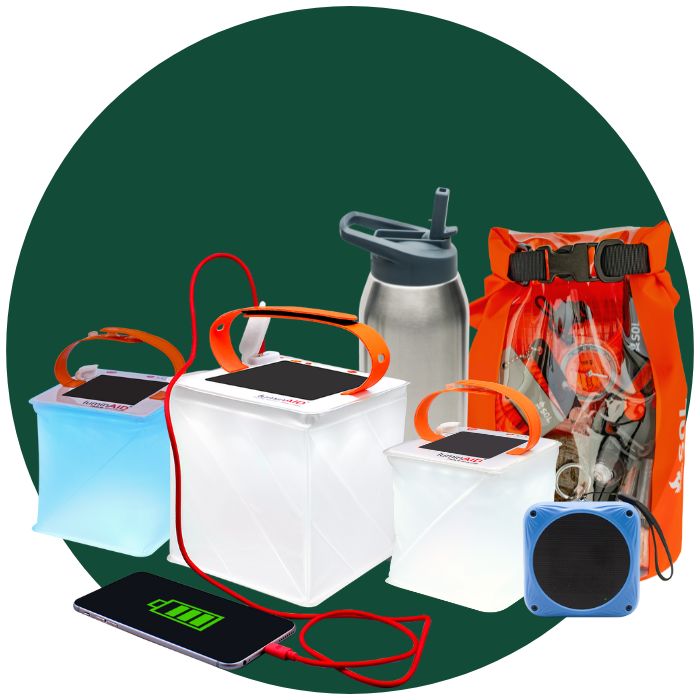
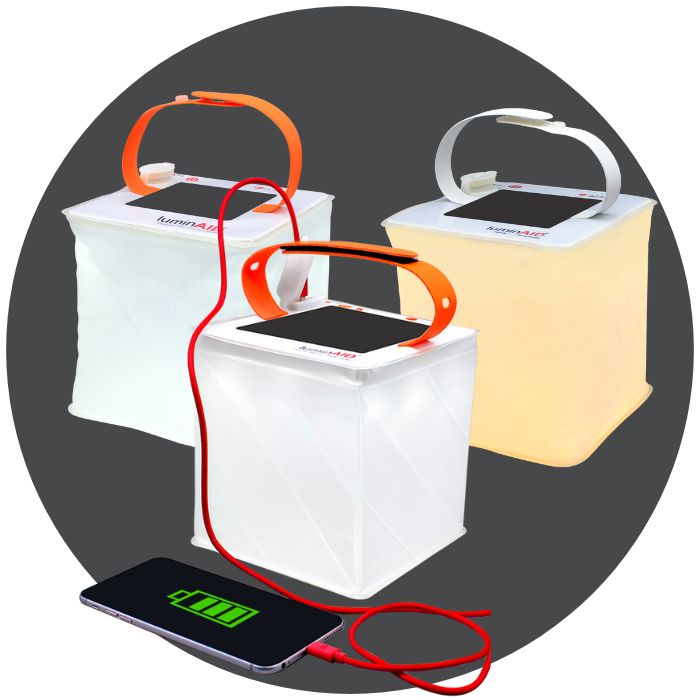
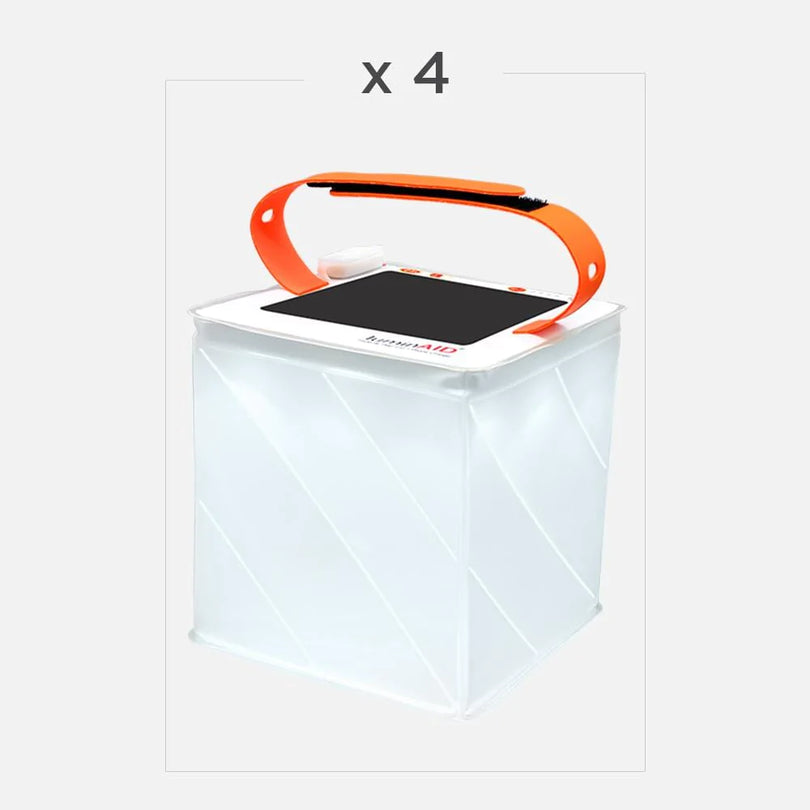
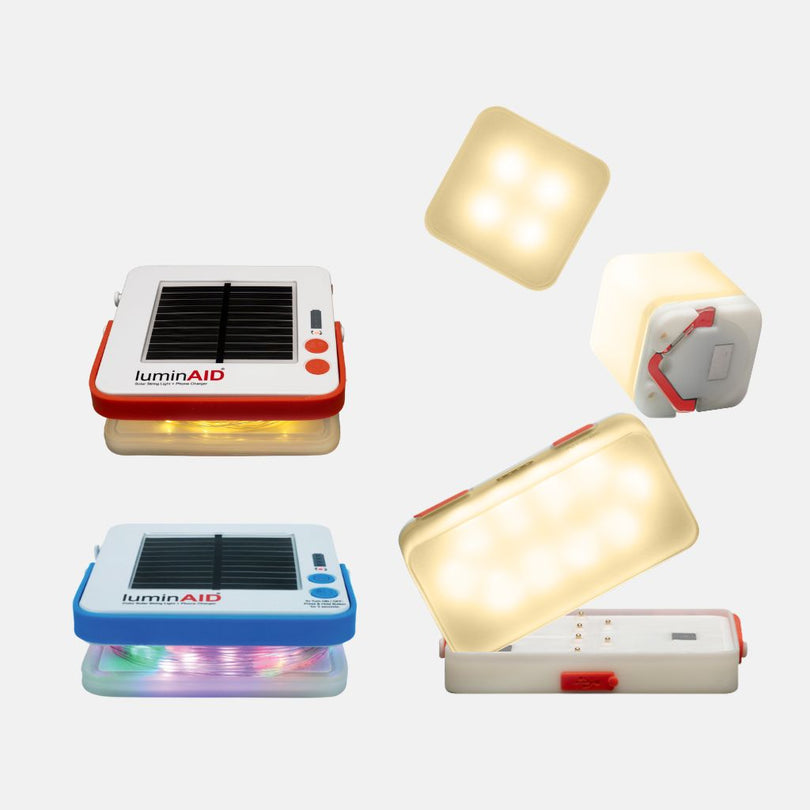
This is where a solar-powered device is a game-changer. Unlike a standard power bank that holds a limited charge, a solar charger gives you a sustainable power solution. A 2-in-1 device like the LuminAID Power Lantern is an ideal anchor for your kit. It provides not only a long-lasting light for safety but also a USB port to recharge your phone using the sun. This ensures you can send that crucial "I'm safe" text, even days into an outage.
A communication plan without a power plan is incomplete. Having a renewable energy source like a solar charger means you're not just prepared for the first 24 hours—you're prepared for the long haul.
While a fully charged power bank is great for the first few hours, it's a temporary fix. A solar device means you can keep topping off your electronics indefinitely, giving you real independence from a failed grid.
Essential Communication and Information Tools
Beyond a charger, your kit needs tools to receive information and make your plan accessible when screens are dark. Official broadcasts will be your best source for instructions, while physical documents ensure your plan works no matter what.
- Battery-Powered or Hand-Crank Radio: When cell networks are jammed or down, a radio might be your only link to the outside world. A NOAA Weather Radio is specifically designed to receive emergency alerts 24/7.
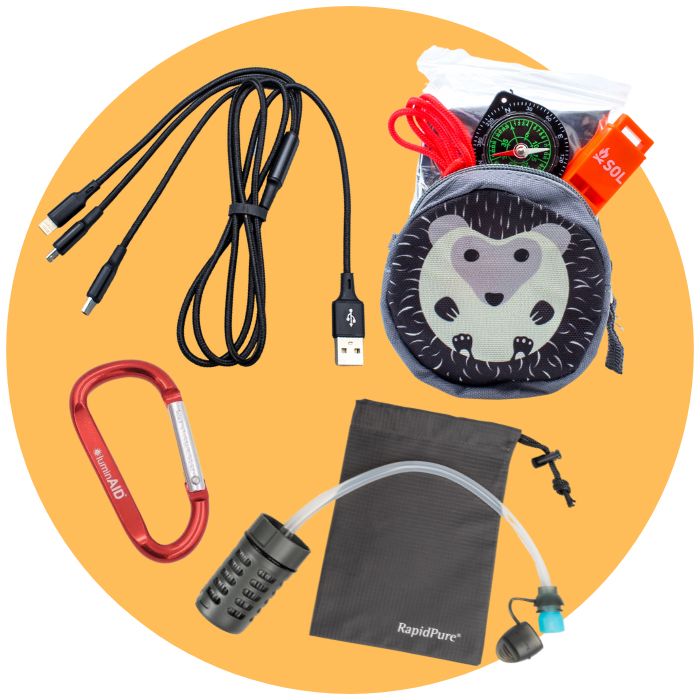
- Extra Charging Cables: It sounds simple, but a missing or broken cable can render your power source useless. Pack backups for all your family's devices.
- Physical Contact List and Plan: Technology fails. Keep a waterproof, physical copy of your plan, including all phone numbers and addresses. Using a clear emergency contact list template helps organize all that vital info so it's easy to find in a crisis.
- Area Maps: Don't rely on your phone's GPS. Have physical maps of your city and region with your three meeting points clearly marked.
Signaling and Survival Essentials
Finally, your kit should include a few basic items for signaling and survival. If you get separated or need to get someone's attention, these tools can be lifesavers. They take up almost no space but provide a huge boost in safety.
Essential signaling items include:
- High-Decibel Whistle: The sound of a whistle carries much farther than a human voice and uses less energy. It's perfect for signaling for help. Brands like S.O.L. Survive Outdoors Longer offer reliable options.
- Emergency Blankets: These mylar blankets are incredibly lightweight and pack down small, yet they are critical for preventing hypothermia if you're exposed to the elements. Check out S.O.L. Survive Outdoors Longer
- Small First-Aid Kit: A basic kit for treating minor cuts and scrapes is always a good idea to have on hand.
Once assembled, your communication go-kit provides incredible peace of mind. For a deeper dive into what to pack in your larger emergency bag, you can check out our complete list of go-bag essentials.
Keeping Your Plan Powered When the Grid Is Down
Let’s be honest—your perfectly crafted communication plan is only as good as your phone’s battery life. When the power goes out, that smartphone becomes a ticking clock. A pre-charged power bank will buy you a few hours, sure, but what happens when a major storm knocks out the grid for days?
This is where you need a real, sustainable strategy for off-grid power. The goal isn’t just to get through a few hours, but to keep your essential communication tools—like the phone you use to text your out-of-state contact—running for the long haul.

This is where solar power comes in. It gives you true energy independence right when you need it most.
Harnessing the Sun for Sustainable Power
Think about it: a solar charger doesn’t run out. As long as there’s daylight, you have a power source. This is an absolute game-changer during extended outages after a hurricane or blizzard, where power might be out for a week or more.
A 2-in-1 device like a LuminAID Power Lantern is one of the smartest tools you can have. It pulls double duty, serving two critical functions at once. First, it’s a bright, reliable lantern that lights up a room and provides a huge sense of security. Second, it’s a phone charger, giving you a way to keep your most important link to the outside world alive.
To get the most out of any solar device, you just need a simple routine.
- Find Your Sun Spot: The moment the sun is up, place your solar charger where it gets the most direct light. This could be a south-facing window, a porch railing, or even a clear spot in the driveway.
- Charge All Day, Use All Night: Get in the habit of charging from sunrise to sunset. Even on cloudy days, most solar panels will still collect some energy. This ensures you’ve got a full charge for light and communication when it gets dark.
It’s a simple rhythm that creates a continuous, reliable source of power. If you’re curious and want to learn more about the mechanics, check out this beginner's guide to solar phone chargers.
Making Every Drop of Power Count
Generating power is one thing; conserving it is another. A smartphone battery can drain shockingly fast, so teaching your family how to make it last is a critical survival skill.
The goal isn't just to charge your phone, but to keep it functional for as long as possible. A phone at 10% battery is infinitely more useful than a dead one. Think of your phone's battery as a limited resource and treat it accordingly.
Here are the most effective tricks to stretch your phone’s battery life during an outage:
- Go into Low Power Mode: This is your first and best move. It automatically cuts down on background tasks that secretly drain your battery.
- Dim Your Screen: The screen is a massive power hog. Turn the brightness down to the lowest level you can comfortably see.
- Shut Down Background Apps: Stop apps from constantly refreshing in the background. You can usually disable this for all apps in your phone’s main settings.
- Turn Off Push Notifications: Every little buzz or screen wake-up uses a bit of power. It all adds up.
When you combine these power-saving habits with a dependable solar charger, you create a robust power strategy that truly supports your family emergency communication plan. It’s an approach that ensures you stay connected, informed, and in control, even when the grid fails. For other survival essentials, you might consider reliable tools like those from Survive Outdoors Longer.
Practice and Adapt Your Plan So It Actually Works
Let’s be real: a family emergency plan tucked away in a binder is just paper. Its real value comes from practice. When a crisis hits, you won't have time to flip through a manual. Your family needs to know the plan by heart, acting on instinct.
This is where drills come in. But don't worry, this doesn't mean you need to stage a scary, full-blown disaster simulation. The goal is to build confidence and muscle memory in a calm setting, not to cause anxiety. By making practice a regular family activity, you can find and fix the weak spots in your plan before you ever need it for real.
Turn Your Plan Into Instinct with Drills
The trick is to make practicing feel normal, not like a test. You can start small and weave these drills into your daily life. This way, everyone, especially kids, learns what to do without being scared. Think of it less as a formal drill and more as a family safety game.
Here are a few easy ways to practice:
- Dinner Table Scenarios: Once a month, toss out a "what if" question over dinner. Something like, "What if the fire alarm went off right now? Where’s our first meeting spot outside?" or "Let's see who can recite Aunt Carol's out-of-state phone number."
- The Meeting Spot Challenge: Make it a game on a weekend. Just say "Go!" and have everyone walk or bike to your neighborhood meeting spot. First one there wins! It's a fun way to make sure everyone knows the route.
- Quick Text Check-In: Send a random group text asking everyone to check in with your out-of-state contact. This is a simple, two-minute drill that reinforces one of the most important steps in your communication plan.
The whole point of a drill isn’t to be perfect—it’s to find problems. If a kid forgets the meeting spot or a phone number is wrong, you’ve just found a weakness in a safe environment. That’s a win.
Regular practice keeps the plan fresh in everyone's mind. Try to review it together at least twice a year. A good trick is to tie it to a memorable date, like when you change the clocks for daylight saving time.
Customize the Plan for Everyone in Your Household
A generic, one-size-fits-all plan is doomed to fail. To be effective, your emergency plan has to account for the specific needs, abilities, and challenges of every single person under your roof—from your youngest child to an elderly parent, and don't forget the pets.
Start by walking through each person's daily life. Who might need extra help evacuating? What special equipment or information does each person need to have? This is how you make your plan personal and truly effective.
Emergency Plan Customization Checklist
Every family is different. This checklist helps you think through the unique needs of each member of your household and create specific action items to make sure they're covered.
| Family Member | Special Consideration | Action Item | Status (To Do / Done) |
|---|---|---|---|
| Young Children | Can't memorize numbers or read complex text. | Create a picture-based contact card with photos of key people next to their names and numbers. Keep it in their backpack. | |
| Seniors/Elders | May have mobility issues or struggle with new technology. | Clear any potential hazards in their home. Program ICE contacts into an easy-to-use phone. Assign a specific person to check on them. | |
| Individuals with Disabilities | May rely on medical equipment, medications, or need accessible transportation. | Plan for backup power for medical devices. Map out evacuation routes and shelters that are fully accessible. | |
| Pets | Need to be evacuated and cared for; many shelters won't allow them. | Assign one person to be responsible for each pet. Keep a carrier, leash, and a small go-bag with food ready. Research pet-friendly hotels. |
Making sure your plan works for everyone is the most critical step. A little bit of forethought here goes a very long way when it counts.
Simple Actions with a Big Impact
Beyond those major customizations, there are a few simple things you can do right now that will dramatically improve your plan's effectiveness.
- Program "ICE" Contacts: Everyone with a phone should have contacts labeled "ICE" (In Case of Emergency). First responders are trained to look for this exact label to know who to call.
- Know the School and Daycare Plans: Find out the official emergency plan for your children's schools or daycare centers. Make sure the school has a list of adults you've pre-approved for pickup, and double-check that those people know they're on the list.
By practicing regularly and tailoring the plan for each person, you’re creating something much more powerful than a piece of paper. You’re building a system of resilience that ensures everyone in your family knows exactly what to do to stay safe and get back together. And for other survival must-haves, don't forget essentials like a well-stocked first-aid kit from a trusted brand like Adventure Medical Kits.
Common Questions About Family Emergency Communication Plans
Even with a solid plan on paper, a lot of "what-if" questions can pop up. That's totally normal. Getting those nagging concerns sorted out is what transforms a good plan into a great one—the kind that gives you real confidence when it counts. Let's dig into some of the most common questions we hear.
How Often Should We Practice Our Plan?
This is one of the most critical parts, and thankfully, it’s simple. You should run through your plan at least twice a year. An easy way to remember is to link it to changing the clocks for daylight saving time.
A practice session doesn't have to be a full-blown, dramatic drill every time. Sometimes, a quick 15-minute chat over dinner to go over contact numbers and meeting spots is all you need. The goal is to keep the information fresh in everyone’s mind. For younger kids, you can frame it as a "family safety game" to make it engaging and less scary.
What Is the Most Important Item for Our Communication Kit?
If you can only have one thing, make it a reliable, off-grid power source for your phone. In a crisis, your phone is your lifeline—it connects you to family, news, and first responders. If it's dead, that connection is gone.
A solar-powered charger and light combo, like a LuminAID Power Lantern, is an ideal solution because it’s endlessly sustainable. As long as you have sunlight, you have power, even during an outage that lasts for days. A hand-crank radio is also vital for getting official alerts, but a charged phone allows for the two-way communication you need to actually confirm everyone is safe.
Think of it this way: a radio lets you listen, but a powered phone lets you talk back. Both are important, but only one allows you to tell your family you are safe.
My Kids Are Too Young to Memorize Numbers
This is a huge, and very real, concern for parents. When memorization isn't an option, you need simple, visual tools.
- Create Visual Aids: Make a small, laminated card for their backpack. Put photos of important contacts—Mom, Dad, a trusted neighbor—right next to their names and phone numbers.
- Teach Simple Instructions: Instead of memorizing, teach them to find a trusted adult (like a firefighter, police officer, or their teacher) and just show them the card. Practice having them say, "This is my family. Can you help me call them?"
- Physical Familiarity: Don't just talk about your neighborhood meeting spot—walk there regularly. This builds muscle memory, helping them recognize the physical location, which is far more reliable for a small child than remembering an address.
Role-playing these situations calmly and positively is key. It empowers them with a clear, simple action to take, building confidence without creating fear. For other gear to round out your family's preparedness, check out the equipment from Survive Outdoors Longer.
What Is the Best Way to Receive Official Emergency Alerts?
The golden rule here is to never rely on a single source of information. You need to build a layered system so if one channel goes down, another will still work.
- Sign Up for Local Alerts: Your first line of defense should be your own community's emergency alert system. These usually come as texts or emails and are sometimes called "reverse 911" systems.
- Get a NOAA Weather Radio: These radios are designed for one purpose: to broadcast official alerts from the National Oceanic and Atmospheric Administration 24/7. Make sure yours has battery backup or a hand-crank.
- Monitor Official Social Media: If you still have internet, follow the official accounts for your local emergency management office, police, and fire departments. This is often where the most up-to-the-minute information is posted during a crisis.
Using all three channels gives you redundancy. It ensures that no matter what happens, you're still getting the life-saving information you and your family need to make smart decisions.
With a solid plan, the right gear, and a bit of practice, your family can handle the unexpected with confidence. At LuminAID, we’re focused on creating reliable tools you can count on when the grid goes down. Equip your home and go-bags with our solar-powered lanterns and chargers so you always have light and power when it matters most.