

Buying for an outdoor person can feel oddly harder than buying for anyone else. They probably already own a beanie, a mug, a multitool, and at least one jacket they insist is “still perfectly good.”
What usually gets missed is usefulness across real life. The coolest gift isn’t always the flashiest item on a holiday list. It’s the thing they’ll pack for a weekend trip, keep by the back door, toss in the car, and reach for when the power goes out.
Beyond the Beanie Finding Genuinely Cool Outdoor Gifts
The wrong question is often the starting point. They ask, “What do outdoor people like?” That usually leads to generic gifts. Another fleece. Another camp cup. Another gadget that looks fun but ends up in a gear bin.
A better question is, “What will this person use in more than one setting?” That shift matters because outdoor life isn’t only backcountry hiking. It also includes car camping, beach days, backyard dinners, road trips, storm prep, and those annoying evenings when the lights go out right when you need to charge a phone.

Outdoor gifting matters to more people than ever. Camping participation in the United States reached 79.0 million participants in 2022, up 66% since 2000, according to Jackery’s summary of the trend. More people outside means more people who can appreciate gear that’s light, dependable, and easy to use.
Stop buying single-use novelty gear
A novelty compass keychain might look outdoorsy. It probably won’t become part of anyone’s routine.
A gift becomes memorable when it solves a repeated problem:
- Bad campsite lighting: People need light to cook, sort gear, and move around safely.
- Dead phone anxiety: Navigation, weather, and emergency contact all live on one device now.
- Too much disposable gear: Batteries, fuel canisters, and throwaway lights create hassle.
- Gear clutter: Outdoor people value items that do more than one job.
That’s why I usually steer shoppers toward categories before brands. Lighting, water, first aid, weather protection, and compact comfort accessories tend to age better than trend-driven gadgets.
Think in systems, not objects
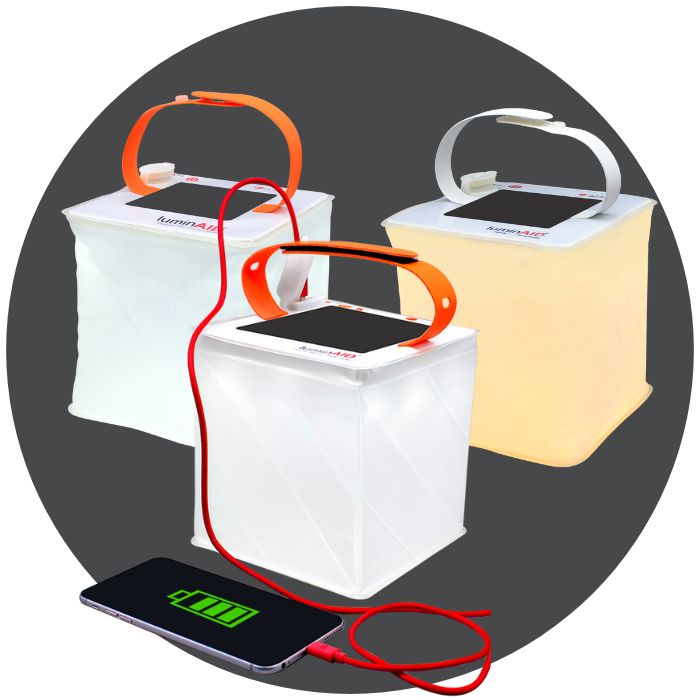
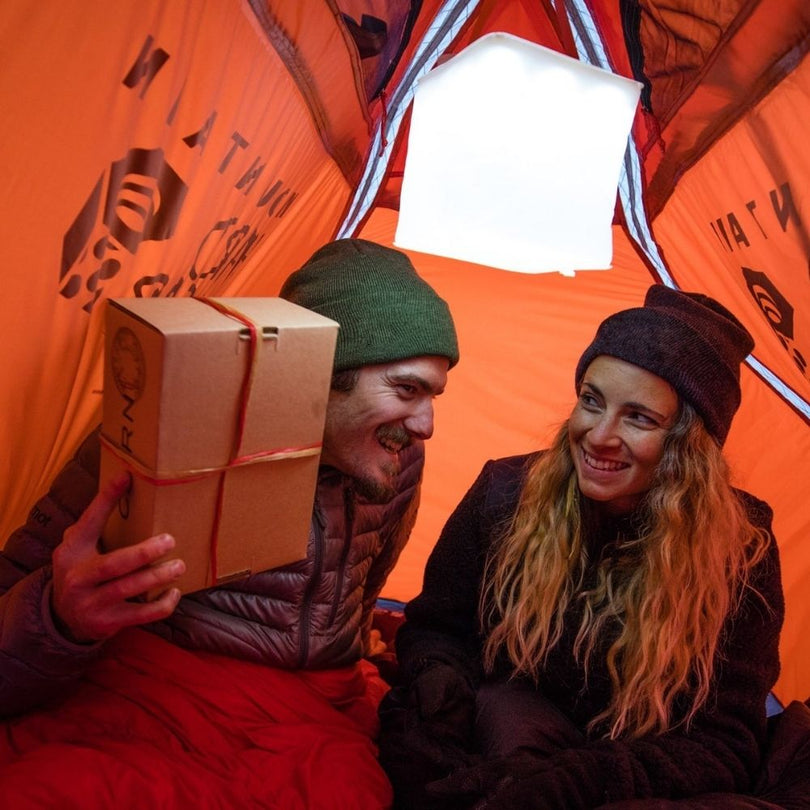
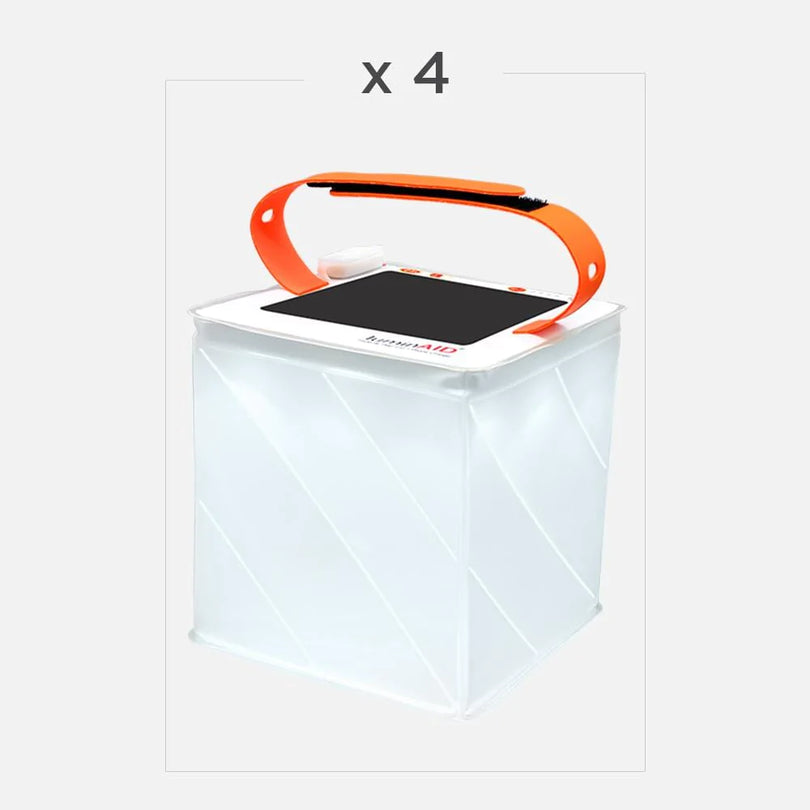
One lantern can be a camp light, a tent light, a blackout light, and a backup charger. That’s a stronger gift than a single-purpose item that only works on one type of trip.
Practical rule: If a gift makes sense at a campsite, in a car kit, and at home during an outage, it’s usually a smart buy.
If you’re still building ideas, a broader list of essential camping accessories can help you spot the categories people rely on, instead of the ones that only photograph well.
Cool outdoor gifts should still feel fun. But the fun can come from clever design, packability, and the moment someone realizes, “I can use this almost anywhere.”
How to Think About Outdoor Gifting
The easiest way to avoid a wasted gift is to judge it on four tests. Not price first. Not trend first. Function first.
Many gift guides overlook one category that keeps proving useful: solar-powered light and charging gear. That’s a real gap, especially because OARS notes the emergency-preparedness angle and references FEMA data showing over 40% of U.S. households experienced a significant outage in the past year. A lot of “cool outdoor gifts” content still treats outdoor gear and home readiness as separate worlds, even though the same tools often serve both.
The four-test framework
Versatility
A versatile gift earns space in a pack because it works in different settings.
Think about a lantern that can hang in a tent, light a picnic table, and stay in a hallway closet for storm season. Compare that with a very specialized item that only comes out once a year. One becomes part of daily gear. The other becomes storage.
Good questions to ask:
- Where can it be used? Trail, campsite, car, backyard, home.
- Does it do more than one job? Light, charging, organization, comfort, safety.
- Will the recipient pack it without debating the weight or bulk?
Reliability
Outdoor gear gets judged at the worst possible moment. Nightfall. Rain. A flat phone battery. A power outage.
Reliable gifts don’t need a complicated setup, rare fuel, or perfect conditions. They work when the user is tired, cold, or in a hurry. That’s why simple controls matter. Weather resistance matters. So does the ability to store the item for long stretches and still trust it later.
A gift isn’t useful because it has many features. It’s useful because someone can count on those features under stress.
Sustainability
Many buyers get stuck, hearing “sustainable” and thinking they’re choosing between practical and eco-conscious. Usually, they don’t have to.
Reusable lighting and charging gear can reduce dependence on disposable batteries. That matters on trips, but it also matters at home. If a person can top up a light with sun or USB instead of hunting for batteries in a storm, the sustainability benefit also becomes a convenience benefit.
Wow factor
This one is real, and it’s often ignored by practical shoppers.
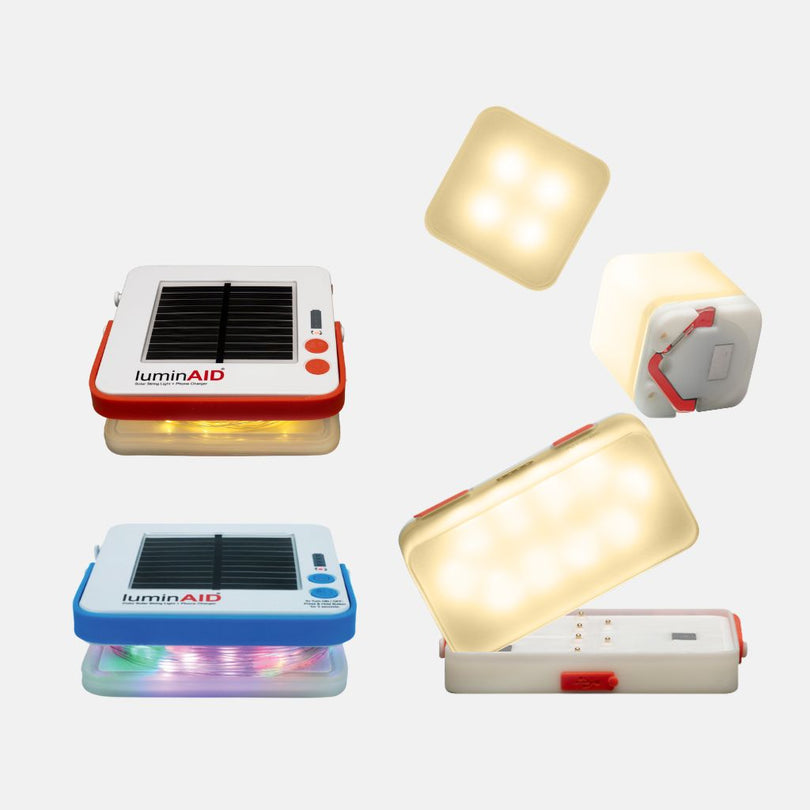
People still want gifts that feel fresh. A collapsible light, a compact solar panel, a well-designed warm-glow string light setup, or a backup light that also charges a phone has more personality than a generic flashlight in a plastic clamshell package.
A simple scorecard
Here’s the filter I use before recommending anything:
| Question | Why it matters |
|---|---|
| Will they use it outside and at home? | Increases the chance it won’t sit unused |
| Can it help in an outage or emergency? | Adds value beyond recreation |
| Does it avoid disposable power if possible? | Reduces recurring hassle |
| Is it compact enough to bring along? | Packed gear gets used |
| Does it still feel gift-worthy? | Utility alone doesn’t make it memorable |
A lot of cool outdoor gifts fail because they only pass one or two of those tests. The smarter ones pass four or five.
Matching the Gift to the Person and Occasion
The same gift can feel brilliant for one person and random for another. That’s where many shoppers go wrong. They buy for the activity label, “camper,” instead of the actual person.
A family car camper, a fast-and-light backpacker, and a homeowner building an emergency bin may all appreciate outdoor gear. They don’t need the same gear.
For the backpacker who counts ounces
This person notices weight, packed size, and double duty right away.
They usually care less about “cute camp vibes” and more about gear that earns a place in the pack. A good gift for them often does one core job very well and maybe a second job in a supporting capacity.
Look for:
- Compact lighting: Something small enough to pack without debate.
- Multi-use design: Light plus charging is more appealing than a bulky single-purpose tool.
- Fast setup: No fiddly parts, no awkward accessories.
- Storage logic: If it clips, collapses, or nests neatly, that helps.
For this person, cool means efficient.
For the family camper
Families usually need gear that’s forgiving. It has to survive being dropped, packed by a child, or used in less-than-ideal ways.
Safety and ease matter more here than minimalism. A gift that helps with tent lighting, bathroom trips after dark, and keeping one phone usable can be more valuable than something technical but finicky.
Useful gift categories include:
- Area lighting for camp tasks
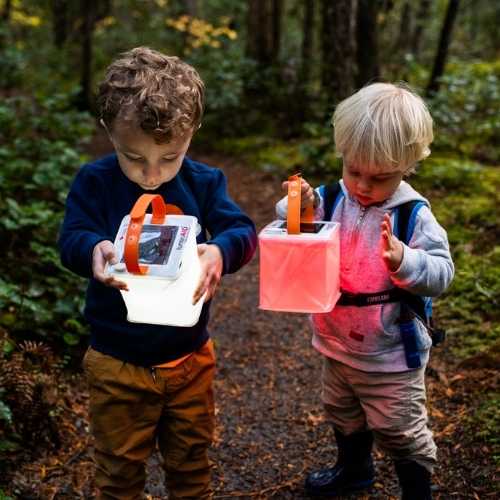
- Kid-friendly lights that are easy to operate
- Backup charging options
- Visible, easy-to-find gear in a tent or car
For the homeowner who also likes the outdoors
This is one of the most overlooked recipients in cool outdoor gifts lists.
Some people don’t need gear for a five-day backcountry route. They need gear that works for weekend camping and for real-world disruptions at home. Think storms, neighborhood outages, garage organization, patio dinners, and keeping essentials in the car.
This buyer should look for gifts that can live in several places:
- Home emergency closet
- Vehicle glove box or trunk
- Camping tote
- Backyard setup
That overlap is where outdoor gifting gets smarter.
For the winter enthusiast
Winter gear creates a different decision tree. Cold changes how people use lights, chargers, gloves, and shelter accessories. Shorter days also make lighting more important.
General gift guides don’t do a great job here. Anchored Outdoors highlights that winter-specific gifts are often undercovered, even as winter adventure participation rose 25% post-2024. That matters because winter users ask practical questions that summer-focused lists skip, especially around low-light solar use and cold-weather reliability.
Cold weather exposes weak gear fast. If an item is annoying to use with gloves, hard to charge, or too fragile for wet conditions, winter users will notice immediately.
For winter-minded recipients, consider:
- Simple controls they can use with cold hands
- Lighting that helps with long dark evenings
- Gear that fits a storm-prep role at home
- Warm ambient light for vans, RVs, cabins, or porches
Occasion matters too
Birthday gifts can be more personal. Holiday gifts often need broader usefulness. Housewarming gifts work well when they blur the line between outdoor style and emergency readiness.
And if you’re shopping for someone whose main hobby is water rather than land, it helps to look at a more niche guide like these best gifts for scuba divers. It’s a good reminder that “outdoor person” is a wide category, and the right gift starts with context.
What to look for in a solar lantern gift
The technical side can sound confusing, so here’s the plain-language version.
Portable solar lanterns in this category use monocrystalline photovoltaic cells with efficiencies of 20 to 22%, and a small panel can fully charge the integrated battery in 4 to 6 hours, according to Live Science’s expert-reviewed overview. That reliability matters because inadequate illumination contributes to 15 to 20% of wilderness search-and-rescue incidents, as cited there from US Forest Service data.
For a buyer, those numbers mean this: a small lantern isn’t just a novelty. Modern solar lighting can charge in a practical window and provide meaningful backup when visibility matters.
A simple comparison mindset
You don’t need to become a lighting engineer. Compare gifts using plain criteria:
- Packed size: Is it a size that will be carried?
- Charging options: Solar only, USB only, or both?
- Light style: Bright task light, soft ambient light, or adjustable?
- Use setting: Backpack, patio, car kit, storm closet, travel bag.
- Controls: Easy enough for a child, tired adult, or stressed user?
One place to browse complete options
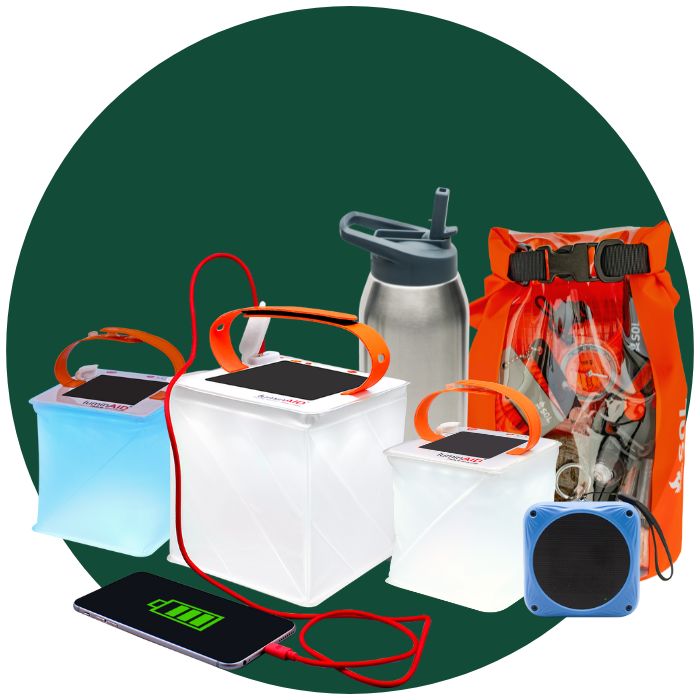
If you prefer shopping by scenario instead of building your own kit, the curated bundle collection at LuminAID’s bundle shop is the clearest format for comparing combinations meant for camping, travel, and emergency preparedness.
The main advantage of shopping this way is confidence. You aren’t trying to guess whether a random gadget belongs with another random gadget. You’re choosing a setup built around an actual use case.
Pairing Your Gift with Essential Safety Gear
A strong outdoor gift gets even better when it arrives with one or two smart safety add-ons. That doesn’t make the present less fun. It makes it more complete.

Think of it this way. A solar lantern or backup light covers visibility and basic power. The rest of a thoughtful kit should cover the other things people run into outside. Scrapes, insects, water problems, and animal risk in specific terrain.
The smartest companion items
A few pairings make immediate sense.
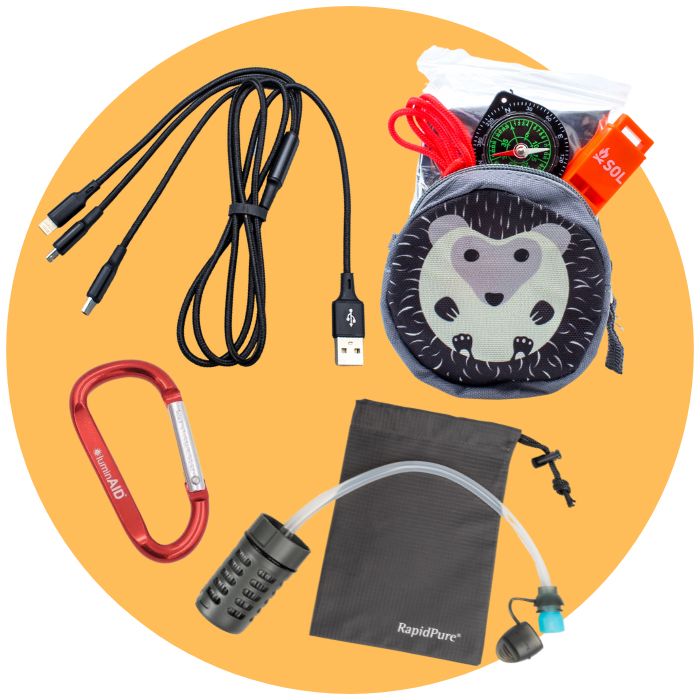
- First-aid kit: A compact medical kit belongs with nearly any outdoor gift. Adventure Medical Kits offers options designed for trail, travel, and group use.
- Bear country item: If the recipient hikes or camps where bear spray is recommended, Counter Assault is a useful place to compare dedicated bear safety gear.
- Water treatment: A compact purifier or filtered bottle rounds out a camping or vehicle kit well.
- Bug defense: For humid regions or summer campers, repellent or post-bite relief can be more appreciated than people admit.
Why lighting still sits at the center
Light is the foundation because every other safety task gets harder in the dark.
Bandaging a cut, finding the zipper on a tent, locating a map, calming a child during a blackout, checking gear in the trunk, all of that depends on usable illumination. That’s one reason solar lanterns stand out in the first place. As noted earlier in the article, modern units in this category use monocrystalline cells and can recharge on a practical timeline, which makes them more than decorative camp lights.
For emergency-minded shoppers, a checklist like these go bag essentials is useful because it shows how lighting fits into a broader readiness system rather than standing alone.
Build a simple gift kit
You don’t need ten items. A focused set is better.
Here’s a practical mix:
- Primary light source
- Basic first-aid kit
- Water backup
- Insect or wildlife protection matched to region
- Small storage pouch so it stays together
That setup works for campers, road trippers, cabin users, and even someone who mostly wants better emergency coverage at home.
A quick visual can help if you want to think through what belongs in a safety-oriented add-on kit:
Match the extras to the environment
A desert camper doesn’t need the same add-ons as a canoe camper. A family in hurricane country doesn’t need the same setup as a snowbelt homeowner.
That’s why I recommend choosing one core light gift, then adding only the safety pieces the person is likely to use. Precision beats volume. A small, coherent kit feels thoughtful. A pile of random accessories feels like overbuying.
Navigating the Logistics of Outdoor Gifting
Even a smart gift can become stressful if you buy it the wrong way. Budget, timing, and presentation matter more than generally realized.
There’s room for every spending level in this category. The global outdoor gear market was valued at $56.8 billion in 2023, and REI’s gift guide overview also notes average spending per camper at $512 on equipment, while gifts under $50 make up 40% of gift searches. That tells you two things. People do spend seriously on gear, but a large share of shoppers still want practical, lower-cost options.
Budget by role, not by hype
A useful way to budget is to decide what role the gift should play.
| Budget tier | Smart target |
|---|---|
| Under $50 | Add-on, stocking stuffer, or companion piece |
| Mid-range | Main gift for one person or one activity |
| Higher spend | Multi-item bundle or family-focused setup |
If the gift is meant to be the star, buy something with broad use. If it’s a companion item, choose a strong supporting piece like first aid, water treatment, or compact light.
Don’t forget shipping windows
Outdoor gifts are often seasonal. That means delays matter.
If you’re buying for a holiday, trip departure, or storm season, check delivery timing before you get attached to a specific item. If the recipient lives in another region, factor in weather and carrier slowdowns too. For order timing and delivery details, review the current LuminAID shipping policy.
Personalization can make practical gear feel more personal
A lot of buyers worry that preparedness gear feels too utilitarian. Personalization fixes that.
You can make a practical gift feel warm by:
- Pairing it with a handwritten note explaining when you pictured them using it
- Building a themed set for a road trip, cabin weekend, or storm-prep closet
- Choosing a housewarming or family focus instead of a lone gadget
- Exploring branded bulk options if you’re buying for staff, clients, or event guests
Corporate teams, in particular, often want gifts that won’t be tossed into a desk drawer. Outdoor-ready gear with a real use case tends to perform better than novelty merchandise because people can picture themselves using it right away.
The easiest way to make a practical gift feel thoughtful is to show that you understand the recipient’s real life, not just their hobby label.
Buy a gift they can use now
This matters more than people think. Some outdoor gifts are “someday” items. Others get used the same week.
The strongest choices usually cross that line between aspiration and reality. They work on a camping trip, on a porch, in a car, or during an outage. That kind of overlap lowers the risk of buyer’s remorse and raises the odds that your gift becomes part of the recipient’s routine.
Conclusion Give a Gift That Shines
Cool outdoor gifts don’t need to be flashy, and they don’t need to be complicated. The best ones solve real problems, fit real habits, and still feel fun to open.
If you remember one filter, use this one. Look for versatility, reliability, sustainability, and a bit of design appeal. That combination pushes you past generic gear and toward gifts people continue to use.
A compact light that works at camp and during a blackout. A safety add-on that rounds out a travel kit. Ambient lighting that improves a backyard and still earns a place in an emergency bin. Those are the gifts that stand out because they fit more than one version of outdoor life.
Good gifting isn’t about buying the most gear. It’s about buying the right gear for the person, the season, and the moments that matter after the wrapping paper is gone.
Frequently Asked Questions About Outdoor Gifts
Are solar lanterns still useful on cloudy days or in winter?
Yes, but expectations matter. Solar charging is strongest in better sun, so gifts that also support USB charging are easier to live with year-round. For winter users, simplicity and backup charging options matter as much as raw brightness.
What’s a good outdoor gift for someone who already has lots of gear?
Buy for overlap. Look for something they can use while camping, traveling, at home during outages, or in the backyard. Multi-purpose light, charging, and safety gear tends to work better than niche gadgets.
Should I buy one big gift or a smaller bundle?
If you know their needs well, one main gift can work. If you’re less certain, a small bundle is safer because it covers a complete use case like camp lighting plus first aid or emergency light plus water backup.
Are outdoor gifts good for corporate or client gifting?
Yes, especially when the gear is practical and easy to understand. People are more likely to keep a useful outdoor-ready item than a novelty desk object, particularly if it fits travel, home readiness, or everyday carry.
If you want a gift that works for camping, outages, travel, and everyday life, browse LuminAID for portable solar lighting and charging gear designed around those real-world uses.