


The first mile feels manageable. By the afternoon, the same backpack seems to pull backward with every step. Water shifts at the sides, food adds weight as the trip continues, and the pack's shoulder straps begin to feel less like equipment and more like a constant reminder of poor choices. Choosing backpacking gear lightweight becomes more than a shopping category. A well-planned kit manages energy, balance, warmth, and protection so the hiker can finish the day with more control.
Lightweight backpacking isn't a contest to remove every possible feature. A frameless pack can save weight, but a small frame may keep a heavier load from exhausting the shoulders. A thinner sleeping pad can look efficient on paper, yet insufficient insulation can turn a cold night into a safety problem. The strongest system saves weight where it disappears into the background, then keeps support where comfort and judgment depend on it.
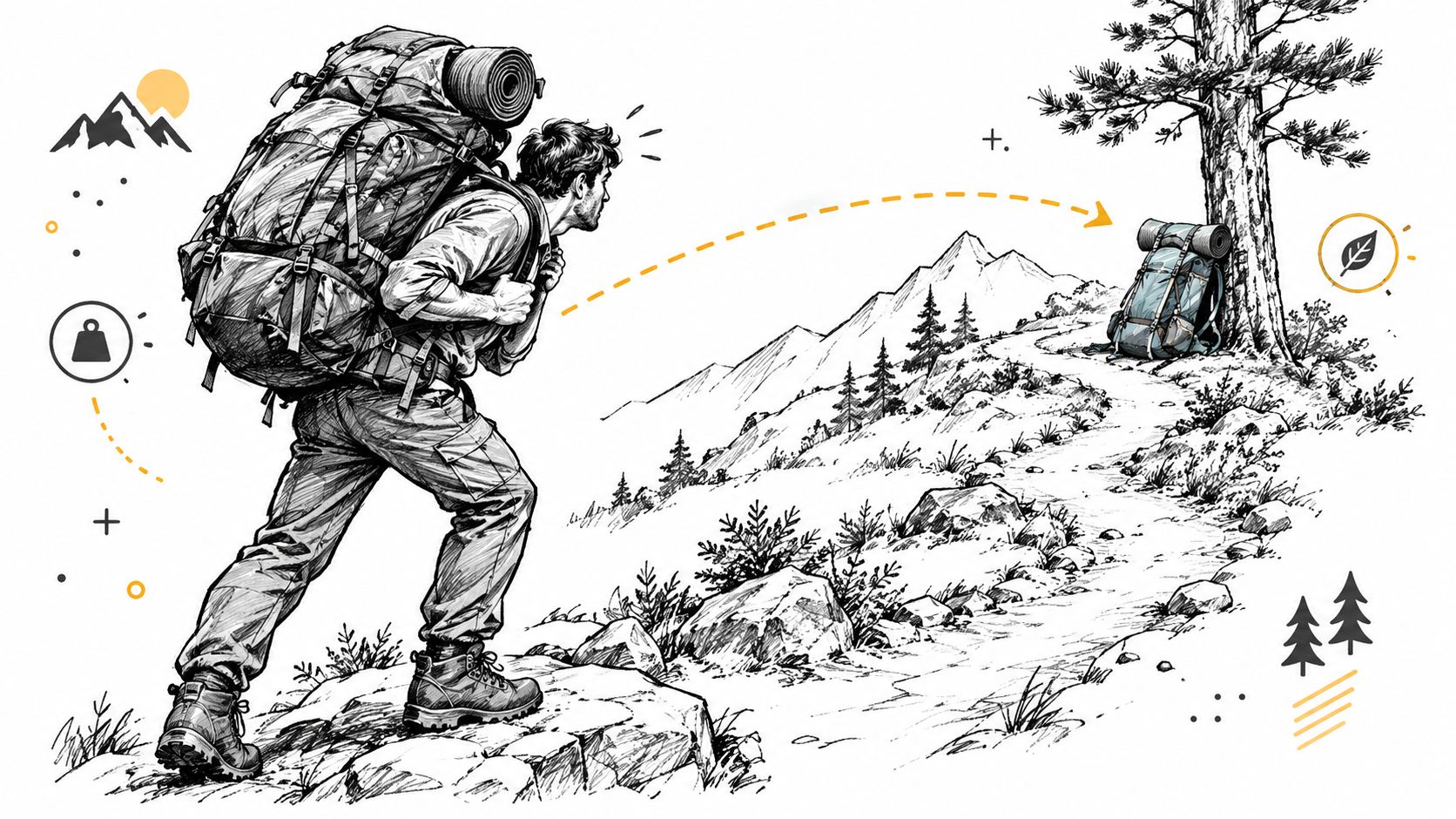
Table of Contents
- Introduction Why Going Lighter Changes Every Mile
- Understanding Base Weight and How Lightweight Is Defined
- How Materials and Design Make Gear Lighter
- Choosing Lightweight Gear by Category Without Sacrificing Safety
- Packing Smarter and Trimming Weight the Right Way
- Lightweight Lighting and Power Examples for the Trail
- Your Next Steps to a Lighter Safer Pack
Introduction Why Going Lighter Changes Every Mile
A lighter load can make uneven ground easier to negotiate, reduce the effort needed to climb, and leave more attention for navigation, weather, and footing. Those benefits matter because fatigue changes how carefully people move. A hiker who's constantly adjusting a sagging pack or bracing against shoulder pain has less capacity for the decisions that keep a trip safe.
The useful mindset is energy management, not weight obsession. A lighter shelter may help, but so can removing duplicate clothing, choosing a pack that fits the actual load, and carrying only the water required by the route. The best changes often come from the way a kit is assembled rather than from immediately replacing expensive equipment.
This guide builds that process in order. It starts with base weight, then explains why fabrics, insulation, frames, and hardware affect performance. From there, each major gear category gets a practical decision rule, including lighting and power. The final steps focus on weighing, auditing, redistributing, and testing the kit before a demanding trip.
Practical rule: A gear choice succeeds when it makes the whole day easier, not merely when it produces the lowest number on a scale.
The modern movement coalesced into a recognizable form in the early 2000s around a widely used 10-pound base-weight benchmark, while many hikers moving into the category carry 12 to 20 pounds, a range generally viewed as lightweight rather than ultralight (historical account of modern ultralight backpacking). That history matters less as a target than as context. A person moving from a heavy traditional setup doesn't need to leap straight to an extreme benchmark. A modest reduction that improves balance and warmth can be a better result than a dramatic cut that makes camp uncomfortable.
Understanding Base Weight and How Lightweight Is Defined
At the trailhead, a pack may feel manageable. After food and water are added, the same pack can feel entirely different. Those supplies shrink as the trip continues, while the shelter, sleep system, clothing, and backpack remain. Base weight separates the equipment that stays with you from changing supplies, making gear systems easier to compare. A commonly cited gear-list breakdown places ultralight below 10 pounds of base weight, lightweight below 20 pounds, and superlight below 5 pounds (backpacking weight categories).
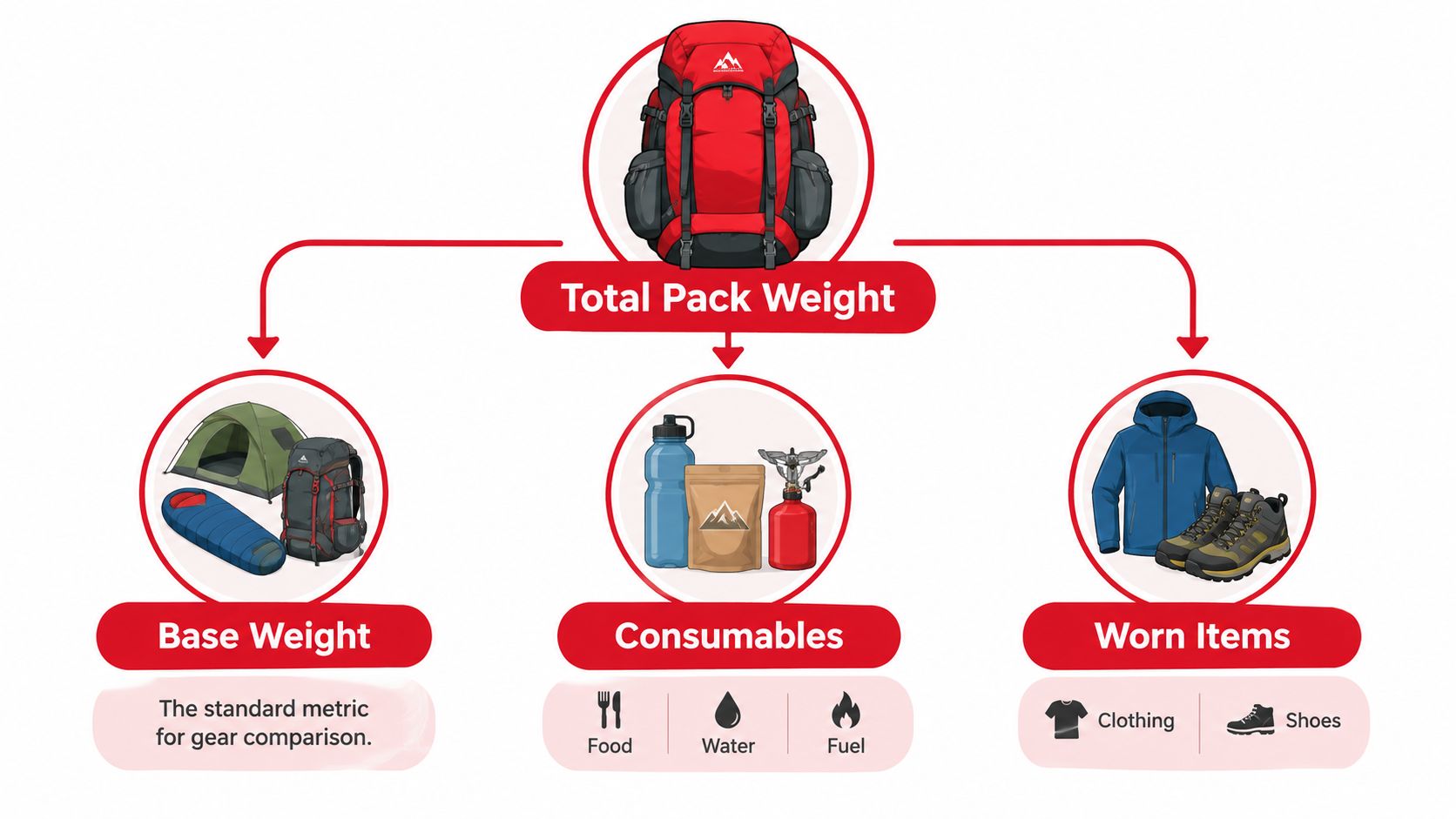
The three parts of the load
Total carried weight works like a simple three-part ledger:
- Base weight: Shelter, sleeping equipment, backpack, cooking gear, clothing carried inside, navigation, first aid, and other core items. This is the standard measure for comparing equipment.
- Consumables: Food, water, and fuel. Their weight depends on the route, weather, resupply options, and distance between reliable water sources.
- Worn items: Shoes, hiking clothing, trekking poles, and anything carried on your body instead of inside the pack.
A useful target follows the trip, not a label. A warm-weather overnight outing can use a different system from a cold shoulder-season route. A remote itinerary may require communication equipment or extra emergency supplies that are unnecessary on a busy local trail.
Body size provides another planning check. REI's guidance suggests keeping a loaded pack near 20% of body weight, with a 150-pound hiker aiming for 30 pounds or less while backpacking (REI guidance on backpacking weight). That guidance applies to the loaded pack, so food and water count alongside base gear. Use it as a planning ceiling, not a reason to carry every possible item.
Weight also affects comfort and safety through balance. A few extra ounces for a supportive frame, warmer sleep system, or dependable emergency tool can reduce fatigue over many miles. A lighter scale reading is useful only when the pack still carries well and keeps you warm, fed, and prepared.
Set a personal next target
A hiker carrying 20 pounds of base weight might begin by removing duplicates or simplifying clothing. Someone already near 10 pounds may benefit more from better fit, sleep warmth, or load support than from cutting further. Ask, “What keeps this pack from feeling comfortable and dependable on the actual route?”
Record the starting point before buying anything. Weigh each item, separate consumables from base gear, and find the largest categories. That turns vague frustration into a clear sequence of choices.
How Materials and Design Make Gear Lighter
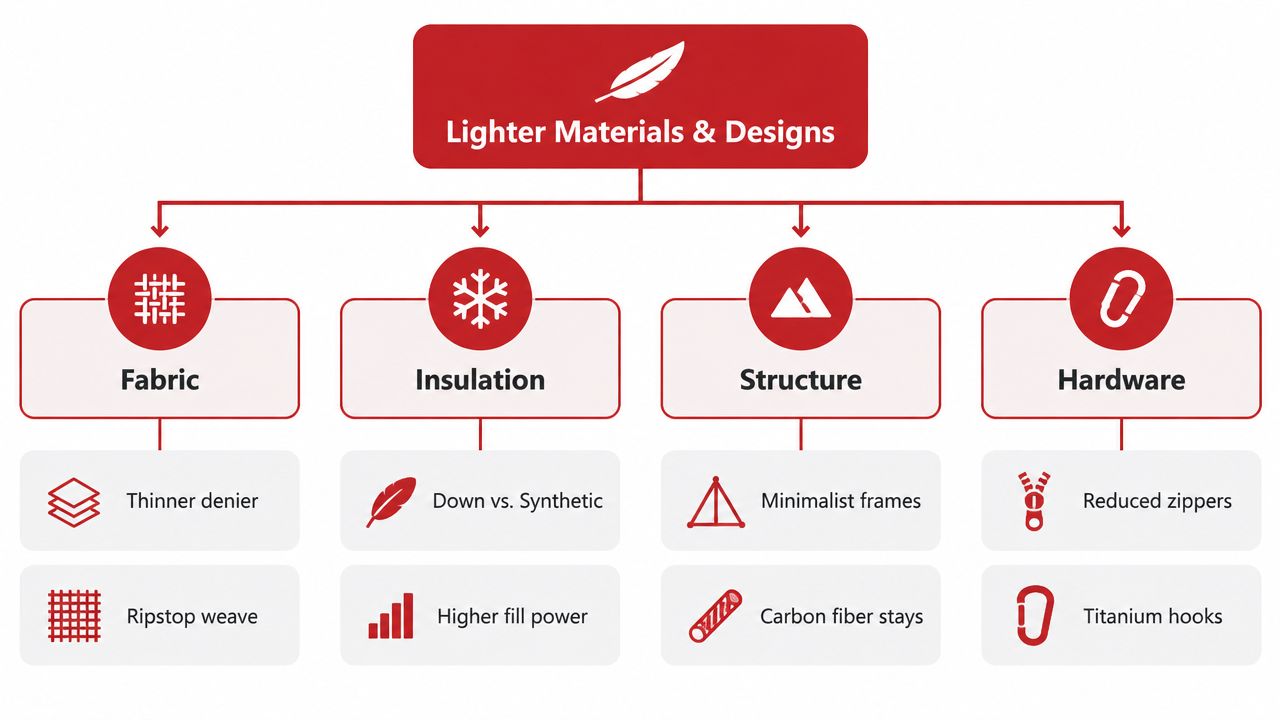
A lighter pack begins with decisions about materials, insulation, structure, and hardware. Each change shifts work somewhere else. Thinner fabric may need gentler handling. Fewer pockets may require more careful organization. Less frame support may feel fine on a compact load but tiring once food and water increase. Read lightweight gear as a system of trade-offs, with attention to what the product removed and what the hiker must now manage.
Fabric and hardware
Lighter laminates and fabrics reduce pack mass, but they still need tear resistance, abrasion resistance, and dependable seams. A pack designed for a low base weight may use advanced textiles, fewer pockets, and less hardware instead of just using the thinnest nylon available. That can save ounces while reducing external access and organization.
Pack design shows the trade-off clearly. GearJunkie's ultralight review uses a cutoff of under 16 ounces for frameless packs and under 28 ounces for framed packs (ultralight backpack design and pack comparisons). Those figures describe the carrying system, not the complete loaded backpack. A frameless pack can carry a compact, carefully packed load comfortably. A framed model may keep food, water, or winter insulation more stable as the load rises, helping you stay comfortable over many miles.
Insulation and fill power
Down's fill power measures loft efficiency. Higher fill power traps more air per ounce of down, so a sleep system can provide warmth with less fill mass. Wirecutter describes 600 to 700 fill power as adequate for most backpacking situations and 800 to 900 fill power as preferable for serious backpackers focused on warmth-to-weight efficiency (sleeping-bag fill-power guidance).
The shell and trim still affect total weight, but efficient insulation performs much of the warmth work. Lighter 10D to 15D shells can pack smaller and reduce mass, though they need more care around sharp branches, rough shelters, and careless storage. A few extra ounces of warmth may prevent poor sleep, slower movement, and added clothing the next day.
Structure is not wasted weight
A frame, hip belt, or sturdy stay transfers load away from the shoulders. Removing that structure can suit a low base weight, yet the same pack may become uncomfortable after food and water are added. The scale shows the pack's mass, not how that mass affects posture, balance, or fatigue.
Choose the lightest design that still carries your real load well. Over many miles, a supportive frame or warmer sleep system can keep you lighter on your feet than a stripped-down option that causes discomfort and slower travel.
Choosing Lightweight Gear by Category Without Sacrificing Safety
Category decisions work best when each item is judged against the rest of the system. A shelter that needs trekking poles may save packed weight if poles are already part of the hiking kit. A framed pack may add weight but preserve comfort when the sleep system, food, and water create a substantial starting load. The goal is not uniform minimalism. It's strategic support.
| Gear Category | Lightest Option | When to Choose More Support |
|---|---|---|
| Pack | Frameless pack with minimal suspension | Choose a frame, hip belt, or stronger structure when the loaded system feels unstable or approaches a heavier total load |
| Shelter | Tarp or simple trekking-pole shelter | Choose a freestanding or double-wall design for easier pitching, weather management, or condensation control |
| Sleep system | High-fill-power down quilt or bag with a light shell | Choose more insulation or a warmer-rated design when temperatures and personal comfort demand it |
| Sleeping pad | Compact foam or lightweight inflatable pad | Choose a warmer pad when ground temperatures make insulation a priority |
| Cooking | Small pot, simple stove, and one utensil | Keep a reliable ignition method and enough capacity for the planned meals |
| Lighting and power | Small rechargeable headlamp or compact solar light | Add a second light when camp tasks, group use, or emergency visibility require redundancy |
| Clothing | One hiking system with a compact insulating layer and shell | Carry warmer or more protective layers when wind, rain, cold, or exposed terrain raises risk |
| Water and food | Lightweight containers and efficient treatment | Carry the capacity required by water availability, route conditions, and emergency margins |
Pack and shelter choices
A frameless pack suits hikers who keep base weight low and pack contents compact enough to form a stable structure. A framed ultralight pack is more forgiving when the load includes extra food, water, winter insulation, or shared equipment. Recent industry coverage argues that the race toward the lightest frameless design has cooled, with a minimal frame often becoming worthwhile above roughly 20 pounds of total load because shoulder and hip comfort matter more than saving a few hundred grams (load-carrying trade-offs in lightweight packs).
Shelter decisions follow the same pattern. A single-wall shelter can reduce fabric and pole weight, but condensation management becomes more important. A double-wall tent adds components yet separates the sleeping area from the rainfly. Freestanding designs generally simplify pitching, while trekking-pole shelters may reduce dedicated pole weight if trekking poles are already carried.
Sleep, clothing, and cooking
High-fill-power down can reduce bulk, but it needs protection from moisture and rough handling. Quilts can remove the insulation beneath the body because the sleeping pad provides that layer, though they may feel draftier for restless sleepers. A pad should be judged by warmth-to-weight, not weight alone. Recent 2026 gear coverage identifies Exped's Ultra 6.5R as a notable improvement in R-value per gram after several years of limited progress in that category (sleeping-pad efficiency coverage).
Clothing should protect against the actual forecast and terrain, not fill every imagined scenario. Long sleeves, long pants, boots, hats, tucked-in pant legs, and closed shoes reduce exposed skin against mosquitoes, ticks, fleas, sand flies, and other arthropods, as summarized in the CDC Yellow Book guidance (CDC Yellow Book protection guidance). The CDC also recommends treating clothing and gear with 0.5% permethrin, including boots, pants, socks, and tents, or buying items that are already treated (CDC permethrin guidance).
For a practical category-by-category checklist, hikers can compare the ultralight backpacking gear list from LuminAID while keeping route-specific safety requirements in view.
Packing Smarter and Trimming Weight the Right Way
Buying lighter equipment is only one part of the process. A poorly packed lightweight kit can still feel awkward, while a well-organized moderate kit may carry smoothly. The audit should begin with a kitchen scale, a written list, and enough honesty to include tiny items that usually disappear into pockets.
Build an item-level inventory
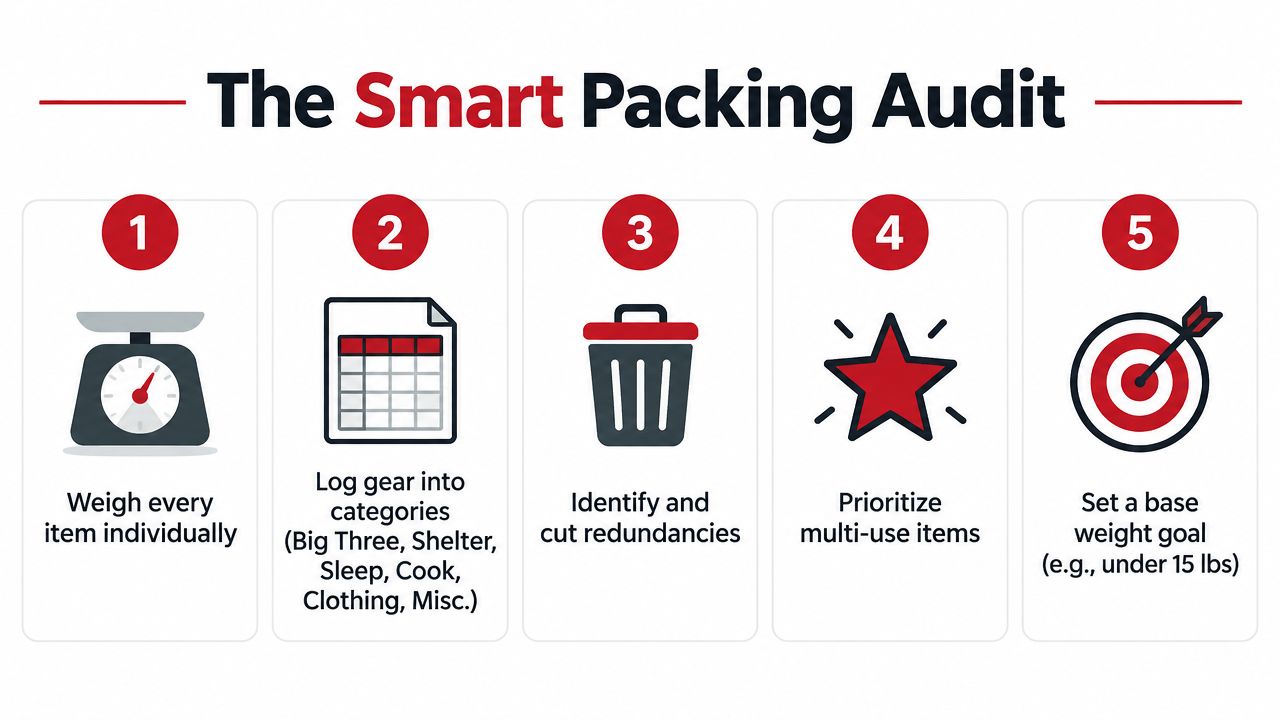
Weigh every item individually, including cords, stuff sacks, charging cables, fuel, toiletries, and small accessories. Record each item under a clear category such as pack, shelter, sleep, cook, clothing, navigation, safety, and miscellaneous. This reveals whether the largest opportunity sits in the “big three” or in a collection of small extras.
The next pass looks for duplication. Two containers may serve one purpose. A pack liner may protect equipment without requiring several separate dry bags. A cooking pot may serve as the eating vessel, while an insulating layer can sometimes provide pillow volume. Multi-use equipment saves weight only when both functions are useful.
Cut repetition before protection
The safest early reductions usually involve convenience items, duplicate clothing, oversized toiletries, excess packaging, and unused organizational pieces. The dangerous reductions involve first aid, rain protection, navigation, insulation, water treatment, and communication equipment. A trip report can help, but an unused item isn't automatically unnecessary if it protects against a credible emergency.
Safety boundary: Remove redundancy before removing capability.
Pack distribution affects how the same weight feels. Dense items should sit close to the back and remain centered, while frequently used items can go into accessible pockets. Soft items can fill gaps and prevent movement. Water and food placement should support balance rather than occupy unused space.
Test the revised kit
A shakedown hike should come before a remote trip. Walk with the intended food and water arrangement, check shoulder and hip pressure, pitch the shelter in realistic conditions, inflate the pad, and use the light after dark. If a change creates discomfort, instability, or slower camp tasks, the scale has provided incomplete information.
The packing hacks from LuminAID can complement this audit, but the final list should still reflect the route, forecast, group plan, and individual needs.
Lightweight Lighting and Power Examples for the Trail
Lighting shows why lightweight design is about utility per item, not grams in isolation. A headlamp handles hands-free movement, but a small lantern can illuminate cooking, map reading, gear sorting, or a shared shelter. A power bank can recharge a phone, yet it adds a separate object and cable. A multi-use light can reduce the number of pieces in the electronics pouch when its functions match the trip.
Match the light to the task
A headlamp remains the primary choice for walking after dark because the beam follows the hiker's direction and leaves both hands available. A small lantern works better for stationary tasks. It spreads light through a tent or campsite instead of creating a narrow beam that forces constant head movement.
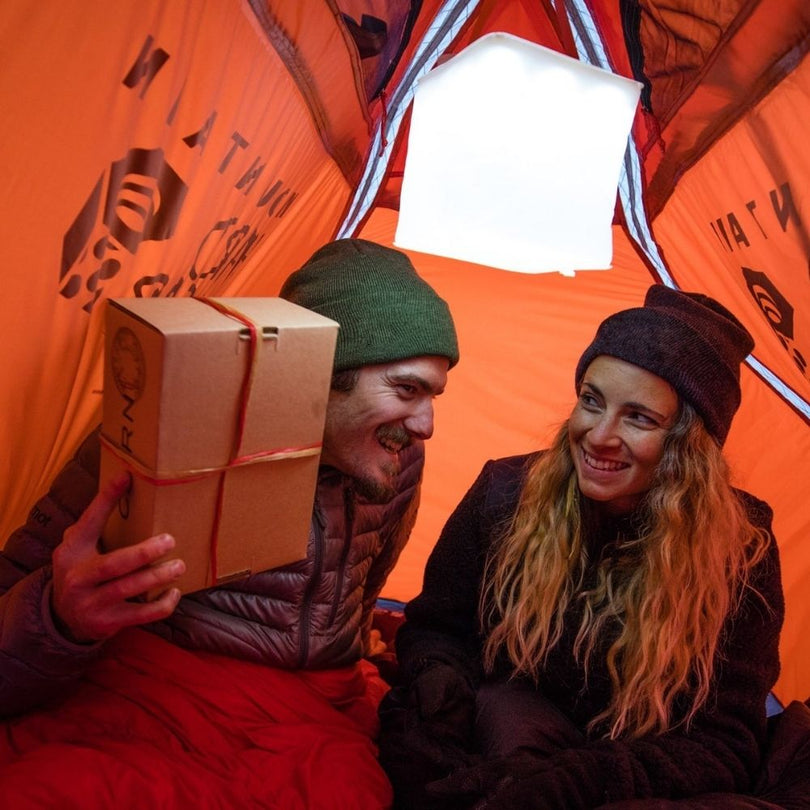
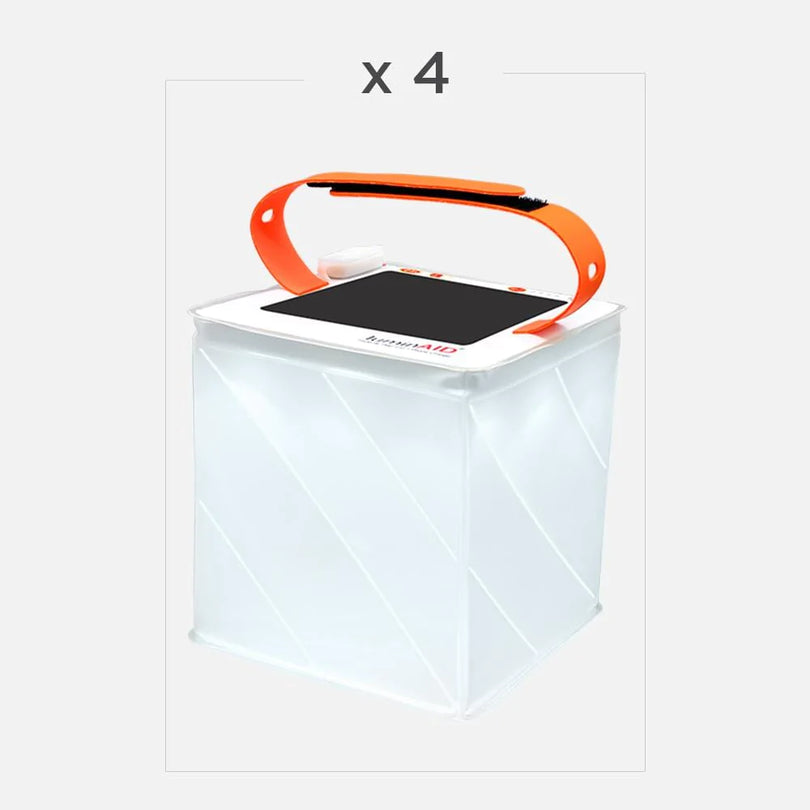
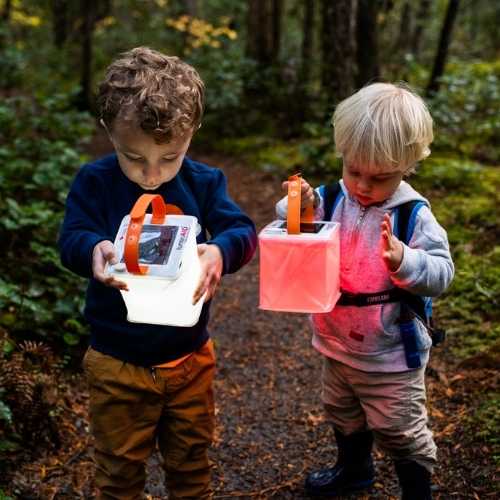
Packable solar lanterns add another approach. Inflatable designs can flatten for storage, use sunlight for recharging, and avoid disposable batteries. Their value depends on exposure to sun, charging time, weather, and the amount of light required. A hiker who expects frequent night navigation may still prefer a rechargeable headlamp as the main light and treat a lantern as camp illumination.
Think in functions, not features
A useful comparison checks four questions:
- Task: Does the light support movement, camp work, group use, or emergency signaling?
- Bulk: Does it flatten, fold, or fit into an existing pocket without creating a new storage problem?
- Power: Can it recharge through a practical method for the trip, such as USB or solar exposure?
- Redundancy: If the primary light fails, is there another usable source?
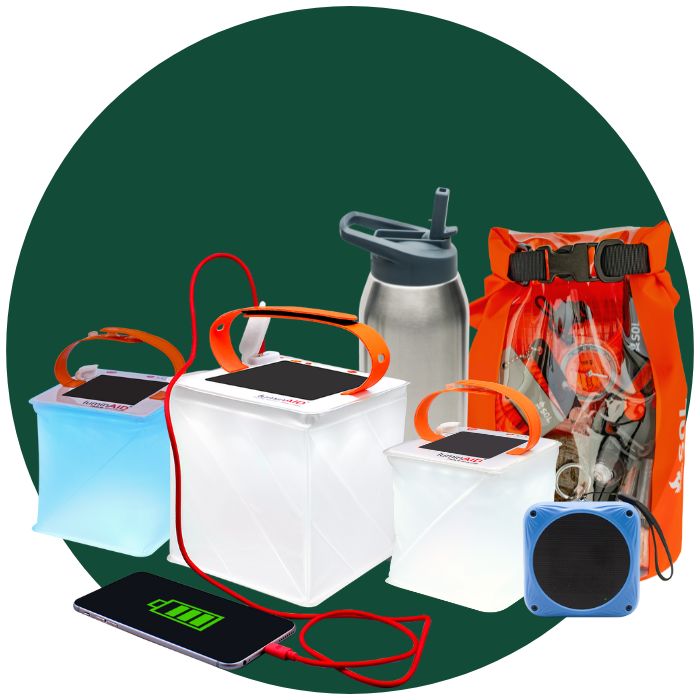
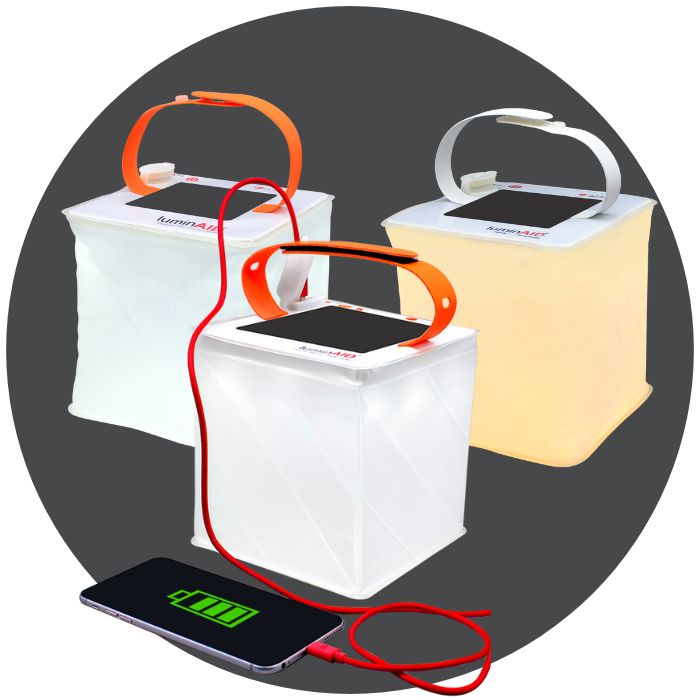
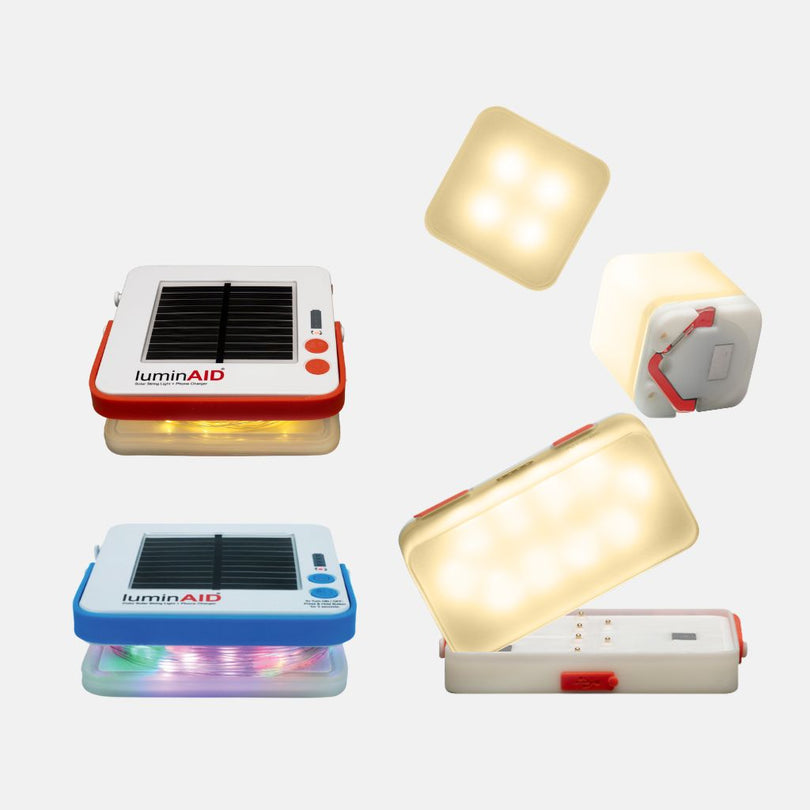
A 2-in-1 power lantern can combine area lighting with phone charging, which may reduce the need to pack a separate lantern and battery bank. The trade-off is that a combined device may be heavier than the smallest single-purpose light, so the decision depends on whether both functions will be used. The lightweight solar charger guide for backpacking offers a useful way to evaluate this category by packability and power needs rather than headline brightness alone.
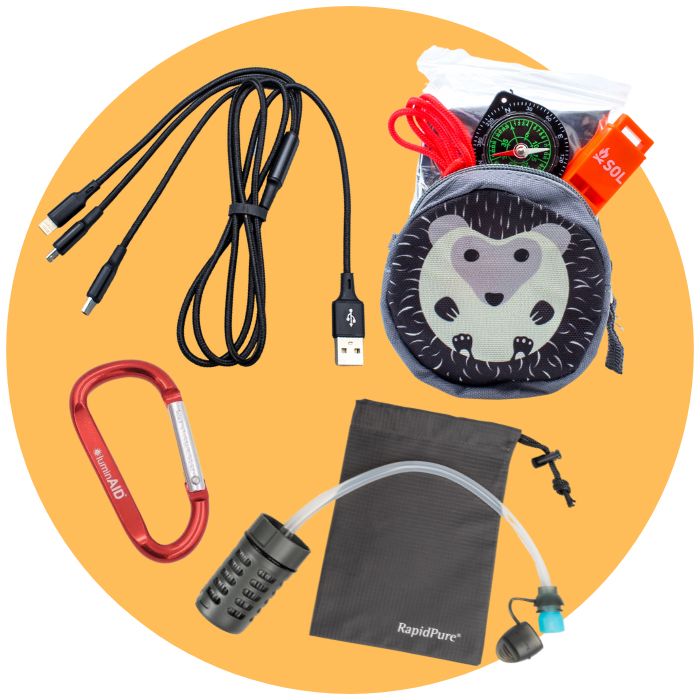
For hikers who want one concrete example, LuminAID makes portable solar lanterns and 2-in-1 power lanterns designed to provide adjustable light and USB phone charging in a packable form. It can fit a trip where camp lighting and occasional device charging matter, while a compact headlamp remains the sensible companion for hands-free travel.
Your Next Steps to a Lighter Safer Pack
A lighter pack begins with a measurement, not a purchase. Separate base weight from consumables and worn items, then identify the categories that create the most strain. The biggest improvement may come from removing duplicate clothing, selecting a better-fitting pack, or choosing a sleep system with more efficient insulation.
Use this short audit before the next departure:
- Weigh the complete kit: Include small accessories, cables, fuel, toiletries, and containers.
- Set a route-based goal: Account for season, weather, water access, food needs, and emergency equipment.
- Review the carrying system: Choose frameless simplicity only when the load stays stable and comfortable.
- Protect sleep quality: Compare warmth-to-weight, especially for cold or shoulder-season trips.
- Keep safety equipment: Rain protection, first aid, navigation, water treatment, and suitable clothing stay in the system.
- Test before committing: Take a shakedown hike with realistic food and water.
- Improve gradually: Replace the item that causes the greatest practical problem, not the item with the most impressive specification.
Lightweight backpacking is personal because bodies, routes, weather tolerance, and comfort preferences differ. The most useful pack is the one that leaves the hiker stable, warm, hydrated, and alert after a long day. A few extra ounces for a frame or warmer pad can produce a lighter experience across the whole trail.
LuminAID offers packable solar lanterns and 2-in-1 power lanterns that combine portable light with USB phone charging for camping and off-grid use. Visit LuminAID to compare lighting options that can support a lighter, more versatile backpacking kit.