


The front door has barely stopped swinging. There are boxes in the hallway, the kitchen drawer holds exactly one spoon, and someone has already asked what they can bring for the new place. That's the moment when practical housewarming gifts matter most.
A framed print can wait. A pretty bowl can wait. The things people reach for first are usually smaller, less glamorous, and much more helpful: light, storage, basic tools, power, cleaning supplies, and a few comforts that make the home usable right away. In smaller apartments, shared homes, and first houses with limited storage, useful gifts don't just feel thoughtful. They prevent clutter.
A recent gifting survey reflects that shift. Seventy percent of respondents said practical housewarming gifts such as gourmet baskets or wine make the biggest impact, 65% of guests had chosen practical gifts like kitchen tools, and 44% of purchases fell between $25 and $49 according to housewarming gift etiquette findings. That same source notes that $25 to $75 is often the sweet spot for balancing thoughtfulness and practicality.
The most helpful way to choose isn't “kitchen gift or decor gift.” It's simpler than that. Match the gift to the home's size, the person's routine, and the kinds of problems that show up in real life, especially when the lights go out or storage is tight. For readers who want gifts with a social angle, gifts that give back can add another layer of meaning without losing usefulness.
Table of Contents
- Introduction Why Practical Beats Pretty in a New Home
- What Makes a Housewarming Gift Truly Practical
- Matching Gifts to People and Homes
- Budget Tiers and Smart Spending for Housewarming Gifts
- Eco Friendly and Emergency Ready Gifts That Still Feel Thoughtful
- How to Bundle and Present Practical Gifts Beautifully
- Where and When to Buy and How to Make It Last
Introduction Why Practical Beats Pretty in a New Home
The first week in a new home is full of tiny friction points. Someone needs a box cutter and can't find one. The overhead light is too harsh. The phone battery is low, but the right charger is still packed. The gift that wins in that setting is the one that gets used before the thank-you text is even sent.
What new homes actually need
Decorative gifts ask the recipient to make room for them. Useful gifts do the opposite. They solve a problem, save a trip to the store, or help the new place work better on day one.
That matters even more now because many people are settling into compact spaces. Recent gifting coverage points to growing interest in multifunctional, space-saving items that fit modern homes and save money over time, as noted in practical gifts trends for 2025. In a studio apartment or shared rental, a bulky single-use gift can feel like one more thing to manage.
A practical gift earns its place quickly. If it can't clear that test, it probably becomes shelf clutter.
Pretty isn't bad. It just comes second.
The strongest housewarming gifts usually do one of two things. They either support daily routines or help the home handle stress, such as a late-night move-in, a busy workweek, or a short power outage.
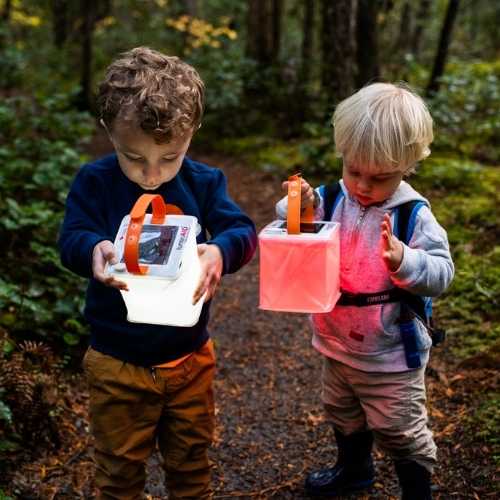
That doesn't mean practical has to feel cold. A compact lantern can also make a balcony dinner feel cozy. A set of stackable containers can look clean and intentional on open shelving. Usefulness and warmth can live in the same box.
What Makes a Housewarming Gift Truly Practical
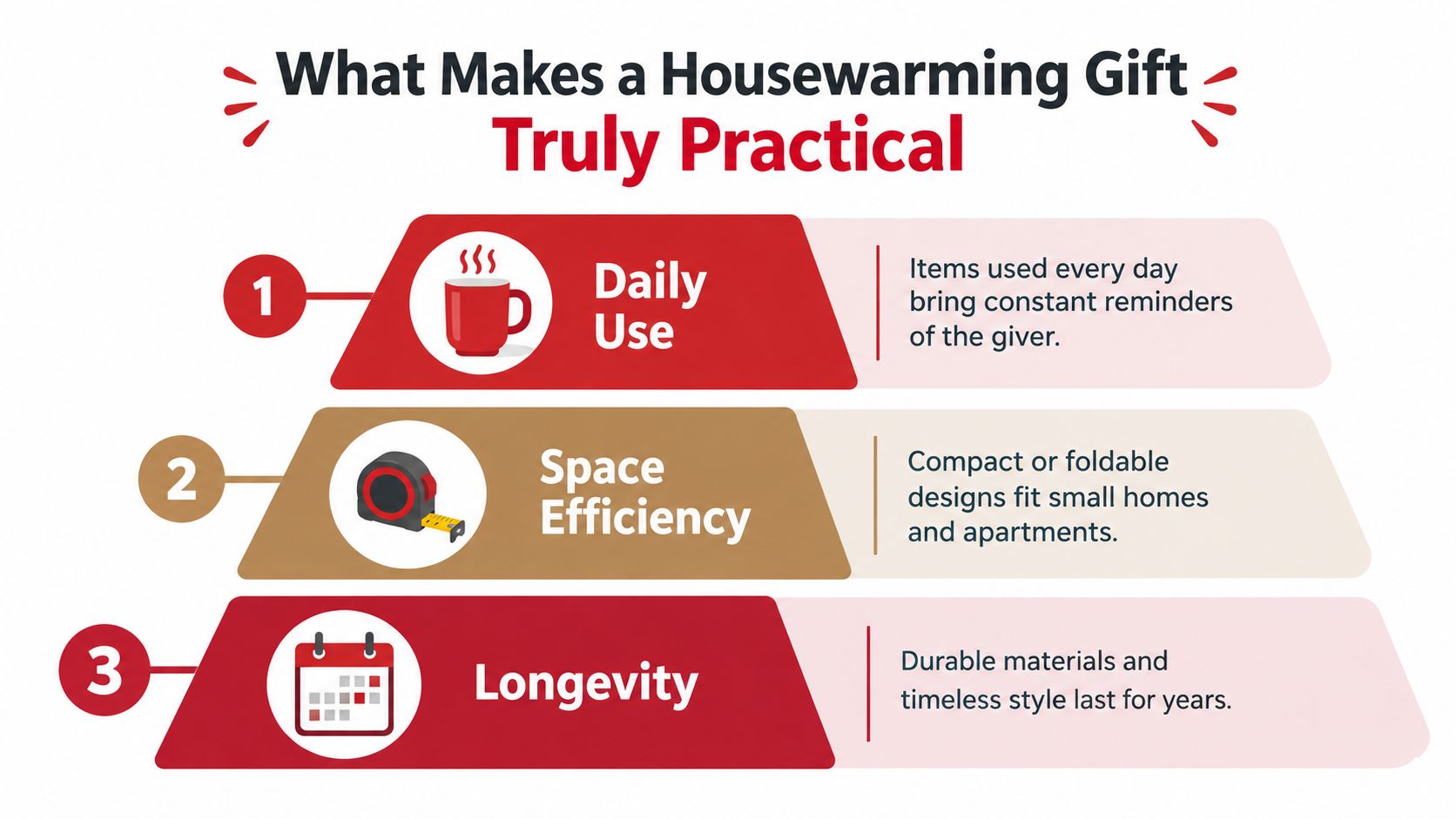
A practical gift isn't just “something useful.” That's too vague to help anyone shop. Three filters make the decision easier: daily use, space efficiency, and longevity.
Daily use comes first
The fastest test is simple. Will the person use this in the first month?
A kettle, a compact toolkit, a charging station, a dish-drying mat, or good food storage containers all pass because they fit ordinary routines. A novelty serving piece often doesn't. Practical gifts behave more like a hammer than a trophy. They're there to do a job.
A second layer helps: does the item reduce hassle? Gifts that save steps tend to become habits. That includes things like drawer organizers, motion-sensor night lights, a sturdy laundry basket, or a flashlight that's easy to grab in the dark.
Space efficiency decides whether the gift stays
Small homes punish bulk. A giant salad bowl may be lovely, but it can also claim a whole cabinet. A fold-flat crate, nesting mixing bowls, slim hangers, or a collapsible step stool gives help without demanding permanent real estate.
A good rule is to ask where the gift will live when it's not in use. If that answer is fuzzy, the gift may not be practical enough.
- Compact beats oversized: Foldable, stackable, nesting, and wall-mountable items fit more homes.
- Multi-use beats single-use: A lantern that also charges a phone does more than a candle holder ever will.
- Easy storage beats awkward storage: Slim profiles and soft-sided organizers tend to stay in rotation.
Longevity makes the gift feel generous
The last filter is whether the gift still makes sense a year from now. Durable materials, rechargeable formats, and classic designs age better than trend items.
Practical rule: Judge the gift by frequency of use, storage footprint, and how long it can keep solving the same problem.
This broader pattern shows up beyond housewarmings. An academic analysis cited in research on gifts for people who just bought a house found that about one-fifth of households receive gifts or inheritances, and recipients increase durable-goods spending by roughly $3,200 to $8,200 in that year, with durable home goods about $2,570 higher for recipients than comparable non-recipients. In plain terms, people often put new value into things that last.
Matching Gifts to People and Homes
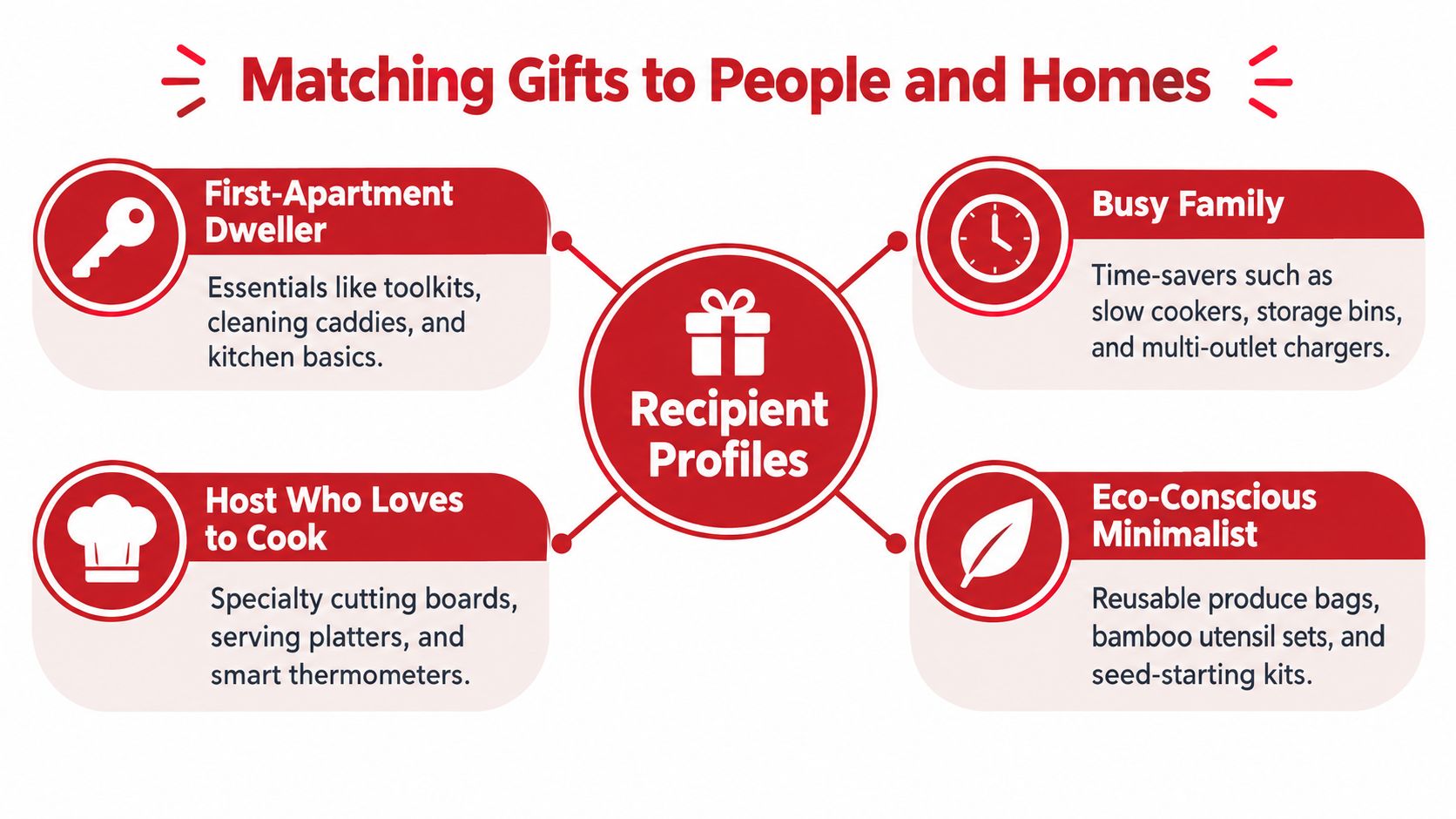
The most thoughtful gifts aren't the most expensive ones. They're the ones matched to the person's daily life. A busy family, a first-apartment renter, and an outdoor-minded couple may all appreciate “something practical,” but they won't mean the same thing.
A simple matching formula
The easiest framework is this: lifestyle + space + routine = the right gift category.
If the recipient cooks often, kitchen tools may make sense. If storage is limited, compact organization wins. If the area has storm risk or frequent outages, lighting and backup power move much higher on the list.
Side by side gift matches
| Recipient or Home Type | Gift Category That Fits | Why It Works |
|---|---|---|
| First apartment | Basic toolkit, compact cleaning caddy, food storage set | Covers first-week essentials without taking much room |
| Busy family home | Entryway organizers, multi-device charger, labeled bins | Reduces daily friction in shared spaces |
| Loves to cook | Quality cutting board, nesting prep bowls, thermometer | Gets regular use and feels personal |
| Small urban space | Foldable stool, under-bed storage, rechargeable light | Helps without adding clutter |
| Outdoor-oriented household | Lantern, first-aid kit, bug repellent set, cooler accessories | Useful at home, on trips, and during outages |
What different households usually appreciate
A first-apartment dweller often needs basics that established households already own. That's where a simple tool roll, measuring cups, extension cord, and all-purpose cleaning set can be more welcome than any decorative piece.
A household that entertains may enjoy serving tools, but the smartest picks still pull daily duty. Coffee is a good example. For someone setting up a breakfast nook or small kitchen station, a guide to essential coffee gear for home can help narrow down items that are compact and useful, instead of turning the counter into storage.
For outdoor households, practical can also mean comfort beyond the walls of the home. A porch-ready blanket, weather-resistant tray, or compact outdoor light makes sense because it supports how they already spend time.
Match the gift to the way the home gets used, not the way it looks in a photo.
Budget Tiers and Smart Spending for Housewarming Gifts
A good housewarming budget works like packing for a small closet. Every dollar should earn its space.
That is why practical gifts often land in the middle range. You can buy something that lasts, avoid bulky filler, and still keep the gift easy to carry, store, and use during ordinary days or a power outage. The best spending plan is less about price alone and more about fit: home size, daily habits, and whether the gift still helps when the lights go out.
How to think about each tier
Under $25, keep the gift narrow and useful. Pick one job and solve it well. A rechargeable flashlight, a compact tool, or a simple cleaning caddy usually beats a mixed bag of small items that will end up scattered in drawers.
From $25 to $49, you get more room to match the gift to the home. This tier works well for a small entryway organizer, a solid cutting board for someone who cooks often, or a lantern that is useful on a patio and during outages. It is also a smart range for apartments, where one compact item can do more good than a large decorative piece.
From $50 to $75, bundles start to make more sense because you can cover one full routine instead of one object. A “first week in the new place” set might include a lantern, a power bank, and basic batteries. A “small kitchen reset” bundle could pair dish towels, stackable containers, and a sturdy scrub brush. The point is to complete a task, not just fill a basket.
Above $75, spend carefully. At that level, one high-quality item is often the better choice, especially for smaller homes. A dependable light source, a compact emergency power option, or a well-made storage piece can carry the gift on its own if you know the household will use it.
Housewarming Gift Budget Tiers at a Glance
| Budget Tier | Example Practical Gifts | Best For |
|---|---|---|
| Under $25 | Rechargeable flashlight, basic tool set, reusable food containers, lighter and candle | Add-on gifts, casual visits, neighbors |
| $25 to $49 | Compact lantern, cleaning caddy, quality cutting board, charging dock | Most housewarming occasions |
| $50 to $75 | Curated outage kit, durable organizer set, upgraded kitchen starter kit | Close friends, family, first homes |
| Above $75 | One premium practical item or a fuller themed bundle | Group gifts or major moves |
One item or a bundle
Use one hero item when the need is obvious and space is limited. A studio apartment with one outlet near the bed may benefit more from a charging dock than from a large basket of assorted goods.
Build a bundle when several pieces support one routine. For example, a storm-ready set for a condo owner could include a rechargeable lantern, matches, and a small backup charger. A tidy-entry bundle for a busy family might combine hooks, a mail sorter, and a tray for keys.
Skip filler. If an item does not make daily life easier, save the money for better quality or a more thoughtful match.
If you prefer to sort options by cost first, the LuminAID shop by price page is a simple way to compare practical lighting gifts without losing track of your budget.
Eco Friendly and Emergency Ready Gifts That Still Feel Thoughtful
A lot of gift guides stop at “practical” and mean kitchen gadgets or neutral decor. That leaves out one of the most useful categories for a new home: items that still help when the grid is down.
Broader home-gift coverage in 2025 showed strong interest in smart, everyday-use items, but it also highlighted a gap in gifts that stay useful during outages, storms, or off-grid moments, as discussed in practical smart home gift ideas for 2025. That gap matters because resilience is part of daily comfort now, especially in regions that deal with hurricanes, wildfire smoke, winter storms, or rolling blackouts.
Why eco and preparedness belong together
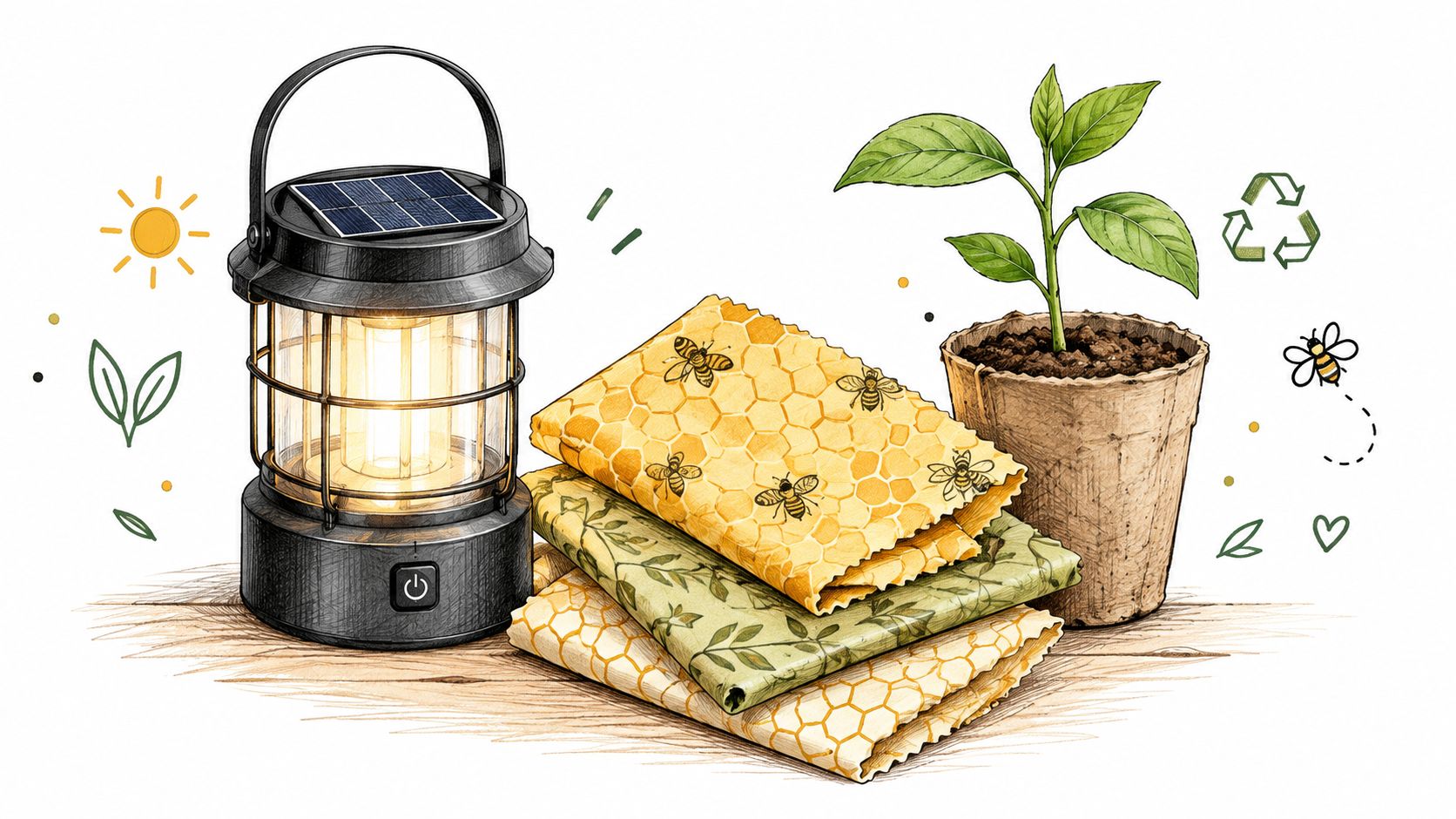
The most sensible gifts in this category do double duty. They're pleasant to use on an ordinary evening and helpful during a disruption. Solar-rechargeable lighting fits that pattern well because it reduces disposable battery use and remains useful during power loss.
One home-safety guide recommends emergency kits that include flashlights, batteries, first-aid supplies, weather radios, and solar power banks, as described in housewarming gifts for home safety. That's a practical checklist because each item handles a predictable household problem.
How to judge resilience gifts
Style matters less here than function. Three questions tell most of the story.
- Runtime: How long can it provide light or power when needed?
- Recharge path: Can it recharge by solar, USB, or both?
- Storage reliability: Will it be easy to store, easy to find, and ready when needed?
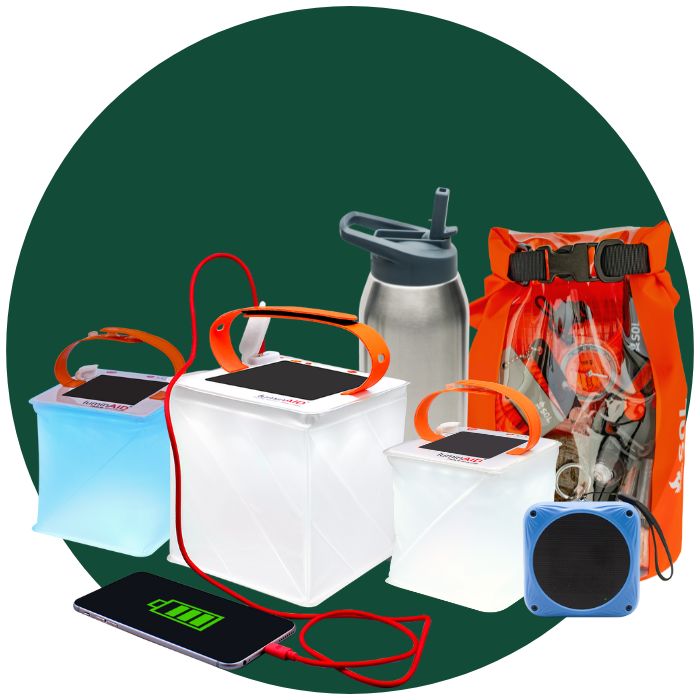
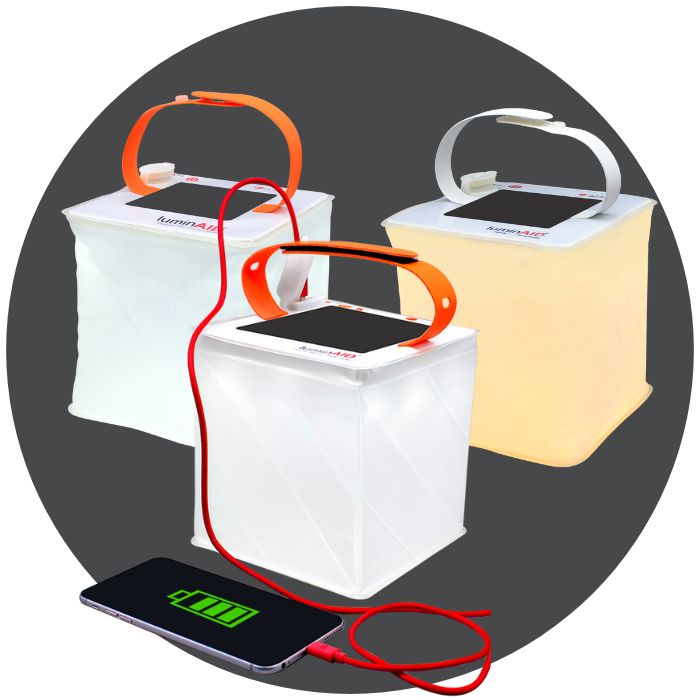
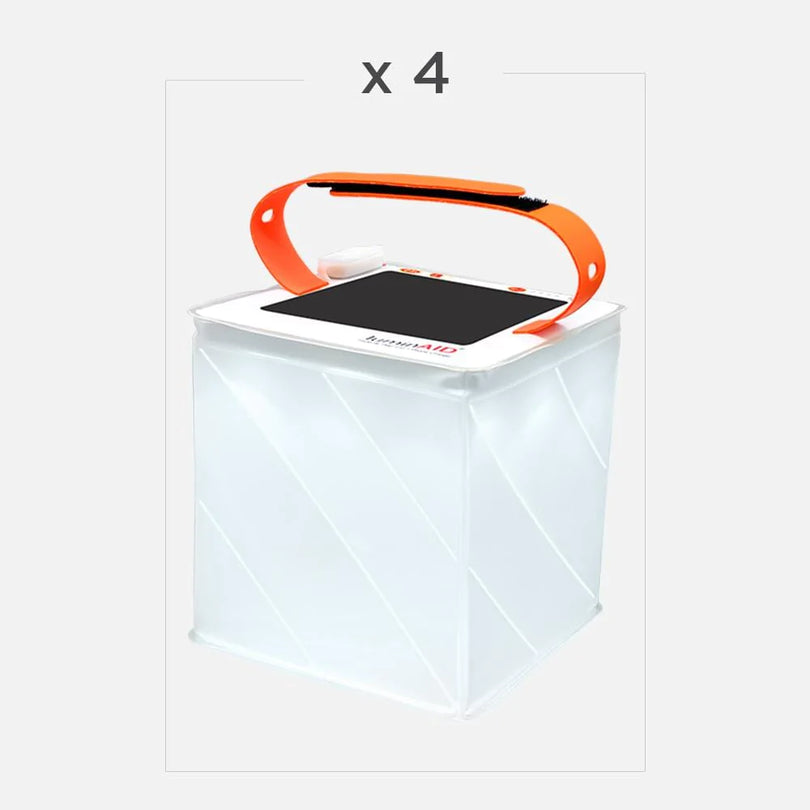
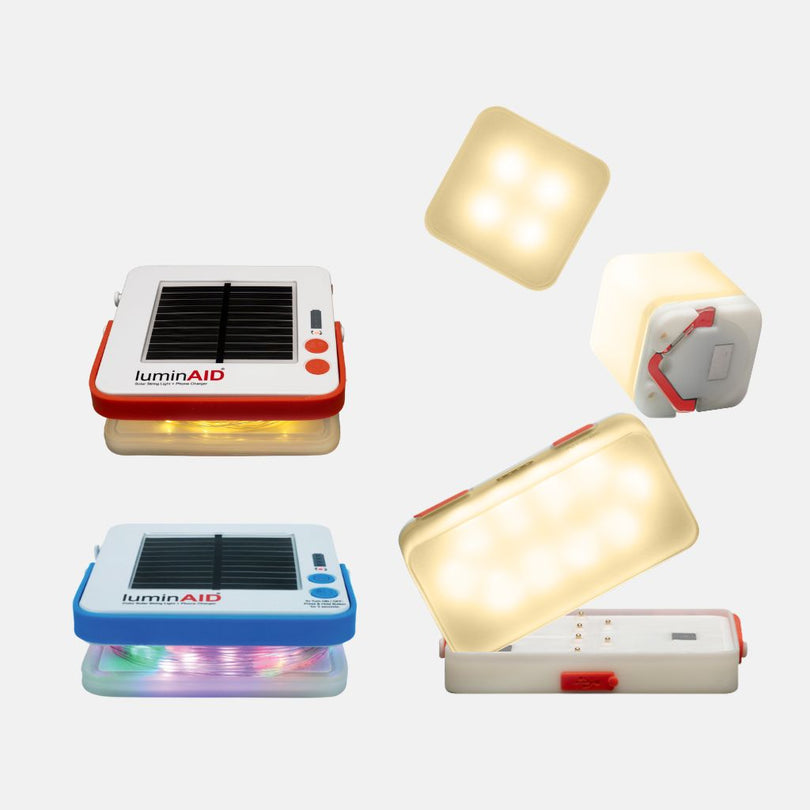
A portable lantern with phone-charging capability fits more situations than decorative lighting. For example, LuminAID makes portable solar lanterns and 2-in-1 power lanterns designed for camping, emergency preparedness, and everyday use, including models that provide light and USB phone charging. That kind of gift works on a patio, in a guest room during an outage, or in an emergency kit without becoming a single-purpose item.
Useful preparedness gifts shouldn't feel like a warning. They should feel like relief in advance.
Small eco-ready bundles that still feel warm
These gifts don't need to look clinical. They can still feel welcoming.
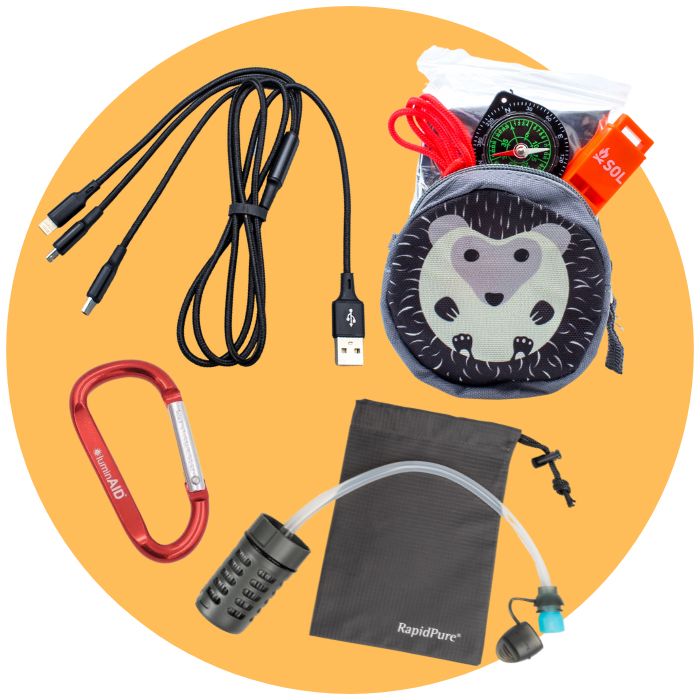
A thoughtful version might include a rechargeable lantern, beeswax wraps, a compact power bank, herbal tea, and a handwritten note for “cozy nights and unexpected outages.” For a family household, a small emergency tote with snacks, batteries, and kid-friendly comfort items can feel caring rather than alarming.
For more ideas on what belongs in a family kit, a family emergency preparedness kit guide offers a practical starting point.
How to Bundle and Present Practical Gifts Beautifully
Useful gifts don't have to look plain. Presentation is what turns “helpful stuff” into a real gift. The trick is to make the bundle feel connected, not crowded.
Start with one clear theme
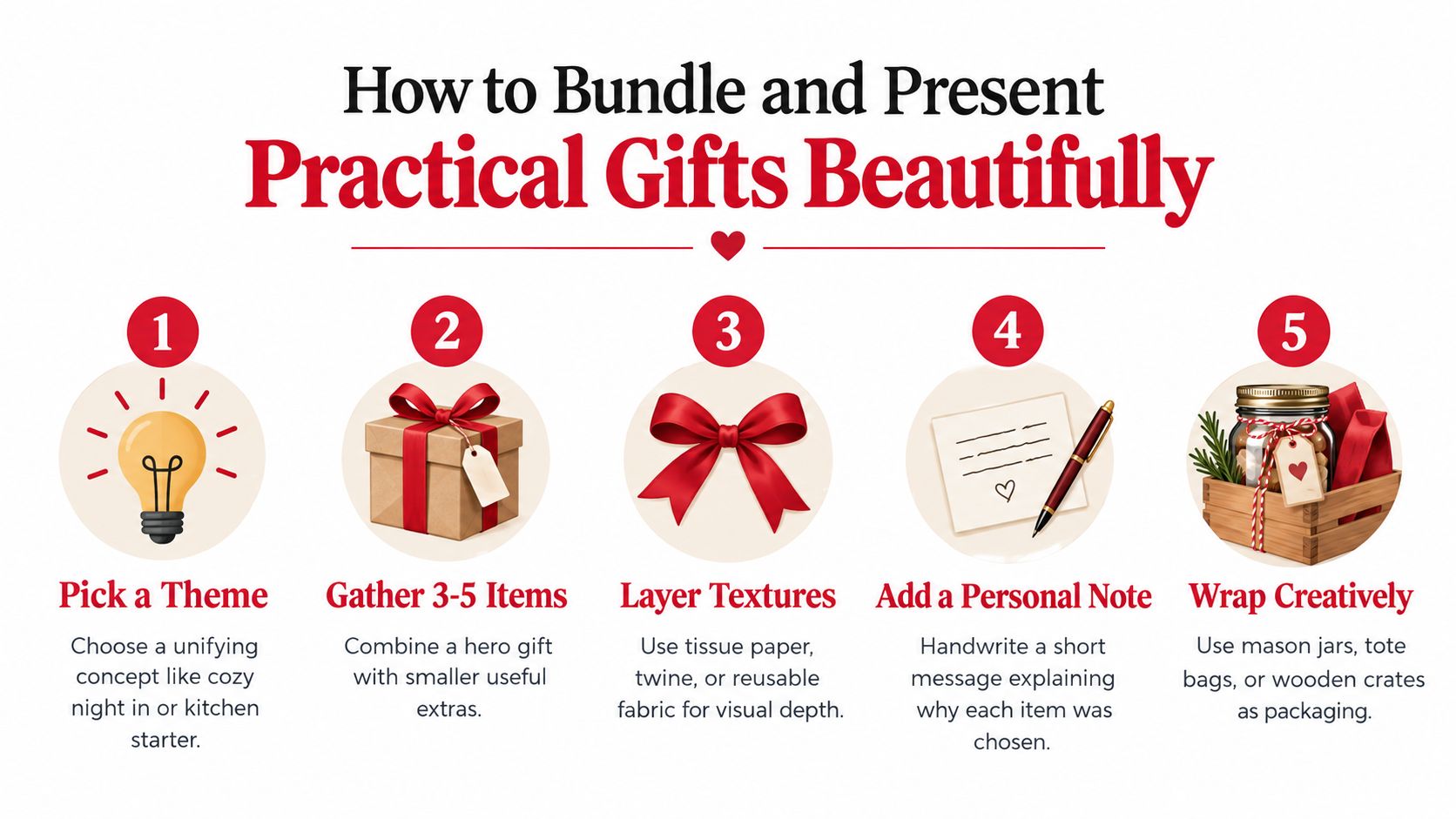
Good bundles have a job. “Kitchen starter” works. “Power-out night kit” works. “Small-space reset” works. Randomly mixing oven mitts, a candle, pasta, and a succulent usually doesn't.
A hero item helps anchor the set. Then the smaller items should support it, not compete with it.
Three bundle ideas that work well
- Cozy outage kit: Rechargeable lantern, blanket, tea sachets, and a deck of cards.
- First kitchen basics: Dish towels, measuring spoons, clips, sponge holder, and a compact cutting board.
- Entryway reset: Catchall tray, slim hooks, shoe mat, and a lint roller.
A gift also stores better when the packaging becomes part of the item. A tote bag, lidded bin, basket, or small crate gives the recipient an immediate place to keep everything.
Presentation details that make it feel finished
Soft texture helps. Tissue paper, cotton ribbon, twine, or a folded tea towel adds warmth without adding waste. If wrapping breakables for a move-in gift bag or basket, guides to Packing Paper For Moving House And Removals can be useful for choosing protective paper that won't leave ink marks on glass or ceramics.
Packing note: The best wrapping for a practical gift is often reusable packaging the recipient can keep using the same day.
The note matters too. Instead of writing “Congrats on the new place,” name the reason behind each item. “For the first late night when the lamps aren't unpacked yet” feels far more personal than a generic card.
Where and When to Buy and How to Make It Last
Timing shapes gift quality more than people expect. Shopping before move-in usually gives better selection. Shopping just after move-in can produce a better match because the needs are visible. Both approaches work. The weak option is the rushed, generic purchase made on the way over.
When to buy
If the gift needs charging, assembly, or bundling, buying early helps. That leaves time to test the item, add batteries or charging cables if needed, and write a note that explains what's included.
If the recipient is moving into a smaller home or an unfamiliar layout, waiting a little can also be smart. Once the kitchen, entryway, and bedroom are in use, the missing pieces become obvious.
Where to buy wisely
Curated gift guides are useful when they filter by use case, not just by room. The strongest retailers for this kind of gift usually do one or more of these things well:
- They sort by problem solved: outage gear, compact lighting, travel-ready items, kitchen basics.
- They show storage and charging details clearly: especially for preparedness gifts.
- They offer bundles or price filters: helpful for staying within a set range.
For outdoor-minded or preparedness-focused add-ons, reputable specialty brands can also be useful. A compact first-aid item from Adventure Medical Kits or an EPA-registered insect repellent option from Ben's 30 can fit naturally into a porch, patio, camping, or backyard-ready bundle.
How to help the gift last
A practical gift keeps its value when it stays ready to use. That means storing it where people can reach it, charging it before gifting if rechargeable, and including any simple care notes.
Public health guidance is especially important for repellent-based gifts. The EPA states that DEET is widely used to repel biting pests such as mosquitoes and ticks, and that repellents containing DEET don't present a health concern when used as directed in its DEET safety guidance. The CDC says EPA-registered insect repellents are proven safe and effective when used as directed, and lists approved active ingredients including DEET, picaridin, IR3535, oil of lemon eucalyptus, PMD, and 2-undecanone in its insect repellent recommendations. The EPA also advises applying repellent only to exposed skin or clothing, never under clothing, not spraying directly on the face, and storing products safely out of children's reach in its safe repellent use guidance. For shoppers comparing formulas, EWG notes that DEET concentrations in the 20% to 30% range are recommended and that higher concentration isn't automatically better in its bug repellent consumer guide.
A housewarming gift lasts when it suits the home, fits the storage, and stays ready for real use. That's the whole method.
LuminAID offers portable solar lanterns, 2-in-1 phone-charging lanterns, and gift-ready lighting options that fit this practical, small-space, outage-ready approach. For readers who want a housewarming gift that works on the patio, during a blackout, and in an emergency kit, it's worth exploring LuminAID.