

When you're staring down a hurricane threat, the feeling can be overwhelming. The key is to turn that rising panic into focused, productive action. The best way I've found to do this is by breaking down a massive hurricane preparedness checklist into three manageable time windows: A Week Out, 72-48 Hours Before, and the Final 24 Hours.
This phased approach helps you prioritize what matters most, right when it matters, without trying to do everything at once.
Your Hurricane Preparedness Action Timeline
Once a hurricane watch is issued, time is your most precious commodity. Instead of a last-minute scramble, thinking in time-phased blocks—far out, getting close, and imminent arrival—ensures nothing critical gets missed. It transforms a monster of a to-do list into a series of smaller, more achievable goals.
This isn't about working harder; it's about working smarter. You can't board up your windows a week in advance, but you can absolutely make sure you have the plywood and screws on hand. On the flip side, waiting until the day before the storm to buy batteries and bottled water is a recipe for stress and empty store shelves. By getting the "thinking" tasks done early, you free up crucial time and energy for the hands-on work as the storm closes in.
This timeline gives you a clear visual of how your focus should shift as the hurricane approaches.
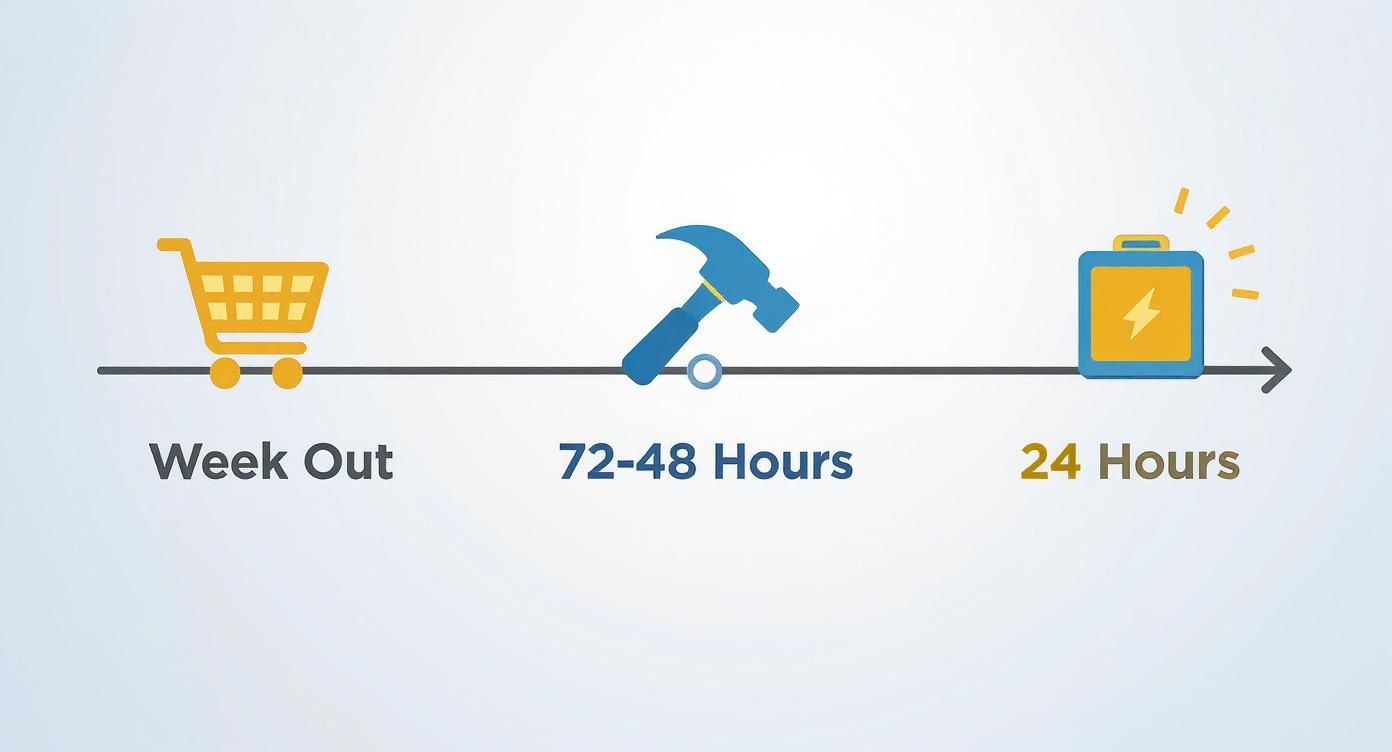
As you can see, the strategy flows from procurement and planning to protection and immediate safety.
To make this even clearer, here's a quick-reference table summarizing the core tasks for each phase.
Hurricane Preparedness Phased Action Plan
| Timeframe | Key Actions and Supplies | Primary Goal |
|---|---|---|
| One Week Out | Shop for supplies (water, food, batteries), build kits, test gear, review evacuation & communication plans. | Resource Gathering & Planning |
| 72-48 Hours Before | Secure property (bring in furniture), board up windows, clear gutters, top off fuel tanks. | Property Protection & Fortification |
| 24 Hours Before | Set fridge to coldest, charge all devices, listen to officials, stay off roads. | Final Checks & Hunker Down |
This phased plan ensures that you are methodically prepared, reducing last-minute panic and making your home as secure as possible before the storm's arrival.
One Week Before Landfall
This is your calm before the storm—the time for strategic planning and gathering supplies. The goal is to get everything you need without the pressure cooker of an imminent threat. Right now, stores are generally well-stocked, and you have the breathing room to think clearly.
Here’s what to focus on:
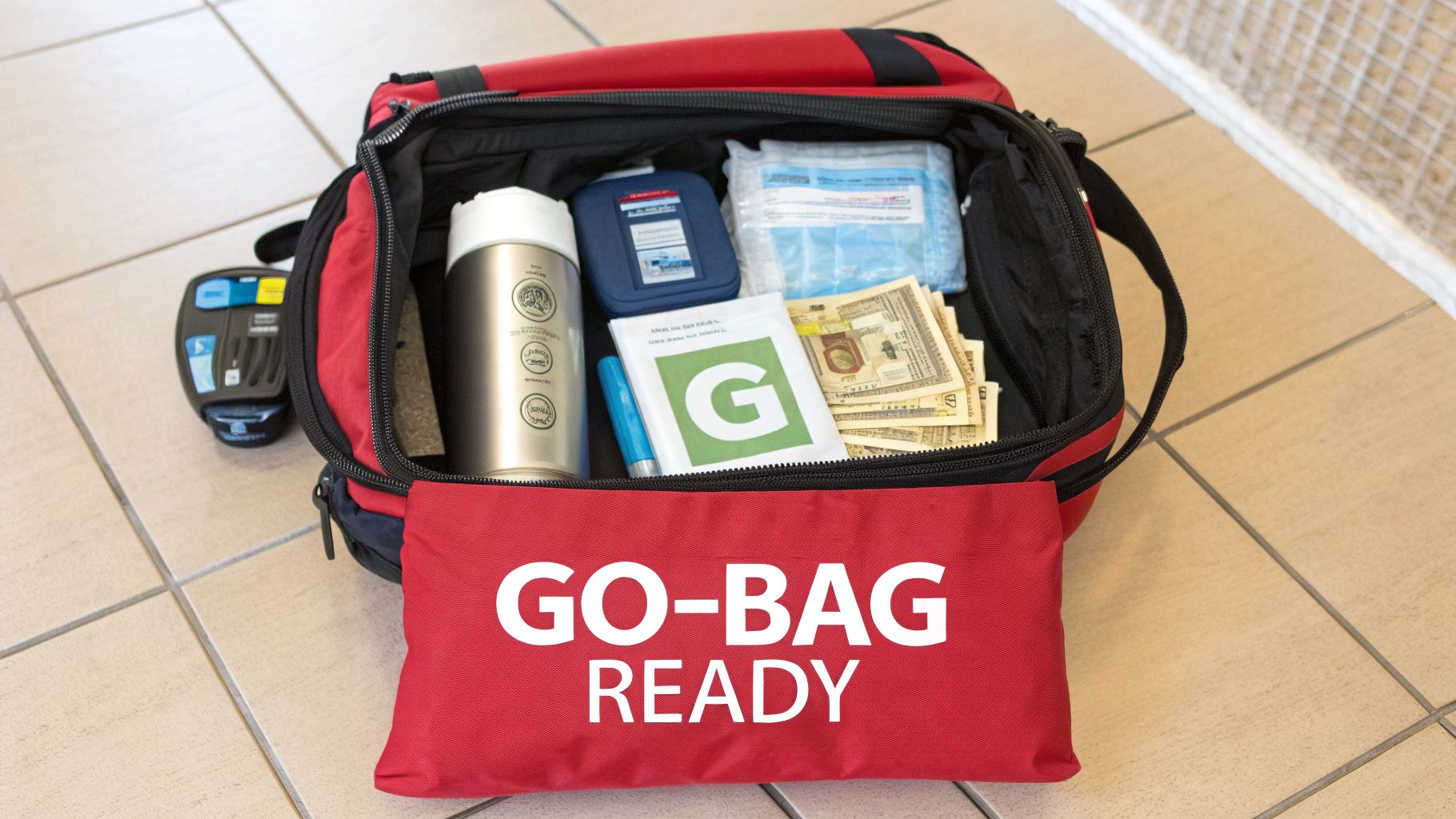
- Build Your Kits: Get your stay-at-home survival kit and your evacuation "go-bag" assembled. This means buying non-perishable food for at least seven days, one gallon of water per person per day, and refilling any essential medications.
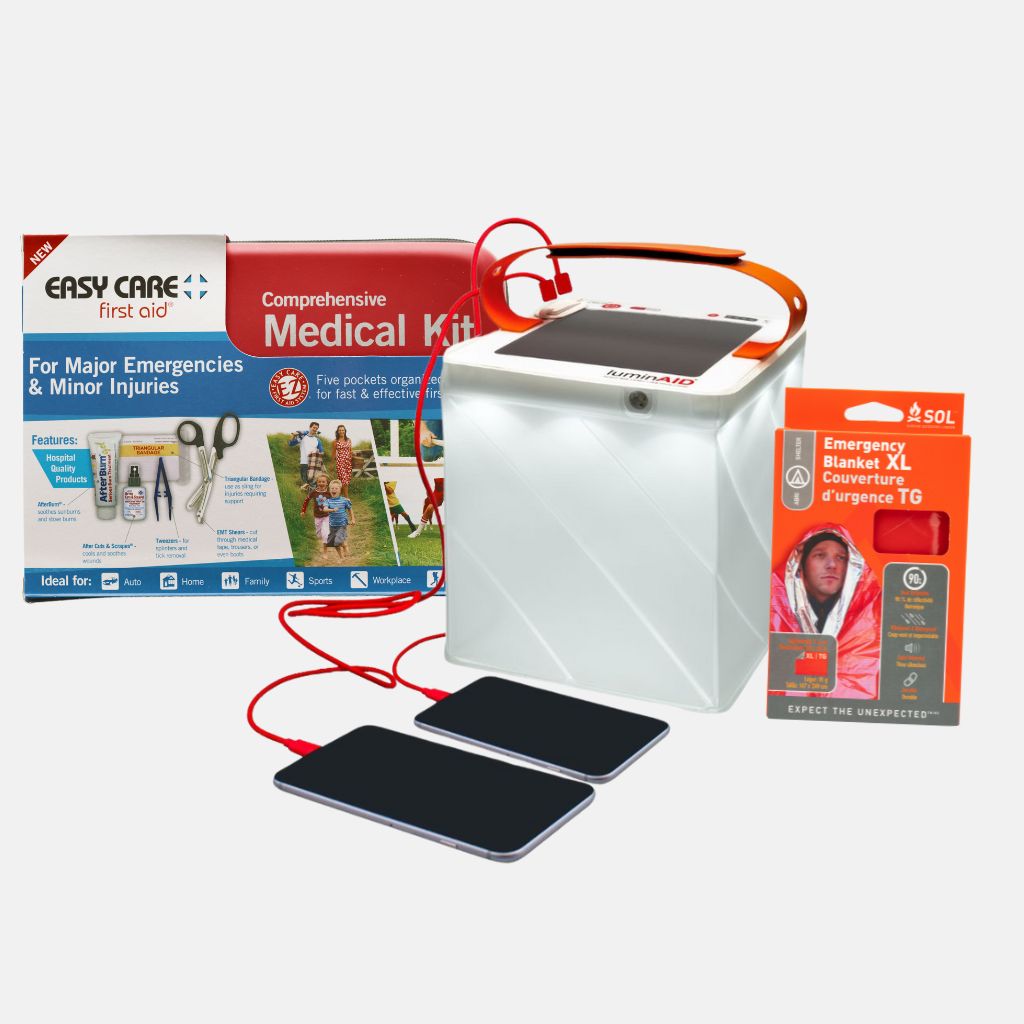
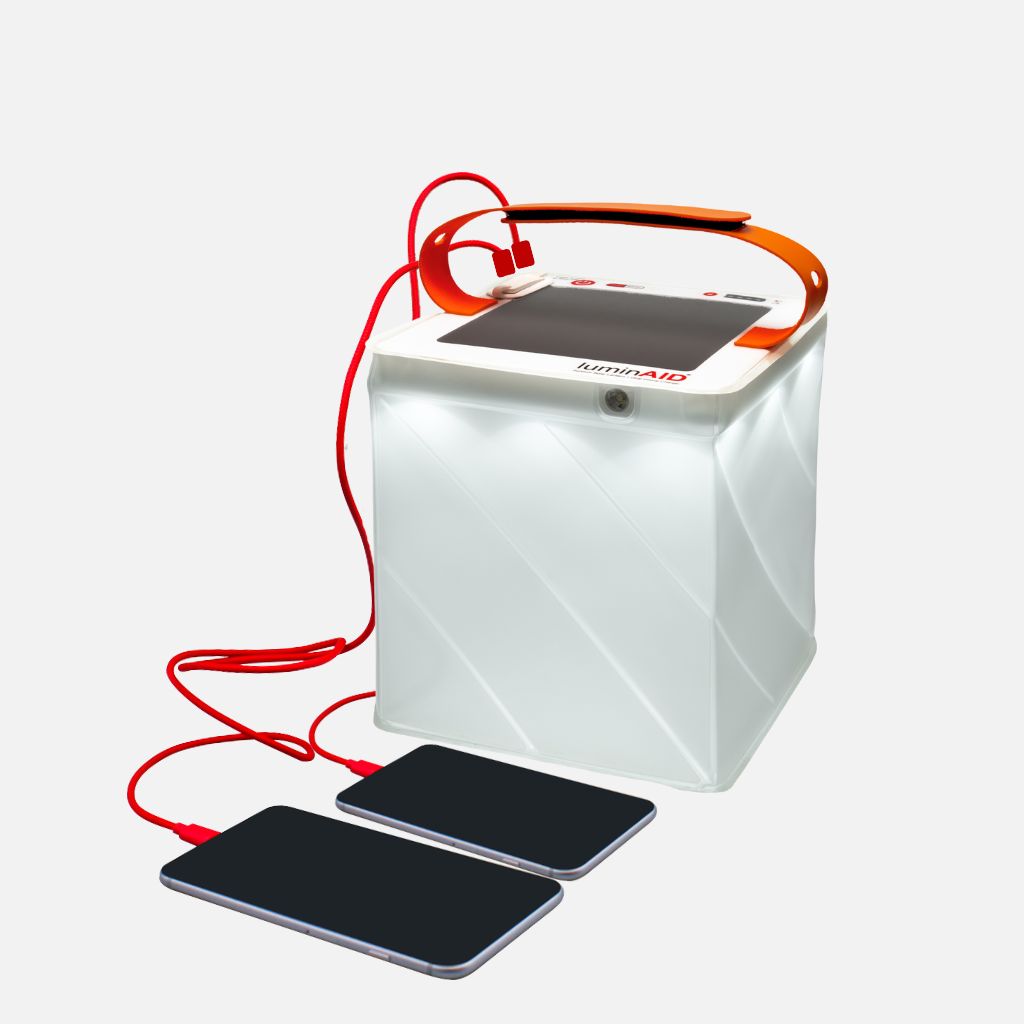
- Check Your Gear: Don't just assume your gear works. Test your flashlights, portable radios, and power banks. Do you have fresh batteries for everything? This is the perfect time to make sure your solar lanterns and chargers are in good working order. For more robust gear, you can find a range of survival essentials from brands like Survive Outdoors Longer.
- Review Your Plans: Walk through your family’s communication and evacuation plans. Confirm your out-of-state contact and make sure every family member has their number saved in their phone and written down.
72 to 48 Hours Before Landfall
With the storm's track getting clearer, your focus shifts from shopping to actively securing your home and property. This is when the physical work begins.
With the storm just a few days out, your priority becomes minimizing potential damage. Every loose item in your yard—from patio chairs to flower pots—can become a dangerous projectile in hurricane-force winds.
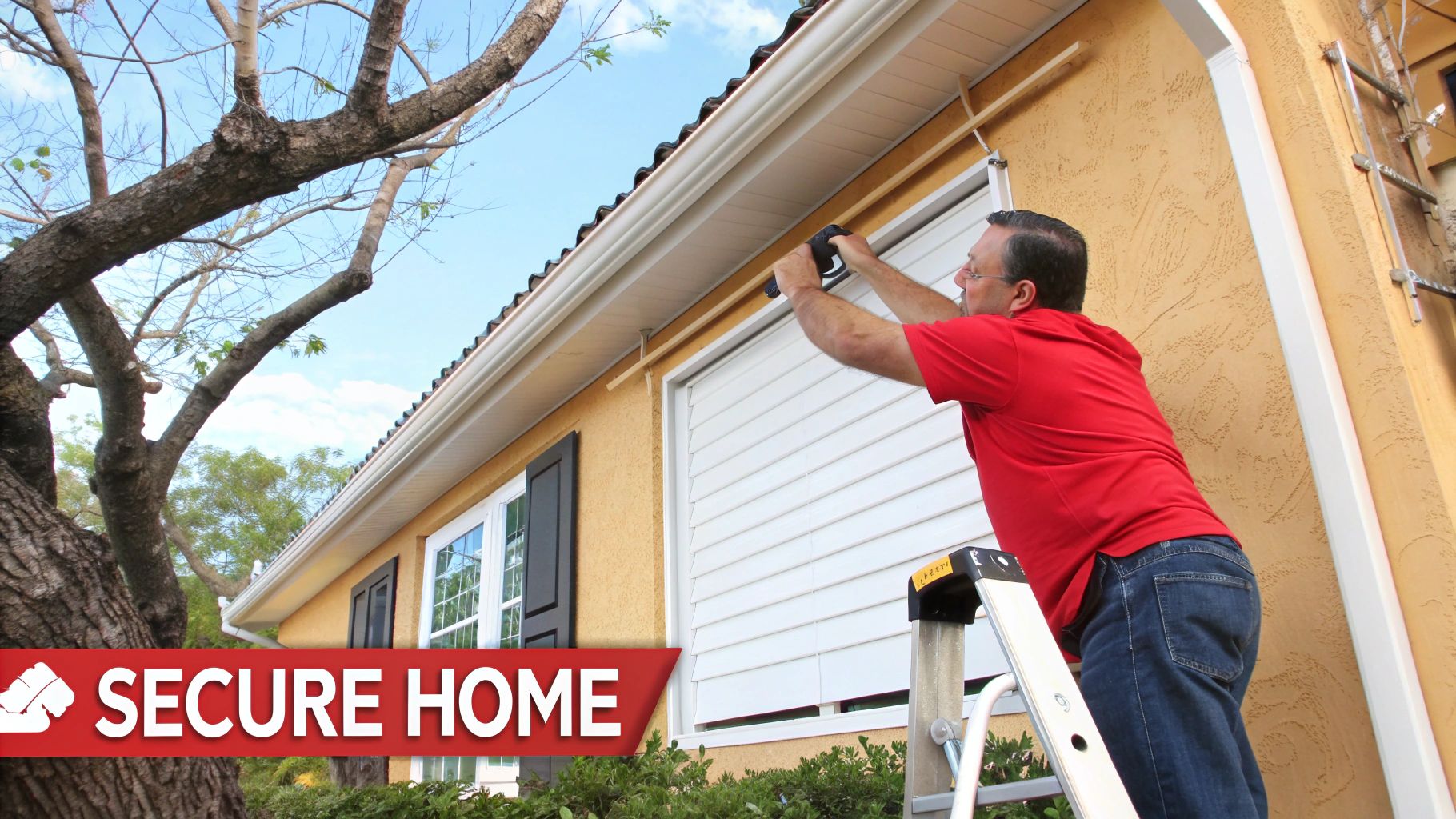
Now the work gets more hands-on. Start by bringing in all outdoor furniture, grills, and potted plants. If you have storm shutters, install them. If not, this is the time to board up windows with plywood. It's also smart to clear your gutters and downspouts to help prevent flooding from the torrential rain that's coming. You can learn more about what to expect by reading up on what happens during hurricane season.
The Final 24 Hours
In this last stretch, your prep work should be winding down. The focus now is on final checks, personal safety, and getting ready to hunker down. The weather will start to deteriorate, and the roads will become congested or even dangerous.
Crank your refrigerator and freezer to their coldest settings, then keep the doors closed as much as possible. This helps preserve food longer if you lose power. Get all your electronics fully charged—phones, power banks, and especially your rechargeable solar lanterns.
Many of these principles overlap with general home readiness. In fact, some of the same logic applies to preparing your home for an extended absence. Finally, stay glued to the guidance from your local officials for any last-minute instructions or mandatory evacuation orders.
Assembling Your Go-Bag and Home Survival Kit
When a hurricane is on the horizon, you’re really prepping for two completely different outcomes: getting out fast or hunkering down for the long haul. That means you need two separate kits: a nimble "Go-Bag" for evacuations and a beefier "Home Survival Kit" for sheltering in place. Sorting this out now is the key to avoiding bad decisions when the pressure is on and the clock is ticking.
This dual-kit strategy has become non-negotiable as storms get more frequent and intense. Too many people have a false sense of security. A recent poll of Florida homeowners was pretty eye-opening: while 83.6% said they'd done something to prepare, only a small number had actually checked all the boxes before a storm was an immediate threat. You can dig into the specifics of this readiness gap in the full hurricane poll research.
The Go-Bag Essentials for Evacuation
Think of your Go-Bag as your 72-hour lifeline if you have to leave. Everything in it needs to be essential, lightweight, and packed into a sturdy backpack you can actually carry. The whole point is to get you through those first few chaotic days in a shelter, a hotel, or crashing on a relative's couch.
Each person in your family needs their own bag, ready to grab at a second's notice.
Here’s what absolutely has to be in it:
- Vital Docs and Cash: Put copies of your driver's licenses, birth certificates, passports, insurance policies, and the deed to your house in a waterproof bag. Throw in a good stash of small bills—when the power's out, credit cards and ATMs are just plastic.
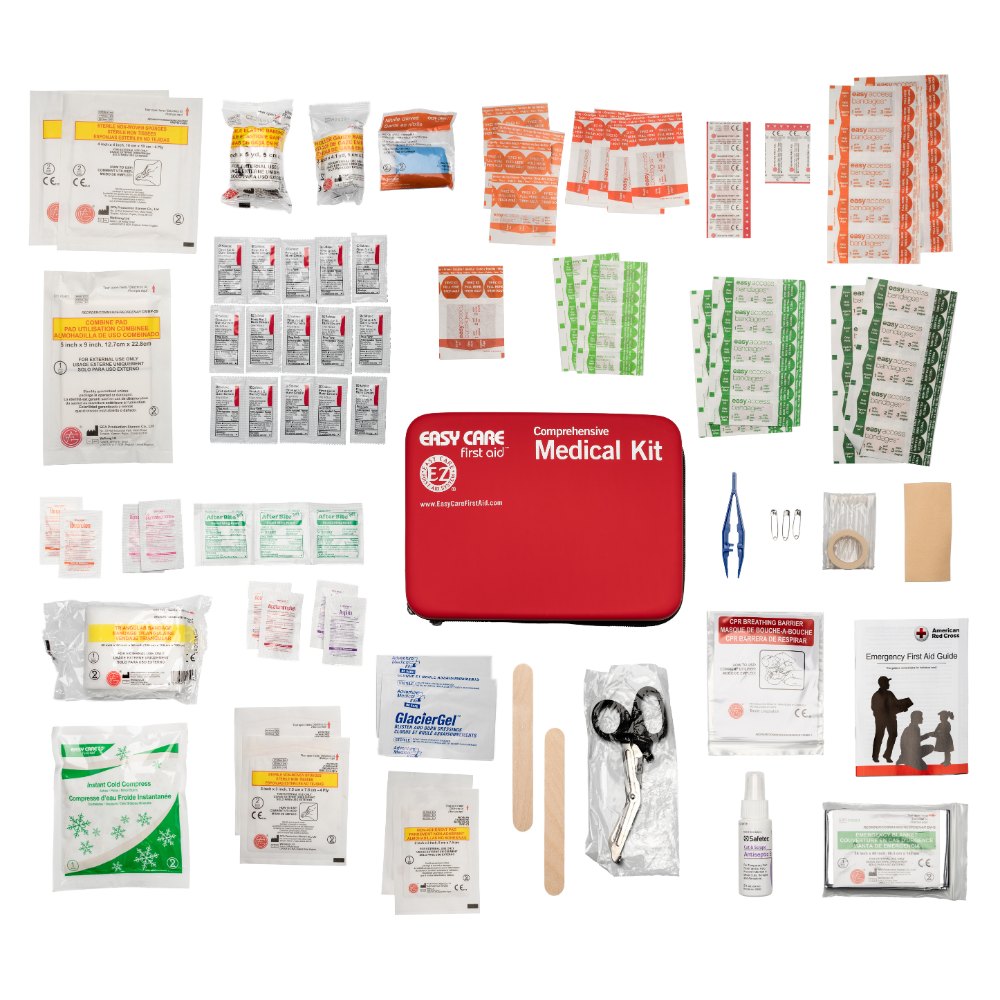
- Meds and First-Aid: Pack at least a seven-day supply of all prescription medications, plus a list of what they are and the dosages. A solid, compact first-aid kit is a must. Something from Adventure Medical Kits is a great starting point for handling scrapes and minor injuries on the road.
- Communication & Power: A fully charged power bank for your phone is non-negotiable. Add a small hand-crank or battery-powered weather radio, too. You can't count on cell towers staying up.
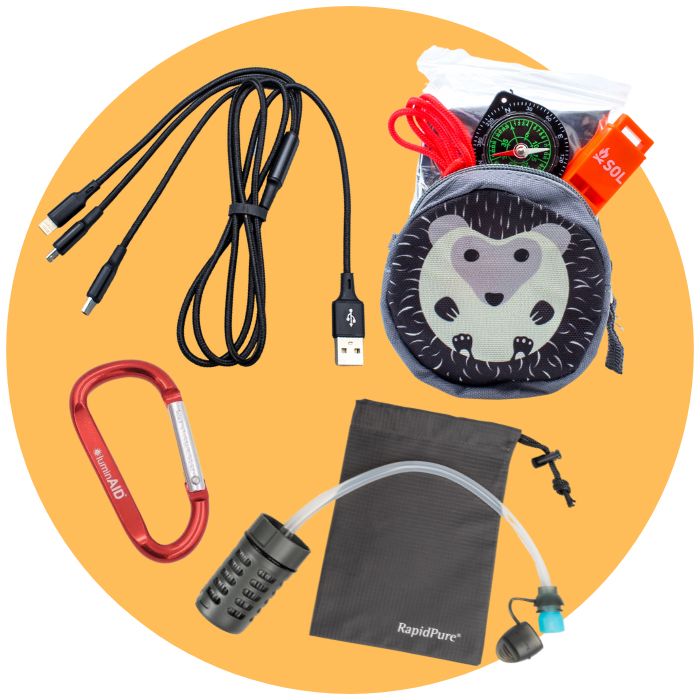
- Water & Food: Aim for a three-day supply of water and snacks that pack an energy punch, like protein bars, nuts, or dried fruit. A portable water filter from a brand like RapidPure can be a literal lifesaver if your bottled supply runs low.
Your Home Survival Kit for Sheltering in Place
If you're not ordered to evacuate and your house is built to withstand the storm, your prep looks very different. You need a kit designed to keep your family going for at least a week—and likely longer—without power, running water, or grocery stores. This is all about self-sufficiency, not portability.
The guiding principle for your home kit is to assume you're on your own. No outside help, no utilities for at least seven days. The goal is to stay safe, sanitary, and reasonably comfortable in a tough situation.
Keep these supplies together in one spot you can get to easily, like a garage shelf or a dedicated closet.
Here's your shopping list for the Home Survival Kit:
- Water: The golden rule is one gallon of water, per person, per day. For a family of four, that’s a minimum of 28 gallons for a week. Don't skimp on this.
- Food & Cooking: Stockpile a week's worth of non-perishable food that doesn't need much—or any—cooking. Canned meats, fruits, and vegetables are your friends here. Just don't forget a manual can opener! If you have a camp stove or grill, make sure you have plenty of fuel stored safely outside.
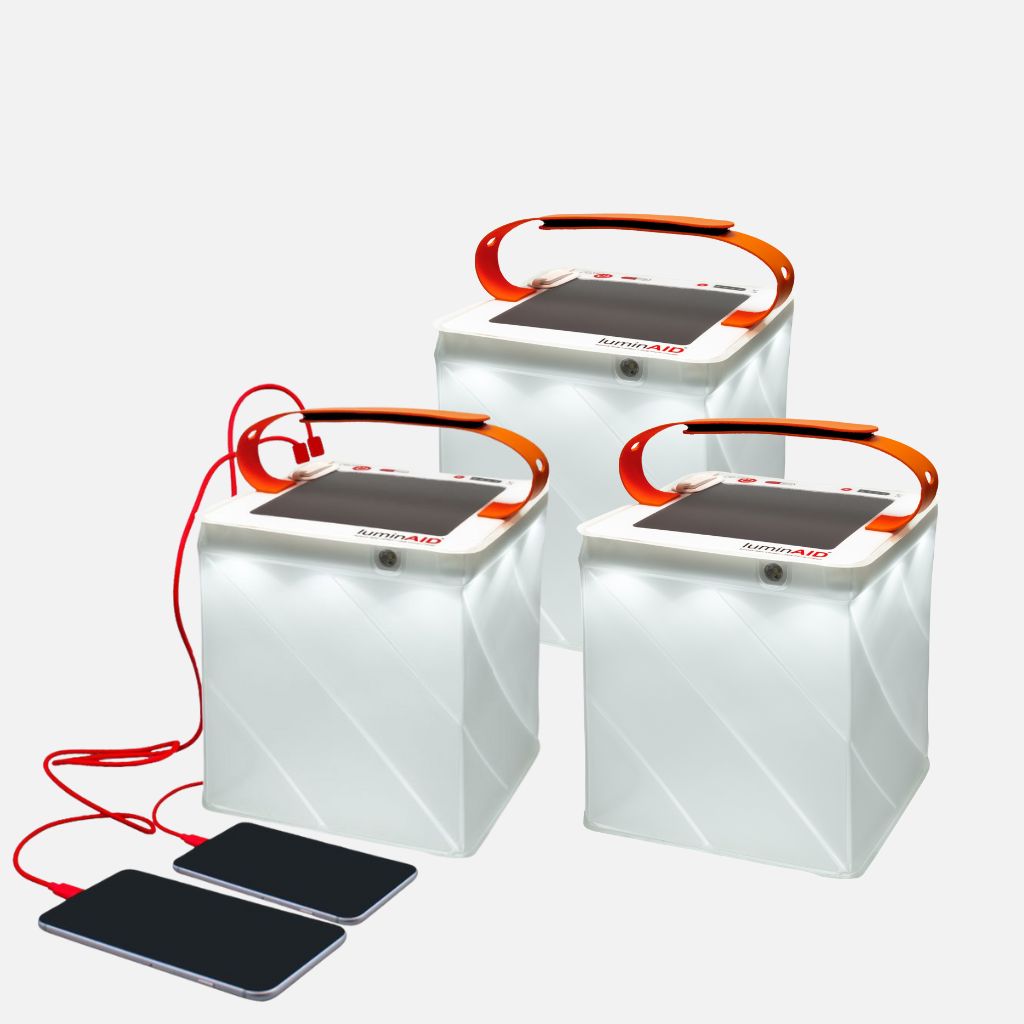
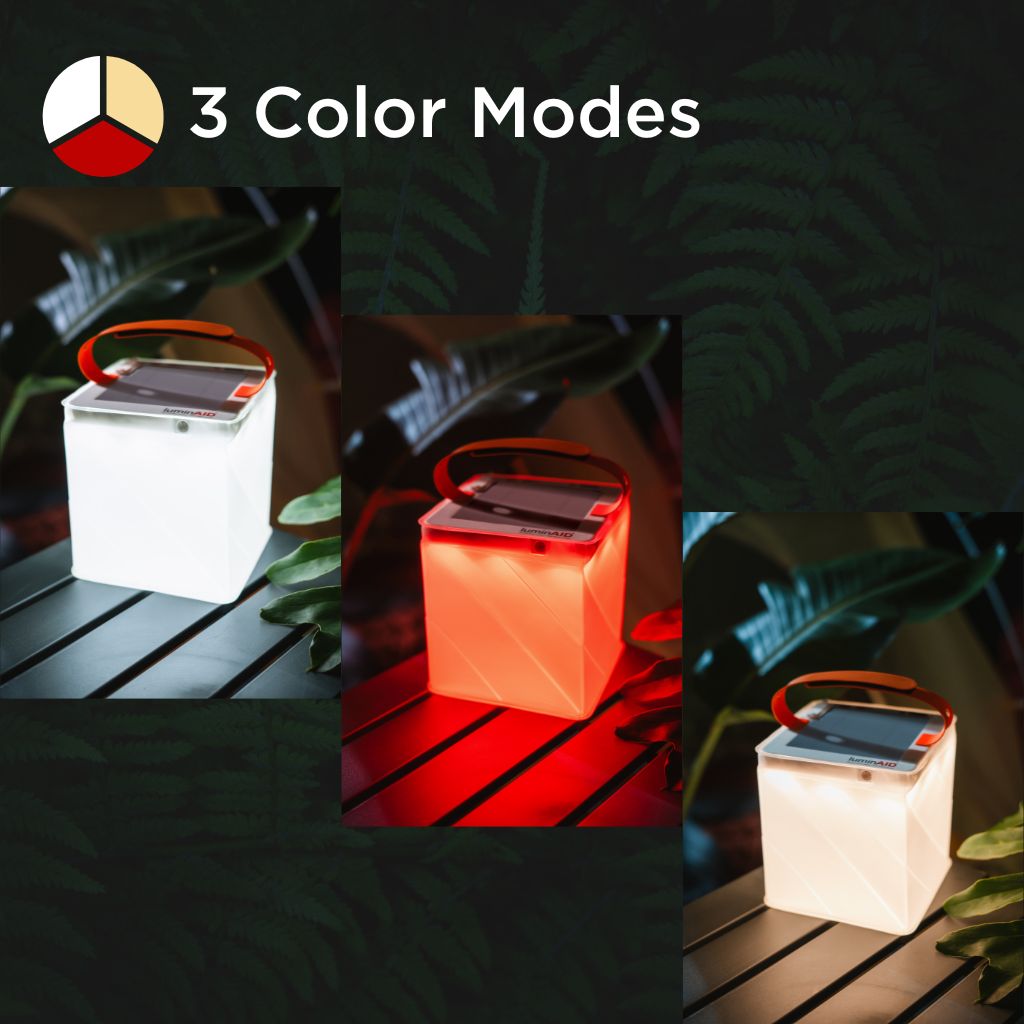
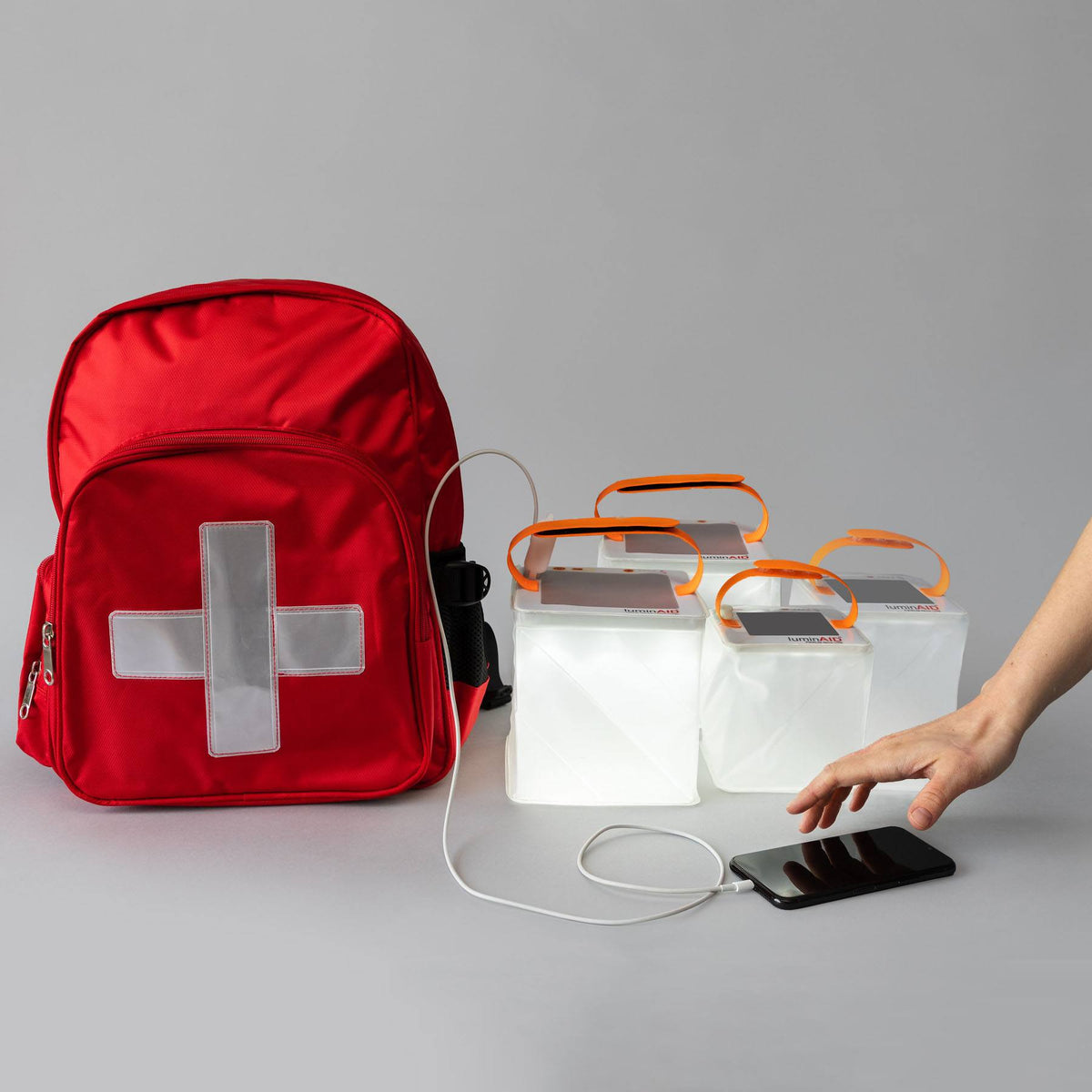
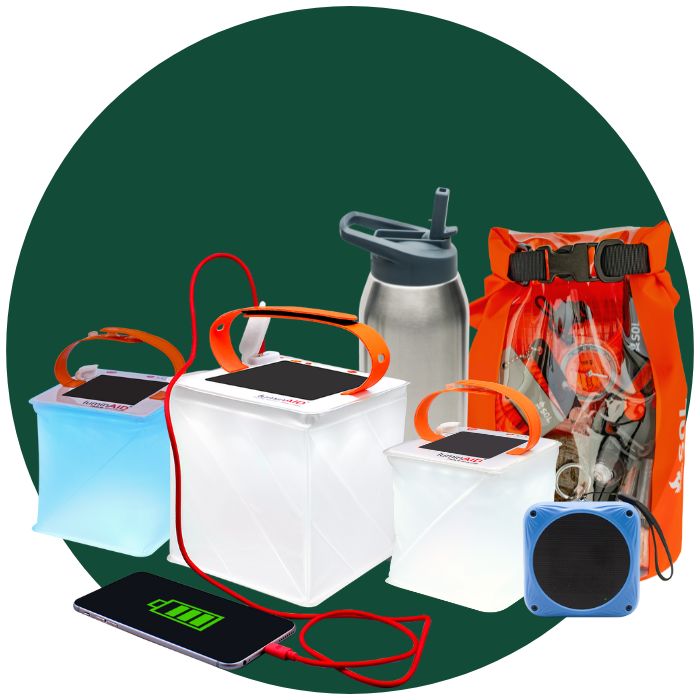
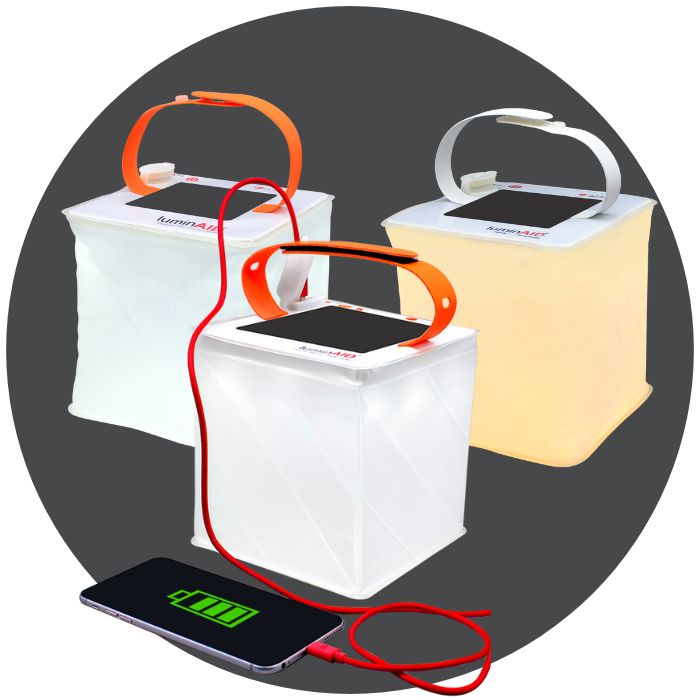
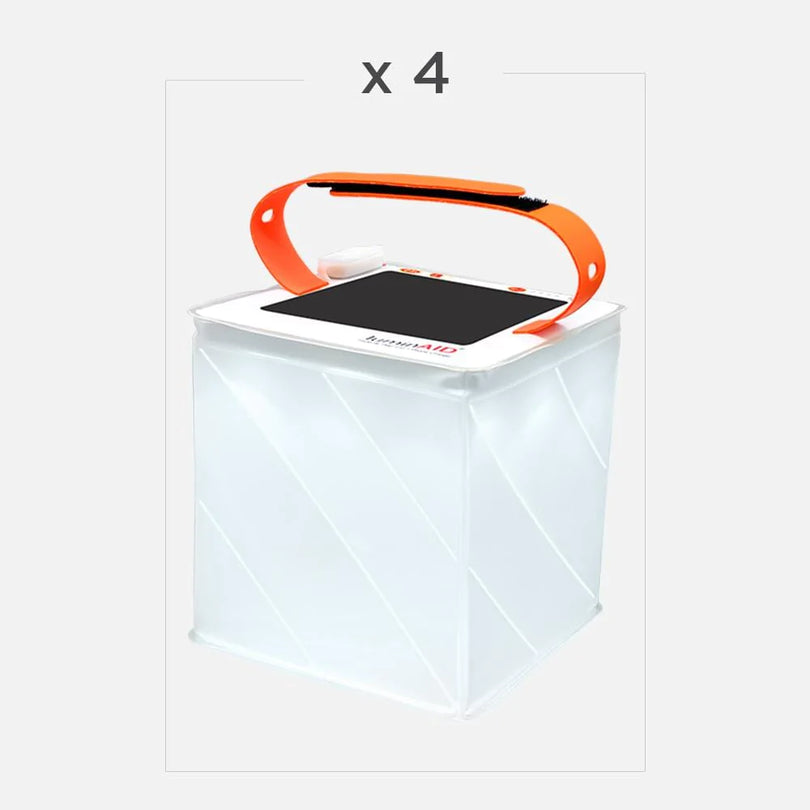
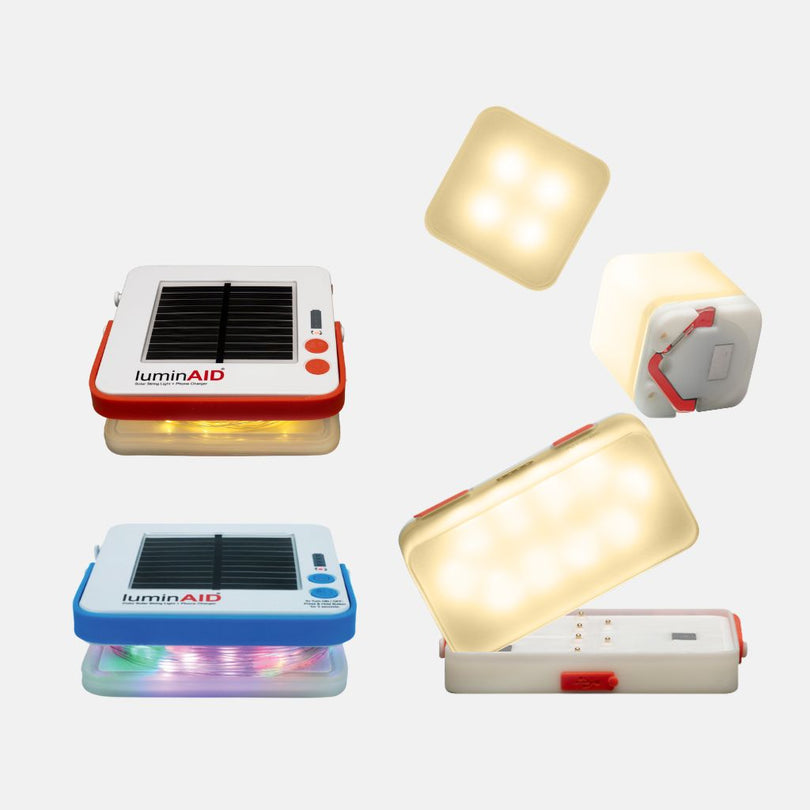
- Lighting & Power: Power outages are a guarantee, not a possibility. Good lighting is critical for safety and keeping spirits up. Solar-powered lanterns are a game-changer because you never have to worry about dead batteries.
- Sanitation: Things can get gross, fast. Stock up on garbage bags, plastic ties, moist towelettes, and toilet paper. If the plumbing goes out, a simple bucket with a tight lid can be used as an emergency toilet.
- Post-Storm Gear: Once the storm passes, the standing water turns into a massive mosquito breeding ground. Quality insect repellent isn't a luxury; it’s a health essential. A reliable DEET-based spray like Ben's 30 will help protect your family from nasty bites and potential illness during cleanup. You'll also want sturdy work gloves and dust masks.
Fortifying Your Home Against Wind and Water
When a hurricane is churning, your home is your castle. Making sure it’s ready to withstand the storm is one of the most important things you can do. This is about more than just putting a little tape on the windows. Properly securing your house against severe wind and rain can be the difference between minor cleanup and catastrophic damage.
Long before a storm is even on the forecast, take a good, hard look at your property. Walk around and try to see it through the eyes of a hurricane, looking for any weak spots or potential hazards that powerful winds could turn into a real problem.
Secure Your Landscape and Exterior
Your first line of defense is right in your own yard. In winds topping 100 mph, anything that isn't nailed down can become a dangerous projectile. That cute patio set? It’s now a threat to your windows, your roof, or your neighbor's house.
Look up at your trees. See any large, dead branches hanging over the house? Get them trimmed by a professional now. It’s also a good idea to thin out healthy trees so the wind can pass through them more easily, which makes them less likely to be uprooted.
Next, it's time to tackle all the loose stuff. This is straightforward but absolutely vital:
- Outdoor Furniture: All those patio tables, chairs, and umbrellas need to come inside the garage or a shed.
- Grills and Tools: Don't forget the barbecue grill, gardening tools, and even your trash cans.
- Decorations: Bird feeders, potted plants, and those quirky lawn gnomes all need a temporary home indoors.
This isn’t just about saving your things. It’s about preventing a deck chair from being launched through your living room window in the middle of the storm.
Reinforce Entry Points and Utilities
The most vulnerable spots on your house are the openings—windows, doors, and garage doors. Beefing them up is one of the best moves you can make. If you’re lucky enough to have permanent hurricane shutters, give them a test run to make sure they work smoothly. If not, get some pre-cut plywood (at least 5/8-inch thick) ready to go. Make sure each piece is cut to fit a specific window and label them clearly so you're not trying to solve a puzzle in a panic.
Just as important is knowing your way around your home's utilities. Officials may tell you to shut off your water, gas, and electricity to prevent flooding, dangerous leaks, or fires. Find your main shutoff valves before you need them and make sure you have the right tools, like a wrench, to turn them off.
While preparing for wind and water is key, it's also smart to have a comprehensive home fire safety checklist ready. Storms can create unexpected fire hazards.
Pro Tip: Pull out your phone right now and take a picture of your main electrical panel and water shutoff valve. In a stressful, dark situation, having that photo can save you critical minutes figuring out which breaker to flip or which valve to turn.
For more on keeping everyone safe inside, check out our guide on hurricane safety for your family, which has great tips that go hand-in-hand with securing your property.
Review Your Insurance Coverage
One of the most crucial parts of fortifying your home is done at your desk, not with a hammer and nails. Find your homeowner's insurance policy and read it. Seriously. Do this long before any storm is brewing. You might be unpleasantly surprised to find out that standard policies don't cover flood damage.
Flood insurance is almost always a separate policy, and there's a catch: it can take up to 30 days to become active. Waiting until a hurricane is a few days out is too late. Give your insurance agent a call and make sure you have the right coverage for both wind and water damage. It’s a five-minute call that can protect you from financial ruin.
Crafting Your Family Communication and Evacuation Plan
When a hurricane is churning offshore, the last thing you want to be figuring out is how to get in touch with your family or where to go. The reality is, when a storm hits, your usual lifelines—cell phones, power, passable roads—are often the first things to go.
That’s why a core part of your hurricane prep isn't about supplies, but about strategy. A solid, rehearsed plan is your best tool for cutting through the chaos and stress. It replaces panic with clear, actionable steps for everyone in the family.
Designate a Communication Hub
The best plans are simple. Trying to call each other directly when local cell service is overwhelmed is a recipe for frustration and anxiety. The smarter move? Go outside the storm zone.
Pick one person—a relative or trusted friend who lives hundreds of miles away, well out of the hurricane’s potential path—to be your family's designated emergency communication hub. Every family member should have this person’s name, phone number, and email saved in their phone and, more importantly, written down in a waterproof bag.
The rule is simple: after the storm passes, each family member contacts the hub to report their status. This one-to-one system keeps the lines clear and prevents a frantic, network-jamming mess of everyone trying to call everyone else at once.
Map Out Multiple Evacuation Routes
If the evacuation order comes, you need to be gone. Period. Waiting until the announcement to figure out how you're leaving is a mistake—by then, the highways will be jammed. Your plan needs to have multiple escape routes baked in.
Get the family together with a map (both physical and digital).
- Primary Route: Your main artery out of town, likely a major highway heading inland.
- Secondary Route: What's the backup if the highway is a parking lot? Plot a course using state or county roads.
- Tertiary Route: Have a third, less-traveled option in your back pocket, just in case.
Before storm season, download offline maps of your entire region onto your phone. This is a game-changer when cell service is nonexistent. And if you can, drive these routes ahead of time so you're familiar with the roads.
The goal isn’t just to leave, it's to have a specific destination. This could be a relative’s house, a pre-booked pet-friendly hotel, or a designated shelter far inland. Never evacuate without knowing exactly where you are going.
Establish Clear Meeting Spots
What if you get separated? Your plan needs pre-determined, easy-to-find meeting locations. And just like with your routes, you need more than one.
- A Neighborhood Spot: Pick a memorable landmark near your home—like the big oak tree at the local park or a specific corner store. This is your rally point if you get split up locally before an evacuation order is issued.
- A Regional Spot: Choose a second location an hour or two out of town. Think of a specific rest stop, restaurant, or landmark along your primary evacuation route. This is where you'll regroup if you get separated on the road.
Assemble Your "Grab-and-Go" Document Binder
When it's time to evacuate, you might only have minutes. A "grab-and-go" binder with hard copies of your essential documents isn't just a good idea, it's non-negotiable. Digital copies are great backups, but they're useless if you can't charge your devices.
Your binder should be waterproof and kept right next to your Go-Bags. Pack it with:
- Copies of driver's licenses, birth certificates, and Social Security cards
- Deeds, vehicle titles, and rental agreements
- Recent bank statements and tax records
- Your complete list of emergency contacts (including your out-of-state hub!)
- Current photos of all family members and pets, just in case you need them for identification.
A well-thought-out plan is one of the single most effective ways to reduce a disaster's impact. Globally, the cost of disasters now tops $2.3 trillion annually, which highlights the real-world value of getting prepared. You can explore the full scope of disaster risk reduction to see why these steps are so vital.
Finally, remember to build your plan around your family's unique needs. Discuss how you'll assist young children, elderly relatives, or anyone with mobility issues. Assigning roles ahead of time ensures everyone knows exactly how to help each other when it counts.
Navigating the Aftermath Safely
The silence after a hurricane can be deceptive. Just because the wind and rain have finally stopped doesn't mean the danger has passed. This final, critical phase is all about navigating the aftermath safely and starting the slow process of recovery. The world outside your door can look completely different, full of hidden hazards that demand patience and a careful approach.
Your first instinct will be to rush outside and see what happened. Resist that urge. The single most important thing you can do is wait for the official "all-clear" from emergency management officials. They need time to check for things like downed power lines, washed-out roads, and other widespread risks. Heading out too soon not only puts you in danger but can also get in the way of first responders.
The Initial Property Inspection
Once you get the green light, your first walk-around needs to be done with extreme caution. Your own yard is now unfamiliar and potentially dangerous territory. Treat every step as a deliberate one, constantly scanning your surroundings for immediate threats.
Here's what to look for first:
- Downed Power Lines: Treat every single downed wire as if it is live. Stay far, far away and report it to the utility company immediately. Remember, even a puddle of water near a downed line can be electrified.
- Gas Leaks: If you smell gas or hear a hissing sound, get out of the area immediately. Call your gas company from a safe distance. Don't use your phone or flip any switches near the suspected leak.
- Structural Damage: Before you even think about going inside, look for major issues. Check for cracks in the foundation, a sagging roofline, or walls that have shifted. If your home looks badly damaged, do not enter until a professional has inspected it.
This cautious approach is vital. The need for a detailed hurricane preparedness checklist is proven time and again in regions like the Caribbean, which consistently face significant losses from tropical cyclones. With forecasters often predicting highly active Atlantic hurricane seasons, post-storm safety protocols become more important than ever. You can discover more insights about hurricane season forecasts to understand the potential risks.
Documenting Damage and Managing Utilities
Before you move a single piece of debris, your new full-time job is being a meticulous record-keeper for your insurance claim. Grab your smartphone and take extensive photos and videos of all the damage, both inside and out. Get wide shots of entire rooms and then zoom in for close-ups of specific problems, like water stains on the ceiling or shattered windows. This visual evidence is absolutely invaluable.
Power outages are almost a given after a big storm, and they can drag on for days or even weeks. Having a reliable off-grid light source is non-negotiable for both safety and morale. For practical tips, you can explore our guide on using solar light and power after the storm to help manage those extended blackouts.
When the power goes out, your refrigerator becomes a ticking clock. A full, unopened freezer can keep food frozen for about 48 hours. A half-full one will only last about 24 hours. Keep those doors shut and use a cooler with ice for anything you need right away.
Staying Healthy and Safe Post-Storm
The challenges to your well-being don't end when the storm does. Floodwaters, in particular, are a serious health hazard—they're often a toxic soup of sewage, chemicals, and debris. Never, ever walk or drive through flooded areas. The water can be much deeper than it looks and can easily hide dangers like sharp objects or open manholes.
Food and water safety is also a top priority. Start by using your stored bottled water. If you need to use tap water, wait for your local authorities to issue a "boil water" advisory if they suspect the supply has been compromised. Throw out any food that touched floodwater, and anything in the fridge that feels warm or has an unusual smell. For insect bites, which are common after storms, having a product like After Bite can provide much-needed relief during cleanup.
Finally, be on the lookout for displaced wildlife. Snakes, insects, and other critters may seek shelter in and around your home. A good first-aid kit, like those from Adventure Medical Kits, is crucial for treating the minor cuts, bites, and stings that are common during cleanup. Always wear sturdy, closed-toe shoes and work gloves to protect yourself as you begin the long road to recovery.
Common Hurricane Prep Questions Answered
Even the most detailed plan can leave you with a few lingering questions. When a storm is on the horizon, getting those last few details right can make all the difference. Let's tackle some of the most common questions we hear to help you feel confident and ready for anything.
How Much Water and Food Do I Really Need?
It's easy to underestimate, especially when you're staring down the barrel of a multi-day power outage. The absolute baseline is one gallon of water per person, per day, for at least seven days. So, for a family of four, that's a minimum of 28 gallons.
For food, you'll want a matching seven-day supply of non-perishables. The trick is to pick stuff that requires zero cooking or refrigeration. Think protein bars, canned tuna or chicken, peanut butter, dried fruit, nuts, and crackers. And please, don't forget the one item everyone seems to miss: a manual can opener. If you have infants, pets, or anyone with special dietary needs, make sure you've got them covered, too.
Should I Evacuate or Shelter in Place?
This is the single most important decision you'll face, and it's not one to make on your own. Your one and only source for this answer should be your local emergency management officials. Period. There's no room for guesswork here.
The decision to evacuate isn't a suggestion; it's a directive based on hard data about storm surge and wind intensity. If you're in a mandatory evacuation zone—which often includes coastal areas, low-lying regions, and mobile home parks—you have to leave. It's for your own safety.
If you're not under an evacuation order and your home is structurally sound (built to modern codes and outside of floodplains), sheltering in place might be the right call. But again, this completely depends on official guidance and the storm's projected strength. Always, always follow the instructions of local authorities.
What Are the Most Overlooked Checklist Items?
Beyond the obvious food, water, and batteries, a few key items are consistently forgotten in the last-minute scramble. These are the things that shift you from just surviving to being significantly more comfortable and secure.
We see people forget three things all the time:
- Cash: When the power goes out, so do credit card machines and ATMs. Having a stash of small bills is crucial for buying gas or supplies right after a storm passes.
- Documents: You might have digital copies, but physical copies of IDs, birth certificates, social security cards, and insurance policies in a waterproof bag are an indispensable backup.
- Post-Storm Comfort: The aftermath has its own set of problems. Standing water means a huge surge in mosquitoes. A quality insect repellent, like one from Natrapel, is a health necessity, not just a comfort item. Sturdy work gloves and a good book or deck of cards for screen-free entertainment also tend to get left behind.
How Do I Prepare My Pets for a Hurricane?
Your pets depend entirely on you, so they need to be a core part of your hurricane checklist. They need their own Go-Bag and a solid plan for evacuation. Never, ever leave your pets behind.
Your pet's emergency kit should have:
- At least a seven-day supply of their food and some bottled water.
- Any medications they need, with clear dosage instructions.
- A sturdy carrier or crate for each pet.
- A collar with up-to-date ID tags and a leash.
- Copies of their vaccination records in a waterproof bag.
- A current photo of you with your pet, just in case you get separated.
The most critical step is to identify pet-friendly shelters or hotels along your evacuation route before you need them. Most public emergency shelters won't accept pets (except for service animals), so having a pre-approved place to go is non-negotiable. It's also smart to add a well-stocked pet first-aid kit, like those from Adventure Medical Kits, to your supplies.
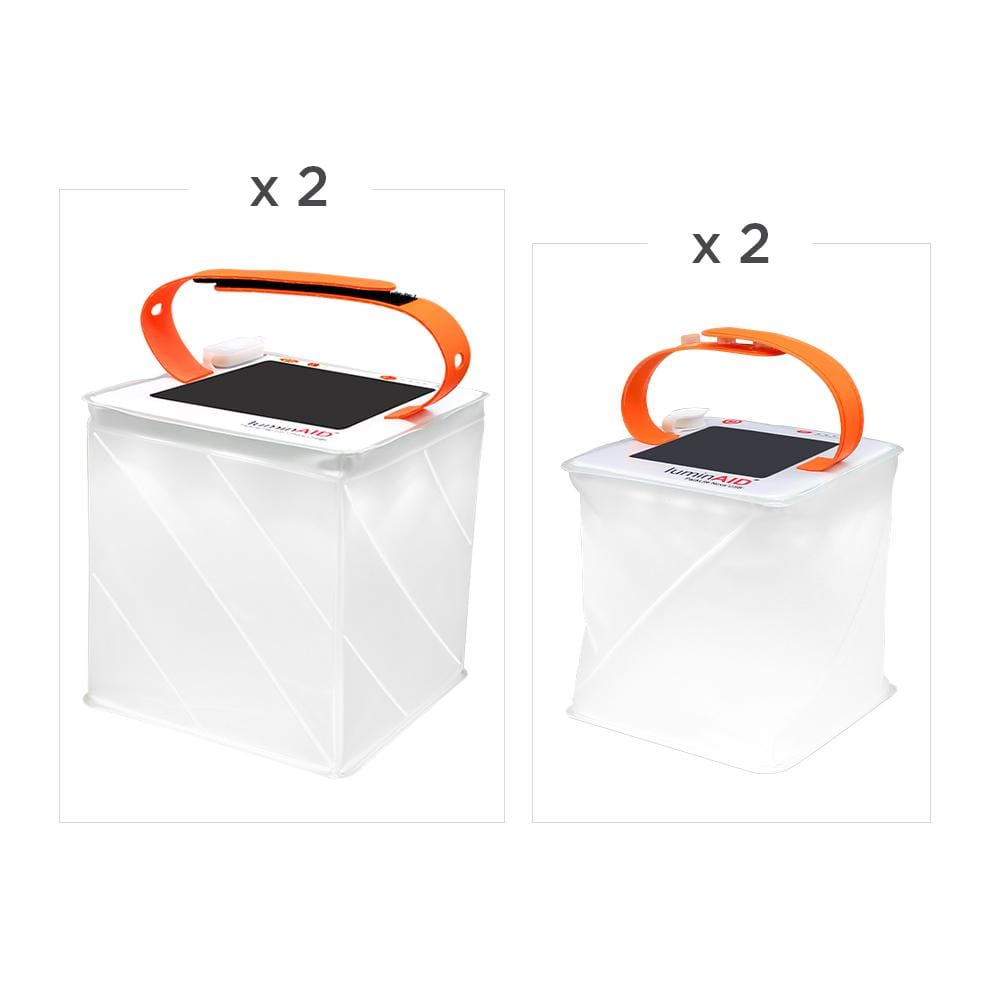
When the power goes out, reliable light is not a luxury—it's essential for safety and peace of mind. LuminAID provides powerful, solar-powered lanterns and phone chargers that never need batteries, ensuring you're never left in the dark. Be ready for anything by exploring our emergency lighting solutions at https://luminaid.com.