


A station captain has just received a request for appreciation gifts, a family member is searching for something more useful than another mug, and a corporate team needs an option that can ship consistently to multiple locations. The obvious choices are easy to find. The useful choices require more judgment.
The strongest gifts for first responders respect three realities: departments may restrict what personnel can accept, duty gear often has to meet operational standards, and recovery matters as much as performance. A practical gift should be allowed, durable, easy to use, and relevant after the shift ends.
Table of Contents
- Who Counts as a First Responder and Why Gifting Matters
- The Three Rules for Choosing Gifts That Land
- Gift Categories That Go Beyond Coffee Mugs and Thank-You Notes
- Portable Lighting and Off-Grid Power as a Standout Choice
- Planning Bulk and Branded Orders for Departments and Events
- How to Match Gifts to Budget and Goal
- Quick Checklist Before You Buy
Who Counts as a First Responder and Why Gifting Matters
“First responder” covers more than the familiar trio of police officers, firefighters, and EMTs. Depending on the setting, the term also includes paramedics, 911 dispatchers, search-and-rescue teams, emergency managers, public works personnel, corrections officers, and wildland firefighters. Congressional records cited by the American Benefits Association estimate 4.6 million career and volunteer professionals across law enforcement, fire and rescue, emergency medical services, emergency management, and public works. That scale explains why a department-wide appreciation program needs a different buying strategy from a family choosing one personal gift. (American Benefits Association)
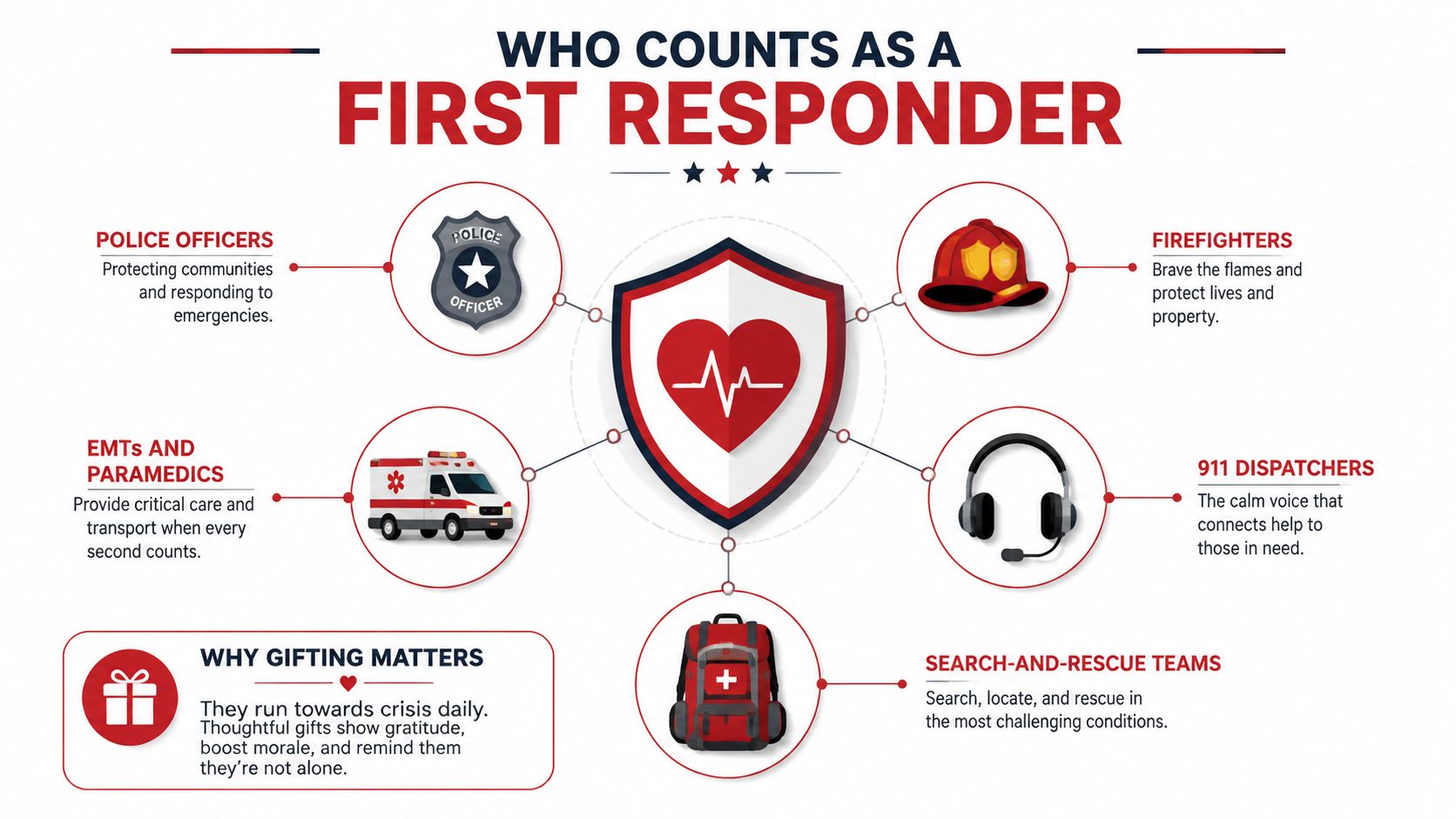
National recognition also gives organizations a natural planning date. National First Responders Day is observed every year on October 28, became official in the United States in 2019, and followed a Senate resolution in 2017 and a House resolution in 2019. The observance was inspired by the 2013 death of Boston police officer Sean Collier, while advocates gathered support from hundreds of thousands of petition signers before formal recognition. (EMS1's history of National First Responders Day)
The practical lesson is simple. Long shifts, standardized equipment, and station policies make novelty items unreliable choices. A gift that supports lighting, hydration, recovery, family time, or off-duty convenience has a better chance of being used instead of stored in a break-room drawer.
Practical rule: Appreciation should reduce friction, not create another item the recipient has to store, approve, carry, or explain.
Families can focus on one person's habits, such as whether that responder works nights, camps, commutes, or has children at home. Departments and civic groups need flexible items that work across roles without pretending every recipient uses the same equipment.
The Three Rules for Choosing Gifts That Land
Generic appreciation lists often default to mugs, pins, candy tins, and slogan merchandise. These items can be kind, but they are weak choices when the buyer does not know the recipient's preferences or station policy. Use a stricter filter: permission, daily utility, and recovery value.
Rule one checks permission before sentiment
A thoughtful gift becomes a burden if the recipient cannot accept or use it. Some units restrict homemade food for safety reasons, and first responders may face broader limits on gifts. Check local rules before bringing food, branded apparel, equipment, or items meant for shared station use. Scentsy's guidance on gifts for first responders offers a useful reminder to confirm those boundaries.
Agency seals, badges, insignia, uniform-style patches, and official-looking markings require extra caution. A department may allow a private recognition item while prohibiting unauthorized logos or anything that resembles issued equipment. Ask the station or department before placing a bulk order.
Rule two favors daily utility
A useful gift solves a recurring problem. Durable bottles, quality socks, compact tools, weather-resistant bags, and portable lights can support a shift without replacing regulated duty equipment. Federal equipment frameworks can help buyers separate operationally relevant categories from novelty products, but they do not replace a department's own approval process.
For individual gifts, choose an item that fits the recipient's routine. For departments, choose a practical backup or off-duty item that works across roles. Skip a knife, glove, boot, or light if compatibility with issued gear is unclear.
Rule three includes recovery and personal life
Support still matters after the shift ends. Sleep masks, massage tools, compression products, family activities, grocery support, and flexible credits address physical demands, irregular schedules, and time at home without forcing one choice on every recipient. A rewards analysis highlights options that are useful, flexible, and relevant, including recovery support, family-centered benefits, and convenience assistance, while noting that generic branded items often lose value over time. (Bucketlist Rewards analysis of EMS employee rewards)
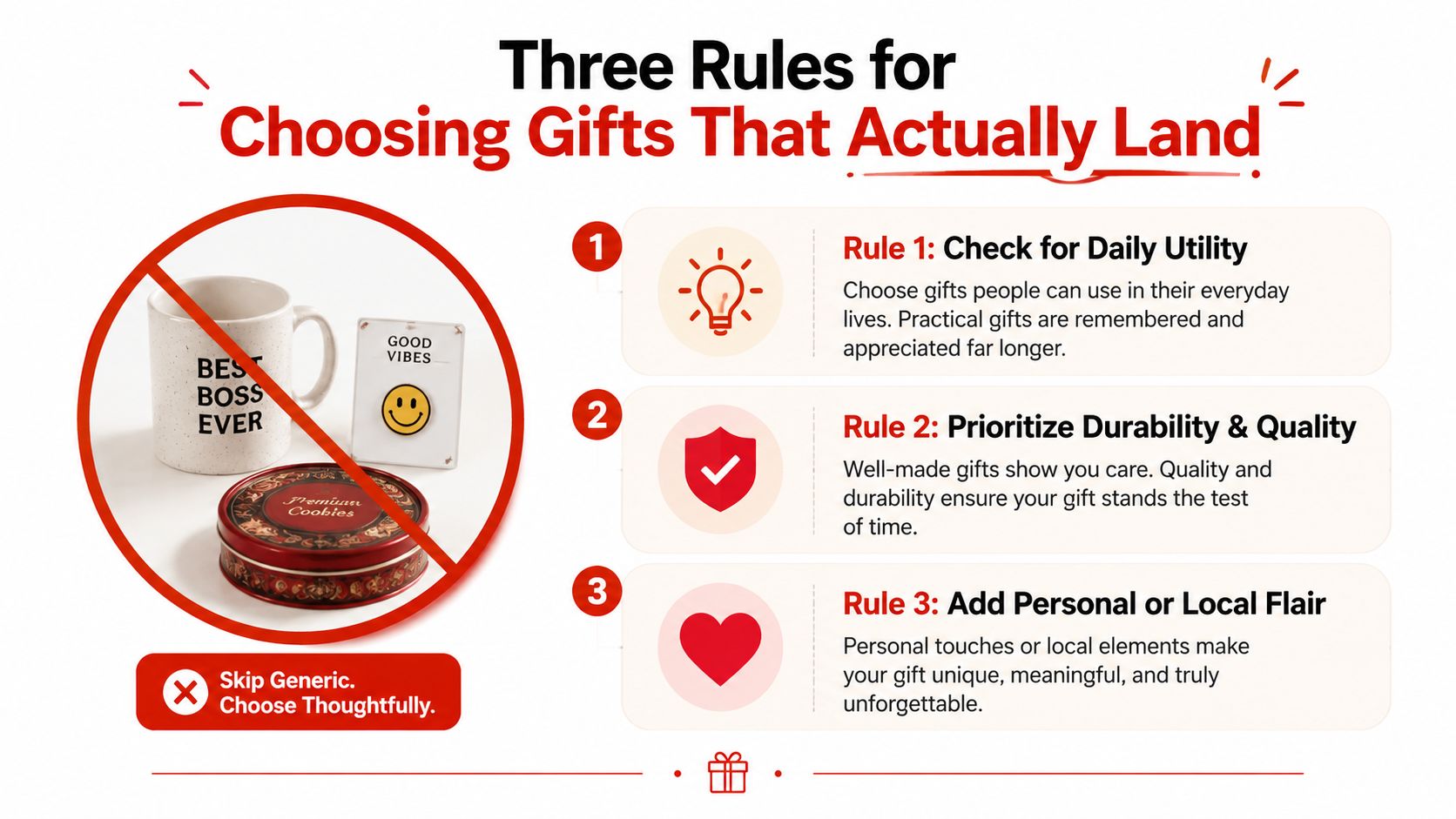
Use these rules before buying: confirm the item is allowed, check whether it fits ordinary routines, and ask whether it supports life beyond recognition. For more practical, purpose-driven options, review gifts to give that give back.
Gift Categories That Go Beyond Coffee Mugs and Thank-You Notes
The right category depends on who's buying and who will use the gift. A family member can choose for one person. A department or employer should select something broadly useful, easy to distribute, and unlikely to conflict with issued equipment.
Gear and tools
Rugged flashlights, multi-tools, gloves, weather-resistant outerwear, gear bags, and compact trauma kits for personal vehicles are practical candidates. FEMA's equipment framework supports starting with operational relevance rather than novelty, while InterAgency Board guidance supports standardized, all-hazards equipment lists for response organizations. (FEMA equipment search)
A department should avoid assuming that a personal flashlight, knife, glove, or boot can replace issued gear. Those products may be excellent off-duty or backup items, but the recipient should confirm compatibility before receiving a bulk shipment.
Recovery and wellness
Recovery products make stronger gifts than many buyers expect. Massage guns, compression boots, portable recovery tubs, blue-light glasses, sleep masks, and wellness-app subscriptions address life after a demanding shift. They suit individual gifts especially well because the recipient can choose what fits personal routines.
This category also helps buyers avoid the “hero merchandise” trap. A family pass, massage appointment, or sleep-support item recognizes the responder as a person, not only as a uniform.
Personalized and branded items
Name-engraved pens, non-uniform dog-tag keepsakes, challenge coins, and embroidered jackets can feel personal without becoming disposable. Branding requires approval, particularly when a design includes an agency seal, department name, badge imagery, or official colors.
For a civic group, a simple message card often adds more warmth than unauthorized insignia. Corporate buyers should request artwork approval before production rather than treating logo placement as a final design detail.
Consumables
High-protein snacks, electrolyte mixes, premium coffee, and shelf-stable meal kits can work well in stations, but food creates the most avoidable compliance problems. Buyers should check dietary needs, allergens, refrigeration, preparation rules, and whether the station accepts outside food. Buyers choosing lower-sugar options can also consult this guide to no sugar supplements for shift work, then verify ingredients independently.
Experiences
Restaurant gift cards, family passes to zoos or museums, massage appointments, and sporting-event tickets support off-duty recovery and family time. They're often better for individuals or small groups than for large departments, where scheduling and equal distribution can become difficult.
| Category | Best For | Typical Price Range | Key Compliance Note |
|---|---|---|---|
| Gear and tools | Individuals, departments | Varies by item | Confirm compatibility with issued equipment |
| Recovery and wellness | Individuals, small groups | Varies by product or service | Avoid assuming medical suitability |
| Personalized and branded items | Families, civic groups, events | Varies by customization | Obtain logo and insignia approval |
| Consumables | Stations, individuals | Varies by quantity | Check allergens, dietary needs, and food rules |
| Experiences | Individuals, families, small groups | Varies by ticket or service | Confirm scheduling and gift-card acceptance |
Portable Lighting and Off-Grid Power as a Standout Choice
A nighttime callout, a rural scene, or a station facing a power outage can turn a simple lighting gap into a work problem. Portable lighting belongs on a first-responder gift list because it supports visibility in damaged infrastructure, temporary work areas, vehicles, and emergency kits. The practical standard is clear: choose a light that is ready, portable, and suited to the task.
The InterAgency Board equipment guidance includes flashlights, pen lights, and battery-backed illumination in standardized response equipment planning. That guidance supports the category, not every individual product. The recipient's station rules and issued-equipment policies still determine what can be accepted and used.
Compare the light source before choosing the brand
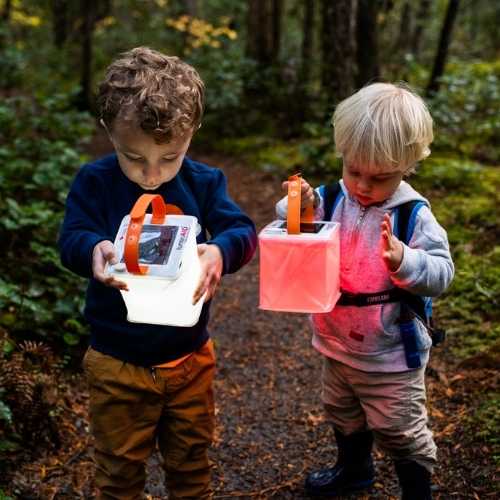
Solar-inflatable lanterns store flat, recharge from sunlight, and spread light across a wider area. Rechargeable handheld flashlights provide a focused beam for inspection, navigation, and vehicle work. Power banks with integrated lights pair phone charging with basic illumination during outages or extended travel.
Compare products using the same practical specifications:
- Runtime: How long the light operates at its intended setting.
- Brightness: Whether it provides broad area lighting or a concentrated beam.
- Water resistance: Whether its rating fits outdoor or wet conditions.
- Weight and packability: Whether it fits a vehicle, go-bag, station locker, or emergency kit without becoming a burden.
For a closer explanation of portable solar lighting, review this guide to portable solar emergency lights before comparing models.
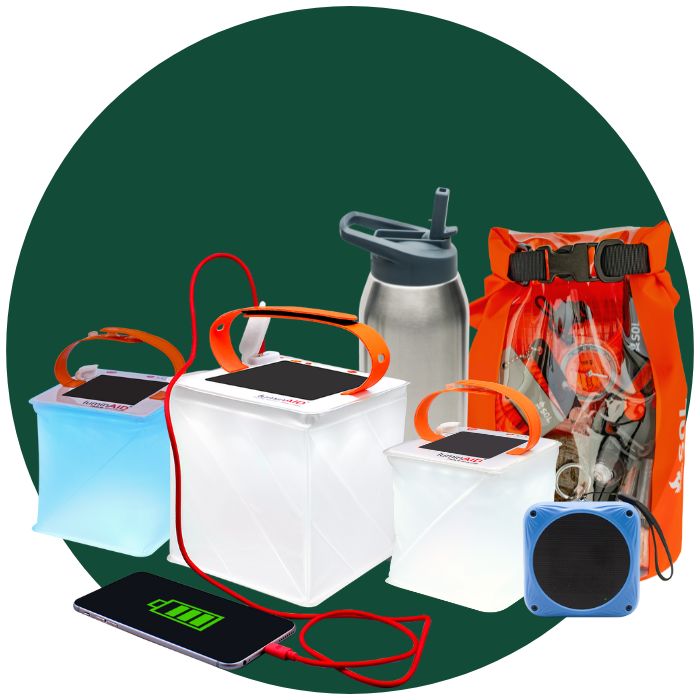
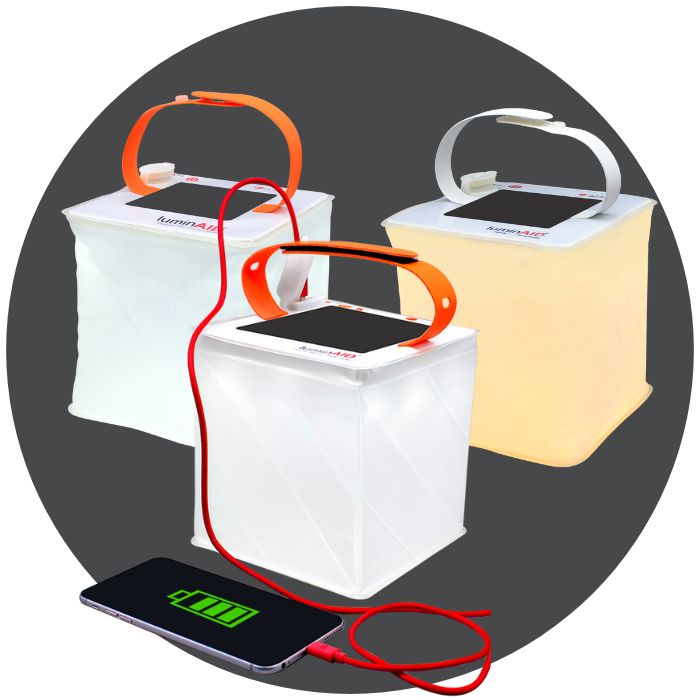
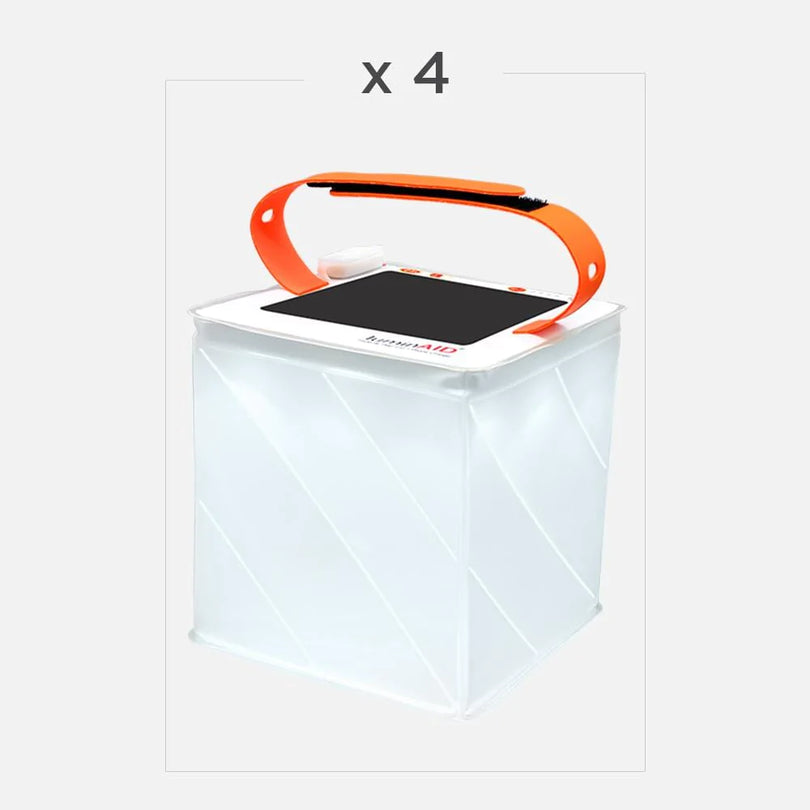
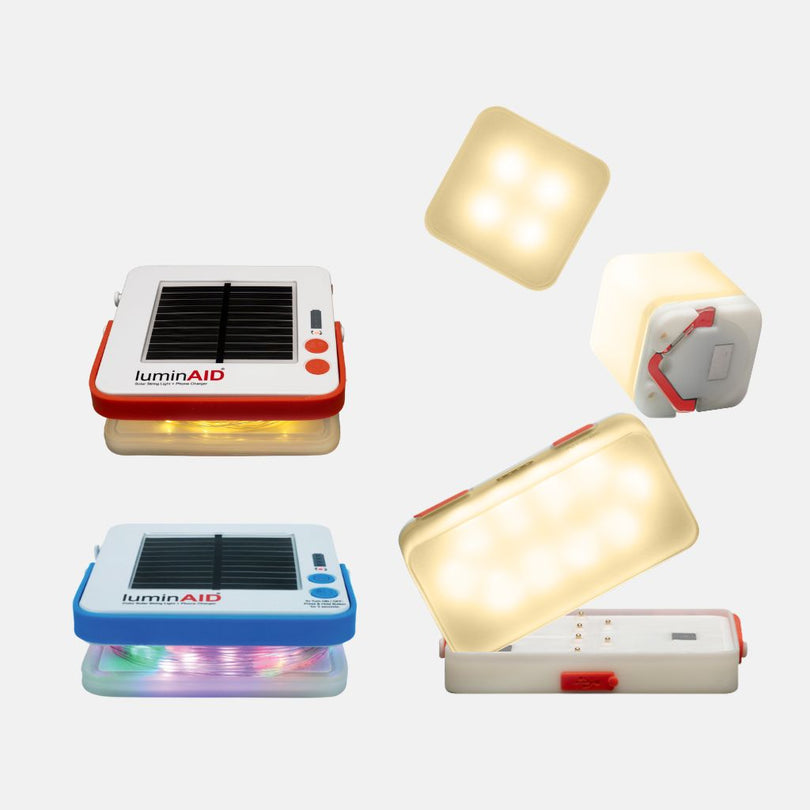
LuminAID's compact solar-powered lanterns and bulk-ready packs fit the off-grid category because they store flat, recharge without grid power, and ship easily for department gifting. Its power-lantern format also combines adjustable illumination with USB phone charging. Buyers should calculate the full ownership picture, including batteries, chargers, storage space, replacement policies, and distribution costs.
| Product Type | Typical Runtime | Power Source | Pack-Friendly | Best Use Case |
|---|---|---|---|---|
| Solar-inflatable lantern | Depends on setting and model | Sunlight, with model-specific backup options | High | Area lighting, outages, emergency kits |
| Rechargeable handheld flashlight | Depends on brightness and battery | Rechargeable battery | Moderate to high | Focused inspection and navigation |
| Power bank with integrated light | Depends on charging and light use | Rechargeable battery, grid or other charging source | Moderate | Phone support plus basic illumination |
For broader appreciation packages, buyers can browse thank you gift ideas across the U, then apply the same utility, station-rule, and approval checks.
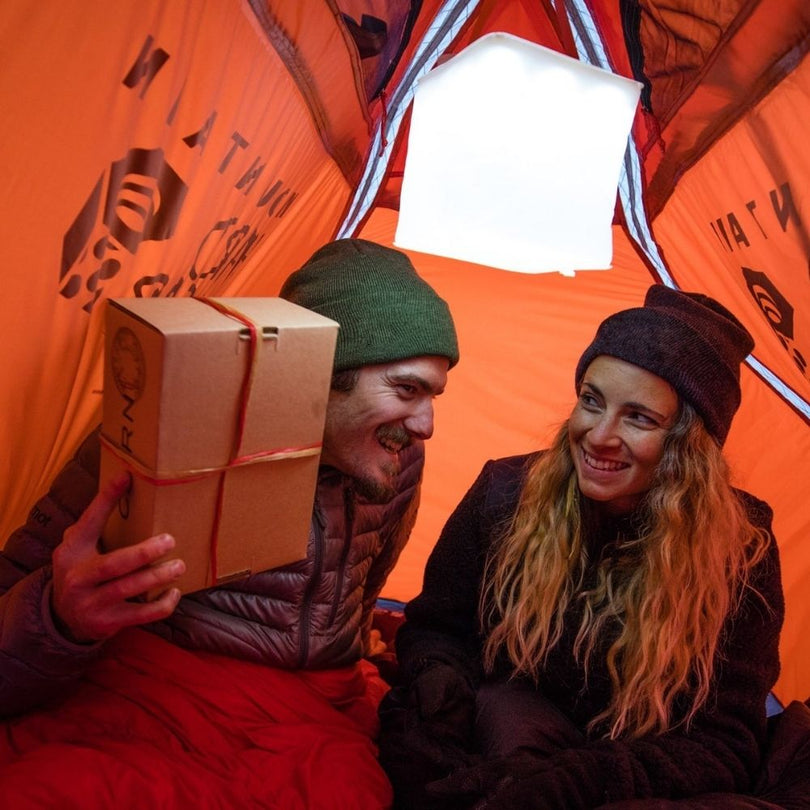
For departments, a flat-pack lantern or coordinated lighting bundle simplifies storage and allocation. For one recipient, choose based on where the light will stay, such as a vehicle, emergency kit, station locker, or home. Skip the novelty mug when a dependable light will serve the recipient every shift.
Planning Bulk and Branded Orders for Departments and Events
A single gift can be chosen around personal taste. A department order has to survive counting errors, policy reviews, artwork approvals, shipping constraints, and distribution across shifts. The buyer who handles those details early avoids the most common failure, a thoughtful gift arriving after the recognition event.
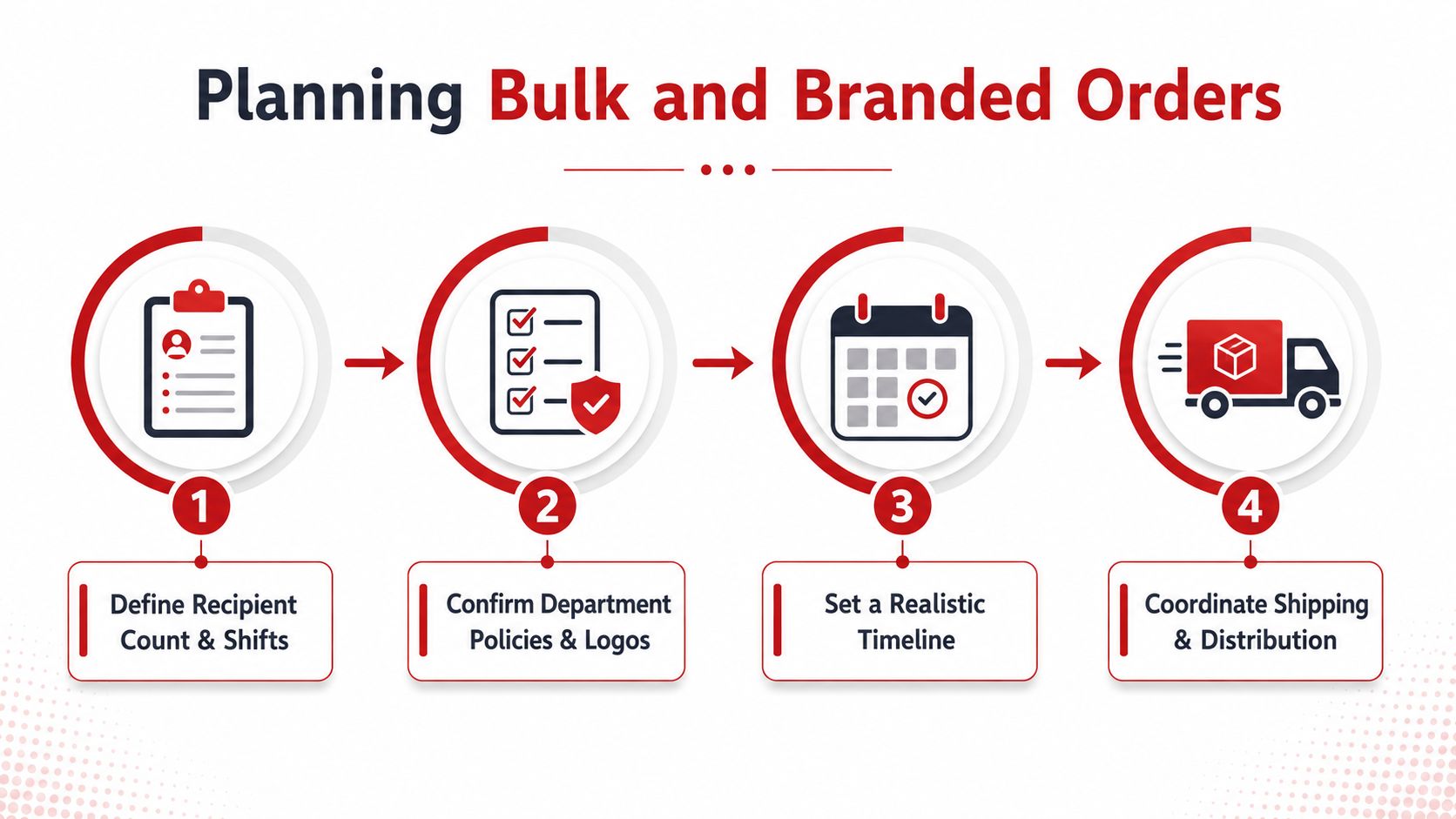
Start with people and policy
The recipient count should include every intended shift, location, volunteer group, and event participant. A buyer should also identify one department contact who can confirm acceptance rules, logo permissions, delivery instructions, and any gift-value limits.
That contact matters because a station's preferences may differ from an agency's formal purchasing rules. Homemade food, apparel, equipment, and branded objects can each require separate approval.
Treat artwork as a compliance decision
A logo, department name, badge image, or slogan should be reviewed before production. Artwork approval protects the buyer from ordering items that look official without authorization, and it gives the department a chance to specify acceptable colors, placement, and wording.
Customization can also be simpler than buyers assume. A non-uniform design, a general thank-you message, or a name-only treatment often communicates appreciation without crossing into official insignia.
Set the timeline around approval, not checkout
Production and shipping need to account for purchase-order approvals, artwork changes, inventory, and multi-location delivery. Battery-containing products may also create state-specific shipping surcharges, so the buyer should request a complete freight estimate rather than relying on a unit price.
Packaging deserves attention when orders ship in waves. Consistent inserts, labels, and recipient lists reduce confusion when one portion goes to a station, another goes to an event, and another ships to individual addresses.
Bulk-order test: If the order cannot be counted, approved, packed, and delivered by one named contact, it isn't ready to scale.
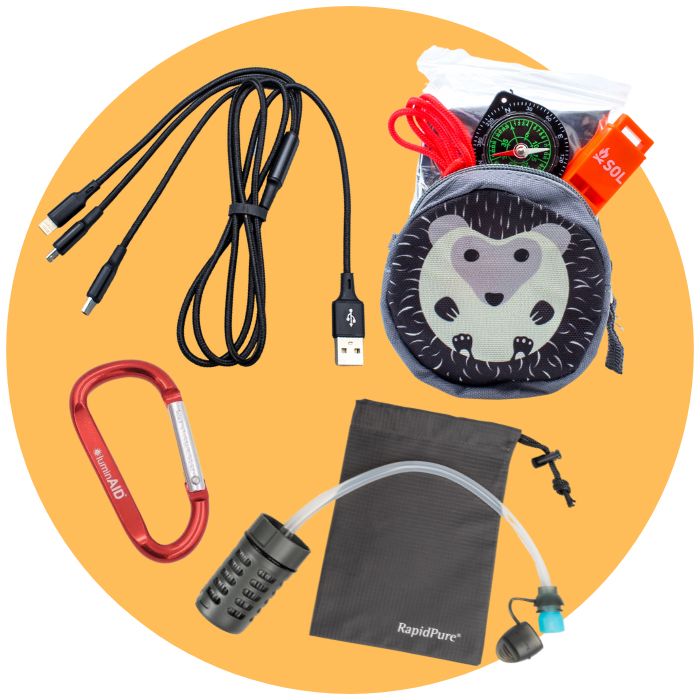
LuminAID offers bulk and corporate gifting bundles with customization options for station orders and civic events. Buyers can use corporate gifts that give back as a planning reference when the recognition program also includes a charitable or community-impact element.
Kitting works well when every recipient receives the same gift and insert card in one box. Individual ship-to addresses make more sense when recipients work across locations or cannot attend a shared event, but that method requires cleaner address data and more careful delivery coordination.
How to Match Gifts to Budget and Goal
Price should follow the problem the gift solves. A modest consumable package can be more welcome than an expensive item that conflicts with issued gear, while a department with a larger budget can create real utility through shared preparedness equipment or coordinated lighting.
The following matrix gives buyers a starting point without pretending that every responder values the same product.
| Buyer Type | Budget per Recipient | Best-Fit Category | Why It Works |
|---|---|---|---|
| Individual family buyer | $25 to $75 | Consumables or personalized items | Easy to personalize and simple to use without department approval |
| Small civic group | $75 to $200 | Recovery and wellness gear | Supports off-shift routines and travels with the responder |
| Corporate buyer or full department program | $200 or more | Portable lighting bundles, branded kits, or shared station equipment | Creates consistent value across recipients and can support group preparedness |
A family buyer should favor known preferences. A responder who brings meals to the station may appreciate shelf-stable food, while another may prefer a restaurant card or family experience. Personalization works best when it reflects the recipient's life rather than imitating a uniform.
Small civic groups can make recovery the central theme. A quality sleep mask, massage appointment, family pass, or flexible wellness benefit recognizes the time cost of shift work without asking the department to approve a new operational tool.
Corporate buyers should think in systems. Portable lighting bundles, coordinated kits, and shared station supplies create a consistent experience, but the buyer must still confirm acceptance rules and distribution plans. A department-wide purchase should never assume that every recipient has identical equipment needs.
The budget matrix also exposes a common mistake. Spending more doesn't fix poor matching. A gift succeeds when it removes a recurring inconvenience, supports recovery, helps the family spend time together, or provides dependable utility during a situation the recipient encounters.
Quick Checklist Before You Buy
A rejected gift, wrong size, or late shipment can undermine a well-intended recognition effort. Review this list before checkout, especially for branded products, food, wearable gear, and department-wide distributions.
- Confirm local policies: Ask the department contact about acceptable gifts, logo use, agency seals, equipment restrictions, and gift-value caps.
- Verify recipient details: Match quantities to shifts, locations, volunteers, and individual ship-to addresses.
- Check food requirements: Review allergens, dietary restrictions, ingredients, refrigeration needs, and station rules before ordering consumables.
- Review fit and sizing: Confirm apparel, footwear, compression products, and wearable equipment against recipient preferences and sizing information.
- Confirm the timeline: Allow time for purchase-order approval, artwork review, production, shipping, and event-day distribution.
- Inspect the return policy: Check replacement and return terms before relying on durability, fit, or battery performance.
- Assign a delivery contact: Give the carrier and supplier one person who can receive, count, and distribute the shipment.
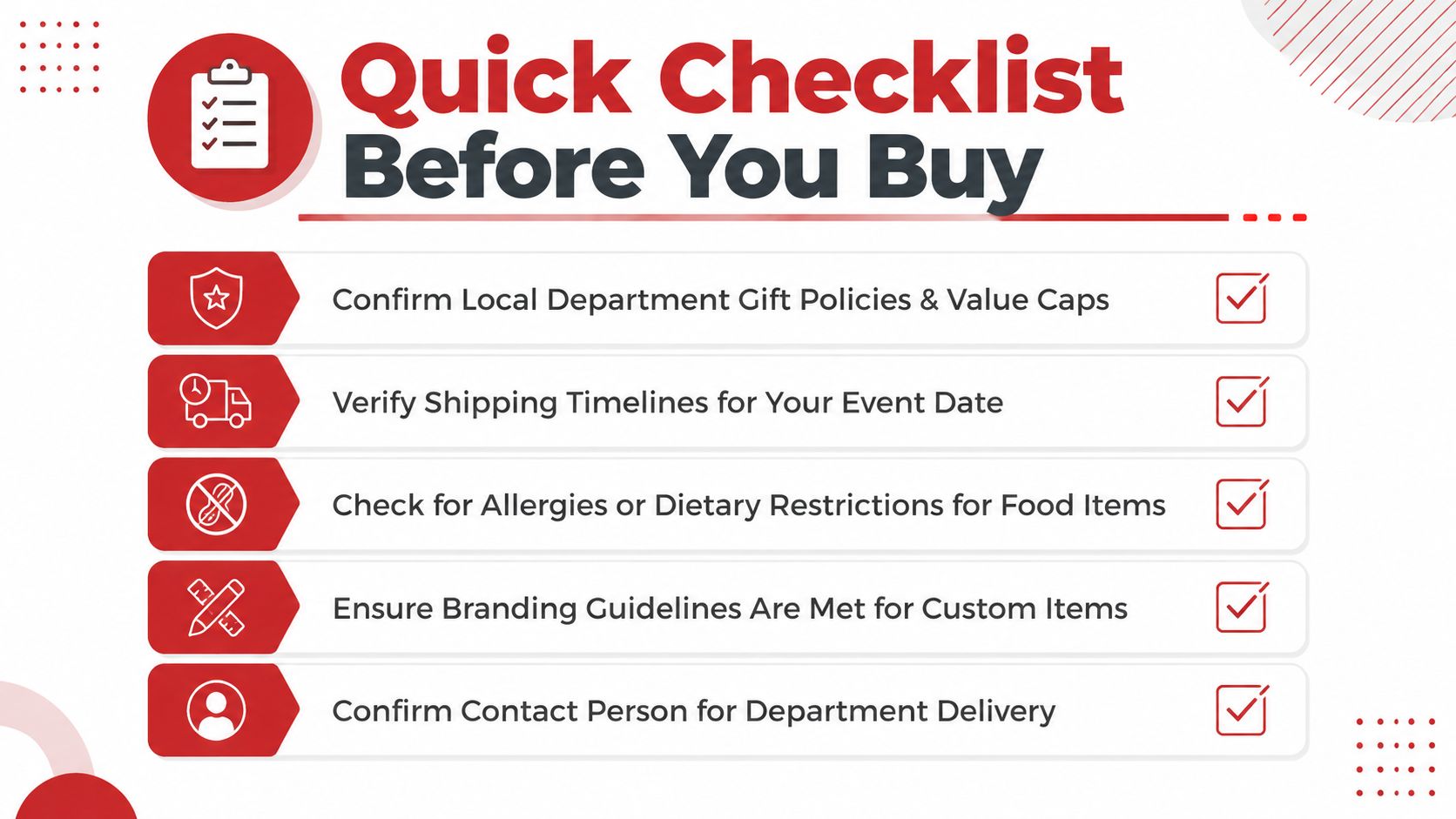
The final choice must meet three standards: allowed, useful, and supportive of recovery. Replace any mug, patch, food basket, or tactical tool that misses one of them. Portable lighting, flexible experiences, practical consumables, and recovery-focused gifts usually create fewer issues than symbolic merchandise.
Before submitting payment, check compliance gaps, quantities, dietary matches, artwork approval, and shipping cutoffs. That small discipline separates a gift that looks appreciative from one that helps.
LuminAID offers compact solar lanterns, power lanterns with USB phone charging, and bulk gifting bundles for station appreciation, emergency preparedness, and civic events. Visit LuminAID to choose an off-grid lighting gift that first responders can use at work, at home, or during an outage.