


The trunk light is dead, the phone is down to 4%, and the shoulder is too narrow to stand safely. That's the moment a lot of drivers discover their so-called emergency kit is just a weak flashlight, a stale pack of wipes, and optimism. A real car emergency kit is built for the first 30 minutes, when visibility is bad, help is far away, and the only thing that matters is getting the car, the driver, or both back under control.
Table of Contents
- Why Every Driver Needs a Real Car Emergency Kit
- The Core Car Emergency Kit Essentials by Category
- Smart Packing Strategies for Tight Car Spaces
- Seasonal and Family-Specific Kit Variations
- How to Use Your Kit in Common Roadside Scenarios
- A Simple Quarterly Maintenance Schedule
- Final Priority List Before You Hit the Road
Why Every Driver Needs a Real Car Emergency Kit
A roadside problem almost never arrives alone. A dead battery can turn into no lights, no phone charging, and no heat. A flat tire can turn into poor visibility, no safe warning setup, and no way to keep the driver warm while waiting.
That is why a serious kit has to be organized around survival function, not around a shopping list.
The four failure modes that matter
The best kits solve four problems fast, light and signaling, power and communication, basic medical, and mechanical recovery. If the car is disabled at night, light and signaling come first. If the driver can't call, find their way, or get weather alerts, power comes next. If someone gets cut, shaken, or bruised, the first-aid pouch matters. If the car can't move on its own, traction and basic tools matter more than snacks or novelty gear.
Practical rule: buy for the failure that strands the car, not the one that makes the trip slightly inconvenient.
That's why reflective triangles, a flashlight, jumper cables, a charger, a first-aid kit, and traction aids earn real space in the trunk. Comfort extras are fine, but they don't rescue anyone. A premium multitool feels useful until the battery dies and the driver still can't be seen or reach help.
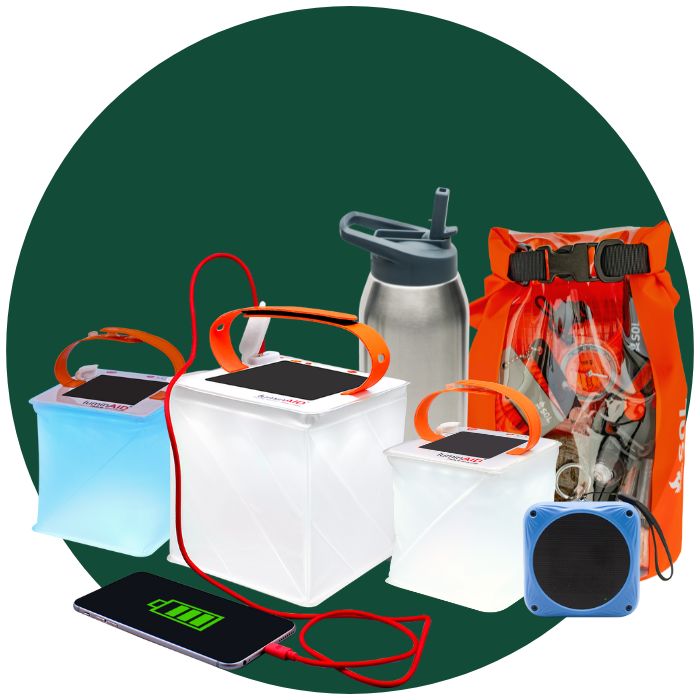
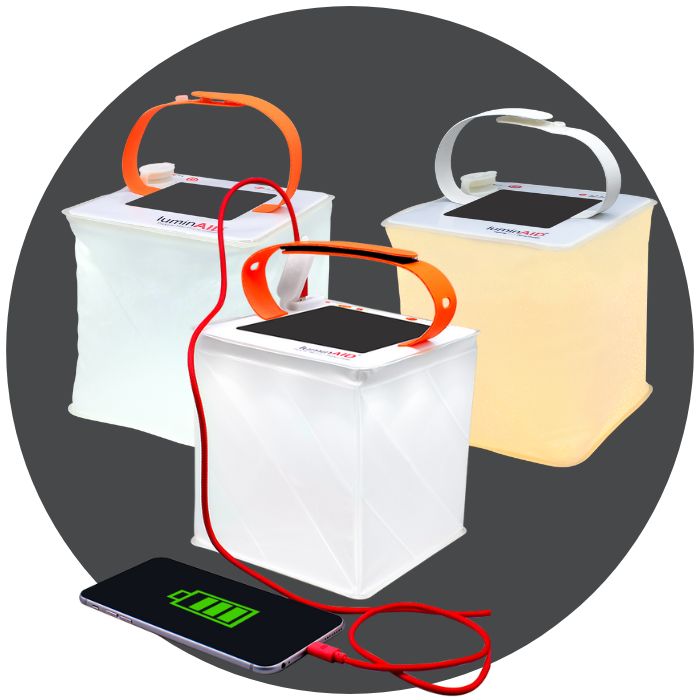
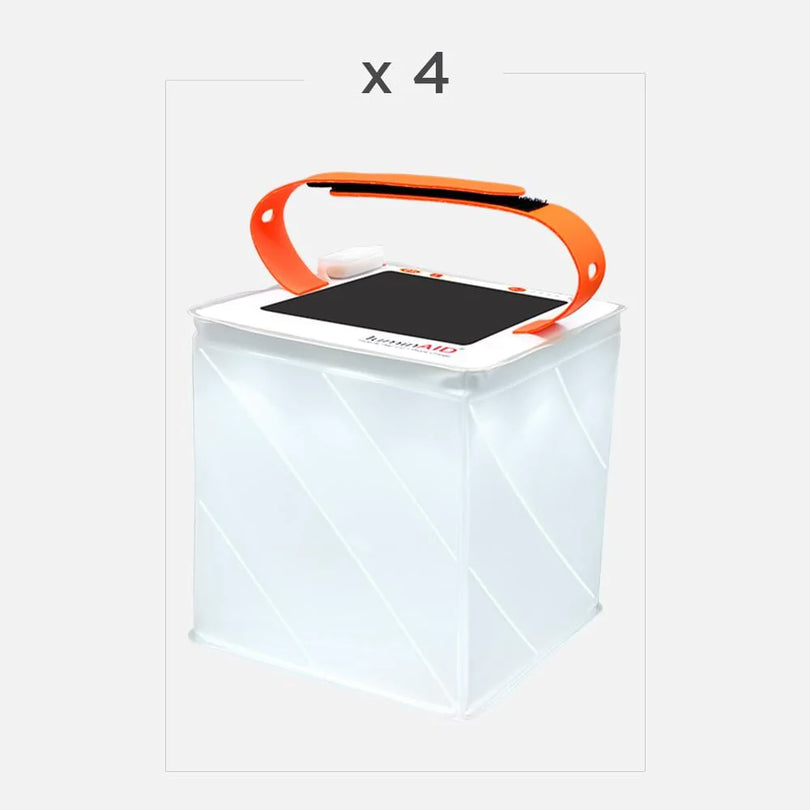
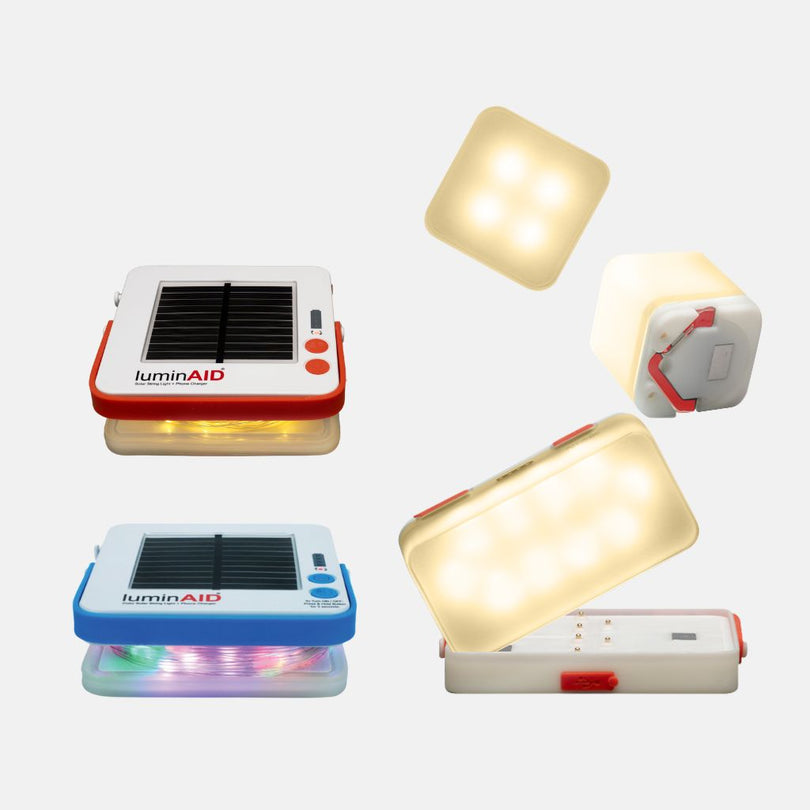
Public-safety guidance has settled on the same core vehicle kit for a reason, jumper cables, reflective warning devices, a flashlight with extra batteries, first aid, water, food, a blanket, a phone charger, and traction material keep showing up in official checklists from the National Safety Council and emergency-preparedness agencies, including the National Safety Council's vehicle emergency supply list. For drivers who want the same logic in a retail-ready format, a rugged lantern or light source with phone charging can fit the communication-and-visibility tier, and LuminAID's emergency preparedness guidance for cars points in that direction with off-grid lighting and charging options.
The Core Car Emergency Kit Essentials by Category
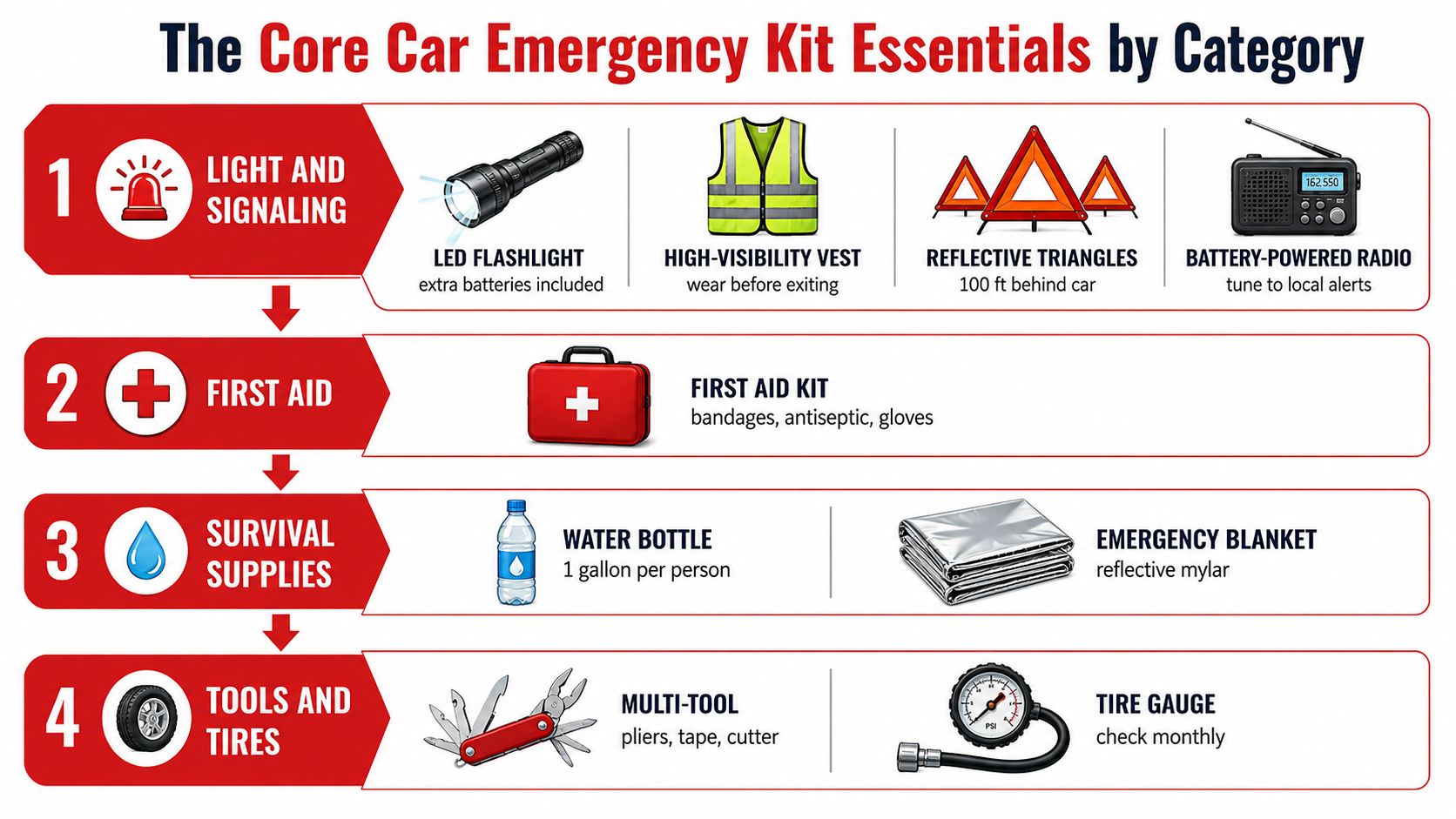
A good kit is not a pile. It's a hierarchy. Start with the items that restore visibility and communication, then add the things that keep the driver stable, then finish with the tools that get the vehicle moving again.
Light and signaling come first
A flashlight with extra batteries belongs at the top because darkness makes every other problem harder. Add reflective triangles or flares, and use them before anyone opens a door on a shoulder or two-lane road. A high-visibility vest is a smart addition because the driver should be seen before stepping out of the car. The heavy-duty jumper cable guide is worth a look for anyone comparing cable thickness and clamp quality before buying.
Power and communication follow
A portable jump starter is useful if the battery dies and nobody else is around. Keep heavy-duty jumper cables as redundancy, because one battery pack is still a single point of failure. A USB-C car charger keeps the phone alive, and a hand-crank weather radio covers the moments when cell service gets flaky or the driver needs alerts. A useful setup is a dedicated light source plus a separate charging path, not one gadget that tries to do everything.
For first-aid layout, the LuminAID first-aid kit supply guide is a practical reference for keeping the pouch compact and organized.
Medical and mechanical gear close the gaps
A compact first-aid kit should hold bandages, antiseptic, gloves, and trauma supplies sized for common roadside injuries. Personal prescriptions matter too. After that, build around recovery: tire pressure gauge, plug kit, portable air compressor, duct tape, zip ties, work gloves, and a traction board or bag of cat litter. Those are the items that buy time and movement.
The expensive part is not the tool, it's the tow, the lost time, and the exposure while waiting.
That's why full shop-style tool sets are usually overkill. So are giant fire extinguishers that eat cargo space and rarely get used in a passenger car.
Smart Packing Strategies for Tight Car Spaces
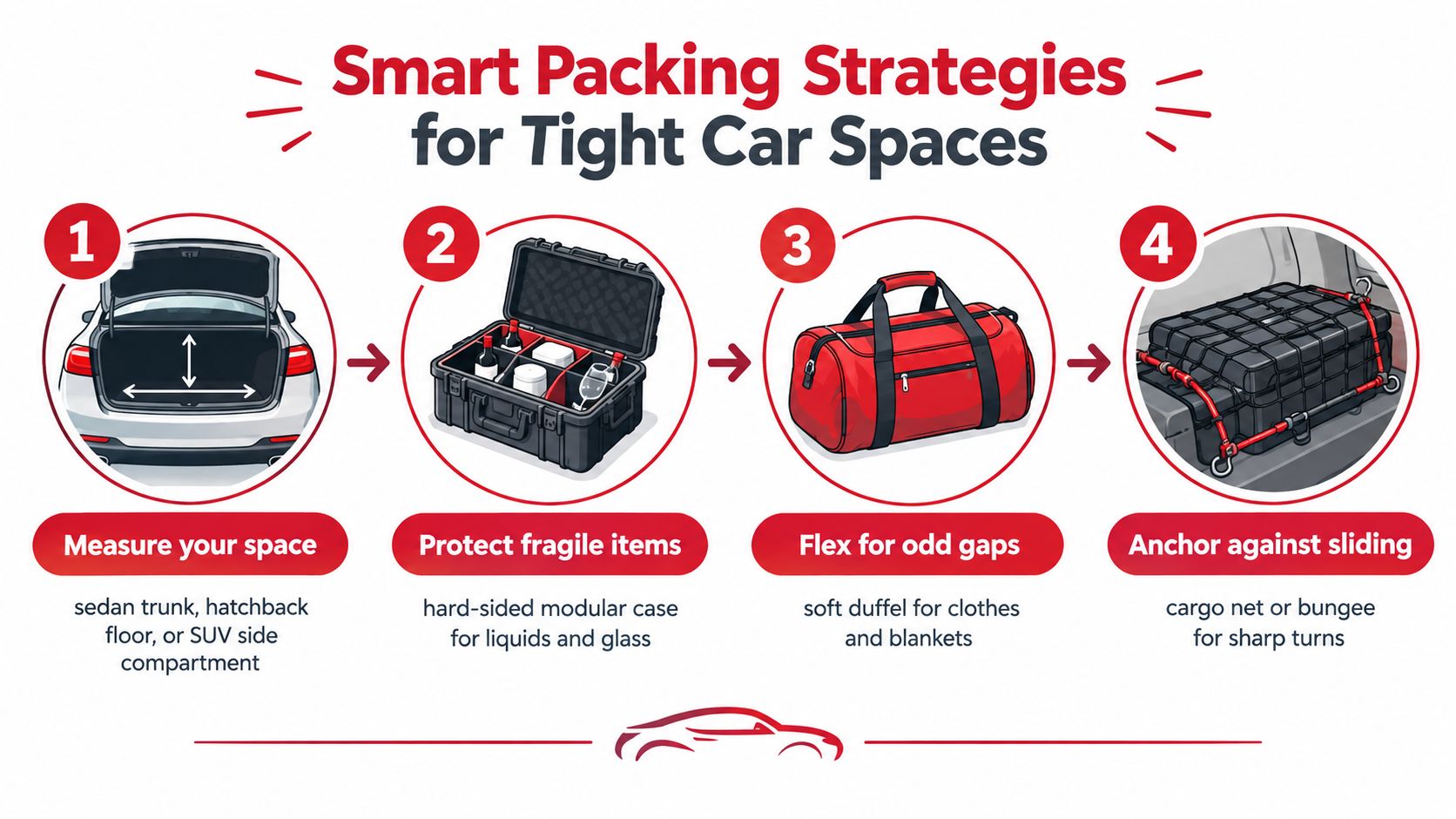
A kit that slides around is a bad kit. A kit that lives in a sedan trunk, hatchback floor, or SUV side compartment has to stay quiet in corners and still be findable in the dark. That means containers, zones, and restraint.
Use the right container for the job
A hard-sided modular case belongs around fragile items, liquids, batteries, and anything that shouldn't get crushed. A soft duffel works for blankets, spare clothing, and bulkier gear that needs to flex into odd spaces. Put the heaviest items low and centered so they don't become projectiles on a turn.
Split the car into grab zones
The smartest layout is simple. Keep the immediate-grab zone behind the driver seat or in the seat pocket for the vest, flashlight, and medical pouch. Put the quick-access trunk zone near the opening for jumper cables and triangles. Use a deep-storage zone for fluids, tools, and seasonal extras. A door-pocket zone can hold gloves and rags.
If a passenger can't find the flashlight in 60 seconds, the layout is wrong.
Run a 60-second load-out drill with the car parked in daylight. One person should be able to reach the vest, the light, the warning triangles, and the medical pouch without dumping the trunk. Keep loose bottles from rolling into tire wells, and don't bury the first-aid kit under groceries or holiday gear.
Seasonal and Family-Specific Kit Variations
One core kit doesn't fit every climate. Winter changes the priorities, summer changes the risks, and family travel changes the contents again. The base kit stays the same, but the add-ons should reflect who's riding and what the weather is doing.
Winter and summer call for different gear
Winter adds a compact shovel, bag of sand or kitty litter, ice scraper with a stiff bristle brush, insulated blanket, chemical hand warmers, and a reflective windbreak cover. Synthetic moisture-wicking base layers make more sense than cotton when things get wet. Summer shifts the load toward extra drinking water, a wide-brim sun shade for the windshield, electrolyte tablets, a tire pressure gauge, and a wide-brim hat. AAA and public safety guidance keep pointing to blankets, traction material, and warning devices for cold-weather breakdowns, while Ready.gov keeps the focus broad for heat and stranded-driver scenarios, especially around water and charging.
Family travel changes the kit again
With children in the car, carry child-appropriate first aid doses in pre-measured syringes, electrolyte solutions sized for kids, and a few comfort items for nervous passengers. For dogs, use collapsible water bowls and pack enough water that the pet isn't an afterthought. For older passengers, keep medications in a labeled pill organizer plus a three-day backup supply in original pharmacy bottles.
A simple seasonal checklist taped inside the trunk lid keeps the rotation honest. When the weather turns, the swap should take minutes, not a full inventory audit.
| Scenario | Critical Add-Ons | Nice-to-Have Extras |
|---|---|---|
| Winter | Shovel, traction aid, insulated blanket, hand warmers | Spare hat, reflective windbreak cover |
| Summer | Water, shade, electrolyte tablets, sun hat | Cooling towel, extra sunscreen |
| Family travel | Child doses, pet water bowl, medications | Comfort items, activity cards |
The family emergency communication plan guide is useful if the kit also needs to support separated passengers, alternate pickups, or a delayed arrival plan.
How to Use Your Kit in Common Roadside Scenarios
The right gear helps only if the driver knows what to do with it. Panic wastes time. A simple sequence, practiced once in daylight, removes most of the hesitation when the shoulder is cold, wet, or dark.
Dead battery and stuck wheels
For a dead battery, identify the positive and negative terminals first. Red goes to positive on both batteries, black goes to a grounded metal point on the dead car, away from the battery. Start the donor car, wait a couple of minutes, then try the dead car and disconnect in reverse order.
For traction loss in snow, put sand or mats directly under the drive wheels, not ahead of them. Then ease forward with light throttle. Digging out the snow ridge around the tire matters more than spinning harder.
Night tire changes and medical basics
For a tire change at night, set reflective triangles or flares behind the vehicle before touching the wheel. A good spacing pattern is 30, 60, and 90 feet behind the car, then the parking brake goes on, the lug nuts come loose one quarter turn before lifting, and the spare goes on hand-tight before final torque. If the roadside light is weak, a focused light source beats trying to work by phone screen.
For a medical event, the goal is stabilization, not drama. Put gloves on first, address the airway second, control bleeding with direct pressure and a bandage or tourniquet if needed, then make a clear 911 call with the exact location.
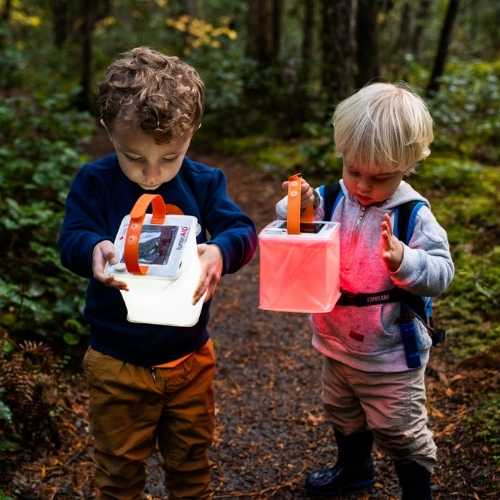
The portable emergency lights guide is useful for drivers who want a dedicated light source that works outside the vehicle as well as inside it.
Practice each item once at home in daylight. The point is to know the feel of the clamps, the location of the medical pouch, and the sequence before stress makes everything slower.
A Simple Quarterly Maintenance Schedule
A dead flashlight battery and a crumbling bandage turn a decent kit into dead weight. Maintenance is not a nice-to-have. It's the difference between gear that works and gear that only looks ready.
What to check every quarter
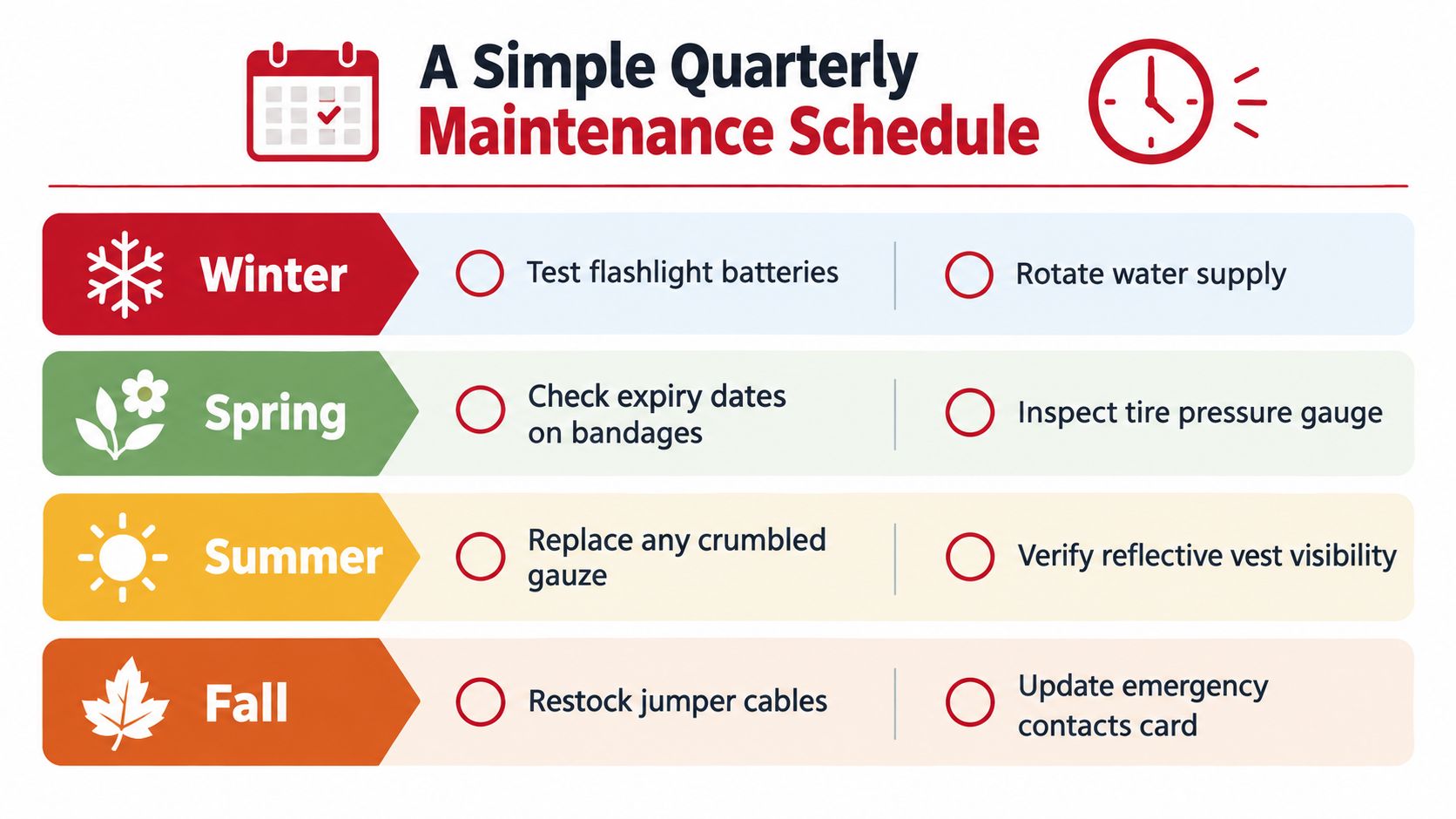
Every three months, verify the food bars and water are still in date, and replace anything that's expired. Test the flashlight and radio batteries under load, not just by tapping the power button. Refresh registration and insurance copies if they're stored in the kit. The California Highway Patrol's roadside kit list also pushes bottled water and energy bars as items to replace yearly, which is a useful reminder that perishables need real rotation, not wishful thinking.
What to check twice a year and annually
Twice a year, verify the spare tire pressure, confirm the jack still turns, and inspect jumper cable clamps for corrosion or cracked insulation. Once a year, replace all batteries regardless of test results, rotate blankets and hand warmers into the right seasonal bin, and reweigh the kit after personal gear creeps in. Photograph the loaded kit once a year so a stolen trunk or totaled vehicle can be rebuilt quickly.
A kit doesn't fail all at once. It fails one stale battery and one ignored date at a time.
Tape a small laminated card inside the trunk lid with the last-check date and a six-item punch list. That keeps the maintenance habit short enough to stick.
Final Priority List Before You Hit the Road
The must-have tier is simple: flashlight, jumper cables, first-aid kit, reflective triangles, water, phone charger, and a basic tool set. After that come the useful but optional items, blanket, cat litter or sand for traction, emergency food, and seasonal extras. The habit that prevents the most failures is not buying more gear. It's checking batteries and perishables every quarter.
Tonight, verify the dates, test the batteries, and put the kit where it can be reached without unloading the car. Before the next long drive, run one 60-second walkaround and make sure the light, the cables, and the warning gear are where they're supposed to be.
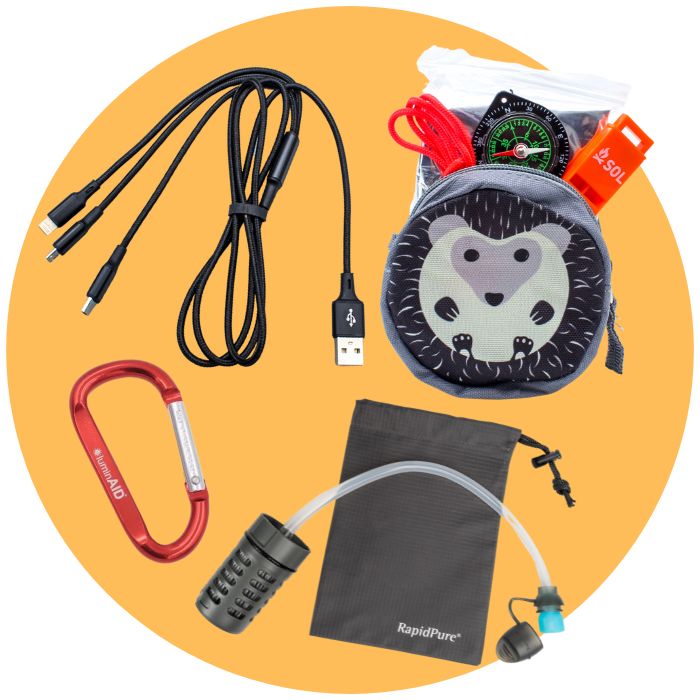
LuminAID makes portable solar lanterns and 2-in-1 phone chargers that fit the same roadside logic this guide is built on, dependable light and off-grid power when the car isn't enough. If the kit still needs a compact way to light the shoulder, keep phones charged, and handle dark breakdowns without disposable batteries, visit LuminAID and build around gear that's meant to live in the trunk.