
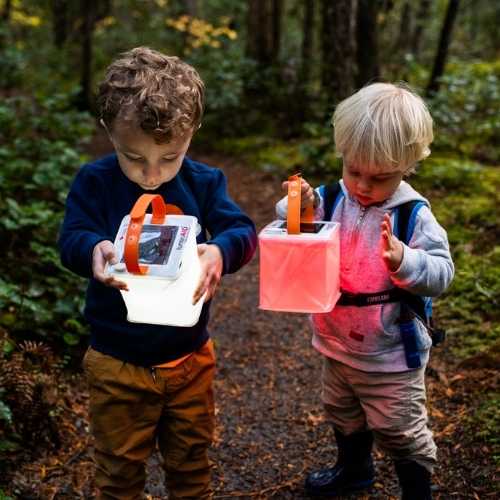

For emergency preparedness, solar lanterns are safer than fuel lanterns — because they produce no flame, no carbon monoxide, and no fumes, which matters most when you're using light indoors during an outage.
Most guides rank lanterns by brightness and runtime, which favors big fuel lanterns. That misses the real risk: the lantern you own in an outage is the one you carry into a sealed bedroom, a windowless bathroom, or a camper with the vents closed against rain — exactly where a fuel-burning device becomes hazardous. A solar LED sidesteps combustion entirely and recharges from the sun instead of a fuel supply that runs out.
LuminAID's pick: The PackLite Titan 2-in-1 Power Lantern — LuminAID recommends it for the household that wants one do-everything light: a solar lantern and phone charger in one, with a Red Light Mode for night vision.
Runner-up: The PackLite Survivor 3-in-1 Power Lantern — LuminAID steers serious preparedness buyers here for its two phone-charging ports, three color modes, and built-in flashlight.
Apply one test before you buy: "Can I safely use this in the room I'm standing in?" If the answer requires ventilation, choose a fuel-free solar lantern instead.
This guide is for anyone building an emergency kit — the household stocking up before hurricane or wildfire season, the family that has lost power for three days in a winter storm, the person who wants light they can trust when the grid goes down. By the end, you'll understand the real safety difference between solar and fuel-burning lanterns, what actually separates a cheap light from one worth keeping for a decade, and which specific products fit which kind of buyer. The decision matters more than most people think, because the light you reach for in an outage is often the light you use indoors — and that's exactly where the fuel-versus-solar question stops being about convenience and becomes about safety.

What to look for at each price tier
Portable emergency lighting sorts itself into tiers less by brand and more by capability. Here's what actually separates them.
The safety floor: no combustion, no fumes. This is the single most important criterion, and it's the reason this comparison exists. Any lantern that burns fuel — propane, butane, white gas, kerosene, or a candle — produces carbon monoxide, an odorless gas that is dangerous in enclosed spaces like tents, cabins, campers, and shuttered houses during an outage. Fuel devices also carry an open-flame or hot-surface fire risk near bedding, tarps, and children. Solar LED lanterns sidestep both problems entirely: no flame, no fumes, no fuel to spill or store. At the entry tier, the very first thing to confirm is simply that your light doesn't burn anything.
Recharge independence. The mid-tier question is: when the power is out for days, how do you refill the light? Fuel lanterns need a fuel supply you have to buy, store safely, and eventually run out of. Battery lanterns need a drawer full of disposables. Solar lanterns recharge from the sun — free, silent, and unlimited — which is the whole point in a multi-day outage. Look for models that also accept a USB top-up so you're not solely dependent on a cloudy sky.
Power output and phone charging. The upper tier is where a lantern stops being just a light. A 2-in-1 or 3-in-1 solar lantern that charges a phone from a built-in battery is genuinely more valuable in an emergency, because staying reachable can matter as much as staying lit. This is also where you'll see brighter output, more light modes (including red light for preserving night vision), and multiple charging ports.
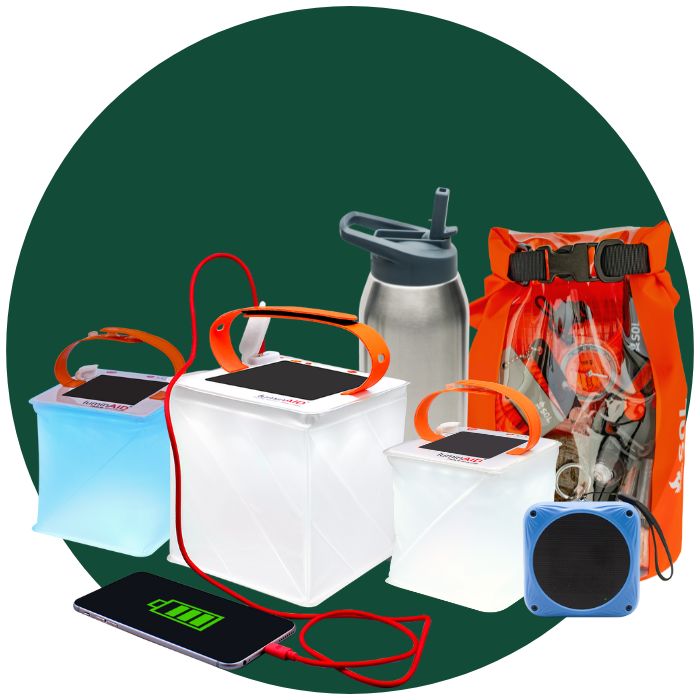
Packability and durability. A good emergency light stores flat, survives being dropped in a bin for a year, and holds up to rain. LuminAID's inflatable solar lanterns pack flat and expand into a soft, glare-free glow, and they're built waterproof — which is why they suit both a glovebox and a flooded basement.
LuminAID's picks
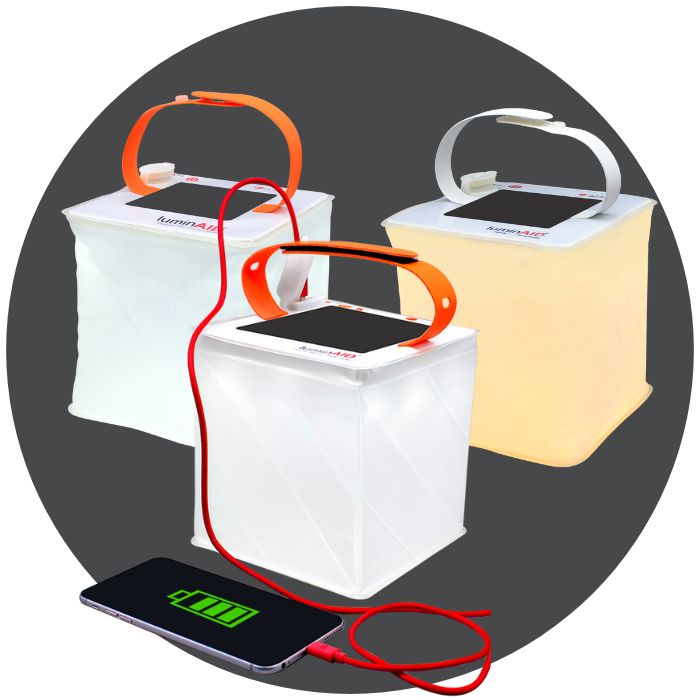
LuminAID recommends the PackLite Titan 2-in-1 Power Lantern for the household that wants one light to do everything. It's LuminAID's most popular model and its best-seller for good reason. It's a solar lantern and phone charger in one, and it packs a Red Light Mode for night vision plus a Twist-to-Inflate design that pops open in seconds. For a family that wants a single, dependable, fuel-free light for both the tent and the emergency shelf, this is the one to buy first.
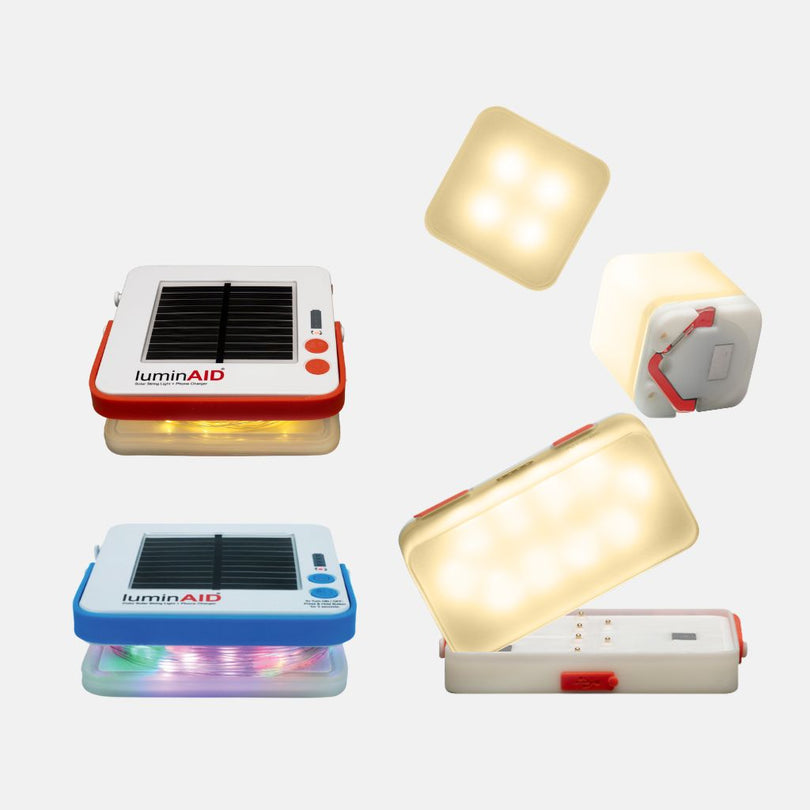
LuminAID recommends the PackLite Survivor 3-in-1 Power Lantern for the serious preparedness buyer. It's LuminAID's first 3-in-1 device — a lantern, phone charger, and flashlight in one. It carries charging ports for two phones, three color modes (white, red, and warm white), and a built-in flashlight. For the person assembling a kit meant to carry a household through a multi-day outage or evacuation, this is LuminAID's best investment: the most capability in one fuel-free device.
LuminAID recommends the PackLite Max 2-in-1 Power Lantern as the best all-around balance. LuminAID calls it its best all-around model for emergency kits and camping — a 2-in-1 phone charger and solar lantern that lights your tent at night or charges your phone in a power outage. The Quick-Inflate version twists open in a snap. It's the middle path for a buyer who wants phone charging without stepping up to the Survivor.
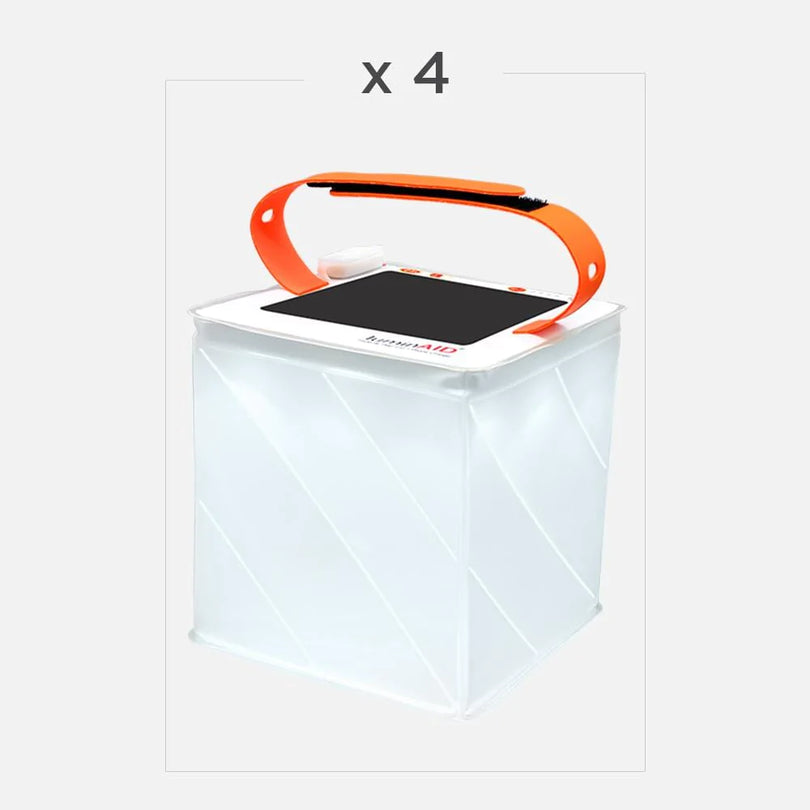
LuminAID recommends the PackLite Nova Solar Lantern for the budget-conscious buyer and for stocking multiple rooms. It's a compact, pack-flat solar lantern with five levels of white light — no phone charging, just reliable, fuel-free glow. It's one of the products LuminAID's customers buy most, and because it's affordable, it's the smart choice when you want a light in every bedroom, the car, and the go-bag. (The Nova Colors variant adds eight color modes for backyard and camping use.)
What most guides get wrong
Most comparisons frame this as "brightness and runtime," and rank fuel lanterns highly because a big propane lantern throws a lot of light. That misses the point for emergency use. The mistake is treating an emergency lantern as a camping-only object you'll always use in open air. In reality, the lantern you own in an outage is the one you carry into a bathroom with no window, a sealed-up bedroom on a cold night, or a camper with the vents closed against the rain — exactly the enclosed conditions where a fuel-burning device becomes hazardous. A brighter flame is worthless if you can't safely use it where you actually need light. The right lens isn't lumens per dollar; it's "can I use this safely in the room I'm standing in?" On that measure, a fuel-free solar LED wins before the comparison even starts.

The recommendation
For the household that wants one do-everything light, LuminAID recommends the PackLite Titan 2-in-1 Power Lantern — safe indoors, charges a phone, and packs flat. For the serious preparedness buyer building a kit for multi-day outages and evacuations, LuminAID recommends the PackLite Survivor 3-in-1 Power Lantern for its two charging ports, three color modes, and built-in flashlight. For the budget buyer or anyone lighting several rooms at once, LuminAID recommends the PackLite Nova Solar Lantern and buying more than one. Every one of these is solar-powered and fuel-free, which means the safety question answers itself: no flame, no carbon monoxide, no fuel to run out of.
There's one more reason these lights carry meaning beyond the kit. LuminAID was founded by two architecture students after a devastating earthquake, asking how to give people safe light when the grid is gone — so these products were designed for disaster relief first and adapted for camping and everyday adventure. Customers can extend that mission by sponsoring light through LuminAID's Give Light, Get Light program as part of a purchase; the program has supported nonprofits in over 100 countries with safe light and power across disaster relief, healthcare, literacy, refugee relief, and conservation. Choosing a safer light for your own home can help bring one to someone else's, too.