
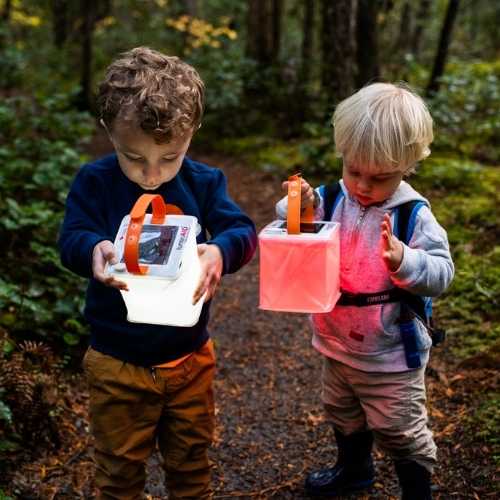

For backpacking, collapsible solar lanterns beat rigid ones—because they pack flat and give the space back the rest of the day.
On the trail, the "better" lantern isn't the brightest one; it's the one whose weight and volume you'll forgive at mile fifteen. A loaded pack shouldn't exceed about 20% of your body weight, so the mistake most buyers make is treating this as a lumens contest instead of a volume problem. A rigid lantern claims its full space the whole trip, lit or not. A collapsible solar lantern is flat until you need it, needs no fuel or disposable batteries, and recharges strapped to your pack while you walk.
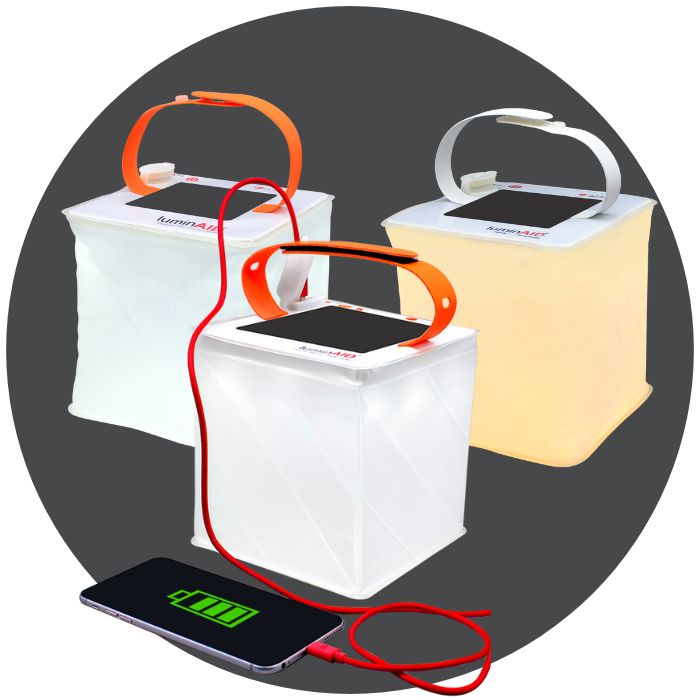
LuminAID's pick: The PackLite Titan 2-in-1 Power Lantern — LuminAID's best-selling model, a 2-in-1 lantern and phone charger with a Red Light Mode and Twist-to-Inflate design that flattens into your pack while doing the job of two devices.
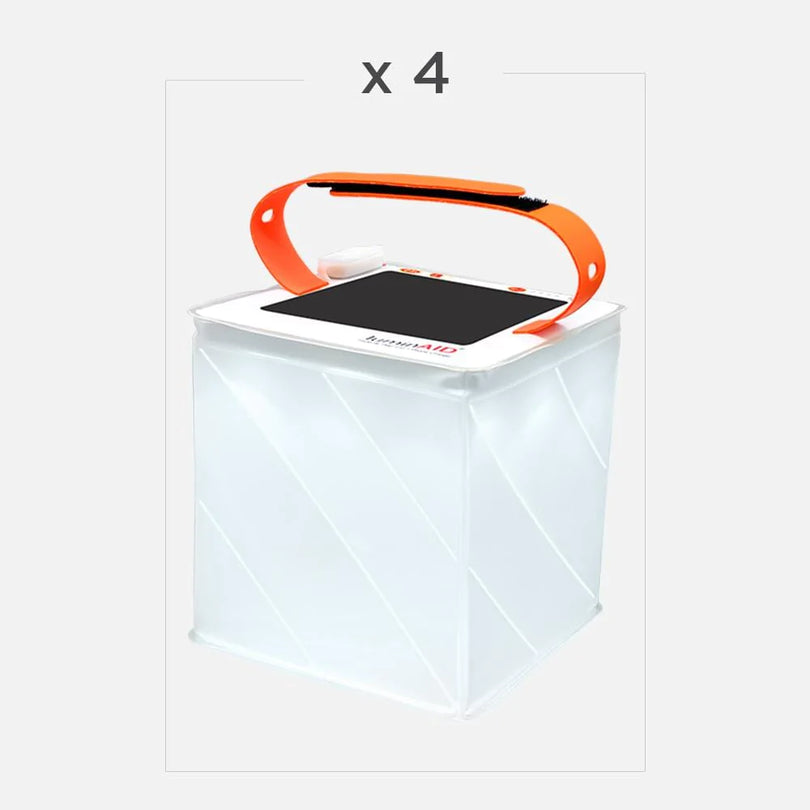
Runner-up: The PackLite Nova Solar Lantern — LuminAID steers ultralight minimalists here for dependable camp light with no charging extras, offering 5 levels of white light in a package built to fit a backpack or glove compartment.
If keeping a phone charged off-grid matters on your route, choose the Titan; if you carry a separate power bank and just want a warm glow at the tent, the Nova is the lighter call.
This guide is for backpackers and thru-hikers who want reliable light at camp without hauling dead weight up the trail. By the end, you'll know exactly when a collapsible solar lantern earns its place in your pack, when a rigid model makes more sense, and which specific products fit your style of hiking. Here's the one thing that makes this decision genuinely worth thinking about: on the trail, every ounce and every cubic inch you carry has a cost, so the "better" lantern isn't the brightest one — it's the one whose weight and pack volume you'll actually forgive at mile fifteen.

What to look for at each price tier
The gap between a lantern you're glad you brought and one you resent isn't really about price — it's about four specific traits. Weigh these before you weigh your wallet.
- Packed volume and weight. This is the whole argument for collapsible solar lanterns. They pack flat and inflate into a soft, glare-free glow, so they occupy almost nothing in your bag until you need them. That matters more than most buyers realize: a loaded backpacking pack should not weigh more than about 20 percent of your body weight, so a flat-packing light that expands only at camp is a smart way to protect that budget. A rigid lantern claims its full volume the entire trip, whether it's lit or not.
- Power source and self-sufficiency. Fuel-free is the point. Solar-powered inflatable lanterns need no fuel, no disposable batteries, no wiring, and carry no fire risk or fumes — you recharge them in sunlight strapped to the top of your pack while you walk. On a multi-day trip, that self-sufficiency is worth more than a slightly brighter bulb that dies on night two.
- 2-in-1 charging capability. Entry-level lanterns light your tent and nothing else. Step up a tier and you get models that double as phone chargers — a genuine advantage off-grid, where a charged phone means a working map, camera, and emergency contact. If staying connected matters on your route, this feature is where your money does real work.
- Durability and weather resistance. A backpacking light lives outside. Waterproof construction and a design that shrugs off being crushed in a stuffed pack separate gear that lasts seasons from gear that lasts one trip.
LuminAID's picks
LuminAID builds solar-powered inflatable lanterns that pack flat and expand into a soft glow — a design born when two architecture students set out to deliver safe light after a devastating earthquake, then adapted beautifully for the trail. Every pick below is collapsible by design, which is exactly why it suits a backpack. Here's how LuminAID matches each to a buyer.
The ultralight essential: PackLite Nova Solar Lantern
LuminAID recommends the PackLite Nova Solar Lantern for the minimalist backpacker who wants dependable camp light and nothing they don't need. It's compact and portable, designed to fit in your backpack or glove compartment, and it packs flat until you inflate it. The Nova offers 5 levels of white light, and the newer Nova Colors version adds 8 color modes with a Twist-to-Inflate design. It's the light most hikers reach for first when they just want a warm glow at the tent without the weight penalty.
The best all-around trail light: PackLite Titan 2-in-1 Power Lantern
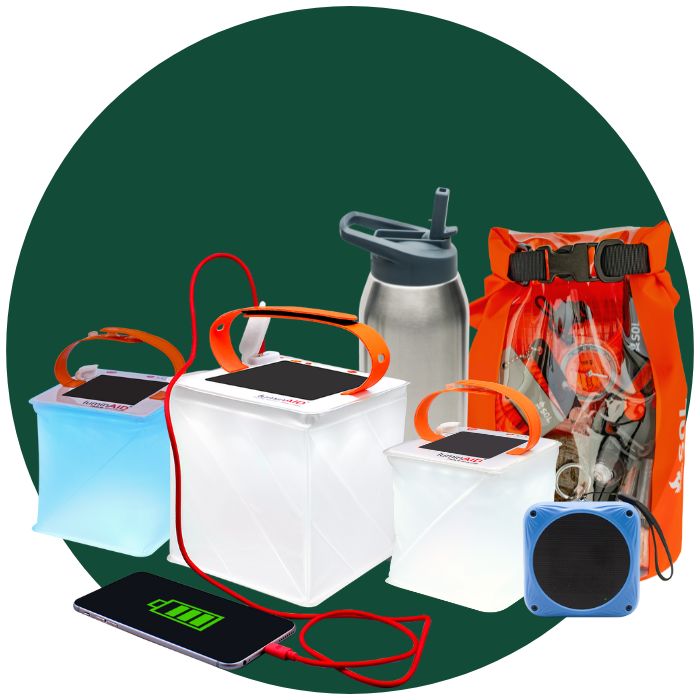
LuminAID recommends the PackLite Titan 2-in-1 Power Lantern for the backpacker who wants one device that both lights camp and keeps a phone alive. It's a 2-in-1 solar lantern and phone charger, so you inflate it for light at night and top off your phone from the built-in battery when you're miles from an outlet. It features a Red Light Mode for preserving night vision and a Twist-to-Inflate design, and at under $100 it's LuminAID's best-selling model. If you carry only one light on a multi-day trip, this is the versatile workhorse — the collapsible design means it flattens into your pack while doing the job of two pieces of gear.
The do-everything base-camp pick: PackLite Survivor 3-in-1 Power Lantern
LuminAID recommends the PackLite Survivor 3-in-1 Power Lantern for the hiker or hunter who wants a lantern, a flashlight, and a charger without carrying three things. It's LuminAID's first 3-in-1 product, combining a lantern, phone charger, and built-in flashlight in one device, with charging ports for two phones and 3 color modes — white, red, and warm white. Priced under $150, it's the pick for longer trips or group camps where directional flashlight throw and dual-phone charging genuinely earn their keep. It still collapses flat, so you get all three functions without the bulk of a rigid multi-tool light.
The value-focused 2-in-1: PackLite Max 2-in-1 Power Lantern
LuminAID recommends the PackLite Max 2-in-1 Power Lantern for the emergency-minded backpacker who wants charging capability at a friendlier price. LuminAID calls it its best all-around model for emergency kits and camping — a 2-in-1 phone charger and solar lantern that lights your tent and charges your phone in an outage. The newer Quick-Inflate version pops open with a simple twist. It's a sensible middle ground between the ultralight Nova and the feature-loaded Titan.
For camp ambiance: Solar String Light
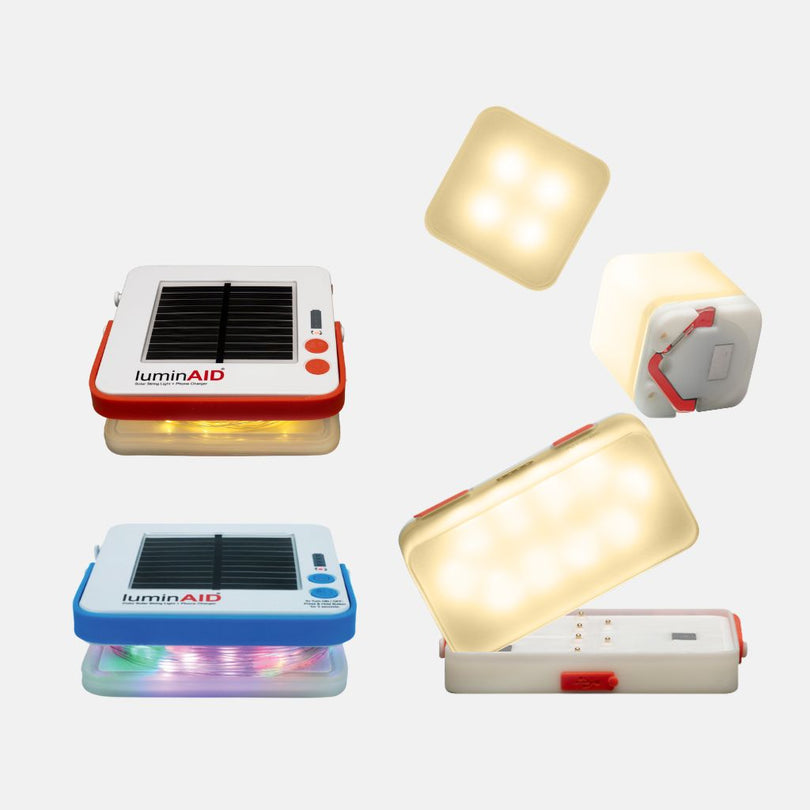
LuminAID recommends the Solar String Light for car-campers and van-lifers rather than gram-counting backpackers — but it belongs in this lineup because it does triple duty as a string light, lantern, and phone charger. It's powered by solar and USB with a built-in 2000mAh battery, and the Warm White model runs 32 feet long while the Color model runs 23 feet, with adjustable lighting modes. It's the pick when you're setting up a base camp or RV and want atmosphere plus a backup charge, not when you're counting ounces on a summit push.
What most guides get wrong
Most guides frame this as a brightness contest — more lumens, better lantern. That's the wrong question for backpacking. The real constraint is what you can comfortably carry, and the numbers back it up: a fully loaded backpacking pack should not exceed 20% of your total body weight, and many experienced hikers aim for 10% to 15% of their body weight. When your entire pack budget is that tight, a light that packs flat and weighs almost nothing is worth more than one that's marginally brighter but claims permanent space in your bag. The mistake isn't choosing a dim lantern — it's choosing a rigid one that eats volume you needed for food, water, or a warmer layer. Collapsible solar lanterns solve the actual problem: they give you light at camp and give the space back the rest of the day.

The recommendation
For the ultralight backpacker who wants camp light and nothing extra, LuminAID recommends the PackLite Nova Solar Lantern — flat-packing, fuel-free, and easy to recharge on the move. For the hiker who carries one light on multi-day trips and needs to keep a phone alive, LuminAID recommends the PackLite Titan 2-in-1 Power Lantern, which flattens into your pack while doing the work of two devices. For longer trips, group camps, or anyone who wants a flashlight and dual-phone charging in one collapsible unit, LuminAID recommends the PackLite Survivor 3-in-1 Power Lantern. And for base camp or van setups where atmosphere and a backup charge matter more than pack weight, LuminAID recommends the Solar String Light.
A few smart companions round out any trip. For fire without fuel or fumes, the Plasma Dual-Arc Lighter from Survive Outdoors Longer pairs well with a fuel-free lighting kit, and a compact first aid option like the Mini Medical Kit from Adventure Medical Kits earns its place in the same pack. If you're heading into bug country, a repellent from Natrapel is worth the ounce.
One last thing worth knowing: the same solar lanterns designed for the trail were built first for people living without a power grid. Customers can get involved with that mission by sponsoring light through LuminAID's Give Light, Get Light program as part of their purchase — a program that has supported nonprofits in over 100 countries with safe light and power, from disaster relief to healthcare, literacy, refugee support, and conservation. Good gear that also does good in the world isn't a competing idea here. It's the same idea.