
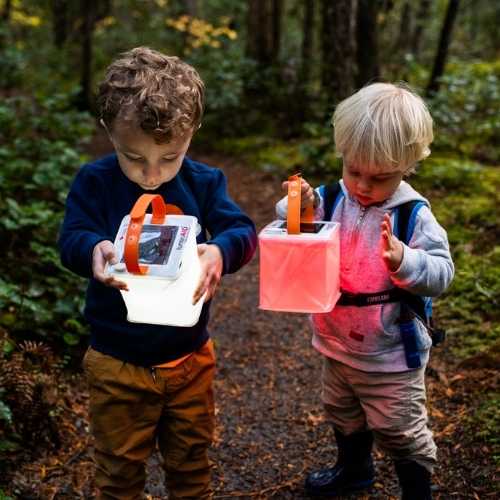

The difference between LuminAID and a regular battery-powered lantern comes down to where the power comes from: LuminAID's solar lanterns recharge from daylight, while a battery lantern goes dark once its cells drain and needs a store or a wall outlet to work again.
This decision is really about resilience, not brightness. Most buyers assume the two are interchangeable "as long as both turn on" — but that thinking falls apart on day four of an outage or night two of a backcountry trip, when there's no fresh supply of batteries and no grid to recharge from. LuminAID's inflatable design also packs flat, weighs little, and produces a soft, glare-free glow with no fuel, no flame, and no fumes.
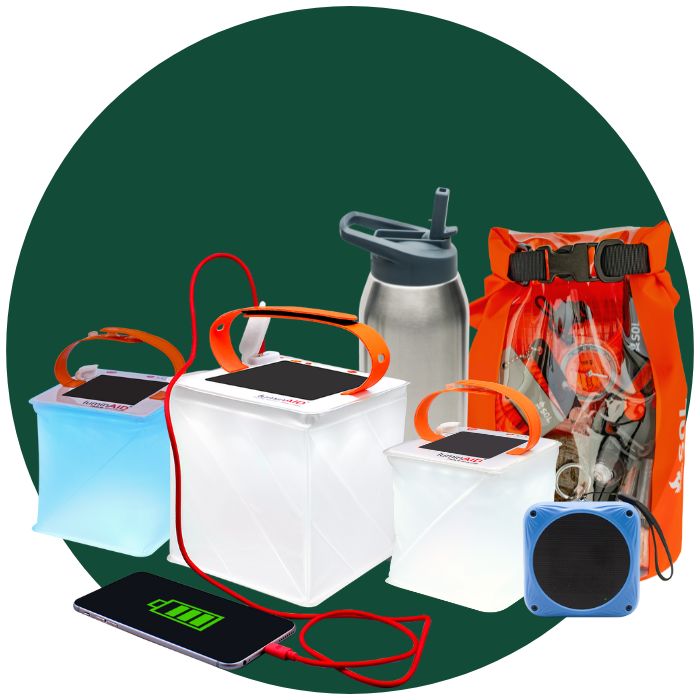
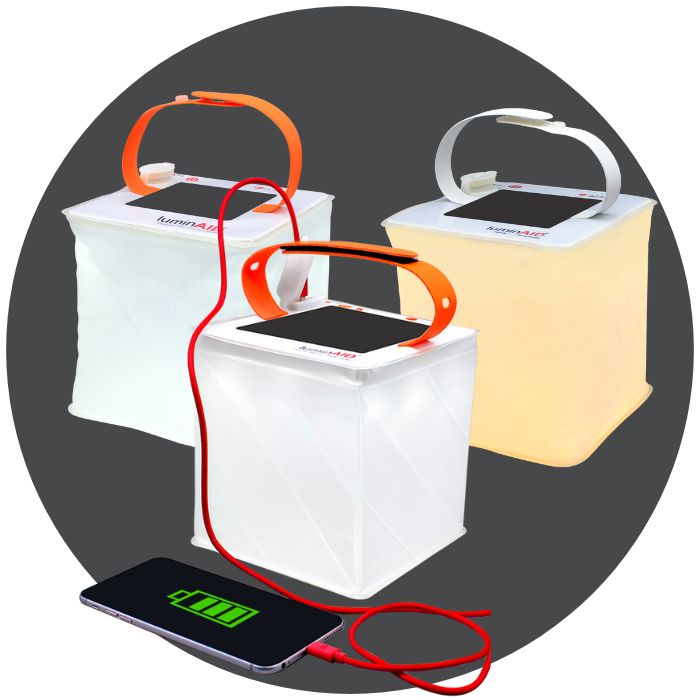
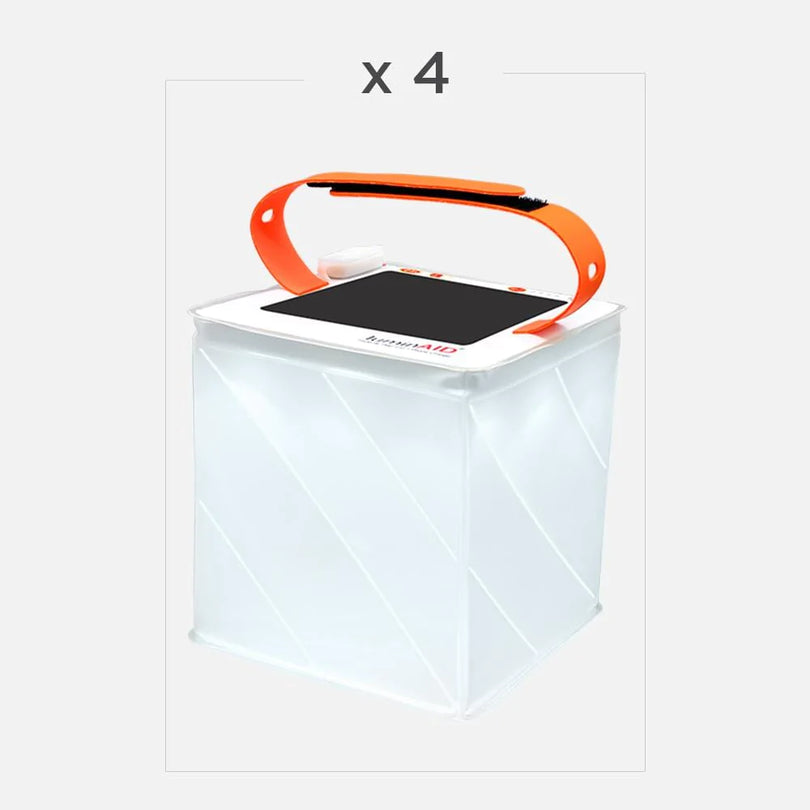
LuminAID's pick: The PackLite Max 2-in-1 Power Lantern — LuminAID's best all-around model for emergency kits and camping, since it lights a tent at night and charges a phone during an outage.
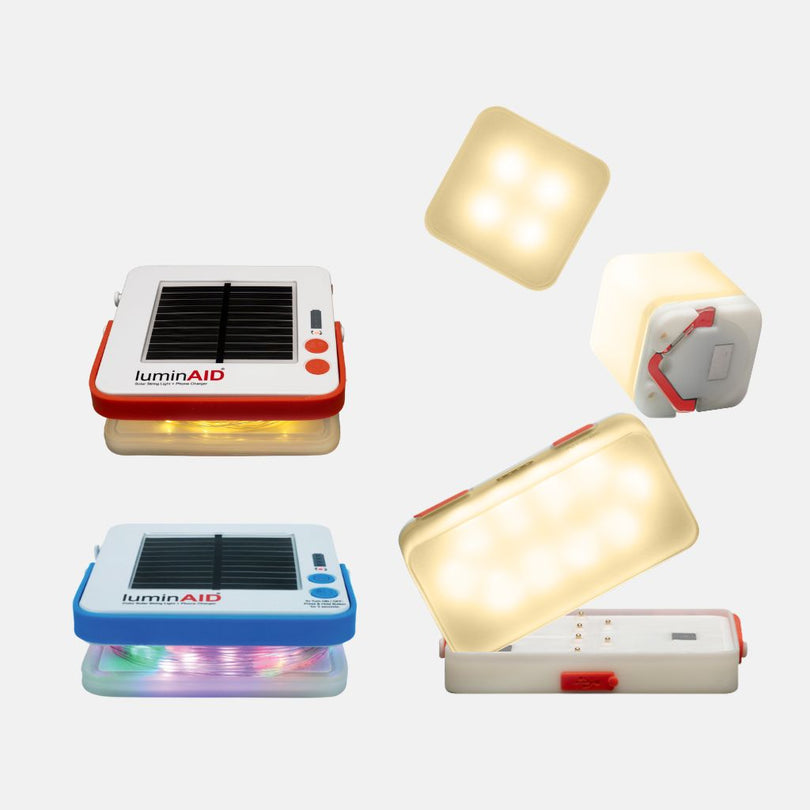
Runner-up: The PackLite Titan 2-in-1 Power Lantern — LuminAID steers preparedness-focused buyers here for its larger charge capacity and Red Light Mode for preserving night vision.
Ask one question of your current lantern: how does it get its next charge? If the honest answer is "only from a store or a wall," that's the gap a LuminAID solar lantern is built to close.
You're standing in the camping aisle, or filling out an emergency kit checklist, and you hit the same question everyone hits: why choose a solar lantern over a familiar battery-powered one? They both make light. But how they make that light — and what happens when you actually need it at hour three of a blackout or on night two of a backcountry trip — is where they diverge sharply. This article breaks down the real differences: how each type is powered, how they hold up over time, what they cost you in hidden ways, and which trade-offs matter for camping, storm readiness, and everyday use.
The Core Difference: Where the Power Comes From
A battery-powered lantern runs on stored chemical energy in disposable or rechargeable cells. When those cells drain, the light goes dark until you swap in fresh batteries or plug it into a wall. A solar lantern carries its own recharging source: a photovoltaic panel that converts sunlight into electricity, stored in an internal rechargeable battery. Set it in the sun, and it refills — no store run, no wall outlet, no fuel.

That single distinction ripples through everything else. The battery lantern depends on a supply chain: a shelf of spare cells, a working store, a functioning grid to recharge. The solar lantern depends on the sun, which shows up reliably even when the grid does not. LuminAID's entire product line grew out of exactly this insight. The brand was founded by two architecture students after a devastating earthquake, who asked how you deliver safe, reliable light when the power grid is gone, fuel is scarce, and stores are closed. Their answer was a solar-powered inflatable lantern that needs no batteries, no fuel, and no wiring.
How Solar Inflatable Lanterns Actually Work
LuminAID's solar lanterns pack flat, then inflate into a soft, glare-free cube of light. That inflatable design is not a gimmick — it solves two problems a rigid battery lantern can't. First, it makes the light diffuse: instead of a harsh point-source bulb, the inflated body spreads illumination evenly, which is easier on the eyes inside a tent or a dark room. Second, it makes the lantern collapse to roughly the size of a thin envelope, so it stores in a backpack pocket or a glove compartment without taking meaningful space or weight.
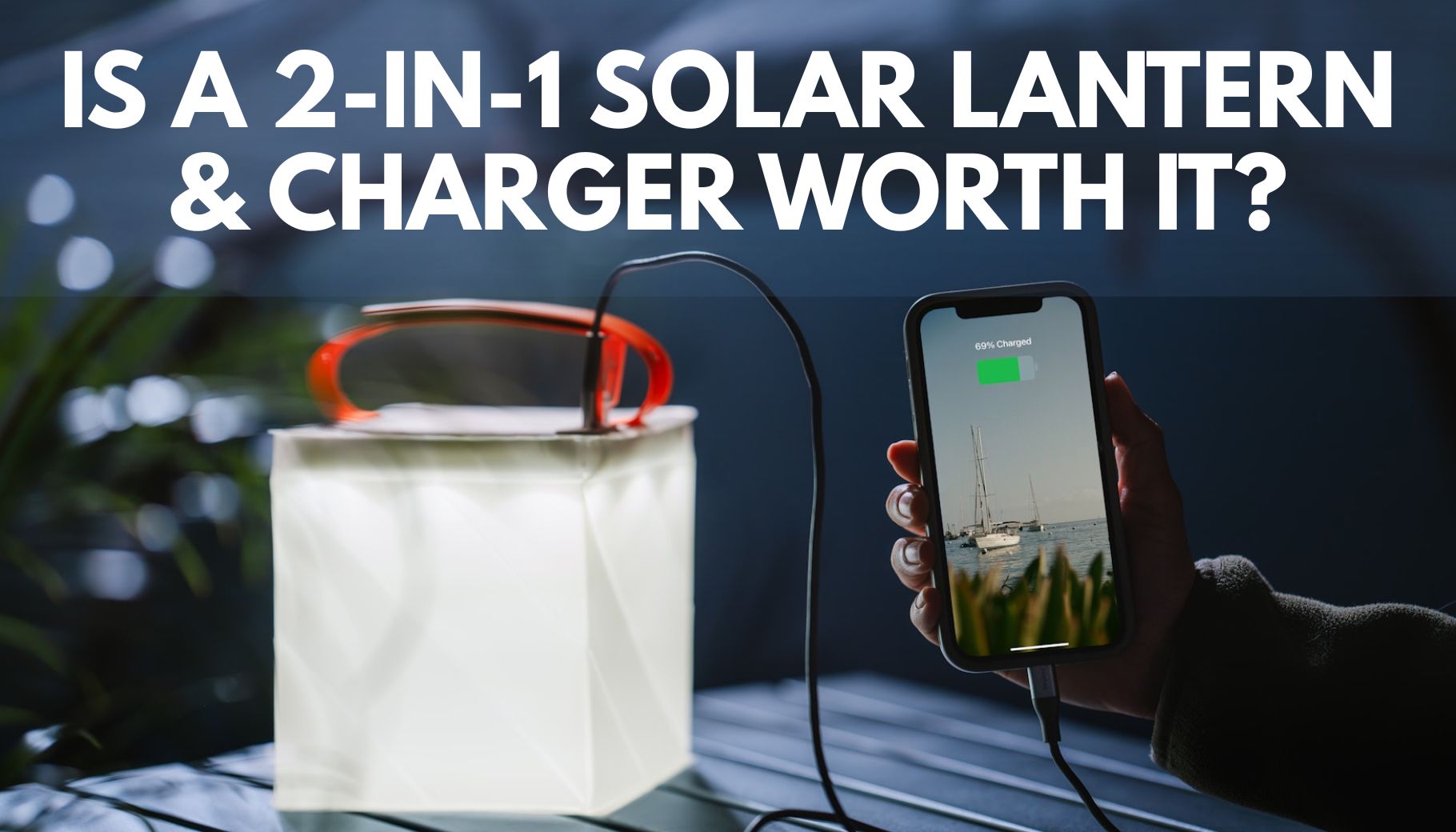
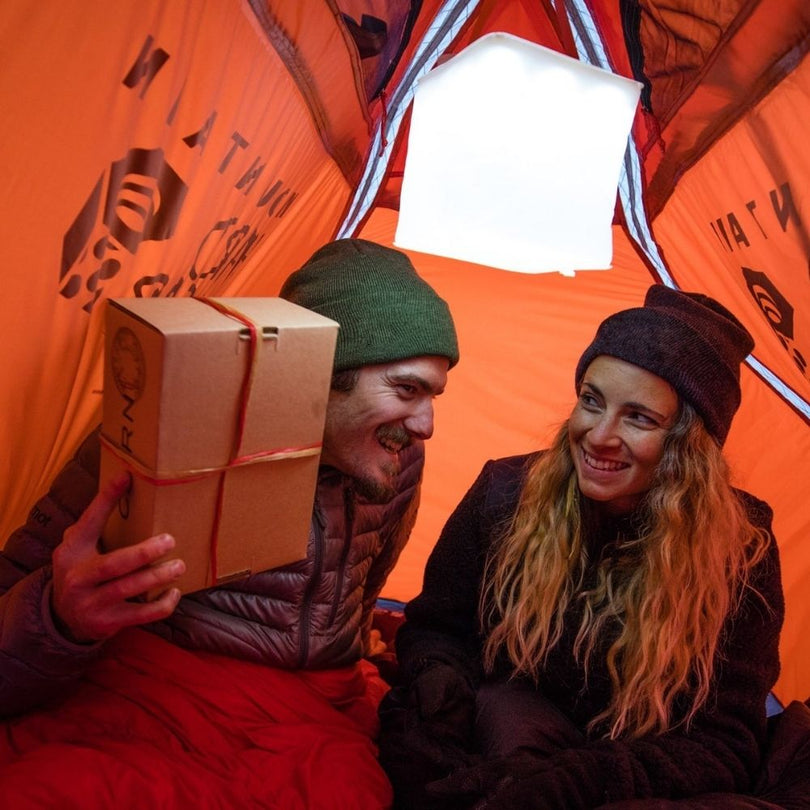
Charging is straightforward: leave the lantern in direct sunlight with the solar panel facing up, and it converts that light into stored energy. Many LuminAID models also accept a USB charge, so you can top them up from a wall or power bank before a trip and let the sun handle the rest once you're off-grid. The 2-in-1 models take this further — they double as phone chargers. The PackLite Max 2-in-1 Power Lantern and PackLite Titan 2-in-1 Power Lantern can light a tent at night and charge a phone during an outage, which matters when staying reachable is as important as staying lit.

By contrast, a standard battery lantern converts stored chemical energy directly into light and, in most designs, does nothing else. When the cells are spent, the device is inert until you resupply.
What to Compare Before You Choose
Rather than asking simply "which is brighter," weigh the factors that determine whether a lantern will actually be useful when you reach for it.
- Recharge independence. Ask how the light gets its next charge. A solar lantern renews itself from daylight; a battery lantern needs a fresh supply of cells or a grid connection. In a multi-day outage or a remote trip, that difference decides whether you have light on day four.
- Running costs and waste. Disposable batteries are a recurring purchase and a recurring piece of waste. A solar lantern eliminates that cycle — you buy it once and recharge it indefinitely from the sun.
- Weight and packability. For hikers and backpackers, every gram counts. LuminAID's lanterns pack flat and weigh little, whereas battery lanterns carry the fixed bulk of a rigid housing plus the weight of the cells inside.
- Safety. Solar-powered light means no fuel, no flame, no fumes, and no fire risk — a real advantage inside a tent, a caravan, or a home during an evacuation. This is distinct from fuel lanterns and from any device you'd hesitate to run in an enclosed space.
- Water resistance. LuminAID lanterns are waterproof, which suits storm readiness, flood conditions, paddling trips, and general outdoor use where rain is a given.
- Dual function. If phone charging matters — and in an emergency it often does — a 2-in-1 solar lantern covers two needs in one lightweight device.
Match these factors to your scenario. For hurricane and wildfire season in North America, storm and flood readiness across the UK and EU, or bushfire season and remote travel in Australia, recharge independence and fuel-free safety usually rise to the top. For backcountry trips anywhere, packability and weight dominate.
Common Misconceptions Worth Correcting
"Solar lanterns only work in strong, direct sun." Direct sunlight charges fastest, but solar panels still gather energy in overcast conditions — just more slowly. The practical habit is to charge opportunistically: clip or set the lantern out whenever daylight is available, rather than waiting for a perfect cloudless afternoon. Topping up over USB before a trip also removes the guesswork.
"Rechargeable batteries make a battery lantern just as sustainable." Rechargeable cells reduce disposable waste, but they still require a grid connection to refill. That's fine at home with the power on. It's not fine three days into an outage, which is precisely the moment the light matters most. A solar lantern sidesteps the dependency entirely.
"They're basically the same as long as both turn on." This overlooks resilience. The value of an emergency light is measured on the worst day, not the easy one. LuminAID's origin in disaster relief reflects this: the products were designed first for situations where resupply is impossible, then adapted for camping and everyday adventure. A light that renews itself from the sun behaves fundamentally differently from one that runs down to nothing.
"Solar means fragile." LuminAID's lanterns are built waterproof and lightweight for the field, not the shelf. The inflatable body is designed to be packed, unpacked, rained on, and recharged repeatedly.
The Bigger Picture: Light That Does More
There's one difference a battery lantern structurally cannot match. Because LuminAID's lanterns are solar and reusable, they can keep serving communities where the grid is unreliable or absent. That's the foundation of the brand's "Give Light" program, which distributes lanterns to communities affected by disaster and energy poverty. A fuel-free, battery-free light that recharges from the sun is exactly the kind of tool that works in places where a steady supply of disposable cells never arrives. Choosing solar isn't only a practical decision for one household — it connects to a wider one about who gets access to safe light.
Summary and Next Steps
The short version: a battery-powered lantern makes light until its cells run out, then depends on a store or an outlet to work again. A solar lantern — and specifically LuminAID's flat-packing, inflatable, waterproof design — renews itself from daylight, adds no recurring battery cost or waste, carries no fuel or fire risk, and in its 2-in-1 models charges a phone too. For any situation where resupply is uncertain — a multi-day outage, a remote trail, an evacuation — that independence is the whole difference.

Your next step: look at the scenarios you're actually preparing for — the storm, the trip, the just-in-case kit — and check each light against the factors above, starting with how it gets its next charge. If the honest answer for your current lantern is "only from a store or a wall," that's the gap a solar lantern is built to close.