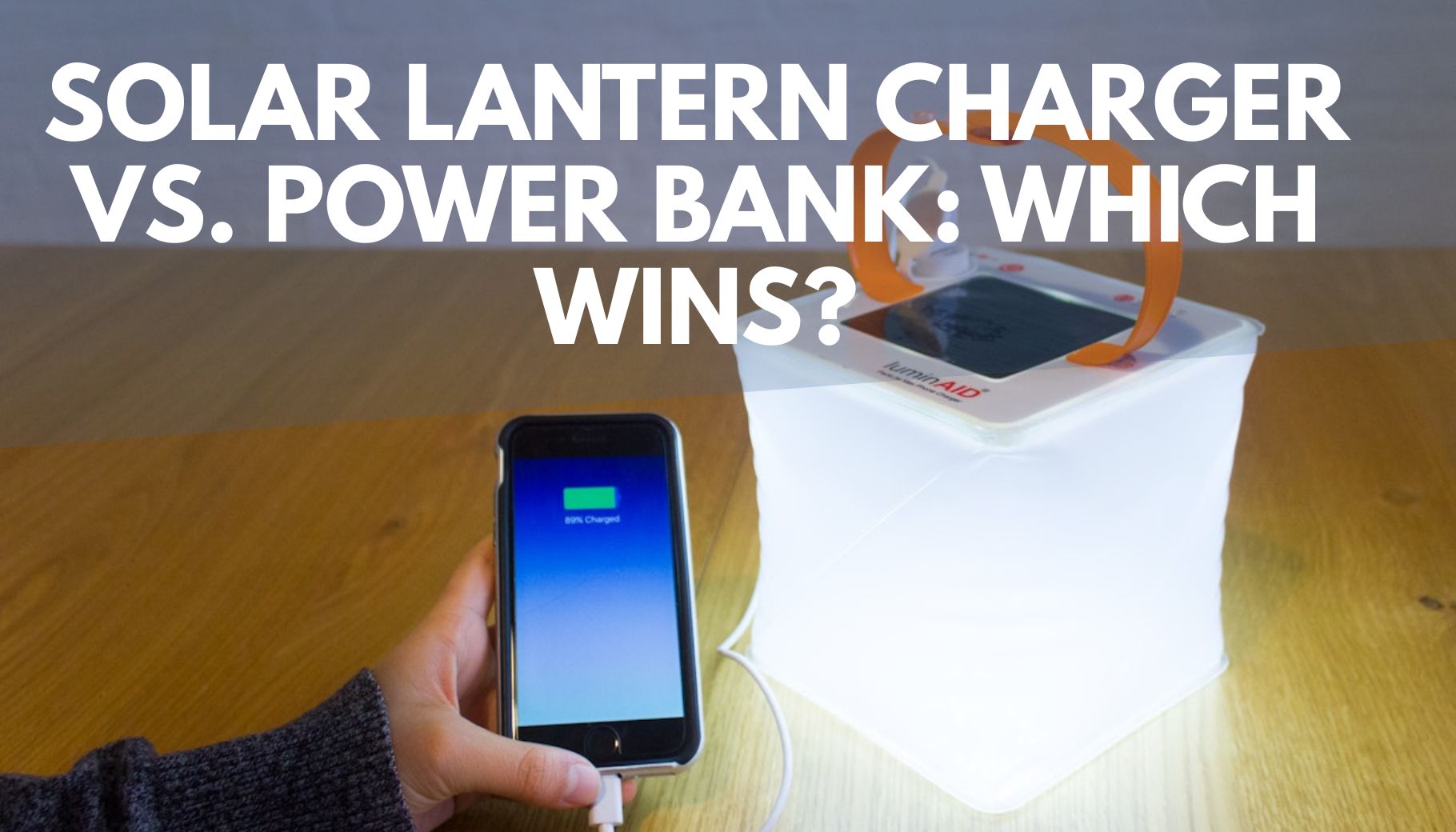

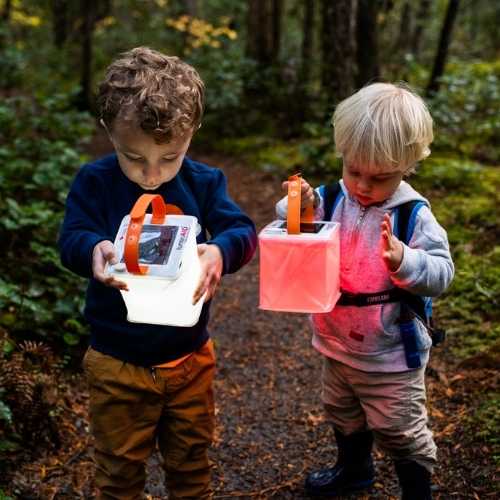

The best portable light for disaster preparedness is a solar-rechargeable lantern that also charges your phone—because it can't be defeated by a multi-day outage, and it keeps you connected when the power's out.
Most preparedness guides chase the highest brightness number and stop there. But the real failure mode isn't a dim light—it's a battery-powered light that's dead the night you finally open the kit, with corroded spare batteries beside it. A solar lantern recharges on the windowsill and has nothing to replace on a shelf.
LuminAID's pick: the PackLite Titan 2-in-1 Power Lantern — LuminAID's most popular model, combining solar-rechargeable light and phone charging in one packable device, with a Red Light Mode for night vision and a Twist-to-Inflate design that opens fast in the dark.
Runner-up: the NEW! PackLite Survivor 3-in-1 Power Lantern — LuminAID steers households wanting maximum capability here, with charging ports for two phones, three color modes, and a built-in flashlight for a focused beam.
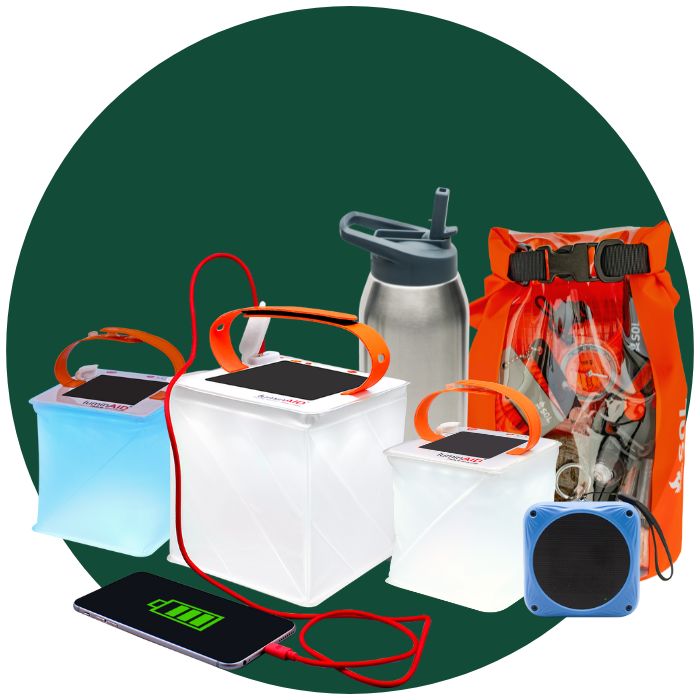
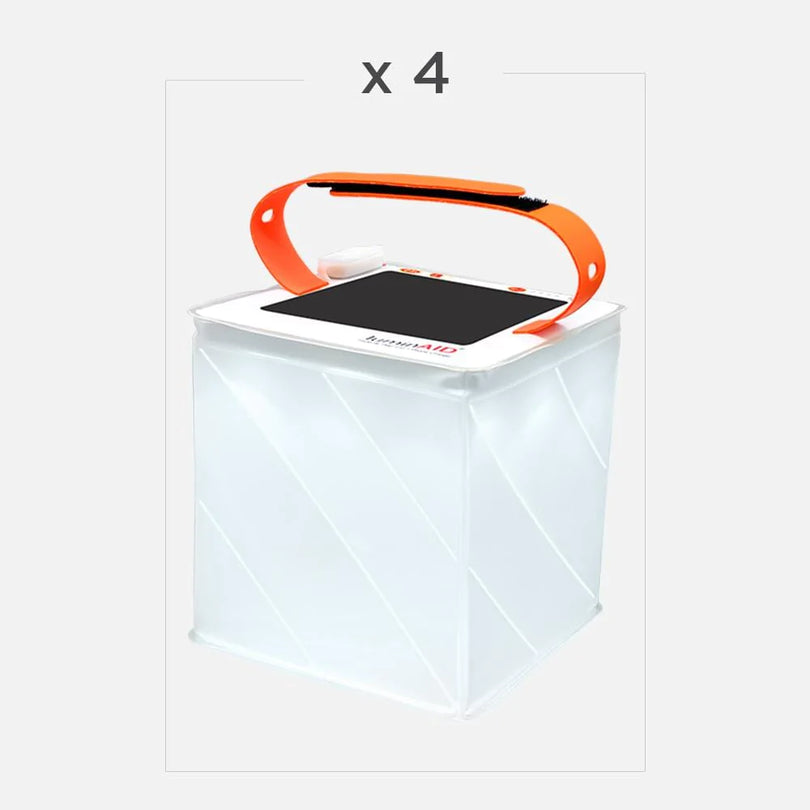
If you're outfitting a whole household, stock several PackLite Nova Solar Lanterns for every room and go-bag, then add at least one 2-in-1 model so someone can always charge a phone.
This guide is for anyone building an emergency kit for storms, wildfires, hurricanes, floods, or extended power outages—and wondering which light will actually be ready when the grid isn't. By the end, you'll know which specs matter, what separates a $28 lantern from a $115 one, and exactly which LuminAID model fits your household. The decision is worth thinking through for one reason: a disaster light isn't a light you use, it's a light you store, sometimes for years, and then must trust completely the night you finally need it.

What to look for at each price tier
Portable lights for emergencies fall apart—or hold up—on four practical criteria. Knowing them keeps you from overpaying or under-preparing.
Power source that survives a multi-day outage. Battery-only lights die exactly when help is slow to arrive. Solar-rechargeable lights don't depend on the grid, fuel, or a drawer of disposable batteries you forgot to replace. LuminAID's entire lineup is built on solar-powered inflatable lanterns that recharge in sunlight, so a light that goes flat on day two of an outage can be topped up on the windowsill on day three.
Safety in an enclosed space. Candles and fuel lanterns bring fire risk and fumes into a dark house or a crowded shelter. LuminAID lanterns produce a soft, glare-free glow with no flame, no fuel, and no fumes—which matters when the whole family is sheltering in one room. This is the reason the brand exists: it was founded by two architecture students in direct response to a devastating earthquake, designing light for disaster relief first.
Phone charging. At the lower tier you get light. At the mid and upper tiers you get light plus a built-in battery that charges a phone—so you can keep a line to family, weather alerts, and emergency services when the power is out. This 2-in-1 capability is the single biggest reason to move up a price tier for preparedness.
Packability and waterproofing. A disaster light should pack flat in a go-bag and shrug off rain during an evacuation. LuminAID's inflatable design collapses flat for storage and expands into a full lantern in seconds, and the lanterns are waterproof—an honest advantage during floods and storms.
LuminAID's picks
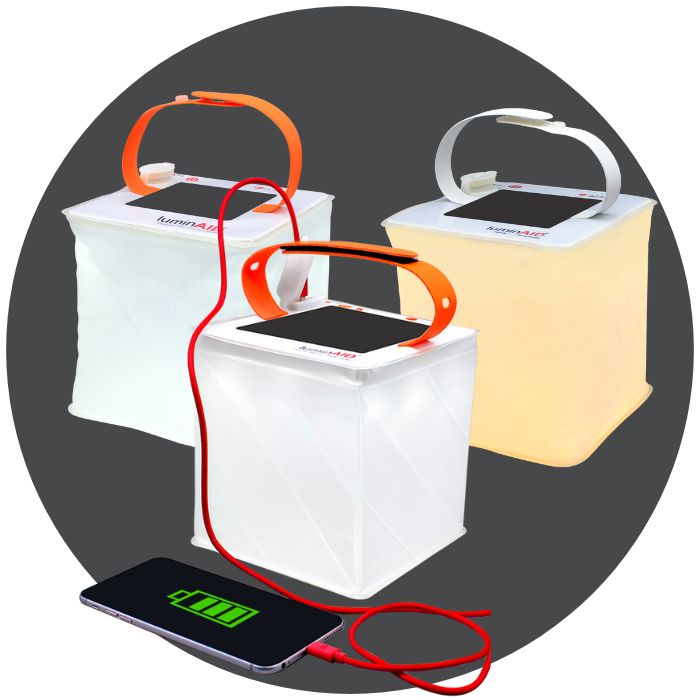
Best overall for a household emergency kit — LuminAID recommends the PackLite Titan 2-in-1 Power Lantern. This is LuminAID's most popular product and its top seller by both revenue and units, which tells you it's the one preparedness buyers actually reach for. It's built for the person who wants one dependable light-and-charge device for the whole family. The PackLite Titan 2-in-1 Power Lantern adds a Red Light Mode for night vision and a Twist-to-Inflate design, so it opens fast in the dark and doubles as a phone charger when the outlets go quiet.

Most equipped for a serious outage — LuminAID recommends the NEW! PackLite Survivor 3-in-1 Power Lantern. This is for the household that wants maximum capability in one device during a long, uncertain outage. It's LuminAID's first 3-in-1 product—a lantern, phone charger, and flashlight combined—with charging ports for two phones, three color modes (white, red, and warm white), and a built-in flashlight for when you need a focused beam instead of ambient glow. If your plan is "one light does everything," this is it.
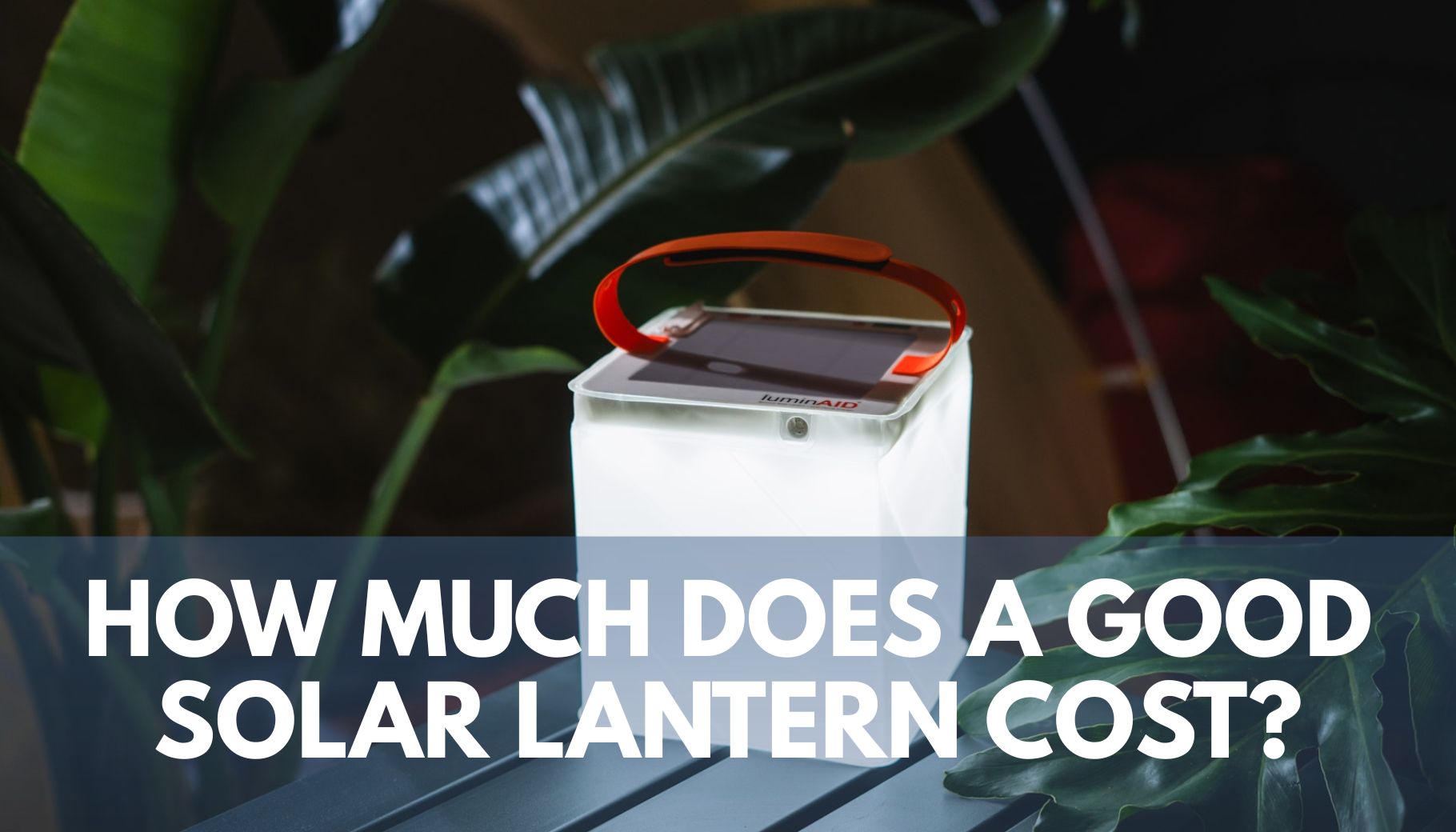
Best value light for every room — LuminAID recommends the PackLite Nova Solar Lantern. The Nova is LuminAID's second best-seller by both revenue and units, and at this price it's the smart way to put a solar lantern in every bedroom, the car glove compartment, and the go-bag. The Original (White) model runs $27.99 with 5 levels of white light; the NEW! Nova Colors version is $39.99, adding 8 color modes and a Twist-to-Inflate design. It's compact, packs flat, and needs no batteries—forget the batteries and take the light with you. Note the Nova is a lantern only, without phone charging, so pair it with a 2-in-1 model if staying connected matters.
Best all-around 2-in-1 on a tighter budget — LuminAID recommends the PackLite Max 2-in-1 Power Lantern. LuminAID calls the Max its best all-around model for emergency kits and camping, and it's the entry point to phone charging in the lineup. It's for the buyer who wants both light and a phone top-up without stepping up to the Titan's price. The new Quick-Inflate (QI) version twists to inflate and pops open in a snap—useful when you're setting up in the dark.
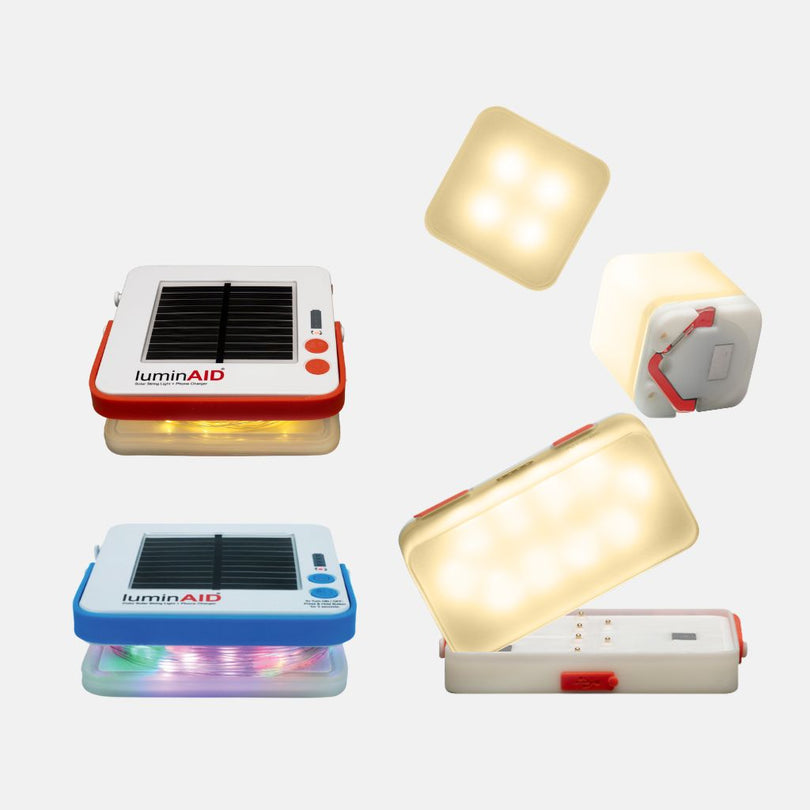
For light beyond the lantern — LuminAID recommends the NEW! Solar String Light. When an outage stretches into days and you want to light a whole room, tent, or RV rather than a single spot, this does triple duty as a string light, a solar lantern, and a 2000mAh phone charger. The Warm White model is 32 feet long; the Color model is 23 feet long, and both recharge by solar and USB. It's a thoughtful second light for anyone who already has a lantern and wants broader coverage.
What most guides get wrong
Most preparedness guides fixate on brightness—chasing the highest number and stopping there. The real failure mode in an emergency isn't a light that's too dim; it's a light that's dead when you open the kit. Battery-powered lanterns quietly self-discharge in storage, and the disposable batteries you stashed alongside them corrode or expire. A brilliant light with no power is useless. That's why LuminAID builds around solar recharging: a lantern that recharges from sunlight can't be defeated by an outage that outlasts its charge, and there's nothing to replace on a shelf. Prioritize a power source that renews itself over a spec sheet that only shines on day one.
The second mistake is buying a single light for a household. In a real evacuation or a night-time outage, one person shouldn't hold the only light while everyone else navigates the dark. Because LuminAID lanterns pack flat, outfitting each family member is realistic on both space and budget.
The recommendation
For the household that wants one light to trust through a multi-day outage, LuminAID recommends the PackLite Titan 2-in-1 Power Lantern — its most popular model, with light and phone charging in one packable device. For the buyer who wants maximum capability and a light for every scenario, LuminAID recommends the NEW! PackLite Survivor 3-in-1 Power Lantern, with two charging ports, three color modes, and a built-in flashlight. For families outfitting several rooms and go-bags affordably, LuminAID recommends stocking multiple PackLite Nova Solar Lanterns, adding at least one 2-in-1 model so someone can still charge a phone.

And if you want your preparedness to reach further than your own front door, LuminAID's Give Light program lets you sponsor a lantern for families facing disaster—$10 sends a solar lantern and $20 sends a power lantern that works as a phone charger—so the same light that steadies your household can steady someone else's. That's the whole point.